Articles | Volume 26, issue 10
https://doi.org/10.5194/nhess-26-4763-2026
Research article
 | 
02 Oct 2026
Research article |  | 02 Oct 2026

A quantitative methodology for analysing physical damage and recovery dynamics from concurrent and consecutive hazards: forensic insights from Puerto Rico

Alessandro Borre, Daria Ottonelli, Eva Trasforini, Tatiana Ghizzoni, Roberto Rudari, Giacomo Zoppi, Giorgio Boni, and Silvia De Angeli

Related authors

Invited perspectives: Towards usable compound event research
Kai Kornhuber, Emanuele Bevacqua, Mariana Madruga de Brito, Wiebke S. Jäger, Pauline Rivoire, Cassandra D. W. Rogers, Fabiola Banfi, Fulden Batibeniz, James Carruthers, Carlo De Michele, Silvia De Angeli, Cristina Deidda, Marleen C. de Ruiter, Andreas H. Fink, Henrique M. D. Goulart, Katharina Küpfer, Patrick Ludwig, Douglas Maraun, Gabriele Messori, Shruti Nath, Fiachra O'Loughlin, Joaquim G. Pinto, Benjamin Poschlod, Alexandre M. Ramos, Colin Raymond, Andreia F. S. Ribeiro, Deepti Singh, Laura Suarez Gutierrez, Philip J. Ward, and Christopher J. White
Nat. Hazards Earth Syst. Sci., 26, 4309–4334, https://doi.org/10.5194/nhess-26-4309-2026,https://doi.org/10.5194/nhess-26-4309-2026, 2026
Short summary
Pluvial flooding damage scenarios using remote sensing and deep learning models for urban object detection
Arianna Cauteruccio, Matteo Maragliano, Roozbeh Rajabi Toostani, Giorgio Boni, and Gabriele Moser
EGUsphere, https://doi.org/10.5194/egusphere-2026-1625,https://doi.org/10.5194/egusphere-2026-1625, 2026
This preprint is open for discussion and under review for Natural Hazards and Earth System Sciences (NHESS).
Short summary
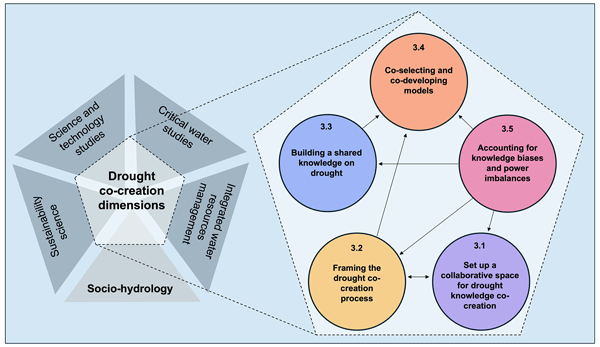
Invited perspectives: Advancing knowledge co-creation in drought impact studies
Silvia De Angeli, Lorenzo Villani, Giulio Castelli, Maria Rusca, Giorgio Boni, Elena Bresci, and Luigi Piemontese
Nat. Hazards Earth Syst. Sci., 25, 2571–2589, https://doi.org/10.5194/nhess-25-2571-2025,https://doi.org/10.5194/nhess-25-2571-2025, 2025
Short summary
Flood and landslide risk mapping based on a multi-criteria analysis (MCA) in Greater Abidjan (Côte d’Ivoire)
Habal Kassoum Traore, Sébastien Lebaut, Gilles Drogue, Eugène Konan Kouadio, and Silvia De Angeli
EGUsphere, https://doi.org/10.5194/egusphere-2025-2925,https://doi.org/10.5194/egusphere-2025-2925, 2025
Short summary
The role of citizen science in assessing the spatiotemporal pattern of rainfall events in urban areas: a case study in the city of Genoa, Italy
Nicola Loglisci, Giorgio Boni, Arianna Cauteruccio, Francesco Faccini, Massimo Milelli, Guido Paliaga, and Antonio Parodi
Nat. Hazards Earth Syst. Sci., 24, 2495–2510, https://doi.org/10.5194/nhess-24-2495-2024,https://doi.org/10.5194/nhess-24-2495-2024, 2024
Short summary

Cited articles

Aljawhari, K., Gentile, R., Freddi, F., and Galasso, C.: Effects of ground-motion sequences on fragility and vulnerability of case-study reinforced concrete frames, B. Earthq. Eng., 19, 6329–6359, https://doi.org/10.1007/s10518-020-01006-8, 2021. a
Borre, A. and De Angeli, S.: Multi-Hazard Impact Assessment Framework, Zenodo [code], https://doi.org/10.5281/zenodo.22773741, 2026. a
Borre, A., Ghizzoni, T., Trasforini, E., Ottonelli, D., Rudari, R., and Ferraris, L.: Developing the Recovery Gap Index: A Comprehensive Tool for Assessing National Disaster Recovery Capacities, Sustainability, 17, 1044, https://doi.org/10.3390/su17031044, 2025. a
Boyle, E., Inanlouganji, A., Carvalhaes, T., Jevtić, P., Pedrielli, G., and Reddy, T. A.: Social vulnerability and power loss mitigation: A case study of Puerto Rico, Int. J. Disast. Risk Re., 82, 103357, https://doi.org/10.1016/j.ijdrr.2022.103357, 2022. a
Cangialosi, J. P., Latto, A. S., and Berg, R.: Tropical Cyclone Report: Hurricane Irma (AL112017), 30 August–12 September 2017, Tech. rep., National Hurricane Center, National Oceanic and Atmospheric Administration, Miami, FL, https://www.nhc.noaa.gov/data/tcr/AL112017_Irma.pdf (last access: 8 September 2026), 2018. a
Download
Short summary
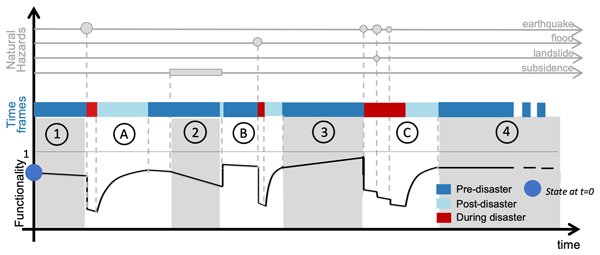
This study presents a quantitative method to capture how damage caused by concurrent and consecutive hazard events evolves, including how earlier damage and ongoing recovery affect later events. Applied to a sequence of hurricanes and earthquakes in Puerto Rico, it shows that ignoring residual damage significantly underestimates the impacts caused by consecutive events.  By accounting for recovery and interaction effects, the method supports more realistic damage assessment and risk planning.
Share
Altmetrics
Final-revised paper
Preprint