
Articles | Volume 26, issue 8
https://doi.org/10.5194/nhess-26-3683-2026
© Author(s) 2026. This work is distributed under
the Creative Commons Attribution 4.0 License.
the Creative Commons Attribution 4.0 License.
https://doi.org/10.5194/nhess-26-3683-2026
© Author(s) 2026. This work is distributed under
the Creative Commons Attribution 4.0 License.
the Creative Commons Attribution 4.0 License.
Research article
| 
07 Aug 2026
Research article |
| 07 Aug 2026
| 07 Aug 2026
Storm surge dynamics in the northern Adriatic Sea: comparing AI emulators with high-resolution numerical simulations
Rodrigo Campos-Caba
CORRESPONDING AUTHOR

Department of Physics and Astronomy (DIFA), University of Bologna, 40127 Bologna, Italy
Interdepartmental Research Centre for Environmental Sciences (CIRSA), University of Bologna, 48123 Ravenna, Italy
Paula Camus
Departamento de Matemática Aplicada y Ciencias de la Computación, University of Cantabria, 39005 Santander, Spain
Andrea Mazzino
Department of Civil, Chemical and Environmental Engineering, University of Genoa, 16145 Genoa, Italy
Istituto Nazionale di Fisica Nucleare, Sezione di Genova, 16146 Genoa, Italy
Michalis Vousdoukas
Department of Marine Sciences, University of the Aegean, 81100 Mitilene, Greece
MV Coastal and Climate Research Ltd., 3046 Limassol, Cyprus
Massimo Tondello
HS Marine SrL, 35027 Noventa Padovana, Italy
Ivan Federico
CMCC Foundation – Euro-Mediterranean Center on Climate Change, 73100 Lecce, Italy
Salvatore Causio
CMCC Foundation – Euro-Mediterranean Center on Climate Change, 73100 Lecce, Italy
Lorenzo Mentaschi
CORRESPONDING AUTHOR
Department of Physics and Astronomy (DIFA), University of Bologna, 40127 Bologna, Italy
Interdepartmental Research Centre for Environmental Sciences (CIRSA), University of Bologna, 48123 Ravenna, Italy
CMCC Foundation – Euro-Mediterranean Center on Climate Change, 73100 Lecce, Italy
Related authors
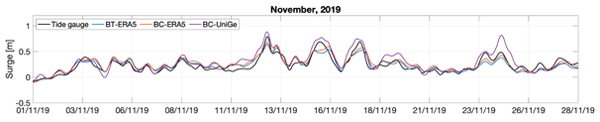
Rodrigo Campos-Caba, Jacopo Alessandri, Paula Camus, Andrea Mazzino, Francesco Ferrari, Ivan Federico, Michalis Vousdoukas, Massimo Tondello, and Lorenzo Mentaschi
Ocean Sci., 20, 1513–1526, https://doi.org/10.5194/os-20-1513-2024, https://doi.org/10.5194/os-20-1513-2024, 2024
Short summary
Short summary
Here we show the development of high-resolution simulations of storm surge in the northern Adriatic Sea employing different atmospheric forcing data and physical configurations. Traditional metrics favor a simulation forced by a coarser database and employing a less sophisticated setup. Closer examination allows us to identify a baroclinic model forced by a high-resolution dataset as being better able to capture the variability and peak values of the storm surge.
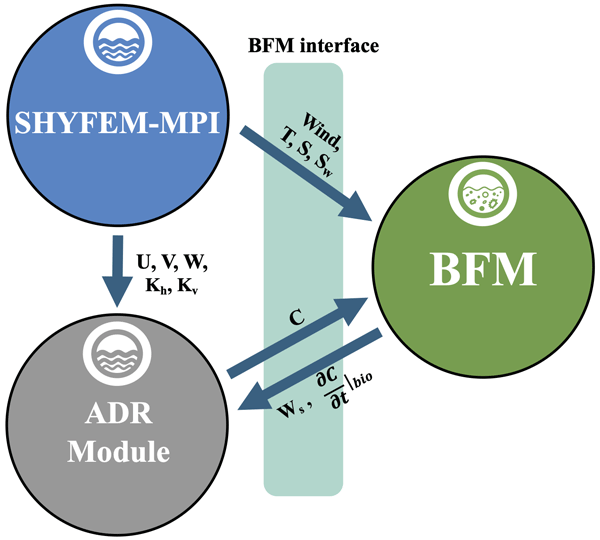
Jacopo Alessandri, Giulia Bonino, Tomas Lovato, Momme Butenschön, Lorenzo Mentaschi, Giorgia Verri, Ivan Federico, and Nadia Pinardi
Geosci. Model Dev., 19, 9301–9324, https://doi.org/10.5194/gmd-19-9301-2026, https://doi.org/10.5194/gmd-19-9301-2026, 2026
Short summary
Short summary
Coastal seas are strongly shaped by complex coastlines, shallow depths, and inputs from rivers, which influence marine life and water quality. This study introduces a new high-resolution modelling system that combines ocean circulation and marine ecosystem processes on unstructured grids. Applied to the northern Adriatic Sea, the model realistically captures seasonal changes in key biogeochemical variables, offering improved tools to support coastal environmental management.
Francesco Maicu, Seimur Shirinov, Charikleia L. G. Oikonomou, Vitalii Sharmar, Lucia Gualtieri, Anna Chiara Goglio, Ehsan Sadighrad, Dimitra Denaxa, Aimie Moulin, Bethany McDonagh, Salvatore Causio, Emanuela Clementi, Gerasimos Korres, Ivan Federico, and Enrico Scoccimarro
State Planet Discuss., https://doi.org/10.5194/sp-2026-12, https://doi.org/10.5194/sp-2026-12, 2026
Preprint under review for SP
Short summary
Short summary
In January 2026, an exceptional storm brought record waves, flooding, and strong currents to the Mediterranean Sea. To understand its coastal impact, we combined data from Europe's ocean monitoring service with a detailed coastal computer model, tracking the storm from open sea to shore. We found unusually high waves, raised sea levels, and strong changes in currents and saltiness. Combining wide-area forecasts with local models improves flood prediction, supporting earlier coastal warning.
Anna Chiara Goglio, Emanuela Clementi, Nadia Pinardi, Giulio Boccaletti, Paolo Oddo, and Lorenzo Mentaschi
EGUsphere, https://doi.org/10.5194/egusphere-2026-4734, https://doi.org/10.5194/egusphere-2026-4734, 2026
This preprint is open for discussion and under review for Natural Hazards and Earth System Sciences (NHESS).
Short summary
Short summary
Venice, one of the world's most famous cities, is threatened by flooding, locally known as Acqua Alta. Based on numerical results from the Copernicus Marine Mediterranean Analysis and Forecasting System, we investigate each process involved in the dynamics of these events to improve their predictability. For the first time, we identify processes occurring within the water column that contribute to the sea level peak, providing new insight into the understanding and modeling of Acqua Alta events.
Archit Shirish Wadalkar, Michalis I. Vousdoukas, Massimo Tondello, Vitali Sharmar, Evangelos Voukouvalas, Salvatore Causio, Ivan Federico, Giovanni Coppini, and Lorenzo Mentaschi
Earth Syst. Sci. Data Discuss., https://doi.org/10.5194/essd-2026-598, https://doi.org/10.5194/essd-2026-598, 2026
Preprint under review for ESSD
Short summary
Short summary
We present a global hazard-oriented dataset of storm surges and significant wave heights, including bulk and spectral peak wave parameters, spanning 1950–2023 on a high-resolution in coastal areas. Significant wave heights are bias-corrected using satellite altimetry, while storm surges are derived from sea surface heights through frequency-based filtering. The dataset is tailor made for regional downscaling and assessment of compound-events for multi hazard mapping.
Milad Niroumand-Jadidi, Lorenzo Mentaschi, and Sonia Silvestri
Int. Arch. Photogramm. Remote Sens. Spatial Inf. Sci., XLIX-B3-2026, 825–830, https://doi.org/10.5194/isprs-archives-XLIX-B3-2026-825-2026, https://doi.org/10.5194/isprs-archives-XLIX-B3-2026-825-2026, 2026
Anna Chiara Goglio, Lorenzo Mentaschi, Begoña Pérez Gómez, Paolo Oddo, Emanuela Clementi, and Federica Borile
State Planet Discuss., https://doi.org/10.5194/sp-2026-7, https://doi.org/10.5194/sp-2026-7, 2026
Preprint under review for SP
Short summary
Short summary
Mediterranean coastal communities are increasingly threatened by extreme sea level events. We built an indicator combining model and observed data to summarize their changes. The analysis of their evolution revealed that the associated hazard is rising along the entire coastline, especially in the northern Adriatic, the Aegean Sea, and along Turkish and Cypriot coasts. This trend is mostly driven by sea level rise, except for the Adriatic Sea, where strong storm effects play a bigger role.
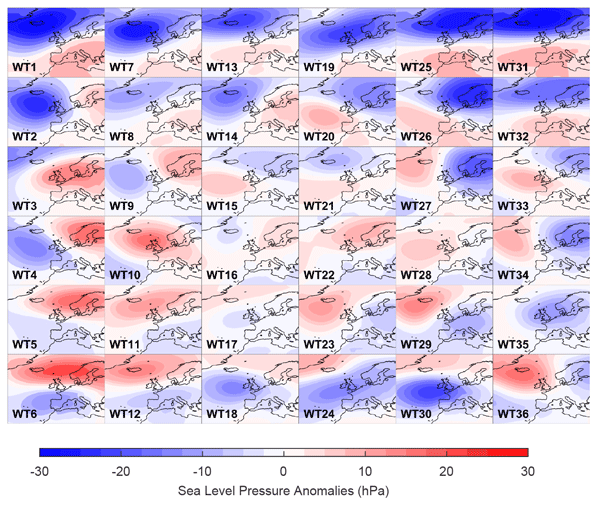
Zehua Zhong, Hachem Kassem, Ivan D. Haigh, Dafni E. Sifnioti, Ye Liu, and Paula Camus
Ocean Sci., 22, 2197–2220, https://doi.org/10.5194/os-22-2197-2026, https://doi.org/10.5194/os-22-2197-2026, 2026
Short summary
Short summary
This work examines how large-scale climate modes affect waves and storm surges on the northeast coast of England. We combine weather types with a multivariate analysis of sea states. We find that the North Atlantic Oscillation and Scandinavian pattern influence local waves and surges by altering the occurrence probabilities of synoptic conditions associated with specific winds, storm locations, and pressure systems. Our results improve the understanding of climate impacts on coastal conditions.
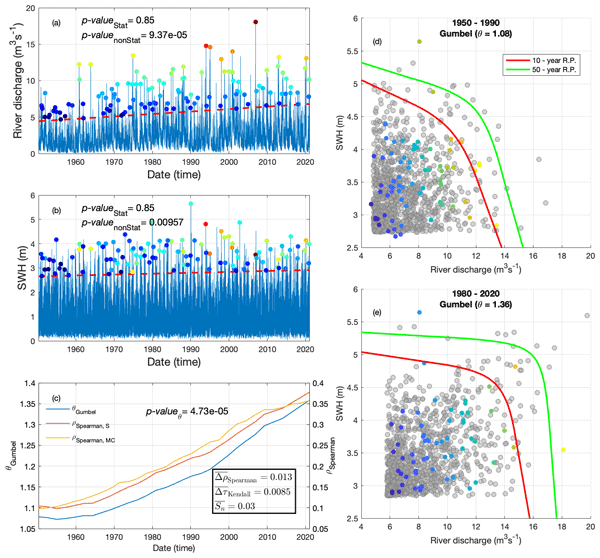
Mohammad Hadi Bahmanpour, Alois Tilloy, Michalis Vousdoukas, Ivan Federico, Giovanni Coppini, Luc Feyen, and Lorenzo Mentaschi
Hydrol. Earth Syst. Sci., 30, 2301–2314, https://doi.org/10.5194/hess-30-2301-2026, https://doi.org/10.5194/hess-30-2301-2026, 2026
Short summary
Short summary
As natural hazards evolve, understanding how extreme events interact over time is crucial. While single extremes have been widely studied, joint extremes remain challenging to analyze. We present a framework that combines advanced statistical modeling with copula theory to capture changing dependencies. Applying it to historical data reveals dynamic patterns in extreme events. To support broader use, we provide an open-source tool for improved hazard assessment.
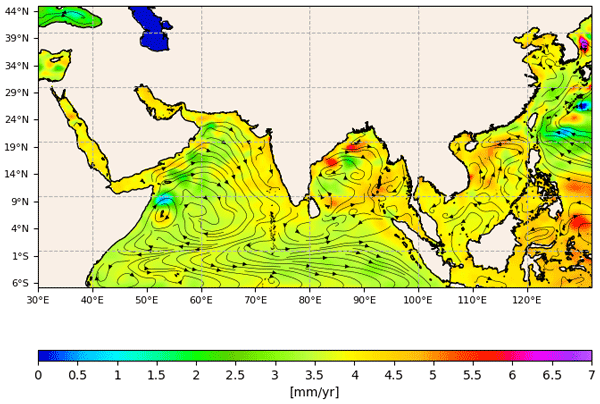
Rita Lecci, Robyn Gwee, Kun Yan, Sanne Muis, Nadia Pinardi, Jun She, Martin Verlaan, Simona Masina, Wenshan Li, Hui Wang, Salvatore Causio, Antonio Novellino, Marco Alba, Etiënne Kras, Sandra Gaytan Aguilar, and Jan-Bart Calewaert
Nat. Hazards Earth Syst. Sci., 26, 1767–1783, https://doi.org/10.5194/nhess-26-1767-2026, https://doi.org/10.5194/nhess-26-1767-2026, 2026
Short summary
Short summary
This study explored how sea level is changing along the China-Europe Sea Route. By combining satellite and in-situ observations with advanced modeling, the research identified ongoing sea level rise and an increasing frequency of extreme water level events in some regions. These findings underscore the importance of continued monitoring and provide useful knowledge to support long-term planning, coastal resilience, and informed decision-making.

Italo dos Reis Lopes, Ivan Federico, Michalis Vousdoukas, Luisa Perini, Salvatore Causio, Giovanni Coppini, Maurilio Milella, Nadia Pinardi, and Lorenzo Mentaschi
Nat. Hazards Earth Syst. Sci., 26, 811–825, https://doi.org/10.5194/nhess-26-811-2026, https://doi.org/10.5194/nhess-26-811-2026, 2026
Short summary
Short summary
We improved a computer model to simulate coastal flooding by including temporary barriers like sand dunes. We tested it where sand dunes are built seasonally to protect the shoreline for two real storms: one that broke through the dunes and another where dunes held strong. Our model showed how important it is to design these defenses carefully since even if a small part of a dune fails, a major flooding can happen. Overall, our work helps create better tools to manage and protect coastal areas.

Mahmud Hasan Ghani, Nadia Pinardi, Antonio Navarra, Lorenzo Mentaschi, Silvia Bianconcini, Francesco Maicu, and Francesco Trotta
Ocean Sci., 22, 427–441, https://doi.org/10.5194/os-22-427-2026, https://doi.org/10.5194/os-22-427-2026, 2026
Short summary
Short summary
Using the same sea surface temperature and the same bulk formula but different atmospheric reanalysis and analysis surface-variable datasets, we show that a higher-resolution dataset is crucial for evaluating the heat-budget closure hypothesis in the Mediterranean Sea. For the first time, we investigate the impact of extreme heat-loss events in the Mediterranean Sea by computing the long-term, basin-averaged mean heat budget.
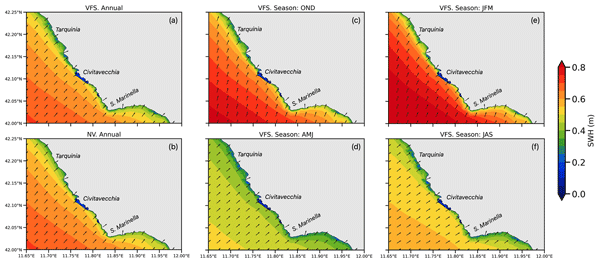
Seimur Shirinov, Ivan Federico, Simone Bonamano, Salvatore Causio, Nicolás Biocca, Viviana Piermattei, Daniele Piazzolla, Jacopo Alessandri, Lorenzo Mentaschi, Giovanni Coppini, Marco Marcelli, and Nadia Pinardi
Nat. Hazards Earth Syst. Sci., 25, 3737–3758, https://doi.org/10.5194/nhess-25-3737-2025, https://doi.org/10.5194/nhess-25-3737-2025, 2025
Short summary
Short summary
This research investigates how seagrass meadows attenuate coastal waves. Our methodology integrates site measurements with numerical simulations, revealing that plant flexibility and seasonal growth cycles are crucial factors that enhance model fidelity for predicting wave damping. These insights aid ecosystem-based coastal protection and conservation of these vital habitats. Future work should address current–sediment–vegetation interactions for a more complete hydrodynamic understanding.
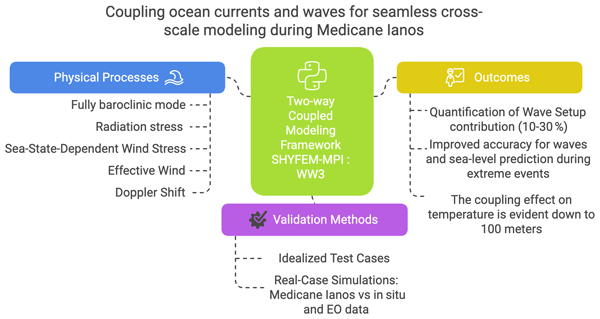
Salvatore Causio, Seimur Shirinov, Ivan Federico, Giovanni De Cillis, Emanuela Clementi, Lorenzo Mentaschi, and Giovanni Coppini
Ocean Sci., 21, 1105–1123, https://doi.org/10.5194/os-21-1105-2025, https://doi.org/10.5194/os-21-1105-2025, 2025
Short summary
Short summary
This study examines how waves and ocean currents interact during severe weather, focusing on Medicane Ianos, one of the strongest storms in the Mediterranean. Using advanced modeling, we created a unique system to simulate these interactions, capturing effects like wave-induced water levels and wave-induced effects on the vertical structure of the ocean. We validated our approach with ideal tests and real data from the storm.
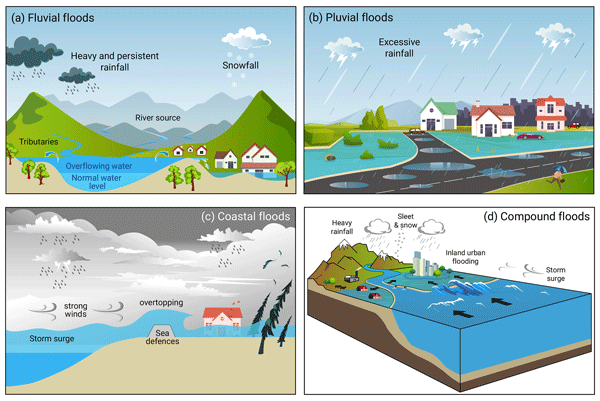
Joshua Green, Ivan D. Haigh, Niall Quinn, Jeff Neal, Thomas Wahl, Melissa Wood, Dirk Eilander, Marleen de Ruiter, Philip Ward, and Paula Camus
Nat. Hazards Earth Syst. Sci., 25, 747–816, https://doi.org/10.5194/nhess-25-747-2025, https://doi.org/10.5194/nhess-25-747-2025, 2025
Short summary
Short summary
Compound flooding, involving the combination or successive occurrence of two or more flood drivers, can amplify flood impacts in coastal/estuarine regions. This paper reviews the practices, trends, methodologies, applications, and findings of coastal compound flooding literature at regional to global scales. We explore the types of compound flood events, their mechanistic processes, and the range of terminology. Lastly, this review highlights knowledge gaps and implications for future practices.
Rodrigo Campos-Caba, Jacopo Alessandri, Paula Camus, Andrea Mazzino, Francesco Ferrari, Ivan Federico, Michalis Vousdoukas, Massimo Tondello, and Lorenzo Mentaschi
Ocean Sci., 20, 1513–1526, https://doi.org/10.5194/os-20-1513-2024, https://doi.org/10.5194/os-20-1513-2024, 2024
Short summary
Short summary
Here we show the development of high-resolution simulations of storm surge in the northern Adriatic Sea employing different atmospheric forcing data and physical configurations. Traditional metrics favor a simulation forced by a coarser database and employing a less sophisticated setup. Closer examination allows us to identify a baroclinic model forced by a high-resolution dataset as being better able to capture the variability and peak values of the storm surge.
Roderik van de Wal, Angélique Melet, Debora Bellafiore, Paula Camus, Christian Ferrarin, Gualbert Oude Essink, Ivan D. Haigh, Piero Lionello, Arjen Luijendijk, Alexandra Toimil, Joanna Staneva, and Michalis Vousdoukas
State Planet, 3-slre1, 5, https://doi.org/10.5194/sp-3-slre1-5-2024, https://doi.org/10.5194/sp-3-slre1-5-2024, 2024
Short summary
Short summary
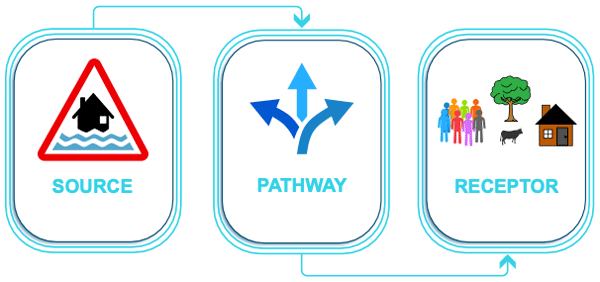
Sea level rise has major impacts in Europe, which vary from place to place and in time, depending on the source of the impacts. Flooding, erosion, and saltwater intrusion lead, via different pathways, to various consequences for coastal regions across Europe. This causes damage to assets, the environment, and people for all three categories of impacts discussed in this paper. The paper provides an overview of the various impacts in Europe.
Dominik Paprotny, Belinda Rhein, Michalis I. Vousdoukas, Paweł Terefenko, Francesco Dottori, Simon Treu, Jakub Śledziowski, Luc Feyen, and Heidi Kreibich
Hydrol. Earth Syst. Sci., 28, 3983–4010, https://doi.org/10.5194/hess-28-3983-2024, https://doi.org/10.5194/hess-28-3983-2024, 2024
Short summary
Short summary
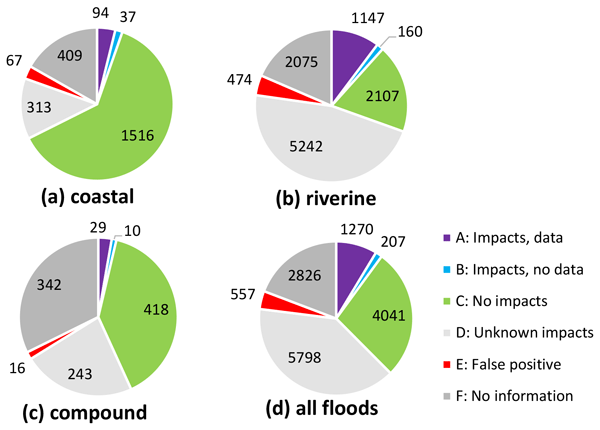
Long-term trends in flood losses are regulated by multiple factors, including climate variation, population and economic growth, land-use transitions, reservoir construction, and flood risk reduction measures. Here, we reconstruct the factual circumstances in which almost 15 000 potential riverine, coastal and compound floods in Europe occurred between 1950 and 2020. About 10 % of those events are reported to have caused significant socioeconomic impacts.
Panagiotis Athanasiou, Ap van Dongeren, Maarten Pronk, Alessio Giardino, Michalis Vousdoukas, and Roshanka Ranasinghe
Earth Syst. Sci. Data, 16, 3433–3452, https://doi.org/10.5194/essd-16-3433-2024, https://doi.org/10.5194/essd-16-3433-2024, 2024
Short summary
Short summary
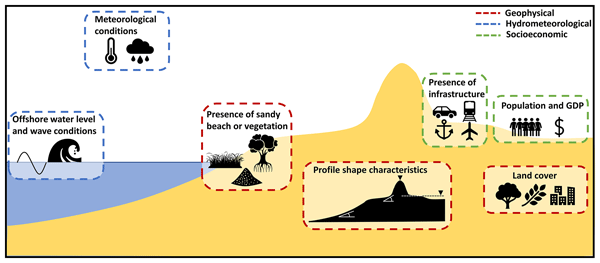
The shape of the coast, the intensity of waves, the height of the water levels, the presence of people or critical infrastructure, and the land use are important information to assess the vulnerability of the coast to coastal hazards. Here, we provide 80 indicators of this kind at consistent locations along the global ice-free coastline using open-access global datasets. These can be valuable for quick assessments of the vulnerability of the coast and at data-poor locations.
Marc Igigabel, Marissa Yates, Michalis Vousdoukas, and Youssef Diab
Nat. Hazards Earth Syst. Sci., 24, 1951–1974, https://doi.org/10.5194/nhess-24-1951-2024, https://doi.org/10.5194/nhess-24-1951-2024, 2024
Short summary
Short summary
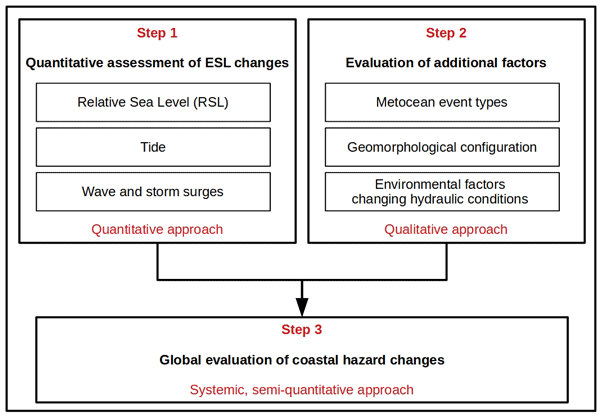
Changes in sea levels alone do not determine the evolution of coastal hazards. Coastal hazard changes should be assessed using additional factors describing geomorphological configurations, metocean event types (storms, cyclones, long swells, and tsunamis), and the marine environment (e.g., coral reef state and sea ice extent). The assessment completed here, at regional scale including the coasts of mainland and overseas France, highlights significant differences in hazard changes.
Leonardo Lima, Salvatore Causio, Mehmet Ilicak, Ronan McAdam, and Eric Jansen
State Planet Discuss., https://doi.org/10.5194/sp-2023-19, https://doi.org/10.5194/sp-2023-19, 2023
Revised manuscript not accepted
Short summary
Short summary
Recent studies have revealed an increase in the ocean temperature and heat content in the Black Sea, where the research on marine heat waves (MHWs) is still incipient. Our study reveals long-lasting MHWs and interesting connections between surface and subsurface MHWs in the Black Sea. Our analysis is a starting point to create a monitoring system of MHWs for the Black Sea.
Panagiotis Athanasiou, Ap van Dongeren, Alessio Giardino, Michalis Vousdoukas, Jose A. A. Antolinez, and Roshanka Ranasinghe
Nat. Hazards Earth Syst. Sci., 22, 3897–3915, https://doi.org/10.5194/nhess-22-3897-2022, https://doi.org/10.5194/nhess-22-3897-2022, 2022
Short summary
Short summary
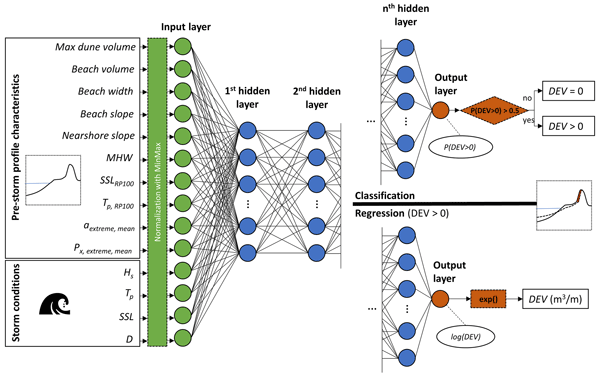
Sandy dunes protect the hinterland from coastal flooding during storms. Thus, models that can efficiently predict dune erosion are critical for coastal zone management and early warning systems. Here we develop such a model for the Dutch coast based on machine learning techniques, allowing for dune erosion estimations in a matter of seconds relative to available computationally expensive models. Validation of the model against benchmark data and observations shows good agreement.

Umesh Pranavam Ayyappan Pillai, Nadia Pinardi, Ivan Federico, Salvatore Causio, Francesco Trotta, Silvia Unguendoli, and Andrea Valentini
Nat. Hazards Earth Syst. Sci., 22, 3413–3433, https://doi.org/10.5194/nhess-22-3413-2022, https://doi.org/10.5194/nhess-22-3413-2022, 2022
Short summary
Short summary
The study presents the application of high-resolution coastal modelling for wave hindcasting on the Emilia-Romagna coastal belt. The generated coastal databases which provide an understanding of the prevailing wind-wave characteristics can aid in predicting coastal impacts.
Giorgio Micaletto, Ivano Barletta, Silvia Mocavero, Ivan Federico, Italo Epicoco, Giorgia Verri, Giovanni Coppini, Pasquale Schiano, Giovanni Aloisio, and Nadia Pinardi
Geosci. Model Dev., 15, 6025–6046, https://doi.org/10.5194/gmd-15-6025-2022, https://doi.org/10.5194/gmd-15-6025-2022, 2022
Short summary
Short summary
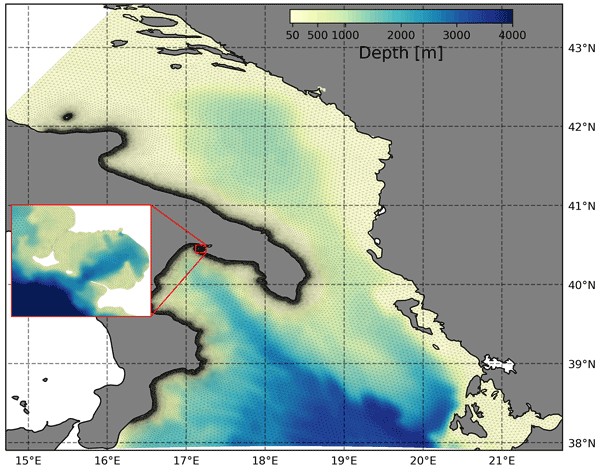
The full exploitation of supercomputing architectures requires a deep revision of the current climate models. This paper presents the parallelization of the three-dimensional hydrodynamic model SHYFEM (System of HydrodYnamic Finite Element Modules). Optimized numerical libraries were used to partition the model domain and solve the sparse linear system of equations in parallel. The performance assessment demonstrates a good level of scalability with a realistic configuration used as a benchmark.
Cited articles
Adeli, E., Sun, L., Wang, J., and Taflanidis, A. A.: An advanced spatio-temporal convolutional recurrent neural network for storm surge predictions, Neural Comput. Appl., 35, 18971–18987, https://doi.org/10.1007/s00521-023-08719-2, 2023.
Alessandri, J., Pinardi, N., Federico, I., and Valentini, A.: Storm Surge Ensemble Prediction System for Lagoons and Transitional Environments, Am. Meteorol. Soc., 38, https://doi.org/10.1175/WAF-D-23-0040.1, 2023.
Bajo, M. and Umgiesser, G.: Storm surge forecast through a combination of dynamic and neural network models, Ocean Model., 33, https://doi.org/10.1016/j.ocemod.2009.12.007, 2010.
Bezuglov, A., Blanton, B., and Santiago, R.: Multi-Output Artificial Neural Network for Storm Surge Prediction in North Carolina, arXiv [preprint], https://doi.org/10.48550/arXiv.1609.07378, 2016.
Bishop, C.: Pattern recognition and machine learning, Springer, ISBN: 978-0-387-31073-2, 2006.
Calafat, F. M., Wahl, T., Tadesse, M. G., and Sparrow, S. N.: Trends in Europe storm surge extremes match the rate of sea-level rise, Nature, 603, 841–845, https://doi.org/10.1038/s41586-022-04426-5, 2022.
Campos-Caba, R. and Mentaschi, L.: ro-camposcaba/stormsurge_ml: Machine Learning emulators for storm surge time-series, Version v1, Zenodo [computer software], https://doi.org/10.5281/zenodo.20393561, 2026.
Campos-Caba, R., Alessandri, J., Camus, P., Mazzino, A., Ferrari, F., Federico, I., Vousdoukas, M., Tondello, M., and Mentaschi, L.: Assessing storm surge model performance: what error indicators can measure the model's skill?, Ocean Sci., 20, 1513–1526, https://doi.org/10.5194/os-20-1513-2024, 2024.
Chen, K., Kuang, C., Wang, L., Chen, K., Han, X., and Fan, J.: Storm surge prediction based on long short-term memory neural network in the east China sea, Appl. Sci.-Bern, 12, https://doi.org/10.3390/app12010181, 2022.
Cid, A., Wahl, T., Chamber, D. P., and Muis, S.: Storm surge reconstruction and return water level estimation in Southeast Asia for the 20th century, J. Geophys. Res.-Oceans, 123, 437–451, https://doi.org/10.1002/2017JC013143, 2018.
Clementi, E., Drudi, M., Aydogdu, A., Moulin, A., Grandi, A., Mariani, A., Goglio, A. C., Pistoia, J., Miraglio, P., Lecci, R., Palermo, F., Coppini, G., Masina, S., and Pinardi, N.: Mediterranean Sea Physical Analysis and Forecast (CMEMS MED-Physics, EAS8 system), Version 1, Copernicus Marine Service (CMS) [data set], https://doi.org/10.25423/CMCC/MEDSEA_ANALYSISFORECAST_PHY_006_013_EAS8, 2023.
Daizong, D., Zhang, M., Yang, M. Pan, and He, X.: Modeling extreme events in time series prediction, in: 25th ACM SIGKDD Conference on Knowledge Discovery and Data Mining (KDD '19), 4–8 August 2019, Anchorage, AK, USA, ACM, New York, NY, USA, https://doi.org/10.1145/3292500.3330896, 2019.
Dang, W., Feng, J., Li, D., Fan, M., and Zhao, L.: A dataset of storm surge reconstructions in the Western North Pacific using CNN, Sci. Data, 11, https://doi.org/10.1038/s41597-024-03249-5, 2024.
De Zolt, S., Lionello, P., Nuhu, A., and Tomasin, A.: The disastrous storm of 4 November 1966 on Italy, Nat. Hazards Earth Syst. Sci., 6, 861–879, https://doi.org/10.5194/nhess-6-861-2006, 2006.
Escudier, R., Clementi, E., Cipollone, A., Pistoia, J., Drudi, M., Grandi, A., Lyubartsev, V., Lecci, R., Aydogdu, A., Delrosso, D., Omar, M., Masina, S., Coppini, G., and Pinardi, N.: A High Resolution Reanalysis for the Mediterranean Sea, Front. Earth Sci., 9, https://doi.org/10.3389/feart.2021.702285, 2021.
Federico, I., Pinardi, N., Coppini, G., Oddo, P., Lecci, R., and Mossa, M.: Coastal ocean forecasting with an unstructured grid model in the southern Adriatic and northern Ionian seas, Nat. Hazards Earth Syst. Sci., 17, 45–59, https://doi.org/10.5194/nhess-17-45-2017, 2017.
Feng, X.-C., and Xu, H.: Accurate storm surge prediction in hurricane area of the Atlantic Ocean using a new multi-recursive neural network based on gate recursive unit, Journal of Ocean Engineering and Science, 11, 726–739, https://doi.org/10.1016/j.joes.2024.01.001, 2024.
Ferrarin, C., Valentini, A., Vodopivec, M., Klaric, D., Massaro, G., Bajo, M., De Pascalis, F., Fadini, A., Ghezzo, M., Menegon, S., Bressan, L., Unguendoli, S., Fettich, A., Jerman, J., Ličer, M., Fustar, L., Papa, A., and Carraro, E.: Integrated sea storm management strategy: the 29 October 2018 event in the Adriatic Sea, Nat. Hazards Earth Syst. Sci., 20, 73–93, https://doi.org/10.5194/nhess-20-73-2020, 2020.
Gholamy, A., Kreinovich, V., and Kosheleva, O.: Why 70/30 or 80/20 relation between training and testing sets: A pedagogical explanation, Department of Computer Science, University of Texas at El Paso, https://scholarworks.utep.edu/cs_techrep/1209/ (last access: 4 August 2026), 2018.
Giaremis, S., Nader, N., Dawson, C., Kaiser, H., Kaiser, C., and Nikidis, E.: Storm surge modeling in the AI era: using LSTM-based machine learning for enhancing forecasting accuracy, arXiv [preprint], https://doi.org/10.48550/arXiv.2403.04818, 2024.
Goodfellow, I., Bengio, Y., and Courville, A.: Deep learning, MIT Press, ISBN: 978-0-262-03561-3, 2016.
Harter, L., Pineau-Guillou, L., and Chapron, B.: Underestimation of extremes in sea level surge reconstruction, Sci. Rep., 14, https://doi.org/10.1038/s41598-024-65718-6, 2024.
Hermans, T. H. J., Ben Hammouda, C., Treu, S., Tiggeloven, T., Couasnon, A., Busecke, J. J. M., and van de Wal, R. S. W.: Computing extreme storm surges in Europe using neural networks, Nat. Hazards Earth Syst. Sci., 25, 4593–4612, https://doi.org/10.5194/nhess-25-4593-2025, 2025.
Hersbach, H., Bell, B., Berrisford, P., Hirahara, S., Horányi, A., Muñoz-Sabater, J., Nicolas, J., Peubey, C., Radu, R., Schepers, D., Simmons, A., Soci, C., Abdalla, S., Abellan, X., Balsamo, G., Bechtold, P., Biavati, G., Bidlot, J., Bonavita, M., De Chiara, G., Dahlgren, P., Dee, D., Diamantakis, M., Dragani, R., Flemming, J., Forbes, R., Fuentes, M., Geer, A., Haimberger, L., Healy, S., Hogan, R. J., Hólm, E., Janiskova, M., Keeley, S., Laloyaux, P., Lopez, P., Lupu, C., Radnoti, G., de Rosnay, P., Rozum, I., Vamborg, F., Villaume, S., and Thépaut, J. N.: The ERA5 global reanalysis, Q. J. Roy. Meteor. Soc., 146, 1999–2049, https://doi.org/10.1002/qj.3803, 2020.
Igarashi, Y. and Tajima, Y.: Application of recurrent neural network for prediction of the time-varying storm surge, Coast. Eng. J., 63, 68–82, https://doi.org/10.1080/21664250.2020.1868736, 2021.
IPCC: Climate change 2021: The physical science basis. Contribution of working group I to the sixth assessment report of the Intergovernmental Panel on Climate Change, IPCC, https://doi.org/10.1017/9781009157896, 2021.
Kim, S., Pan, S., and Mase, H.: Artificial neural network-based storm surge forecast model: Practical application to Sakai Minato, Japan, Appl. Ocean Res., 91, https://doi.org/10.1016/j.apor.2019.101871, 2019.
Lionello, P., Barriopedro, D., Ferrarin, C., Nicholls, R. J., Orlić, M., Raicich, F., Reale, M., Umgiesser, G., Vousdoukas, M., and Zanchettin, D.: Extreme floods of Venice: characteristics, dynamics, past and future evolution (review article), Nat. Hazards Earth Syst. Sci., 21, 2705–2731, https://doi.org/10.5194/nhess-21-2705-2021, 2021.
Longo, E., Ficchì, A., Verlaan, M., Muis, S., and Castelletti, A.: A deep learning framework for extreme storm surge modelling under future climate scenarios, ESS Open Archive [preprint], https://doi.org/10.22541/essoar.175511719.92481227/v1, 2025.
Lyard, F. H., Allain, D. J., Cancet, M., Carrère, L., and Picot, N.: FES2014 global ocean tide atlas: design and performance, Ocean Sci., 17, 615–649, https://doi.org/10.5194/os-17-615-2021, 2021.
Mel, R. A., Coraci, E., Morucci, S., Crosato, F., Cornello, M., Casaioli, M., Mariani, S., Carniello, L., Papa, A., Bonometto, A., and Ferla, M.: Insights on the Extreme Storm Surge Event of the 22 November 2022 in the Venice Lagoon,. Journal of Marine Science and Engineering, 11, https://doi.org/10.3390/jmse11091750, 2023.
Micaletto, G., Barletta, I., Mocavero, S., Federico, I., Epicoco, I., Verri, G., Coppini, G., Schiano, P., Aloisio, G., and Pinardi, N.: Parallel implementation of the SHYFEM (System of HydrodYnamic Finite Element Modules) model, Geosci. Model Dev., 15, 6025–6046, https://doi.org/10.5194/gmd-15-6025-2022, 2022.
Noh, S. H.: Analysis of gradient vanishing of RNNs and performance comparison, Information, 12, https://doi.org/10.3390/info12110442, 2021.
Park, K., Federico, I., Di Lorenzo, E., Ezer, T., Cobb, K. M., Pinardi, N., and Coppini, G.: The contribution of hurricane remote ocean forcing to storm surge along the Southeastern U. S. coast, Coast. Eng., 173, https://doi.org/10.1016/j.coastaleng.2022.104098, 2022.
Paszke, A., Gross, S., Chintala, S., Chanan, G., Yang, E., Devito, Z., Lin, Z., Desmaison, A., Antiga, L., and Lerer, A.: Automatic differentiation in PyTorch, in: Conference on Neural Information Processing Systems (NIPS 2017), Long Beach, CA, USA, ISBN: 978-1-5108-6096-4, 2017.
Pawlowicz, R., Beardsley, B., and Lentz, S.: Classical harmonic analysis including error estimates in MATLAB using T_TIDE, Comput. Geosci., 28, 929–937, 2022.
Raicich, F.: The sea level time series of Trieste, Molo Sartorio, Italy (1869-2021). Earth System Science Data, 15, 1749–1763, https://doi.org/10.5194/essd-15-1749-2023, 2023.
Rus, M., Fettich, A., Kristan, M., and Ličer, M.: HIDRA2: deep-learning ensemble sea level and storm tide forecasting in the presence of seiches - the case of the northern Adriatic. Geosci. Model Dev., 16, 271–288, https://doi.org/10.5194/gmd-16-271-2023, 2023a.
Rus, M., Fettich, A., Kristan, M., and Ličer, M.: HIDRA-T – A transformer-based sea level forecasting method, ERK 2023 Computational Intelligence Section, 2023b.
Sun, K. and Pan, J.: Model of storm surge maximum water level increase in a coastal area using ensemble machine learning and explicable algorithm, Earth Space Sci., 10, https://doi.org/10.1029/2023EA003243, 2023.
Suradhaniwar, S., Kar, S., Durbha, S. S., and Jagarlapudi, A.: Time series forecasting of univariate agrometeorological data: A comparative performance evaluation via one-step and multi-step ahead forecasting strategies, Sensors, 21, https://doi.org/10.3390/s21072430, 2021.
Tadesse, M., Wahl, T., and Cid, A.: Data-Driven Modeling of Global Storm Surges, Frontiers in Marine Science, 7, https://doi.org/10.3389/fmars.2020.00260, 2020.
Tausía, J., Delaux, S., Camus, P., Rueda, A., Méndez, F., Bryan, K. R., Pérez, J., Costa, C. G. R., Zyngfogel, R., and Cofiño, A.: Rapid response data-driven reconstructions for storm surge around New Zealand, Appl. Ocean Res., 133, https://doi.org/10.1016/j.apor.2023.103496, 2023.
Tiggeloven, T., Couasnon, A., van Straaten, C., Muis, S., and Ward, P. J.: Exploring deep learning capabilities for surge predictions in coastal areas, Sci. Rep., 11, https://doi.org/10.1038/s41598-021-96674-0, 2021.
Trotta, F., Fenu, E., Pinardi, N., Bruciaferri, D., Giacomelli, L., Federico, I., and Coppini, G.: A structured and unstructured grid relocatable ocean platform for forecasting (SURF), Deep-Sea Res. Pt. II, 133, 54–75, https://doi.org/10.1016/j.dsr2.2016.05.004, 2016.
Uçar, M. K., Nour, M., Sindi, H., and Polat, K.: The effect of training and testing process on machine learning in biomedical datasets, Math. Probl. Eng., 2020, https://doi.org/10.1155/2020/2836236, 2020.
Umgiesser, G., Canu, D. M., Cucco, A., and Solidoro, C.: A finite element model for the Venice lagoon: Development, set up, calibration and validation, J. Marine Syst., 123–145, https://doi.org/10.1016/j.jmarsys.2004.05.009, 2004.
Umgiesser, G., Bajo, M., Ferrrarin, C., Cucco, A., Lionello, P., Zanchettin, D., Papa, A., Tosoni, A., Ferla, M., Coraci, E., Morucci, S., Crosato, F., Bonometto, A., Valentini, A., Orlic, M., Haigh, I. D., Nielsen, J. W., Bertin, X., Bustorff Fortunato, A., Perez, B., Alvarez, E., Paradis, D., Jourdan, D., Pasquet, A., Mourre, B., Tintoré, J. and Nicholls, R. J.: The prediction of floods in Venice: Methods, models and uncertainty (review article). Nat. Hazards Earth Syst. Sci., 21, 2679–2704, https://doi.org/10.5194/nhess-21-2679-2021, 2021.
Wahl, T., Haigh, I. D., Nicholls, R. J., Arns, A., Dangendorf, S., Hinkel, J., and Slangen, A. B. A.: Understanding extreme sea levels for broad-scale coastal impact and adaptation analysis, Nat. Commun., 8, https://doi.org/10.1038/ncomms16075, 2017.
Wang, B., Liu, S., Wang, B., Wu, W., Wang, J., and Shen, D.: Multi-step ahead short-term predictions of storm surge level using CNN and LSTM network, Acta Oceanol. Sin., 40, 104–118, https://doi.org/10.1007/s13131-021-1763-9, 2021.
Wang, X., Wang, R., Hu, N., Wang, P., Huo, P., Wang, G., Wang, H., Wang, S., Zhu, J., Xu, J., Yin, J., Bao, S., Luo, C., Zu, Z., Han, Y., Zhang, W., Ren, K., Deng, K., and Song, J.: XiHe: A Data-Driven Model for Global Ocean Eddy-Resolving Forecasting, arXiv [preprint], https://doi.org/10.48550/arXiv.2402.02995, 2024.
Zhao, T., Wang, S., Ouyang, C., Chen, M., Liu, C., Zhang, J., Yu, L., Wang, F., Xie, Y., Li, J., Wang, F., Grunwald, S., Wong, B. M., Zhang, F., Qian, Z., Xu, Y., Yu, C., Han, W., Sun, T., Shao, Z., Qian, T., Chen, Z., Zeng, J., Zhang, H., Letu, H., Zhang, B., Wang, L., Luo, L., Shi, C., Su, H., Zhang, H., Yin, S., Huang, N., Zhao, W., Li, N., Zheng, C., Zhou, Y., Huang, C., Feng, D., Xu, Q., Wu, Y., Hong, D., Wang, Z., Lin, Y., Zhang, T., Kumar, P., Plaza, A., Chanussot, J., Zhang, J., Shi, J., and Wang, L.: Artificial intelligence for geoscience: Progress, challenges, and perspectives, Innovation, 5, https://doi.org/10.1016/j.xinn.2024.100691, 2024.
Žust, L., Fettich, A., Kristan, M., and Licer, M.: HIDRA 1.0: deep-learning-based ensemble sea level forecasting in the northern Adriatic. Geosci. Model Dev., 14, 2057–2074, https://doi.org/10.5194/gmd-14-2057-2021, 2021.
Short summary
We assess the ability of machine learning emulators, from Multivariate Linear Regression to Long Short-Term Memory (LSTM) networks, to reproduce storm surge dynamics in the northern Adriatic Sea. Using the corrected Mean Absolute Deviation squared (MADc²) loss function, we demonstrate that data-driven models can match high-resolution hydrodynamic simulations in representing extreme surge events with greatly reduced computational cost.
We assess the ability of machine learning emulators, from Multivariate Linear Regression to Long...


Altmetrics
Final-revised paper
Preprint