
Articles | Volume 26, issue 7
https://doi.org/10.5194/nhess-26-3213-2026
© Author(s) 2026. This work is distributed under
the Creative Commons Attribution 4.0 License.
the Creative Commons Attribution 4.0 License.
https://doi.org/10.5194/nhess-26-3213-2026
© Author(s) 2026. This work is distributed under
the Creative Commons Attribution 4.0 License.
the Creative Commons Attribution 4.0 License.
Research article
| 
21 Jul 2026
Research article |
| 21 Jul 2026
| 21 Jul 2026
Marine heatwave amplifies extreme multi-hazards of extratropical cyclone Babet
Piyali Goswami
CORRESPONDING AUTHOR

Department of Meteorology, University of Reading, Reading, UK
Ségolène Berthou
Met Office, Exeter, UK
Theodore G. Shepherd
Department of Meteorology, University of Reading, Reading, UK
Ambrogio Volonté
Department of Meteorology, University of Reading, Reading, UK
National Centre for Atmospheric Science, Reading, UK
Sana Mahmood
Met Office, Exeter, UK
Juan Manuel Castillo
Met Office, Exeter, UK
Anne-Christine Péquignet
Met Office, Exeter, UK
Yong-June Park
Korea Meteorological Administration, Seoul, Korea
Mark Worsfold
Met Office, Exeter, UK
Regina Rodrigues
Department of Oceanography, Federal University of Santa Catarina (UFSC), Florianópolis, Santa Catarina, Brazil
Magdalena A. Balmaseda
European Centre for Medium-Range Weather Forecasts (ECMWF), Reading, UK
Related authors
No articles found.
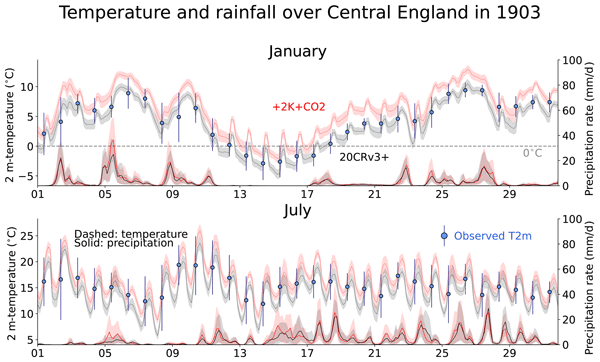
Rhidian Thomas, Gilbert P. Compo, Steve George, Gabriele C. Hegerl, Andrew Schurer, Theodore G. Shepherd, Laura C. Slivinski, Vikki Thompson, and Ed Hawkins
Earth Syst. Dynam., 17, 1365–1380, https://doi.org/10.5194/esd-17-1365-2026, https://doi.org/10.5194/esd-17-1365-2026, 2026
Short summary
Short summary
We explore how our day-to-day experience of the weather may change in a warmer world. We compare weather model experiments that share the same weather patterns, but have different levels of CO2 and ocean surface warming. In the warmer experiments, the biggest temperature changes occur on the coldest and hottest days. Daily swings in rainfall become larger, and we see fewer drizzly days and more days with heavy rain. This illustrates the impact of climate change on our day-to-day weather.
Dalena León-FonFay, Theodore G. Shepherd, Linda van Garderen, and Frauke Feser
EGUsphere, https://doi.org/10.5194/egusphere-2026-5459, https://doi.org/10.5194/egusphere-2026-5459, 2026
This preprint is open for discussion and under review for Weather and Climate Dynamics (WCD).
Short summary
Short summary
With a growing interest in using long-term storyline simulations for climate change attribution, we argue that this is not just a longer of storyline analysis, but a new conceptual object placed between a conventional free-running climate model and an event-based storyline. Therefore, we revisit conceptual interpretation of multi-year storyline simulations, examine the implications of viewing them as conditional climate trajectories, and suggest potential applications of this emerging object.
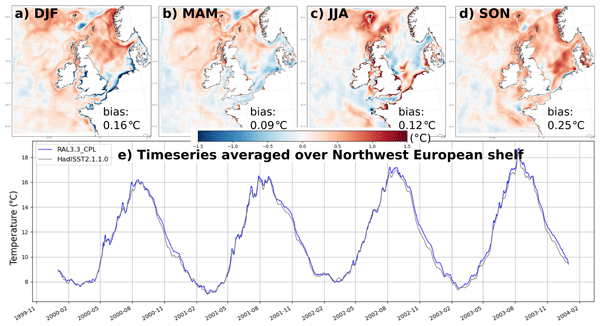
Ségolène Berthou, Juan Manuel Castillo, Vivian Fraser-Leonhardt, Sana Mahmood, Nefeli Makrygianni, Alex Arnold, Claudio Sanchez, Huw W. Lewis, Dale Partridge, Martin Best, Lucy Bricheno, Helen Davies, Douglas B. Clark, James R. Clark, Jeff A. Polton, Andrew Saulter, Chris J. Short, Jonathan Tinker, Simon Tucker, and Maisie Wright
Geosci. Model Dev., 19, 8535–8564, https://doi.org/10.5194/gmd-19-8535-2026, https://doi.org/10.5194/gmd-19-8535-2026, 2026
Short summary
Short summary
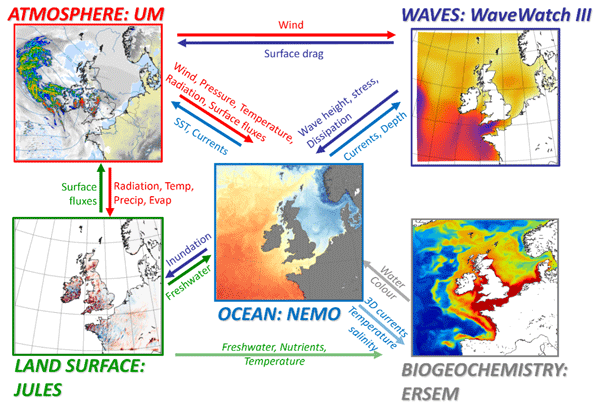
The UK’s new RCS-UKC4 (Regional Coupled Suite – UK Coupled domain version 4) system combines atmosphere, ocean, waves, land, rivers, and biogeochemistry models to improve coastal weather and climate predictions. It offers better storm wave predictions, more accurate river flows, and captures rapid sea-level changes. These advances help predict multiple hazards more reliably, supporting safer communities and helping better planning.
Andressa Andrade Cardoso, Suzanne L. Gray, Ambrogio Volonté, Ben J. Harvey, and Claudio Sánchez
EGUsphere, https://doi.org/10.5194/egusphere-2026-4757, https://doi.org/10.5194/egusphere-2026-4757, 2026
Short summary
Short summary
We studied whether high-resolution weather models that simulate thunderstorm clouds directly, rather than estimating their effects, improve forecasts of hazardous Mediterranean storms. Unlike more typical Mediterranean storms, tropical-cyclone-like medicanes became much stronger in the high-resolution simulations. However, the results also depended on how physical processes were represented, showing that more accurate forecasts require both better model design and higher resolution.
Rajesh Kumar, Claudio Sanchez, Juan Manuel Castillo, Jian-Guo Li, Bijoy Thompson, Pratiman Patel, Alvin Ng, Kaushik Sasmal, Kalli Furtado, Hailin Yan, Liu Jianyu, and Hugh Zhang
EGUsphere, https://doi.org/10.5194/egusphere-2026-2024, https://doi.org/10.5194/egusphere-2026-2024, 2026
Short summary
Short summary
Weather over Southeast Asia is shaped by complex interactions between the air, ocean, and waves. We developed a high-resolution model that links these processes to better understand and predict rainfall patterns in the region. The results show that ocean–atmosphere interactions improve the representation and prediction of squall events that affect daily life in Singapore and surrounding regions. This work supports more accurate weather forecasting in the region.
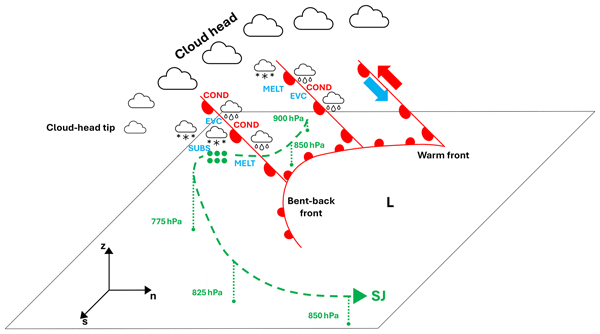
Ambrogio Volonté, Hanna Joos, Ming Hon Franco Lee, Richard Forbes, and Rémi Bouffet-Klein
Weather Clim. Dynam., 7, 1241–1264, https://doi.org/10.5194/wcd-7-1241-2026, https://doi.org/10.5194/wcd-7-1241-2026, 2026
Short summary
Short summary
Sting jets are air flows that can form in cloudy and unstable regions of intense windstorms. They can cause damaging wind gusts as they descend and accelerate while releasing their instability. We use a numerical simulation of Storm Ciarán to identify the individual cloud processes, such as condensation and sublimation, driving the onset of this instability. We reveal their complex interplay and highlight the unique properties of the three-dimensional environment in which a sting jet develops.
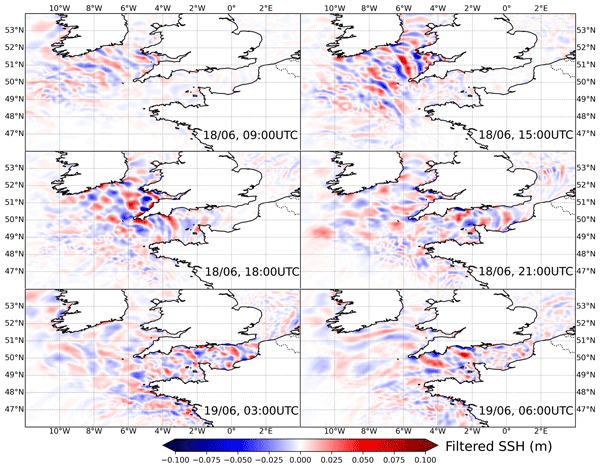
Nefeli Makrygianni, Ségolène Berthou, David L. A. Flack, Cindy Lebeaupin Brossier, Jonathan Beuvier, Juan Manuel Castillo, Emiliano Renzi, Clare O'Neill, Daniel Peláez-Zapata, Frederic Dias, Huw Lewis, and Diego Bruciaferri
Nat. Hazards Earth Syst. Sci., 26, 3185–3211, https://doi.org/10.5194/nhess-26-3185-2026, https://doi.org/10.5194/nhess-26-3185-2026, 2026
Short summary
Short summary
Meteotsunamis are rare but dangerous anomalous waves triggered by atmospheric disturbances, they are not currently forecast in Northwest Europe. We analysed the strongest recorded event on June 18, 2022, which reached 1 m amplitude. We showed high-resolution, high-frequency coupled models can represent such events up to three days ahead and help better understand their atmospheric triggers. These models, together with improved observations, can enhance early warnings and coastal safety.
Dorothy Heinrich, Erin Coughlan de Perez, Leanne Archer, Nadia Bloemendaal, Kevin I. Hodges, Helen Hooker, Theodore G. Shepherd, Nathan Sparks, Ralf Toumi, and Elisabeth Stephens
EGUsphere, https://doi.org/10.5194/egusphere-2026-2758, https://doi.org/10.5194/egusphere-2026-2758, 2026
Short summary
Short summary
An unprecedented tropical cyclone (TC) can turn into a disaster if it is unforeseen. In this work, we explore different TC datasets to identify simulated events that could be unprecedented. We look at whether these scenarios could be considered be plausible and how different these would be from past records, and illustrate with examples. We highlight that there is a wealth of scenarios that could be used by disaster managers to imagine and prepare for unprecedented events.
Dale Partridge, Ségolène Berthou, Rebecca Millington, James R. Clark, Lucy Bricheno, Juan Manuel Castillo, Julia Rulent, and Huw Lewis
Ocean Sci., 22, 345–366, https://doi.org/10.5194/os-22-345-2026, https://doi.org/10.5194/os-22-345-2026, 2026
Short summary
Short summary
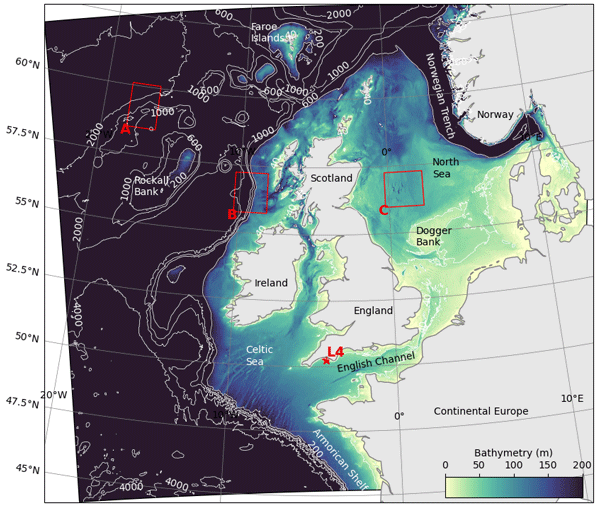
Phytoplankton blooms are governed by the availability of light and nutrients, both of which are affected by mixing in the upper layers of the ocean, which is impacted by wave activity on the surface. Most numerical ocean models estimate waves through a parameterisation, here we explicitly resolve waves through a coupled wave model to examine the impact on the strength and timing of phytoplankton blooms, particular during storms when wave activity is elevated.
Fiona R. Spuler, Marlene Kretschmer, Magdalena Alonso Balmaseda, Yevgeniya Kovalchuk, and Theodore G. Shepherd
Weather Clim. Dynam., 6, 995–1014, https://doi.org/10.5194/wcd-6-995-2025, https://doi.org/10.5194/wcd-6-995-2025, 2025
Short summary
Short summary
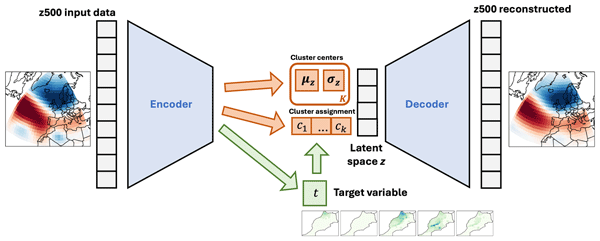
Large-scale atmospheric dynamics modulate the occurrence of extreme events and can improve their prediction. We present a generative machine learning method to identify key dynamical drivers of an impact variable in the form of targeted circulation regimes. Applied to extreme precipitation in Morocco, we show that these targeted regimes are more predictive of the impact while preserving their own predictability and physical consistency.
John R. Albers, Matthew Newman, Magdalena A. Balmaseda, William Sweet, Yan Wang, and Tongtong Xu
Ocean Sci., 21, 1761–1785, https://doi.org/10.5194/os-21-1761-2025, https://doi.org/10.5194/os-21-1761-2025, 2025
Short summary
Short summary
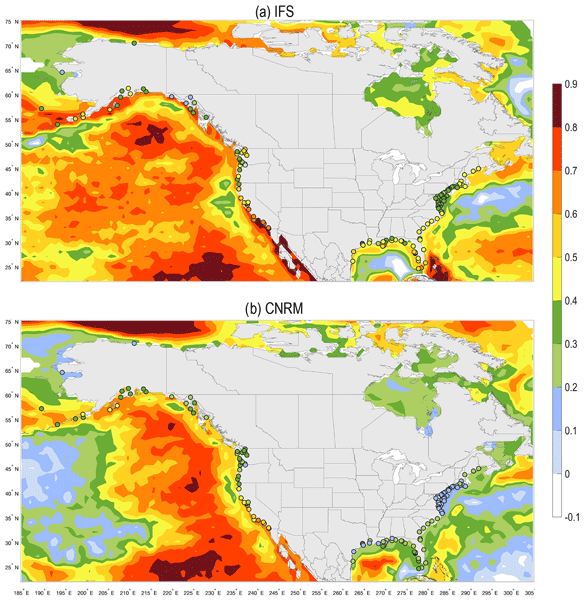
Providing early warning of coastal flooding is an emerging priority for the National Oceanic and Atmospheric Administration. We assess whether current operational forecast models can provide the basis for predicting the risks of higher-than-normal coastal sea level values up to 6 weeks in advance. For many United States coastal locations, models have sufficient prediction skill to be used as the basis for the development of a high tide flooding prediction system on subseasonal timescales.
Xue Feng, Matthew J. Widlansky, Tong Lee, Ou Wang, Magdalena A. Balmaseda, Hao Zuo, Gregory Dusek, William Sweet, and Malte F. Stuecker
Ocean Sci., 21, 1663–1676, https://doi.org/10.5194/os-21-1663-2025, https://doi.org/10.5194/os-21-1663-2025, 2025
Short summary
Short summary
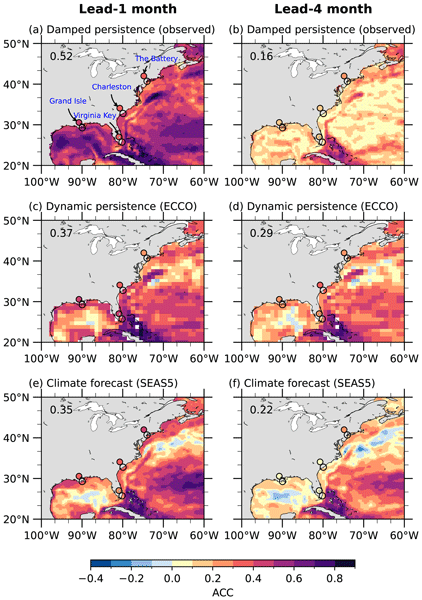
Forecasting sea level changes months in advance along the Gulf Coast and East Coast of the United States is challenging. Here, we present a method that uses past ocean states to forecast future sea levels, while assuming no knowledge of how the atmosphere will evolve other than its typical annual cycle near the ocean's surface. Our findings indicate that this method improves sea level outlooks for many locations along the Gulf Coast and East Coast, especially south of Cape Hatteras.
Mike Bush, David L. A. Flack, Huw W. Lewis, Sylvia I. Bohnenstengel, Chris J. Short, Charmaine Franklin, Adrian P. Lock, Martin Best, Paul Field, Anne McCabe, Kwinten Van Weverberg, Segolene Berthou, Ian Boutle, Jennifer K. Brooke, Seb Cole, Shaun Cooper, Gareth Dow, John Edwards, Anke Finnenkoetter, Kalli Furtado, Kate Halladay, Kirsty Hanley, Margaret A. Hendry, Adrian Hill, Aravindakshan Jayakumar, Richard W. Jones, Humphrey Lean, Joshua C. K. Lee, Andy Malcolm, Marion Mittermaier, Saji Mohandas, Stuart Moore, Cyril Morcrette, Rachel North, Aurore Porson, Susan Rennie, Nigel Roberts, Belinda Roux, Claudio Sanchez, Chun-Hsu Su, Simon Tucker, Simon Vosper, David Walters, James Warner, Stuart Webster, Mark Weeks, Jonathan Wilkinson, Michael Whitall, Keith D. Williams, and Hugh Zhang
Geosci. Model Dev., 18, 3819–3855, https://doi.org/10.5194/gmd-18-3819-2025, https://doi.org/10.5194/gmd-18-3819-2025, 2025
Short summary
Short summary
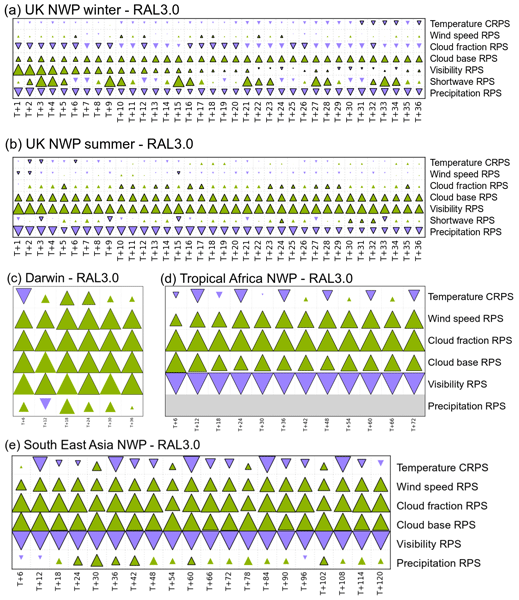
RAL configurations define settings for the Unified Model atmosphere and Joint UK Land Environment Simulator. The third version of the Regional Atmosphere and Land (RAL3) science configuration for kilometre- and sub-kilometre-scale modelling represents a major advance compared to previous versions (RAL2) by delivering a common science definition for applications in tropical and mid-latitude regions. RAL3 has more realistic precipitation distributions and an improved representation of clouds and visibility.
Ségolène Berthou, John Siddorn, Vivian Fraser-Leonhardt, Pierre-Yves Le Traon, and Ibrahim Hoteit
State Planet, 5-opsr, 20, https://doi.org/10.5194/sp-5-opsr-20-2025, https://doi.org/10.5194/sp-5-opsr-20-2025, 2025
Short summary
Short summary
Ocean forecasting is traditionally done independently from atmospheric, wave, or river modelling. We discuss the benefits and challenges of bringing all these modelling systems together for ocean forecasting.
Geert Lenderink, Nikolina Ban, Erwan Brisson, Ségolène Berthou, Virginia Edith Cortés-Hernández, Elizabeth Kendon, Hayley J. Fowler, and Hylke de Vries
Hydrol. Earth Syst. Sci., 29, 1201–1220, https://doi.org/10.5194/hess-29-1201-2025, https://doi.org/10.5194/hess-29-1201-2025, 2025
Short summary
Short summary
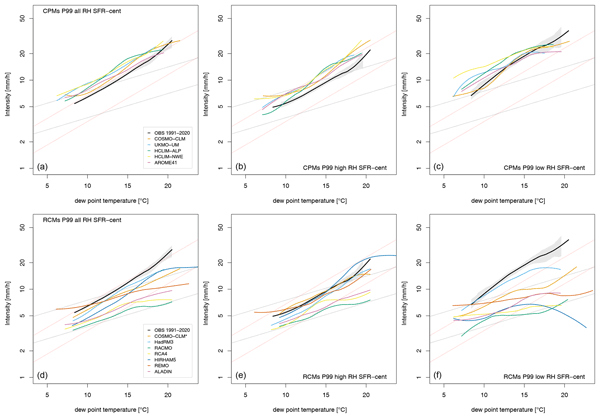
Future extreme rainfall events are influenced by changes in both absolute and relative humidity. The impact of increasing absolute humidity is reasonably well understood, but the role of relative humidity decreases over land remains largely unknown. Using hourly observations from France and the Netherlands, we find that lower relative humidity generally leads to more intense rainfall extremes. This relation is only captured well in recently developed convection-permitting climate models.
Suzanne L. Gray, Ambrogio Volonté, Oscar Martínez-Alvarado, and Ben J. Harvey
Weather Clim. Dynam., 5, 1523–1544, https://doi.org/10.5194/wcd-5-1523-2024, https://doi.org/10.5194/wcd-5-1523-2024, 2024
Short summary
Short summary
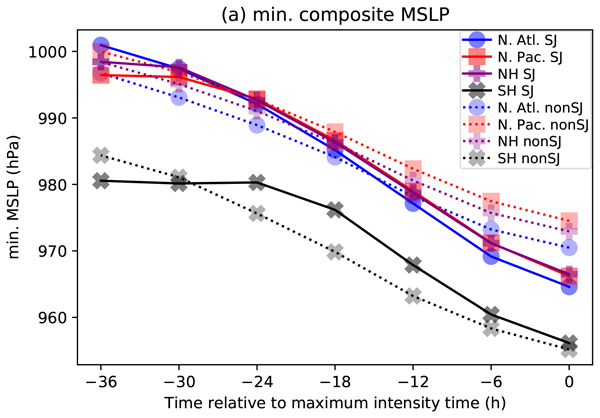
Sting jets occur in some of the most damaging cyclones impacting Europe. We present the first climatology of sting-jet cyclones over the major ocean basins. Cyclones with sting-jet precursors occur over the North Atlantic, North Pacific, and Southern Oceans, with implications for wind warnings. Precursor cyclones have distinct characteristics, even in reanalyses that are too coarse to fully resolve sting jets, evidencing the climatological consequences of strong diabatic cloud processes.
Claudio Sánchez, Suzanne Gray, Ambrogio Volonté, Florian Pantillon, Ségolène Berthou, and Silvio Davolio
Weather Clim. Dynam., 5, 1429–1455, https://doi.org/10.5194/wcd-5-1429-2024, https://doi.org/10.5194/wcd-5-1429-2024, 2024
Short summary
Short summary
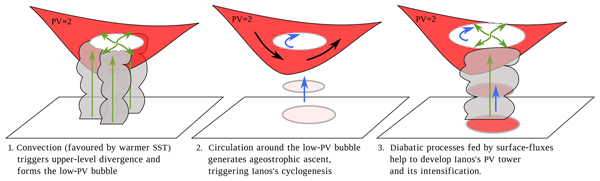
Medicane Ianos was a very intense cyclone that led to harmful impacts over Greece. We explore what processes are important for the forecasting of Medicane Ianos, with the use of the Met Office weather model. There was a preceding precipitation event before Ianos’s birth, whose energetics generated a bubble in the tropopause. This bubble created the necessary conditions for Ianos to emerge and strengthen, and the processes are enhanced in simulations with a warmer Mediterranean Sea.
Sebastian Sippel, Clair Barnes, Camille Cadiou, Erich Fischer, Sarah Kew, Marlene Kretschmer, Sjoukje Philip, Theodore G. Shepherd, Jitendra Singh, Robert Vautard, and Pascal Yiou
Weather Clim. Dynam., 5, 943–957, https://doi.org/10.5194/wcd-5-943-2024, https://doi.org/10.5194/wcd-5-943-2024, 2024
Short summary
Short summary
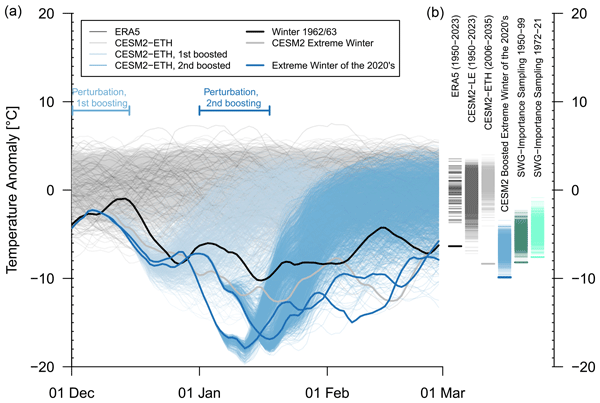
Winter temperatures in central Europe have increased. But cold winters can still cause problems for energy systems, infrastructure, or human health. Here we tested whether a record-cold winter, such as the one observed in 1963 over central Europe, could still occur despite climate change. The answer is yes: it is possible, but it is very unlikely. Our results rely on climate model simulations and statistical rare event analysis. In conclusion, society must be prepared for such cold winters.
Wilson C. H. Chan, Nigel W. Arnell, Geoff Darch, Katie Facer-Childs, Theodore G. Shepherd, and Maliko Tanguy
Nat. Hazards Earth Syst. Sci., 24, 1065–1078, https://doi.org/10.5194/nhess-24-1065-2024, https://doi.org/10.5194/nhess-24-1065-2024, 2024
Short summary
Short summary
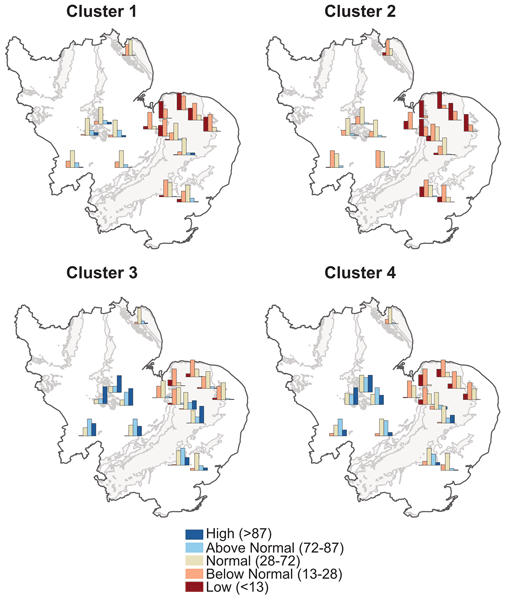
The most recent drought in the UK was declared in summer 2022. We pooled a large sample of plausible winters from seasonal hindcasts and grouped them into four clusters based on their atmospheric circulation configurations. Drought storylines representative of what the drought could have looked like if winter 2022/23 resembled each winter circulation storyline were created to explore counterfactuals of how bad the 2022 drought could have been over winter 2022/23 and beyond.
Eric de Boisséson and Magdalena Alonso Balmaseda
Ocean Sci., 20, 265–278, https://doi.org/10.5194/os-20-265-2024, https://doi.org/10.5194/os-20-265-2024, 2024
Short summary
Short summary
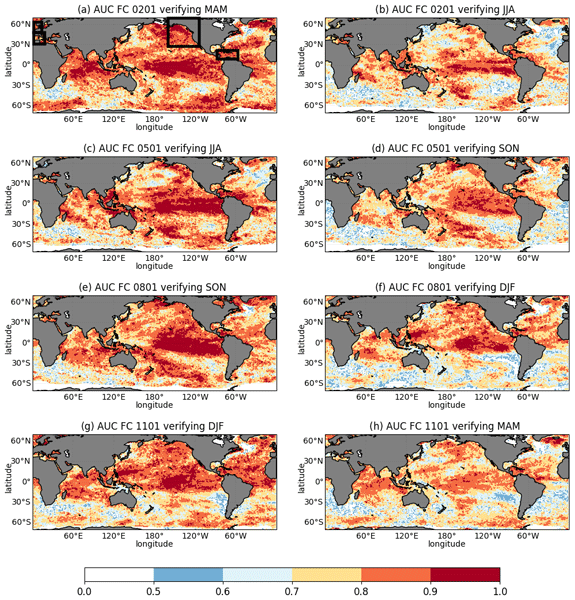
Marine heatwaves are long periods of extremely warm ocean surface temperatures. Predicting such events a few months in advance would help decision-making to mitigate their impacts on marine ecosystems. This work investigates how well operational seasonal forecasts can predict marine heatwaves. Results show that such events can be predicted a few months in advance in the tropics but that extending the predictability skill to other regions will require additional work on the forecast models.
Stefania A. Ciliberti, Enrique Alvarez Fanjul, Jay Pearlman, Kirsten Wilmer-Becker, Pierre Bahurel, Fabrice Ardhuin, Alain Arnaud, Mike Bell, Segolene Berthou, Laurent Bertino, Arthur Capet, Eric Chassignet, Stefano Ciavatta, Mauro Cirano, Emanuela Clementi, Gianpiero Cossarini, Gianpaolo Coro, Stuart Corney, Fraser Davidson, Marie Drevillon, Yann Drillet, Renaud Dussurget, Ghada El Serafy, Katja Fennel, Marcos Garcia Sotillo, Patrick Heimbach, Fabrice Hernandez, Patrick Hogan, Ibrahim Hoteit, Sudheer Joseph, Simon Josey, Pierre-Yves Le Traon, Simone Libralato, Marco Mancini, Pascal Matte, Angelique Melet, Yasumasa Miyazawa, Andrew M. Moore, Antonio Novellino, Andrew Porter, Heather Regan, Laia Romero, Andreas Schiller, John Siddorn, Joanna Staneva, Cecile Thomas-Courcoux, Marina Tonani, Jose Maria Garcia-Valdecasas, Jennifer Veitch, Karina von Schuckmann, Liying Wan, John Wilkin, and Romane Zufic
State Planet, 1-osr7, 2, https://doi.org/10.5194/sp-1-osr7-2-2023, https://doi.org/10.5194/sp-1-osr7-2-2023, 2023
Robert Peal, Mark Worsfold, and Simon Good
State Planet, 1-osr7, 3, https://doi.org/10.5194/sp-1-osr7-3-2023, https://doi.org/10.5194/sp-1-osr7-3-2023, 2023
Short summary
Short summary
Marine heatwaves (MHWs) and marine cold spells (MCSs) can have devastating impacts on the environment. We analysed their trends and found that the number of MHWs and MCSs is increasing and decreasing respectively, except for an area of the Southern Ocean where MCSs are increasing. While our results are in agreement with previous studies, this study uses a different, higher-resolution sea surface temperature dataset, showing that these events are not just a feature of their input dataset.
Hannah L. Croad, John Methven, Ben Harvey, Sarah P. E. Keeley, and Ambrogio Volonté
Weather Clim. Dynam., 4, 617–638, https://doi.org/10.5194/wcd-4-617-2023, https://doi.org/10.5194/wcd-4-617-2023, 2023
Short summary
Short summary
The interaction between Arctic cyclones and the sea ice surface in summer is investigated by analysing the friction and sensible heat flux processes acting in two cyclones with contrasting evolution. The major finding is that the effects of friction on cyclone strength are dependent on a particular feature of cyclone structure: whether they have a warm or cold core during growth. Friction leads to cooling within both cyclone types in the lower atmosphere, which may contribute to their longevity.
Nieves G. Valiente, Andrew Saulter, Breogan Gomez, Christopher Bunney, Jian-Guo Li, Tamzin Palmer, and Christine Pequignet
Geosci. Model Dev., 16, 2515–2538, https://doi.org/10.5194/gmd-16-2515-2023, https://doi.org/10.5194/gmd-16-2515-2023, 2023
Short summary
Short summary
We document the Met Office operational global and regional wave models which provide wave forecasts up to 7 d ahead. Our models present coarser resolution offshore to higher resolution near the coastline. The increased resolution led to replication of the extremes but to some overestimation during modal conditions. If currents are included, wave directions and long period swells near the coast are significantly improved. New developments focus on the optimisation of the models with resolution.
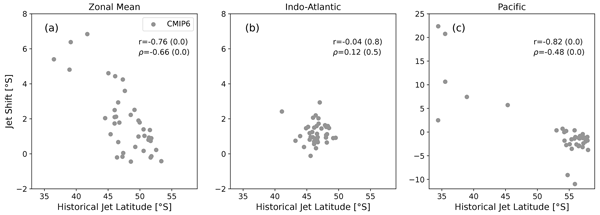
Philipp Breul, Paulo Ceppi, and Theodore G. Shepherd
Weather Clim. Dynam., 4, 39–47, https://doi.org/10.5194/wcd-4-39-2023, https://doi.org/10.5194/wcd-4-39-2023, 2023
Short summary
Short summary
Accurately predicting the response of the midlatitude jet stream to climate change is very important, but models show a variety of possible scenarios. Previous work identified a relationship between climatological jet latitude and future jet shift in the southern hemispheric winter. We show that the relationship does not hold in separate sectors and propose that zonal asymmetries are the ultimate cause in the zonal mean. This questions the usefulness of the relationship.
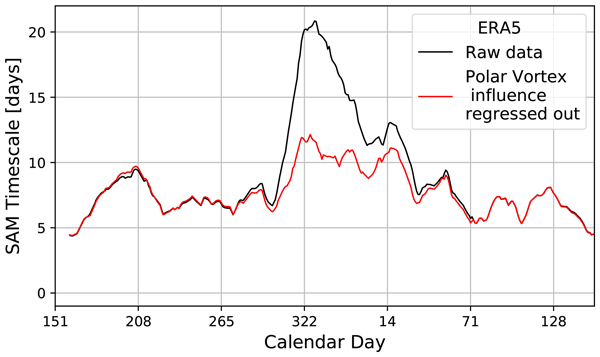
Philipp Breul, Paulo Ceppi, and Theodore G. Shepherd
Weather Clim. Dynam., 3, 645–658, https://doi.org/10.5194/wcd-3-645-2022, https://doi.org/10.5194/wcd-3-645-2022, 2022
Short summary
Short summary
Understanding how the mid-latitude jet stream will respond to a changing climate is highly important. Unfortunately, climate models predict a wide variety of possible responses. Theoretical frameworks can link an internal jet variability timescale to its response. However, we show that stratospheric influence approximately doubles the internal timescale, inflating predicted responses. We demonstrate an approach to account for the stratospheric influence and recover correct response predictions.
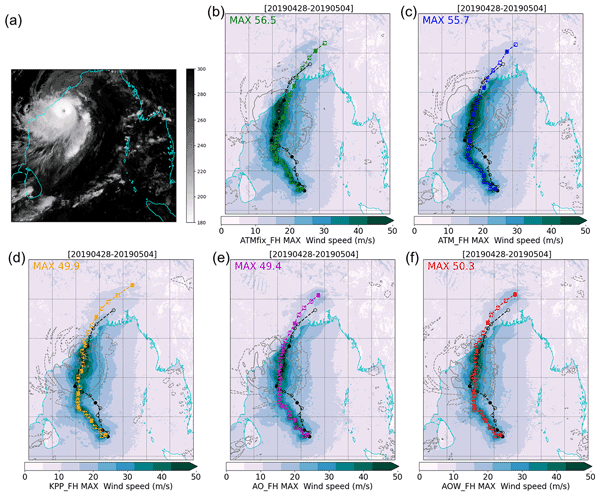
Juan Manuel Castillo, Huw W. Lewis, Akhilesh Mishra, Ashis Mitra, Jeff Polton, Ashley Brereton, Andrew Saulter, Alex Arnold, Segolene Berthou, Douglas Clark, Julia Crook, Ananda Das, John Edwards, Xiangbo Feng, Ankur Gupta, Sudheer Joseph, Nicholas Klingaman, Imranali Momin, Christine Pequignet, Claudio Sanchez, Jennifer Saxby, and Maria Valdivieso da Costa
Geosci. Model Dev., 15, 4193–4223, https://doi.org/10.5194/gmd-15-4193-2022, https://doi.org/10.5194/gmd-15-4193-2022, 2022
Short summary
Short summary
A new environmental modelling system has been developed to represent the effect of feedbacks between atmosphere, land, and ocean in the Indian region. Different approaches to simulating tropical cyclones Titli and Fani are demonstrated. It is shown that results are sensitive to the way in which the ocean response to cyclone evolution is captured in the system. Notably, we show how a more rigorous formulation for the near-surface energy budget can be included when air–sea coupling is included.
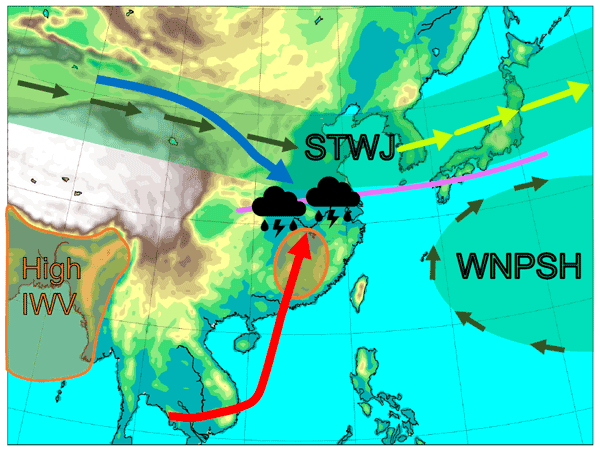
Ambrogio Volonté, Andrew G. Turner, Reinhard Schiemann, Pier Luigi Vidale, and Nicholas P. Klingaman
Weather Clim. Dynam., 3, 575–599, https://doi.org/10.5194/wcd-3-575-2022, https://doi.org/10.5194/wcd-3-575-2022, 2022
Short summary
Short summary
In this study we analyse the complex seasonal evolution of the East Asian summer monsoon. Using reanalysis data, we show the importance of the interaction between tropical and extratropical air masses converging at the monsoon front, particularly during its northward progression. The upper-level flow pattern (e.g. the westerly jet) controls the balance between the airstreams and thus the associated rainfall. This framework provides a basis for studies of extreme events and climate variability.
Wilson C. H. Chan, Theodore G. Shepherd, Katie Facer-Childs, Geoff Darch, and Nigel W. Arnell
Hydrol. Earth Syst. Sci., 26, 1755–1777, https://doi.org/10.5194/hess-26-1755-2022, https://doi.org/10.5194/hess-26-1755-2022, 2022
Short summary
Short summary
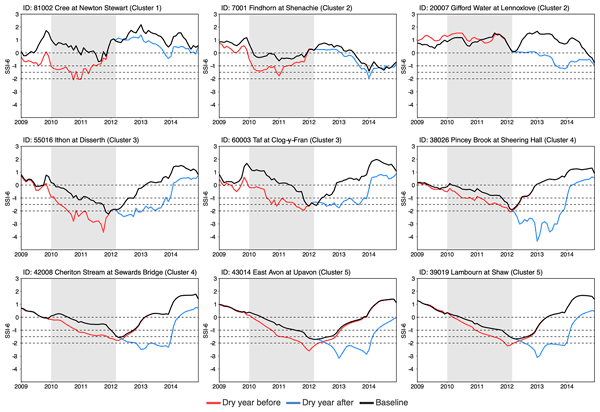
We select the 2010–2012 UK drought and investigate an alternative unfolding of the drought from changes to its attributes. We created storylines of drier preconditions, alternative seasonal contributions, a third dry winter, and climate change. Storylines of the 2010–2012 drought show alternative situations that could have resulted in worse conditions than observed. Event-based storylines exploring plausible situations are used that may lead to high impacts and help stress test existing systems.

Beatriz M. Monge-Sanz, Alessio Bozzo, Nicholas Byrne, Martyn P. Chipperfield, Michail Diamantakis, Johannes Flemming, Lesley J. Gray, Robin J. Hogan, Luke Jones, Linus Magnusson, Inna Polichtchouk, Theodore G. Shepherd, Nils Wedi, and Antje Weisheimer
Atmos. Chem. Phys., 22, 4277–4302, https://doi.org/10.5194/acp-22-4277-2022, https://doi.org/10.5194/acp-22-4277-2022, 2022
Short summary
Short summary
The stratosphere is emerging as one of the keys to improve tropospheric weather and climate predictions. This study provides evidence of the role the stratospheric ozone layer plays in improving weather predictions at different timescales. Using a new ozone modelling approach suitable for high-resolution global models that provide operational forecasts from days to seasons, we find significant improvements in stratospheric meteorological fields and stratosphere–troposphere coupling.
Adam A. Scaife, Mark P. Baldwin, Amy H. Butler, Andrew J. Charlton-Perez, Daniela I. V. Domeisen, Chaim I. Garfinkel, Steven C. Hardiman, Peter Haynes, Alexey Yu Karpechko, Eun-Pa Lim, Shunsuke Noguchi, Judith Perlwitz, Lorenzo Polvani, Jadwiga H. Richter, John Scinocca, Michael Sigmond, Theodore G. Shepherd, Seok-Woo Son, and David W. J. Thompson
Atmos. Chem. Phys., 22, 2601–2623, https://doi.org/10.5194/acp-22-2601-2022, https://doi.org/10.5194/acp-22-2601-2022, 2022
Short summary
Short summary
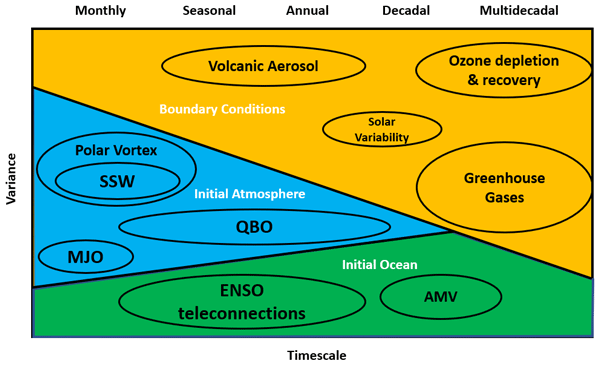
Great progress has been made in computer modelling and simulation of the whole climate system, including the stratosphere. Since the late 20th century we also gained a much clearer understanding of how the stratosphere interacts with the lower atmosphere. The latest generation of numerical prediction systems now explicitly represents the stratosphere and its interaction with surface climate, and here we review its role in long-range predictions and projections from weeks to decades ahead.
Marion Mittermaier, Rachel North, Jan Maksymczuk, Christine Pequignet, and David Ford
Ocean Sci., 17, 1527–1543, https://doi.org/10.5194/os-17-1527-2021, https://doi.org/10.5194/os-17-1527-2021, 2021
Short summary
Short summary
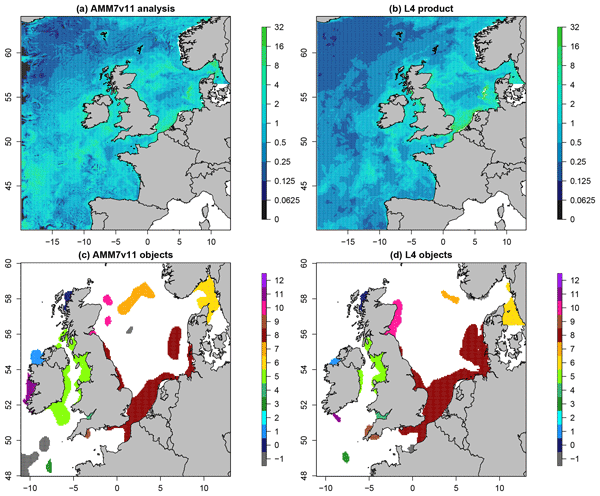
Regions of enhanced chlorophyll-a concentrations can be identified by applying a threshold to the concentration value to a forecast and observed field (or analysis). These regions can then be treated and analysed as features using diagnostic techniques to consider of the evolution of the chlorophyll-a blooms in space and time. This allows us to understand whether the biogeochemistry in the model has any skill in predicting these blooms, their location, intensity, onset, duration and demise.
Cited articles
Ardhuin, F., Rogers, E., Babanin, A., Filipot, J.-F., Magne, R., Roland, A., Westhuysen, A. V. D., Queffeulou, P., Lefevre, J.-M., Aouf, L., and Collard, F.: Semiempirical Dissipation Source Functions for Ocean Waves. Part I: Definition, Calibration, and Validation, J. Phys. Oceanogr., 40, 1917–1941, https://doi.org/10.1175/2010JPO4324.1, 2010. a
Atkins, J. R., Scaife, A. A., Graham, J. A., Tinker, J., and Halloran, P. R.: Recent European marine heatwaves are unprecedented but not unexpected, Commun. Earth Environ., 6, 792, https://doi.org/10.1038/s43247-025-02802-3, 2025. a
Berthou, S., Roberts, M. J., Vannière, B., Ban, N., Belušić, D., Caillaud, C., Crocker, T., de Vries, H., Dobler, A., Harris, D., Kendon, E. J., Landgren, O., and Manning, C.: Convection in future winter storms over Northern Europe, Environ. Res. Lett., 17, https://doi.org/10.1088/1748-9326/aca03a, 2022. a
Berthou, S., Renshaw, R., Smyth, T., Tinker, J., Grist, J.P., Wihsgott, J.U., Jones, S., Inall, M., Nolan, G., Berx, B., and Arnold, A.: Exceptional atmospheric conditions in June 2023 generated a northwest European marine heatwave which contributed to breaking land temperature records, Commun. Earth Environ., 5, 287, https://doi.org/10.1038/s43247-024-01413-8, 2024. a, b, c, d, e
Berthou, S., Siddorn, J., Fraser-Leonhardt, V., Le Traon, P.-Y., and Hoteit, I.: Towards Earth system modelling: coupled ocean forecasting, in: Ocean prediction: present status and state of the art (OPSR), edited by: Álvarez Fanjul, E., Ciliberti, S. A., Pearlman, J., Wilmer-Becker, K., and Behera, S., Copernicus Publications, State Planet, 5-opsr, 20, https://doi.org/10.5194/sp-5-opsr-20-2025, 2025. a
Berthou, S., Castillo, J. M., Fraser-Leonhardt, V., Mahmood, S., Makrygianni, N., Arnold, A., Sanchez, C., Lewis, H. W., Partridge, D., Best, M., Bricheno, L., Davies, H., Clark, D., Clark, J. R., Polton, J., Saulter, A., Short, C. J., Tinker, J., and Tucker, S.: Km-scale regional coupled system for the Northwest European shelf for weather and climate applications: RCS-UKC4, EGUsphere [preprint], https://doi.org/10.5194/egusphere-2025-6216, 2026. a, b, c, d
Brown, A., Milton, S., Cullen, M., Golding, B., Mitchell, J., and Shelly, A.: Unified modeling and prediction of weather and climate: A 25-year journey, B. Am. Meteor. Soc., 93, 1865–1877, 2012. a
Bush, M., Boutle, I., Edwards, J., Finnenkoetter, A., Franklin, C., Hanley, K., Jayakumar, A., Lewis, H., Lock, A., Mittermaier, M., Mohandas, S., North, R., Porson, A., Roux, B., Webster, S., and Weeks, M.: The second Met Office Unified Model–JULES Regional Atmosphere and Land configuration, RAL2, Geosci. Model Dev., 16, 1713–1734, https://doi.org/10.5194/gmd-16-1713-2023, 2023. a
Castillo, J. M., Lewis, H. W., Mishra, A., Mitra, A., Polton, J., Brereton, A., Saulter, A., Arnold, A., Berthou, S., Clark, D., Crook, J., Das, A., Edwards, J., Feng, X., Gupta, A., Joseph, S., Klingaman, N., Momin, I., Pequignet, C., Sanchez, C., Saxby, J., and Valdivieso da Costa, M.: The Regional Coupled Suite (RCS-IND1): application of a flexible regional coupled modelling framework to the Indian region at kilometre scale, Geosci. Model Dev., 15, 4193–4223, https://doi.org/10.5194/gmd-15-4193-2022, 2022. a
Chen, W. and Staneva, J.: Characteristics and trends of marine heatwaves in the northwest European Shelf and the impacts on density stratification, in: 8th edition of the Copernicus Ocean State Report (OSR8), edited by: von Schuckmann, K., Moreira, L., Grégoire, M., Marcos, M., Staneva, J., Brasseur, P., Garric, G., Lionello, P., Karstensen, J., and Neukermans, G., Copernicus Publications, State Planet, 4-osr8, 7, https://doi.org/10.5194/sp-4-osr8-7-2024, 2024. a
Choi, H.-Y., Park, M.-S., Kim, H.-S., and Lee, S.: Marine heatwave events strengthen the intensity of tropical cyclones, Commun. Earth Environ., 5, 69, https://doi.org/10.1038/s43247-024-01239-4, 2024. a, b
Cornes, R., Tinker, J., Hermanson, L., Oltmanns, M., Hunter, W., Lloyd-Hartley, H., Kent, E., Rabe, B., and Renshaw, R.: The impacts of climate change on sea temperature around the UK and Ireland, MCCIP Science Review 2025, 24 pp., https://doi.org/10.14465/2025.reu08.tem, 2023a. a, b
Cornes, R., Tinker, J., Hermanson, L., Oltmanns, M., Hunter, W., Lloyd-Hartley, H., Kent, E., Rabe, B., and Renshaw, R.: Climate change impacts on temperature around the UK and Ireland, MCCIP Science review 2023, 1, 18, https://doi.org/10.14465/2023.reu08.tem, 2023b. a
Deoras, A., Turner, A. G., Volonté, A., and Menon, A.: The role of midlatitude dry air during the withdrawal of the Indian summer monsoon, Q. J. Roy. Meteor. Soc., 150, 5094–5112, 2024. a
Dzwonkowski, B., Coogan, J., Fournier, S., Lockridge, G., Park, K., and Lee, T.: Compounding impact of severe weather events fuels marine heatwave in the coastal ocean, Nat. Commun., 11, 4623, https://doi.org/10.1038/s41467-020-18339-2, 2020. a
Gentile, E. S., Gray, S. L., and Lewis, H. W.: The sensitivity of probabilistic convective-scale forecasts of an extratropical cyclone to atmosphere–ocean–wave coupling, Q. J. Roy. Meteor. Soc., 148, 685–710, https://doi.org/10.1002/qj.4225, 2022. a
Good, S., Fiedler, E., Mao, C., Martin, M.J., Maycock, A., Reid, R., Roberts-Jones, J., Searle, T., Waters, J., While, J., and Worsfold, M.: The current configuration of the OSTIA system for operational production of foundation sea surface temperature and ice concentration analyses, Remote Sens., 12, 720, https://doi.org/10.3390/rs12040720, 2020. a
Goswami, P. and Berthou, S.: Data and code for “Marine heatwave amplifies extreme multi-hazards of extratropical cyclone Babet” In Natural Hazards and Earth System Sciences (NHESS), Zenodo [code, data set], https://doi.org/10.5281/zenodo.20427490, 2026. a
Goswami, P.: Data and code for “Marine heatwave amplifies extreme multi-hazards of extratropical cyclone Babet” in Natural Hazards and Earth System Sciences (NHESS), Zenodo [code, data set], https://doi.org/10.5281/zenodo.20457718, 2026. a
Graham, J. A., O'Dea, E., Holt, J., Polton, J., Hewitt, H. T., Furner, R., Guihou, K., Brereton, A., Arnold, A., Wakelin, S., Castillo Sanchez, J. M., and Mayorga Adame, C. G.: AMM15: a new high-resolution NEMO configuration for operational simulation of the European north-west shelf, Geosci. Model Dev., 11, 681–696, https://doi.org/10.5194/gmd-11-681-2018, 2018. a
Hagelin, S., Roberts, N., Thompson, S. A., Beare, R., and Bush, M.: The Met Office convective-scale ensemble, MOGREPS-UK, Q. J. Roy. Meteor. Soc., 143, 2846–2861, https://doi.org/10.1002/qj.3135, 2017. a
Hawcroft, M., Walsh, E., Hodges, K., and Zappa, G.: Significantly increased extreme precipitation expected in Europe and North America from extratropical cyclones, Environ. Res. Lett., 13, 124006, https://doi.org/10.1088/1748-9326/aaed59, 2018. a, b
Hobday, A. J., Alexander, L. V., Perkins, S. E., Smale, D. A., Straub, S. C., Oliver, E. C., Benthuysen, J. A., Burrows, M. T., Donat, M. G., Feng, M., and Holbrook, N. J.: A hierarchical approach to defining marine heatwaves, Prog. Oceanogr., 141, 227–238, https://doi.org/10.1016/j.pocean.2015.12.014, 2016. a, b
Hobday, A. J., Oliver, E. C., Gupta, A. S., Benthuysen, J. A., Burrows, M. T., Donat, M. G., Holbrook, N. J., Moore, P. J., Thomsen, M. S., Wernberg, T., and Smale, D. A.: Categorizing and naming marine heatwaves, Oceanography, 31, 162–173, https://doi.org/10.5670/oceanog.2018.205, 2018. a
Hollis, D., McCarthy, M., Kendon, M., Legg, T., and Simpson, I.: HadUK-Grid – A new UK dataset of gridded climate observations, Geosci. Data J., 6, 151–159, 2019. a
Jangir, B., Mishra, A. K., and Strobach, E.: The interplay between medicanes and the Mediterranean Sea in the presence of sea surface temperature anomalies, Atmos. Res., 310, 107625, https://doi.org/10.1016/j.atmosres.2024.107625, 2024. a
Kendon, M.: Storm Babet, 18 to 21 October 2023, Report, Met Office National Climate Information Centre, Met Office, Exeter, UK, https://www.metoffice.gov.uk/binaries/content/assets/metofficegovuk/pdf/weather/learn-about/uk-past-events/interesting/2023/2023_08_storm_babet.pdf (last access: 30 October 2025), 2023. a
Kendon, M., Doherty, A., Hollis, D., Carlisle, E., Packman, S., McCarthy, M., Jevrejeva, S., Matthews, A., Williams, J., Garforth, J., and Sparks, T.: State of the UK Climate 2023, Int. J. Climatol., 44, 1–117, https://doi.org/10.1002/joc.8553, 2024. a
Kew, S. F., McCarthy, M., Ryan, C., Pirret, J. S., Murtagh, E., Vahlberg, M., Amankona, A., Pope, J. O., Lott, F., Claydon, O., Coonan, B., Pinto, I., Barnes, C., and Philip, S.: Autumn and Winter storms over UK and Ireland are becoming wetter due to climate change, Report, Grantham Institute for Climate Change, https://doi.org/10.25561/111577, 2024. a
Kodama, C., Stevens, B., Mauritsen, T., Seiki, T., and Satoh, M.: A new perspective for future precipitation change from intense extratropical cyclones, Geophys. Res. Lett., 46, 12435–12444, 2019. a
Lewis, H. W. and Dadson, S. J.: A regional coupled approach to water cycle prediction during winter 2013/14 in the United Kingdom, Hydrol. Process., 35, e14438, https://doi.org/10.1002/hyp.14438, 2021. a
Lewis, H. W., Castillo Sanchez, J. M., Arnold, A., Fallmann, J., Saulter, A., Graham, J., Bush, M., Siddorn, J., Palmer, T., Lock, A., Edwards, J., Bricheno, L., Martínez-de la Torre, A., and Clark, J.: The UKC3 regional coupled environmental prediction system, Geosci. Model Dev., 12, 2357–2400, https://doi.org/10.5194/gmd-12-2357-2019, 2019. a
Madec, G. and the NEMO team: NEMO Ocean Engine, Paris, France, version 3.6 stable, https://www.nemo-ocean.eu/doc/ (last access: 27 June 2026), 2016. a
Partridge, D., Berthou, S., Millington, R., Clark, J. R., Bricheno, L., Castillo, J. M., Rulent, J., and Lewis, H.: Impact of waves on phytoplankton activity on the Northwest European Shelf: insights from observations and km-scale coupled models, Ocean Sci., 22, 345–366, https://doi.org/10.5194/os-22-345-2026, 2026. a
Paulson, C. A. and Simpson, J. J.: Irradiance measurements in the upper ocean, J. Phys. Oceanogr., 7, 952–956, 1977. a
Porson, A. N., Carr, J. M., Hagelin, S., Darvell, R., North, R., Walters, D., Mylne, K. R., Mittermaier, M. P., Willington, S., and Macpherson, B.: Recent upgrades to the Met Office convective-scale ensemble: An hourly time-lagged 5-day ensemble, Q. J. Roy. Meteor. Soc., 146, 3245–3265, https://doi.org/10.1002/qj.3844, 2020. a, b
Rai, D. and Raveh-Rubin, S.: Enhancement of Indian summer monsoon rainfall by cross-equatorial dry intrusions, NPJ Climate and Atmospheric Science, 6, 43, https://doi.org/10.1038/s41612-023-00374-7, 2023. a
Rodrigues, R. R., Artana, C., Neto, A. G., Frölicher, T. L., Keenlyside, N., Hobday, A. J., Burger, F. A., Bernardo, P. S., and Araújo, J.: Extreme compound events in the equatorial and South Atlantic, Nat. Commun., 16, 3183, https://doi.org/10.1038/s41467-025-58238-y, 2025. a
Shepherd, T. G.: A common framework for approaches to extreme event attribution, Current Climate Change Reports, 2, 28–38, 2016. a
Smale, D. A., Wernberg, T., Oliver, E. C., Thomsen, M., Harvey, B. P., Straub, S. C., Burrows, M. T., Alexander, L. V., Benthuysen, J. A., Donat, M. G., and Feng, M.: Marine heatwaves threaten global biodiversity and the provision of ecosystem services, Nat. Clim. Change, 9, 306–312, https://doi.org/10.1038/s41558-019-0412-1, 2019. a
Smith, K. E., Burrows, M. T., Hobday, A. J., King, N. G., Moore, P. J., Sen Gupta, A., Thomsen, M. S., Wernberg, T., and Smale, D. A.: Biological impacts of marine heatwaves, Annu. Rev. Mar. Sci., 15, 119–145, 2023. a
Sprenger, M. and Wernli, H.: The LAGRANTO Lagrangian analysis tool – version 2.0, Geosci. Model Dev., 8, 2569–2586, https://doi.org/10.5194/gmd-8-2569-2015, 2015. a
Tennant, W. and Beare, S.: New schemes to perturb sea-surface temperature and soil moisture content in MOGREPS, Q. J. Roy. Meteor. Soc., 140, 1150–1160, https://doi.org/10.1002/qj.2202, 2014. a
Tinker, J., Palmer, M. D., Harrison, B. J., O'Dea, E., Sexton, D. M. H., Yamazaki, K., and Rostron, J. W.: Twenty-first century marine climate projections for the NW European shelf seas based on a perturbed parameter ensemble, Ocean Sci., 20, 835–885, https://doi.org/10.5194/os-20-835-2024, 2024. a, b
Tolman, H. L. and the WWIII development group: User Manual and System Documentation of WAVEWATCH III® Version 4.18, College Park, MD, USA, mMAB Contribution No. 316, https://polar.ncep.noaa.gov/waves/wavewatch/manual.v4.18.pdf (last access: 27 June 2026), 2014. a
Tonani, M., Sykes, P., King, R. R., McConnell, N., Péquignet, A.-C., O'Dea, E., Graham, J. A., Polton, J., and Siddorn, J.: The impact of a new high-resolution ocean model on the Met Office North-West European Shelf forecasting system, Ocean Sci., 15, 1133–1158, https://doi.org/10.5194/os-15-1133-2019, 2019. a
Valcke, S.: The OASIS3 coupler: a European climate modelling community software, Geosci. Model Dev., 6, 373–388, https://doi.org/10.5194/gmd-6-373-2013, 2013. a
Volonté, A., Turner, A. G., and Menon, A.: Airmass analysis of the processes driving the progression of the Indian summer monsoon, Q. J. Roy. Meteor. Soc., 146, 2949–2980, 2020. a
Wakelin, S., Holt, J., Blackford, J., Allen, J., Butenschön, M., and Artioli, Y.: Modeling the carbon fluxes of the northwest European continental shelf: Validation and budgets, J. Geophys. Res., 117, C05020, https://doi.org/10.1029/2011JC007402, 2012. a
Wernli, H. and Davies, H. C.: A Lagrangian-based analysis of extratropical cyclones. I: The method and some applications, Q. J. Roy. Meteor. Soc., 123, 467–489, 1997. a
Short summary
We examined how a marine heatwave - period of unusually warm ocean conditions - affected flooding and coastal erosion during a storm in northwest Europe. Using a state-of-the-art regional coupled model at km-scale, we compared simulations with and without the marine heatwave to isolate its effects on the storm hazards. Warmer shallow seas intensified rainfall, winds and surface depression of the storm, which integrated into larger increases of surge, wave power and river flows.
We examined how a marine heatwave - period of unusually warm ocean conditions - affected...


Altmetrics
Final-revised paper
Preprint