
Articles | Volume 26, issue 7
https://doi.org/10.5194/nhess-26-3185-2026
© Author(s) 2026. This work is distributed under
the Creative Commons Attribution 4.0 License.
the Creative Commons Attribution 4.0 License.
https://doi.org/10.5194/nhess-26-3185-2026
© Author(s) 2026. This work is distributed under
the Creative Commons Attribution 4.0 License.
the Creative Commons Attribution 4.0 License.
Research article
| 
09 Jul 2026
Research article |
| 09 Jul 2026
| 09 Jul 2026
Representation of meteotsunamis in km-scale regional simulations coupled at high frequency
Nefeli Makrygianni
CORRESPONDING AUTHOR

Met Office, Fitzroy Road, EX1 3PB, Exeter, UK
Ségolène Berthou
Met Office, Fitzroy Road, EX1 3PB, Exeter, UK
David L. A. Flack
Met Office, Fitzroy Road, EX1 3PB, Exeter, UK
Cindy Lebeaupin Brossier
CNRM, Université de Toulouse, Météo-France, CNRS, Toulouse, France
Jonathan Beuvier
CNRM, Université de Toulouse, Météo-France, CNRS, Toulouse, France
Juan Manuel Castillo
Met Office, Fitzroy Road, EX1 3PB, Exeter, UK
Emiliano Renzi
Mathematics of Complex and Nonlinear Phenomena, School of Engineering, Physics and Mathematics, Northumbria University, Newcastle upon Tyne, NE1 8ST, UK
Clare O'Neill
Met Office, Fitzroy Road, EX1 3PB, Exeter, UK
Daniel Peláez-Zapata
Centre Borelli, École normale supérieure Paris-Saclay, Gif-sur-Yvette, France
Frederic Dias
Centre Borelli, École normale supérieure Paris-Saclay, Gif-sur-Yvette, France
Huw Lewis
Met Office, Fitzroy Road, EX1 3PB, Exeter, UK
Diego Bruciaferri
Met Office, Fitzroy Road, EX1 3PB, Exeter, UK
Related authors
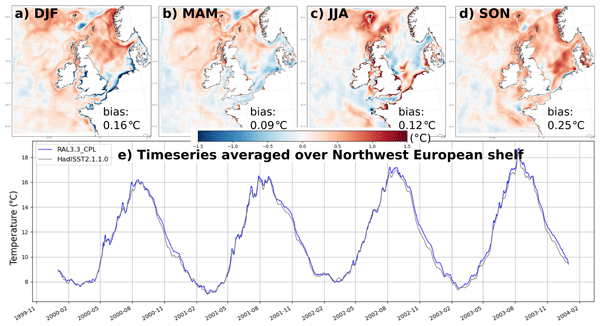
Ségolène Berthou, Juan Manuel Castillo, Vivian Fraser-Leonhardt, Sana Mahmood, Nefeli Makrygianni, Alex Arnold, Claudio Sanchez, Huw W. Lewis, Dale Partridge, Martin Best, Lucy Bricheno, Helen Davies, Douglas B. Clark, James R. Clark, Jeff A. Polton, Andrew Saulter, Chris J. Short, Jonathan Tinker, Simon Tucker, and Maisie Wright
Geosci. Model Dev., 19, 8535–8564, https://doi.org/10.5194/gmd-19-8535-2026, https://doi.org/10.5194/gmd-19-8535-2026, 2026
Short summary
Short summary
The UK’s new RCS-UKC4 (Regional Coupled Suite – UK Coupled domain version 4) system combines atmosphere, ocean, waves, land, rivers, and biogeochemistry models to improve coastal weather and climate predictions. It offers better storm wave predictions, more accurate river flows, and captures rapid sea-level changes. These advances help predict multiple hazards more reliably, supporting safer communities and helping better planning.
Ségolène Berthou, Juan Manuel Castillo, Vivian Fraser-Leonhardt, Sana Mahmood, Nefeli Makrygianni, Alex Arnold, Claudio Sanchez, Huw W. Lewis, Dale Partridge, Martin Best, Lucy Bricheno, Helen Davies, Douglas B. Clark, James R. Clark, Jeff A. Polton, Andrew Saulter, Chris J. Short, Jonathan Tinker, Simon Tucker, and Maisie Wright
Geosci. Model Dev., 19, 8535–8564, https://doi.org/10.5194/gmd-19-8535-2026, https://doi.org/10.5194/gmd-19-8535-2026, 2026
Short summary
Short summary
The UK’s new RCS-UKC4 (Regional Coupled Suite – UK Coupled domain version 4) system combines atmosphere, ocean, waves, land, rivers, and biogeochemistry models to improve coastal weather and climate predictions. It offers better storm wave predictions, more accurate river flows, and captures rapid sea-level changes. These advances help predict multiple hazards more reliably, supporting safer communities and helping better planning.
Rajesh Kumar, Claudio Sanchez, Juan Manuel Castillo, Jian-Guo Li, Bijoy Thompson, Pratiman Patel, Alvin Ng, Kaushik Sasmal, Kalli Furtado, Hailin Yan, Liu Jianyu, and Hugh Zhang
EGUsphere, https://doi.org/10.5194/egusphere-2026-2024, https://doi.org/10.5194/egusphere-2026-2024, 2026
Short summary
Short summary
Weather over Southeast Asia is shaped by complex interactions between the air, ocean, and waves. We developed a high-resolution model that links these processes to better understand and predict rainfall patterns in the region. The results show that ocean–atmosphere interactions improve the representation and prediction of squall events that affect daily life in Singapore and surrounding regions. This work supports more accurate weather forecasting in the region.
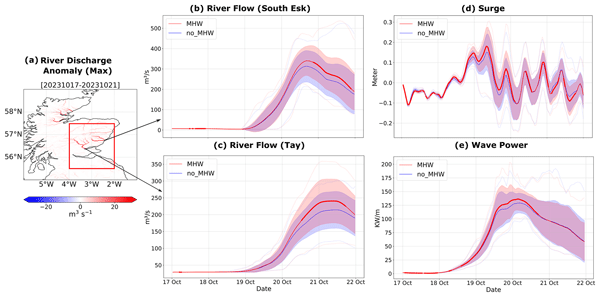
Piyali Goswami, Ségolène Berthou, Theodore G. Shepherd, Ambrogio Volonté, Sana Mahmood, Juan Manuel Castillo, Anne-Christine Péquignet, Yong-June Park, Mark Worsfold, Regina Rodrigues, and Magdalena A. Balmaseda
Nat. Hazards Earth Syst. Sci., 26, 3213–3230, https://doi.org/10.5194/nhess-26-3213-2026, https://doi.org/10.5194/nhess-26-3213-2026, 2026
Short summary
Short summary
We examined how a marine heatwave - period of unusually warm ocean conditions - affected flooding and coastal erosion during a storm in northwest Europe. Using a state-of-the-art regional coupled model at km-scale, we compared simulations with and without the marine heatwave to isolate its effects on the storm hazards. Warmer shallow seas intensified rainfall, winds and surface depression of the storm, which integrated into larger increases of surge, wave power and river flows.
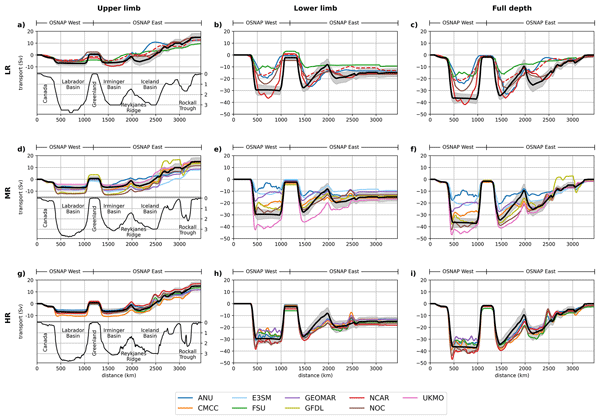
Gokhan Danabasoglu, Frederic S. Castruccio, Burcu Boza, Alice M. Barthel, Arne Biastoch, Adam Blaker, Alexandra Bozec, Diego Bruciaferri, Frank O. Bryan, Eric P. Chassignet, Yao Fu, Ian Grooms, Catherine Guiavarc'h, Hakase Hayashida, Andrew McC. Hogg, Ryan M. Holmes, Doroteaciro Iovino, Andrew E. Kiss, M. Susan Lozier, Gustavo Marques, Alex Megann, Franziska U. Schwarzkopf, Dave Storkey, Luke van Roekel, Jon Wolfe, Xiaobiao Xu, and Rong Zhang
Geosci. Model Dev., 19, 5071–5117, https://doi.org/10.5194/gmd-19-5071-2026, https://doi.org/10.5194/gmd-19-5071-2026, 2026
Short summary
Short summary
A comparison of simulated and observed overturning transports across the Overturning in the Subpolar North Atlantic Program sections is presented. Eighteen ocean simulations participate in the study with resolutions ranging from coarse to eddy-resolving. The simulated transports are in general agreement with observations, with better agreement at high resolution. Analyzing overturning circulations in both depth and density space together provides a more complete picture.
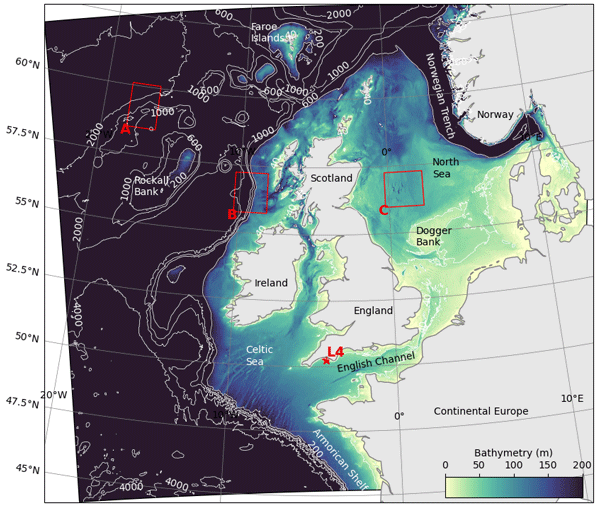
Dale Partridge, Ségolène Berthou, Rebecca Millington, James R. Clark, Lucy Bricheno, Juan Manuel Castillo, Julia Rulent, and Huw Lewis
Ocean Sci., 22, 345–366, https://doi.org/10.5194/os-22-345-2026, https://doi.org/10.5194/os-22-345-2026, 2026
Short summary
Short summary
Phytoplankton blooms are governed by the availability of light and nutrients, both of which are affected by mixing in the upper layers of the ocean, which is impacted by wave activity on the surface. Most numerical ocean models estimate waves through a parameterisation, here we explicitly resolve waves through a coupled wave model to examine the impact on the strength and timing of phytoplankton blooms, particular during storms when wave activity is elevated.
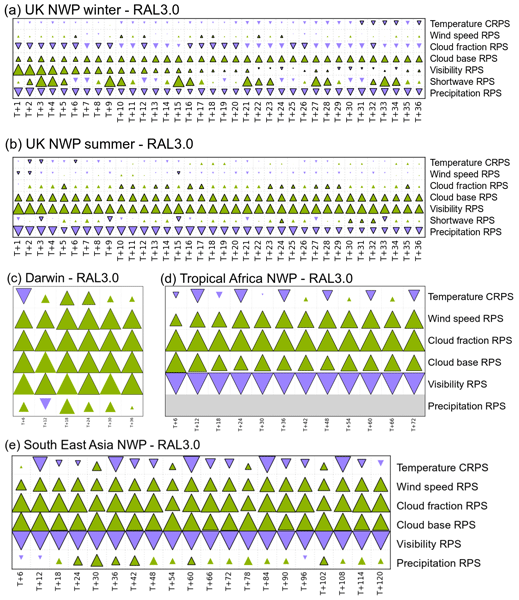
Mike Bush, David L. A. Flack, Huw W. Lewis, Sylvia I. Bohnenstengel, Chris J. Short, Charmaine Franklin, Adrian P. Lock, Martin Best, Paul Field, Anne McCabe, Kwinten Van Weverberg, Segolene Berthou, Ian Boutle, Jennifer K. Brooke, Seb Cole, Shaun Cooper, Gareth Dow, John Edwards, Anke Finnenkoetter, Kalli Furtado, Kate Halladay, Kirsty Hanley, Margaret A. Hendry, Adrian Hill, Aravindakshan Jayakumar, Richard W. Jones, Humphrey Lean, Joshua C. K. Lee, Andy Malcolm, Marion Mittermaier, Saji Mohandas, Stuart Moore, Cyril Morcrette, Rachel North, Aurore Porson, Susan Rennie, Nigel Roberts, Belinda Roux, Claudio Sanchez, Chun-Hsu Su, Simon Tucker, Simon Vosper, David Walters, James Warner, Stuart Webster, Mark Weeks, Jonathan Wilkinson, Michael Whitall, Keith D. Williams, and Hugh Zhang
Geosci. Model Dev., 18, 3819–3855, https://doi.org/10.5194/gmd-18-3819-2025, https://doi.org/10.5194/gmd-18-3819-2025, 2025
Short summary
Short summary
RAL configurations define settings for the Unified Model atmosphere and Joint UK Land Environment Simulator. The third version of the Regional Atmosphere and Land (RAL3) science configuration for kilometre- and sub-kilometre-scale modelling represents a major advance compared to previous versions (RAL2) by delivering a common science definition for applications in tropical and mid-latitude regions. RAL3 has more realistic precipitation distributions and an improved representation of clouds and visibility.
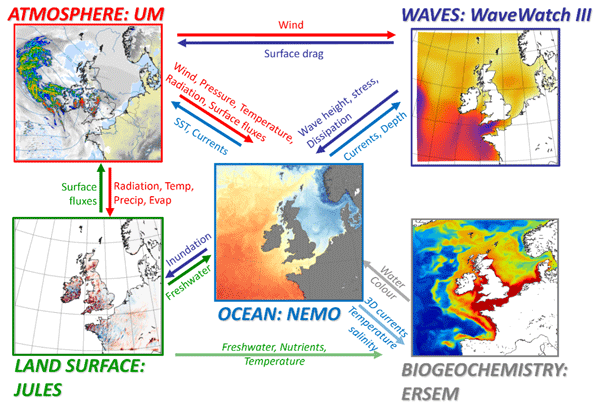
Ségolène Berthou, John Siddorn, Vivian Fraser-Leonhardt, Pierre-Yves Le Traon, and Ibrahim Hoteit
State Planet, 5-opsr, 20, https://doi.org/10.5194/sp-5-opsr-20-2025, https://doi.org/10.5194/sp-5-opsr-20-2025, 2025
Short summary
Short summary
Ocean forecasting is traditionally done independently from atmospheric, wave, or river modelling. We discuss the benefits and challenges of bringing all these modelling systems together for ocean forecasting.
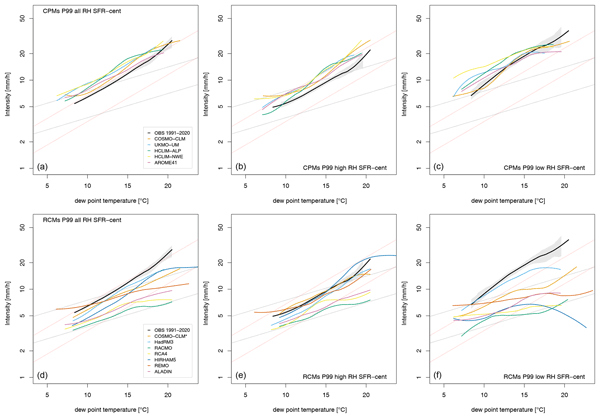
Geert Lenderink, Nikolina Ban, Erwan Brisson, Ségolène Berthou, Virginia Edith Cortés-Hernández, Elizabeth Kendon, Hayley J. Fowler, and Hylke de Vries
Hydrol. Earth Syst. Sci., 29, 1201–1220, https://doi.org/10.5194/hess-29-1201-2025, https://doi.org/10.5194/hess-29-1201-2025, 2025
Short summary
Short summary
Future extreme rainfall events are influenced by changes in both absolute and relative humidity. The impact of increasing absolute humidity is reasonably well understood, but the role of relative humidity decreases over land remains largely unknown. Using hourly observations from France and the Netherlands, we find that lower relative humidity generally leads to more intense rainfall extremes. This relation is only captured well in recently developed convection-permitting climate models.
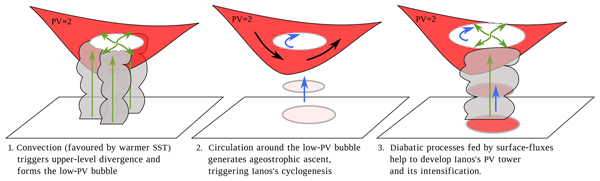
Claudio Sánchez, Suzanne Gray, Ambrogio Volonté, Florian Pantillon, Ségolène Berthou, and Silvio Davolio
Weather Clim. Dynam., 5, 1429–1455, https://doi.org/10.5194/wcd-5-1429-2024, https://doi.org/10.5194/wcd-5-1429-2024, 2024
Short summary
Short summary
Medicane Ianos was a very intense cyclone that led to harmful impacts over Greece. We explore what processes are important for the forecasting of Medicane Ianos, with the use of the Met Office weather model. There was a preceding precipitation event before Ianos’s birth, whose energetics generated a bubble in the tropopause. This bubble created the necessary conditions for Ianos to emerge and strengthen, and the processes are enhanced in simulations with a warmer Mediterranean Sea.
Marie-Noëlle Bouin, Cindy Lebeaupin Brossier, Sylvie Malardel, Aurore Voldoire, and César Sauvage
Geosci. Model Dev., 17, 117–141, https://doi.org/10.5194/gmd-17-117-2024, https://doi.org/10.5194/gmd-17-117-2024, 2024
Short summary
Short summary
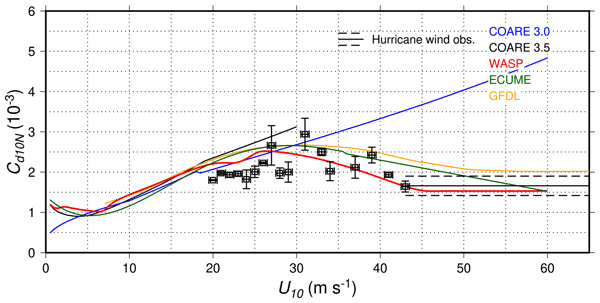
In numerical models, the turbulent exchanges of heat and momentum at the air–sea interface are not represented explicitly but with parameterisations depending on the surface parameters. A new parameterisation of turbulent fluxes (WASP) has been implemented in the surface model SURFEX v8.1 and validated on four case studies. It combines a close fit to observations including cyclonic winds, a dependency on the wave growth rate, and the possibility of being used in atmosphere–wave coupled models.
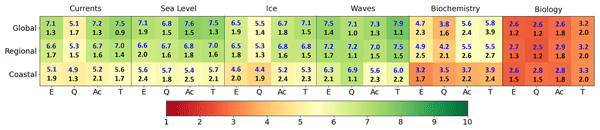
Stefania A. Ciliberti, Enrique Alvarez Fanjul, Jay Pearlman, Kirsten Wilmer-Becker, Pierre Bahurel, Fabrice Ardhuin, Alain Arnaud, Mike Bell, Segolene Berthou, Laurent Bertino, Arthur Capet, Eric Chassignet, Stefano Ciavatta, Mauro Cirano, Emanuela Clementi, Gianpiero Cossarini, Gianpaolo Coro, Stuart Corney, Fraser Davidson, Marie Drevillon, Yann Drillet, Renaud Dussurget, Ghada El Serafy, Katja Fennel, Marcos Garcia Sotillo, Patrick Heimbach, Fabrice Hernandez, Patrick Hogan, Ibrahim Hoteit, Sudheer Joseph, Simon Josey, Pierre-Yves Le Traon, Simone Libralato, Marco Mancini, Pascal Matte, Angelique Melet, Yasumasa Miyazawa, Andrew M. Moore, Antonio Novellino, Andrew Porter, Heather Regan, Laia Romero, Andreas Schiller, John Siddorn, Joanna Staneva, Cecile Thomas-Courcoux, Marina Tonani, Jose Maria Garcia-Valdecasas, Jennifer Veitch, Karina von Schuckmann, Liying Wan, John Wilkin, and Romane Zufic
State Planet, 1-osr7, 2, https://doi.org/10.5194/sp-1-osr7-2-2023, https://doi.org/10.5194/sp-1-osr7-2-2023, 2023
Mike Bush, Ian Boutle, John Edwards, Anke Finnenkoetter, Charmaine Franklin, Kirsty Hanley, Aravindakshan Jayakumar, Huw Lewis, Adrian Lock, Marion Mittermaier, Saji Mohandas, Rachel North, Aurore Porson, Belinda Roux, Stuart Webster, and Mark Weeks
Geosci. Model Dev., 16, 1713–1734, https://doi.org/10.5194/gmd-16-1713-2023, https://doi.org/10.5194/gmd-16-1713-2023, 2023
Short summary
Short summary
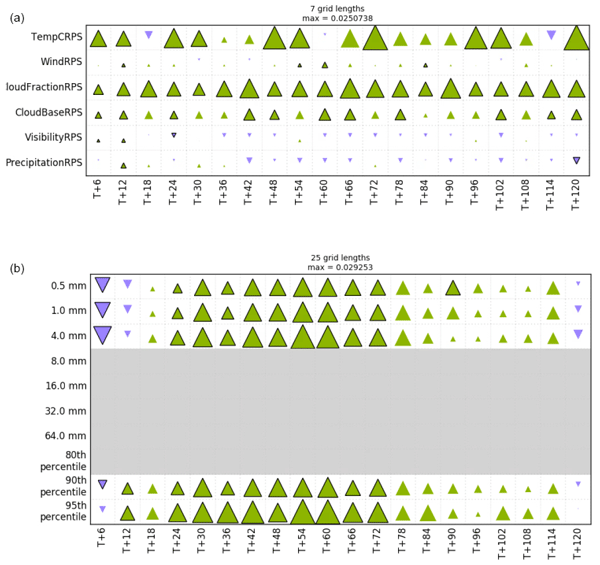
Building on the baseline of RAL1, the RAL2 science configuration is used for regional modelling around the UM partnership and in operations at the Met Office. RAL2 has been tested in different parts of the world including Australia, India and the UK. RAL2 increases medium and low cloud amounts in the mid-latitudes compared to RAL1, leading to improved cloud forecasts and a reduced diurnal cycle of screen temperature. There is also a reduction in the frequency of heavier precipitation rates.
Jeff Polton, James Harle, Jason Holt, Anna Katavouta, Dale Partridge, Jenny Jardine, Sarah Wakelin, Julia Rulent, Anthony Wise, Katherine Hutchinson, David Byrne, Diego Bruciaferri, Enda O'Dea, Michela De Dominicis, Pierre Mathiot, Andrew Coward, Andrew Yool, Julien Palmiéri, Gennadi Lessin, Claudia Gabriela Mayorga-Adame, Valérie Le Guennec, Alex Arnold, and Clément Rousset
Geosci. Model Dev., 16, 1481–1510, https://doi.org/10.5194/gmd-16-1481-2023, https://doi.org/10.5194/gmd-16-1481-2023, 2023
Short summary
Short summary
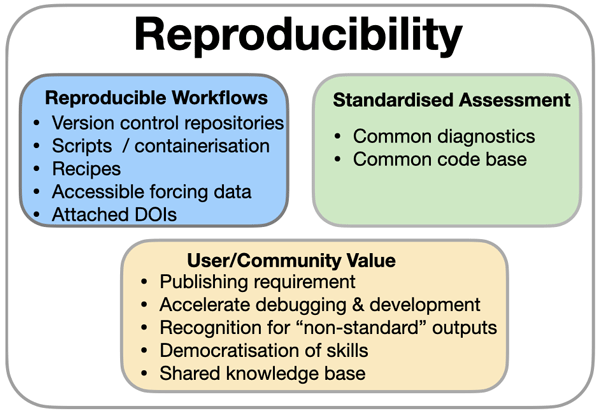
The aim is to increase the capacity of the modelling community to respond to societally important questions that require ocean modelling. The concept of reproducibility for regional ocean modelling is developed: advocating methods for reproducible workflows and standardised methods of assessment. Then, targeting the NEMO framework, we give practical advice and worked examples, highlighting key considerations that will the expedite development cycle and upskill the user community.
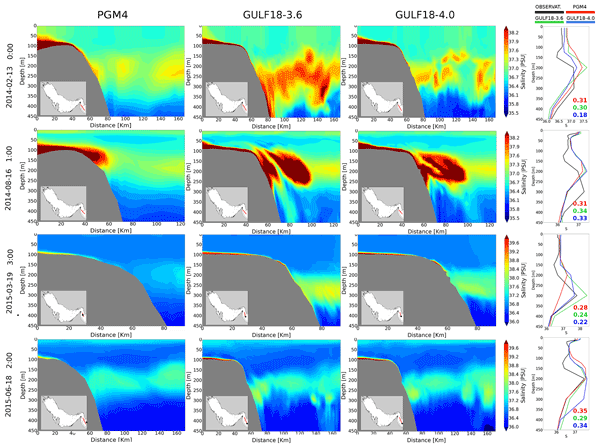
Diego Bruciaferri, Marina Tonani, Isabella Ascione, Fahad Al Senafi, Enda O'Dea, Helene T. Hewitt, and Andrew Saulter
Geosci. Model Dev., 15, 8705–8730, https://doi.org/10.5194/gmd-15-8705-2022, https://doi.org/10.5194/gmd-15-8705-2022, 2022
Short summary
Short summary
More accurate predictions of the Gulf's ocean dynamics are needed. We investigate the impact on the predictive skills of a numerical shelf sea model of the Gulf after changing a few key aspects. Increasing the lateral and vertical resolution and optimising the vertical coordinate system to best represent the leading physical processes at stake significantly improve the accuracy of the simulated dynamics. Additional work may be needed to get real benefit from using a more realistic bathymetry.
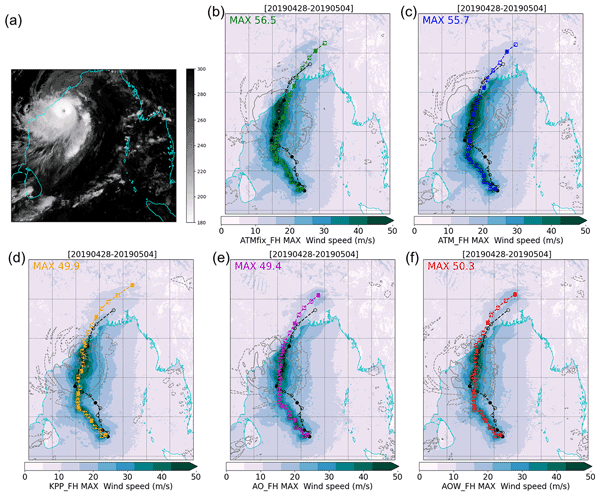
Juan Manuel Castillo, Huw W. Lewis, Akhilesh Mishra, Ashis Mitra, Jeff Polton, Ashley Brereton, Andrew Saulter, Alex Arnold, Segolene Berthou, Douglas Clark, Julia Crook, Ananda Das, John Edwards, Xiangbo Feng, Ankur Gupta, Sudheer Joseph, Nicholas Klingaman, Imranali Momin, Christine Pequignet, Claudio Sanchez, Jennifer Saxby, and Maria Valdivieso da Costa
Geosci. Model Dev., 15, 4193–4223, https://doi.org/10.5194/gmd-15-4193-2022, https://doi.org/10.5194/gmd-15-4193-2022, 2022
Short summary
Short summary
A new environmental modelling system has been developed to represent the effect of feedbacks between atmosphere, land, and ocean in the Indian region. Different approaches to simulating tropical cyclones Titli and Fani are demonstrated. It is shown that results are sensitive to the way in which the ocean response to cyclone evolution is captured in the system. Notably, we show how a more rigorous formulation for the near-surface energy budget can be included when air–sea coupling is included.
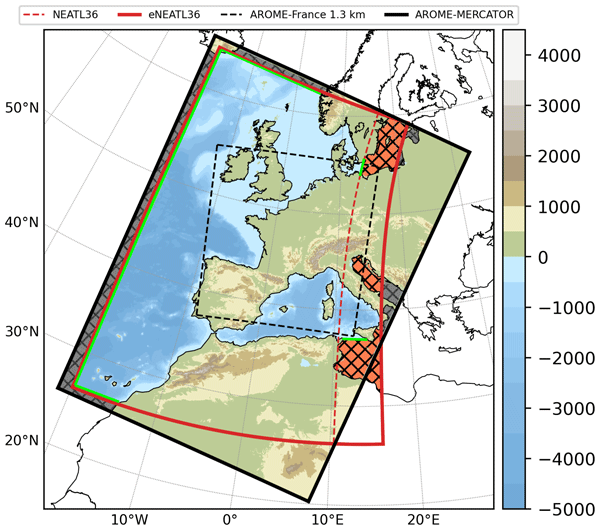
Joris Pianezze, Jonathan Beuvier, Cindy Lebeaupin Brossier, Guillaume Samson, Ghislain Faure, and Gilles Garric
Nat. Hazards Earth Syst. Sci., 22, 1301–1324, https://doi.org/10.5194/nhess-22-1301-2022, https://doi.org/10.5194/nhess-22-1301-2022, 2022
Short summary
Short summary
Most numerical weather and oceanic prediction systems do not consider ocean–atmosphere feedback during forecast, and this can lead to significant forecast errors, notably in cases of severe situations. A new high-resolution coupled ocean–atmosphere system is presented in this paper. This forecast-oriented system, based on current regional operational systems and evaluated using satellite and in situ observations, shows that the coupling improves both atmospheric and oceanic forecasts.
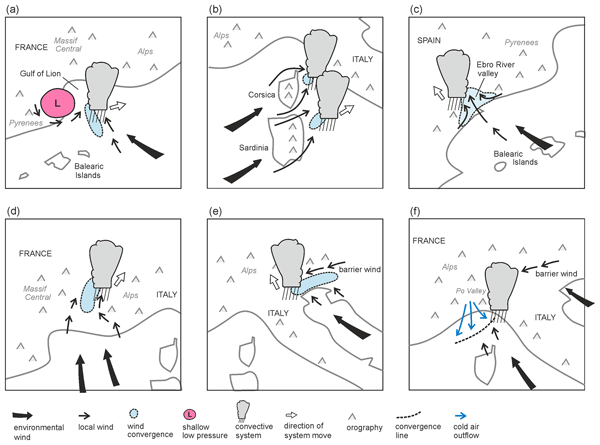
Samira Khodayar, Silvio Davolio, Paolo Di Girolamo, Cindy Lebeaupin Brossier, Emmanouil Flaounas, Nadia Fourrie, Keun-Ok Lee, Didier Ricard, Benoit Vie, Francois Bouttier, Alberto Caldas-Alvarez, and Veronique Ducrocq
Atmos. Chem. Phys., 21, 17051–17078, https://doi.org/10.5194/acp-21-17051-2021, https://doi.org/10.5194/acp-21-17051-2021, 2021
Short summary
Short summary
Heavy precipitation (HP) constitutes a major meteorological threat in the western Mediterranean. Every year, recurrent events affect the area with fatal consequences. Despite this being a well-known issue, open questions still remain. The understanding of the underlying mechanisms and the modeling representation of the events must be improved. In this article we present the most recent lessons learned from the Hydrological Cycle in the Mediterranean Experiment (HyMeX).

Julia Rulent, Lucy M. Bricheno, J. A. Mattias Green, Ivan D. Haigh, and Huw Lewis
Nat. Hazards Earth Syst. Sci., 21, 3339–3351, https://doi.org/10.5194/nhess-21-3339-2021, https://doi.org/10.5194/nhess-21-3339-2021, 2021
Short summary
Short summary
High coastal total water levels (TWLs) can lead to flooding and hazardous conditions for coastal communities and environment. In this research we are using numerical models to study the interactions between the three main components of the TWL (waves, tides, and surges) on UK and Irish coasts during winter 2013/14. The main finding of this research is that extreme waves and surges can indeed happen together, even at high tide, but they often occurred simultaneously 2–3 h before high tide.
Cited articles
Angove, M., Kozlosky, L., Chu, P., Dusek, G., Mann, G., Anderson, E., Gridley, J., Arcas, D., Titov, V., Eble, M., McMahon, K., Hirsch, B., and Zaleski, W.: Addressing the meteotsunami risk in the United States, Nat. Hazards, 106, 1467–1487, https://doi.org/10.1007/s11069-020-04499-3, 2021. a
Ardhuin, F., Rogers, E., Babanin, A., Filipot, J.-F., Magne, R., Roland, A., Westhuysen, A. V. D., Queffeulou, P., Lefevre, J.-M., Aouf, L., and Collard, F.: Semiempirical Dissipation Source Functions for Ocean Waves. Part I: Definition, Calibration, and Validation, J. Phys. Oceanogr., 40, 1917–1941, https://doi.org/10.1175/2010JPO4324.1, 2010. a
Battjes, J. A. and Janssen, J. P. F. M.: Energy loss and set-up due to breaking random waves, in: Proceedings of the 16th International Conference on Coastal Engineering, pp. 569–587, American Society of Civil Engineers, Hamburg, Germany, https://repository.tudelft.nl/record/uuid:2fba43fe-f8bd-42ac-85ee-848312d2e27e (last access: 7 July 2026), 1978. a
Berthou, S., Siddorn, J., Fraser-Leonhardt, V., Le Traon, P.-Y., and Hoteit, I.: Towards Earth system modelling: coupled ocean forecasting, in: Ocean prediction: present status and state of the art (OPSR), edited by: Álvarez Fanjul, E., Ciliberti, S. A., Pearlman, J., Wilmer-Becker, K., and Behera, S., Copernicus Publications, State Planet, 5-opsr, 20, https://doi.org/10.5194/sp-5-opsr-20-2025, 2025. a, b, c, d, e
Berthou, S., Castillo, J. M., Fraser-Leonhardt, V., Mahmood, S., Makrygianni, N., Arnold, A., Sanchez, C., Lewis, H. W., Partridge, D., Best, M., Bricheno, L., Davies, H., Clark, D., Clark, J. R., Polton, J., Saulter, A., Short, C. J., Tinker, J., and Tucker, S.: Km-scale regional coupled system for the Northwest European shelf for weather and climate applications: RCS-UKC4, EGUsphere [preprint], https://doi.org/10.5194/egusphere-2025-6216, 2026. a, b, c, d
Best, M. J., Pryor, M., Clark, D. B., Rooney, G. G., Essery, R. L. H., Ménard, C. B., Edwards, J. M., Hendry, M. A., Porson, A., Gedney, N., Mercado, L. M., Sitch, S., Blyth, E., Boucher, O., Cox, P. M., Grimmond, C. S. B., and Harding, R. J.: The Joint UK Land Environment Simulator (JULES), model description – Part 1: Energy and water fluxes, Geosci. Model Dev., 4, 677–699, https://doi.org/10.5194/gmd-4-677-2011, 2011. a
Blayo, E. and Debreu, L.: Revisiting open boundary conditions from the point of view of characteristic variables, Ocean Modell., 9, 231–252, https://doi.org/10.1016/j.ocemod.2004.07.001, 2005. a
Bouin, M.-N. and Lebeaupin Brossier, C.: Surface processes in the 7 November 2014 medicane from air–sea coupled high-resolution numerical modelling, Atmos. Chem. Phys., 20, 6861–6881, https://doi.org/10.5194/acp-20-6861-2020, 2020. a, b
Brousseau, P., Seity, Y., Ricard, D., and Léger, J.: Improvement of the forecast of convective activity from the AROME-France system, Q. J. Roy. Meteorol. Soc., 142, 2231–2243, https://doi.org/10.1002/qj.2822, 2016. a
Brown, A., Milton, S., Cullen, M., Golding, B., Mitchell, J., and Shelly, A.: Unified Modeling and Prediction of Weather and Climate: A 25-Year Journey, B. Am. Meteorol. Soc., 93, 1865–1877, https://doi.org/10.1175/BAMS-D-12-00018.1, 2012. a
Bush, M., Allen, T., Bain, C., Boutle, I., Edwards, J., Finnenkoetter, A., Franklin, C., Hanley, K., Lean, H., Lock, A., Manners, J., Mittermaier, M., Morcrette, C., North, R., Petch, J., Short, C., Vosper, S., Walters, D., Webster, S., Weeks, M., Wilkinson, J., Wood, N., and Zerroukat, M.: The first Met Office Unified Model–JULES Regional Atmosphere and Land configuration, RAL1, Geosci. Model Dev., 13, 1999–2029, https://doi.org/10.5194/gmd-13-1999-2020, 2020. a
Bush, M., Boutle, I., Edwards, J., Finnenkoetter, A., Franklin, C., Hanley, K., Jayakumar, A., Lewis, H., Lock, A., Mittermaier, M., Mohandas, S., North, R., Porson, A., Roux, B., Webster, S., and Weeks, M.: The second Met Office Unified Model–JULES Regional Atmosphere and Land configuration, RAL2, Geosci. Model Dev., 16, 1713–1734, https://doi.org/10.5194/gmd-16-1713-2023, 2023. a
Bush, M., Flack, D. L. A., Lewis, H. W., Bohnenstengel, S. I., Short, C. J., Franklin, C., Lock, A. P., Best, M., Field, P., McCabe, A., Van Weverberg, K., Berthou, S., Boutle, I., Brooke, J. K., Cole, S., Cooper, S., Dow, G., Edwards, J., Finnenkoetter, A., Furtado, K., Halladay, K., Hanley, K., Hendry, M. A., Hill, A., Jayakumar, A., Jones, R. W., Lean, H., Lee, J. C. K., Malcolm, A., Mittermaier, M., Mohandas, S., Moore, S., Morcrette, C., North, R., Porson, A., Rennie, S., Roberts, N., Roux, B., Sanchez, C., Su, C.-H., Tucker, S., Vosper, S., Walters, D., Warner, J., Webster, S., Weeks, M., Wilkinson, J., Whitall, M., Williams, K. D., and Zhang, H.: The third Met Office Unified Model–JULES Regional Atmosphere and Land Configuration, RAL3, Geosci. Model Dev., 18, 3819–3855, https://doi.org/10.5194/gmd-18-3819-2025, 2025. a, b
Carrere, L., Lyard, F., Cancet, M., and Guillot, A.: FES 2014, a new tidal model on the global ocean with enhanced accuracy in shallow seas and in the Arctic region, in: EGU General Assembly Conference Abstracts, EGU General Assembly Conference Abstracts, p. 5481, https://meetingorganizer.copernicus.org/EGU2015/EGU2015-5481-1.pdf (last access: 7 July 2026), 2015. a
Chan, S. C., Kendon, E. J., Berthou, S., Fosser, G., Lewis, E., and Fowler, H. J.: Europe-wide precipitation projections at convection permitting scale with the Unified Model, Clim. Dynam., 55, 409–428, https://doi.org/10.1007/s00382-020-05192-8, 2020. a
Charnock, H.: Wind stress on a water surface, Q. J. Roy. Meteorol. Soc., 81, 639–640, https://doi.org/10.1002/qj.49708135027, 1955. a
Clark, D. B., Mercado, L. M., Sitch, S., Jones, C. D., Gedney, N., Best, M. J., Pryor, M., Rooney, G. G., Essery, R. L. H., Blyth, E., Boucher, O., Harding, R. J., Huntingford, C., and Cox, P. M.: The Joint UK Land Environment Simulator (JULES), model description – Part 2: Carbon fluxes and vegetation dynamics, Geosci. Model Dev., 4, 701–722, https://doi.org/10.5194/gmd-4-701-2011, 2011. a
Courtier, P., Freydier, C., Geleyn, J.-F., Rabier, F., and Rochas, M.: The Arpege project at Meteo France, Ph.D. thesis, Shinfield Park, Reading, https://www.ecmwf.int/en/elibrary/74049-arpege-project-meteo-france (last access: 7 July 2026), 1991. a
Craig, A., Valcke, S., and Coquart, L.: Development and performance of a new version of the OASIS coupler, OASIS3-MCT_3.0, Geosci. Model Dev., 10, 3297–3308, https://doi.org/10.5194/gmd-10-3297-2017, 2017. a
Cuxart, J., Bougeault, P., and Redelsperger, J. L.: A turbulence scheme allowing for mesoscale and large-eddy simulations, Q. J. Roy. Meteorol. Soc., 126, 1–30, https://doi.org/10.1002/qj.49712656202, 2000. a
Edwards, J. M. and Slingo, A.: Studies with a flexible new radiation code. I: Choosing a configuration for a large-scale model, Q. J. Roy. Meteorol. Soc., 122, 689–719, 1996. a
Ferrarin, C., Orlić, M., Bajo, M., Davolio, S., Umgiesser, G., and Lionello, P.: The contribution of a mesoscale cyclone and associated meteotsunami to the exceptional flood in Venice on November 12, 2019, Q. J. Roy. Meteorol. Soc., 149, 2929–2942, https://doi.org/10.1002/qj.4539, 2023. a
Flather, R.: A tidal model of the northwest European continental shelf, Mém. Soc. Roy. Sci. Liège, 10, 141–164, 1976. a
Fouquart, Y. and Bonnel, B.: Computation of Solar Heating of the Earth's Atmosphere: A New Parameterization, Beitr. Phys. Atmos., 53, 35–62, http://pascal-francis.inist.fr/vibad/index.php?action=getRecordDetail&idt=PASCAL8030435628 (last access: 7 July 2026), 1980. a
Gentile, E. S., Gray, S. L., and Lewis, H. W.: The sensitivity of probabilistic convective-scale forecasts of an extratropical cyclone to atmosphere–ocean–wave coupling, Q. J. Roy. Meteorol. Soc., 148, 685–710, https://doi.org/10.1002/qj.4225, 2022. a
Graham, J. A., O'Dea, E., Holt, J., Polton, J., Hewitt, H. T., Furner, R., Guihou, K., Brereton, A., Arnold, A., Wakelin, S., Castillo Sanchez, J. M., and Mayorga Adame, C. G.: AMM15: a new high-resolution NEMO configuration for operational simulation of the European north-west shelf, Geosci. Model Dev., 11, 681–696, https://doi.org/10.5194/gmd-11-681-2018, 2018. a
Greenspan, M.: Propagation of Sound in Five Monatomic Gases, Acoust. Soc. Am. J., 28, 644, https://doi.org/10.1121/1.1908432, 1956. a
Hagelin, S., Roberts, N., Thompson, S. A., Beare, R., and Bush, M.: The Met Office convective‐scale ensemble, MOGREPS‐UK, Q. J. Roy. Meteorol. Soc., 143, 2846–2861, https://doi.org/10.1002/qj.3135, 2017. a
Haslett, S. K., Mellor, H. E., and Bryant, E. A.: Meteo-tsunami hazard associated with summer thunderstorms in the United Kingdom, Phys. Chem. Earth, 34, 1016–1022, https://doi.org/10.1016/j.pce.2009.10.005, 2009. a
Hasselmann, K., Barnett, T., Bouws, E., Carlson, H., Cartwright, D., Enke, K., Ewing, J., Gienapp, H., Hasselmann, D., Kruseman, P., Meerburg, A., Müller, P., Olbers, D., Richter, K., Sell, W., and Walden, H.: Measurements of Wind-Wave Growth and Swell Decay during the Joint North Sea Wave Project (JONSWAP), Ergänzungsheft zur Deutschen Hydrographischen Zeitschrift, Reihe A, 12, https://pure.mpg.de/rest/items/item_3262854_4/component/file_3282032/content (last access: 7 July 2026), 1973. a
Huang, C., Anderson, E., Liu, Y., Ma, G., Mann, G., and Xue, P.: Evaluating essential processes and forecast requirements for meteotsunami-induced coastal flooding, Nat.Hazards, 110, 1693–1718, https://doi.org/10.1007/s11069-021-05007-x, 2021. a
Kahraman, A., Kendon, E. J., Chan, S. C., and Fowler, H. J.: Quasi-Stationary Intense Rainstorms Spread Across Europe Under Climate Change, Geophys. Res. Lett., 48, e92361, https://doi.org/10.1029/2020GL092361, 2021. a
Kain, J. S. and Fritsch, J. M.: A One-Dimensional Entraining/Detraining Plume Model and Its Application in Convective Parameterization, J. Atmos. Sci., 47, 2784–2802, https://doi.org/10.1175/1520-0469(1990)047<2784:AODEPM>2.0.CO;2, 1990. a
Kim, J. and Omira, R.: Combined surge-meteotsunami dynamics: A numerical model for hurricane Leslie on the coast of Portugal, Ocean Modell., 189, 102368, https://doi.org/10.1016/j.ocemod.2024.102368, 2024. a
Kim, M.-S., Woo, S.-B., Eom, H., and You, S. H.: Occurrence of pressure-forced meteotsunami events in the eastern Yellow Sea during 2010–2019, Nat. Hazards Earth Syst. Sci., 21, 3323–3337, https://doi.org/10.5194/nhess-21-3323-2021, 2021. a
Leclair, M. and Madec, G.: A conservative leapfrog time stepping method, Ocean Modell., 30, 88–94, https://doi.org/10.1016/j.ocemod.2009.06.006, 2009. a
Lewis, H. W., Castillo Sanchez, J. M., Arnold, A., Fallmann, J., Saulter, A., Graham, J., Bush, M., Siddorn, J., Palmer, T., Lock, A., Edwards, J., Bricheno, L., Martínez-de la Torre, A., and Clark, J.: The UKC3 regional coupled environmental prediction system, Geosci. Model Dev., 12, 2357–2400, https://doi.org/10.5194/gmd-12-2357-2019, 2019. a, b, c
Levier, B., Reffray, G., Escudier, R., Gutknecht, E., Amo-Baladrón, A., Ciliberti, S., Aznar, R., and Sotillo, M. G.: Quality Information Document for IBI-MFC Ocean Reanalysis Product, Tech. Rep. CMEMS-IBI-QUID-005-001, Copernicus Marine Environment Monitoring Service (CMEMS), https://documentation.marine.copernicus.eu/QUID/CMEMS-IBI-QUID-005-001.pdf (last access: July 2025), 2021. a
Madec, G. and the NEMO team: NEMO Ocean Engine, Paris, France, version 3.6 stable, https://frouingroup.ucsd.edu/NEMO_ORCA2_LIM3_PISCES/Refs/NEMO_books/NEMO_book_3.6_STABLE-2016.pdf (last access: 7 July 2026), 2016. a
Madec, G., Bell, M., Blaker, A., Bricaud, C., Bruciaferri, D., Castrillo, M., Calvert, D., Chanut, J., Clementi, E., Coward, A., Epicoco, I., Éthé, C., Ganderton, J., Harle, J., Hutchinson, K., Iovino, D., Lea, D., Lovato, T., Martin, M., Martin, N., Mele, F., Martins, D., Masson, S., Mathiot, P., Mele, F., Mocavero, S., Müller, S., Nurser, A. G., Paronuzzi, S., Peltier, M., Person, R., Rousset, C., Rynders, S., Samson, G., Téchené, S., Vancoppenolle, M., and Wilson, C.: NEMO Ocean Engine Reference Manual, Zenodo, https://doi.org/10.5281/zenodo.8167700, 2023. a
Makrygianni, N.: Scripts and Data for Meteotsunami prediction in km-scale regional systems coupled at high frequency, Zenodo [data set and code], https://doi.org/10.5281/zenodo.16370112, 2025. a, b
Manners, J., Edwards, J. M., Hill, P., and Thelen, J.-C.: SOCRATES (Suite Of Community Radiative Transfer codes based on Edwards and Slingo) Technical Guide, Met Office, UK, https://github.com/MetOffice/socrates/ (last access: 7 July 2026), 2018. a
Masson, V.: A Physically-Based Scheme For The Urban Energy Budget In Atmospheric Models, Bound.-Lay. Meteorol., 94, 357–397, https://doi.org/10.1023/A:1002463829265, 2000. a
Masson, V., Le Moigne, P., Martin, E., Faroux, S., Alias, A., Alkama, R., Belamari, S., Barbu, A., Boone, A., Bouyssel, F., Brousseau, P., Brun, E., Calvet, J.-C., Carrer, D., Decharme, B., Delire, C., Donier, S., Essaouini, K., Gibelin, A.-L., Giordani, H., Habets, F., Jidane, M., Kerdraon, G., Kourzeneva, E., Lafaysse, M., Lafont, S., Lebeaupin Brossier, C., Lemonsu, A., Mahfouf, J.-F., Marguinaud, P., Mokhtari, M., Morin, S., Pigeon, G., Salgado, R., Seity, Y., Taillefer, F., Tanguy, G., Tulet, P., Vincendon, B., Vionnet, V., and Voldoire, A.: The SURFEXv7.2 land and ocean surface platform for coupled or offline simulation of earth surface variables and fluxes, Geoscientific Model Development, 6, 929–960, https://doi.org/10.5194/gmd-6-929-2013, 2013. a
Mlawer, E. J., Taubman, S. J., Brown, P. D., Iacono, M. J., and Clough, S. A.: Radiative transfer for inhomogeneous atmospheres: RRTM, a validated correlated-k model for the longwave, J. Geophys. Res.-Atmos., 102, 16663–16682, https://doi.org/10.1029/97JD00237, 1997. a
NOC: UK National Tide Gauge Network | National Tidal and Sea Level Facility, https://ntslf.org/tides/uk-network, last access: 23 July 2025. a
Noilhan, J. and Planton, S.: A Simple Parameterization of Land Surface Processes for Meteorological Models, Mon. Weather Rev., 117, 536, https://doi.org/10.1175/1520-0493(1989)117<0536:ASPOLS>2.0.CO;2, 1989. a
O'Brien, L., Dudley, J. M., and Dias, F.: Extreme wave events in Ireland: 14 680 BP–2012, Nat. Hazards Earth Syst. Sci., 13, 625–648, https://doi.org/10.5194/nhess-13-625-2013, 2013. a
O'Brien, L., Renzi, E., Dudley, J. M., Clancy, C., and Dias, F.: Catalogue of extreme wave events in Ireland: revised and updated for 14680 BP to 2017, Nat. Hazards Earth Syst. Sci., 18, 729–758, https://doi.org/10.5194/nhess-18-729-2018, 2018. a
Pianezze, J., Beuvier, J., Lebeaupin Brossier, C., Samson, G., Faure, G., and Garric, G.: Development of a forecast-oriented kilometre-resolution ocean–atmosphere coupled system for western Europe and sensitivity study for a severe weather situation, Nat. Hazards Earth Syst. Sci., 22, 1301–1324, https://doi.org/10.5194/nhess-22-1301-2022, 2022. a, b, c, d, e
Pinty, J.-P. and Jabouille, P.: A mixed-phase cloud parameterization for use in a mesoscale non-hydrostatic model: simulations of a squall line and of orographic precipitations, in: Proceedings of the Conference on Cloud Physics, American Meteorological Society, Everett, WA, USA, http://mesonh.aero.obs-mip.fr/mesonh/dir_publication/pinty_jabouille_ams_ccp1998.pdf (last access: 7 July 2026), 1998. a
Proudman, J.: The Effects on the Sea of Changes in Atmospheric Pressure, Geophys. J., 2, 197–209, https://doi.org/10.1111/j.1365-246X.1929.tb05408.x, 1929. a, b
Renault, L., Marchesiello, P., Masson, S., and McWilliams, J.: Remarkable Control of Western Boundary Currents by Eddy Killing, a Mechanical Air-Sea Coupling Process, Geophys. Res. Lett., 46, 2743–2751, https://doi.org/10.1029/2018GL081211, 2019. a
Roehrig, R., Beau, I., Saint-Martin, D., Alias, A., Decharme, B., Guérémy, J.-F., Voldoire, A., Abdel-Lathif, A. Y., Bazile, E., Belamari, S., Blein, S., Bouniol, D., Bouteloup, Y., Cattiaux, J., Chauvin, F., Chevallier, M., Colin, J., Douville, H., Marquet, P., Michou, M., Nabat, P., Oudar, T., Peyrillé, P., Piriou, J.-M., Salas y Mélia, D., Séférian, R., and Sénési, S.: The CNRM Global Atmosphere Model ARPEGE-Climat 6.3: Description and Evaluation, J. Adv. Model. Earth Syst., 12, e2020MS002075, https://doi.org/10.1029/2020MS002075, 2020. a
Seity, Y., Brousseau, P., Malardel, S., Hello, G., Bénard, P., Bouttier, F., Lac, C., and Masson, V.: The AROME-France Convective-Scale Operational Model, Mon. Weather Rev., 139, 976–991, https://doi.org/10.1175/2010MWR3425.1, 2011. a
Sibley, A.: Meteotsunamis reported around Britain and Ireland, and northern France, 18–19 June 2022, Weather, 77, 279–280, https://doi.org/10.1002/wea.4271, 2022. a, b, c
Swan, L. D., McCarthy, G. D., and Bergin, C.: Investigating the occurrence of an unusual tidal event along the north–west coast of Ireland, Nat. Hazards, 122, 517, https://doi.org/10.1007/s11069-026-08287-3, 2026. a
Tang, Y., Lean, H. W., and Bornemann, J.: The benefits of the Met Office variable resolution NWP model for forecasting convection, Meteorol. Appl., 20, 417–426, https://doi.org/10.1002/met.1300, 2013. a
Tappin, D. R., Sibley, A., Horsburgh, K., Daubord, C., Cox, D., and Long, D.: The English Channel “tsunami” of 27 June 2011 – a probable meteorological source, Weather, 68, 144–152, https://doi.org/10.1002/wea.2061, 2013. a
Taylor, J. P., Edwards, J. M., Glew, M. D., Hignett, P., and Slingo, A.: Studies with a flexible new radiation code. II: Comparisons with aircraft short-wave observations, Q. J. Roy. Meteorol. Soc., 122, 839–861, https://doi.org/10.1002/qj.49712253204, 1996. a
Titov, V. and Moore, C.: Meteotsunami model forecast: can coastal hazard be quantified in real time?, Nat. Hazards, 106, 1545–1561, https://doi.org/10.1007/s11069-020-04450-6, 2021. a
Tolman, H. L. and the WWIII development group: User Manual and System Documentation of WAVEWATCH III® Version 4.18, College Park, MD, USA, mMAB Contribution No. 316, https://polar.ncep.noaa.gov/waves/wavewatch/manual.v4.18.pdf (last access: 7 July 2026), 2014. a
Tonani, M., Sykes, P., King, R. R., McConnell, N., Péquignet, A.-C., O'Dea, E., Graham, J. A., Polton, J., and Siddorn, J.: The impact of a new high-resolution ocean model on the Met Office North-West European Shelf forecasting system, Ocean Sci., 15, 1133–1158, https://doi.org/10.5194/os-15-1133-2019, 2019. a, b, c, d, e
Valcke, S., Craig, T., and Coquart, L.: OASIS3-MCT User Guide, OASIS3-MCT 3.0, Toulouse, France, cERFACS TR/CMGC/15/38, https://cerfacs.fr/oa4web/oasis3-mct_3.0/oasis3mct_UserGuide.pdf (last access: 7 July 2026), 2015. a
Valcke, S., Craig, T., Maisonnave, E., and Coquart, L.: OASIS3-MCT User Guide, OASIS3-MCT 5.0, Toulouse, France, cERFACS TR/CMGC/21/161, https://cnrs.hal.science/hal-04739698v1/document (last access: 7 July 2026), 2021. a
Valiente, N. G., Saulter, A., Edwards, J. M., Lewis, H. W., Sanchez, J. M. C., Bruciaferri, D., Bunney, C., and Siddorn, J.: The Impact of Wave Model Source Terms and Coupling Strategies to Rapidly Developing Waves across the North-West European Shelf during Extreme Events, J. Mar. Sci. Eng., 9, 403, https://doi.org/10.3390/jmse9040403, 2021. a
Valiente, N. G., Saulter, A., Gomez, B., Bunney, C., Li, J.-G., Palmer, T., and Pequignet, C.: The Met Office operational wave forecasting system: the evolution of the regional and global models, Geosci. Model Dev., 16, 2515–2538, https://doi.org/10.5194/gmd-16-2515-2023, 2023. a
Vergados, P., Krishnamoorthy, S., Martire, L., Mrak, S., Komjáthy, A., Morton, Y. T. J., and Vilibić, I.: Prospects for meteotsunami detection in earth’s atmosphere using GNSS observations, GPS Sol., 27, 169, https://doi.org/10.1007/s10291-023-01492-8, 2023. a
Vilibić, I., Monserrat, S., Rabinovich, A., and Mihanović, H.: Numerical Modelling of the Destructive Meteotsunami of 15 June, 2006 on the Coast of the Balearic Islands, Pure Appl. Geophys., 165, 2169–2195, https://doi.org/10.1007/s00024-008-0426-5, 2008. a, b
Vilibić, I., Šepić, J., Rabinovich, A. B., and Monserrat, S.: Modern Approaches in Meteotsunami Research and Early Warning, Front. Mar. Sci., 3, https://doi.org/10.3389/fmars.2016.00057, 2016. a
Vilibić, I., Rabinovich, A. B., and Anderson, E. J.: Special issue on the global perspective on meteotsunami science: editorial, Nat. Hazards, 106, 1087–1104, https://doi.org/10.1007/s11069-021-04679-9, 2021. a, b
Villalonga, J., Monserrat, S., Gomis, D., and Jordà, G.: Observational Characterization of Atmospheric Disturbances Generating Meteotsunamis in the Balearic Islands, J. Geophys. Res.-Oceans, 129, e2024JC020910, https://doi.org/10.1029/2024JC020910, 2024. a
Voldoire, A., Decharme, B., Pianezze, J., Lebeaupin Brossier, C., Sevault, F., Seyfried, L., Garnier, V., Bielli, S., Valcke, S., Alias, A., Accensi, M., Ardhuin, F., Bouin, M.-N., Ducrocq, V., Faroux, S., Giordani, H., Léger, F., Marsaleix, P., Rainaud, R., Redelsperger, J.-L., Richard, E., and Riette, S.: SURFEX v8.0 interface with OASIS3-MCT to couple atmosphere with hydrology, ocean, waves and sea-ice models, from coastal to global scales, Geosci. Model Dev., 10, 4207–4227, https://doi.org/10.5194/gmd-10-4207-2017, 2017. a
Šepić, J., Vilibić, I., and Monserrat, S.: Quantifying the probability of meteotsunami occurrence from synoptic atmospheric patterns, Geophys. Res. Lett., 43, 10377–10384, https://doi.org/10.1002/2016GL070754, 2016. a
Walters, D. N., Best, M. J., Bushell, A. C., Copsey, D., Edwards, J. M., Falloon, P. D., Harris, C. M., Lock, A. P., Manners, J. C., Morcrette, C. J., Roberts, M. J., Stratton, R. A., Webster, S., Wilkinson, J. M., Willett, M. R., Boutle, I. A., Earnshaw, P. D., Hill, P. G., MacLachlan, C., Martin, G. M., Moufouma-Okia, W., Palmer, M. D., Petch, J. C., Rooney, G. G., Scaife, A. A., and Williams, K. D.: The Met Office Unified Model Global Atmosphere 3.0/3.1 and JULES Global Land 3.0/3.1 configurations, Geosci. Model Dev., 4, 919–941, https://doi.org/10.5194/gmd-4-919-2011, 2011. a
Wijeratne, E. M. S. and Pattiaratchi, C. B.: Meteotsunamis Generated by Thunderstorms, J. Geophys. Res.-Oceans, 129, e2023JC020662, https://doi.org/10.1029/2023JC020662, 2024. a, b, c
Williams, D. A., Schultz, D. M., Horsburgh, K. J., and Hughes, C. W.: An 8-yr Meteotsunami Climatology across Northwest Europe: 2010–17, J. Phys. Oceanogr., 51, 1145–1161, https://doi.org/10.1175/JPO-D-20-0175.1, 2021. a
Wunsch, C. and Stammer, D.: Atmospheric loading and the oceanic “inverted barometer” effect, Rev. Geophys., 35, 79–107, https://doi.org/10.1029/96RG03037, 1997. a
Short summary
Meteotsunamis are rare but dangerous anomalous waves triggered by atmospheric disturbances, they are not currently forecast in Northwest Europe. We analysed the strongest recorded event on June 18, 2022, which reached 1 m amplitude. We showed high-resolution, high-frequency coupled models can represent such events up to three days ahead and help better understand their atmospheric triggers. These models, together with improved observations, can enhance early warnings and coastal safety.
Meteotsunamis are rare but dangerous anomalous waves triggered by atmospheric disturbances, they...


Altmetrics
Final-revised paper
Preprint