Articles | Volume 26, issue 7
https://doi.org/10.5194/nhess-26-3129-2026
© Author(s) 2026. This work is distributed under
the Creative Commons Attribution 4.0 License.
https://doi.org/10.5194/nhess-26-3129-2026
© Author(s) 2026. This work is distributed under
the Creative Commons Attribution 4.0 License.
Evaluation of AI-based seasonal weather ensembles as input for fluvial flood risk estimation: a case study over the Elbe basin
JBA Risk Management, Skipton, BD23 3FD, United Kingdom
Alison Poulston
JBA Risk Management, Skipton, BD23 3FD, United Kingdom
Marius Koch
Nvidia Corporation, 2788 San Tomas Expressway, Santa Clara, CA 95051, USA
Georg Ertl
Nvidia Corporation, 2788 San Tomas Expressway, Santa Clara, CA 95051, USA
Kirsty Brown
JBA Risk Management, Skipton, BD23 3FD, United Kingdom
James Butler
JBA Risk Management, Skipton, BD23 3FD, United Kingdom
Anthony Hammond
JBA Consulting, Skipton, BD23 3FD, United Kingdom
Owen Jordan
JBA Risk Management, Skipton, BD23 3FD, United Kingdom
Sarah Warren
JBA Consulting, Skipton, BD23 3FD, United Kingdom
JBA Trust, Skipton, BD23 3FD, United Kingdom
Lancaster Environment Centre, Lancaster University, Lancaster, LA1 4YQ, United Kingdom
Paul J. Young
JBA Risk Management, Skipton, BD23 3FD, United Kingdom
School of Engineering, Newcastle University, Newcastle, NE1 7RU, United Kingdom
David Wood
JBA Risk Management, Skipton, BD23 3FD, United Kingdom
Related authors
No articles found.
Francesca Pianosi, Georgios Sarailidis, Kirsty Styles, Philip Oldham, Stephen Hutchings, Rob Lamb, and Thorsten Wagener
Nat. Hazards Earth Syst. Sci., 26, 1727–1743, https://doi.org/10.5194/nhess-26-1727-2026, https://doi.org/10.5194/nhess-26-1727-2026, 2026
Short summary
Short summary
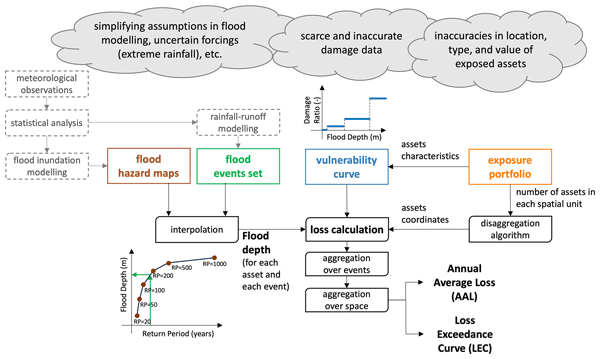
Mathematical modelling is essential to support flood risk management. As these models simulate complex interactions between climate, the natural and the built environment, they unavoidably embed a range of simplifying assumptions. In this paper, we propose a more rigorous approach to analyse the impact of uncertain assumptions on modelling results. This is important to improve model transparency and set priorities for improving models.
Paul T. Griffiths, Laura J. Wilcox, Robert J. Allen, Vaishali Naik, Fiona M. O'Connor, Michael Prather, Alex Archibald, Florence Brown, Makoto Deushi, William Collins, Stephanie Fiedler, Naga Oshima, Lee T. Murray, Bjørn H. Samset, Chris Smith, Steven Turnock, Duncan Watson-Parris, and Paul J. Young
Atmos. Chem. Phys., 25, 8289–8328, https://doi.org/10.5194/acp-25-8289-2025, https://doi.org/10.5194/acp-25-8289-2025, 2025
Short summary
Short summary
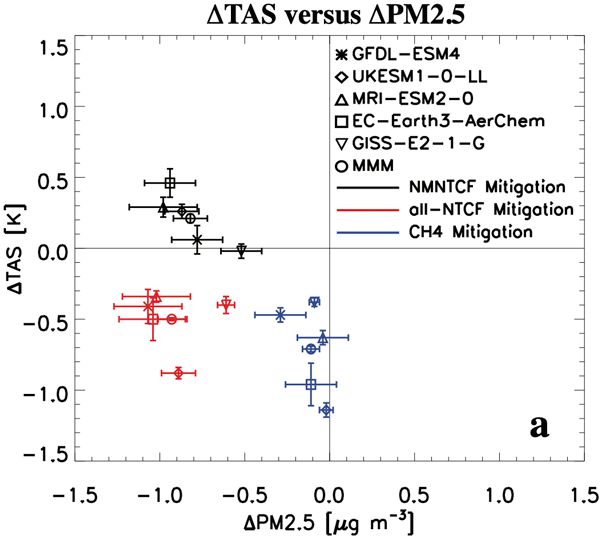
The Aerosol Chemistry Model Intercomparison Project (AerChemMIP) aimed to quantify the climate and air quality impacts of aerosols and chemically reactive gases. We review its contribution to AR6 (Sixth Assessment Report of the Intergovernmental Panel on Climate Change) and the wider understanding of the role of these species in climate and climate change. We identify challenges and provide recommendations to improve the utility and uptake of climate model data, detailed summary tables of CMIP6 models, experiments, and emergent diagnostics.
Lily Gouldsbrough, Ryan Hossaini, Emma Eastoe, Paul J. Young, and Massimo Vieno
Atmos. Chem. Phys., 24, 3163–3196, https://doi.org/10.5194/acp-24-3163-2024, https://doi.org/10.5194/acp-24-3163-2024, 2024
Short summary
Short summary
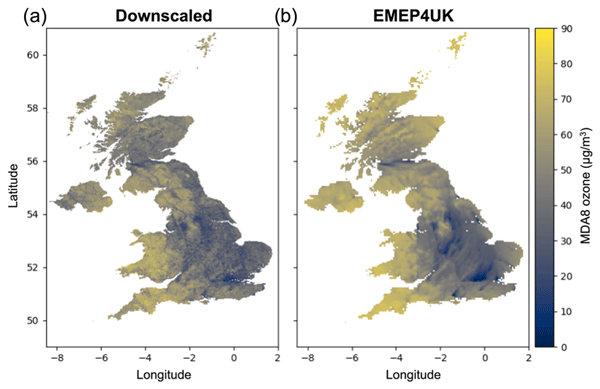
High-resolution spatial fields of surface ozone are used to understand spikes in ozone concentration and predict their impact on public health. Such fields are routinely output from complex mathematical models for atmospheric conditions. These outputs are on a coarse spatial resolution and the highest concentrations tend to be biased. Using a novel data-driven machine learning methodology, we show how such output can be corrected to produce fields with both lower bias and higher resolution.
Enrico Tubaldi, Christopher J. White, Edoardo Patelli, Stergios Aristoteles Mitoulis, Gustavo de Almeida, Jim Brown, Michael Cranston, Martin Hardman, Eftychia Koursari, Rob Lamb, Hazel McDonald, Richard Mathews, Richard Newell, Alonso Pizarro, Marta Roca, and Daniele Zonta
Nat. Hazards Earth Syst. Sci., 22, 795–812, https://doi.org/10.5194/nhess-22-795-2022, https://doi.org/10.5194/nhess-22-795-2022, 2022
Short summary
Short summary
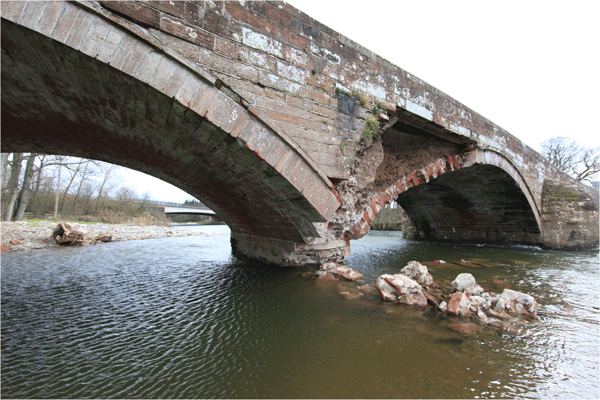
Bridges are critical infrastructure components of transport networks. A large number of these critical assets cross or are adjacent to waterways and are therefore exposed to the potentially devastating impact of floods. This paper discusses a series of issues and areas where improvements in research and practice are required in the context of risk assessment and management of bridges exposed to flood hazard, with the ultimate goal of guiding future efforts in improving bridge flood resilience.
Cited articles
Alexandre, D. A., Chaudhuri, C., and Gill-Fortin, J.: Novel extensions to the Fisher copula to model flood spatial dependence over North America, Hydrol. Earth Syst. Sci., 28, 5069–5085, https://doi.org/10.5194/hess-28-5069-2024, 2024.
Allaire, M.: Socio-economic impacts of flooding: A review of the empirical literature, Water Secur., 3, 18–26, https://doi.org/10.1016/j.wasec.2018.09.002, 2018.
Arino, O., Ramos Perez, J. J., Kalogirou, V., Bontemps, S., Defourny, P., and Van Bogaert, E.: Global Land Cover Map for 2009 (GlobCover 2009), European Space Agency (ESA) & Université catholique de Louvain (UCL), PANGAEA [data set], https://doi.org/10.1594/PANGAEA.787668, 2012.
Ben Bouallègue, Z., Clare, M. C. A., Magnusson, L., Gascón, E., Maier-Gerber, M., Janoušek, M., Rodwell, M., Pinault, F., Dramsch, J. S., Lang, S. T. K., Raoult, B., Rabier, F., Chevallier, M., Sandu, I., Dueben, P., Chantry, M., and Pappenberger, F.: The Rise of Data-Driven Weather Forecasting: A First Statistical Assessment of Machine Learning–Based Weather Forecasts in an Operational-Like Context, Bull. Am. Meteorol. Soc., 105, E864–E883, https://doi.org/10.1175/BAMS-D-23-0162.1, 2024.
Bonev, B., Kurth, T., Hundt, C., Pathak, J., Baust, M., Kashinath, K., and Anandkumar, A.: Spherical Fourier Neural Operators: Learning Stable Dynamics on the Sphere, Proc. 40th Int. Conf. Mach. Learn., 202, 2806–2823, 2023.
Brocca, L., Melone, F., and Moramarco, T.: Distributed rainfall-runoff modelling for flood frequency estimation and flood forecasting, Hydrol. Process., 25, 2801–2813, https://doi.org/10.1002/hyp.8042, 2011.
Brunner, M. I. and Gilleland, E.: Stochastic simulation of streamflow and spatial extremes: a continuous, wavelet-based approach, Hydrol. Earth Syst. Sci., 24, 3967–3982, https://doi.org/10.5194/hess-24-3967-2020, 2020.
Brunner, M. I., Furrer, R., and Favre, A.-C.: Modeling the spatial dependence of floods using the Fisher copula, Hydrol. Earth Syst. Sci., 23, 107–124, https://doi.org/10.5194/hess-23-107-2019, 2019.
Brunner, M. I., Papalexiou, S., Clark, M. P., and Gilleland, E.: How Probable Is Widespread Flooding in the United States?, Water Resour. Res., 56, e2020WR028096, https://doi.org/10.1029/2020WR028096, 2020.
Čertík, O., Klotz, D., MacDonald, A., Visser, M., Gauch, M., and martinma10: Rainfall-Runoff modelling playground, GitHub [code], https://github.com/kratzert/RRMPG (last access: 3 July 2026), 2022.
Cooley, D. and Thibaud, E.: Decompositions of dependence for high-dimensional extremes, Biometrika, 106, 587–604, https://doi.org/10.1093/biomet/asz028, 2019.
Cotterill, D. F., Mitchell, D., Stott, P. A., and Bates, P.: Using UNSEEN approach to attribute regional UK winter rainfall extremes, Int. J. Climatol., 44, 2406–2424, https://doi.org/10.1002/joc.8460, 2024.
CRESTA CLIX: CRESTA CLIX Press Release Q4 2024, PERILS AG, https://about.cresta.org/uploads/files/Media/2025-01-02-CRESTA-Press-Release-CLIX-Q4-2024.pdf (last access: 26 June 2026), 2024.
Davison, A. C. and Smith, R. L.: Models for Exceedances Over High Thresholds, J. R. Stat. Soc. Ser. B Methodol., 52, 393–425, https://doi.org/10.1111/j.2517-6161.1990.tb01796.x, 1990.
Drees, H. and Sabourin, A.: Principal component analysis for multivariate extremes, Electron. J. Stat., 15, https://doi.org/10.1214/21-EJS1803, 2021.
European Environment Agency (EEA): European Digital Elevation Model (EU-DEM) (1.1), https://www.eea.europa.eu/en/datahub/datahubitem-view/d08852bc-7b5f-4835-a776-08362e2fbf4b (last access: 3 July 2026), 2016.
Ferreira, C. S. S., Potočki, K., Kapović-Solomun, M., and Kalantari, Z.: Nature-Based Solutions for Flood Mitigation and Resilience in Urban Areas, in: Nature-Based Solutions for Flood Mitigation: Environmental and Socio-Economic Aspects, edited by: Ferreira, C. S. S., Kalantari, Z., Hartmann, T., and Pereira, P., Springer International Publishing, Cham, 59–78, https://doi.org/10.1007/698_2021_758, 2022.
Formetta, G., Svensson, C., and Stewart, E.: Spatio-temporal clustering of extreme floods in Great Britain, Hydrol. Sci. J., 69, 1288–1300, https://doi.org/10.1080/02626667.2024.2367167, 2024.
Gupta, H. V., Kling, H., Yilmaz, K. K., and Martinez, G. F.: Decomposition of the mean squared error and NSE performance criteria: Implications for improving hydrological modelling, J. Hydrol., 377, 80–91, https://doi.org/10.1016/j.jhydrol.2009.08.003, 2009.
Heffernan, J. E. and Tawn, J. A.: A conditional approach for multivariate extreme values (with discussion), J. R. Stat. Soc. Ser. B Stat. Methodol., 66, 497–546, https://doi.org/10.1111/j.1467-9868.2004.02050.x, 2004.
Hersbach, H., Bell, B., Berrisford, P., Hirahara, S., Horányi, A., Muñoz-Sabater, J., Nicolas, J., Peubey, C., Radu, R., Schepers, D., Simmons, A., Soci, C., Abdalla, S., Abellan, X., Balsamo, G., Bechtold, P., Biavati, G., Bidlot, J., Bonavita, M., De Chiara, G., Dahlgren, P., Dee, D., Diamantakis, M., Dragani, R., Flemming, J., Forbes, R., Fuentes, M., Geer, A., Haimberger, L., Healy, S., Hogan, R. J., Hólm, E., Janisková, M., Keeley, S., Laloyaux, P., Lopez, P., Lupu, C., Radnoti, G., De Rosnay, P., Rozum, I., Vamborg, F., Villaume, S., and Thépaut, J.: The ERA5 global reanalysis, Q. J. R. Meteorol. Soc., 146, 1999–2049, https://doi.org/10.1002/qj.3803, 2020.
Hijmans, R. J., Cameron, S. E., Parra, J. L., Jones, P. G., and Jarvis, A.: Very high resolution interpolated climate surfaces for global land areas, Int. J. Climatol., 25, 1965–1978, https://doi.org/10.1002/joc.1276, 2005.
Karlbauer, M., Cresswell-Clay, N., Durran, D. R., Moreno, R. A., Kurth, T., Bonev, B., Brenowitz, N., and Butz, M. V.: Advancing Parsimonious Deep Learning Weather Prediction Using the HEALPix Mesh, J. Adv. Model. Earth Syst., 16, e2023MS004021, https://doi.org/10.1029/2023MS004021, 2024.
Kay, A. L., Booth, N., Lamb, R., Raven, E., Schaller, N., and Sparrow, S.: Flood event attribution and damage estimation using national-scale grid-based modelling: Winter 2013/2014 in Great Britain, Int. J. Climatol., 38, 5205–5219, https://doi.org/10.1002/joc.5721, 2018.
Kay, A. L., Dunstone, N., Kay, G., Bell, V. A., and Hannaford, J.: Demonstrating the use of UNSEEN climate data for hydrological applications: case studies for extreme floods and droughts in England, Nat. Hazards Earth Syst. Sci., 24, 2953–2970, https://doi.org/10.5194/nhess-24-2953-2024, 2024.
Keef, C., Svensson, C., and Tawn, J. A.: Spatial dependence in extreme river flows and precipitation for Great Britain, J. Hydrol., 378, 240–252, https://doi.org/10.1016/j.jhydrol.2009.09.026, 2009.
Keef, C., Tawn, J. A., and Lamb, R.: Estimating the probability of widespread flood events, Environmetrics, 24, 13–21, https://doi.org/10.1002/env.2190, 2013.
Klingler, C., Schulz, K., and Herrnegger, M.: LamaH-CE: LArge-SaMple DAta for Hydrology and Environmental Sciences for Central Europe, Earth Syst. Sci. Data, 13, 4529–4565, https://doi.org/10.5194/essd-13-4529-2021, 2021.
Kottek, M., Grieser, J., Beck, C., Rudolf, B., and Rubel, F.: World Map of the Köppen-Geiger climate classification updated, Meteorol. Z., 15, 259–263, https://doi.org/10.1127/0941-2948/2006/0130, 2006.
Kunnath-Poovakka, A. and Eldho, T. I.: A comparative study of conceptual rainfall-runoff models GR4J, AWBM and Sacramento at catchments in the upper Godavari river basin, India, J. Earth Syst. Sci., 128, 33, https://doi.org/10.1007/s12040-018-1055-8, 2019.
Lamb, R., Keef, C., Tawn, J., Laeger, S., Meadowcroft, I., Surendran, S., Dunning, P., and Batstone, C.: A new method to assess the risk of local and widespread flooding on rivers and coasts, J. Flood Risk Manag., 3, 323–336, https://doi.org/10.1111/j.1753-318X.2010.01081.x, 2010.
Lamb, R., Longfield, S., Manson, S., Cloke, H. L., Pilling, C., Reynard, N., Sheppard, O., Asadullah, A., Vaughan, M., Fowler, H. J., and Beven, K. J.: The future of flood hydrology in the UK, Hydrol. Res., 53, 1286–1303, https://doi.org/10.2166/nh.2022.053, 2022.
Ledford, A. and Tawn, J. A.: Statistics for near independence in multivariate extreme values, Biometrika, 83, 169–187, https://doi.org/10.1093/biomet/83.1.169, 1996.
Lee, D. and Joe, H.: Multivariate extreme value copulas with factor and tree dependence structures, Extremes, 21, 147–176, https://doi.org/10.1007/s10687-017-0298-0, 2018.
Li, H., Haer, T., Couasnon, A., Enríquez, A. R., Muis, S., and Ward, P. J.: A spatially-dependent synthetic global dataset of extreme sea level events, Weather Clim. Extrem., 41, 100596, https://doi.org/10.1016/j.wace.2023.100596, 2023.
Mahesh, A., Collins, W., Bonev, B., Brenowitz, N., Cohen, Y., Harrington, P., Kashinath, K., Kurth, T., North, J., OBrien, T., Pritchard, M., Pruitt, D., Risser, M., Subramanian, S., and Willard, J.: Huge Ensembles Part II: Properties of a Huge Ensemble of Hindcasts Generated with Spherical Fourier Neural Operators, arXiv [preprint], https://doi.org/10.48550/arXiv.2408.01581, 2 August 2024.
Mahesh, A., Collins, W., Bonev, B., Brenowitz, N., Cohen, Y., Elms, J., Harrington, P., Kashinath, K., Kurth, T., North, J., OBrien, T., Pritchard, M., Pruitt, D., Risser, M., Subramanian, S., and Willard, J.: Huge Ensembles Part I: Design of Ensemble Weather Forecasts using Spherical Fourier Neural Operators, arXiv [preprint], https://doi.org/10.48550/arXiv.2408.03100, 3 April 2025.
Merz, B. and Thieken, A. H.: Flood risk curves and uncertainty bounds, Nat. Hazards, 51, 437–458, https://doi.org/10.1007/s11069-009-9452-6, 2009.
Merz, B., Aerts, J., Arnbjerg-Nielsen, K., Baldi, M., Becker, A., Bichet, A., Blöschl, G., Bouwer, L. M., Brauer, A., Cioffi, F., Delgado, J. M., Gocht, M., Guzzetti, F., Harrigan, S., Hirschboeck, K., Kilsby, C., Kron, W., Kwon, H.-H., Lall, U., Merz, R., Nissen, K., Salvatti, P., Swierczynski, T., Ulbrich, U., Viglione, A., Ward, P. J., Weiler, M., Wilhelm, B., and Nied, M.: Floods and climate: emerging perspectives for flood risk assessment and management, Nat. Hazards Earth Syst. Sci., 14, 1921–1942, https://doi.org/10.5194/nhess-14-1921-2014, 2014.
Mitchell-Wallace, K., Jones, M., Hillier, J., and Foote, M. (Eds.): Natural catastrophe risk management and modelling: A practitioner's guide, John Wiley and Sons, Inc, Hoboken, NJ, ISBN 978-1-118-90604-0, 2017.
Nied, M., Hundecha, Y., and Merz, B.: Flood-initiating catchment conditions: a spatio-temporal analysis of large-scale soil moisture patterns in the Elbe River basin, Hydrol. Earth Syst. Sci., 17, 1401–1414, https://doi.org/10.5194/hess-17-1401-2013, 2013.
Olcese, G., Bates, P. D., Neal, J. C., Sampson, C. C., Wing, O. E. J., Quinn, N., Murphy-Barltrop, C. J. R., and Probyn, I.: Developing a Fluvial and Pluvial Stochastic Flood Model of Southeast Asia, Water Resour. Res., 60, e2023WR036580, https://doi.org/10.1029/2023WR036580, 2024.
Oudin, L., Hervieu, F., Michel, C., Perrin, C., Andréassian, V., Anctil, F., and Loumagne, C.: Which potential evapotranspiration input for a lumped rainfall–runoff model?: Part 2 – Towards a simple and efficient potential evapotranspiration model for rainfall–runoff modelling, J. Hydrol., 303, 290–306, https://doi.org/10.1016/j.jhydrol.2004.08.026, 2005.
Pathak, J., Subramanian, S., Harrington, P., Raja, S., Chattopadhyay, A., Mardani, M., Kurth, T., Hall, D., Li, Z., Azizzadenesheli, K., Hassanzadeh, P., Kashinath, K., and Anandkumar, A.: FourCastNet: A Global Data-driven High-resolution Weather Model using Adaptive Fourier Neural Operators, arXiv [preprint], https://doi.org/10.48550/arXiv.2202.11214, 22 February 2022.
Pearson, K.: Notes on regression and inheritance in the case of two parents, in: Proceedings of the Royal Society of London, Taylor & Francis, https://doi.org/10.1098/rspl.1895.0041, 1895.
Peings, Y., Dong, C., Mahesh, A., Pritchard, M., Collins, W., and Magnusdottir, G.: Subseasonal forecasting and MJO teleconnections in machine learning weather prediction models, J. Geophys. Res.-Atmos., 131, e2025JD044910, 2026.
Perrin, C., Michel, C., and Andréassian, V.: Improvement of a parsimonious model for streamflow simulation, J. Hydrol., 279, 275–289, https://doi.org/10.1016/S0022-1694(03)00225-7, 2003.
PhysicsNeMo Contributors: NVIDIA Earth2Studio, GitHub [code], https://github.com/NVIDIA/earth2studio (last access: 3 July 2026), 2024.
Politis, D. N. and Romano, J. P.: The Stationary Bootstrap, J. Am. Stat. Assoc., 89, 1303–1313, https://doi.org/10.1080/01621459.1994.10476870, 1994.
Quinn, N., Bates, P. D., Neal, J., Smith, A., Wing, O., Sampson, C., Smith, J., and Heffernan, J.: The Spatial Dependence of Flood Hazard and Risk in the United States, Water Resour. Res., 55, 1890–1911, https://doi.org/10.1029/2018WR024205, 2019.
Rasp, S., Dueben, P. D., Scher, S., Weyn, J. A., Mouatadid, S., and Thuerey, N.: WeatherBench: A Benchmark Data Set for Data-Driven Weather Forecasting, J. Adv. Model. Earth Syst., 12, e2020MS002203, https://doi.org/10.1029/2020MS002203, 2020.
Rohrbeck, C. and Cooley, D.: Simulating flood event sets using extremal principal components, arXiv [preprint], https://doi.org/10.48550/arXiv.2106.00630, 16 March 2022.
Sando, K., Wada, R., Rohmer, J., and Jonathan, P.: Multivariate spatial and spatio-temporal models for extreme tropical cyclone seas, Ocean Eng., 309, 118365, https://doi.org/10.1016/j.oceaneng.2024.118365, 2024.
Scalgo ApS: Scalgo Hydrology (version 1.4), https://scalgo.com, last access: 26 June 2026.
Schaller, N., Kay, A. L., Lamb, R., Massey, N. R., van Oldenborgh, G. J., Otto, F. E. L., Sparrow, S. N., Vautard, R., Yiou, P., Ashpole, I., Bowery, A., Crooks, S. M., Haustein, K., Huntingford, C., Ingram, W. J., Jones, R. G., Legg, T., Miller, J., Skeggs, J., Wallom, D., Weisheimer, A., Wilson, S., Stott, P. A., and Allen, M. R.: Human influence on climate in the 2014 southern England winter floods and their impacts, Nat. Clim. Change, 6, 627–634, https://doi.org/10.1038/nclimate2927, 2016.
Shepherd, T. G., Boyd, E., Calel, R. A., Chapman, S. C., Dessai, S., Dima-West, I. M., Fowler, H. J., James, R., Maraun, D., Martius, O., Senior, C. A., Sobel, A. H., Stainforth, D. A., Tett, S. F. B., Trenberth, K. E., van den Hurk, B. J. J. M., Watkins, N. W., Wilby, R. L., and Zenghelis, D. A.: Storylines: an alternative approach to representing uncertainty in physical aspects of climate change, Clim. Change, 151, 555–571, https://doi.org/10.1007/s10584-018-2317-9, 2018.
Shin, M.-J. and Kim, C.-S.: Assessment of the suitability of rainfall–runoff models by coupling performance statistics and sensitivity analysis, Hydrol. Res., 48, 1192–1213, https://doi.org/10.2166/nh.2016.129, 2017.
Steirou, E., Gerlitz, L., Sun, X., Apel, H., Agarwal, A., Totz, S., and Merz, B.: Towards seasonal forecasting of flood probabilities in Europe using climate and catchment information, Sci. Rep., 12, 13514, https://doi.org/10.1038/s41598-022-16633-1, 2022.
Svetlana, D., Radovan, D., and Ján, D.: The Economic Impact of Floods and their Importance in Different Regions of the World with Emphasis on Europe, Procedia Econ. Finance, 34, 649–655, https://doi.org/10.1016/S2212-5671(15)01681-0, 2015.
Tawn, J., Shooter, R., Towe, R., and Lamb, R.: Modelling spatial extreme events with environmental applications, Spat. Stat., 28, 39–58, https://doi.org/10.1016/j.spasta.2018.04.007, 2018.
Thompson, V., Dunstone, N. J., Scaife, A. A., Smith, D. M., Slingo, J. M., Brown, S., and Belcher, S. E.: High risk of unprecedented UK rainfall in the current climate, Nat. Commun., 8, 107, https://doi.org/10.1038/s41467-017-00275-3, 2017.
Thornton, J., Smith, H., Leedal, D., Young, P., Charge, J., Filipova, V., Hannah Kellett, Lamb, R., and Waller, S.: H igh-resolution inland flood hazard quantification for any country: The JBA framework and example applications, in preparation, 2026.
Toth, Z. and Kalnay, E.: Ensemble Forecasting at NMC: The Generation of Perturbations, Bull. Am. Meteorol. Soc., 74, 2317–2330, https://doi.org/10.1175/1520-0477(1993)074<2317:EFANTG>2.0.CO;2, 1993.
Toth, Z. and Kalnay, E.: Ensemble Forecasting at NCEP and the Breeding Method, Mon. Weather Rev., 125, 3297–3319, https://doi.org/10.1175/1520-0493(1997)125<3297:EFANAT>2.0.CO;2, 1997.
Towe, R., Tawn, J., and Lamb, R.: Why Extreme Floods are More Common than you Might Think, Significance, 15, 16–21, https://doi.org/10.1111/j.1740-9713.2018.01209.x, 2018.
Tyler, J., Sadiq, A.-A., and Noonan, D. S.: A review of the community flood risk management literature in the USA: lessons for improving community resilience to floods, Nat. Hazards, 96, 1223–1248, https://doi.org/10.1007/s11069-019-03606-3, 2019.
Valéry, A., Andréassian, V., and Perrin, C.: “As simple as possible but not simpler”: What is useful in a temperature-based snow-accounting routine? Part 1 – Comparison of six snow accounting routines on 380 catchments, J. Hydrol., 517, 1166–1175, https://doi.org/10.1016/j.jhydrol.2014.04.059, 2014a.
Valéry, A., Andréassian, V., and Perrin, C.: “As simple as possible but not simpler”: What is useful in a temperature-based snow-accounting routine? Part 2 – Sensitivity analysis of the Cemaneige snow accounting routine on 380 catchments, J. Hydrol., 517, 1176–1187, https://doi.org/10.1016/j.jhydrol.2014.04.058, 2014b.
Van De Vyver, H.: Fast generation of high-dimensional spatial extremes, Weather Clim. Extrem., 46, 100732, https://doi.org/10.1016/j.wace.2024.100732, 2024.
Wang, R., Liu, J., and Wang, J.: The extremal spatial dependence of significant wave height in the South China sea, Ocean Eng., 295, 116888, https://doi.org/10.1016/j.oceaneng.2024.116888, 2024.
Xu, W., Chen, K., Han, T., Chen, H., Ouyang, W., and Bai, L.: ExtremeCast: Boosting Extreme Value Prediction for Global Weather Forecast, arXiv [preprint], https://doi.org/10.48550/arXiv.2402.01295, 16 August 2024.
Zanardo, S. and Salinas, J. L.: An introduction to flood modeling for catastrophe risk management, WIREs Water, 9, e1568, https://doi.org/10.1002/wat2.1568, 2022.
Zhang, Y., Li, Z., Xu, H., Ge, W., Qian, H., Li, J., Sun, H., Zhang, H., and Jiao, Y.: Impact of floods on the environment: A review of indicators, influencing factors, and evaluation methods, Sci. Total Environ., 951, 175683, https://doi.org/10.1016/j.scitotenv.2024.175683, 2024.
Zobler, L.: Global Soil Types, 1-degree grid, ORNL Distributed Active Archive Center (ORNL DAAC), Oak Ridge, Tennessee, USA, https://doi.org/10.3334/ORNLDAAC/418, 1999.
Short summary
Floods cause major social and economic losses, but estimating risk is difficult because extreme events are rare. We used artificial intelligence to generate over a thousand realistic winter weather seasons and river flows for the Elbe basin. The approach reproduced observed patterns and produced a wider range of extreme storms, showing that artificial intelligence can expand plausible flood scenarios for improved risk assessment.
Floods cause major social and economic losses, but estimating risk is difficult because extreme...
Altmetrics
Final-revised paper
Preprint