
the Creative Commons Attribution 4.0 License.
the Creative Commons Attribution 4.0 License.
 | 03 Jul 2026
Enhancing long-term reservoir inflow forecasting: an integrated approach combining switch prediction method, ensemble rainfall forecasts, and machine learning techniques
Jhih-Huang Wang
Ming-Jui Chang
Accurate long lead-time reservoir inflow forecasting under typhoon conditions remains a significant challenge due to the high uncertainty in rainfall predictions and the complex rainfall–runoff processes. This study makes a unique contribution by evaluating the effectiveness of the Switch Prediction Method (SPM) in integrating ensemble rainfall forecasts, significantly improving the accuracy of long-term inflow forecasting for reservoirs – a crucial aspect of hydrological forecasting. The proposed approach combines Numerical Weather Prediction (NWP) data with machine learning techniques, specifically Support Vector Machine (SVM) and Long Short-Term Memory (LSTM) models, to develop a robust forecasting framework. The study utilizes comprehensive datasets from the ShihMen Reservoir in Taiwan to assess the performance of the proposed model. The SPM dynamically integrates multiple meteorological forecasts to reduce uncertainty and improve rainfall input accuracy, which are then used in multi-step forecasting (MSF) models with a 72 h lead time. Among the tested models, the SPM-LSTM-MSF framework achieved the best performance, demonstrating both high accuracy and temporal stability. For example, in the case of Typhoon Soudelor – the event with the highest observed peak inflow (5634.1 m3 s−1) – the model achieved a Mean Absolute Error (MAE) of 178.8 m3 s−1 and a Coefficient of Efficiency (CE) of 0.87. Unlike conventional ensemble approaches that rely on static or probabilistic weighting schemes, the proposed method employs the SPM to dynamically select and integrate rainfall forecasts based on real-time performance. By coupling SPM with machine learning models, the framework effectively reduces uncertainty propagation from rainfall forecasts to inflow prediction, resulting in improved accuracy and robustness for long-term reservoir inflow forecasting under highly variable typhoon conditions.
- Article
(4583 KB) - Full-text XML
- BibTeX
- EndNote


Accurate long-term inflow forecasting is critical for effective reservoir management, particularly during extreme weather events such as typhoons. Over the past century, Taiwan has experienced an average of three to four typhoons annually, many of which bring intense rainfall and flood risks to mountainous regions (Lin et al., 2013a; Wang et al., 2019). While typhoon rainfall is an essential source of water, it also poses significant operational challenges. During the early phase of a typhoon – the rising limb – reservoir operators must regulate discharges through floodgates and hydropower systems to lower water levels in anticipation of incoming inflows. These actions not only protect dam infrastructure and downstream communities but also optimize hydropower efficiency (Li et al., 2010; Nohara et al., 2016; Wei and Hsu, 2008).
Following the peak inflow period, known as the recession limb, effective management of excess water is essential for implementing sediment flushing operations that preserve reservoir storage capacity. For example, Morris and Fan (1998) outlined comprehensive sediment management strategies to ensure long-term sustainability. Kondolf et al. (2014) and Lee et al. (2022) further emphasized the importance of integrating sediment flushing into routine operations to maintain the functionality of reservoirs across diverse hydroclimatic conditions.
Given these operational demands, inflow forecasts with lead times of up to 72 h are invaluable for enabling timely and informed decision-making during typhoon events. Studies by Hsiao et al. (2013) and Yu et al. (2015) have demonstrated the utility of such forecasts in enhancing flood mitigation and optimizing water allocation. However, the complex, non-linear nature of rainfall–runoff processes and uncertainties in meteorological forecasts present ongoing challenges.
Numerical Weather Prediction (NWP) models have become indispensable tools for generating rainfall forecasts in advance of and during typhoon landfalls. Yet, a single NWP model may struggle to fully capture the spatiotemporal variability of typhoon-induced precipitation. To address this limitation, ensemble forecasting methods – which combine outputs from multiple models – have gained traction for their ability to represent a broader range of potential rainfall scenarios and reduce forecast errors (He et al., 2013; Hsiao et al., 2013; Yu et al., 2015). He et al. (2013), Wu et al. (2018) and Wu and Lin (2017) showed that ensemble approaches significantly improve short-term precipitation forecasts, particularly in rapidly changing weather conditions. Despite these advances, identifying the most accurate ensemble member or combination remains a central challenge. One promising direction involves applying probabilistic weighting techniques such as Bayesian Model Averaging (BMA). For example, Mendes and Maia (2023) introduced a multi-objective BMA framework that simultaneously optimizes forecast accuracy and reliability in typhoon-induced rainfall prediction. Their results highlight the value of adaptive, data-driven integration strategies for improving ensemble forecast performance.
Building upon this concept, the Switch Prediction Method (SPM) has been introduced as a dynamic ensemble integration strategy. Originally applied in landslide prediction (Lian et al., 2015; Utomo et al., 2019), SPM adaptively selects and combines forecast outputs based on real-time performance metrics, thereby enhancing predictive reliability. In hydrological applications, Huang et al. (2021, 2022) successfully used SPM to improve the accuracy of sediment concentration and inflow forecasts. The adaptive nature of SPM makes it particularly well-suited to high-uncertainty environments such as typhoon-induced rainfall.
Concurrently, machine learning (ML) techniques have shown strong potential in modeling the non-linear relationships inherent in rainfall–runoff processes. Early studies demonstrated that Support Vector Machine (SVM) models are effective in capturing complex input–output relationships in hydrological systems. For instance, Lin et al. (2013b) and Wu et al. (2014) showed that SVM models can successfully model evaporation and streamflow processes, while Lin et al. (2013c) applied SVM to tropical cyclone intensity forecasting, validating its capability in modeling meteorological–hydrological interactions. Furthermore, Yang et al. (2018) improved SVM-based rainfall forecasting by incorporating genetic algorithm-based predictor selection, enhancing model input quality.
More recently, deep learning approaches, particularly Long Short-Term Memory (LSTM) networks, have demonstrated superior performance in hydrological forecasting due to their ability to capture temporal dependencies and sequential patterns. Studies such as Liang et al. (2018), Zhang et al. (2018) and Kaveh et al. (2021) have shown that LSTM models can effectively simulate complex hydrodynamic processes and predict hydrological variables under noisy conditions. Rahimzad et al. (2021) further confirmed that LSTM outperforms conventional ML models in streamflow forecasting, particularly under highly variable and uncertain conditions. More recent studies, such as Zhou et al. (2025) have demonstrated that LSTM-based and stacked ensemble models can effectively capture complex interactions in flood forecasting, while Luo et al. (2023) proposed hybrid frameworks that integrate LSTM with physically based models, significantly improving predictive performance under data-scarce conditions.
In parallel with these developments, recent research has increasingly focused on hybrid and ensemble-based approaches to further enhance forecasting performance and robustness. These approaches combine multiple models or integrate data-driven methods with physically based models to overcome the limitations of individual techniques. Recent studies have demonstrated that hybrid frameworks integrating deep learning with physically based hydrological models can significantly improve predictive accuracy by leveraging both process understanding and data-driven learning capability (Xu et al., 2024). Similarly, attention-enhanced and decomposition-based models have shown strong ability to capture nonlinear and multi-scale hydrological dynamics, particularly for peak flow prediction and long lead-time forecasting (Li et al., 2024). More recently, adaptive ensemble frameworks that dynamically integrate multiple forecast sources have been proposed to further enhance prediction stability under highly variable hydrological conditions (Teegavarapu et al., 2025). These advances highlight a clear trend toward hybridization and adaptive ensemble strategies in modern hydrological forecasting systems, particularly for improving long lead-time prediction accuracy and reducing uncertainty in operational applications.
In Taiwan, conventional inflow forecasting is often limited to short lead times – typically 6 h – due to the rapid watershed response and typhoon intensity (Yang et al., 2018). However, leveraging ensemble-based rainfall forecasts can significantly extend the forecasting horizon. Huang et al. (2021) demonstrated that integrating forecasted rainfall with ML models improves long lead-time inflow prediction, which is critical for proactive reservoir operation. Moreover, Guo et al. (2023) proposed a residual error correction and multiple-ahead adjustment technique to enhance inflow forecasts in mountainous catchments such as Shihmen and Feitsui Reservoirs. Their approach significantly improved prediction accuracy at 3–24 h lead times, particularly under typhoon-induced heavy rainfall conditions. This further illustrates the value of post-processing techniques and data-driven corrections in improving reservoir forecasting performance under highly dynamic hydrological conditions.
Despite these advances, several critical challenges remain in reservoir inflow forecasting under highly dynamic and uncertain hydrological conditions. First, most existing hybrid and ensemble-based approaches rely on static weighting or predefined model structures, which limit their ability to adapt to rapidly changing meteorological conditions, particularly during extreme events such as typhoons. Second, although ensemble forecasting methods can reduce uncertainty, they often lack an effective mechanism for dynamically selecting the most reliable rainfall forecast inputs in real time, leading to the propagation of input uncertainty into inflow predictions. Third, while multi-step forecasting techniques enable long lead-time prediction, their performance remains highly sensitive to the quality and temporal consistency of rainfall inputs, especially when forecast errors accumulate over time.
To address these challenges, this study aims to develop and evaluate a novel framework that integrates the SPM with machine learning techniques to forecast reservoir inflows up to 72 h in advance during typhoon events. Unlike conventional ensemble approaches that rely on static or probabilistic weighting schemes, the SPM dynamically selects and integrates rainfall forecasts based on real-time performance, enabling adaptive responses to rapidly changing meteorological conditions. In contrast to conventional ML-based approaches that typically rely on fixed input structures, the proposed framework explicitly accounts for time-varying forecast reliability through dynamic input selection. The proposed methodology includes: (1) optimizing ensemble rainfall forecasts using SPM, (2) constructing inflow forecasting models using SVM and LSTM, and (3) generating long lead-time inflow forecasts through a multi-step forecasting (MSF) approach using SPM-integrated rainfall inputs. By addressing both forecast uncertainty and hydrological modeling complexity, this framework improves the robustness and reliability of long-lead inflow forecasting and provides practical value for reservoir operation under typhoon conditions. The main novelty of this study lies in four aspects. First, the proposed SPM introduces a dynamic rainfall forecast selection mechanism that overcomes the limitations of conventional static ensemble approaches by continuously adapting to real-time forecast performance. Second, the integration of SPM with machine learning-based multi-step forecasting effectively mitigates the propagation of uncertainty from rainfall forecasts to inflow predictions, which is a critical challenge in long lead-time forecasting. Third, unlike studies primarily focused on developing or comparing specific machine learning architectures, this study proposes a general forecasting framework in which optimized rainfall forecasts generated by the SPM can be coupled with different predictive models. By evaluating both a conventional machine learning model (SVM) and a deep learning model (LSTM), the study demonstrates the transferability and model-independent benefits of the proposed framework. Fourth, the proposed framework is designed with practical applicability in mind, providing extended lead-time forecasts that support proactive reservoir operation under highly dynamic typhoon conditions. The remainder of this paper is organized as follows: Sect. 2 introduces the methodology of the proposed SPM-integrated forecasting approach. Section 3 presents the case study and experimental design. Section 4 discusses forecasting results, practical implications, uncertainty, and research limitations. Section 5 concludes with key findings and implications for reservoir operation.
2.1 Study area and data
2.1.1 Study area
ShihMen Reservoir, located in the middle reaches of the Dahan River in Taoyuan City, is one of Taiwan's most significant multi-purpose reservoirs. It was constructed with an earth-and-rock fill embankment. It currently has a storage capacity of approximately 199 million m3, reduced from its original designed capacity of 309 million m3 due to sedimentation issues. The reservoir plays a crucial role in providing agricultural irrigation, domestic water supply, and industrial water needs for the regions of Taoyuan City, New Taipei City, and Hsinchu County. Additionally, it serves multiple functions, including flood control, hydroelectric power generation, tourism promotion, and ecological environment preservation.
Figure 1 illustrates the location of the ShihMen Reservoir catchment area and the rain gauge stations. The catchment area of ShihMen Reservoir covers approximately 763 km2, with an annual average rainfall of about 2600 mm. Over 60 % of this precipitation occurs during the wet season from May to October, primarily due to heavy typhoon rains. These typhoons significantly impact the reservoir's operations and necessitate robust flood management strategies. Knowing the future inflow volume of the reservoir during typhoon periods in advance would greatly benefit the flood control operations of the reservoir. Accurate long-term inflow forecasting enables reservoir managers to make informed decisions regarding pre-emptive water release, optimizing storage capacity to mitigate flood risks while ensuring sufficient water supply for post-typhoon periods.
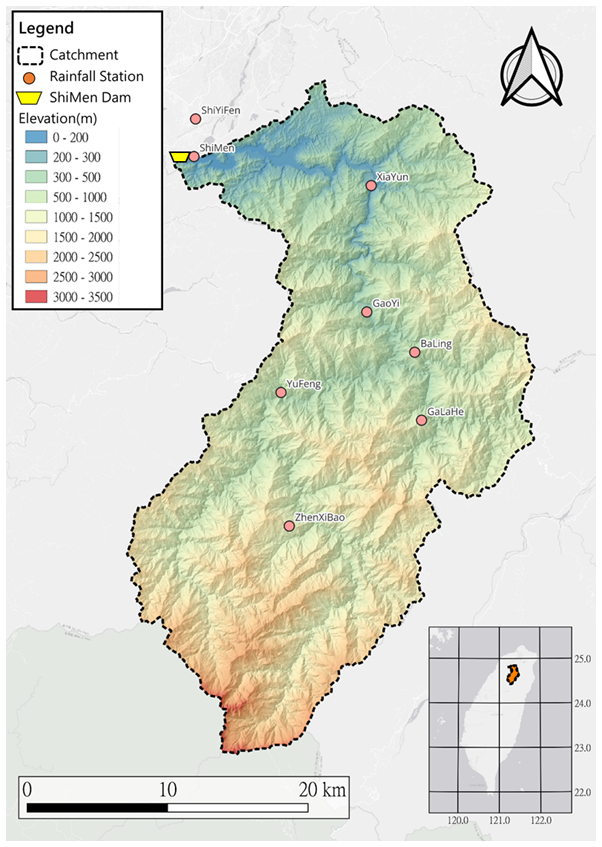
Figure 1Map of the ShihMen Reservoir catchment showing the locations of rainfall stations used in the study. The spatial configuration is essential for understanding hydrological inputs and validating the forecast models. Data sources: Central Weather Administration and Water Resources Agency, Taiwan.
2.1.2 Historical typhoon events
This study collected reservoir inflow data from 18 typhoon events that occurred between 2004 and 2019. The duration of each typhoon event, the average peak hourly rainfall in the catchment area, and the peak inflow are listed in Table 1. The data were divided into training and test datasets in a 13 : 4 ratio based on the year of the typhoon events.
Table 1Summary of 18 historical typhoon events from 2004 to 2019 used for model training and testing. Includes event duration, peak hourly rainfall, and peak reservoir inflow.
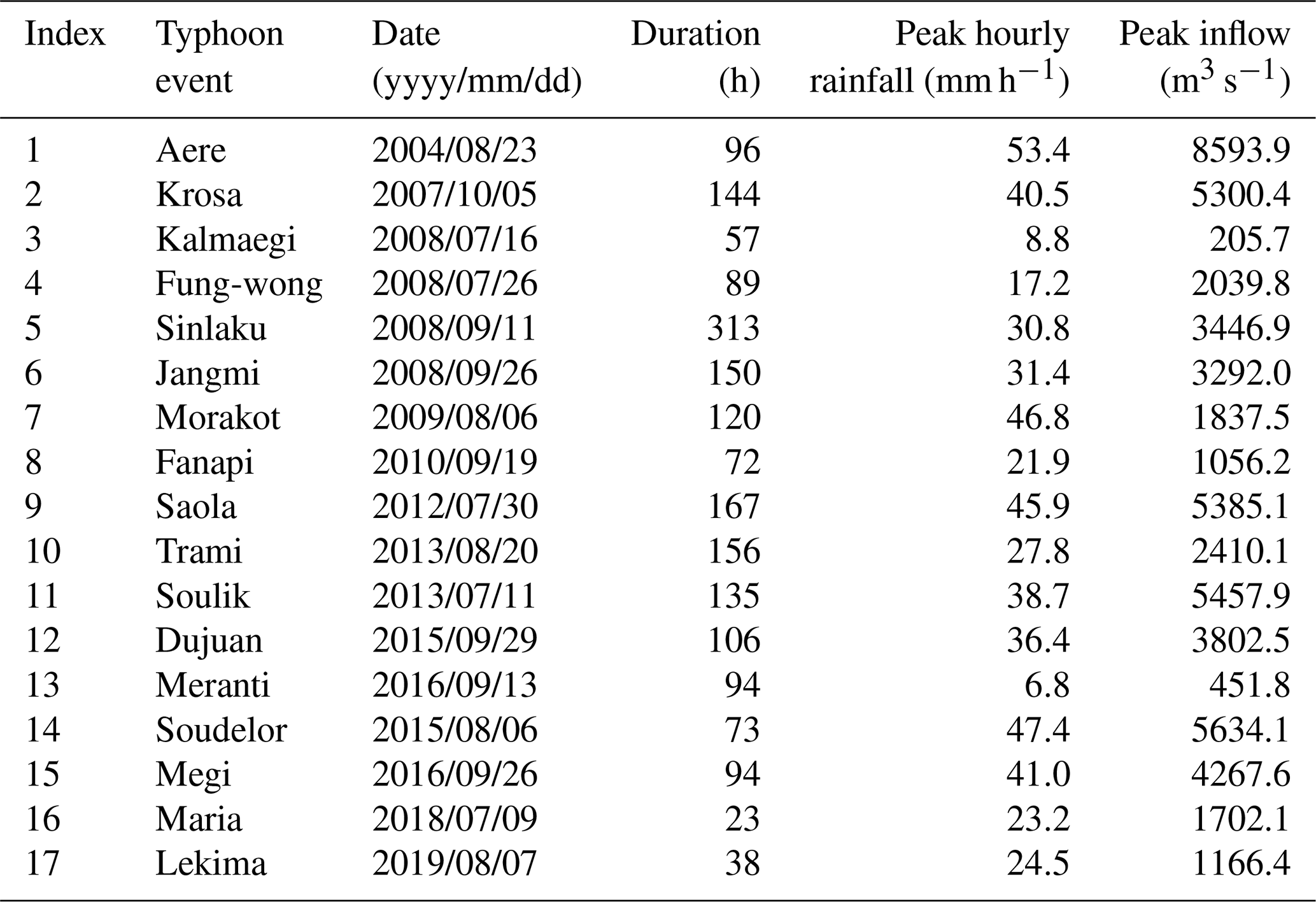
To ensure the model's generalization capability and to avoid extrapolation beyond the training range – a known limitation of machine learning approaches – the training dataset was deliberately selected to include typhoon events with both the highest (Typhoon Aere, peak inflow of 8593.9 m3 s−1) and lowest (Typhoon Kammuri, peak inflow of 205.7 m3 s−1) inflow events. This approach ensures that the model is exposed to the full range of inflow variability during training.
The test dataset, while distinct in events, still falls within the range of the training data. For instance, Typhoon Soudelor in the test set recorded a peak inflow of 5634.1 m3 s−1. The aim of this study is to evaluate the performance of the proposed forecasting framework under known but diverse hydrological conditions, rather than testing the model's extrapolation capability. A more detailed investigation of extrapolation beyond observed ranges is recognized as an important direction for future research.
2.1.3 Meteorological forecast products
This study utilized various meteorological forecast products, which are mainly categorized into NWP and ensemble forecasting. These include Quantitative Precipitation Estimation and Segregation Using Multiple Sensors (QPESUMS), Quantitative Precipitation Forecast (QPF), Ensemble Typhoon Quantitative Precipitation Forecast (ETQPF), Central Weather Bureau Weather Research and Forecasting model (CWB-WRF), WRF Ensemble Prediction System – Probability-Matched Rainfall Forecast (WEPS-PM) and Space and Time Multiscale Analysis System – WRF (STMAS-WRF).
QPESUMS is a platform that integrates observational data from radar, satellites, rain gauges, and lightning detection to provide real-time monitoring of severe weather, quantitative precipitation estimation, and short-term quantitative precipitation forecasting. QPF is the official quantitative precipitation forecast by the Central Weather Administration (formerly Central Weather Bureau). ETQPF uses ensemble model rainfall forecasts as a basis, combined with typhoon track forecasts and related meteorological parameters as selection criteria, to reassemble a new set of typhoon rainfall forecasts. CWBWRF is a mesoscale numerical model developed by the Central Weather Administration (formerly Central Weather Bureau) for atmospheric research and forecasting purposes. WEPS-PM is the best rainfall forecast product obtained by probabilistic matching and averaging of over 20 WRF products. STMAS-WRF is a short-term rainfall forecast product produced by integrating the WRF model with the Space-Time Multiscale Analysis System (STMAS) data assimilation technique. The temporal resolution, spatial resolution, and contents of each product are summarized in Table 2.
Table 2Characteristics of the meteorological forecast products used in this study, including data frequency, lead time, resolution, and data type.
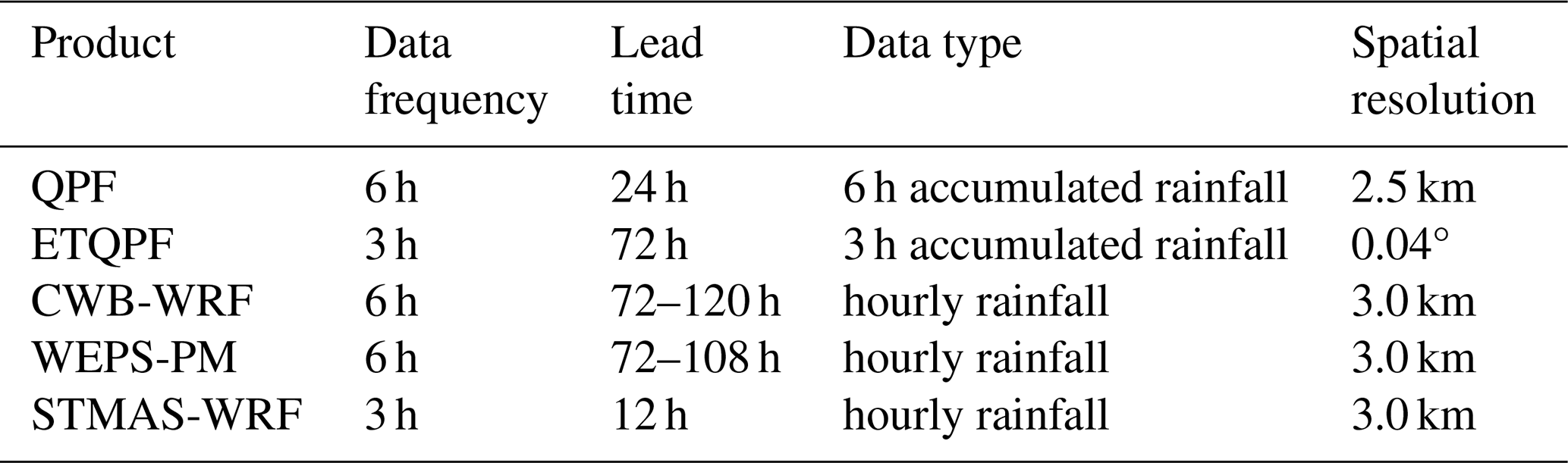
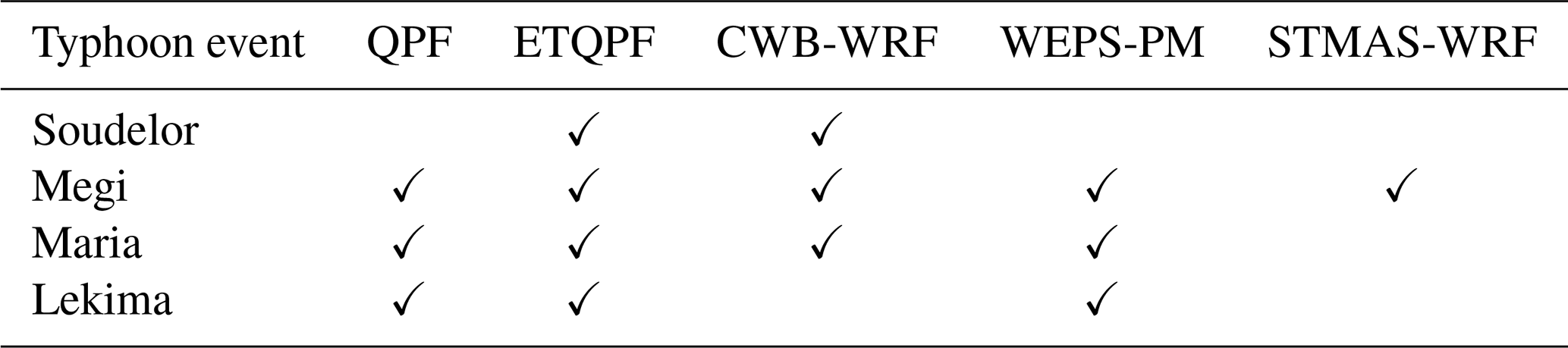
Due to differences in the availability and data provided by each meteorological forecast product, the meteorological forecast products obtained for each typhoon event in this study are summarized in Table 3. The precipitation forecast results from these meteorological forecast products can be used as input variables for the developed rainfall-runoff model to forecast long-term reservoir inflow.
Table 3Availability of meteorological forecast products for each typhoon event in the test dataset. Indicates which products were used for ensemble integration via SPM.
2.2 Model development
A hybrid machine learning–based approach integrated with the Switch Prediction Method (SPM) is proposed to provide accurate 72 h reservoir inflow forecasts. The flowchart of the proposed framework is presented in Fig. 2. The development process consists of three main stages, each incorporating different data sources and computational components to enhance forecast accuracy and robustness.
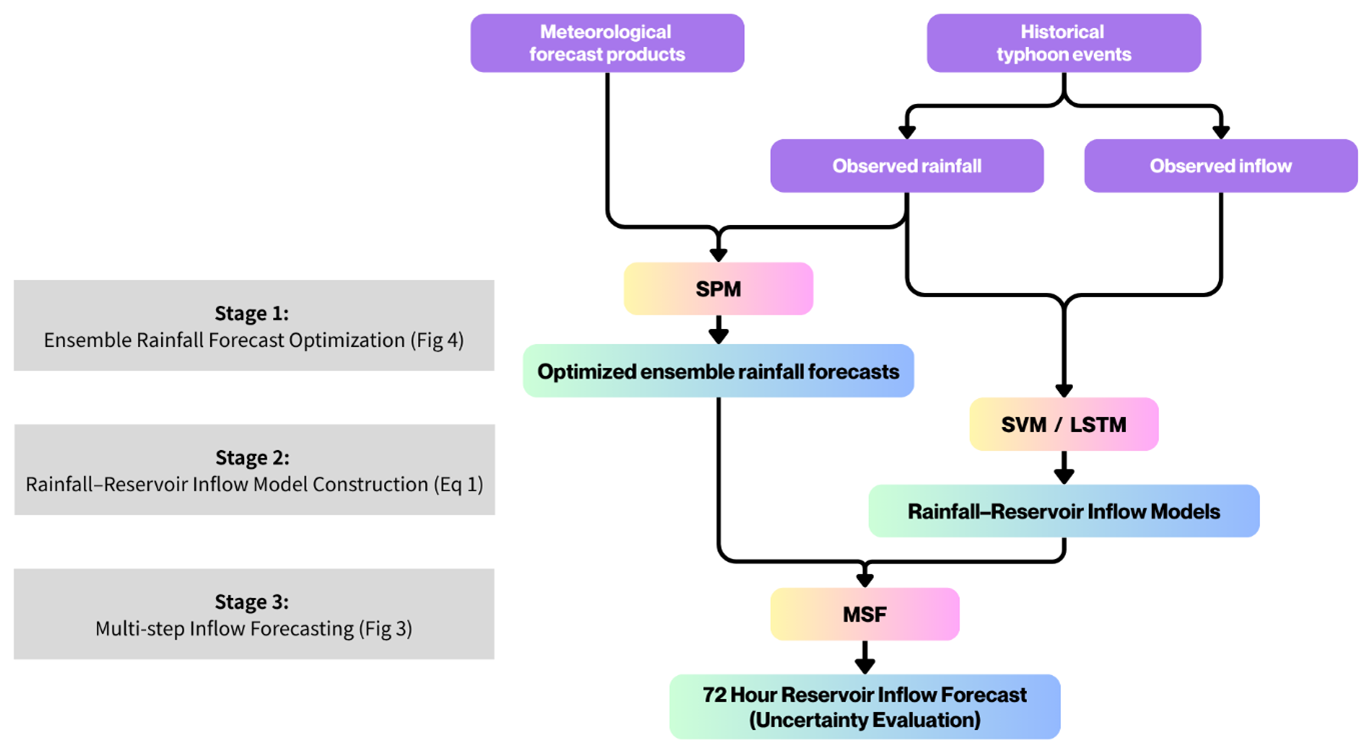
Figure 2Schematic diagram of the proposed three-stage framework for 72 h reservoir inflow forecasting, integrating ensemble rainfall forecasts with machine learning models (SVM and LSTM) via the Switch Prediction Method (SPM) and Multi-Step Forecasting (MSF).
In Stage 1, the SPM is used to optimize ensemble rainfall forecasts by dynamically selecting the most appropriate forecast product based on real-time observed rainfall. This adaptive integration of meteorological forecast products enhances the reliability of rainfall inputs by minimizing prediction biases and maximizing consistency with observed conditions. The output of this stage is the optimized ensemble rainfall forecast.
Stage 2 involves the construction of a data-driven rainfall–reservoir inflow model using observed rainfall and inflow data from historical typhoon events. Both SVM and LSTM are employed as predictive models to explore their respective strengths in capturing the nonlinear and temporal dynamics of hydrological processes.
In Stage 3, the optimized rainfall forecasts from Stage 1 are used as inputs to the trained models from Stage 2 to generate inflow predictions over a 72 h lead time. This is achieved through a MSF approach, which allows the model to sequentially predict inflows for multiple future time steps. The outputs of this stage include both deterministic inflow predictions and, when ensemble rainfall inputs are used, associated confidence intervals representing forecast uncertainty.
This integrated framework provides a robust foundation for inflow forecasting and can be further enhanced for real-time operational deployment. The details of each stage are elaborated in the following subsections.
2.2.1 Optimization of ensemble rainfall products using the switch prediction method
The first stage focuses on optimizing ensemble rainfall forecast products by applying the SPM. The SPM is a forecasting technique that dynamically switches between different predictive models based on specific criteria or conditions to improve accuracy. It is important to note that the SPM differs from conventional ensemble integration approaches. While methods such as simple averaging or BMA assign weights based on historical or probabilistic performance, the SPM adopts a dynamic selection mechanism that evaluates forecast performance in real time.
In this study, the SPM operates by assessing forecast accuracy over a moving time window (N) and selecting the top-performing M candidates from a set of temporally shifted forecasts (controlled by parameter S). The parameter S controls the temporal shifting of forecast products and is used to address time-lag issues in rainfall prediction. The parameter N defines the length of the evaluation window, determining how recent performance influences model selection. The parameter M specifies the number of top-performing candidates included in the final ensemble, balancing robustness and diversity. As noted by Wu and Lin (2017), forecast results can sometimes experience time delays. To address this issue, a parameter S can be set to shift the forecast results over time, thereby improving the delay problem and increasing the number of candidate models.
To improve clarity and reproducibility, the implementation of the SPM is described as follows. At each forecasting time step, multiple candidate rainfall forecasts are first generated by shifting each meteorological forecast product forward and backward in time by S steps. These time-shifted forecasts form an expanded candidate pool that accounts for potential temporal misalignment in the original forecasts. Next, the performance of each candidate forecast is evaluated using observed rainfall over a moving window of the most recent N time steps. Based on the evaluation results, all candidate forecasts are ranked according to their performance, and the top M candidates are selected as the optimal subset. The final ensemble rainfall forecast is then computed as the average of these selected candidates. This mechanism allows the model to adaptively switch between different forecast products depending on current conditions, thereby reducing the influence of poorly performing forecasts and improving the robustness of rainfall inputs. As a result, the SPM effectively reduces the uncertainty inherent in ensemble forecasts by leveraging the strengths of multiple prediction models. This stage is shown in Fig. 2, under the “Ensemble Rainfall Forecast Optimization” block. By continuously integrating real-time rainfall observations, the method produces reliable and robust rainfall forecasts. These optimized forecasts form a solid foundation for the subsequent modeling stages, ensuring that the input data used in later stages is of high quality and consistency.
2.2.2 Construction of a rainfall-reservoir inflow model using observed data
In the second stage, observed data are employed to develop a rainfall-reservoir inflow model. This stage involves establishing a quantitative relationship between observed rainfall and reservoir inflow using historical rainfall and inflow data. As illustrated in Fig. 2, historical typhoon events provide both rainfall and inflow observations for training the models. Statistical methods and machine learning algorithms are used to analyze the historical data and identify patterns and correlations. The model created in this stage serves as a critical tool for translating rainfall data into expected reservoir inflow, thus forming the basis for forecasting analysis. This step ensures that the model is tailored to the specific hydrological characteristics of the reservoir, improving the accuracy of inflow forecasts.
Machine learning methods offer significant advantages in rainfall-reservoir inflow modeling due to their ability to handle complex, non-linear relationships between input variables and inflow responses. Unlike traditional hydrological or statistical approaches, machine learning algorithms can automatically learn from data, capturing intricate patterns and dependencies that are often present in hydrological processes.
In this study, two machine learning models are used: SVM and LSTM. SVM is chosen for its robustness in handling high-dimensional data and its effectiveness in regression tasks. It is particularly suited when the relationship between input variables and outputs is complex and non-linear (Lin et al., 2013b, c; Lu et al., 2019; Wu et al., 2013, 2014). On the other hand, LSTM networks, a type of Recurrent Neural Network (RNN), are particularly well-suited for time series forecasting (Kaveh et al., 2021; Liang et al., 2018; Zhang et al., 2018). LSTMs are capable of capturing long-term dependencies and temporal dynamics in sequential data, making them ideal for modeling the temporal patterns of rainfall and inflow.
The selection of SVM and LSTM was intended to represent two widely adopted classes of machine learning approaches, namely conventional machine learning and deep learning methods. It should be noted that the primary objective of this study is not to identify the optimal forecasting architecture, but rather to evaluate the effectiveness of the proposed SPM framework for improving rainfall forecast inputs and long lead-time inflow prediction. Therefore, SVM and LSTM were selected as representative models to assess whether the benefits of SPM can be consistently transferred across different modeling paradigms. This design enables the contribution of the proposed rainfall forecast optimization framework to be evaluated independently of a specific prediction architecture.
The general form of the nonlinear function approximator is given by:
where Qt+1 is the predicted inflow at time t+1, and Qt and Rt represent the observed inflow and rainfall at time t, respectively. f denotes the nonlinear function approximator constructed by the SVM or LSTM, and LQ and LR are the lag lengths of reservoir inflow and rainfall, respectively.
2.2.3 Forecasting 72 h reservoir inflow using the optimized rainfall forecast input
The final stage integrates the optimized rainfall forecasts from Stage 1 and the trained machine learning models from Stage 2 to perform long-range inflow forecasting. This is achieved through a MSF approach, as indicated in Fig. 2 and further illustrated in Fig. 3. The MSF method is particularly effective for sequential prediction tasks, where the output of one prediction step is used as an input for the next step, thereby enabling more accurate and continuous inflow forecasting over extended periods.
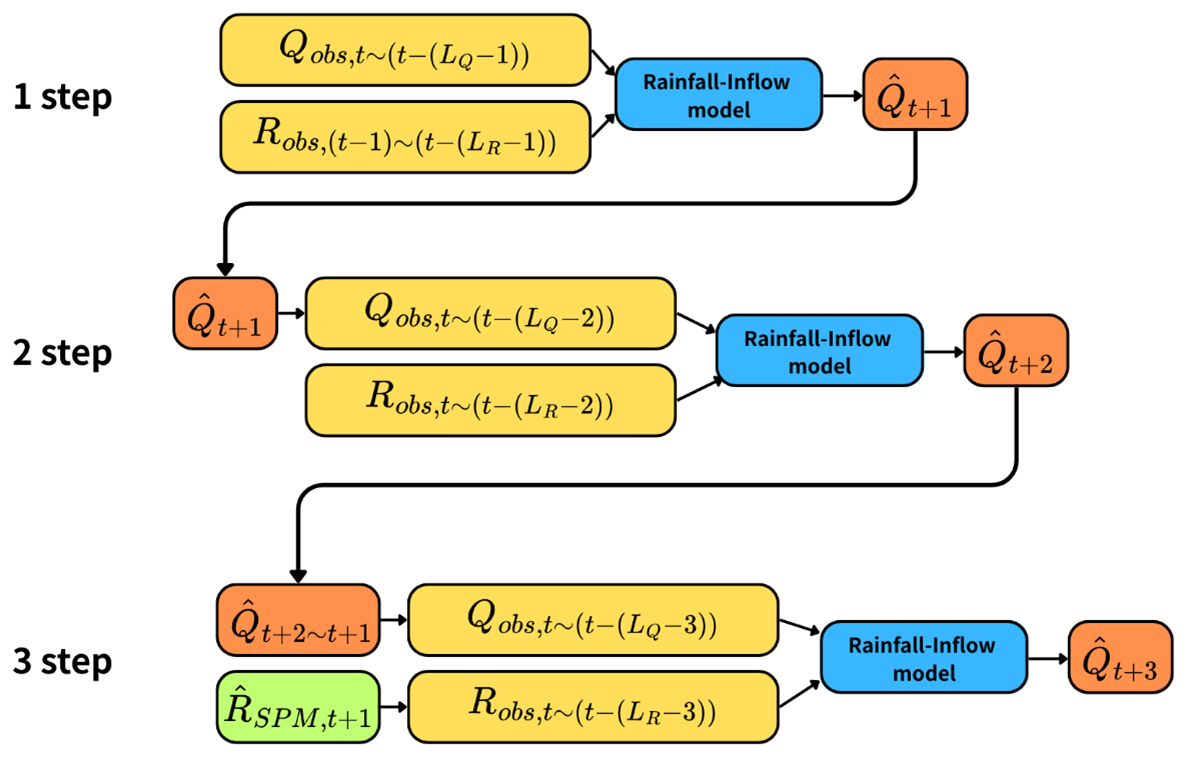
Figure 3Flowchart of the Multi-Step Forecasting (MSF) procedure. This diagram demonstrates how sequential inflow predictions are generated by iteratively using previous outputs and SPM-optimized rainfall forecasts.
Thaisiam et al. (2025) have shown that multi-step forecasting approaches are essential for long lead-time prediction but are inherently sensitive to error accumulation and input uncertainty. Moreover, no single forecasting strategy consistently performs best across all scenarios, highlighting the importance of adaptability in forecasting frameworks. In this context, the proposed framework extends conventional MSF approaches by incorporating the SPM, which dynamically selects and integrates rainfall forecasts based on real-time performance, thereby improving input quality and reducing uncertainty propagation.
The model further incorporates updated rainfall information during the forecasting process, ensuring that the input conditions reflect the most recent observations and forecast adjustments. As the forecast lead time increases, the model transitions from relying on observed data to utilizing its own sequentially generated forecasts and SPM-integrated rainfall inputs. Through 72 iterations, the MSF process produces a 72 h reservoir inflow forecast. The integration of new rainfall data in real-time is particularly valuable for operational applications, such as adaptive water release strategies and flood control during typhoon events.
By incorporating these stages, the proposed model significantly improves the ability to forecast long-term reservoir inflows, thereby enhancing the overall management and operational efficiency of the reservoir. The integration of advanced meteorological products with cutting-edge modeling techniques ensures that the model remains robust and adaptable to various weather conditions and hydrological scenarios.
2.2.4 Algorithm of the proposed SPM–ML–MSF framework
To enhance the reproducibility of the proposed framework, the overall procedure of the SPM–ML–MSF approach is summarized as follows:
-
Step 1: Collect multiple rainfall forecasts from different numerical weather prediction (NWP) products for each lead time.
-
Step 2: Apply the SPM to evaluate the performance of each rainfall forecast based on recent observations and select the most reliable forecast product dynamically.
-
Step 3: Generate integrated rainfall inputs by combining the selected forecasts across different lead times.
-
Step 4: Construct inflow forecasting models using machine learning techniques (SVM and LSTM) trained on historical rainfall–inflow data.
-
Step 5: Use the SPM-integrated rainfall forecasts as inputs to the trained models to generate inflow predictions.
-
Step 6: Apply a MSF strategy to produce continuous inflow forecasts up to 72 h ahead.
-
Step 7: Evaluate model performance using statistical metrics such as MAE, RMSE, and CE.
The above procedure ensures that the proposed framework can be systematically implemented and reproduced in other studies.
2.3 Performance measures
To evaluate the forecasting performance of proposed models in different stages, four criteria are used in this study and described as follows:
-
Root mean square error (RMSE)
RMSE measures the average magnitude of forecast errors, placing greater emphasis on larger errors. It is particularly useful for identifying models that generate significant outliers.
-
Mean absolute error (MAE)
MAE represents the average of the absolute differences between forecasted and observed values, offering an intuitive measure of overall forecast accuracy.
n is the number of data, and ot and are the observed and forecasted values at time t, respectively.
-
Coefficient of correlation (CC)
CC evaluates the strength and direction of the linear relationship between forecasted and observed values, indicating how well the predicted values follow the trend of the actual data.
-
Coefficient of efficiency (CE)
CE quantifies the proportion of variance in observed values explained by the forecast. A CE value closer to 1 indicates higher model efficiency, whereas a value less than zero suggests poor model performance.
and are the averages of the observed and forecasted values, respectively.
3.1 The optimal inputs and parameters
The optimization algorithm used in this study was the grid-search method, which considered all parameter combinations within a reasonable range.
In the first stage, when integrating ensemble rainfall forecast products using the SPM, it was necessary to optimize the parameters S, N, and M. Through the grid-search method, the optimal parameters were determined as , where E represents the number of provided meteorological forecast products (Table 3).
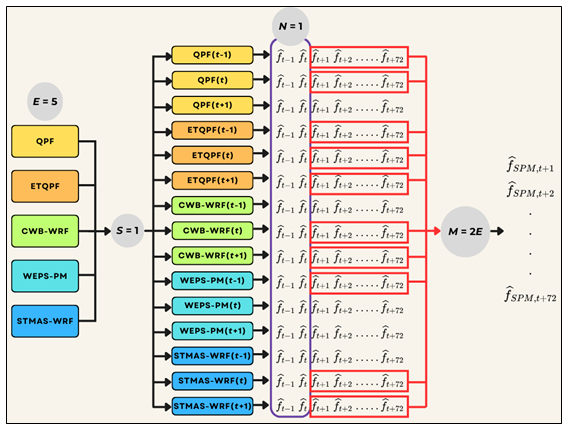
Figure 4Illustration of the Switch Prediction Method (SPM) implementation for Typhoon Megi. It shows the selection of optimal forecasts by comparing multiple time-shifted rainfall forecasts against observations.
Figure 4 presents the illustration of the SPM stage for typhoon Megi. For this typhoon event, five meteorological forecast products were collected (E = 5). Each product was shifted forward and backward by one unit (S = 1), resulting in 15 candidate models. The forecast results from time t to t−1 (N = 1) were compared with observed data to select the top-performing M models (). The average of M models at each lead time was then used as the rainfall forecasts.
The second stage, while constructing the rainfall-reservoir inflow model, focused on optimizing both the model input combinations and the hyperparameters of the machine learning models. Rainfall and reservoir inflow information were identified as the key input factors required for accurate reservoir inflow forecasting. The parameters (LR) and (LQ) are particularly important because they define the lag lengths of rainfall and reservoir inflow, respectively, enabling the models to capture the temporal dependencies inherent in hydrological processes.
In addition to input selection, model hyperparameters play a critical role in determining forecasting accuracy and generalization capability. Therefore, a grid-search procedure was employed to systematically identify the optimal combination of model parameters and hyperparameters. The search ranges considered for the SVM and LSTM models are summarized in Table 4.
Table 4Hyperparameter search ranges and optimal hyperparameter settings for the SVM and LSTM models used in reservoir inflow forecasting.
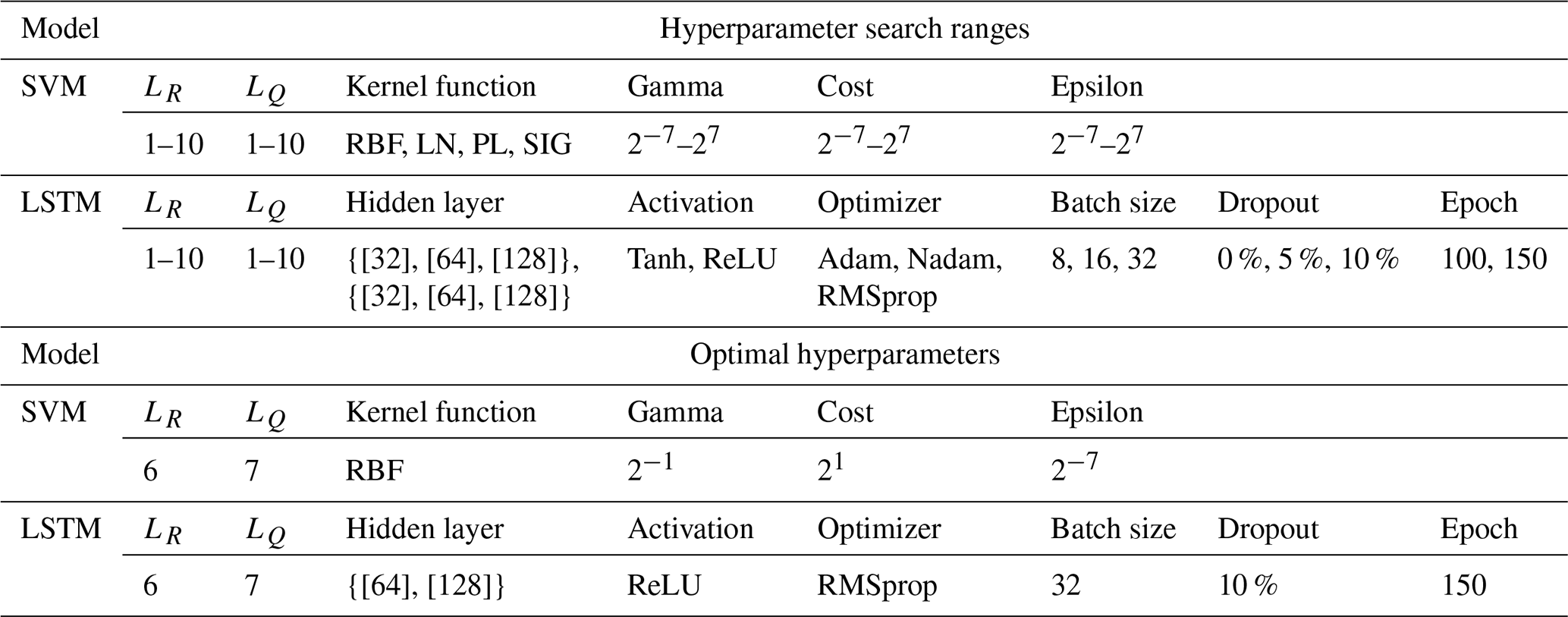
This optimization procedure ensures that the models capture the most relevant temporal information and hydrological characteristics of the study area, thereby improving the accuracy and reliability of reservoir inflow forecasting.
3.2 Model comparisons
3.2.1 Comparison of meteorological forecast products and the SPM
To evaluate the effectiveness of the SPM in enhancing the accuracy and reliability of rainfall forecasts, the performance of various meteorological forecast products with the results obtained using SPM are compared. Table 5 summarizes the results for four typhoon events using four evaluation metrics: RMSE, MAE, CC and CE.
Table 5Performance comparison of individual meteorological forecast products and the SPM across four typhoon events using four statistical evaluation metrics.
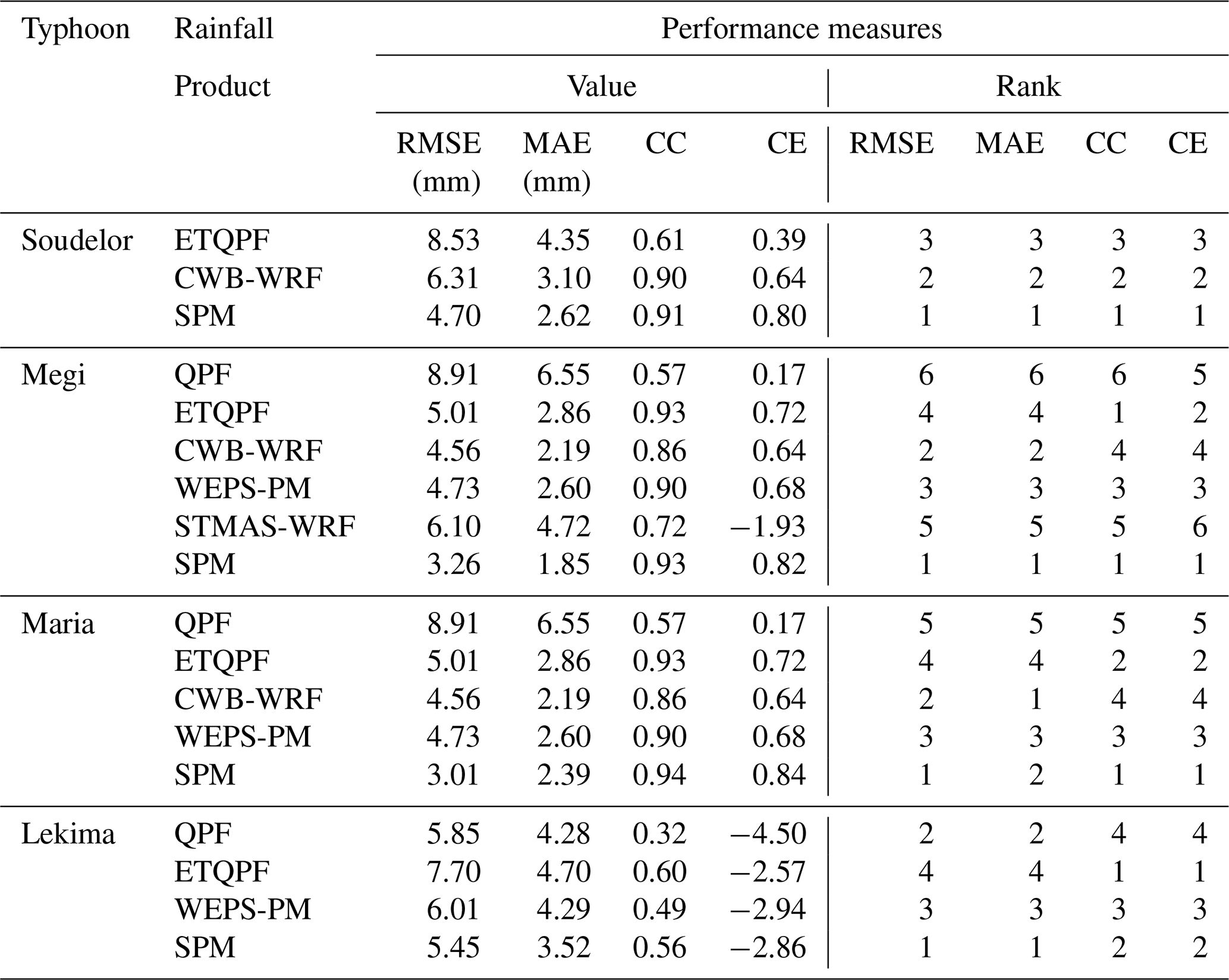
For instance, during Typhoon Soudelor, the SPM achieved an RMSE of 4.70 mm, an MAE of 2.62 mm, a CC of 0.91, and a CE of 0.80, outperforming all individual forecast products, including ETQPF (RMSE: 8.53 mm, CE: 0.39) and CWB-WRF (RMSE: 6.31 mm, CE: 0.64). A similar pattern was observed for Typhoon Megi, where the SPM yielded an RMSE of 3.26 mm, an MAE of 1.85 mm, a CC of 0.93, and a CE of 0.82, again ranking first across all metrics.
In the case of Typhoon Maria, the SPM continued to demonstrate superior performance, producing the lowest RMSE (3.01 mm) and the highest CE (0.84). Even for Typhoon Lekima, where all models produced negative CE values due to considerable discrepancies in rainfall forecasts, the SPM still achieved the best relative performance, with an RMSE of 5.45 mm. These results confirm that the SPM not only improves the accuracy of ensemble rainfall forecasts but also enhances the consistency and robustness of rainfall prediction under varying meteorological conditions.
The meteorological forecast products for each typhoon event and the integrated forecast results using the proposed SPM are shown in Figs. 5 to 8. Due to the high temporal resolution of the ensemble forecasts, Figs. 5 to 8 are presented to reflect the full variability and temporal spread among different forecast members. While individual lines may appear visually dense, this type of visualization is intended not for exact value identification but to highlight the degree of uncertainty across forecast initialization times. This approach realistically captures the variation and inconsistency commonly found in operational meteorological forecasts across different typhoon events.
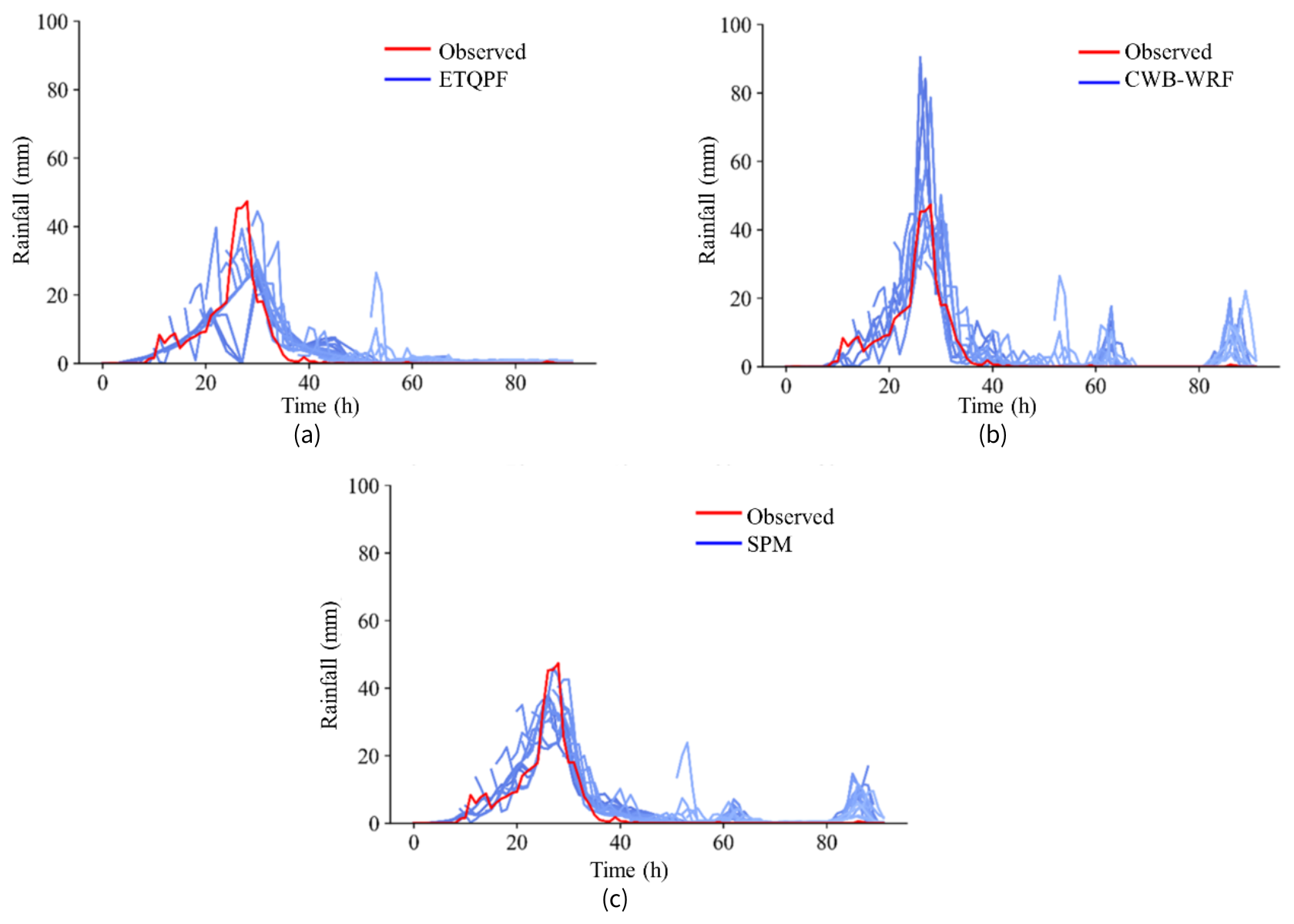
Figure 5Comparison of meteorological forecast products (ETQPF and CWB-WRF) and the SPM-generated forecast for Typhoon Soudelor.
As shown in Fig. 5, it can be seen that for Typhoon Soudelor, the ETQPF model exhibited significant fluctuations in forecast results before the peak rainfall, leading to significant variations in forecasts at different times. On the other hand, the CWB-WRF model showed more stable forecast results with less variation in values over time. However, it significantly overestimated the peak rainfall, predicting a maximum rainfall of 90 mm, whereas the actual observed rainfall was about 47 mm. The proposed SPM, by integrating the advantages of both meteorological products, provided forecasts that did not exhibit significant fluctuations over time and had peak forecast values closer to the actual observations.
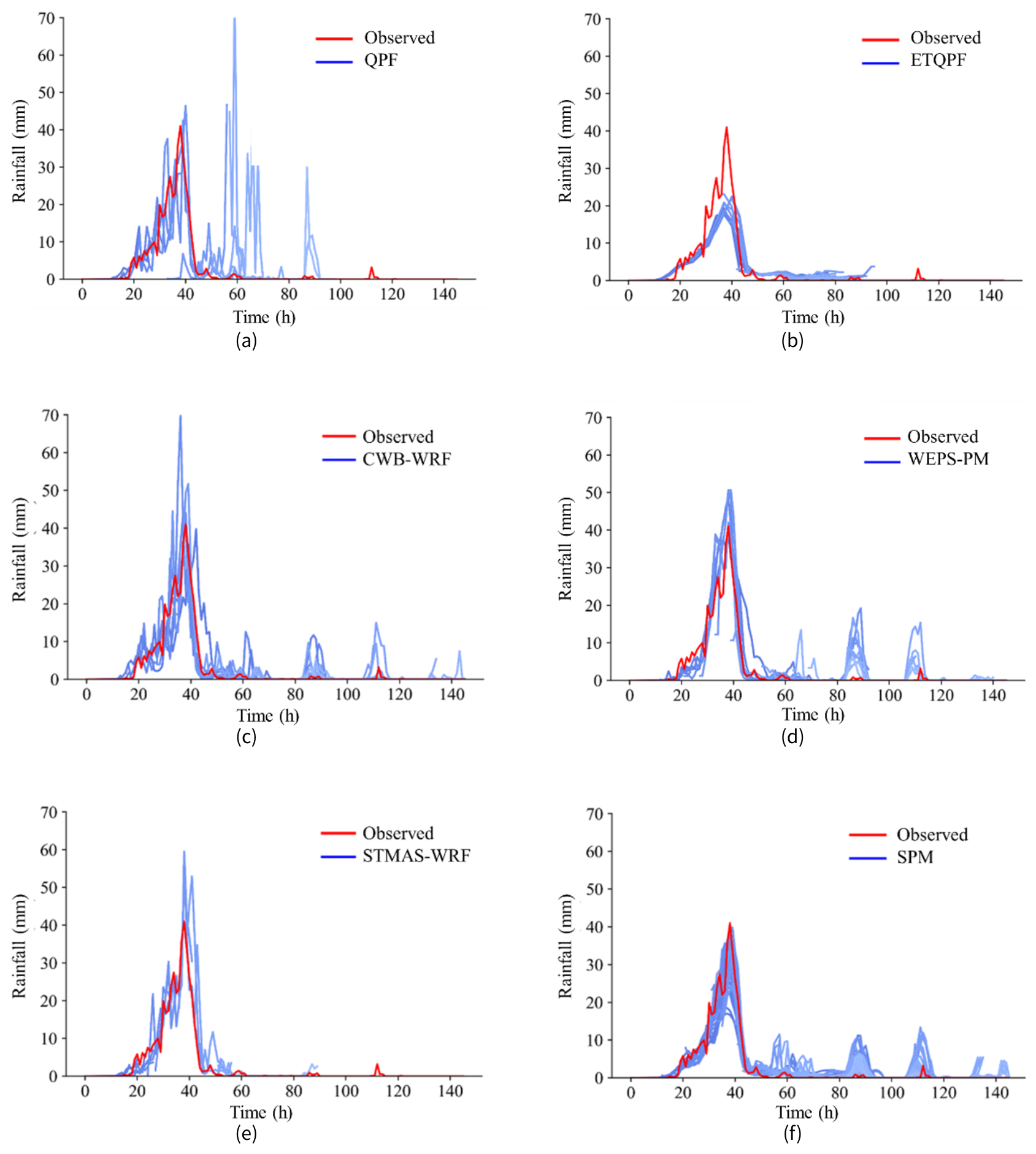
Figure 6Comparison of meteorological forecast products (QPF, ETQPF, CWB-WRF, WEPS-PM and STMAS-WRF) and the SPM-generated forecast for Typhoon Megi.
In Fig. 6, the QPF model shows an overestimated rainfall after the peak rainfall. The ETQPF forecast results are consistent with the observed rainfall trends, but the peak rainfall is significantly underestimated. The CWB-WRF model tends to overestimate rainfall throughout the entire typhoon period, while WEPS-PM and STMAS-WRF showed relatively good performance regarding forecast error and trend alignment. The SPM combines the strengths of these models, resulting in stable forecast values over time with peak predictions closer to the observed values.
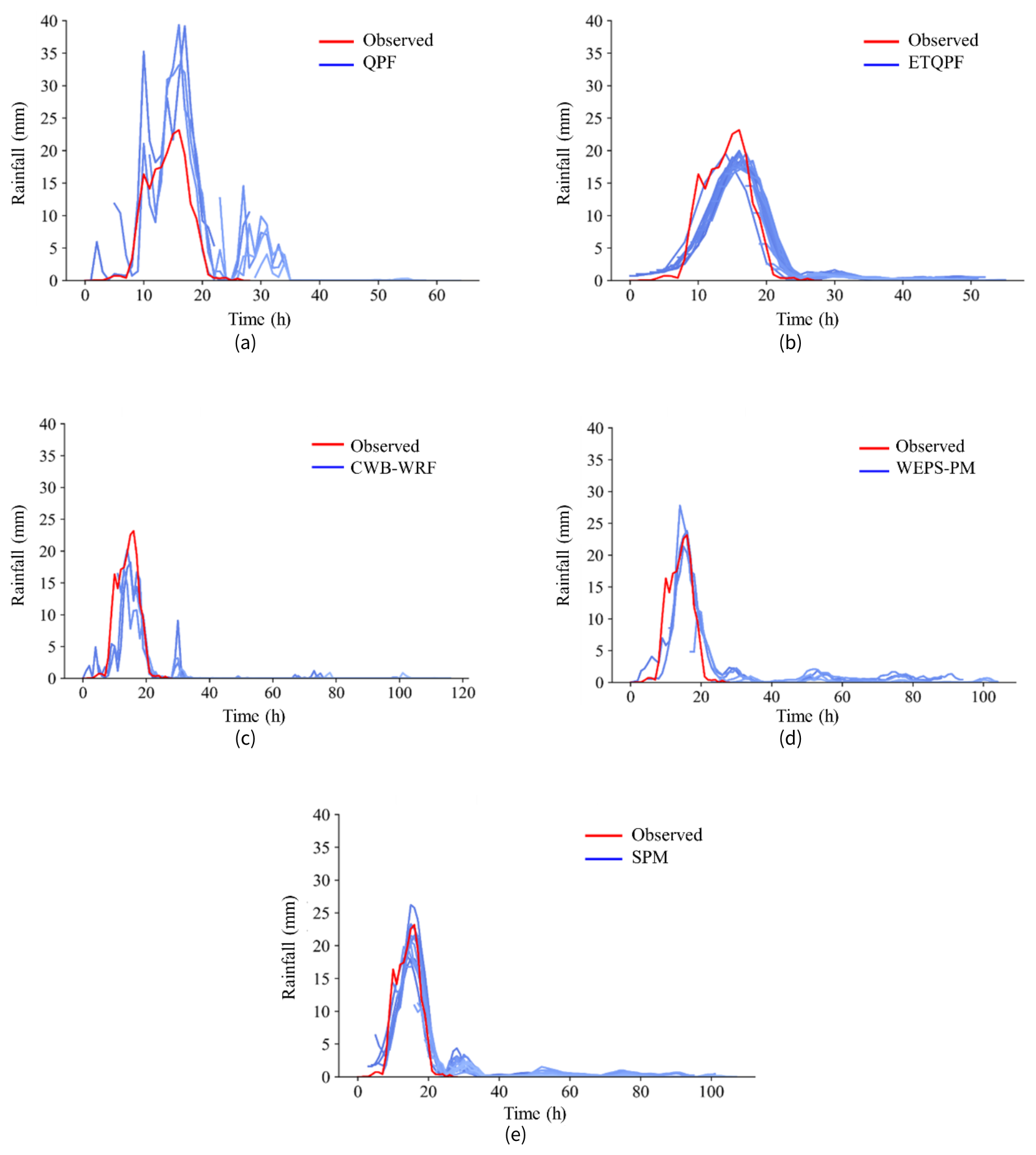
Figure 7Comparison of meteorological forecast products (QPF, ETQPF, CWB-WRF and WEPS-PM) and the SPM-generated forecast for Typhoon Maria.
Figure 7 shows the performance of Typhoon Maria. The QPF model exhibits forecast fluctuations and overestimation of rainfall. In contrast, the CWB-WRF model underestimates rainfall throughout the typhoon period. ETQPF and WEPS-PM provide forecasts more consistent with the observed rainfall values and trends. The SPM integrates these forecasts to provide the most stable and accurate predictions, reducing errors and aligning more closely with observed data.
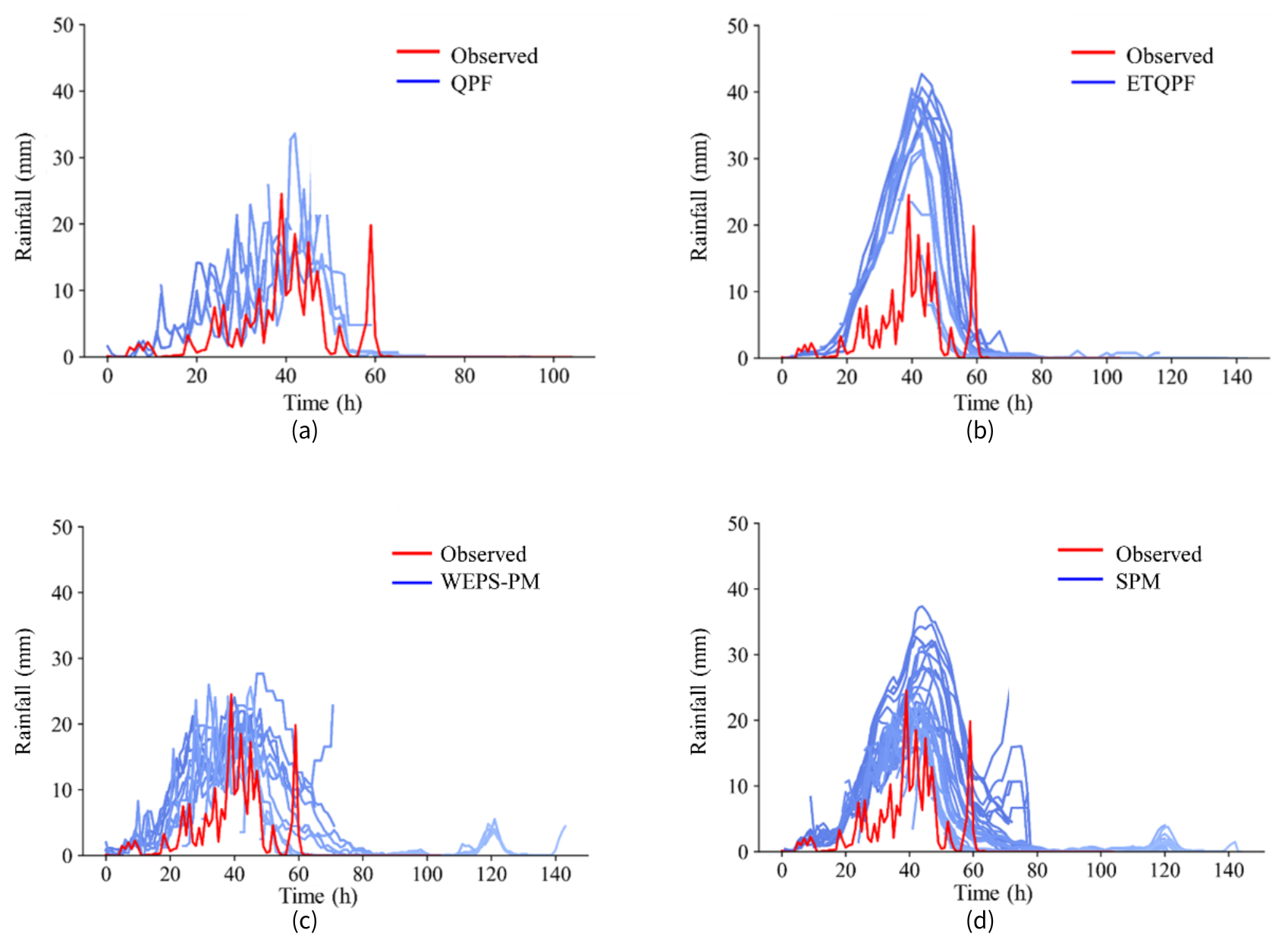
Figure 8Comparison of meteorological forecast products (QPF, ETQPF and WEPS-PM) and the SPM-generated forecast for Typhoon Lekima.
In Fig. 8, it can be seen that QPF, ETQPF, and WEPS-PM all perform inadequately. Consequently, the performance of SPM was also limited, resulting in larger forecast errors compared to other typhoon events. However, the SPM still provides more stable forecasts than QPF and WEPS-PM, with better forecasts than ETQPF. This demonstrates that even under challenging conditions, the SPM offers superior overall error reduction and forecast stability.
The analysis shows that different meteorological forecast products exhibit varying strengths and weaknesses across different typhoon events, making it difficult to identify a single best-performing product applicable to all situations. The SPM method proposed in this study addresses this limitation by dynamically selecting and integrating rainfall forecasts based on real-time observational data. By filtering out unsuitable forecasts using specific criteria, SPM avoids the direct propagation of unreliable inputs into the forecasting system. As a result, the rainfall forecasts generated by SPM exhibit lower uncertainty and better agreement with observed rainfall compared to individual meteorological forecast products, demonstrating its effectiveness in improving input quality. This highlights a key strength of the proposed framework: its ability to enhance adaptability to time-varying meteorological conditions while reducing uncertainty propagation from rainfall forecasts to inflow predictions.
3.2.2 Comparison of rainfall-reservoir inflow models
This section compares the performance of two machine learning-based rainfall-reservoir inflow models: SVM and LSTM. Both models were trained and tested using observed rainfall and inflow data, and their performance is summarized in Table 6 and illustrated in Fig. 9.
Table 6Performance comparison between SVM-based and LSTM-based rainfall-inflow models during training and test phases.
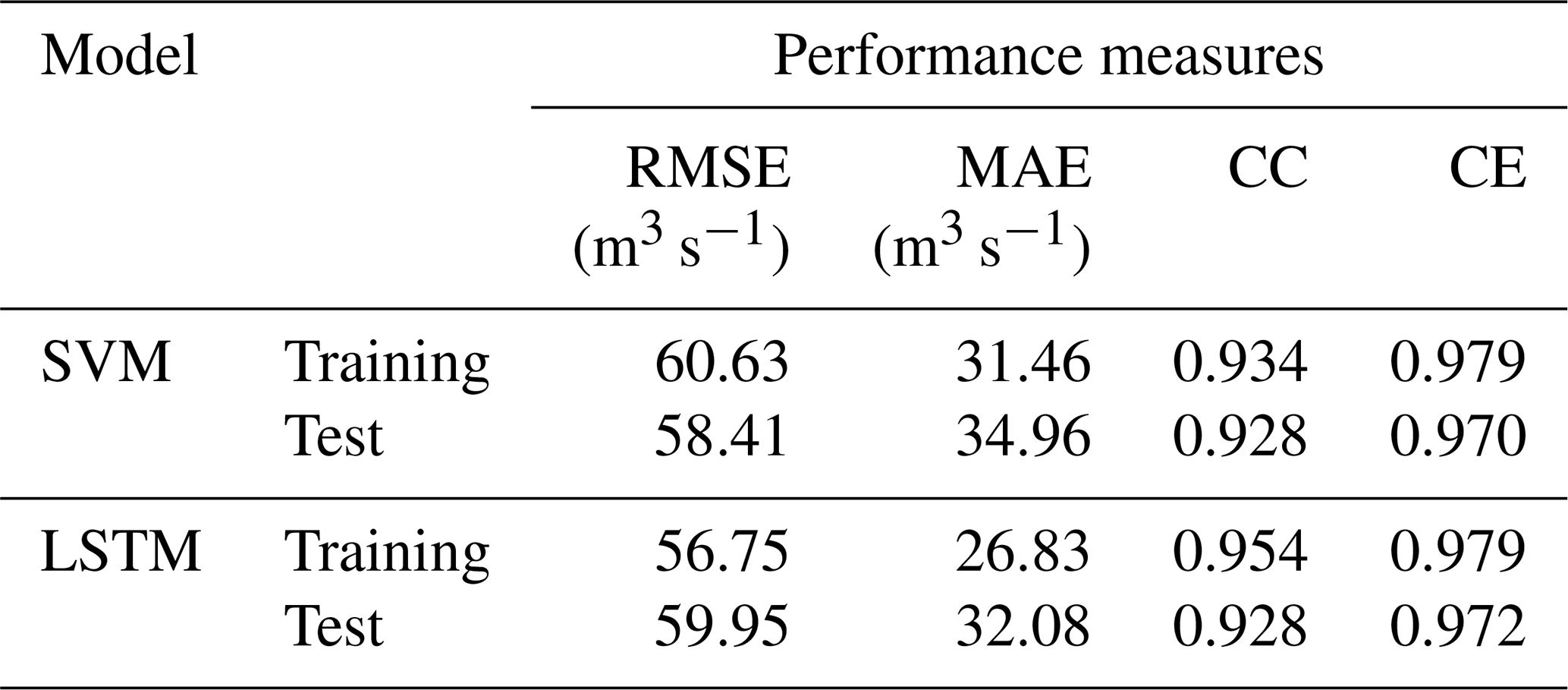
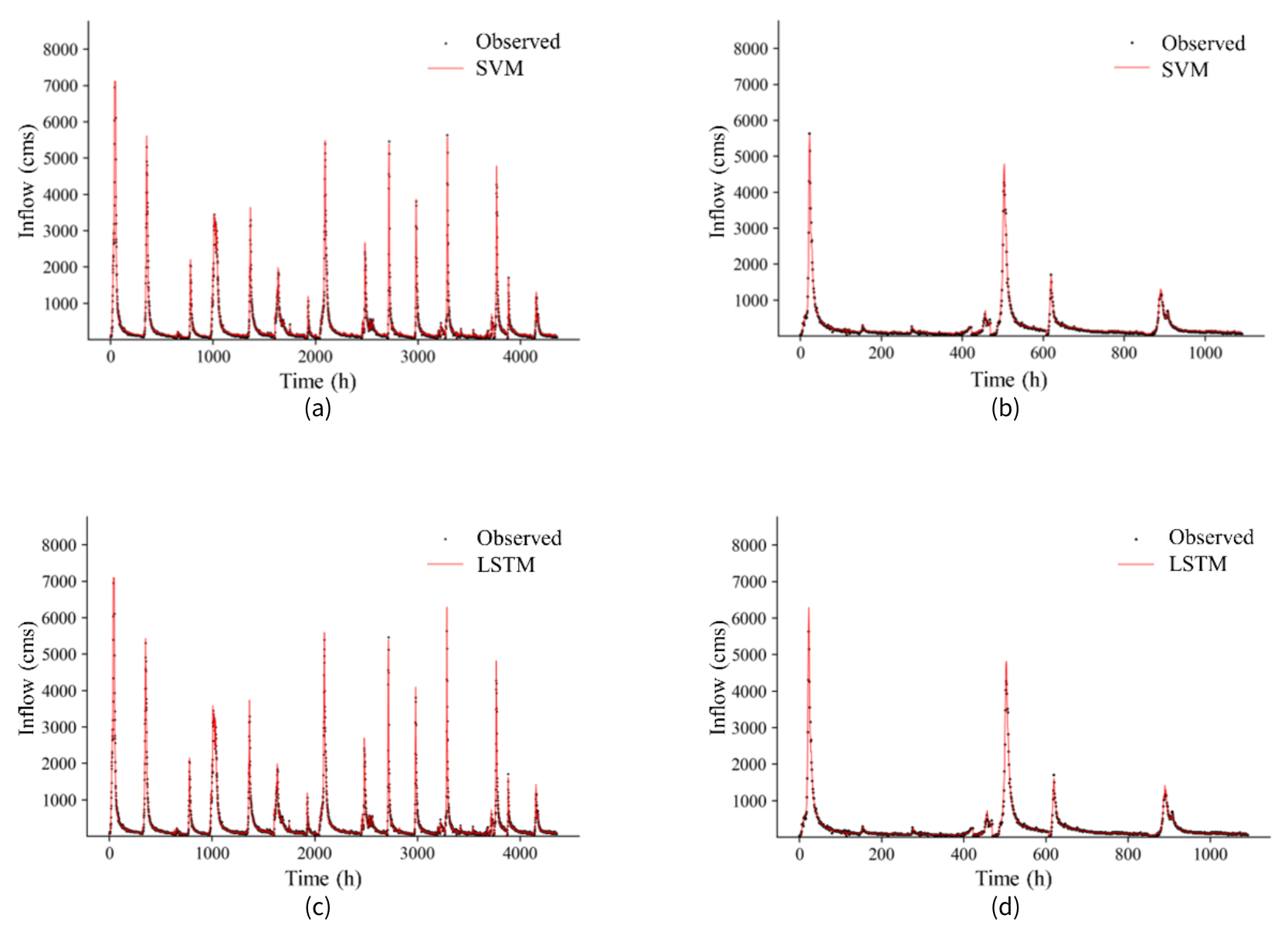
Figure 9Performance comparisons of SVM-based and LSTM-based rainfall-inflow models using training and test datasets. The plots show both the accuracy and learning stability of each model.
During the training phase, the LSTM model demonstrated lower error values (RMSE: 56.75 m3 s−1, MAE: 26.83 m3 s−1) compared to the SVM model (RMSE: 60.63 m3 s−1, MAE: 31.46 m3 s−1), while also achieving a higher correlation coefficient (CC: 0.954 vs. 0.934). In the test phase, the SVM model exhibited slightly better RMSE (58.41 m3 s−1) than the LSTM model (59.95 m3 s−1), although the LSTM model had a marginally better CE (0.972 vs. 0.970). Both models achieved identical CC values of 0.928 in the test set.
These results suggest that while the SVM model showed slightly better overall generalization in terms of RMSE, the LSTM model maintained comparable performance and demonstrated stronger learning capability during training. Both models exhibited excellent predictive skill and reliability, with high CC and CE values in both phases, indicating their suitability for modeling complex, non-linear rainfall–inflow relationships. Given their consistent performance, both the SVM and LSTM models can be effectively used for long-term reservoir inflow forecasting, particularly when driven by SPM-integrated rainfall forecasts.
3.2.3 Comparison of the performance of MSF with observed rainfall
This section primarily discusses the results of long-term inflow forecasting using the MSF method. Unlike the previous subsection, where inflow at time t+1 was forecasted using the information at time t, this section uses the MSF method. The MSF method iteratively calculates the forecasted inflow for the next time step, and then using it as the input for the subsequent step. This process is repeated 72 times to produce inflow forecasts from t+1 to t+72.
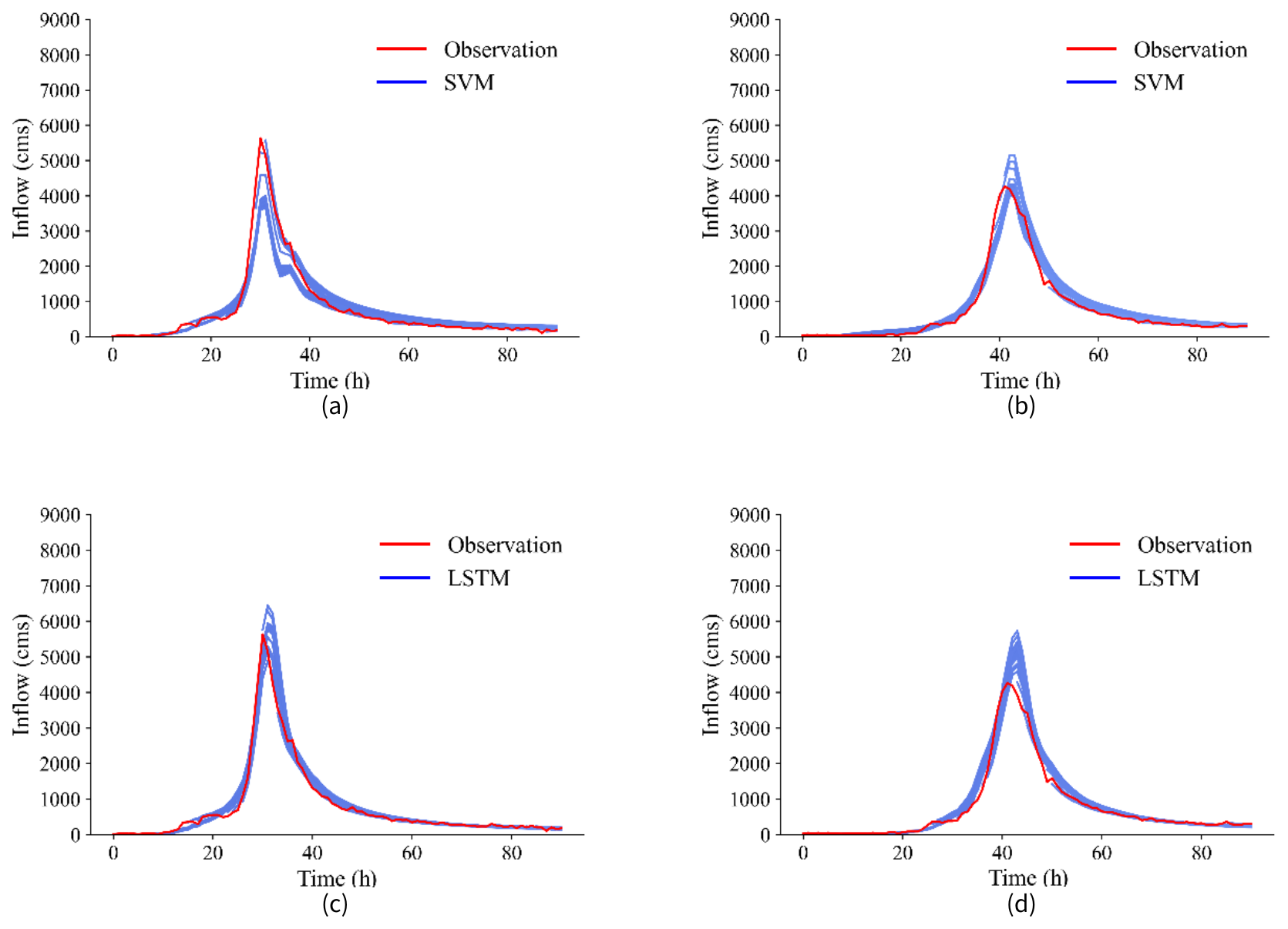
Figure 10Multi-step inflow forecasts using observed rainfall for Typhoons Soudelor and Megi. The results validate both SVM and LSTM models for capturing temporal hydrological dynamics.
To evaluate the performance of the MSF method, the observed rainfall is used as input to examine the models' ability to forecast 72 h inflows directly. Figure 10 shows the MSF forecasting results for the test events of Soudelor and Megi.
For Typhoon Soudelor, the SVM model initially underestimates the inflow. However, as time progresses and more observed inflow information at the rising limb becomes available, the MSF forecasts gradually become more accurate in forecasting the peak inflow. For Typhoon Megi, the SVM model accurately reflects the entire flood process, with forecasted peak inflows closely matching the observed values.
The LSTM model, on the other hand, captures the flood processes well for both Soudelor and Megi events. However, it tends to overestimate the peak inflow compared to the actual observed peak inflow.
Overall, the results indicate that both SVM and LSTM models, when combined with the MSF method and accurate rainfall information, can reliably forecast reservoir inflows for up to 72 h. This demonstrates the robustness and effectiveness of using MSF for long-term inflow predictions without significant oscillations or error accumulations.
3.2.4 Comparison of the performance of MSF with forecasted rainfall
This section analyzes the results of long-term inflow forecasting using the MSF method with SPM-integrated forecasted rainfall data. The forecast performance for three test typhoon events – Soudelor, Megi, and Maria – is summarized in Table 7.
Table 7Evaluation of forecasted inflows using SPM-integrated rainfall for three typhoon events. Comparison is based on RMSE, MAE, CC, and CE.
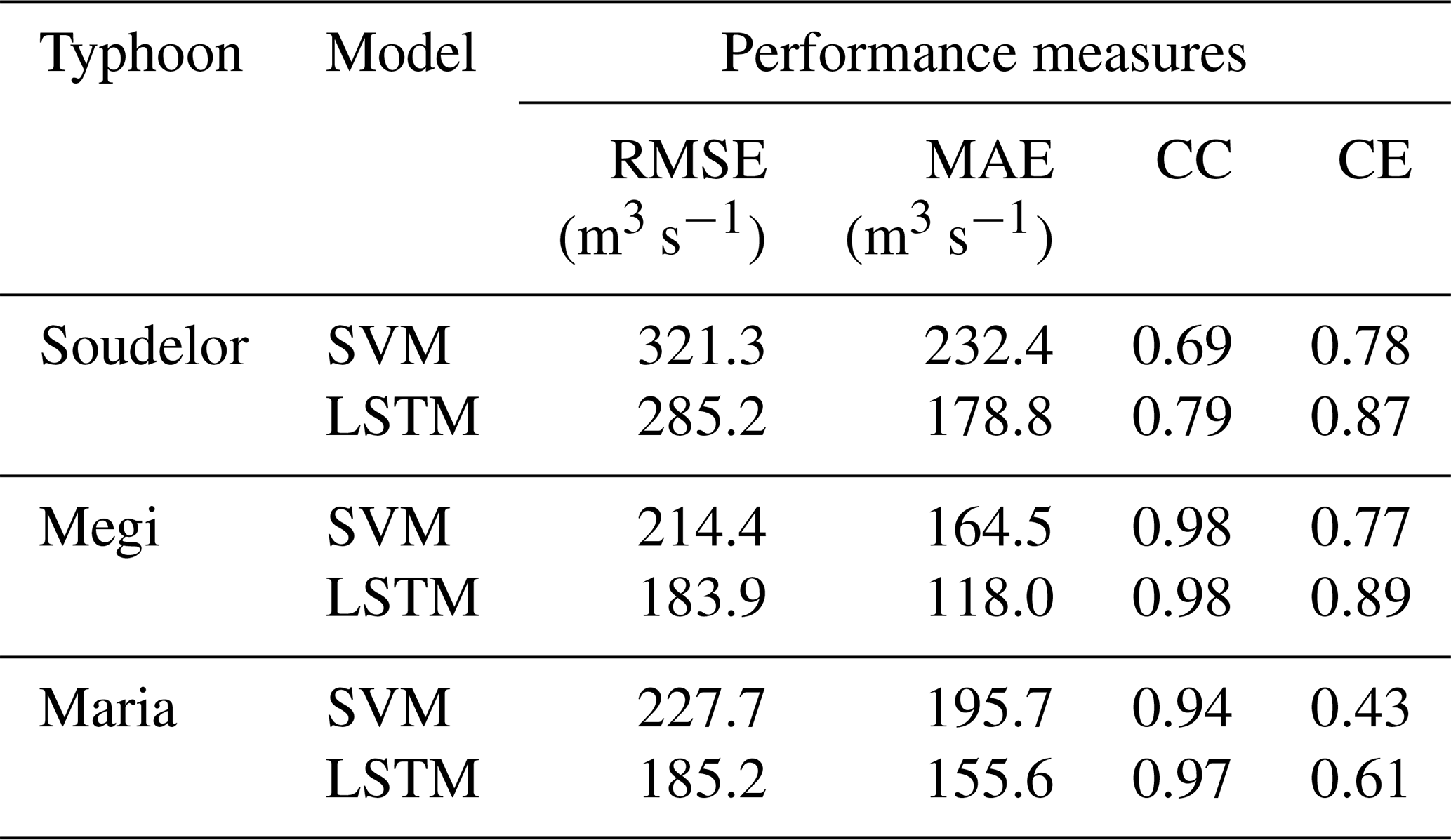
The results show that the LSTM-based rainfall–inflow model outperformed the SVM-based model across all events and evaluation metrics. Specifically, for Typhoon Soudelor, the LSTM model achieved an RMSE of 285.2 m3 s−1, an MAE of 178.8 m3 s−1, a CC of 0.79, and a CE of 0.87, compared to the SVM model's RMSE of 321.3 m3 s−1 and CC of 0.69. For Typhoon Megi, both models exhibited high correlation (CC: 0.98), but the LSTM model produced lower RMSE (183.9 m3 s−1) and MAE (118.0 m3 s−1) than the SVM model (RMSE: 214.4 m3 s−1, MAE: 164.5 m3 s−1), along with a higher CE (0.89 vs. 0.77). In the case of Typhoon Maria, the LSTM model again outperformed SVM, achieving a lower RMSE (185.2 m3 s−1) and MAE (155.6 m3 s−1), and higher CC (0.97) and CE (0.61) compared to the SVM model (CE: 0.43).
These results confirm the superior performance of the LSTM model in forecasting long-lead reservoir inflows, particularly in capturing temporal dynamics and nonlinear rainfall–runoff relationships. The consistent advantage across multiple events highlights the LSTM model's robustness and its suitability for operational applications when combined with SPM-enhanced rainfall forecasts.
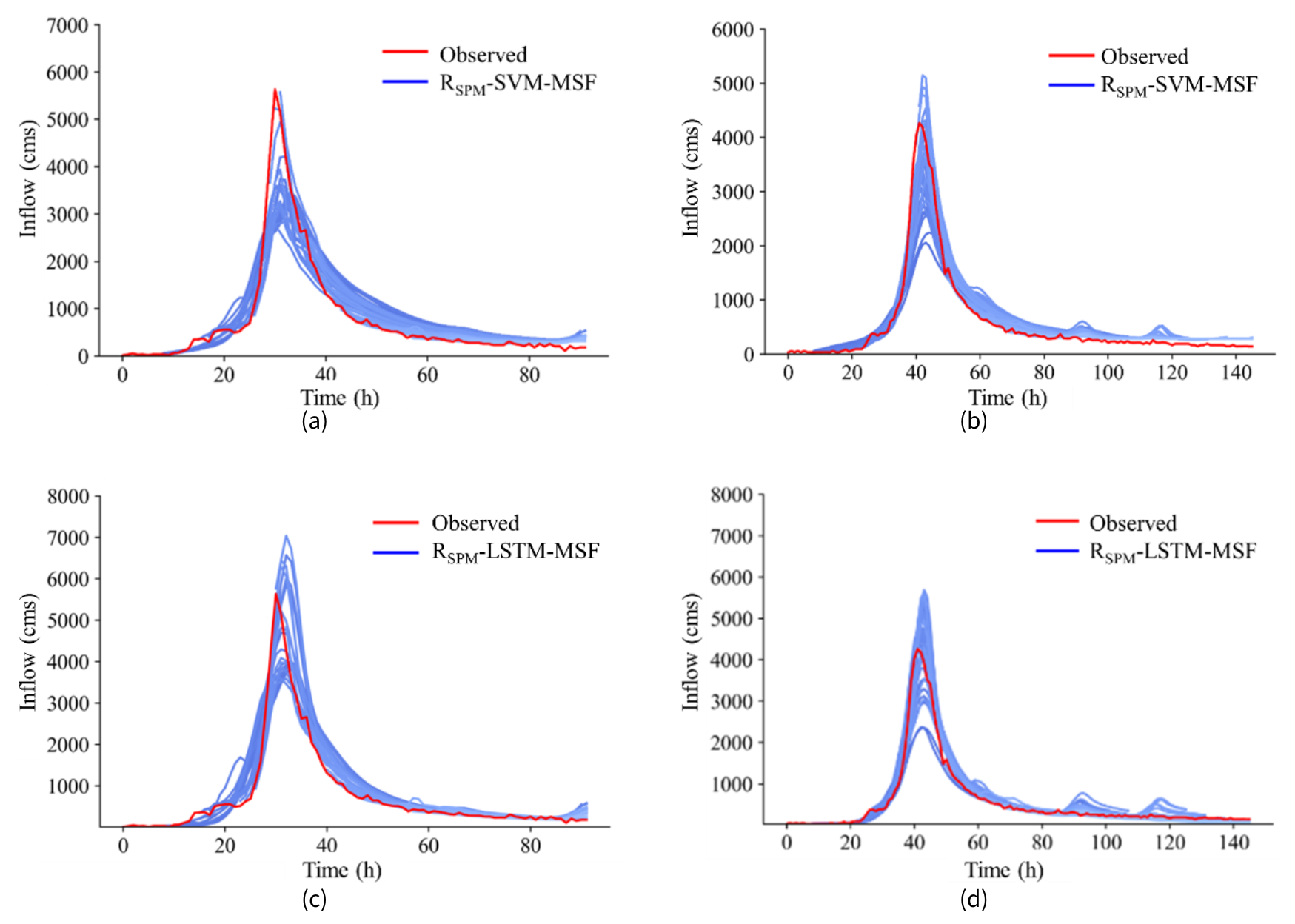
Figure 11Inflow forecast comparisons using SPM-integrated rainfall inputs for Typhoons Soudelor and Megi. The plots show the effects of forecasted rainfall uncertainty on inflow prediction accuracy.
Figure 11 illustrates the MSF forecasting results using SPM-integrated forecasted rainfall data for the test events of Soudelor and Megi. Compared to using observed rainfall, the use of forecasted rainfall as input to the rainfall-inflow model leads to more pronounced fluctuations in the forecast results at different times due to the continuous dynamic adjustments in the forecasted rainfall.
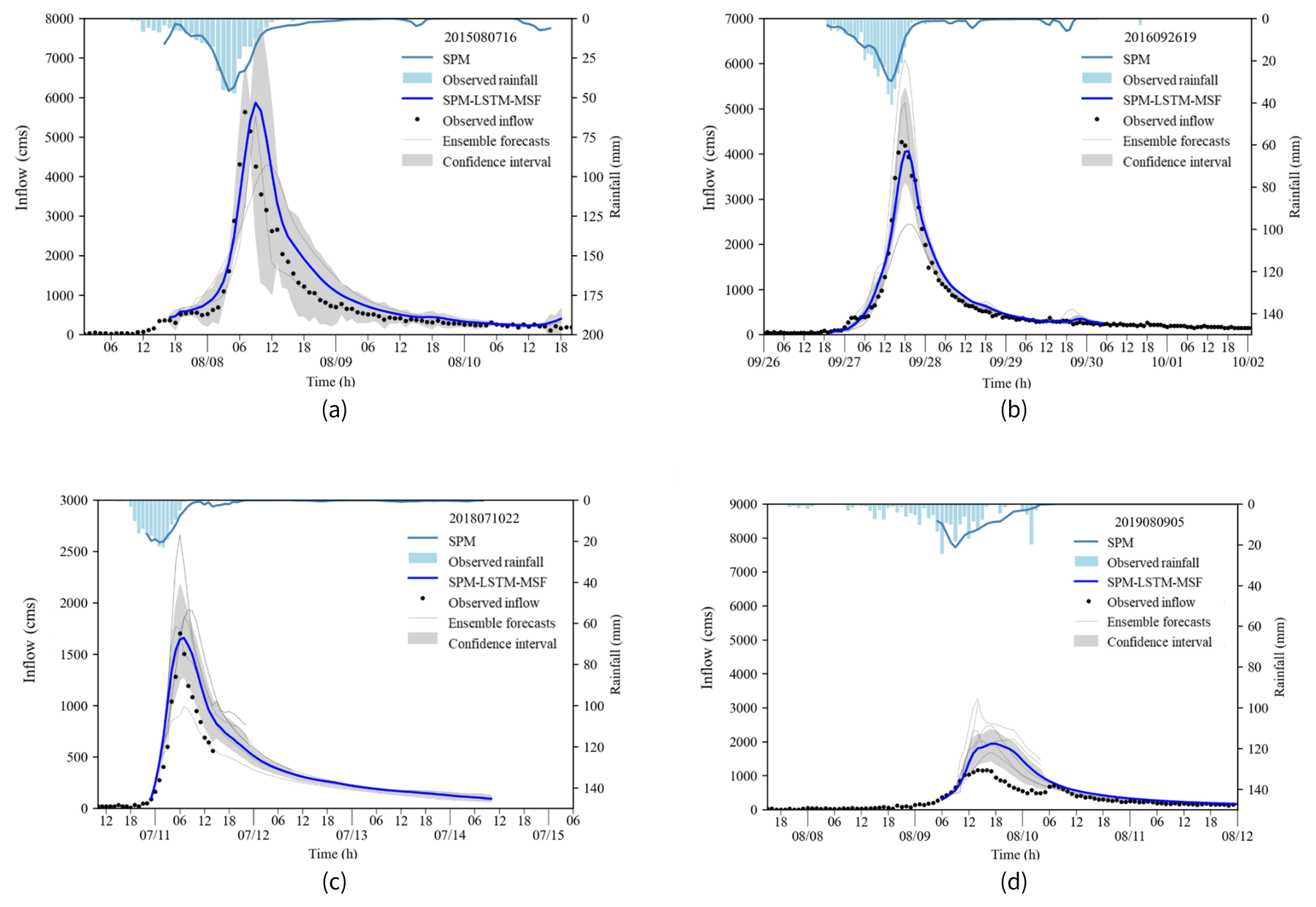
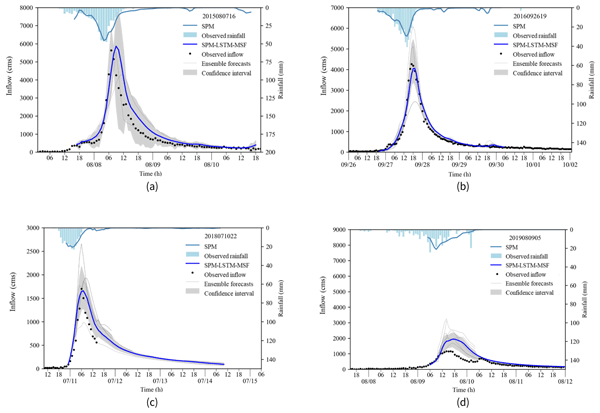
Figure 12Probabilistic inflow forecasts for four typhoon events using ensemble rainfall inputs. Confidence intervals illustrate the uncertainty propagated from rainfall forecasts to inflow predictions.
For Typhoon Soudelor (Fig. 12a), the SVM model tends to underestimate the peak inflow. The LSTM model's forecasts gradually align with the observed peak inflow as time approaches the peak inflow phase. However, after the peak, the LSTM model tends to overestimate the inflow. For Typhoon Megi, both models initially fail to accurately forecast the peak inflow due to underestimating the forecasted rainfall in the early stages of a typhoon. As a result, the predicted inflow to reservoirs may also have significant errors. As time progresses and the forecasted rainfall aligns more closely with the observed rainfall, both models start to capture the peak inflow more accurately. In this event, the LSTM model tends to overestimate the peak inflow, while the SVM model's forecasted peak inflow is more consistent with the observed values.
In addition to performing deterministic forecasts using SPM-integrated rainfall, the developed rainfall–inflow models can also be applied to generate probabilistic inflow forecasts based on multiple meteorological forecast products. By visualizing the ensemble spread and plotting corresponding confidence intervals, the uncertainty associated with inflow predictions can be quantified.
When the rainfall forecasts from different meteorological products vary substantially, the resulting inflow forecasts exhibit wider confidence intervals, reflecting increased uncertainty. This effect is evident in Fig. 12b and c for Typhoons Megi and Maria, where broader confidence bands are observed near the flood peaks, indicating divergence among the ensemble forecasts. For Typhoon Lekima (Fig. 12d), not only do the ensemble rainfall forecasts diverge significantly, but the SPM-integrated rainfall also overestimates the observed rainfall. This leads to inflated deterministic inflow predictions and larger uncertainty bounds, emphasizing the sensitivity of inflow forecasts to the accuracy and consistency of upstream rainfall inputs.
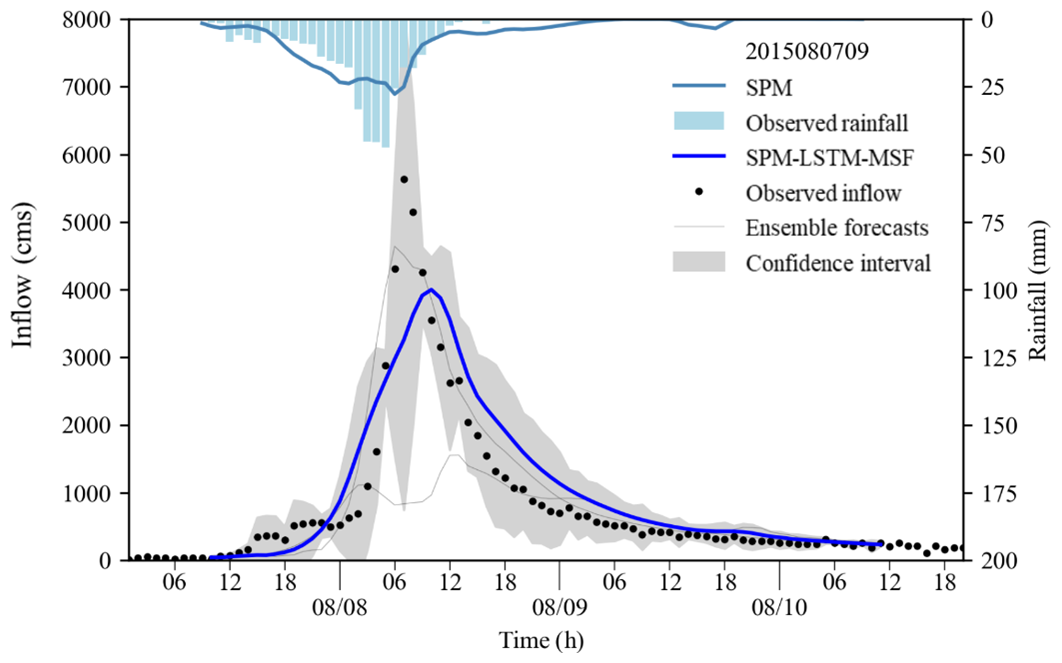
Figure 13Early inflow forecast for Typhoon Soudelor using SPM and machine learning models. The figure highlights the effect of initialization timing and forecasted rainfall accuracy on peak prediction.
This issue highlights a fundamental limitation in the current inflow forecasting system – namely, that even a well-trained machine learning model remains highly dependent on the quality of its rainfall inputs. Figure 13 presents the inflow forecasting results for Typhoon Soudelor, initialized at 09:00 LT (UTC+8) on 7 August 2015, with a 72 h lead time. Compared to the observed inflow, the model underestimates the peak magnitude and predicts it with a clear delay. This discrepancy is largely due to inaccuracies in the forecasted rainfall inputs, which – even after integration using the SPM – still show lower intensity and delayed onset relative to the observed rainfall. This example demonstrates that, while models such as LSTM are effective in capturing rainfall-inflow dynamics, their predictive performance is ultimately constrained by the accuracy of upstream meteorological forecasts, especially under extreme event conditions.
Notably, as shown in Fig. 12a, when the forecast was initialized at 16:00 LT on 7 August, the predicted rainfall pattern became more consistent with observed data in both timing and magnitude. As a result, the inflow forecasts also improved significantly. These findings further underscore the critical role of accurate rainfall forecasts in long-lead inflow prediction and reservoir operation planning. Although the proposed forecasting framework demonstrates strong potential, its performance is expected to improve as meteorological forecasting technologies continue to advance.
Nevertheless, the use of the SPM enables dynamic integration of ensemble rainfall forecast products over time. When coupled with a machine learning-based model that captures the nonlinear rainfall-inflow relationship, this approach provides a viable means of generating long-term reservoir inflow forecasts. Such forecasts can serve as valuable references to support decision-making by reservoir management authorities.
4.1 Performance superiority of LSTM over SVM
The comparative results of this study indicate that the LSTM-based model consistently outperforms the SVM-based model across various typhoon events and evaluation metrics. This performance advantage is largely attributed to LSTM's capability to capture temporal dependencies and non-linear dynamics inherent in hydrological processes.
LSTM, a specialized form of RNN, is designed to retain information over long sequences, making it particularly effective for time series modeling such as rainfall–runoff relationships. Its internal memory units allow it to learn sequential patterns and long-term influences of rainfall inputs on reservoir inflow. This is especially critical for flood forecasting where early rainfall events significantly affect downstream inflow volumes. Numerous studies have demonstrated LSTM's effectiveness in modeling complex hydrological time series, reinforcing its advantages observed in this study. In contrast, SVM is a static machine learning method that relies on mapping input features into higher-dimensional spaces using kernel functions. While effective in capturing non-linear relationships, SVM lacks the ability to model time-lagged dependencies, making it less suitable for sequential prediction tasks. Consequently, SVM exhibits inferior performance in capturing peak discharges and timing, particularly under highly variable rainfall conditions. The performance gap is evident in the quantitative metrics presented in Tables 6 and 7, where LSTM-based models achieved higher CE and lower RMSE values compared to SVM-based models. The advantage of LSTM becomes more pronounced under forecast-based rainfall scenarios, where input uncertainties amplify the need for temporal learning capabilities.
These findings align with previous studies in the literature. For instance, Rahimzad et al. (2021) found that LSTM outperformed other models in daily streamflow forecasting across all evaluation criteria, demonstrating its robustness in hydrological modeling applications. Similarly, Hu et al. (2020) showed that LSTM achieved superior results compared to SVM in small watershed flow prediction, particularly in capturing flood peaks and timing accuracy. Together, these results highlight the LSTM model's adaptability and robustness in hydro meteorological forecasting contexts, reaffirming its value in enhancing long-term reservoir inflow prediction frameworks.
4.2 Practical implications for reservoir operation
While the above results demonstrate the strong predictive performance of the proposed models, their practical significance for reservoir operation lies not only in accuracy but also in the extended forecasting lead time. In particular, the ability to provide inflow forecasts up to 72 h in advance offers substantial value for real-time reservoir management, even in the presence of forecast uncertainty.
Compared to conventional short lead-time forecasts (e.g., 6 h), extended forecasts provide critical decision-making windows that allow reservoir operators to implement proactive strategies, such as pre-release operations, gate regulation, and dynamic storage allocation prior to peak inflow events. During the early rising limb of typhoon-induced inflows, such advance information enables gradual drawdown of reservoir water levels, thereby increasing available flood storage capacity and reducing the need for emergency releases that may pose downstream flood risks.
Although uncertainties in rainfall forecasts inevitably propagate into inflow predictions, the timing and trend information provided by the model remain highly valuable for operational planning. In practice, conservative decision-making strategies – such as considering upper-bound inflow estimates or ensemble spread – can be adopted to ensure that forecast information remains actionable under risk-averse conditions.
Furthermore, the integration of the SPM enhances the temporal consistency and reliability of rainfall inputs by dynamically selecting the most suitable forecast products in real time. This improves the stability of inflow predictions under rapidly changing meteorological conditions, which is particularly important in Taiwan, where steep terrain and intense typhoon rainfall often result in rapid hydrological responses and limited response time for reservoir operation.
Therefore, the proposed forecasting framework can be regarded not only as a predictive model but also as a decision-support tool that facilitates proactive reservoir operation, enhances operational safety, and reduces downstream flood risk under extreme weather conditions.
4.3 Uncertainties in forecasting results
In hydrological forecasting, uncertainties arise from various sources, including input data inaccuracies, model structural limitations, and the inherent variability of hydrological processes. These uncertainties can significantly impact the reliability of reservoir inflow predictions, especially during extreme weather events.
Input Data Uncertainty: The accuracy of rainfall forecasts is a primary source of uncertainty in inflow predictions. Even with advanced integration methods like the SPM, discrepancies between forecasted and observed rainfall can lead to significant errors in inflow estimates. For instance, underestimating the intensity or delaying the onset of rainfall in forecasts can result in under predicted peak inflows and misaligned timing, as observed in the case of Typhoon Soudelor.
Model Structural Uncertainty: Machine learning models, such as LSTM and SVM, have demonstrated proficiency in capturing complex nonlinear relationships in hydrological data. However, their performance is contingent upon the quality and representativeness of the training data. Models trained on historical data may struggle to generalize to unprecedented events or changing climatic conditions, leading to increased prediction uncertainty.
Uncertainty Quantification in Machine Learning Models: Recent studies have emphasized the importance of incorporating uncertainty estimation within machine learning frameworks for hydrological forecasting. Techniques such as Monte Carlo dropout and mixture density networks have been employed to quantify predictive uncertainty, providing probabilistic forecasts that offer more comprehensive risk assessments. For example, Klotz et al. (2022) demonstrated that deep learning models could produce statistically reliable uncertainty estimates in rainfall–runoff modeling by integrating such techniques.
Implications for Reservoir Management: Understanding and quantifying uncertainties in inflow forecasts are crucial for effective reservoir operation and flood risk management. By acknowledging the limitations of both input data and modeling approaches, reservoir managers can make more informed decisions, incorporating safety margins to accommodate potential forecast errors. Furthermore, ongoing advancements in uncertainty quantification methods will enhance the robustness of hydrological forecasts, contributing to more resilient water resource management strategies.
4.4 Research limitations and future directions
While this study demonstrates the effectiveness of integrating the SPM with machine learning techniques for long-term reservoir inflow forecasting, several limitations should be acknowledged, which also point to important directions for future research.
First, this study relies on data from a single reservoir – ShihMen Reservoir in Taiwan – which may limit the generalizability of the proposed framework to other regions with distinct hydrological regimes. Moreover, only 18 typhoon events were available for model development and evaluation, which may not fully represent the range of hydrometeorological variability encountered in different climatic and watershed settings. While the results demonstrate the effectiveness of the proposed framework under typhoon conditions, further validation across multiple basins with diverse climatic, topographic, and hydrological characteristics is needed to evaluate its robustness and broader applicability. Second, the forecasting accuracy of inflow is fundamentally constrained by the precision of upstream rainfall forecasts. As observed in the case of Typhoon Soudelor, even with SPM integration, underestimation or delayed onset of rainfall forecasts can lead to significant biases in inflow prediction. This limitation highlights the need to further explore adaptive forecasting strategies under non-stationary conditions, particularly in the context of climate change, where rainfall patterns and extreme events are expected to become more variable and less predictable.Third, machine learning models such as LSTM and SVM perform well within the range of training data but may struggle with extrapolation beyond observed extremes, which represents an inherent limitation of data-driven approaches. In addition, the performance of these models is strongly dependent on the availability and quality of training data, potentially constraining their applicability in data-scarce regions. Although this study included typhoon events with diverse inflow magnitudes, further investigation is needed to evaluate model robustness under changing climate conditions or previously unseen hydrometeorological extremes. Recent advances in deep learning, particularly transformer-based architectures, have demonstrated promising capabilities for capturing long-range temporal dependencies in hydrological forecasting. Future studies may investigate the integration of transformer-based models and other advanced deep learning approaches within the proposed SPM framework to assess whether additional improvements can be achieved under larger datasets and more complex forecasting scenarios. Such investigations would also help further evaluate the transferability, scalability, and model-independence of the proposed framework. In addition, while the proposed SPM-LSTM-MSF framework shows promise in a research setting, but further validation is needed under real-time operational conditions. This includes automated handling of real-time data streams, integration with decision-support systems, and user-centered interfaces for water resource managers.
Finally, integrating the proposed data-driven framework with physically based hydrological models represents a promising direction for enhancing both predictive accuracy and process interpretability. Such hybrid approaches may improve model reliability, particularly under data-scarce or extrapolation scenarios. Furthermore, the incorporation of uncertainty-aware forecasting techniques and probabilistic prediction frameworks could enhance the reliability and usability of long lead-time forecasts in operational decision-making. By addressing these aspects, the proposed framework can evolve into a more comprehensive and adaptable tool for enhancing hydrological forecasting and water resource management under uncertainty. These enhancements will further bridge the gap between research innovation and practical decision-making in hydrological management.
This study presents a novel and robust framework for long-term reservoir inflow forecasting by integrating the SPM with machine learning techniques, specifically SVM and LSTM models. The scientific contribution lies in two key innovations:
-
First, the study develops a dynamic ensemble rainfall integration approach (SPM), which systematically filters and combines multiple meteorological forecast products. This method significantly improves the temporal stability and accuracy of rainfall forecasts across diverse typhoon events, as evidenced by consistently higher correlation coefficients and lower RMSE and MAE values.
-
Second, by coupling SPM-integrated rainfall forecasts with data-driven inflow modeling techniques, the framework captures the complex non-linear and temporal dependencies inherent in hydrological processes. LSTM-based models, in particular, demonstrated strong generalization capabilities and superior performance over SVM-based models, especially under forecast-based scenarios with uncertain inputs.
Together, these components form a MSF system that effectively anticipates reservoir inflow up to 72 h in advance. Quantitative evaluation confirms that the SPM-LSTM-MSF model offers improved accuracy. The ensemble flow forecasting can be generated using various meteorological forecast products with the proposed models, and the probabilistic forecasting approach enhances decision-making processes by providing information on forecast uncertainty. These findings contribute to the academic community by advancing the integration of dynamic ensemble forecasting and machine learning in hydrological modeling, paving the way for more adaptive and reliable decision-support tools for water resource management.
The software code developed for this study is not publicly available because it was developed specifically for this research and depends on non-public forecast datasets used under research collaboration. The code is available from the corresponding author upon reasonable request.
The observational rainfall data, reservoir inflow data, and ensemble rainfall forecast data used in this study were obtained from their respective data providers. Researchers interested in accessing these datasets should contact the respective data providers directly, as access is subject to their data-sharing policies.
All authors contributed to the study conception and design. Material preparation, data collection, and analysis were performed by HY Lin, JH Wang, and MJ Chang. The first draft of the manuscript was written by HY Lin, and all authors commented on previous versions of the manuscript. All authors read and approved the final manuscript.
The contact author has declared that none of the authors has any competing interests.
Publisher's note: Copernicus Publications remains neutral with regard to jurisdictional claims made in the text, published maps, institutional affiliations, or any other geographical representation in this paper. The authors bear the ultimate responsibility for providing appropriate place names. Views expressed in the text are those of the authors and do not necessarily reflect the views of the publisher.
The authors gratefully acknowledge the support from the Water Resources Agency and the Central Weather Administration, Taiwan, who provided the data. The authors also thank the Hydrotech Research Institute of the National Taiwan University for providing access to the facilities and providing technique support. Finally, we would like to thank reviewers for their constructive suggestions that greatly improved the manuscript.
This research has been supported by the National Science and Technology Council (grant nos. NSTC 113-2222-E-415-002- and NSTC 113-2625-M-002-001).
This paper was edited by Kai Schröter and reviewed by two anonymous referees.
Guo, W.-D., Chen, W.-B., and Chang, C.-H.: Prediction of hourly inflow for reservoirs at mountain catchments using residual error data and multiple-ahead correction technique, Hydrol. Res., 54, 1072–1093, https://doi.org/10.2166/nh.2023.072, 2023.
He, S., Raghavan, S. V., Nguyen, N. S., and Liong, S.-Y.: Ensemble rainfall forecasting with numerical weather prediction and radar-based nowcasting models, Hydrol. Process., 27, 1560–1571, https://doi.org/10.1002/hyp.9254, 2013.
Hsiao, L.-F., Yang, M.-J., Lee, C.-S., Kuo, H.-C., Shih, D.-S., Tsai, C.-C., Wang, C.-J., Chang, L.-Y., Chen, D. Y.-C., Feng, L., Hong, J.-S., Fong, C.-T., Chen, D.-S., Yeh, T.-C., Huang, C.-Y., Guo, W.-D., and Lin, G.-F.: Ensemble forecasting of typhoon rainfall and floods over a mountainous watershed in Taiwan, J. Hydrol., 506, 55–68, https://doi.org/10.1016/j.jhydrol.2013.08.046, 2013.
Hu, Y., Yan, L., Hang, T., and Feng, J.: Stream-Flow Forecasting of Small Rivers Based on LSTM, arXiv [preprint], https://doi.org/10.48550/arXiv.2001.05681, 16 January 2020.
Huang, C.-C., Chang, M.-J., Lin, G.-F., Wu, M.-C., and Wang, P.-H.: Real-time forecasting of suspended sediment concentrations in reservoirs by the optimal integration of multiple machine learning techniques, J. Hydrol.: Regional Studies, 34, 100804, https://doi.org/10.1016/j.ejrh.2021.100804, 2021.
Huang, I.-H., Chang, M.-J., and Lin, G.-F.: An optimal integration of multiple machine learning techniques to real-time reservoir inflow forecasting, Stoch. Environ. Res. Risk Assess., 36, 1541–1561, https://doi.org/10.1007/s00477-021-02085-y, 2022.
Kaveh, K., Kaveh, H., Bui, M. D., and Rutschmann, P.: Long short-term memory for predicting daily suspended sediment concentration, Eng. Comput., 37, 2013–2027, https://doi.org/10.1007/s00366-019-00921-y, 2021.
Klotz, D., Kratzert, F., Gauch, M., Keefe Sampson, A., Brandstetter, J., Klambauer, G., Hochreiter, S., and Nearing, G.: Uncertainty estimation with deep learning for rainfall–runoff modeling, Hydrol. Earth Syst. Sci., 26, 1673–1693, https://doi.org/10.5194/hess-26-1673-2022, 2022.
Kondolf, G. M., Gao, Y., Annandale, G. W., Morris, G. L., Jiang, E., Zhang, J., Cao, Y., Carling, P., Fu, K., Guo, Q., Hotchkiss, R., Peteuil, C., Sumi, T., Wang, H.-W., Wang, Z., Wei, Z., Wu, B., Wu, C., and Yang, C. T.: Sustainable sediment management in reservoirs and regulated rivers: Experiences from five continents, Earths Future, 2, 256–280, https://doi.org/10.1002/2013EF000184, 2014.
Lee, F.-Z., Lai, J.-S., and Sumi, T.: Reservoir Sediment Management and Downstream River Impacts for Sustainable Water Resources – Case Study of Shihmen Reservoir, Water, 14, 479, https://doi.org/10.3390/w14030479, 2022.
Li, F., Ma, G., Ju, C., Chen, S., and Huang, W.: Data-driven forecasting framework for daily reservoir inflow time series considering flood peaks based on a multi-head attention mechanism, J. Hydrol., 645, 132197, https://doi.org/10.1016/j.jhydrol.2024.132197, 2024.
Li, X., Guo, S., Liu, P., and Chen, G.: Dynamic control of flood limited water level for reservoir operation by considering inflow uncertainty, J. Hydrol., 391, 124–132, https://doi.org/10.1016/j.jhydrol.2010.07.011, 2010.
Lian, C., Zeng, Z., Yao, W., and Tang, H.: Multiple neural networks switched prediction for landslide displacement, Eng. Geol., 186, 91–99, https://doi.org/10.1016/j.enggeo.2014.11.014, 2015.
Liang, C., Li, H., Lei, M., and Du, Q.: Dongting Lake Water Level Forecast and Its Relationship with the Three Gorges Dam Based on a Long Short-Term Memory Network, Water, 10, 1389, https://doi.org/10.3390/w10101389, 2018.
Lin, G.-F., Lin, H.-Y., and Chou, Y.-C.: Development of a real-time regional-inundation forecasting model for the inundation warning system, J. Hydroinform., 15, 1391–1407, https://doi.org/10.2166/hydro.2013.202, 2013a.
Lin, G.-F., Lin, H.-Y., and Wu, M.-C.: Development of a support-vector-machine-based model for daily pan evaporation estimation, Hydrol. Process., 27, 3115–3127, https://doi.org/10.1002/hyp.9428, 2013b.
Lin, G.-F., Huang, P.-K., and Lin, H.-Y.: Forecasting tropical cyclone intensity change in the western North Pacific, J. Hydroinform., 15, 952–966, https://doi.org/10.2166/hydro.2013.155, 2013c.
Lu, H., Li, H., Liu, T., Fan, Y., Yuan, Y., Xie, M., and Qian, X.: Simulating heavy metal concentrations in an aquatic environment using artificial intelligence models and physicochemical indexes, Sci. Total Environ., 694, 133591, https://doi.org/10.1016/j.scitotenv.2019.133591, 2019.
Luo, X., Liu, P., Dong, Q., Zhang, Y., Xie, K., and Han, D.: Exploring the role of the long short-term memory model in improving multi-step ahead reservoir inflow forecasting, J. Flood Risk Manage., 16, e12854, https://doi.org/10.1111/jfr3.12854, 2023.
Mendes, J. and Maia, R.: Evaluation of Ensemble Inflow Forecasts for Reservoir Management in Flood Situations, Hydrology, 10, 28, https://doi.org/10.3390/hydrology10020028, 2023.
Morris, G. L. and Fan, J.: Reservoir sedimentation handbook: design and management of dams, reservoirs, and watersheds for sustainable use, McGraw-Hill, ISBN 9780070433021, 1998.
Nohara, D., Nishioka, Y., Hori, T., and Sato, Y.: Real-Time Reservoir Operation for Flood Management Considering Ensemble Streamflow Prediction and Its Uncertainty, in: Advances in Hydroinformatics, edited by: Gourbesville, P., Cunge, J. A., and Caignaert, G., Springer Singapore, Singapore, 333–347, https://doi.org/10.1007/978-981-287-615-7_23, 2016.
Rahimzad, M., Moghaddam Nia, A., Zolfonoon, H., Soltani, J., Danandeh Mehr, A., and Kwon, H.-H.: Performance Comparison of an LSTM-based Deep Learning Model versus Conventional Machine Learning Algorithms for Streamflow Forecasting, Water Resour. Manage., 35, 4167–4187, https://doi.org/10.1007/s11269-021-02937-w, 2021.
Teegavarapu, R. S., Pathak, C. S., Curtis, D., Yadav, S. M., Patel, A., and Panchal, A.: Use of ensemble-based forecasting methods in reservoir operation: issues and implementation challenges, J. Hydrol. Eng., 30, 03125001, https://doi.org/10.1061/JHYEFF.HEENG-6467, 2025.
Thaisiam, W., Rattanapant, P., Kraisornnukhor, P., and Wongchaisuwat, P.: Multi-step reservoir inflow prediction using a rolling window strategy and decomposed LSTM, Water Sci. Eng., https://doi.org/10.1016/j.wse.2025.11.001, 2025.
Utomo, D., Chen, S.-F., and Hsiung, P.-A.: Landslide Prediction with Model Switching, Appl. Sci., 9, 1839, https://doi.org/10.3390/app9091839, 2019.
Wang, J.-H., Lin, G.-F., Chang, M.-J., Huang, I.-H., and Chen, Y.-R.: Real-Time Water-Level Forecasting Using Dilated Causal Convolutional Neural Networks, Water Resour. Manage., 33, 3759–3780, https://doi.org/10.1007/s11269-019-02342-4, 2019.
Wei, C.-C. and Hsu, N.-S.: Multireservoir Flood-Control Optimization with Neural-Based Linear Channel Level Routing Under Tidal Effects, Water Resour. Manage., 22, 1625–1647, https://doi.org/10.1007/s11269-008-9246-8, 2008.
Wu, M.-C. and Lin, G.-F.: The very short-term rainfall forecasting for a mountainous watershed by means of an ensemble numerical weather prediction system in Taiwan, J. Hydrol., 546, 60–70, https://doi.org/10.1016/j.jhydrol.2017.01.012, 2017.
Wu, M.-C., Lin, G.-F., and Lin, H.-Y.: The effect of data quality on model performance with application to daily evaporation estimation, Stoch. Environ. Res. Risk Assess., 27, 1661–1671, https://doi.org/10.1007/s00477-013-0703-4, 2013.
Wu, M.-C., Lin, G.-F., and Lin, H.-Y.: Improving the forecasts of extreme streamflow by support vector regression with the data extracted by self-organizing map: streamflow forecasting using an approach combining SVM and SOM, Hydrol. Process., 28, 386–397, https://doi.org/10.1002/hyp.9584, 2014.
Wu, M.-C., Yang, S.-C., Yang, T.-H., and Kao, H.-M.: Typhoon Rainfall Forecasting by Means of Ensemble Numerical Weather Predictions with a GA-Based Integration Strategy, Atmosphere, 9, 425, https://doi.org/10.3390/atmos9110425, 2018.
Xu, W., Chen, J., Corzo, G., Xu, C.-Y., Zhang, X. J., Xiong, L., Liu, D., and Xia, J.: Coupling deep learning and physically based hydrological models for monthly streamflow predictions, Water Resour. Res., 60, e2023WR035618, https://doi.org/10.1029/2023WR035618, 2024.
Yang, T.-C., Yu, P.-S., Lin, K.-H., Kuo, C.-M., and Tseng, H.-W.: Predictor selection method for the construction of support vector machine (SVM)-based typhoon rainfall forecasting models using a non-dominated sorting genetic algorithm, Meteorol. Appl., 25, 510–522, https://doi.org/10.1002/met.1717, 2018.
Yu, W., Nakakita, E., Kim, S., and Yamaguchi, K.: Improvement of rainfall and flood forecasts by blending ensemble NWP rainfall with radar prediction considering orographic rainfall, J. Hydrol., 531, 494–507, https://doi.org/10.1016/j.jhydrol.2015.04.055, 2015.
Zhang, D., Lindholm, G., and Ratnaweera, H.: Use long short-term memory to enhance Internet of Things for combined sewer overflow monitoring, J. Hydrol., 556, 409–418, https://doi.org/10.1016/j.jhydrol.2017.11.018, 2018.
Zhou, J., Chen, L., Hu, T., Lu, H., Shi, Y., and Chen, L.: The comparative study of machine learning agent models in flood forecasting for tidal river reaches, Sci. Rep., 15, 19130, https://doi.org/10.1038/s41598-025-04633-w, 2025.