
Articles | Volume 26, issue 6
https://doi.org/10.5194/nhess-26-3045-2026
© Author(s) 2026. This work is distributed under
the Creative Commons Attribution 4.0 License.
the Creative Commons Attribution 4.0 License.
https://doi.org/10.5194/nhess-26-3045-2026
© Author(s) 2026. This work is distributed under
the Creative Commons Attribution 4.0 License.
the Creative Commons Attribution 4.0 License.
Research article
| 
01 Jul 2026
Research article |
| 01 Jul 2026
| 01 Jul 2026
The long-term hazard cascade of an unprecedented wildfire in a tropical mountain ecosystem

Department of Civil and Environmental Engineering, Imperial College London, London, SW7 2BB, UK
CatchmentAI Limited, Andover, UK
Department of Civil and Environmental Engineering, Imperial College London, London, SW7 2BB, UK
Anthony C. Ross
Department of Civil and Environmental Engineering, Imperial College London, London, SW7 2BB, UK
Yazidhi Bamutaze
Department of Geography, Geo-Informatics and Climatic Sciences, Makerere University, Kampala, Uganda
Jiayuan Han
Department of Civil and Environmental Engineering, Imperial College London, London, SW7 2BB, UK
Douglas Mulangwa
Department of Meteorology, University of Reading, Reading, RG6 6BB, UK
Ministry of Water and Environment, Kampala, Uganda
Andrew Mwesigwa
Ministry of Water and Environment, Kampala, Uganda
Emmanuel Ntale
Uganda Red Cross Society, Kampala, Uganda
Callist Tindimugaya
Ministry of Water and Environment, Kampala, Uganda
Brian Guma
Ministry of Water and Environment, Kampala, Uganda
Elisabeth Stephens
Department of Meteorology, University of Reading, Reading, RG6 6BB, UK
Red Cross Red Crescent Climate Centre, The Hague, the Netherlands
Wouter Buytaert
Department of Civil and Environmental Engineering, Imperial College London, London, SW7 2BB, UK
Related authors
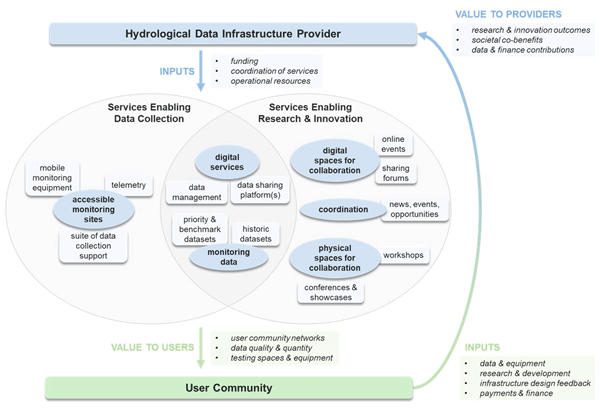
William Veness, Alejandro Dussaillant, Gemma Coxon, Simon De Stercke, Gareth H. Old, Matthew Fry, Jonathan G. Evans, and Wouter Buytaert
Hydrol. Earth Syst. Sci., 29, 6201–6219, https://doi.org/10.5194/hess-29-6201-2025, https://doi.org/10.5194/hess-29-6201-2025, 2025
Short summary
Short summary
We investigated what users want from the next-generation of hydrological monitoring systems to better support science and innovation. Through literature review and interviews with UK experts, we found that beyond providing high-quality data, users particularly value additional support for collecting their own data, sharing it with others, and building collaborations with other data users. Designing systems with these needs in mind can greatly boost long-term engagement, data coverage and impact.
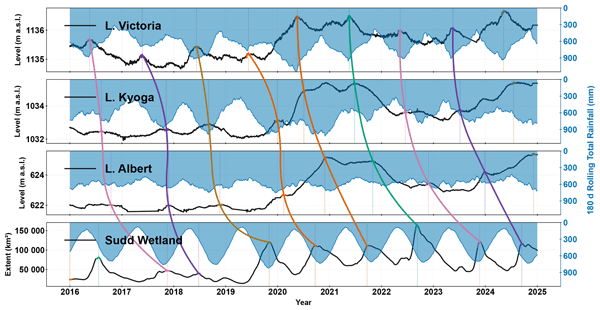
Douglas Mulangwa, Evet Naturinda, Charles Koboji, Benon T. Zaake, Emily Black, Hannah Cloke, and Elisabeth M. Stephens
Hydrol. Earth Syst. Sci., 30, 5297–5325, https://doi.org/10.5194/hess-30-5297-2026, https://doi.org/10.5194/hess-30-5297-2026, 2026
Short summary
Short summary
This study traced how water moved from Lake Victoria to the Sudd wetlands to explain the prolonged flooding in South Sudan between 2019 and 2024. Using satellite observations, rainfall records, and lake and river measurements, we found that water takes about 17 months to travel through the system, much longer than previously assumed 5 months. The results show that lakes and wetlands can store and slowly release water over several years, helping improve flood forecasting and early warning.
Anthony C. Ross, Ben C. Howard, Braulio Lahuatte, Paola Fuentes, Bert De Bièvre, Mateo Jerves-Ramirez, Patricio Crespo, Nilton Montoya, Jasper Oshun, Athanasios Paschalis, and Wouter Buytaert
EGUsphere, https://doi.org/10.5194/egusphere-2026-4439, https://doi.org/10.5194/egusphere-2026-4439, 2026
Short summary
Short summary
High-mountain wetlands can secure year-round water for communities, but their connection to streams remains unclear. Using dye tracing across five tropical mountain sites, we tracked water movement over several months. Results show that wetland-to-stream travel times vary from under one week to over three months, depending on season, topography and geology, among other factors. Understanding this complex connectivity is vital for improving streamflow predictions and water supply management.
Dorothy Heinrich, Erin Coughlan de Perez, Leanne Archer, Nadia Bloemendaal, Kevin I. Hodges, Helen Hooker, Theodore G. Shepherd, Nathan Sparks, Ralf Toumi, and Elisabeth Stephens
EGUsphere, https://doi.org/10.5194/egusphere-2026-2758, https://doi.org/10.5194/egusphere-2026-2758, 2026
Short summary
Short summary
An unprecedented tropical cyclone (TC) can turn into a disaster if it is unforeseen. In this work, we explore different TC datasets to identify simulated events that could be unprecedented. We look at whether these scenarios could be considered be plausible and how different these would be from past records, and illustrate with examples. We highlight that there is a wealth of scenarios that could be used by disaster managers to imagine and prepare for unprecedented events.
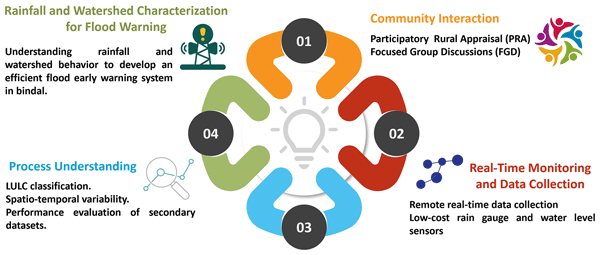
Sudhanshu Dixit, Sumit Sen, Tahmina Yasmin, Kieran Khamis, Debashish Sen, Wouter Buytaert, and David M. Hannah
Nat. Hazards Earth Syst. Sci., 26, 1251–1268, https://doi.org/10.5194/nhess-26-1251-2026, https://doi.org/10.5194/nhess-26-1251-2026, 2026
Short summary
Short summary
Flash floods are becoming more frequent in mountainous regions due to heavier rainstorms. To protect people and property, we are working to better understand local hydrology and improve the efficiency of early warning systems for urban flooding in Lesser Himalayas. By combining community knowledge, low-cost technology, we can enhance understanding of flood dynamics and strengthen preparedness in mountains. This work is a step toward building resilience by bridging science and community insight.
Jessica Rapson, Elisabeth Stephens, Ross I. Maidment, and Rogerio Bonifacio
EGUsphere, https://doi.org/10.5194/egusphere-2026-66, https://doi.org/10.5194/egusphere-2026-66, 2026
Short summary
Short summary
Extreme flooding is hard to predict in regions with limited data, yet early warnings are crucial to protect lives and livelihoods. This study developed an artificial intelligence system that learns from past weather, river levels, and satellite observations to predict where severe flooding will spread months in advance. Tested and used in real time in South Sudan, the system successfully supported humanitarian planning, showing it can improve preparedness and reduce the impacts of future floods.
William Veness, Alejandro Dussaillant, Gemma Coxon, Simon De Stercke, Gareth H. Old, Matthew Fry, Jonathan G. Evans, and Wouter Buytaert
Hydrol. Earth Syst. Sci., 29, 6201–6219, https://doi.org/10.5194/hess-29-6201-2025, https://doi.org/10.5194/hess-29-6201-2025, 2025
Short summary
Short summary
We investigated what users want from the next-generation of hydrological monitoring systems to better support science and innovation. Through literature review and interviews with UK experts, we found that beyond providing high-quality data, users particularly value additional support for collecting their own data, sharing it with others, and building collaborations with other data users. Designing systems with these needs in mind can greatly boost long-term engagement, data coverage and impact.
Jeffrey Neal, Anthony Cooper, Stephen Chuter, Leanne Archer, Laura Devitt, Stephen Grey, Laurence Hawker, James Savage, Elisabeth Stephens, Calum Baugh, Tim Sumner, Katherine Marsden, and Tamara Janes
EGUsphere, https://doi.org/10.5194/egusphere-2025-3473, https://doi.org/10.5194/egusphere-2025-3473, 2025
Short summary
Short summary
East Africa has recently experienced a series of devastating tropical cyclone landfalls characterised by hundreds of fatalities, millions of displaced people and substantial economic damage. This paper describes an approach to forecasting the number of people directly exposed to flooding from tropical cyclones and documents experience gained communicating these forecasts to practitioners via emergency bulletins.
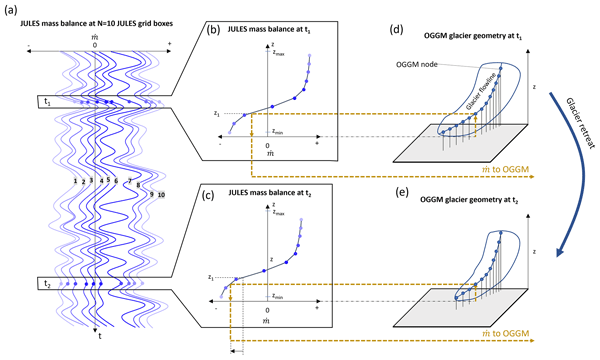
Jonathan D. Mackay, Nicholas E. Barrand, David M. Hannah, Emily Potter, Nilton Montoya, and Wouter Buytaert
The Cryosphere, 19, 685–712, https://doi.org/10.5194/tc-19-685-2025, https://doi.org/10.5194/tc-19-685-2025, 2025
Short summary
Short summary
We combine two globally capable glacier evolution models to include processes that are typically neglected but thought to control tropical glacier retreat (e.g. sublimation). We apply the model to Peru's Vilcanota-Urubamba Basin. The model captures observed glacier mass changes,but struggles with surface albedo dynamics. Projections show glacier mass shrinking to 17 % or 6 % of 2000 levels by 2100 under moderate- and high-emission scenarios, respectively.
Heidi Kreibich, Kai Schröter, Giuliano Di Baldassarre, Anne F. Van Loon, Maurizio Mazzoleni, Guta Wakbulcho Abeshu, Svetlana Agafonova, Amir AghaKouchak, Hafzullah Aksoy, Camila Alvarez-Garreton, Blanca Aznar, Laila Balkhi, Marlies H. Barendrecht, Sylvain Biancamaria, Liduin Bos-Burgering, Chris Bradley, Yus Budiyono, Wouter Buytaert, Lucinda Capewell, Hayley Carlson, Yonca Cavus, Anaïs Couasnon, Gemma Coxon, Ioannis Daliakopoulos, Marleen C. de Ruiter, Claire Delus, Mathilde Erfurt, Giuseppe Esposito, Didier François, Frédéric Frappart, Jim Freer, Natalia Frolova, Animesh K. Gain, Manolis Grillakis, Jordi Oriol Grima, Diego A. Guzmán, Laurie S. Huning, Monica Ionita, Maxim Kharlamov, Dao Nguyen Khoi, Natalie Kieboom, Maria Kireeva, Aristeidis Koutroulis, Waldo Lavado-Casimiro, Hong-Yi Li, Maria Carmen LLasat, David Macdonald, Johanna Mård, Hannah Mathew-Richards, Andrew McKenzie, Alfonso Mejia, Eduardo Mario Mendiondo, Marjolein Mens, Shifteh Mobini, Guilherme Samprogna Mohor, Viorica Nagavciuc, Thanh Ngo-Duc, Huynh Thi Thao Nguyen, Pham Thi Thao Nhi, Olga Petrucci, Nguyen Hong Quan, Pere Quintana-Seguí, Saman Razavi, Elena Ridolfi, Jannik Riegel, Md Shibly Sadik, Nivedita Sairam, Elisa Savelli, Alexey Sazonov, Sanjib Sharma, Johanna Sörensen, Felipe Augusto Arguello Souza, Kerstin Stahl, Max Steinhausen, Michael Stoelzle, Wiwiana Szalińska, Qiuhong Tang, Fuqiang Tian, Tamara Tokarczyk, Carolina Tovar, Thi Van Thu Tran, Marjolein H. J. van Huijgevoort, Michelle T. H. van Vliet, Sergiy Vorogushyn, Thorsten Wagener, Yueling Wang, Doris E. Wendt, Elliot Wickham, Long Yang, Mauricio Zambrano-Bigiarini, and Philip J. Ward
Earth Syst. Sci. Data, 15, 2009–2023, https://doi.org/10.5194/essd-15-2009-2023, https://doi.org/10.5194/essd-15-2009-2023, 2023
Short summary
Short summary
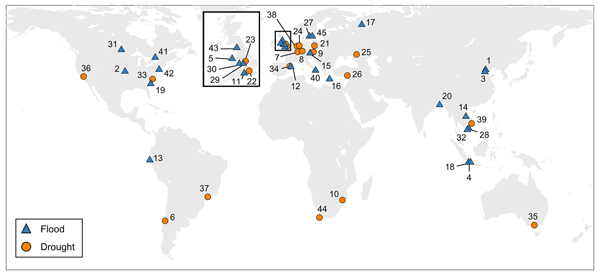
As the adverse impacts of hydrological extremes increase in many regions of the world, a better understanding of the drivers of changes in risk and impacts is essential for effective flood and drought risk management. We present a dataset containing data of paired events, i.e. two floods or two droughts that occurred in the same area. The dataset enables comparative analyses and allows detailed context-specific assessments. Additionally, it supports the testing of socio-hydrological models.
Tahmina Yasmin, Kieran Khamis, Anthony Ross, Subir Sen, Anita Sharma, Debashish Sen, Sumit Sen, Wouter Buytaert, and David M. Hannah
Nat. Hazards Earth Syst. Sci., 23, 667–674, https://doi.org/10.5194/nhess-23-667-2023, https://doi.org/10.5194/nhess-23-667-2023, 2023
Short summary
Short summary
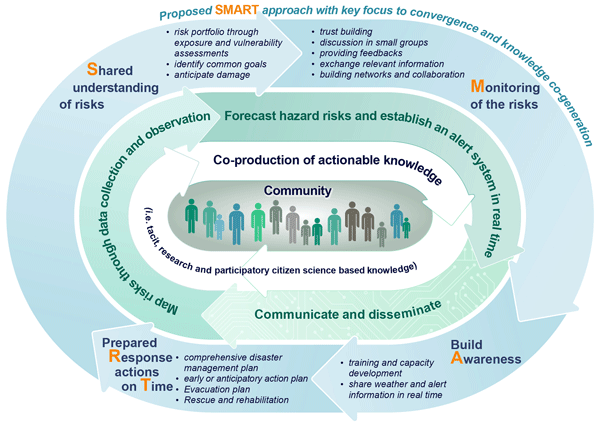
Floods continue to be a wicked problem that require developing early warning systems with plausible assumptions of risk behaviour, with more targeted conversations with the community at risk. Through this paper we advocate the use of a SMART approach to encourage bottom-up initiatives to develop inclusive and purposeful early warning systems that benefit the community at risk by engaging them at every step of the way along with including other stakeholders at multiple scales of operations.
Veerle Vanacker, Armando Molina, Miluska A. Rosas, Vivien Bonnesoeur, Francisco Román-Dañobeytia, Boris F. Ochoa-Tocachi, and Wouter Buytaert
SOIL, 8, 133–147, https://doi.org/10.5194/soil-8-133-2022, https://doi.org/10.5194/soil-8-133-2022, 2022
Short summary
Short summary
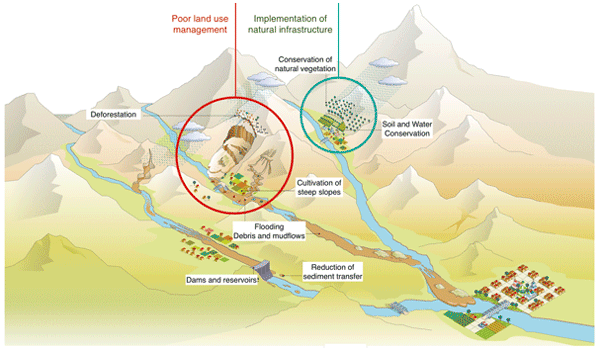
The Andes region is prone to natural hazards due to its steep topography and climatic variability. Anthropogenic activities further exacerbate environmental hazards and risks. This systematic review synthesizes the knowledge on the effectiveness of nature-based solutions. Conservation of natural vegetation and implementation of soil and water conservation measures had significant and positive effects on soil erosion mitigation and topsoil organic carbon concentrations.
Cited articles
Abraham, M. R. and Susan, T. B.: Water contamination with heavy metals and trace elements from Kilembe copper mine and tailing sites in Western Uganda; implications for domestic water quality, Chemosphere, 169, 281–287, https://doi.org/10.1016/j.chemosphere.2016.11.077, 2017.
Act Alliance: ACT Alliance Preliminary Appeal UGA131: Flash Floods in Kasese, Uganda, https://reliefweb.int/report/uganda/act-alliance-preliminary-appeal-uga131-flash-floods-kasese-uganda (last access: 14 October 2025), 2013.
Act Alliance: Uganda: Flood Emergency, RRF No. 04/2020, https://actalliance.org/wp-content/uploads/2020/06/Uganda_Floods-Emergency-RRF-No.-04.pdf (last access: 29 June 2026), 2020.
AghaKouchak, A., Huning, L. S., Chiang, F., Sadegh, M., Vahedifard, F., Mazdiyasni, O., Moftakhari, H., and Mallakpour, I.: How do natural hazards cascade to cause disasters?, Nature, 561, 458–460, https://doi.org/10.1038/d41586-018-06783-6, 2018.
AghaKouchak, A., Chiang, F., Huning, L. S., Love, C. A., Mallakpour, I., Mazdiyasni, O., Moftakhari, H., Papalexiou, S. M., Ragno, E., and Sadegh, M.: Climate extremes and compound hazards in a warming world, Annu. Rev. Earth Pl. Sc., 48, 519–548, https://doi.org/10.1146/annurev-earth-071719-055228, 2020.
Ahmad, Z. U., Sakib, S., and Gang, D. D.: Nonpoint source pollution, Water Environ. Res., 88, 1594–1619, https://doi.org/10.2175/106143016X14696400495497, 2016.
Arango-Carmona, M. I., Voit, P., Hürlimann, M., Aristizábal, E., and Korup, O.: Hillslope torrential hazard cascades in tropical mountains, Nat. Hazards Earth Syst. Sci., 25, 3641–3663, https://doi.org/10.5194/nhess-25-3641-2025, 2025.
Asiimwe, W.: Kasese hit fresh floods, New Vision, https://newvision.co.ug/news/1341922/kasese-hit-fresh-floods (last access: 14 October 2025), 2014.
Belongia, M. F., Hammond Wagner, C., Seipp, K. Q., and Ajami, N. K.: Building water resilience in the face of cascading wildfire risks, Sci. Adv., 9, eadf9534, https://doi.org/10.1126/sciadv.adf9534, 2023.
Bombino, G., D'Agostino, D., Marziliano, P. A., Pérez Cutillas, P., Praticò, S., Proto, A. R., Manti, L. M., Lofaro, G., and Zimbone, S. M.: A nature-based approach using felled burnt logs to enhance forest recovery post-fire and reduce erosion phenomena in the Mediterranean area, Land, 13, 236, https://doi.org/10.3390/land13020236, 2024.
Boyer, E. W., Wagenbrenner, J. W., and Zhang, L.: Wildfire and hydrological processes, Hydrol. Process., 36, e14640, https://doi.org/10.1002/hyp.14640, 2022.
Church, M. and Jakob, M.: What is a debris flood?, Water Resour. Res., 56, e2020WR027144, https://doi.org/10.1029/2020WR027144, 2020.
Coalition for the Poudre River Watershed (CPRW): Low-Tech Process-Based Restoration, https://www.poudrewatershed.org/ltpbr, last access: 12 April 2026.
Coconino County Flood Control District: Alluvial Fan Stabilization Project, Coconino County, Arizona, https://www.coconino.az.gov/2407/Alluvial-Fan-Stabilization-Project, last access: 12 April 2026.
Congedo, L.: Semi-Automatic Classification Plugin: a Python tool for the download and processing of remote sensing images in QGIS, J. Open Source Softw., 6, 3172, https://doi.org/10.21105/joss.03172, 2021.
Copernicus Climate Change Service (C3S): ERA5: fifth generation of ECMWF atmospheric reanalyses of the global climate, Copernicus Climate Change Service Climate Data Store (CDS), https://doi.org/10.24381/cds.adbb2d47, 2017.
Costa, J. E. and Schuster, R. L.: The formation and failure of natural dams, Open-File Report 87-392, U.S. Geological Survey, Vancouver, Washington, https://pubs.usgs.gov/of/1987/0392/report.pdf (last access: 24 April 2026), 1987.
Creswell, J. W.: Research Design: Qualitative, Quantitative and Mixed Methods Approaches, 3rd edn., SAGE Publications, https://www.ucg.ac.me/skladiste/blog_609332/objava_105202/fajlovi/Creswell.pdf (last access: 14 October 2025), 2009.
Cruden, D. M. and Varnes, D. J.: Landslide types and processes, in: Landslides: Investigation and Mitigation, Transportation Research Board Special Report 247, U.S. National Academy of Sciences, Washington, D.C., 36–75, ISBN 978-0-309-06151-3, https://onlinepubs.trb.org/Onlinepubs/sr/sr247/sr247-003.pdf (last access: 29 June 2026), 1996.
DeBano, L. F.: The role of fire and soil heating on water repellency in wildland environments: a review, J. Hydrol., 231–232, 195–206, https://doi.org/10.1016/S0022-1694(00)00194-3, 2000.
Delforge, D., Wathelet, V., Below, R., Lanfredi Sofia, C., Tonnelier, M., van Loenhout, J. A. F., and Speybroeck, N.: EM-DAT: the Emergency Events Database, Int. J. Disast. Risk Re., 105509, https://doi.org/10.1016/j.ijdrr.2025.105509, 2025.
DesInventar: DesInventar Database, UNDRR, https://www.desinventar.net/ (last access: 14 October 2025), 2025.
Doerr, S. H., Shakesby, R. A., and Walsh, R. P. D.: Soil water repellency: its causes, characteristics and hydro-geomorphological significance, Earth-Sci. Rev., 51, 33–65, https://doi.org/10.1016/S0012-8252(00)00011-8, 2000.
Encalada, A. C., Flecker, A. S., Poff, N. L., Suárez, E., Herrera-R, G. A., Ríos-Touma, B., Jumani, S., Larson, E. I., and Anderson, E. P.: A global perspective on tropical montane rivers, Science, 365, 1124–1129, https://doi.org/10.1126/science.aax1682, 2019.
European Environment Agency: Nature-based solutions for fire-resilient European forests, Publications Office of the European Union, Luxembourg, https://doi.org/10.2800/8810870, 2025.
FAO: Integrated fire management voluntary guidelines – principles and strategic actions, 2nd edn., Forestry Working Paper No. 41, FAO, Rome, https://doi.org/10.4060/cd1090en, 2024.
FAO and UNEP: The State of the World's Forests 2020, FAO and UNEP, Rome, https://doi.org/10.4060/ca8642en, 2020.
FAO and UNEP: Global assessment of soil pollution: report, FAO and UNEP, Rome, https://doi.org/10.4060/cb4894en, 2021.
Flood List News: Uganda – 8 dead after more floods in Kasese, Flood List, https://floodlist.com/africa/uganda-floods-kasese-may-2020 (last access: 14 October 2025), 2020a.
Flood List News: Uganda – thousands affected by floods in western region, Flood List, https://floodlist.com/africa/uganda-thousands-affected-by-floods-in-western-region (last access: 14 October 2025), 2020b.
Galletta, A.: Mastering the Semi-Structured Interview and Beyond: From Research Design to Analysis and Publication, New York University Press, New York, https://doi.org/10.18574/nyu/9780814732939.001.0001, 2020.
Gearon, J., Martin, H. K., DeLisle, C., Barefoot, E. A., Mohrig, D., Paola, C., and Edmonds, D. A.: Rules of River Avulsion Supplementary Data Files (Version 0.0.2), Zenodo [data set], https://doi.org/10.5281/zenodo.10338685, 2024.
Gill, J. C. and Malamud, B. D.: Hazard interactions and interaction networks (cascades) within multi-hazard methodologies, Earth Syst. Dynam., 7, 659–679, https://doi.org/10.5194/esd-7-659-2016, 2016.
Google News: Google News Search, https://news.google.com/home?hl=en-GB&gl=GB&ceid=GB:en (last access: 14 October 2025), 2025.
Government of British Columbia: Post wildfire natural hazard risk analysis, https://www2.gov.bc.ca/gov/content/safety/wildfire-status/recovery/wildfire-land-based-recovery/post-wildfire-natural-hazard-risk-analysis#PWFNHRA (last access: 10 April 2026), 2023.
Guerriero, L., Tufano, R., Capozzi, V., Budillon, G., Di Muro, C., Esposito, L., Forte, G., Vitale, E., and Calcaterra, D.: A postwildfire debris flood in Gragnano, southern Italy, on September 11, 2024, Landslides, 22, 1923–1936, https://doi.org/10.1007/s10346-025-02509-8, 2025.
Haring, C. P., Altmann, G. L., Suedel, B. C., and Brown, S. W.: Using Engineering With Nature (EWN) principles to manage erosion of watersheds damaged by large-scale wildfires, Integr. Environ. Asses., 17, 1194–1202, https://doi.org/10.1002/ieam.4453, 2021.
Hasanuzzaman, M., Islam, A., Bera, B., and Shit, P. K.: Quantifying the riverbank erosion and accretion rate using DSAS model study from the lower Ganga River, India, Nat. Hazards Res., 4, 550–561, https://doi.org/10.1016/j.nhres.2023.12.015, 2024.
Hinzmann, A., Mölg, T., Braun, M., Cullen, N. J., Hardy, D. R., Kaser, G., and Prinz, R.: Tropical glacier loss in East Africa: recent areal extents on Kilimanjaro, Mount Kenya, and in the Rwenzori Range from high-resolution remote sensing data, Environ. Res.-Clim., 3, 011003, https://doi.org/10.1088/2752-5295/ad1fd7, 2024.
Hungr, O., Leroueil, S., and Picarelli, L.: The Varnes classification of landslide types, an update, Landslides, 11, 167–194, https://doi.org/10.1007/s10346-013-0436-y, 2014.
Islam, A. and Guchhait, S. K.: Characterizing cross-sectional morphology and channel inefficiency of lower Bhagirathi River, India, in post-Farakka barrage condition, Nat. Hazards, 103, 3803–3836, https://doi.org/10.1007/s11069-020-04156-9, 2020.
Jacobs, L., Maes, J., Mertens, K., Sekajugo, J., Thiery, W., Van Lipzig, N., Poesen, J., Kervyn, M., and Dewitte, O.: Reconstruction of a flash flood event through a multi-hazard approach: focus on the Rwenzori Mountains, Uganda, Nat. Hazards, 84, 851–876, https://doi.org/10.1007/s11069-016-2458-y, 2016.
Jordan, P.: Post-wildfire debris flows in southern British Columbia, Canada, Int. J. Wildland Fire, 25, 322–336, https://doi.org/10.1071/WF14070, 2016.
Juma, B.: Uganda – at least 1,000 displaced after floods in Kasese and Kampala, Flood List, https://floodlist.com/africa/uganda-1000-displaced-floods-kasese-kampala (last access: 14 October 2025), 2016.
Kappelle, M., Geuze, T., Leal, M. E., and Cleef, A. M.: Successional age and forest structure in a Costa Rican upper montane Quercus forest, J. Trop. Ecol., 12, 681–698, https://doi.org/10.1017/S0266467400009871, 1996.
Kemter, M., Fischer, M., Luna, L. V., Schönfeldt, E., Vogel, J., Banerjee, A., Korup, O., and Thonicke, K.: Cascading hazards in the aftermath of Australia's 2019/2020 Black Summer wildfires, Earth's Future, 9, e2020EF001884, https://doi.org/10.1029/2020EF001884, 2021.
Key, C. H. and Benson, N. C.: Landscape Assessment (LA): sampling and analysis methods, in: FIREMON: Fire Effects Monitoring and Inventory System, edited by: Lutes, D. C., Keane, R. E., Caratti, J. F., Key, C. H., Benson, N. C., Sutherland, S., and Gangi, L. J., Gen. Tech. Rep. RMRS-GTR-164-CD, USDA Forest Service, Rocky Mountain Research Station, Fort Collins, CO, LA1–LA51, https://doi.org/10.2737/RMRS-GTR-164, 2006.
Korup, O. and Schlunegger, F.: Bedrock landsliding, river incision, and transience of geomorphic hillslope-channel coupling: evidence from inner gorges in the Swiss Alps, J. Geophys. Res.-Earth, 112, F03027, https://doi.org/10.1029/2006JF000710, 2007.
Lawler, D. M.: The measurement of river bank erosion and lateral channel change: a review, Earth Surf. Proc. Land., 18, 777–821, https://doi.org/10.1002/esp.3290180905, 1993.
Marengo, J. A., Cunha, A. P., Cuartas, L. A., Deusdará Leal, K. R., Broedel, E., Seluchi, M. E., Michelin, C. M., De Praga Baião, C. F., Chuchón Angulo, E., Almeida, E. K., Kazmierczak, M. L., Mateus, N. P. A., Silva, R. C., and Bender, F.: Extreme drought in the Brazilian Pantanal in 2019–2020: characterization, causes, and impacts, Front. Water, 3, 639204, https://doi.org/10.3389/frwa.2021.639204, 2021.
Mason, A. L., Pereboom, E. M. B., Ivory, S. J., Vachula, R. S., Kelly, M. A., Nakileza, B., and Russell, J. M.: Twenty-first century emergence of alpine fire in Central African mountains, Nature, 653, 746–751, https://doi.org/10.1038/s41586-026-10511-w, 2026.
Maxar Technologies: Historical satellite imagery from March 2006 of Kilembe, Uganda, Google Earth Pro, https://www.google.com/earth/about/versions/#earth-pro (last access: 14 October 2025), 2025a.
Maxar Technologies: Satellite imagery from 10 April 2023 of Kilembe, Uganda, Bing Maps, https://www.bing.com/maps (last access: 14 October 2025), 2025b.
McCaffrey, S.: Thinking of wildfire as a natural hazard, Soc. Nat. Resour., 17, 509–516, https://doi.org/10.1080/08941920490452445, 2004.
McGuire, L. A., Ebel, B. A., Rengers, F. K., Vieira, D. C. S., and Nyman, P.: Fire effects on geomorphic processes, Nat. Rev. Earth Environ., 5, 486–503, https://doi.org/10.1038/s43017-024-00557-7, 2024.
McKee, T. B., Doesken, N. J., and Kleist, J.: The relationship of drought frequency and duration to time scales, in: Proceedings of the 8th Conference on Applied Climatology, Anaheim, California, 17–22 January 1993, 179–184, https://climate.colostate.edu/pdfs/relationshipofdroughtfrequency.pdf (last access: 29 June 2026), 1993.
Mojtahed, R., Nunes, M. B., Martins, J. T., and Peng, A.: Equipping the constructivist researcher: the combined use of semi-structured interviews and decision-making maps, Electron. J. Bus. Res. Methods, 12, 87–95, 2014.
Moody, J. A. and Martin, D. A.: Initial hydrologic and geomorphic response following a wildfire in the Colorado Front Range, Earth Surf. Proc. Land., 26, 1049–1070, https://doi.org/10.1002/esp.253, 2001.
World Bank: Integrated Water Management and Development Project (P163782): Implementation Status & Results Report, Report No. ISR53182, World Bank, Washington, D.C., https://documents1.worldbank.org/curated/en/099540010172230683/pdf/P1637820a5f3b50620b7730e052a4841570.pdf, last access: 17 October 2022.
Mukisa, W., Yatuha, J., Andama, M., and Kasangaki, A.: Heavy metal pollution in the main rivers of Rwenzori Region, Kasese District, South-Western Uganda, Oct. Jour. Env. Res., 8, 78–90, 2020.
Mwesigye, A. R. and Lawrence, O. B.: Trace elements contamination of Kilembe copper mine catchment soils in Kasese District, Western Uganda, Soil Sediment Contam., 33, 232–243, https://doi.org/10.1080/15320383.2023.2195512, 2024.
Mwesigye, A. R., Young, S. D., Bailey, E. H., and Tumwebaze, S. B.: Population exposure to trace elements in the Kilembe copper mine area, Western Uganda: a pilot study, Sci. Total Environ., 573, 366–375, https://doi.org/10.1016/j.scitotenv.2016.08.125, 2016.
Mwongyera, A., Mbabazi, J., Muwanga, A., Ntale, M., and Kwetegyeka, J.: Impact of the disused Kilembe mine pyrites on the domestic water quality of Kasese town, western Uganda, Caribb. J. Sci. Technol., 2, 482–495, 2014.
NASA Shuttle Radar Topography Mission: SRTM GL1 Global 30m, OpenTopography [data set], https://doi.org/10.5069/G9445JDF, 2013.
National Interagency Fire Center (NIFC): Post Fire Recovery, https://www.nifc.gov/programs/post-fire-recovery (last access: 10 April 2026), 2026.
New Vision: Kasese PWDs bear the brunt of floods, landslides, https://web.archive.org/web/20251124071306/https://www.newvision.co.ug/category/news/kasese-pwds-bear-the-brunt-of-floods-landslid-NV_188969 (last access: 14 October 2025), 2024.
Nichter, K. A., Gilmore, T., Carbone, C., Sellers, B., Fairchild, M. P., and Preston, D. L.: Ecological characteristics of stream reaches with and without low-tech process-based restoration in a wildfire-affected catchment, River Res. Appl., https://doi.org/10.1002/rra.70119, 2026.
Norville, C., Ivory, S., Russell, J. M., Mason, A., Nakileza, B., and Miller, J.: Using charcoal to calibrate the frequency of wildfire in the Rwenzori Mountains over the Holocene, AGU Fall Meeting 2024, Washington, D.C., USA, 9–13 December 2024, https://ui.adsabs.harvard.edu/abs/2024AGUFMPP21E0525N/abstract (last access: 29 June 2026), 2024.
Oakley, N. S., Cheung, D. J., Lindsay, D. N., and Nash, D.: Insights from a 25-year database of post-fire debris flows in California, Int. J. Wildland Fire, 34, WF25136, https://doi.org/10.1071/WF25136, 2025.
Obando-Cabrera, L., Díaz-Timoté, J. J., Bastarrika, A., Celis, N., and Hantson, S.: The Paramo Fire Atlas: quantifying burned area and trends across the Tropical Andes, Environ. Res. Lett., 20, 054019, https://doi.org/10.1088/1748-9326/adc8ba, 2025.
Okiror, S.: “People are desperate”: floods and rock slides devastate western Uganda, The Guardian, https://www.theguardian.com/global-development/2020/may/16/people-are-desperate-floods-and-rock-slides-devastate-western-uganda (last access: 14 October 2025), 2020.
Oliveras, I., Malhi, Y., Salinas, N., Huaman, V., Urquiaga-Flores, E., Kala-Mamani, J., Quintano-Loaiza, J. A., Cuba-Torres, I., Lizarraga-Morales, N., and Román-Cuesta, R.-M.: Changes in forest structure and composition after fire in tropical montane cloud forests near the Andean treeline, Plant Ecol. Divers., 7, 329–340, https://doi.org/10.1080/17550874.2013.816800, 2014.
Ometto, J. P., Kalaba, K., Anshari, G. Z., Chacon, N., Farrell, A., Halim, S. A., Neufeldt, H., and Sukumar, R.: Cross-Chapter Paper 7: Tropical Forests, in: Climate Change 2022 – Impacts, Adaptation and Vulnerability: Working Group II Contribution to the Sixth Assessment Report of the Intergovernmental Panel on Climate Change, edited by: Pörtner, H.-O., Roberts, D. C., Tignor, M. M. B., Poloczanska, E. S., Mintenbeck, K., Alegría, A., Craig, M., Langsdorf, S., Löschke, S., Möller, V., Okem, A., and Rama, B., Cambridge University Press, Cambridge, UK and New York, NY, USA, https://doi.org/10.1017/9781009325844.028, 2022.
Papaioannou, G., Alamanos, A., and Maris, F.: Evaluating post-fire erosion and flood protection techniques: a narrative review of applications, GeoHazards, 4, 380–405, https://doi.org/10.3390/geohazards4040022, 2023.
Paton, D.: Disaster preparedness: a social-cognitive perspective, Disaster Prev. Manag., 12, 210–216, https://doi.org/10.1108/09653560310480686, 2003.
Patton, M. Q.: Qualitative Research & Evaluation Methods: Integrating Theory and Practice, 4th edn., SAGE Publications, Thousand Oaks, CA, ISBN 978-1-4129-7212-3, 2015.
Pierson, T. C.: Hyperconcentrated flow – transitional process between water flow and debris flow, in: Debris-flow Hazards and Related Phenomena, edited by: Jakob, M. and Hungr, O., Springer, Heidelberg, Germany, 159–202, https://doi.org/10.1007/3-540-27129-5_8, 2005.
Pivello, V. R., Vieira, I., Christianini, A. V., Ribeiro, D. B., Da Silva Menezes, L., Berlinck, C. N., Melo, F. P. L., Marengo, J. A., Tornquist, C. G., Tomas, W. M., and Overbeck, G. E.: Understanding Brazil's catastrophic fires: causes, consequences and policy needed to prevent future tragedies, Perspect. Ecol. Conserv., 19, 233–255, https://doi.org/10.1016/j.pecon.2021.06.005, 2021.
ReliefWeb: Uganda – floods (DG ECHO Partners, Uganda Red Cross, media) (ECHO Daily Flash of 10 September 2024), https://reliefweb.int/report/uganda/uganda-floods-dg-echo-partners-uganda-red-cross-media-echo-daily-flash-10-september-2024 (last access: 14 October 2025), 2024.
Rengers, F. K., McGuire, L. A., Oakley, N. S., Kean, J. W., Staley, D. M., and Tang, H.: Landslides after wildfire: initiation, magnitude, and mobility, Landslides, 17, 2631–2641, https://doi.org/10.1007/s10346-020-01506-3, 2020.
Ring, U.: Extreme uplift of the Rwenzori Mountains in the East African Rift, Uganda: structural framework and possible role of glaciations, Tectonics, 27, TC4018, https://doi.org/10.1029/2007TC002176, 2008.
Robichaud, P. R., Lewis, S. A., Wagenbrenner, J. W., Ashmun, L. E., and Brown, R. E.: Post-fire mulching for runoff and erosion mitigation, Catena, 105, 75–92, https://doi.org/10.1016/j.catena.2012.11.015, 2013.
Robinne, F. N., Hallema, D. W., Bladon, K. D., Flannigan, M. D., Boisramé, G., Bréthaut, C. M., Doerr, S. H., Di Baldassarre, G., Gallagher, L. A., Hohner, A. K., Khan, S. J., Kinoshita, A. M., Mordecai, R., Nunes, J. P., Nyman, P., Santín, C., Sheridan, G., Stoof, C. R., Thompson, M. P., Waddington, J. M., and Wei, Y.: Scientists' warning on extreme wildfire risks to water supply, Hydrol. Process., 35, e14086, https://doi.org/10.1002/hyp.14086, 2021.
Rudoy, A. N.: Glacier-dammed lakes and geological work of glacial superfloods in the Late Pleistocene, Southern Siberia, Altai Mountains, Quatern. Int., 87, 119–140, https://doi.org/10.1016/S1040-6182(01)00066-0, 2002.
Saldaña, J.: The Coding Manual for Qualitative Researchers, SAGE Publications, London, ISBN 978-1-5297-3175-0, 2021.
Salinas, N., Cosio, E. G., Silman, M., Meir, P., Nottingham, A. T., Roman-Cuesta, R. M., and Malhi, Y.: Editorial: Tropical montane forests in a changing environment, Front. Plant Sci., 12, 712748, https://doi.org/10.3389/fpls.2021.712748, 2021.
Sanches Fernandes, L. F., Sampaio Pinto, A. A., Salgado Terêncio, D. P., Leal Pacheco, F. A., and Vitor Cortes, R. M.: Combination of ecological engineering procedures applied to morphological stabilization of estuarine banks after dredging, Water, 12, 391, https://doi.org/10.3390/w12020391, 2020.
Sandwell, D., Anderson, D. L., and Wessel, P.: Global tectonic maps, in: Plates, Plumes and Paradigms, edited by: Foulger, G. R., Natland, J. H., Presnall, D. C., and Anderson, D. L., Geological Society of America, https://doi.org/10.1130/0-8137-2388-4.1, 2005.
Saunders, M., Lewis, P., and Thornhill, A.: Research Methods for Business Students, 7th edn., Pearson, Harlow, UK, ISBN 978-1-292-01662-7, 2016.
Schenk, E. R., Wood, A., Haden, A., Baca, G., Fleishman, J., and Loverich, J.: Post-wildfire sediment source and transport modeling, empirical observations, and applied mitigation: an Arizona, USA, case study, Nat. Hazards Earth Syst. Sci., 25, 727–745, https://doi.org/10.5194/nhess-25-727-2025, 2025.
Scheper, A. C., Verweij, P. A., and Van Kuijk, M.: Post-fire forest restoration in the humid tropics: a synthesis of available strategies and knowledge gaps for effective restoration, Sci. Total Environ., 771, 144647, https://doi.org/10.1016/j.scitotenv.2020.144647, 2021.
Shakesby, R. A. and Doerr, S. H.: Wildfire as a hydrological and geomorphological agent, Earth-Sci. Rev., 74, 269–307, https://doi.org/10.1016/j.earscirev.2005.10.006, 2006.
Sklar, L. S. and Dietrich, W. E.: Sediment and rock strength controls on river incision into bedrock, Geology, 29, 1087–1090, https://doi.org/10.1130/0091-7613(2001)029<1087:SARSCO>2.0.CO;2, 2001.
Slingerland, R. and Smith, N. D.: River avulsions and their deposits, Annu. Rev. Earth Pl. Sc., 32, 257–285, https://doi.org/10.1146/annurev.earth.32.101802.120201, 2004.
Stock, J. and Dietrich, W. E.: Valley incision by debris flows: evidence of a topographic signature, Water Resour. Res., 39, 1089, https://doi.org/10.1029/2001WR001057, 2003.
Stoof, C. R., Vervoort, R. W., Iwema, J., van den Elsen, E., Ferreira, A. J. D., and Ritsema, C. J.: Hydrological response of a small catchment burned by experimental fire, Hydrol. Earth Syst. Sci., 16, 267–285, https://doi.org/10.5194/hess-16-267-2012, 2012.
Swain, D. L., Prein, A. F., Abatzoglou, J. T., Albano, C. M., Brunner, M., Diffenbaugh, N. S., Singh, D., Skinner, C. B., and Touma, D.: Hydroclimate volatility on a warming Earth, Nat. Rev. Earth Environ., 6, 35–50, https://doi.org/10.1038/s43017-024-00624-z, 2025.
UNdata: UNdata Glossary: nonpoint source pollution, https://data.un.org/Glossary.aspx?q=nonpoint+source+pollution (last access: 24 April 2026), 2026.
UNDRR: Hazard Information Profiles, United Nations Office for Disaster Risk Reduction, https://www.preventionweb.net/drr-glossary/hips (last access: 12 April 2026), 2025.
UNEP: Spreading like wildfire – the rising threat of extraordinary landscape fires, A UNEP Rapid Response Assessment, United Nations Environment Programme, Nairobi, https://wedocs.unep.org/handle/20.500.11822/38372 (last access: 29 June 2026), 2022.
UNESCO: State of conservation of World Heritage properties inscribed on the World Heritage List, WHC-12/36.COM/7B, United Nations Educational, Scientific and Cultural Organization, Paris, https://whc.unesco.org/archive/2012/whc12-36com-7B-en.pdf (last access: 12 April 2026), 2012.
UNESCO and WMO (Eds.): International Glossary of Hydrology, WMO, Geneva, ISBN 978-92-63-03385-8, https://unesdoc.unesco.org/ark:/48223/pf0000221862 (last access: 29 June 2026), 2012.
Vahedifard, F., Abdollahi, M., Leshchinsky, B. A., Stark, T. D., Sadegh, M., and AghaKouchak, A.: Interdependencies between wildfire-induced alterations in soil properties, near-surface processes, and geohazards, Earth Space Sci., 11, e2023EA003498, https://doi.org/10.1029/2023EA003498, 2024.
Veness, W. A. and Buytaert, W.: Towards an evidence base for groundwater data investments, Environ. Sci. Policy, 164, 104014, https://doi.org/10.1016/j.envsci.2025.104014, 2025.
Veness, W., Day, M., Ross, A. C., Bamutaze, Y., Han, J., Mulangwa, D., Mwesigwa, A., Ntale, E., Tindimugaya, C., Guma, B. B., Stephens, S., and Buytaert, W.: Data Set for Study – The long-term hazard cascade of an unprecedented wildfire in a tropical mountain ecosystem, Zenodo [data set], https://doi.org/10.5281/zenodo.20556393, 2026.
Wesche, K., Miehe, G., and Kaeppeli, M.: The significance of fire for Afroalpine ericaceous vegetation, Mt. Res. Dev., 20, 340–347, https://doi.org/10.1659/0276-4741(2000)020[0340:TSOFFA]2.0.CO;2, 2000.
Wheaton, J. M., Bennett, S. N., Bouwes, N., Maestas, J. D., and Shahverdian, S.: Low-Tech Process-Based Restoration of Riverscapes: Design Manual, Version 1.0, Utah State University Restoration Consortium, Logan, UT, https://doi.org/10.13140/RG.2.2.19590.63049/2, 2019.
Williams, D. J.: Placing soil covers on soft mine tailings, in: Ground Improvement Case Histories, Elsevier, 51–81, https://doi.org/10.1016/B978-0-08-100698-6.00002-7, 2015.
Wimberly, M. C., Wanyama, D., Doughty, R., Peiro, H., and Crowell, S.: Increasing fire activity in African tropical forests is associated with deforestation and climate change, Geophys. Res. Lett., 51, e2023GL106240, https://doi.org/10.1029/2023GL106240, 2024.
Xiao, C., Feng, Z., and Li, P.: Active fires show an increasing elevation trend in the tropical highlands, Glob. Change Biol., 28, 2790–2803, https://doi.org/10.3389/ffgc.2023.1252587, 2022
Short summary
Climate change is driving wildfires to higher elevations in tropical mountains, exposing ecosystems with little or no fire history. We analyse a 2012 fire in Uganda’s Rwenzori Mountains that burned pristine forest and wetland above 3800 m, where no major fire had occurred for 12,000 years. The fire triggered a long-term cascade of floods, debris flows, landslides, erosion and mine-waste pollution, showing the need for rapid post-fire risk assessment and restoration.
Climate change is driving wildfires to higher elevations in tropical mountains, exposing...


Altmetrics
Final-revised paper
Preprint