
Articles | Volume 26, issue 6
https://doi.org/10.5194/nhess-26-2865-2026
© Author(s) 2026. This work is distributed under
the Creative Commons Attribution 4.0 License.
the Creative Commons Attribution 4.0 License.
https://doi.org/10.5194/nhess-26-2865-2026
© Author(s) 2026. This work is distributed under
the Creative Commons Attribution 4.0 License.
the Creative Commons Attribution 4.0 License.
Brief communication
| 
16 Jun 2026
Brief communication |
| 16 Jun 2026
| 16 Jun 2026
Brief communication: Drought economic assessments must include human health impacts
Alexandre Cunha Costa
CORRESPONDING AUTHOR
Water Resources Management Group, Wageningen University, Wageningen, PB, the Netherlands
Engineering and Sustainable Development Institute, University for International Integration of the Afro-Brazilian Lusophony, Redenção, Ceara, Brazil
Francisco Gildemir Ferreira da Silva
Economy Graduate Program, Federal University of Ceara, Fortaleza, Ceara, Brazil
Rafaella Pessoa Moreira
Health Sciences Institute, University for International Integration of the Afro-Brazilian Lusophony, Redenção, Ceara, Brazil
Eduardo Sávio Passos Rodrigues Martins
Posgradute Program in Civil Engineering, Federal University of Ceara, Fortaleza, Ceara, Brazil
Luewton Lemos Felício Agostinho
Water Technology Research Group, NHL Stenden University of Applied Sciences, Leeuwarden, the Netherlands
Pieter Richard van Oel
Water Resources Management Group, Wageningen University, Wageningen, PB, the Netherlands
Related authors
Germano G. Ribeiro Neto, Sarra Kchouk, Lieke A. Melsen, Louise Cavalcante, David W. Walker, Art Dewulf, Alexandre C. Costa, Eduardo S. P. R. Martins, and Pieter R. van Oel
Hydrol. Earth Syst. Sci., 27, 4217–4225, https://doi.org/10.5194/hess-27-4217-2023, https://doi.org/10.5194/hess-27-4217-2023, 2023
Short summary
Short summary
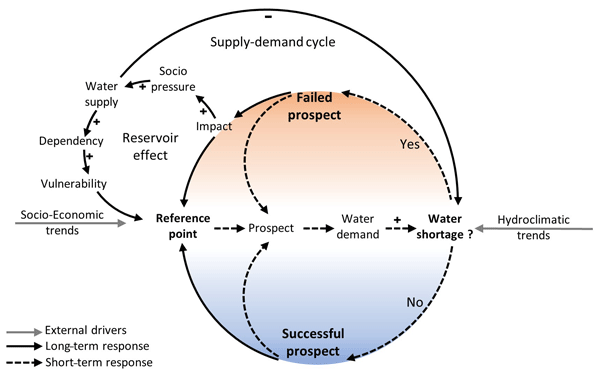
People induce and modify droughts. However, we do not know exactly how relevant human and natural processes interact nor how to evaluate the co-evolution of people and water. Prospect theory can help us to explain the emergence of drought impacts leading to failed welfare expectations (“prospects”) due to water shortage. Our approach helps to explain socio-hydrological phenomena, such as reservoir effects, and can contribute to integrated drought management considering the local context.
Louise Cavalcante, David W. Walker, Sarra Kchouk, Germano Ribeiro Neto, Taís Maria Nunes Carvalho, Mariana Madruga de Brito, Wieke Pot, Art Dewulf, and Pieter R. van Oel
Nat. Hazards Earth Syst. Sci., 25, 1993–2005, https://doi.org/10.5194/nhess-25-1993-2025, https://doi.org/10.5194/nhess-25-1993-2025, 2025
Short summary
Short summary
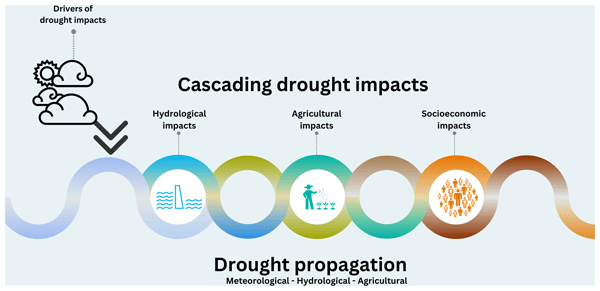
Drought affects not only water availability but also agriculture, the economy, and communities. This study explores how public policies help reduce these impacts in Ceará, Northeast Brazil. Using qualitative drought monitoring data, interviews, and policy analysis, we found that policies supporting local economies help lessen drought effects. However, most reported impacts are still related to water shortages, showing the need for broader strategies beyond water supply investment.
Sarra Kchouk, Louise Cavalcante, Lieke A. Melsen, David W. Walker, Germano Ribeiro Neto, Rubens Gondim, Wouter J. Smolenaars, and Pieter R. van Oel
Nat. Hazards Earth Syst. Sci., 25, 893–912, https://doi.org/10.5194/nhess-25-893-2025, https://doi.org/10.5194/nhess-25-893-2025, 2025
Short summary
Short summary
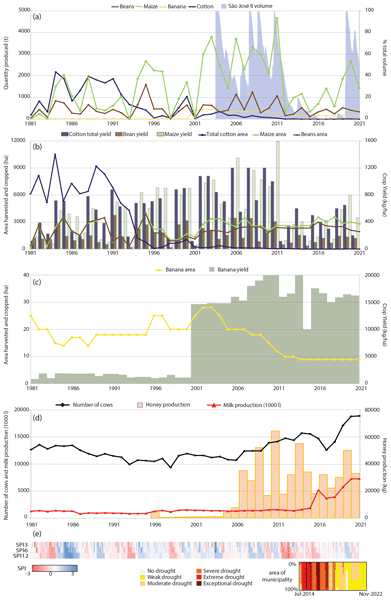
Droughts impact water and people, yet monitoring often overlooks impacts on people. In northeastern Brazil, we compare official data to local experiences, finding data mismatches and blind spots. Mismatches occur due to the data's broad scope missing finer details. Blind spots arise from ignoring diverse community responses and vulnerabilities to droughts. We suggest enhanced monitoring by technical extension officers for both severe and mild droughts.
Charles Nduhiu Wamucii, Pieter R. van Oel, Adriaan J. Teuling, Arend Ligtenberg, John Mwangi Gathenya, Gert Jan Hofstede, Meine van Noordwijk, and Erika N. Speelman
Hydrol. Earth Syst. Sci., 28, 3495–3518, https://doi.org/10.5194/hess-28-3495-2024, https://doi.org/10.5194/hess-28-3495-2024, 2024
Short summary
Short summary
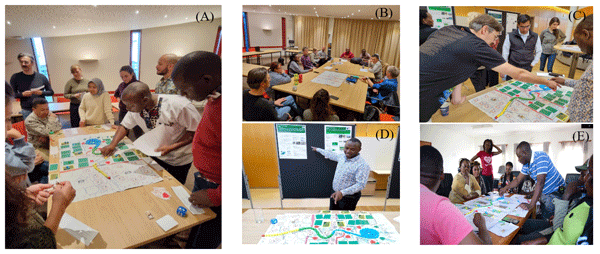
The study explored the role of serious gaming in strengthening stakeholder engagement in addressing human–water challenges. The gaming approach guided community discussions toward implementable decisions. The results showed increased active participation, knowledge gain, and use of plural pronouns. We observed decreased individual interests and conflicts among game participants. The study presents important implications for creating a collective basis for water resources management.
Germano G. Ribeiro Neto, Sarra Kchouk, Lieke A. Melsen, Louise Cavalcante, David W. Walker, Art Dewulf, Alexandre C. Costa, Eduardo S. P. R. Martins, and Pieter R. van Oel
Hydrol. Earth Syst. Sci., 27, 4217–4225, https://doi.org/10.5194/hess-27-4217-2023, https://doi.org/10.5194/hess-27-4217-2023, 2023
Short summary
Short summary
People induce and modify droughts. However, we do not know exactly how relevant human and natural processes interact nor how to evaluate the co-evolution of people and water. Prospect theory can help us to explain the emergence of drought impacts leading to failed welfare expectations (“prospects”) due to water shortage. Our approach helps to explain socio-hydrological phenomena, such as reservoir effects, and can contribute to integrated drought management considering the local context.
Veit Blauhut, Michael Stoelzle, Lauri Ahopelto, Manuela I. Brunner, Claudia Teutschbein, Doris E. Wendt, Vytautas Akstinas, Sigrid J. Bakke, Lucy J. Barker, Lenka Bartošová, Agrita Briede, Carmelo Cammalleri, Ksenija Cindrić Kalin, Lucia De Stefano, Miriam Fendeková, David C. Finger, Marijke Huysmans, Mirjana Ivanov, Jaak Jaagus, Jiří Jakubínský, Svitlana Krakovska, Gregor Laaha, Monika Lakatos, Kiril Manevski, Mathias Neumann Andersen, Nina Nikolova, Marzena Osuch, Pieter van Oel, Kalina Radeva, Renata J. Romanowicz, Elena Toth, Mirek Trnka, Marko Urošev, Julia Urquijo Reguera, Eric Sauquet, Aleksandra Stevkov, Lena M. Tallaksen, Iryna Trofimova, Anne F. Van Loon, Michelle T. H. van Vliet, Jean-Philippe Vidal, Niko Wanders, Micha Werner, Patrick Willems, and Nenad Živković
Nat. Hazards Earth Syst. Sci., 22, 2201–2217, https://doi.org/10.5194/nhess-22-2201-2022, https://doi.org/10.5194/nhess-22-2201-2022, 2022
Short summary
Short summary
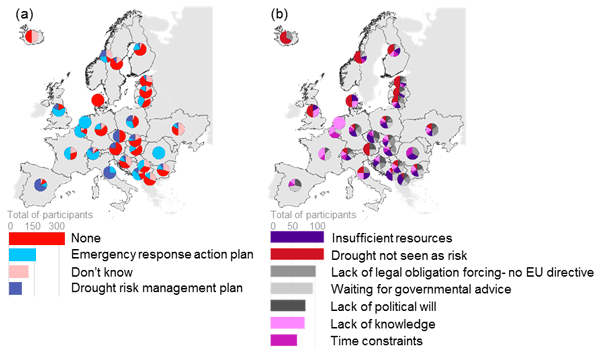
Recent drought events caused enormous damage in Europe. We therefore questioned the existence and effect of current drought management strategies on the actual impacts and how drought is perceived by relevant stakeholders. Over 700 participants from 28 European countries provided insights into drought hazard and impact perception and current management strategies. The study concludes with an urgent need to collectively combat drought risk via a European macro-level drought governance approach.
Sarra Kchouk, Lieke A. Melsen, David W. Walker, and Pieter R. van Oel
Nat. Hazards Earth Syst. Sci., 22, 323–344, https://doi.org/10.5194/nhess-22-323-2022, https://doi.org/10.5194/nhess-22-323-2022, 2022
Short summary
Short summary
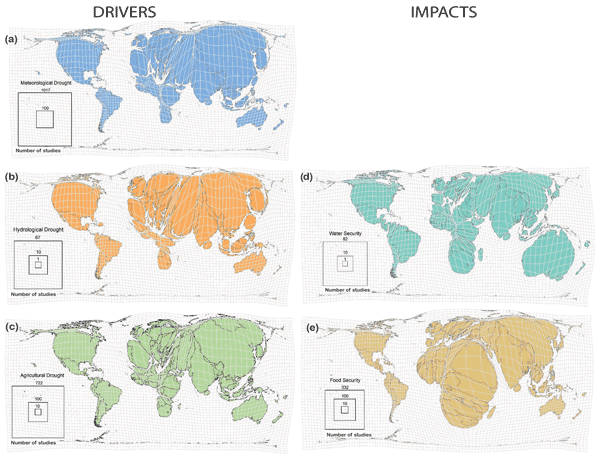
The aim of our study was to question the validity of the assumed direct linkage between drivers of drought and its impacts on water and food securities, mainly found in the frameworks of drought early warning systems (DEWSs). We analysed more than 5000 scientific studies leading us to the conclusion that the local context can contribute to drought drivers resulting in these drought impacts. Our research aims to increase the relevance and utility of the information provided by DEWSs.

Charles Nduhiu Wamucii, Pieter R. van Oel, Arend Ligtenberg, John Mwangi Gathenya, and Adriaan J. Teuling
Hydrol. Earth Syst. Sci., 25, 5641–5665, https://doi.org/10.5194/hess-25-5641-2021, https://doi.org/10.5194/hess-25-5641-2021, 2021
Short summary
Short summary
East African water towers (WTs) are under pressure from human influences within and without, but the water yield (WY) is more sensitive to climate changes from within. Land use changes have greater impacts on WY in the surrounding lowlands. The WTs have seen a strong shift towards wetter conditions while, at the same time, the potential evapotranspiration is gradually increasing. The WTs were identified as non-resilient, and future WY may experience more extreme variations.
Cited articles
Costa, A. C., Cavalcante, T. F., de Oliveira, A. S. S., Lima Neto, I. E., Ribeiro Neto, G. G., van Oel, P. R., and Moreira, R. P.: Sharp decline of diarrhea hospitalizations despite historical drought in Brazil: The potential role of local water supply and public health measures, J. Water Health, 23, 743–756, https://doi.org/10.2166/wh.2025.392, 2025.
De Sousa, T. C., Costa, A. C., Moreira, R. P., and van Oel, P. R.: Groundwater access reduces water insecurity and diarrhea hospitalizations in the drought-affected tropical drylands of Ceará, Brazil. Hydrogeol. J., https://doi.org/10.1007/s10040-025-02961-9, 2025.
Fleming-Muñoz, D. A., Whitten, S., and Bonnett, G. D.: The economics of drought: A review of impacts and costs, Aust. J. Agr. Resour. Ec., 67, 501–523, https://doi.org/10.1111/1467-8489.12527, 2023.
Instituto Brasileiro de Geografia e Estatística: Produto Interno Bruto – PIB, https://www.ibge.gov.br/explica/pib.php (last access: 1 December 2025), 2021.
Ministério da Saúde: DATASUS – Sistema de Informações Hospitalares, https://datasus.saude.gov.br, last access: 2025.
Ministério do Desenvolvimento Regional: Atlas Digital de Desastres no Brasil, https://atlasdigital.mdr.gov.br/paginas/graficos.xhtml# (last access: 1 December 2025), 2024.
Mishra, A., Delk, J., Mishra, A., and Zilberman, D.: Drought has varying impacts on the national economy, Stoch. Env. Res. Risk A., 39, 925–936, https://doi.org/10.1007/s00477-024-02892-z, 2025.
Moreira, R. P., Costa, A. C., Gomes, T. F., and Ferreira, G. de O.: Climate and climate-sensitive diseases in semi-arid regions: a systematic review, Int. J. Public Health, 65, 1749–1761, https://doi.org/10.1007/s00038-020-01464-6, 2020.
Moreira, R. P., da Silva, C. B. C., de Sousa, T. C., Leitão, F. L. B. F., Morais, H. C. C., de Oliveira, A. S. S., Duarte-Clíments, G., Gómez, M. B. S, Cavalcante, T. F., and Costa, A. C.: The Influence of Climate, Atmospheric Pollution, and Natural Disasters on Cardiovascular Diseases and Diabetes Mellitus in Drylands: A Scoping Review, Public Health Rev., 45, 1607300, https://doi.org/10.3389/phrs.2024.1607300, 2024.
Naciones Unidas Convención de Lucha contra la Desertificación (UNCCD): Perspectiva Global de la tierra, Bonn, UNCCD, https://www.unccd.int/sites/default/files/documents/2017-09/GLO_Full_Report_low_res_Spanish.pdf (last access: 15 November 2025), 2017.
Naumann, G., Cammalleri, C., Mentaschi, L., and Feyen, L.: Increased economic drought impacts in Europe with anthropogenic warning, Nat. Clim. Change, 11, 485–491, https://doi.org/10.1038/s41558-021-01044-3, 2021.
Sarmiento, J. H., Melo, O., Ortiz-Alvarado, L., Vallejos, C. P., and Reyes-Mandujano, I. F.: Economic impacts associated with the health effects of climate change in South America: a scoping review, Lancet Reg. Health Am., 26, 100606, https://doi.org/10.1016/j.lana.2023.100606, 2023.
Schmitt, L. H. M., Graham, H. M., and White, P. C. L.: Economic evaluations of the health impacts of weather-related extreme events: a scoping review, Int. J. Env. Res. Pub. He., 13, 1105, https://doi.org/10.3390/ijerph13111105, 2016.
Stivali, M.: Valoração estatística da vida no Brasil, Planejamento e Políticas Públicas, 66, 193–226, https://doi.org/10.38116/ppp66art7, 2024.
Viana, S. W., Faleiro, M. D., Mendes, A. L. F., Torquato, A. C., Tavares, C. P. O., Feres, B., Fernandez, M. G., Sobreira, I. R. M., De Aquino, C. M., Abib, S. de C. V., and Botelho, F.: Limitations of using the DATASUS database as a primary source of data in surgical research: a scoping review, Rev. Col. Bras. Cir., 50, e20233545, https://doi.org/10.1590/0100-6991e-20233545-en, 2023.
Wang, P., Asare, E., Pitzer, V. E., Dubrow, R., and Chen, K.: Associations between long-term drought and diarrhea among children under five in low- and middle-income countries, Nat. Commun., 13, 3661, https://doi.org/10.1038/s41467-022-31291-7, 2022.
Short summary
Many studies highlight drought impacts on productive sectors, such as agriculture and navigation, but economic consequences for human health remain understudied. We conducted an economic valuation of drought-related health interventions in Brazil, showing that ensuring groundwater access during severe droughts can avert substantial losses. Estimated benefits from reduced diarrhea hospitalizations total 9.92 % of local GDP (Gross Domestic Product), with avoidable losses reaching USD 1.15 billion at the state level.
Many studies highlight drought impacts on productive sectors, such as agriculture and...


Altmetrics
Final-revised paper
Preprint