
Articles | Volume 26, issue 5
https://doi.org/10.5194/nhess-26-2227-2026
© Author(s) 2026. This work is distributed under
the Creative Commons Attribution 4.0 License.
the Creative Commons Attribution 4.0 License.
https://doi.org/10.5194/nhess-26-2227-2026
© Author(s) 2026. This work is distributed under
the Creative Commons Attribution 4.0 License.
the Creative Commons Attribution 4.0 License.
Research article
| 
13 May 2026
Research article |
| 13 May 2026
| 13 May 2026
Seismo-acoustic and GNSS observations of a record-breaking Black Sea storm: repurposing geophysical sensors for environmental monitoring
Laura Petrescu
CORRESPONDING AUTHOR

National Institute for Earth Physics, Magurele, Romania
University of Bucharest, Faculty of Physics, Magurele, Romania
Bogdan Antonescu
National Institute for Earth Physics, Magurele, Romania
University of Bucharest, Faculty of Physics, Magurele, Romania
Sorin Nistor
University of Oradea, Faculty of Construction, Cadaster and Architecture, Oradea, Romania
Iustin Floroiu
Politehnica University of Bucharest, Faculty of Electronics, Telecommunications and Information Technology, Bucharest, Romania
Politehnica University of Bucharest, Doctoral School of Electronics, Telecommunications and Information Technology, Bucharest, Romania
Dragoş Ene
National Institute for Earth Physics, Magurele, Romania
Daniela Ghica
National Institute for Earth Physics, Magurele, Romania
Constantin Ionescu
National Institute for Earth Physics, Magurele, Romania
Andrei Anghel
Politehnica University of Bucharest, Faculty of Electronics, Telecommunications and Information Technology, Bucharest, Romania
Mihai Datcu
Politehnica University of Bucharest, Faculty of Electronics, Telecommunications and Information Technology, Bucharest, Romania
Related authors
Alexandra Muntean, Laura Petrescu, Boudewijn Ambrosius, Felix Borleanu, Eduard Ilie Nastase, and Ioan Munteanu
Solid Earth, 17, 747–762, https://doi.org/10.5194/se-17-747-2026, https://doi.org/10.5194/se-17-747-2026, 2026
Short summary
Short summary
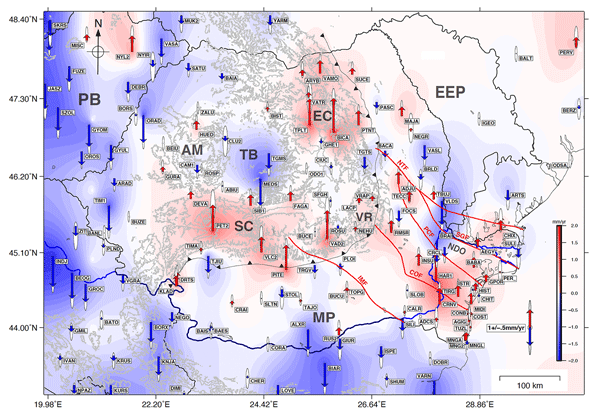
We utilize two decades of continuous GPS data to investigate crustal deformation in Romania, a region that has long been regarded as tectonically stable. Despite the end of major collisions millions of years ago, subcrustal earthquakes and active faults indicate ongoing strain. We estimate horizontal and vertical velocities, strain rates, and dominant deformation styles. Our results reveal localized uplift and extension in the foreland, linked to slab dynamics beneath the southeast Carpathians.
Alexandra Muntean, Laura Petrescu, Boudewijn Ambrosius, Felix Borleanu, Eduard Ilie Nastase, and Ioan Munteanu
Solid Earth, 17, 747–762, https://doi.org/10.5194/se-17-747-2026, https://doi.org/10.5194/se-17-747-2026, 2026
Short summary
Short summary
We utilize two decades of continuous GPS data to investigate crustal deformation in Romania, a region that has long been regarded as tectonically stable. Despite the end of major collisions millions of years ago, subcrustal earthquakes and active faults indicate ongoing strain. We estimate horizontal and vertical velocities, strain rates, and dominant deformation styles. Our results reveal localized uplift and extension in the foreland, linked to slab dynamics beneath the southeast Carpathians.
Monica Ionita, Bogdan Antonescu, and Viorica Nagavciuc
EGUsphere, https://doi.org/10.5194/egusphere-2026-1457, https://doi.org/10.5194/egusphere-2026-1457, 2026
Short summary
Short summary
This study shows that the winter of 2025/26 in Romania was not historically exceptional in thermal terms, despite intense media claims to the contrary. Using long instrumental records, we show that January and February 2026 were both markedly warmer than the 1971–2000 average, while the main high-impact event, the 18th of February 2026 blizzard, was driven by a Mediterranean cyclone and strong moisture transport rather than an extreme cold outbreak.
Monica Ionita, Petru Vaideanu, Bogdan Antonescu, Catalin Roibu, Qiyun Ma, and Viorica Nagavciuc
Nat. Hazards Earth Syst. Sci., 24, 4683–4706, https://doi.org/10.5194/nhess-24-4683-2024, https://doi.org/10.5194/nhess-24-4683-2024, 2024
Short summary
Short summary
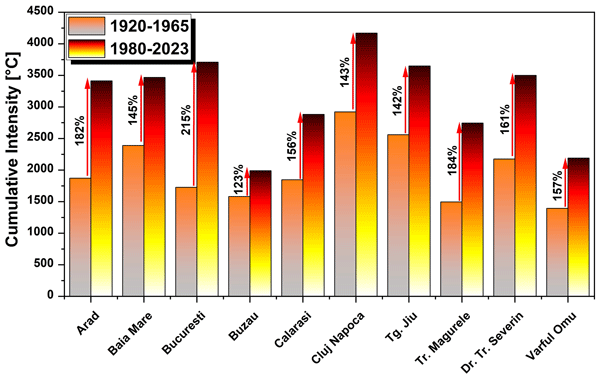
Eastern Europe's heat wave history is explored from 1885 to 2023, with a focus on pre-1960 events. The study reveals two periods with more frequent and intense heat waves (HWs): 1920s–1960s and 1980s–present. The research highlights the importance of a long-term perspective, revealing that extreme heat events have occurred throughout the entire study period, and it emphasizes the combined influence of climate change and natural variations on increasing HW severity.
Rodanthi-Elisavet Mamouri, Albert Ansmann, Kevin Ohneiser, Daniel A. Knopf, Argyro Nisantzi, Johannes Bühl, Ronny Engelmann, Annett Skupin, Patric Seifert, Holger Baars, Dragos Ene, Ulla Wandinger, and Diofantos Hadjimitsis
Atmos. Chem. Phys., 23, 14097–14114, https://doi.org/10.5194/acp-23-14097-2023, https://doi.org/10.5194/acp-23-14097-2023, 2023
Short summary
Short summary
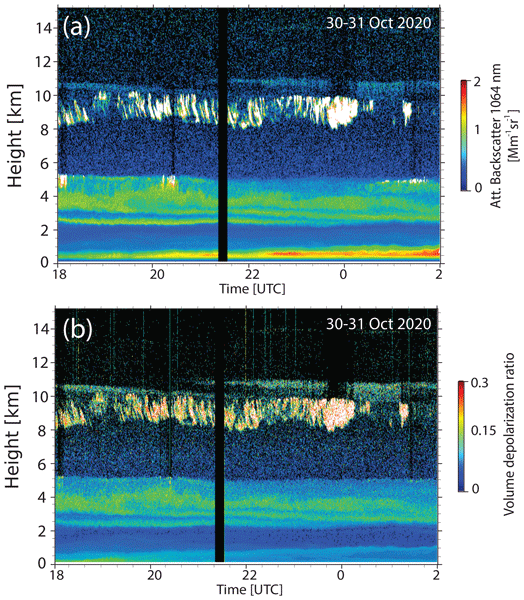
For the first time, rather clear evidence is found that wildfire smoke particles can trigger strong cirrus formation. This finding is of importance because intensive and large wildfires may occur increasingly often in the future as climate change proceeds. Based on lidar observations in Cyprus in autumn 2020, we provide detailed insight into the cirrus formation at the tropopause in the presence of aged wildfire smoke (here, 8–9 day old Californian wildfire smoke).
Carlos Alberti, Frank Hase, Matthias Frey, Darko Dubravica, Thomas Blumenstock, Angelika Dehn, Paolo Castracane, Gregor Surawicz, Roland Harig, Bianca C. Baier, Caroline Bès, Jianrong Bi, Hartmut Boesch, André Butz, Zhaonan Cai, Jia Chen, Sean M. Crowell, Nicholas M. Deutscher, Dragos Ene, Jonathan E. Franklin, Omaira García, David Griffith, Bruno Grouiez, Michel Grutter, Abdelhamid Hamdouni, Sander Houweling, Neil Humpage, Nicole Jacobs, Sujong Jeong, Lilian Joly, Nicholas B. Jones, Denis Jouglet, Rigel Kivi, Ralph Kleinschek, Morgan Lopez, Diogo J. Medeiros, Isamu Morino, Nasrin Mostafavipak, Astrid Müller, Hirofumi Ohyama, Paul I. Palmer, Mahesh Pathakoti, David F. Pollard, Uwe Raffalski, Michel Ramonet, Robbie Ramsay, Mahesh Kumar Sha, Kei Shiomi, William Simpson, Wolfgang Stremme, Youwen Sun, Hiroshi Tanimoto, Yao Té, Gizaw Mengistu Tsidu, Voltaire A. Velazco, Felix Vogel, Masataka Watanabe, Chong Wei, Debra Wunch, Marcia Yamasoe, Lu Zhang, and Johannes Orphal
Atmos. Meas. Tech., 15, 2433–2463, https://doi.org/10.5194/amt-15-2433-2022, https://doi.org/10.5194/amt-15-2433-2022, 2022
Short summary
Short summary
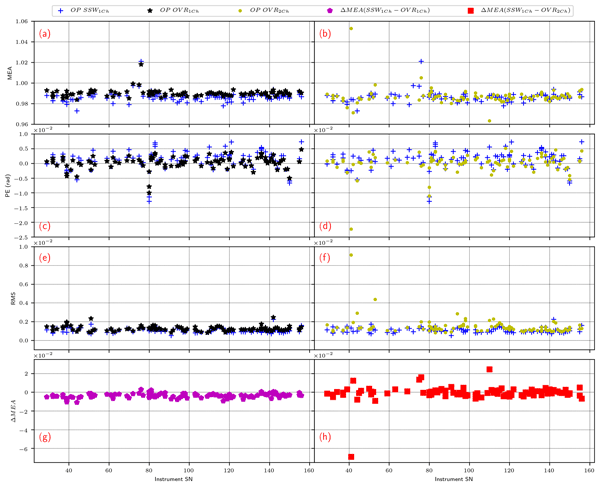
Space-borne greenhouse gas missions require ground-based validation networks capable of providing fiducial reference measurements. Here, considerable refinements of the calibration procedures for the COllaborative Carbon Column Observing Network (COCCON) are presented. Laboratory and solar side-by-side procedures for the characterization of the spectrometers have been refined and extended. Revised calibration factors for XCO2, XCO and XCH4 are provided, incorporating 47 new spectrometers.
Cited articles
Antonescu, B., Dafis, S., and Faranda, D.: Changes in precipitation patterns driving August 2024 Romania floods mostly driven by human-driven climate change, ClimaMeter, Institut Pierre Simon Laplace, CNRS, https://doi.org/10.5281/zenodo.14056214, 2024.
Ardhuin, F., Gualtieri, L., Stutzmann, E., Nakata, N., and Fichtner, A.: Physics of ambient noise generation by ocean waves, in: Seismic ambient noise, edited by: Nakata, N., Gualtieri, L., and Fichtner, A., Cambridge University Press, 69–108, https://doi.org/10.1017/9781108264808.005, 2019.
Assink, J. D., Evers, L. G., Holleman, I., and Paulssen, H.: Characterization of infrasound from lightning, Geophys. Res. Lett., 35, L15802, https://doi.org/10.1029/2008GL034193, 2008.
Aster, R. C., McNamara, D. E., and Bromirski, P. D.: Multidecadal climate-induced variability in microseisms, Seismol. Res. Lett., 79, 194–202, https://doi.org/10.1785/gssrl.79.2.194, 2008.
Aster, R. C., Ringler, A. T., Anthony, R. E., and Lee, T. A.: Increasing ocean wave energy observed in Earth's seismic wavefield since the late 20th century, Nat. Commun., 14, 6984, https://doi.org/10.1038/s41467-023-42673-w, 2023.
Athanase, M., Sánchez-Benítez, A., Monfort, E., Jung, T., and Goessling, H. F.: How climate change intensified storm Boris' extreme rainfall, revealed by near-real-time storylines, Commun. Earth Environ., 5, 676, https://doi.org/10.1038/s43247-024-01847-0, 2024.
Awange, J. L.: Environmental monitoring using GNSS: Global navigation satellite systems, Springer, Heidelberg, https://doi.org/10.1007/978-3-540-88256-5, 2012.
Bengtsson, L., Hodges, K. I., and Roeckner, E.: Storm tracks and climate change, J. Climate, 19, 3518–3543, https://doi.org/10.1175/JCLI3815.1, 2006.
Beyreuther, M., Barsch, R., Krischer, L., Megies, T., Behr, Y., and Wassermann, J.: ObsPy: A Python toolbox for seismology, Seismol. Res. Lett., 81, 530–533, https://doi.org/10.1785/gssrl.81.3.530, 2010.
Bližňák, V. and Sokol, Z.: First validation of the Lightning Imager aboard Meteosat Third Generation satellite with Earth Networks Total Lightning Network, Int. J. Appl. Earth Obs., 147, 105205, https://doi.org/10.1016/j.jag.2026.105205, 2026.
Bondár, I., Šindelářová, T., Ghica, D., Mitterbauer, U., Liashchuk, A., Baše, J., Chum, J., Czanik, C., Ionescu, C., Neagoe, C., and Pásztor, M.: Central and Eastern European Infrasound Network: contribution to infrasound monitoring, Geophys. J. Int., 230, 565–579, https://doi.org/10.1093/gji/ggac066, 2022.
Borzì, A. M., Minio, V., Cannavò, F., Cavallaro, A., D'Amico, S., Gauci, A., De Plaen, R., Lecocq, T., Nardone, G., Orasi, A., Picone, M., and Cannata, A.: Monitoring extreme meteo-marine events in the Mediterranean area using the microseism (Medicane Apollo case study), Sci. Rep.-UK, 12, https://doi.org/10.1038/s41598-022-25395-9, 2022.
Bosy, J., Kaplon, J., Rohm, W., Sierny, J., and Hadas, T.: Near real-time estimation of water vapour in the troposphere using ground GNSS and the meteorological data, Ann. Geophys., 30, 1379–1391, https://doi.org/10.5194/angeo-30-1379-2012, 2012.
Brachet, N., Brown, D., Le Bras, R., Cansi, Y., Mialle, P., and Coyne, J.: Monitoring the Earth's Atmosphere with the Global IMS Infrasound Network, in: Infrasound Monitoring for Atmospheric Studies, edited by: Le Pichon, A., Blanc, E., and Hauchecorne, A., Springer, Dordrecht, https://doi.org/10.1007/978-1-4020-9508-5_3, 2009.
Bromirski, P. D. and Duennebier, F. K.: The near-coastal microseism spectrum: Spatial and temporal wave climate relationships, J. Geophys. Res.-Sol. Ea., 107, ESE 5-1-ESE 5–20, https://doi.org/10.1029/2001JB000265, 2002.
Bruyninx, C., Habrich, H., Söhne, W., Kenyeres, A., Stangl, G., and Völksen, C.: Enhancement of the EUREF Permanent Network Services and Products, in: Geodesy for Planet Earth. International Association of Geodesy Symposia, edited by: Kenyon, S., Pacino, M., and Marti, U., 136, Springer, Berlin, Heidelberg, https://doi.org/10.1007/978-3-642-20338-1_4, 2012.
Burtin, A., Hovius, N., and Turowski, J. M.: Seismic monitoring of torrential and fluvial processes, Earth Surf. Dynam., 4, 285–307, https://doi.org/10.5194/esurf-4-285-2016, 2016.
Butler, R. and Aucan, J.: Multisensor, microseismic observations of a hurricane transit near the ALOHA cabled observatory, J. Geophys. Res.-Sol. Ea., 123, 3027–3046, https://doi.org/10.1002/2017JB014885, 2018.
Campus, P. and Christie, D. R.: Worldwide observations of infrasonic waves, in: Infrasound monitoring for atmospheric studies, edited by: Le Pichon, A., Blanc, E., and Hauchecorne, A., Springer, Dordrecht, Netherlands, 185–234, https://doi.org/10.1007/978-1-4020-9508-5_6, 2009.
Cansi, Y. and Le Pichon, A. L.: Infrasound event detection using the progressive multi-channel correlation algorithm, in: Handbook of signal processing in acoustics, edited by: Havelock, D., Kuwano, S., and Vorländer, M., Springer, New York, 1425–1435, https://doi.org/10.1007/978-0-387-30441-0_77, 2008.
Coates, A. and Ng, A. Y.: Learning feature representations with k-means, in: Neural Networks: Tricks of the Trade: Second Edition, Berlin, Heidelberg, Springer Berlin Heidelberg, edited by: Montavon, G., Orr, G. B., and Muller, K. R., 561–580, https://doi.org/10.1007/978-3-642-35289-8_30, 2012.
Copernicus Climate Change Service: Complete ERA5 global atmospheric reanalysis, Copernicus Climate Change Service (C3S) Climate Data Store (CDS), https://doi.org/10.24381/cds.143582cf, 2023.
Coviello, V., Palo, M., Adirosi, E., and Picozzi, M.: Seismic signature of an extreme hydro-meteorological event in Italy, Nat. Hazards, 1, 17, https://doi.org/10.1038/s44304-024-00018-7, 2024.
Díaz, J., Ruiz, M., Sánchez-Pastor, P. S., and Romero, P.: Urban seismology: On the origin of earth vibrations within a city, Sci. Rep.-UK, 7, 15296, https://doi.org/10.1038/s41598-017-15499-y, 2017.
Diaz, J., Ruiz, M., Udina, M., Polls, F., Martí, D., and Bech, J.: Monitoring storm evolution using a high-density seismic network, Sci. Rep.-UK, 13, https://doi.org/10.1038/s41598-023-28902-8, 2023.
Dimitriu, R. G., Stanciu, I. M., Barbu M.-B., Dobrev, N., and Dumitru, P.: First results on the western Black Sea coast geodynamics resulted from GeoPontica permanent GNSS stations network data processing, in: Proceedings of the 17th International Multidisciplinary Scientific GeoConference SGEM, Albena, Bulgaria August 2017, 17, 149–157, https://doi.org/10.5593/sgem2017/11/S01.019, 2017.
Dullaart, J. C., Muis, S., Bloemendaal, N., and Aerts, J. C.: Advancing global storm surge modelling using the new ERA5 climate reanalysis, Clim. Dynam., 54, 1007–1021, https://doi.org/10.1007/s00382-019-05044-0, 2020.
Ebeling, C. W.: Inferring Ocean Storm Characteristics from Ambient Seismic Noise. A Historical Perspective, Adv. Geophys., 53, 1–33, https://doi.org/10.1016/B978-0-12-380938-4.00001-X, 2012.
Enno, S.-E., Viticchie, B., Navia, D., and Grandell, J.: Meteosat-12 Lightning Imager: first year of observations and the main performance characteristics, 12th European Conference on Severe Storms, Utrecht, The Netherlands, 17–21 November 2025, ECSS2025-152, https://doi.org/10.5194/ecss2025-152, 2025.
Faranda, D., Messori, G., Coppola, E., Alberti, T., Vrac, M., Pons, F., Yiou, P., Saint Lu, M., Hisi, A. N. S., Brockmann, P., Dafis, S., Mengaldo, G., and Vautard, R.: ClimaMeter: contextualizing extreme weather in a changing climate, Weather Clim. Dynam., 5, 959–983, https://doi.org/10.5194/wcd-5-959-2024, 2024.
Floroiu, I., Anghel, A., Petrescu, L., and Datcu, M.: Clustering and Feature-Based Similarity Retrieval of Infrasound Events during Two Storms in Constanţa, Romania, International Conference on Machine Intelligence for GeoAnalytics and Remote Sensing (MIGARS), Bucharest, Romania, 1–4, https://doi.org/10.1109/MIGARS67156.2025.11231952, 2025.
Francoeur, J. W., Matoza, R. S., Ortiz, H. D., and De Negri, R.: Identification of transient seismo-acoustic signals from crashing ocean waves: template matching and location of discrete surf events, Geophys. J. Int., 243, ggaf317, https://doi.org/10.1093/gji/ggaf317, 2025.
Garcés, M. A.: On infrasound standards, part 1 time, frequency, and energy scaling, InfraMatics, 2, 13–35, https://doi.org/10.4236/inframatics.2013.22002, 2013.
Gastmeier, W. J. and Howe, B.: Recent studies of infrasound from industrial sources, Canadian Acoustics, 36, 58–59, https://jcaa.caa-aca.ca/index.php/jcaa/article/view/2036 (last access: 7 May 2026), 2008.
Grafkina, M. V., Nyunin, B. N., and Sviridova, E. Y: Environmental monitoring and simulation of infrasound generating mechanism of traffic flow, J. Ecol. Eng., 20, https://doi.org/10.12911/22998993/109877, 2019.
Grevemeyer, I., Herber, R., and Essen, H. H.: Microseismological evidence for a changing wave climate in the northeast Atlantic Ocean, Nature, 408, 349–352, https://doi.org/10.1038/35042558, 2000.
Groos, J. C. and Ritter, J. R. R.: Time domain classification and quantification of seismic noise in an urban environment, Geophys. J. Int., 179, 1213–1231, https://doi.org/10.1111/j.1365-246X.2009.04343.x, 2009.
Gualtieri, L., Camargo, S. J., Pascale, S., Pons, F. M. E., and Ekström, G.: The persistent signature of tropical cyclones in ambient seismic noise, Earth Planet. Sc. Lett., 484, 287–294, https://doi.org/10.1016/j.epsl.2017.12.026, 2018.
Guerova, G., Jones, J., Douša, J., Dick, G., de Haan, S., Pottiaux, E., Bock, O., Pacione, R., Elgered, G., Vedel, H., and Bender, M.: Review of the state of the art and future prospects of the ground-based GNSS meteorology in Europe, Atmos. Meas. Tech., 9, 5385–5406, https://doi.org/10.5194/amt-9-5385-2016, 2016.
Herring, T., King, R., Floyd, M., and McClusky, S.: GAMIT Reference Manual GPS Analysis at MIT Release 10.7. GAMIT/GLOBK, http://www-gpsg.mit.edu/gg/ (last access: 10 March 2026), 2020.
Hersbach, H., Bell, B., Berrisford, P., Hirahara, S., Horányi, A., Muñoz-Sabater, J., Nicolas, J., Peubey, C., Radu, R., Schepers, D., and Simmons, A.: The ERA5 global reanalysis, Q. J. Roy. Meteor. Soc., 146, 1999–2049, https://doi.org/10.1002/qj.3803, 2020.
Hersbach, H., Bell, B., Berrisford, P., Biavati, G., Horányi, A., Muñoz Sabater, J., Nicolas, J., Peubey, C., Radu, R., Rozum, I., Schepers, D., Simmons, A., Soci, C., Dee, D., and Thépaut, J.-N.: ERA5 hourly data on single levels from 1940 to present, Copernicus Climate Change Service (C3S) Climate Data Store (CDS) [data set], https://doi.org/10.24381/cds.bd0915c6, 2023.
Holmlund, K., Grandell, J., Schmetz, J., Stuhlmann, R., Bojkov, B., Munro, R., Lekouara, M., Coppens, D., Viticchie, B., August, T., and Theodore, B.: Meteosat Third Generation (MTG): Continuation and innovation of observations from geostationary orbit, B. Am. Meteorol. Soc., 102, E990–E1015, https://doi.org/10.1175/BAMS-D-19-0304.1, 2021.
Hua, J., Wu, M., Mulholland, J. P., Neelin, J. D., Tsai, V. C., and Trugman, D. T.: High-resolution precipitation monitoring with a dense seismic nodal array, Sci. Rep.-UK, 13, 11450, https://doi.org/10.1038/s41598-023-38008-w, 2023.
Hupe, P., Ceranna, L., Pilger, C., de Carlo, M., Le Pichon, A., Kaifler, B., and Rapp, M.: Assessing middle atmosphere weather models using infrasound detections from microbaroms, Geophys. J. Int., 216, 1761–1767, https://doi.org/10.1093/gji/ggy520, 2019.
Hupe, P., Ceranna, L., Le Pichon, A., Matoza, R. S., and Mialle, P.: International Monitoring System infrasound data products for atmospheric studies and civilian applications, Earth Syst. Sci. Data, 14, 4201–4230, https://doi.org/10.5194/essd-14-4201-2022, 2022.
Iliescu, A. I., Rus, T., Danciu, V., Moldoveanu, C., and Ilie, A.: Current situation of GNSS networks in Romania, Bulletin of University of Agricultural Sciences and Veterinary Medicine Cluj-Napoca, Horticulture, 76, https://doi.org/10.15835/buasvmcn-hort:2019.0040, 2019.
Jakobsen, J.: Infrasound emission from wind turbines, J. Low. Freq. Noise V. A., 24, 145–155, https://doi.org/10.1260/0263092057753744, 2005.
Jiao, D., Xu, N., Yang, F., and Xu, K.: Evaluation of spatial-temporal variation performance of ERA5 precipitation data in China, Sci. Rep.-UK, 11, 17956, https://doi.org/10.1038/s41598-021-97432-y, 2021.
Johnston, G., Riddell, A., and Hausler, G.: The international GNSS service, in: Springer handbook of global navigation satellite systems, edited by: Teunissen, P. J. and Montenbruck, O., Springer, Cham, Switzerland, 967–982, https://doi.org/10.1007/978-3-319-42928-1_33, 2017.
Jones, J., Guerova, G., Douša, J., Dick, G., de Haan, S., Pottiaux, E., Bock, O., Pacione, R., and Van Malderen, R.: Advanced GNSS tropospheric products for monitoring severe weather events and climate, COST Action ES1206 Final Action Dissemination Report, 563, https://doi.org/10.1007/978-3-030-13901-8, 2020.
Karabatić, A., Weber, R., and Haiden, T.: Near real-time estimation of tropospheric water vapour content from ground based GNSS data and its potential contribution to weather now-casting in Austria, Adv. Space Res., 47, 1691–1703, https://doi.org/10.1016/j.asr.2010.10.028, 2011.
Kober, K. and Tafferner, A.: Tracking and nowcasting of convective cells using remote sensing data from radar and satellite, Meteorol. Z., 1, 75–84, https://doi.org/10.1127/0941-2948/2009/359, 2009.
Kokou, P.: Status of the MTG-I1 Lightning Imager commissioning activities, in: EUMETSAT Conference 2023, 1-C GEO – MTG, Malmö, Sweden, 12 September 2023, https://www-cdn.eumetsat.int/files/2023-10/3. Pierre Kokou 11.15.pdf (last access: 9 April 2026), 2023.
Koper, K. D. and Burlacu, R.: The fine structure of double-frequency microseisms recorded by seismometers in North America, J. Geophys. Res.-Sol. Ea., 120, 1677–1691, https://doi.org/10.1002/2014JB011820, 2015.
Landès, M., Ceranna, L., Le Pichon, A., and Matoza, R. S.: Localization of microbarom sources using the IMS infrasound network, J. Geophys. Res.-Atmos., 117, https://doi.org/10.1029/2011JD016684, 2012.
Landskron, D. and Böhm, J.: VMF3/GPT3: refined discrete and empirical troposphere mapping functions, J. Geodesy., 92, 349–360, https://doi.org/10.1007/s00190-017-1066-2, 2018.
Le Pichon, A., Matoza, R., Brachet, N., and Cansi, Y.: Recent enhancements of the PMCC infrasound signal detector, Inframatics, 26, 5–8, https://matoza.faculty.geol.ucsb.edu/files/lepichon_2010.pdf (last access: 9 April 2026), 2010.
Li, L., Boué, P., Retailleau, L., and Campillo, M.: Spatiotemporal Correlation Analysis of Noise-Derived Seismic Body Waves With Ocean Wave Climate and Microseism Sources, Geochem. Geophy. Geosy., 21, https://doi.org/10.1029/2020GC009112, 2020.
Listowski, C., Forestier, E., Dafis, S., Farges, T., De Carlo, M., Grimaldi, F., Le Pichon, A., Vergoz, J., Heinrich, P., and Claud, C.: Remote monitoring of Mediterranean hurricanes using infrasound, Remote Sens.-Basel, 14, 6162, https://doi.org/10.3390/rs14236162, 2022.
MacQueen, J.: Some methods for classification and analysis of multivariate observations, in: Proceedings of the Fifth Berkeley Symposium on Mathematical Statistics and Probability, Berkeley, California, January 1967, 5, 281–298, https://digicoll.lib.berkeley.edu/record/113015/files/math_s5_v1_article-17.pdf (last access: 9 April 2026), 1967.
Marut, G., Hadas, T., Kaplon, J., Trzcina, E., and Rohm, W.: Monitoring the water vapor content at high spatio-temporal resolution using a network of low-cost multi-GNSS receivers, IEEE T. Geosci. Remote, 60, 1–14, https://doi.org/10.1109/TGRS.2022.3226631, 2022.
Nistor, S., Suba, N. S., Maciuk, K., Kudrys, J., Nastase, E. I., and Muntean, A.: Analysis of noise and velocity in GNSS EPN-repro 2 time series, Remote Sens.-Basel, 13, 2783, https://doi.org/10.3390/rs13142783, 2021a.
Nistor, S., Suba, N. S., El-Mowafy, A., Apollo, M., Malkin, Z., Nastase, E. I., Kudrys, J., and Maciuk, K.: Implication between geophysical events and the variation of seasonal signal determined in GNSS position time series, Remote Sens.-Basel, 13, 3478, https://doi.org/10.3390/rs13173478, 2021b.
Pásztor, M., Czanik, C., and Bondár, I.: A single array approach for infrasound signal discrimination from quarry blasts via machine learning, Remote Sens.-Basel, 15, 1657, https://doi.org/10.3390/rs15061657, 2023.
Price, I., Sanchez-Gonzalez, A., Alet, F., Andersson, T. R., El-Kadi, A., Masters, D., Ewalds, T., Stott, J., Mohamed, S., Battaglia, P., and Lam, R.: Probabilistic weather forecasting with machine learning, Nature, 637, 84–90, https://doi.org/10.1038/s41586-024-08252-9, 2025.
Priego, E., Jones, J., Porres, M. J., and Seco, A.: Monitoring water vapour with GNSS during a heavy rainfall event in the Spanish Mediterranean area, Geomat. Nat. Haz. Risk, 8, 282–294, https://doi.org/10.1080/19475705.2016.1201150, 2017.
Retailleau, L. and Gualtieri, L.: Multi-phase seismic source imprint of tropical cyclones, Nat. Commun., 12, https://doi.org/10.1038/s41467-021-22231-y, 2021.
Rindraharisaona, E. J., Réchou, A., Fontaine, F. R., Barruol, G., Stamenoff, P., Boudevillain, B., Rigaud-Louise, F., and Delcher, E.: Seismic signature of rain and wind inferred from seismic data, Earth Space Sci., 9, p.e2022EA002328, https://doi.org/10.1029/2022EA002328, 2022.
Šindelářová, J., Chum, J., Skripnikova, K., and Base, J.: Atmospheric infrasound observed during intense convective storms on 9–10 July 2011, J. Atmos. Sol.-Terr. Phy., 122, 66–74, https://doi.org/10.1016/j.jastp.2014.10.014, 2015.
Šindelářová, T., De Carlo, M., Czanik, C., Ghica, D., Kozubek, M., Podolská, K., Baše, J., Chum, J., and Mitterbauer, U.: Infrasound signature of the post-tropical storm Ophelia at the Central and Eastern European Infrasound Network, J. Atmos. Sol.-Terr. Phy., 217, 105603, https://doi.org/10.1016/j.jastp.2021.105603, 2021.
Smirnov, A., De Carlo, M., Le Pichon, A., Shapiro, N. M., and Kulichkov, S.: Characterizing the oceanic ambient noise as recorded by the dense seismo-acoustic Kazakh network, Solid Earth, 12, 503–520, https://doi.org/10.5194/se-12-503-2021, 2021.
Soci, C., Hersbach, H., Simmons, A., Poli, P., Bell, B., Berrisford, P., Horányi, A., Muñoz-Sabater, J., Nicolas, J., Radu, R., and Schepers: The ERA5 global reanalysis from 1940 to 2022, Q. J. Roy. Meteor. Soc., 150, 4014–4048, https://doi.org/10.1002/qj.4803, 2024.
Sokol, Z., Szturc, J., Orellana-Alvear, J., Popova, J., Jurczyk, A., and Célleri, R.: The role of weather radar in rainfall estimation and its application in meteorological and hydrological modelling – A review, Remote Sens.-Basel, 13, 351, https://doi.org/10.3390/rs13030351, 2021.
Stopa, J. E., Cheung, K. F., Garcés, M. A., and Badger, N.: Atmospheric infrasound from nonlinear wave interactions during Hurricanes Felicia and Neki of 2009, J. Geophys. Res.-Oceans, 117, https://doi.org/10.1029/2012JC008257, 2012
Stott, P.: How climate change affects extreme weather events, Science, 352, 1517–1518, https://doi.org/10.1126/science.aaf7271, 2016.
Tanimoto, T. and Anderson, A.: Seismic noise between 0.003 Hz and 1.0 Hz and its classification, Prog. Earth Planet. Sci., 10, https://doi.org/10.1186/s40645-023-00587-7, 2023.
Taweesintananon, K., Landrø, M., Potter, J. R., Johansen, S. E., Rørstadbotnen, R. A., Bouffaut, L., Kriesell, H. J., Brenne, J. K., Haukanes, A., Schjelderup, O., and Storvik, F.: Distributed acoustic sensing of ocean-bottom seismo-acoustics and distant storms: A case study from Svalbard, Norway, Geophysics, 88, B135–B150, https://doi.org/10.1190/geo2022-0435.1, 2023.
Tiberia, A., Mascitelli, A., D'adderio, L. P., Federico, S., Marisaldi, M., Porcù, F., Realini, E., Gatti, A., Ursi, A., Fuschino, F., and Tavani, M.: Time evolution of storms producing terrestrial gamma-ray flashes using ERA5 reanalysis data, GPS, lightning and geostationary satellite observations, Remote Sens.-Basel, 13, 784, https://doi.org/10.3390/rs13040784, 2021.
Vaquero-Martínez, J. and Antón, M.: Review on the role of GNSS meteorology in monitoring water vapor for atmospheric physics, Remote Sens.-Basel, 13, 2287, https://doi.org/10.3390/rs13122287, 2021.
Viticchie, B., Lekouara, M., Hungershöfer, K., Joro, S., Grandell, J., Maufrais, A., Marquez, M. J., and Munro, R.: Algorithm Theoretical Basis Document (ATBD) for L2 processing of the MTG Lightning Imager data, Rapp. Tech. EUMESTAT [data set], 6, https://user.eumetsat.int/s3/eup-strapi-media/Algorithm_Theoretical_Basis_Document_ATBD_for_L2_processing_of_the_MTG_Lightning_Imager_data_9e724c567a.pdf (last access: 9 April 2026), 2020.
Waxler, R., Frazier, W. G., Talmadge, C. L., Liang, B., Hetzer, C., Buchanan, H., and Audette, W. E.: Analysis of infrasound array data from tornadic storms in the southeastern United States, J. Acoust. Soc. Am., 156, 1903–1919, https://doi.org/10.1121/10.0028815, 2024.
Wessel, P., Luis, J. F., Uieda, L. A., Scharroo, R., Wobbe, F., Smith, W. H., and Tian, D.: The generic mapping tools version 6, Geochem. Geophy. Geosy., 20, 5556–5564, https://doi.org/10.1029/2019GC008515, 2019.
Wilgan, K., Rohm, W., and Bosy, J.: Multi-observation meteorological and GNSS data comparison with numerical weather prediction model, Atmos. Res., 156, 29–42, https://doi.org/10.1016/j.atmosres.2014.12.011, 2015.
Wu, G., Qin, S., Mao, Y., Ma, Z., and Shi, C.: Validation of precipitation events in ERA5 to gauge observations during warm seasons over eastern China, J. Hydrometeorol., 23, 807–822, https://doi.org/10.1175/JHM-D-21-0195.1, 2022.
Short summary
In August 2024, a powerful storm hit Romania’s Black Sea coast, breaking rainfall records. We used a mix of ground and satellite sensors to track the storm’s development and impacts. The data revealed clear signs of intense rainfall, lightning, and ground vibrations likely linked to storm activity. Our study shows that combining different types of sensors can improve how we monitor extreme storms and may help in building better early-warning systems in coastal areas.
In August 2024, a powerful storm hit Romania’s Black Sea coast, breaking rainfall records. We...


Altmetrics
Final-revised paper
Preprint