
Articles | Volume 26, issue 4
https://doi.org/10.5194/nhess-26-1785-2026
© Author(s) 2026. This work is distributed under
the Creative Commons Attribution 4.0 License.
the Creative Commons Attribution 4.0 License.
https://doi.org/10.5194/nhess-26-1785-2026
© Author(s) 2026. This work is distributed under
the Creative Commons Attribution 4.0 License.
the Creative Commons Attribution 4.0 License.
Invited perspectives
| 
17 Apr 2026
Invited perspectives |
| 17 Apr 2026
| 17 Apr 2026
Invited perspectives: Four reasons DRR does not work as intended – lessons from the 2025 California wildfires and beyond

Department of Landscape, Water and Infrastructure, BOKU University, Vienna, 1190, Austria
Konstantinos Karagiorgos
Karlstad University, Karlstad, 65188, Sweden
Margreth Keiler
Department of Geography, University of Innsbruck, Innsbruck, 6020, Austria
Institute for Interdisciplinary Mountain Research, Austrian Academy of Sciences, Innsbruck, 6020, Austria
Lars Nyberg
Karlstad University, Karlstad, 65188, Sweden
Maria Papathoma-Köhle
Department of Landscape, Water and Infrastructure, BOKU University, Vienna, 1190, Austria
Annemarie Polderman
Institute for Interdisciplinary Mountain Research, Austrian Academy of Sciences, Innsbruck, 6020, Austria
Related authors
Hedieh Soltanpour, Kamal Serrhini, Joel C. Gill, Sven Fuchs, and Solmaz Mohadjer
Nat. Hazards Earth Syst. Sci., 26, 2743–2763, https://doi.org/10.5194/nhess-26-2743-2026, https://doi.org/10.5194/nhess-26-2743-2026, 2026
Short summary
Short summary
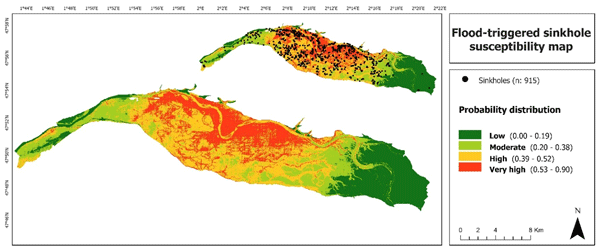
We applied the Maximum Entropy model to characterise multi-hazard scenarios in a karst environment, focusing on flood-triggered sinkholes in Val d'Orléans, France. Karst terrains as multi-hazard forming areas, have received little attention in multi-hazard literature. Our study developed a multi-hazard susceptibility map to forecast the spatial distribution of these hazards. The findings improve understanding of hazard interactions and demonstrate the model's utility in multi-hazard analysis.
Wolfgang Schwanghart, Ankit Agarwal, Kristen Cook, Ugur Ozturk, Roopam Shukla, and Sven Fuchs
Nat. Hazards Earth Syst. Sci., 24, 3291–3297, https://doi.org/10.5194/nhess-24-3291-2024, https://doi.org/10.5194/nhess-24-3291-2024, 2024
Short summary
Short summary
The Himalayan landscape is particularly susceptible to extreme events, which interfere with increasing populations and the expansion of settlements and infrastructure. This preface introduces and summarizes the nine papers that are part of the special issue,
Estimating and predicting natural hazards and vulnerabilities in the Himalayan region.
Hedieh Soltanpour, Kamal Serrhini, Joel C. Gill, Sven Fuchs, and Solmaz Mohadjer
Nat. Hazards Earth Syst. Sci., 26, 2743–2763, https://doi.org/10.5194/nhess-26-2743-2026, https://doi.org/10.5194/nhess-26-2743-2026, 2026
Short summary
Short summary
We applied the Maximum Entropy model to characterise multi-hazard scenarios in a karst environment, focusing on flood-triggered sinkholes in Val d'Orléans, France. Karst terrains as multi-hazard forming areas, have received little attention in multi-hazard literature. Our study developed a multi-hazard susceptibility map to forecast the spatial distribution of these hazards. The findings improve understanding of hazard interactions and demonstrate the model's utility in multi-hazard analysis.
Vesna Coutureau, Tabea Bork-Hüffer, and Margreth Keiler
Nat. Hazards Earth Syst. Sci., 26, 703–708, https://doi.org/10.5194/nhess-26-703-2026, https://doi.org/10.5194/nhess-26-703-2026, 2026
Short summary
Short summary
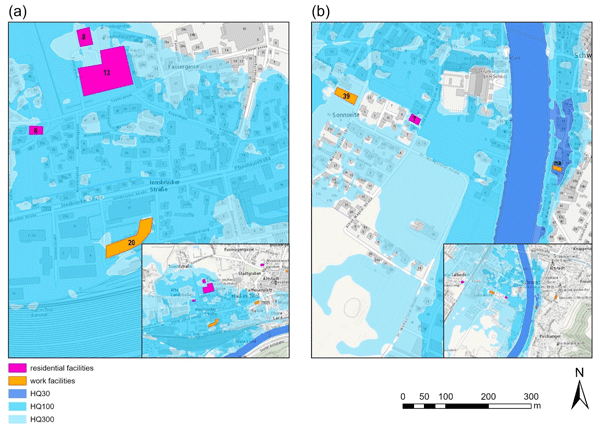
People with disabilities are highly vulnerable to disasters but underrepresented in risk management. A pilot study in Tyrol, Austria, assessed flood exposure and preparedness in disability facilities. Spatial analysis showed significant flood risk, while interviews revealed gaps in awareness and planning. The study urges disability-inclusive disaster management with accessible info, targeted measures, and integration of disability perspectives to enhance resilience.
Claudia Canedo Rosso, Lars Nyberg, and Ilias Pechlivanidis
Nat. Hazards Earth Syst. Sci., 25, 4577–4592, https://doi.org/10.5194/nhess-25-4577-2025, https://doi.org/10.5194/nhess-25-4577-2025, 2025
Short summary
Short summary
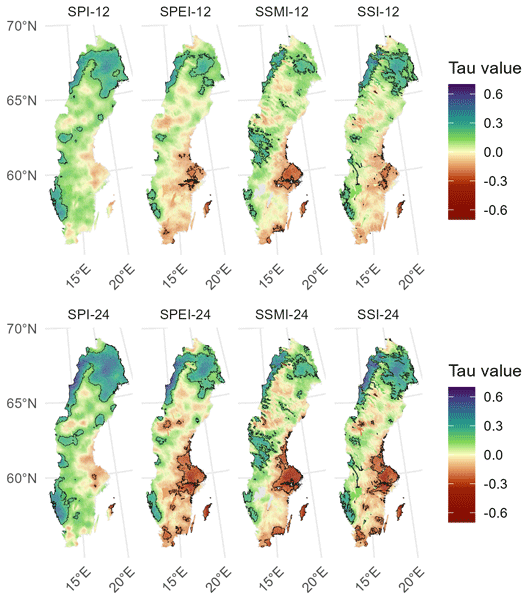
Severe droughts have increasingly impacted water supply, farming, and forestry in Sweden. This study examines how meteorological, agricultural, and hydrological droughts differ and how they have changed over time and across regions. The results indicate drier conditions in central and south-eastern Sweden, while northern regions show a tendency toward wetter conditions. These findings can inform climate services and support decision-making for drought preparedness and climate adaptation.
Wolfgang Schwanghart, Ankit Agarwal, Kristen Cook, Ugur Ozturk, Roopam Shukla, and Sven Fuchs
Nat. Hazards Earth Syst. Sci., 24, 3291–3297, https://doi.org/10.5194/nhess-24-3291-2024, https://doi.org/10.5194/nhess-24-3291-2024, 2024
Short summary
Short summary
The Himalayan landscape is particularly susceptible to extreme events, which interfere with increasing populations and the expansion of settlements and infrastructure. This preface introduces and summarizes the nine papers that are part of the special issue,
Estimating and predicting natural hazards and vulnerabilities in the Himalayan region.
Mauro Fischer, Mario Kummert, Reto Aeschbacher, Christoph Graf, Alexis Rüeger, Philippe Schoeneich, Markus Zimmermann, and Margreth Keiler
EGUsphere, https://doi.org/10.5194/egusphere-2023-1190, https://doi.org/10.5194/egusphere-2023-1190, 2023
Preprint archived
Short summary
Short summary
Due to climate change, the hazard for debris flows originating in glacier forefields or areas dominated by seasonal to perennial frost is increasing. Hazard assessment for this type of debris flows is especially difficult as records of past events are typically scarce or inexistent. We therefore developed a multi-methods approach for scenario building and runout modelling for pro- and periglacial debris flows triggered by precipitation events and applied it to a catchment in the Swiss Alps.
Cited articles
Alcántara-Ayala, I., Velásquez-Espinoza, G., and de Jesús, A. M.: From mandates to mechanisms: Institutional vulnerability, decentralized governance, and the challenges of local disaster risk reduction implementation, I. J. Disast. Risk Sc., 16, 709–723, https://doi.org/10.1007/s13753-025-00673-y, 2025.
Anderson, S. E., Plantinga, A. J., and Wibbenmeyer, M.: Inequality in agency response: Evidence from salient wildfire events, J. Polit., 85, 625–639, https://doi.org/10.1086/722044, 2023.
Attems, M.-S., Thaler, T., Genovese, E., and Fuchs, S.: Implementation of property level flood risk adaptation (PLFRA) measures: choices and decisions, WIREs Water, 7, e1404, https://doi.org/10.1002/wat2.1404, 2020.
Auer, M. R.: Wildfire risk and insurance: research directions for policy scientists, Policy Sci., 57, 459–484, https://doi.org/10.1007/s11077-024-09528-7, 2024.
Babrauskas, V.: The Palisades fire of Los Angeles: lessons to be learned, Fire, 8, 303, https://doi.org/10.3390/fire8080303, 2025.
Bankoff, G.: Design by disasters, in: Cultures and disasters, edited by: Krüger, F., Bankoff, G., Cannon, T., Orlowski, B., and Schipper, E. L. F., Routledge, London, 53–71, https://doi.org/10.4324/9781315797809, 2015.
Biesbroek, G. R., Klostermann, J. E. M., Termeer, C. J. A. M., and Kabat, P.: On the nature of barriers to climate change adaptation, Reg. Environ. Change, 13, 1119–1129, https://doi.org/10.1007/s10113-013-0421-y, 2013.
Boomhover, J.: Adapting to growing wildfire property risk, Science, 382, 638–641, https://doi.org/10.1126/science.adk7118, 2023.
Bourgeois, E., Baril, P., Normandin, J., and Therrien, M.: Scoping review: understanding the barriers and drivers of risk management in local governments, International Journal of Disaster Resilience in the Built Environment, 15, 777–792, https://doi.org/10.1108/IJDRBE-04-2022-0032, 2024.
Canavar, R.: Post-quake period in Türkiye: fallacies, political insensitivity, Daily Sabah, https://www.dailysabah.com/ opinion/op-ed/post-quake-period-in-turkiye-fallacies-political-insensitivity (last access 25 January 2026), 2023.
Charalampous, P., Speybroeck, N., van Loenhout, J. A. F., Pluen, G., and Delforge, D.: The 2024 Spain floods: A call for resilience and the duty of memory, Int. J. Public Health, 70, 1608236, https://doi.org/10.3389/ijph.2025.1608236, 2025.
Chasen G.: “No words really – just a horror show. Some of the design choices we made here helped. But we were also very lucky”, X, https://x.com/ChasenGreg/status/1877478755091767732 (last access: 2 February 2026), 9 January 2025.
Chauvet, R.: Floods in Spain highlight disinformation's appeal during natural disasters, International Journalists Network, https://ijnet.org/en/story/floods-spain-highlight-disinformations-appeal-during-natural-disasters (last access: 25 January 2026), 2024.
D'Ayala, D.: Commentary: Reflections on the Turkey–Syria earthquakes of 6 February 2023, P. I. Civil Eng.-Str. B., 176, 478–481, https://doi.org/10.1680/jstbu.23.00027, 2023.
Doorn, N., Brackel, L., and Vermeulen, S.: Distributing responsibilities for climate adaptation: Examples from the water domain, Sustainability, 13, 3676, https://doi.org/10.3390/su13073676, 2021.
Dulin, S., Smith, M., Ellinport, B., Trump, B., Keenan, J. M., and Linkov, I.: Quantifying the compounding effects of natural hazard events: a case study on wildfires and floods in California, npj Natural Hazards, 2, 40, https://doi.org/10.1038/s44304-025-00090-7, 2025.
Editorial: Wildfires and politics, Nature Sustainability, 3, 669, https://doi.org/10.1038/s41893-020-00613-2, 2020.
Egbelakin, T., Wilkinson, S., Ingham, J., Potanaroa, R., and Sajoudi, M.: Incentives and motivators for improving building resilience to earthquake disaster, Nat. Hazards Rev., 18, 04017008, https://doi.org/10.1061/(ASCE)NH.1527-6996.0000249, 2017.
Essen, M., McCaffrey, S., Abrams, J., and Paveglio, T.: Improving wildfire management outcomes: shifting the paradigm of wildfire from simple to complex risk, J. Environ. Plann. Man., 66, 909–927, https://doi.org/10.1080/09640568.2021.2007861, 2023.
Fekete, A., Estrany, J., and Ramírez, M. Á. A.: Cascading impact chains and recovery challenges of the 2024 Valencia catastrophic floods, Discover Sustainability, 6, 586, https://doi.org/10.1007/s43621-025-01483-4, 2025.
Ford, J. D. and King, D.: A framework for examining adaptation readiness, Mitig. Adapt. Strat. Gl., 20, 505–526, https://doi.org/10.1007/s11027-013-9505-8, 2015.
Freddi, F., Galasso, C., Cremen, G., Dall'Asta, A., Di Sarno, L., Giaralis, A., Gutiérrez-Urzúa, F., Málaga-Chuquitaype, C., Mitoulis, S. A., Petrone, C., Sextos, A., Sousa, L., Tarbali, K., Tubaldi, E., Wardman, J., and Woo, G.: Innovations in earthquake risk reduction for resilience: Recent advances and challenges, Int. J. Disast. Risk Re., 60, 102267, https://doi.org/10.1016/j.ijdrr.2021.102267, 2021.
Fuchs, S., Karagiorgos, K., Keiler, M., Papathoma-Köhle, M., and Nyberg, L.: The ambiguity in IPCC's risk diagram raises explanatory challenges, Nat. Hazards, 120, 12559–12564, https://doi.org/10.1007/s11069-024-06643-9, 2024.
Geier, W.: Valencia 2024 flood disaster: Challenges of effective disaster management in countries with complex division of public responsibilities, in: Hochwasser – inundaciones – floods: Integrative risk and security research, edited by: Fekete, A., TH Köln, Cologne, 186–190, 2025.
Gill, J. C.: Brief Communication: Rejuvenating and strengthening the science–policy interface required to implement the Sendai Framework for Disaster Risk Reduction, Nat. Hazards Earth Syst. Sci., 26, 271–278, https://doi.org/10.5194/nhess-26-271-2026, 2026.
Golgowski, N.: 'Fake weather, fake flooding': Republicans are spreading a bizarre conspiracy theory after the deadly Texas floods, HuffPost, 7 July 2025, https://www.huffpost.com/entry/weather-manipulation-conspiracy-theory-texas-floods_n_686c0c45e4b0082b3c90c01c (last access: 2 August 2025), 2025.
Hamilton, M., Nielsen-Pincus, M., and Evers, C. R.: Wildfire risk governance from the bottom up: linking local planning processes in fragmented landscapes, Ecol. Soc., 28, 3, https://doi.org/10.5751/ES-13856-280303, 2023.
Hossain, M. S., Ramirez, J. A., Haisch, T., Speranza, C. I., Martius, O., Mayer, H., and Keiler, M.: A coupled human and landscape conceptual model of risk and resilience in Swiss Alpine communities, Sci. Total Environ., 730, 138322, https://doi.org/10.1016/j.scitotenv.2020.138322, 2020.
Howell, J. and Elliott, J. R.: Damages done: The longitudinal impacts of natural hazards on wealth inequality in the United States, Soc. Probl., 66, 448–467, https://doi.org/10.1093/socpro/spy016, 2019.
Hui, I., Zhao, A., Cain, B. E., and Driscoll, A. M.: Baptism by wildfire? Wildfire experiences and public support for wildfire adaptation policies, Am. Polit. Res., 50, 108–116, https://doi.org/10.1177/1532673X211023926, 2022.
Iglesias, V., Braswell, A. E., Rossi, M. W., Joseph, M. B., McShane, C., Cattau, M., Koontz, M. J., McGlinchy, J., Nagy, R. C., Balch, J., Leyk, S., and Travis, W. R.: Risky development: Increasing exposure to natural hazards in the United States, Earth's Future, 9, e2020EF001795, https://doi.org/10.1029/2020EF001795, 2021.
Jacobson, T.: Government, homeowners, and wildfire: What can we learn from California's resilience planning experience?, in: Homeowners and the resilient city, edited by: Thaler, T., Hartmann, T., Slavíková, L., and Tempels, B., Palgrave Macmillan, Cham, 237–263, https://doi.org/10.1007/978-3-031-17763-7_10, 2023.
Jiao, A., Vargas, A. L., Gluhova, Y. D., Headon, K., Rangel, L., Abdallah, S., Ramsey, E. C., Truong, K., Chal, A. M., Hopfer, S., and Wu, J.: Wildfire risk perception and communication in disadvantaged communities: Insights from Eastern Coachella Valley in Southern California, Int. J. Disast. Risk Re., 117, 105186, https://doi.org/10.1016/j.ijdrr.2025.105186, 2025.
Keller, M., Kleffner, A., Medders, L., and Russell, D.: Trial by fire: reimagining wildfire insurance in California, Journal of Insurance Regulation, 44, 27093, https://doi.org/10.52227/27093.2025, 2025.
Kramer, H. A., Mockrin, M. H., Alexandre, P. M., and Radeloff, V. C.: High wildfire damage in interface communities in California, Int. J. Wildland Fire, 28, 641–650, https://doi.org/10.1071/WF18108, 2019.
Kramer, H. A., Butsic, V., Mockrin, M. H., Ramirez-Reyes, C., Alexandre, P. M., and Radeloff, V. C.: Post-wildfire rebuilding and new development in California indicates minimal adaptation to fire risk, Land Use Policy, 107, 105502, https://doi.org/10.1016/j.landusepol.2021.105502, 2021.
Kuhlicke, C., Steinführer, A., Begg, C., Bianchizza, C., Bründl, M., Buchecker, M., De Marchi, B., Di Masso Tarditti, M., Höppner, C., Komac, B., Lemkow, L., Luther, J., McCarthy, S., Pellizzoni, L., Renn, O., Scolobig, A., Supramaniam, M., Tapsell, S., Wachinger, G., Walker, G., Whittle, R., Zorn, M., and Faulkner, H.: Perspectives on social capacity building for natural hazards: outlining an emerging field of research and practice in Europe, Environ. Sci. Policy, 14, 804–814, https://doi.org/10.1016/j.envsci.2011.05.001, 2011.
Lambrou, N., Kolden, C., Loukaitou-Sideris, A., Anjum, E., and Acey, C.: Social drivers of vulnerability to wildfire disasters: A review of the literature, Landscape Urban Plan., 237, 104797, https://doi.org/10.1016/j.landurbplan.2023.104797, 2023.
Lambrou, N., Kolden, C., and Loukaitou-Sideris, A.: Disaster recovery gentrification in post-wildfire landscapes: The case of Paradise, CA, Int. J. Disast. Risk Re., 118, 105235, https://doi.org/10.1016/j.ijdrr.2025.105235, 2025.
Lang, D. J., Wiek, A., Bergmann, M., Stauffacher, M., Martens, P., Moll, P., Swilling, M., and Thomas, C. J.: Transdisciplinary research in sustainability science: practice, principles, and challenges, Sustain. Sci., 7, 25–43, https://doi.org/10.1007/s11625-011-0149-x, 2012.
Makuch, B.: Far-right conspiracy theories spread online in aftermath of the Texas floods, The Guardian, https://www.theguardian.com/us-news/2025/jul/09/texas-floods-conspiracy-theories (last access: 2 August 2025), 9 July 2025.
Mannucci, S., Rosso, F., D'Amico, A., Bernardini, G., and Morganti, M.: Flood resilience and adaptation in the built environment: How far along are we?, Sustainability, 14, 4096, https://doi.org/10.3390/su14074096, 2022.
Mauser, W., Klepper, G., Rice, M., Schmalzbauer, B. S., Hackmann, H., Leemans, R., and Moore, H.: Transdisciplinary global change research: the co-creation of knowledge for sustainability, Curr. Opin. Env. Sust., 5, 420–431, https://doi.org/10.1016/j.cosust.2013.07.001, 2013.
McChrystal Group: After-action review of alert notification systems and evacuation policies for the Eaton and Palisades Fires, McChrystal Group, Alexandria, 132 pp., 2025.
Meyer, V., Kuhlicke, C., Luther, J., Fuchs, S., Priest, S., Dorner, W., Serrhini, K., Pardoe, J., McCarthy, S., Seidel, J., Palka, G., Unnerstall, H., Viavattene, C., and Scheuer, S.: Recommendations for the user-specific enhancement of flood maps, Nat. Hazards Earth Syst. Sci., 12, 1701–1716, https://doi.org/10.5194/nhess-12-1701-2012, 2012.
Miller, R.: Residents reducing wildfire risks: Findings from the NFPA® Firewise® Sites of Excellence Pilot, 2019–2020, National Fire Protection Association, Quincy, 43 pp., 2022.
Mostafiz, R. B., Rohli, R. V., Friedland, C. J., and Lee, Y.-C.: Actionable information in flood risk communications and the potential for new web-based tools for long-term planning for individuals and community, Front. Earth Sci., 10, 840250, https://doi.org/10.3389/feart.2022.840250, 2022.
Mowery, M., Read, A., Johnston, K., and Wafaie, T.: Planning the wildland-urban interface (PAS Report 594), American Planning Association, Chicago, 144 pp., ISBN: 978-1-61190-202-0, 2019.
Namkung, V.: `It was built for this': how design helped spare some homes from the LA wildfires, The Guardian, https://www.theguardian.com/us-news/2025/jan/17/la-houses-survived-fire (last access: 5 January 2026), 17 January 2025.
National Fire Protection Association: Firewise communities, http://www.firewise.org/ (last access: 26 January 2026), 2016.
Nevitt, M.: Eight takeaways from the Texas flood tragedy (July 28, 2025), Lawfare, SSRN, https://doi.org/10.2139/ssrn.5374687, 2025.
Nielsen-Pincus, M., Evers, C., and Ager, A.: Exposure complexity and community capacity to manage wildfire risk: a coupled biophysical and social analysis of 60 communities in the western United States, Fire, 2, 59, https://doi.org/10.3390/fire2040059, 2019.
Obama, B.: Executive Order No. 13728 – Wildland–urban interface federal risk mitigation. Daily Compilation of Presidential Documents DCPD201600328, The White House, Washington, https://www.govinfo.gov/app/details/DCPD-201600328 (last access: 14 April 2026), 2016.
Palsa, E., Bauer, M., Evers, C., Hamilton, M., and Nielsen-Pincus, M.: Engagement in local and collaborative wildfire risk mitigation planning across the western US – evaluating participation and diversity in Community Wildfire Protection Plans, PLoS One, 17, e0263757, https://doi.org/10.1371/journal.pone.0263757, 2022.
Papathoma-Köhle, M., Thaler, T., and Fuchs, S.: An institutional approach to vulnerability: evidence from natural hazard management in Europe, Environ. Res. Lett., 16, 044056, https://doi.org/10.1088/1748-9326/abe88c, 2021.
Papathoma-Köhle, M., Schlögl, M., Garlichs, C., Diakakis, M., Mavroulis, S., and Fuchs, S.: A wildfire vulnerability index for buildings, Sci. Rep., 12, 6378, https://doi.org/10.1038/s41598-022-10479-3, 2022.
Papathoma-Köhle, M., Hausharter, D., Schlögl, M., and Fuchs, S.: Towards a wildfire vulnerability index using expert judgement, Int. J. Wildland Fire, 34, WF24114, https://doi.org/10.1071/WF24114, 2025.
Proverbs, D. and Lamond, J.: Flood resilient construction and adaptation of buildings, Oxford Research Encyclopedia of Natural Hazard Science, online edn., 1–37, https://doi.org/10.1093/acrefore/9780199389407.013.111, 2017.
Radeloff, V. C., Helmers, D. P., Kramer, H. A., Mockrin, M. H., Alexandre, P. M., Bar-Massada, A., Butsic, V., Hawbaker, T. J., Martinuzzi, S., Syphard, A. D., and Stewart, S. I.: Rapid growth of the US wildland-urban interface raises wildfire risk, P. Natl. Acad. Sci. USA, 115, 3314–3319, https://doi.org/10.1073/pnas.1718850115, 2018.
Rauter, M., Kaufmann, M., Thaler, T., and Fuchs, S.: Flood risk management in Austria: Analysing the shift in responsibility-sharing between public and private actors from a public stakeholder's perspective, Land Use Policy, 99, 105017, https://doi.org/10.1016/j.landusepol.2020.105017, 2020.
Reining, S., Wussow, M., Zanocco, C., and Neumann, D.: Roof renewal disparities widen the equity gap in residential wildfire protection, Nat. Commun., 16, 463, https://doi.org/10.1038/s41467-024-55705-w, 2025.
Ryan, B., King, R., Lokuge, W., Karunasena, W., and Anderson, E.: Using an inventory cluster approach for assessing bushfire preparedness and information needs in vulnerable communities, Nat. Hazards, 115, 1697–1714, https://doi.org/10.1007/s11069-022-05614-2, 2023.
Sánchez, J. J., Holmes, T. P., Loomis, J., and González-Cabán, A.: Homeowners willingness to pay to reduce wildfire risk in wildland urban interface areas: Implications for targeting financial incentives, Int. J. Disast. Risk Re., 68, 102696, https://doi.org/10.1016/j.ijdrr.2021.102696, 2022.
Schinko, T., Berchtold, C., Handmer, J., Deubelli-Hwang, T., Preinfalk, E., Linnerooth-Bayer, J., Scolobig, A., Serra, M., and Plana, E.: A framework for considering justice aspects in integrated wildfire risk management, Nat. Clim. Change, 13, 788–795, https://doi.org/10.1038/s41558-023-01726-0, 2023.
Schneider, M., Cotton, F., and Schweizer, P.-J.: Criteria-based visualization design for hazard maps, Nat. Hazards Earth Syst. Sci., 23, 2505–2521, https://doi.org/10.5194/nhess-23-2505-2023, 2023.
Schoennagel, T., Balch, J. K., Brenkert-Smith, H., Dennison, P. E., Harvey, B. J., Krawchuck, M. A., Mietkiewicz, N., Morgan, P., Moritz, M. A., Rasker, R., Turner, M. G., and Whitlock, C.: Adapt to more wildfire in western North American forests as climate changes, P. Natl. Acad. Sci. USA, 114, 4582–4590, https://doi.org/10.1073/pnas.1617464114, 2017.
Schubert, A., von Streit, A., and Garschagen, M.: Unravelling the capacity–action gap in flood risk adaptation, Nat. Hazards Earth Syst. Sci., 25, 1621–1653, https://doi.org/10.5194/nhess-25-1621-2025, 2025.
Schumann III, R. L., Mockrin, M., Syphard, A. D., Whittaker, J., Price, O., Johnson Gaither, C., Emrich, C. T., and Butsic, V.: Wildfire recovery as a “hot moment” for creating fire-adapted communities, Int. J. Disast. Risk Re., 42, 101354, https://doi.org/10.1016/j.ijdrr.2019.101354, 2020.
Snel, K. A. W., Priest, S., Hartmann, T., Witte, P. A., and Geertman, S. C. M.: Tailored flood risk communication: residents' perspectives as a starting point, Nature and Culture, 19, 297–327, https://doi.org/10.3167/nc.2024.190304, 2024.
State of California: Palisades Fire, https://www.fire.ca.gov/incidents/2025/1/7/palisades-fire (last access: 5 January 2026), 2025a.
State of California: Eaton Fire, https://www.fire.ca.gov/incidents/2025/1/7/eaton-fire (last access: 5 January 2026), 2025b.
Syphard, A. D., Brennand, T. J., and Keeley, J. E.: The importance of building construction materials relative to other factors affecting structure survival during wildfire, Int. J. Disast. Risk Re., 21, 140–147, https://doi.org/10.1016/j.ijdrr.2016.11.011, 2017.
Wachinger, G., Renn, O., Begg, C., and Kuhlicke, C.: The risk perception paradox – implications for governance and communication of natural hazards, Risk Anal., 33, 1049–1065, https://doi.org/10.1111/j.1539-6924.2012.01942.x, 2013.
White, G., Kates, R., and Burton, I.: Knowing better and losing even more: The use of knowledge in hazards management, Global Environmental Change Part B: Environmental Hazards, 3, 81–92, https://doi.org/10.1016/S1464-2867(01)00021-3, 2001.
Zhang, C., Lambrou, N., Kolden, C., and Loukaitou-Sideris, A.: Addressing wildfire resilience through comprehensive county-level plan effectiveness in California, Int. J. Disast. Risk Re., 118, 105230, https://doi.org/10.1016/j.ijdrr.2025.105230, 2025.
Short summary
The 2025 California wildfires revealed persistent gaps between what we know about reducing disaster risk and what communities actually do. Limited awareness, weak resources, misaligned incentives, and complex rules leave people exposed. Similar patterns appear in floods, earthquakes and other disasters worldwide, highlighting the urgent need for stronger institutions, clearer policies, and active community engagement to build fair, practical, and lasting resilience.
The 2025 California wildfires revealed persistent gaps between what we know about reducing...


Altmetrics
Final-revised paper
Preprint