Articles | Volume 26, issue 4
https://doi.org/10.5194/nhess-26-1767-2026
© Author(s) 2026. This work is distributed under
the Creative Commons Attribution 4.0 License.

https://doi.org/10.5194/nhess-26-1767-2026
© Author(s) 2026. This work is distributed under
the Creative Commons Attribution 4.0 License.
Assessing sea level rise and extreme events along the China–Europe Sea Route

CMCC Foundation – Euro-Mediterranean Centre on Climate Change, Lecce, Italy
Robyn Gwee
Marine & Coastal Systems Unit, Deltares, Delft, the Netherlands
Centre for Nature-based Climate Solutions, National University of Singapore, Singapore, Singapore
Department of Biological Sciences, National University of Singapore, Singapore, Singapore
Kun Yan
Marine & Coastal Systems Unit, Deltares, Delft, the Netherlands
Sanne Muis
Marine & Coastal Systems Unit, Deltares, Delft, the Netherlands
Institute for Environmental Studies (IVM), Vrije Universiteit Amsterdam, Amsterdam, the Netherlands
Nadia Pinardi
Department of Physics and Astronomy, University of Bologna, Bologna, Italy
CMCC Foundation – Euro-Mediterranean Centre on Climate Change, Lecce, Italy
Jun She
Department of Weather Research, Danish Meteorological Institute, Copenhagen, Denmark
Martin Verlaan
Marine & Coastal Systems Unit, Deltares, Delft, the Netherlands
Simona Masina
CMCC Foundation – Euro-Mediterranean Centre on Climate Change, Lecce, Italy
Wenshan Li
National Marine Data and Information Service (NMDIS), Tianjin, China
Hui Wang
National Marine Data and Information Service (NMDIS), Tianjin, China
Salvatore Causio
CMCC Foundation – Euro-Mediterranean Centre on Climate Change, Lecce, Italy
Antonio Novellino
ETT SpA, Genova, Italy
Marco Alba
ETT SpA, Genova, Italy
Etiënne Kras
Marine & Coastal Systems Unit, Deltares, Delft, the Netherlands
Sandra Gaytan Aguilar
Marine & Coastal Systems Unit, Deltares, Delft, the Netherlands
Jan-Bart Calewaert
Secretariat of the European Marine Observation and Data Network (EMODnet), Ostend, Belgium
Seascape Belgium, Brussels, Belgium
Related authors
Simona Masina, Andrea Cipollone, Doroteaciro Iovino, Stefania Ciliberti, Rita Lecci, Sergio Cretí, Vladyslav Lyubartsev, Giovanni Coppini, and Emanuela Clementi
EGUsphere, https://doi.org/10.5194/egusphere-2026-887, https://doi.org/10.5194/egusphere-2026-887, 2026
This preprint is open for discussion and under review for Geoscientific Model Development (GMD).
Short summary
Short summary
The paper presents GOFS16, an eddy-resolving global operational ocean and sea ice forecasting system which provides 6-day forecasts of three-dimensional temperature, salinity, currents, sea level, and sea ice properties. The system assimilates satellite and in situ observations using a 3D variational data assimilation scheme. Validation is conducted routinely using global and regional metrics. Results indicate that GOFS16 performs within the expected range of skill for current global systems.
Giovanni Coppini, Emanuela Clementi, Gianpiero Cossarini, Stefano Salon, Gerasimos Korres, Michalis Ravdas, Rita Lecci, Jenny Pistoia, Anna Chiara Goglio, Massimiliano Drudi, Alessandro Grandi, Ali Aydogdu, Romain Escudier, Andrea Cipollone, Vladyslav Lyubartsev, Antonio Mariani, Sergio Cretì, Francesco Palermo, Matteo Scuro, Simona Masina, Nadia Pinardi, Antonio Navarra, Damiano Delrosso, Anna Teruzzi, Valeria Di Biagio, Giorgio Bolzon, Laura Feudale, Gianluca Coidessa, Carolina Amadio, Alberto Brosich, Arnau Miró, Eva Alvarez, Paolo Lazzari, Cosimo Solidoro, Charikleia Oikonomou, and Anna Zacharioudaki
Ocean Sci., 19, 1483–1516, https://doi.org/10.5194/os-19-1483-2023, https://doi.org/10.5194/os-19-1483-2023, 2023
Short summary
Short summary
The paper presents the Mediterranean Forecasting System evolution and performance developed in the framework of the Copernicus Marine Service.
Jacopo Alessandri, Giulia Bonino, Tomas Lovato, Momme Butenschön, Lorenzo Mentaschi, Giorgia Verri, Ivan Federico, and Nadia Pinardi
EGUsphere, https://doi.org/10.5194/egusphere-2026-1119, https://doi.org/10.5194/egusphere-2026-1119, 2026
This preprint is open for discussion and under review for Geoscientific Model Development (GMD).
Short summary
Short summary
Coastal seas are strongly shaped by complex coastlines, shallow depths, and inputs from rivers, which influence marine life and water quality. This study introduces a new high-resolution modelling system that combines ocean circulation and marine ecosystem processes on unstructured grids. Applied to the northern Adriatic Sea, the model realistically captures seasonal changes in key biogeochemical variables, offering improved tools to support coastal environmental management.
Simona Masina, Andrea Cipollone, Doroteaciro Iovino, Stefania Ciliberti, Rita Lecci, Sergio Cretí, Vladyslav Lyubartsev, Giovanni Coppini, and Emanuela Clementi
EGUsphere, https://doi.org/10.5194/egusphere-2026-887, https://doi.org/10.5194/egusphere-2026-887, 2026
This preprint is open for discussion and under review for Geoscientific Model Development (GMD).
Short summary
Short summary
The paper presents GOFS16, an eddy-resolving global operational ocean and sea ice forecasting system which provides 6-day forecasts of three-dimensional temperature, salinity, currents, sea level, and sea ice properties. The system assimilates satellite and in situ observations using a 3D variational data assimilation scheme. Validation is conducted routinely using global and regional metrics. Results indicate that GOFS16 performs within the expected range of skill for current global systems.
Doris M. Vertegaal, Bart J. J. M. van den Hurk, Anaïs Couasnon, Natalia Aleksandrova, Tycho Bovenschen, Fernaldi Gradiyanto, Tim W. B. Leijnse, Henrique M. D. Goulart, and Sanne Muis
Nat. Hazards Earth Syst. Sci., 26, 1417–1433, https://doi.org/10.5194/nhess-26-1417-2026, https://doi.org/10.5194/nhess-26-1417-2026, 2026
Short summary
Short summary
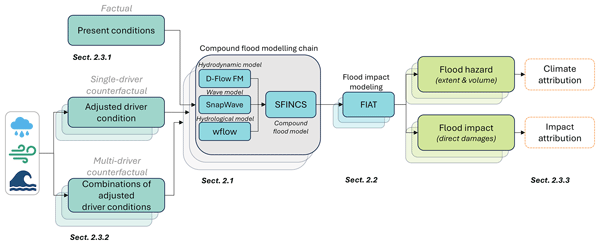
This study highlights the need to disentangle climate change effects on flood drivers using storyline attribution. Whether information is presented as change in one or multiple drivers, or as change in hazard or impact, determines the attribution statement. For compound flooding from tropical cyclone Idai, that hit Mozambique in 2019, we attribute 1–19 % of the flood hazard and 8–35 % of the damage to climate change. The attribution framework can be applied to other events worldwide.
Italo dos Reis Lopes, Ivan Federico, Michalis Vousdoukas, Luisa Perini, Salvatore Causio, Giovanni Coppini, Maurilio Milella, Nadia Pinardi, and Lorenzo Mentaschi
Nat. Hazards Earth Syst. Sci., 26, 811–825, https://doi.org/10.5194/nhess-26-811-2026, https://doi.org/10.5194/nhess-26-811-2026, 2026
Short summary
Short summary
We improved a computer model to simulate coastal flooding by including temporary barriers like sand dunes. We tested it where sand dunes are built seasonally to protect the shoreline for two real storms: one that broke through the dunes and another where dunes held strong. Our model showed how important it is to design these defenses carefully since even if a small part of a dune fails, a major flooding can happen. Overall, our work helps create better tools to manage and protect coastal areas.
Mahmud Hasan Ghani, Nadia Pinardi, Antonio Navarra, Lorenzo Mentaschi, Silvia Bianconcini, Francesco Maicu, and Francesco Trotta
Ocean Sci., 22, 427–441, https://doi.org/10.5194/os-22-427-2026, https://doi.org/10.5194/os-22-427-2026, 2026
Short summary
Short summary
Using the same sea surface temperature and the same bulk formula but different atmospheric reanalysis and analysis surface-variable datasets, we show that a higher-resolution dataset is crucial for evaluating the heat-budget closure hypothesis in the Mediterranean Sea. For the first time, we investigate the impact of extreme heat-loss events in the Mediterranean Sea by computing the long-term, basin-averaged mean heat budget.
Paolo Oddo, Mario Adani, Francesco Carere, Andrea Cipollone, Anna Chiara Goglio, Eric Jansen, Ali Aydogdu, Francesca Mele, Italo Epicoco, Jenny Pistoia, Emanuela Clementi, Nadia Pinardi, and Simona Masina
Geosci. Model Dev., 19, 423–445, https://doi.org/10.5194/gmd-19-423-2026, https://doi.org/10.5194/gmd-19-423-2026, 2026
Short summary
Short summary
This study present a data assimilation system that combines ocean observational data with ocean model results to better understand the ocean and predict its future state. The method uses a three dimensional incremental variational approach focusing on the physical relationships between all the state vector variables errors. Testing in the Mediterranean Sea showed that a complex sea level operator based on a barotropic model works best.
Rodrigo Campos-Caba, Paula Camus, Andrea Mazzino, Michalis Vousdoukas, Massimo Tondello, Ivan Federico, Salvatore Causio, and Lorenzo Mentaschi
EGUsphere, https://doi.org/10.5194/egusphere-2025-5313, https://doi.org/10.5194/egusphere-2025-5313, 2025
Short summary
Short summary
We assess the ability of machine learning emulators, from Multivariate Linear Regression to Long Short-Term Memory (LSTM) networks, to reproduce storm surge dynamics in the northern Adriatic Sea. Using the corrected Mean Absolute Deviation squared (MADc²) loss function, we demonstrate that data-driven models can match high-resolution hydrodynamic simulations in representing extreme surge events with greatly reduced computational cost.
Seimur Shirinov, Ivan Federico, Simone Bonamano, Salvatore Causio, Nicolás Biocca, Viviana Piermattei, Daniele Piazzolla, Jacopo Alessandri, Lorenzo Mentaschi, Giovanni Coppini, Marco Marcelli, and Nadia Pinardi
Nat. Hazards Earth Syst. Sci., 25, 3737–3758, https://doi.org/10.5194/nhess-25-3737-2025, https://doi.org/10.5194/nhess-25-3737-2025, 2025
Short summary
Short summary
This research investigates how seagrass meadows attenuate coastal waves. Our methodology integrates site measurements with numerical simulations, revealing that plant flexibility and seasonal growth cycles are crucial factors that enhance model fidelity for predicting wave damping. These insights aid ecosystem-based coastal protection and conservation of these vital habitats. Future work should address current–sediment–vegetation interactions for a more complete hydrodynamic understanding.
Natalia Aleksandrova, Jelmer Veenstra, and Sanne Muis
Earth Syst. Sci. Data Discuss., https://doi.org/10.5194/essd-2025-471, https://doi.org/10.5194/essd-2025-471, 2025
Preprint under review for ESSD
Short summary
Short summary
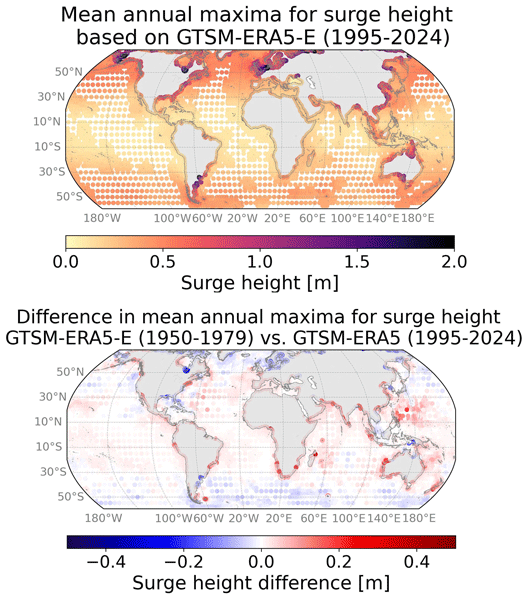
Extreme sea levels during storms can lead to coastal flooding and sediment displacement. In the paper, we present an expanded global dataset of sea levels, produced using a global ocean model driven by ERA5 reanalysis – a state-of-the-art dataset of historical weather and climate. The strengths and limitations of the dataset are discussed by comparing it to observed sea levels. The dataset covers a period of 1950–2024, improving our understanding of the global frequency of extreme water levels.
Skyler Kern, Mary E. McGuinn, Katherine M. Smith, Nadia Pinardi, Kyle E. Niemeyer, Nicole S. Lovenduski, and Peter E. Hamlington
EGUsphere, https://doi.org/10.5194/egusphere-2025-3795, https://doi.org/10.5194/egusphere-2025-3795, 2025
Short summary
Short summary
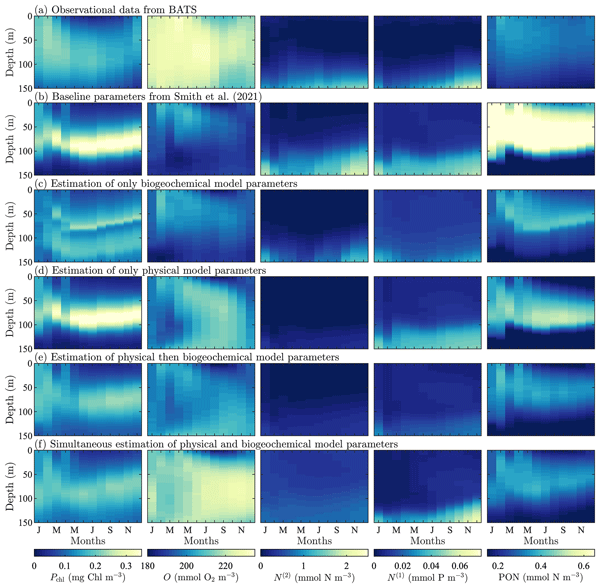
The parameters that control a model's behavior determine its ability to represent a system. In this work, multiple cases test how to estimate the parameters of a model with components corresponding to both the physics and the chemical and biological processes (i.e. the biogeochemistry) of the ocean. While demonstrating how to approach this problem type, the results show estimating both sets of parameters simultaneously is better than estimating the physics then the biogeochemistry separately.
Salvatore Causio, Seimur Shirinov, Ivan Federico, Giovanni De Cillis, Emanuela Clementi, Lorenzo Mentaschi, and Giovanni Coppini
Ocean Sci., 21, 1105–1123, https://doi.org/10.5194/os-21-1105-2025, https://doi.org/10.5194/os-21-1105-2025, 2025
Short summary
Short summary
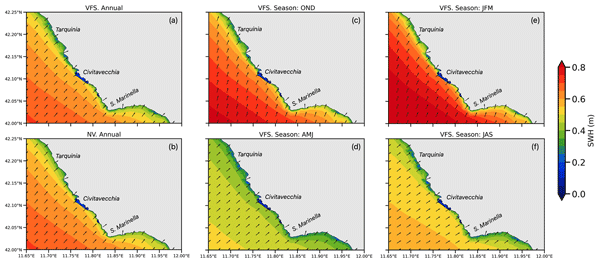
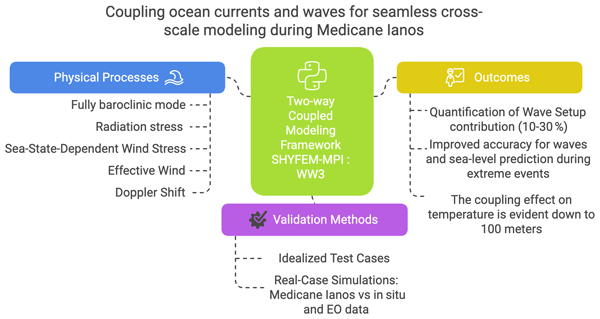
This study examines how waves and ocean currents interact during severe weather, focusing on Medicane Ianos, one of the strongest storms in the Mediterranean. Using advanced modeling, we created a unique system to simulate these interactions, capturing effects like wave-induced water levels and wave-induced effects on the vertical structure of the ocean. We validated our approach with ideal tests and real data from the storm.
Pierre-Yves Le Traon, Antonio Novellino, and Andrew M. Moore
State Planet, 5-opsr, 7, https://doi.org/10.5194/sp-5-opsr-7-2025, https://doi.org/10.5194/sp-5-opsr-7-2025, 2025
Short summary
Short summary
Ocean prediction relies on the integration between models and satellite and in situ observations through data assimilation techniques. The authors discuss the role of observations in operational ocean forecasting systems, describing the state of the art of satellite and in situ observing networks and defining the paths for addressing multi-scale monitoring and forecasting.
Antonio Novellino, Alain Arnaud, Andreas Schiller, and Liying Wan
State Planet, 5-opsr, 25, https://doi.org/10.5194/sp-5-opsr-25-2025, https://doi.org/10.5194/sp-5-opsr-25-2025, 2025
Short summary
Short summary
The paper describes the significant role that ocean forecasting systems play in the blue economy, demonstrating their direct benefits in improving prediction accuracy and downstream applications.
Antonio Novellino, Pierre-Yves Le Traon, and Andy Moore
State Planet, 5-opsr, 8, https://doi.org/10.5194/sp-5-opsr-8-2025, https://doi.org/10.5194/sp-5-opsr-8-2025, 2025
Short summary
Short summary
This paper discusses the vital role of observations in ocean predictions and forecasting, highlighting the need for effective access, management, and integration of data to improve models and decision-making. The paper also explores opportunities for standardizing protocols and the potential of citizen-based, cost-effective data collection methods.
Ye Liu, Lars Axell, and Jun She
EGUsphere, https://doi.org/10.5194/egusphere-2024-3283, https://doi.org/10.5194/egusphere-2024-3283, 2024
Preprint archived
Short summary
Short summary
The temperature and salinity trends at various depths in the Baltic basins from 1990 to 2020 were analyzed from a reasonable reanalysis data set. Overall, the Baltic Sea showed a clear warming trend in recent decades, the northern Baltic Sea has a slight desalination trend, and the southern Baltic Sea has a salinity increase trend. The temperature and salinity trends in the southern Baltic Sea are greater than those in the northern Baltic Sea.
Bart van den Hurk, Nadia Pinardi, Alexander Bisaro, Giulia Galluccio, José A. Jiménez, Kate Larkin, Angélique Melet, Lavinia Giulia Pomarico, Kristin Richter, Kanika Singh, Roderik van de Wal, and Gundula Winter
State Planet, 3-slre1, 1, https://doi.org/10.5194/sp-3-slre1-1-2024, https://doi.org/10.5194/sp-3-slre1-1-2024, 2024
Short summary
Short summary
The Summary for Policymakers compiles findings from “Sea Level Rise in Europe: 1st Assessment Report of the Knowledge Hub on Sea Level Rise”. It covers knowledge gaps, observations, projections, impacts, adaptation measures, decision-making principles, and governance challenges. It provides information for each European basin (Mediterranean, Black Sea, North Sea, Baltic Sea, Atlantic, and Arctic) and aims to assist policymakers in enhancing the preparedness of European coasts for sea level rise.
Nadia Pinardi, Bart van den Hurk, Michael Depuydt, Thorsten Kiefer, Petra Manderscheid, Lavinia Giulia Pomarico, and Kanika Singh
State Planet, 3-slre1, 2, https://doi.org/10.5194/sp-3-slre1-2-2024, https://doi.org/10.5194/sp-3-slre1-2-2024, 2024
Short summary
Short summary
The Knowledge Hub on Sea Level Rise (KH-SLR), a joint effort between JPI Climate and JPI Oceans, addresses the critical need for science-based information on sea level changes in Europe. The KH-SLR actively involves stakeholders through a co-design process discussing the impacts, adaptation planning, and policy requirements related to SLR in Europe. Its primary output is the KH Assessment Report (KH-AR), which is described in this volume.
José A. Jiménez, Gundula Winter, Antonio Bonaduce, Michael Depuydt, Giulia Galluccio, Bart van den Hurk, H. E. Markus Meier, Nadia Pinardi, Lavinia G. Pomarico, and Natalia Vazquez Riveiros
State Planet, 3-slre1, 3, https://doi.org/10.5194/sp-3-slre1-3-2024, https://doi.org/10.5194/sp-3-slre1-3-2024, 2024
Short summary
Short summary
The Knowledge Hub on Sea Level Rise (SLR) has done a scoping study involving stakeholders from government and academia to identify gaps and needs in SLR information, impacts, and policies across Europe. Gaps in regional SLR projections and uncertainties were found, while concerns were raised about shoreline erosion and emerging problems like saltwater intrusion and ineffective adaptation plans. The need for improved communication to make better decisions on SLR adaptation was highlighted.
Karina von Schuckmann, Lorena Moreira, Mathilde Cancet, Flora Gues, Emmanuelle Autret, Ali Aydogdu, Lluis Castrillo, Daniele Ciani, Andrea Cipollone, Emanuela Clementi, Gianpiero Cossarini, Alvaro de Pascual-Collar, Vincenzo De Toma, Marion Gehlen, Rianne Giesen, Marie Drevillon, Claudia Fanelli, Kevin Hodges, Simon Jandt-Scheelke, Eric Jansen, Melanie Juza, Ioanna Karagali, Priidik Lagemaa, Vidar Lien, Leonardo Lima, Vladyslav Lyubartsev, Ilja Maljutenko, Simona Masina, Ronan McAdam, Pietro Miraglio, Helen Morrison, Tabea Rebekka Panteleit, Andrea Pisano, Marie-Isabelle Pujol, Urmas Raudsepp, Roshin Raj, Ad Stoffelen, Simon Van Gennip, Pierre Veillard, and Chunxue Yang
State Planet, 4-osr8, 2, https://doi.org/10.5194/sp-4-osr8-2-2024, https://doi.org/10.5194/sp-4-osr8-2-2024, 2024
Ronan McAdam, Giulia Bonino, Emanuela Clementi, and Simona Masina
State Planet, 4-osr8, 13, https://doi.org/10.5194/sp-4-osr8-13-2024, https://doi.org/10.5194/sp-4-osr8-13-2024, 2024
Short summary
Short summary
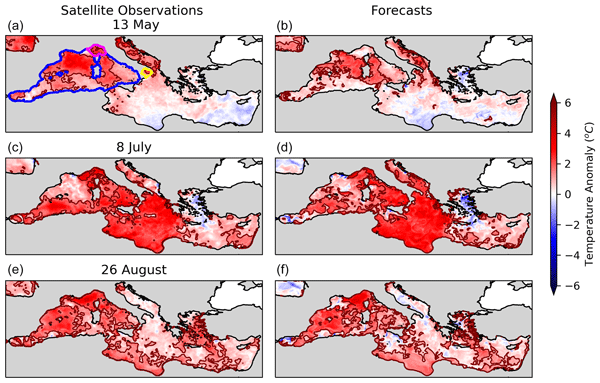
In the summer of 2022, a regional short-term forecasting system was able to predict the onset, spread, peaks, and decay of a record-breaking marine heatwave in the Mediterranean Sea up to 10 d in advance. Satellite data show that the event was record-breaking in terms of basin-wide intensity and duration. This study demonstrates the potential of state-of-the-art forecasting systems to provide early warning of marine heatwaves for marine activities (e.g. conservation and aquaculture).
Dimitra Denaxa, Gerasimos Korres, Giulia Bonino, Simona Masina, and Maria Hatzaki
State Planet, 4-osr8, 11, https://doi.org/10.5194/sp-4-osr8-11-2024, https://doi.org/10.5194/sp-4-osr8-11-2024, 2024
Short summary
Short summary
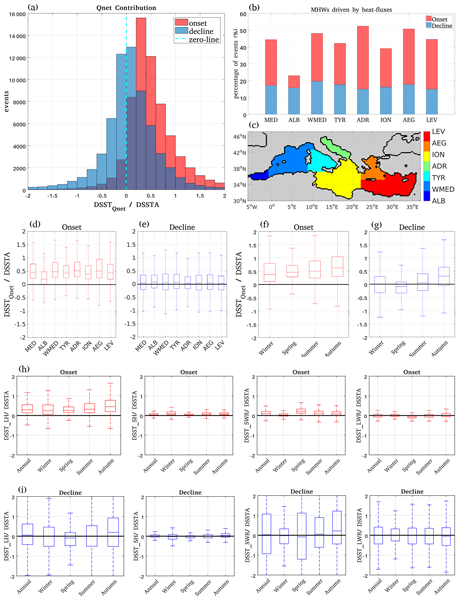
We investigate the air–sea heat flux during marine heatwaves (MHWs) in the Mediterranean Sea. Surface heat flux drives 44 % of the onset and only 17 % of the declining MHW phases, suggesting a key role of oceanic processes. Heat flux is more important in warmer months and onset phases, with latent heat dominating. Shorter events show a weaker heat flux contribution. In most cases, mixed layer shoaling occurs over the entire MHW duration, followed by vertical mixing after the MHW end day.
Karina von Schuckmann, Lorena Moreira, Mathilde Cancet, Flora Gues, Emmanuelle Autret, Jonathan Baker, Clément Bricaud, Romain Bourdalle-Badie, Lluis Castrillo, Lijing Cheng, Frederic Chevallier, Daniele Ciani, Alvaro de Pascual-Collar, Vincenzo De Toma, Marie Drevillon, Claudia Fanelli, Gilles Garric, Marion Gehlen, Rianne Giesen, Kevin Hodges, Doroteaciro Iovino, Simon Jandt-Scheelke, Eric Jansen, Melanie Juza, Ioanna Karagali, Thomas Lavergne, Simona Masina, Ronan McAdam, Audrey Minière, Helen Morrison, Tabea Rebekka Panteleit, Andrea Pisano, Marie-Isabelle Pujol, Ad Stoffelen, Sulian Thual, Simon Van Gennip, Pierre Veillard, Chunxue Yang, and Hao Zuo
State Planet, 4-osr8, 1, https://doi.org/10.5194/sp-4-osr8-1-2024, https://doi.org/10.5194/sp-4-osr8-1-2024, 2024
Bethany McDonagh, Emanuela Clementi, Anna Chiara Goglio, and Nadia Pinardi
Ocean Sci., 20, 1051–1066, https://doi.org/10.5194/os-20-1051-2024, https://doi.org/10.5194/os-20-1051-2024, 2024
Short summary
Short summary
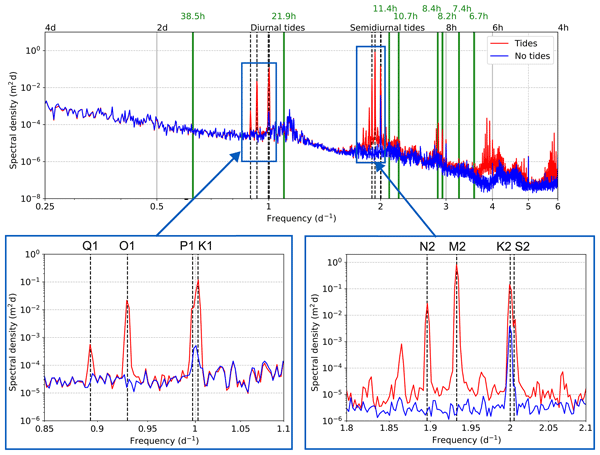
Tides in the Mediterranean Sea are typically of low amplitude, but twin experiments with and without tides demonstrate that tides affect the circulation directly at scales away from those of the tides. Analysis of the energy changes due to tides shows that they enhance existing oscillations, and internal tides interact with other internal waves. Tides also increase the mixed layer depth and enhance deep water formation in key regions. Internal tides are widespread in the Mediterranean Sea.
Roberta Benincasa, Giovanni Liguori, Nadia Pinardi, and Hans von Storch
Ocean Sci., 20, 1003–1012, https://doi.org/10.5194/os-20-1003-2024, https://doi.org/10.5194/os-20-1003-2024, 2024
Short summary
Short summary
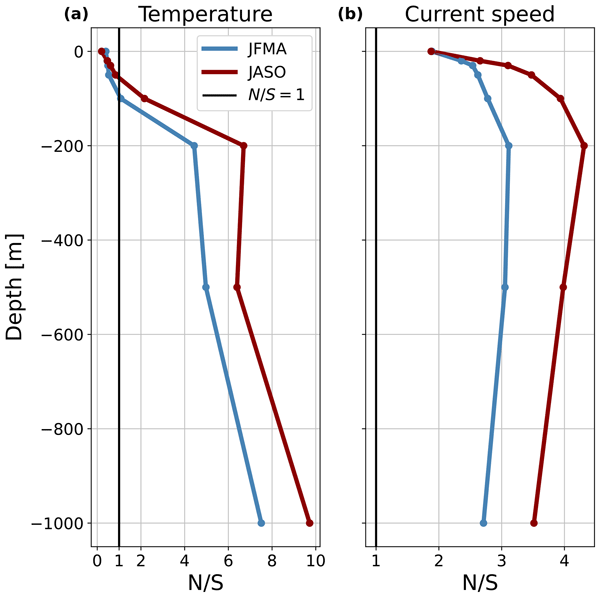
Ocean dynamics result from the interplay of internal processes and external inputs, primarily from the atmosphere. It is crucial to discern between these factors to gauge the ocean's intrinsic predictability and to be able to attribute a signal under study to either external factors or internal variability. Employing a simple analysis, we successfully characterized this variability in the Mediterranean Sea and compared it with the oceanic response induced by atmospheric conditions.
Elena Bianco, Doroteaciro Iovino, Simona Masina, Stefano Materia, and Paolo Ruggieri
The Cryosphere, 18, 2357–2379, https://doi.org/10.5194/tc-18-2357-2024, https://doi.org/10.5194/tc-18-2357-2024, 2024
Short summary
Short summary
Changes in ocean heat transport and surface heat fluxes in recent decades have altered the Arctic Ocean heat budget and caused warming of the upper ocean. Using two eddy-permitting ocean reanalyses, we show that this has important implications for sea ice variability. In the Arctic regional seas, upper-ocean heat content acts as an important precursor for sea ice anomalies on sub-seasonal timescales, and this link has strengthened since the 2000s.
Eric Mortensen, Timothy Tiggeloven, Toon Haer, Bas van Bemmel, Dewi Le Bars, Sanne Muis, Dirk Eilander, Frederiek Sperna Weiland, Arno Bouwman, Willem Ligtvoet, and Philip J. Ward
Nat. Hazards Earth Syst. Sci., 24, 1381–1400, https://doi.org/10.5194/nhess-24-1381-2024, https://doi.org/10.5194/nhess-24-1381-2024, 2024
Short summary
Short summary
Current levels of coastal flood risk are projected to increase in coming decades due to various reasons, e.g. sea-level rise, land subsidence, and coastal urbanization: action is needed to minimize this future risk. We evaluate dykes and coastal levees, foreshore vegetation, zoning restrictions, and dry-proofing on a global scale to estimate what levels of risk reductions are possible. We demonstrate that there are several potential adaptation pathways forward for certain areas of the world.
Giulia Bonino, Giuliano Galimberti, Simona Masina, Ronan McAdam, and Emanuela Clementi
Ocean Sci., 20, 417–432, https://doi.org/10.5194/os-20-417-2024, https://doi.org/10.5194/os-20-417-2024, 2024
Short summary
Short summary
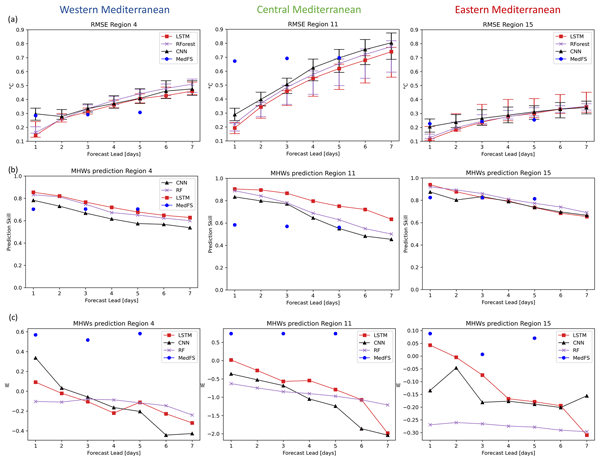
This study employs machine learning to predict marine heatwaves (MHWs) in the Mediterranean Sea. MHWs have far-reaching impacts on society and ecosystems. Using data from ESA and ECMWF, the research develops accurate prediction models for sea surface temperature (SST) and MHWs across the region. Notably, machine learning methods outperform existing forecasting systems, showing promise in early MHW predictions. The study also highlights the importance of solar radiation as a predictor of SST.
Skyler Kern, Mary E. McGuinn, Katherine M. Smith, Nadia Pinardi, Kyle E. Niemeyer, Nicole S. Lovenduski, and Peter E. Hamlington
Geosci. Model Dev., 17, 621–649, https://doi.org/10.5194/gmd-17-621-2024, https://doi.org/10.5194/gmd-17-621-2024, 2024
Short summary
Short summary
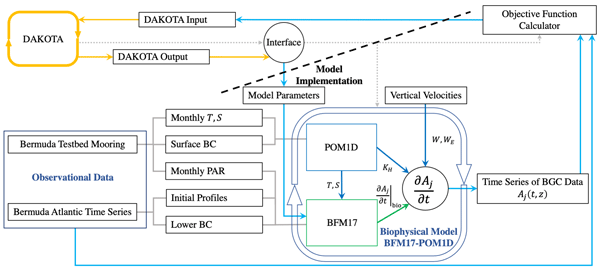
Computational models are used to simulate the behavior of marine ecosystems. The models often have unknown parameters that need to be calibrated to accurately represent observational data. Here, we propose a novel approach to simultaneously determine a large set of parameters for a one-dimensional model of a marine ecosystem in the surface ocean at two contrasting sites. By utilizing global and local optimization techniques, we estimate many parameters in a computationally efficient manner.
Doroteaciro Iovino, Pier Giuseppe Fogli, and Simona Masina
Geosci. Model Dev., 16, 6127–6159, https://doi.org/10.5194/gmd-16-6127-2023, https://doi.org/10.5194/gmd-16-6127-2023, 2023
Short summary
Short summary
This paper describes the model performance of three global ocean–sea ice configurations, from non-eddying (1°) to eddy-rich (1/16°) resolutions. Model simulations are obtained following the Ocean Model Intercomparison Project phase 2 (OMIP2) protocol. We compare key global climate variables across the three models and against observations, emphasizing the relative advantages and disadvantages of running forced ocean–sea ice models at higher resolution.
Giovanni Coppini, Emanuela Clementi, Gianpiero Cossarini, Stefano Salon, Gerasimos Korres, Michalis Ravdas, Rita Lecci, Jenny Pistoia, Anna Chiara Goglio, Massimiliano Drudi, Alessandro Grandi, Ali Aydogdu, Romain Escudier, Andrea Cipollone, Vladyslav Lyubartsev, Antonio Mariani, Sergio Cretì, Francesco Palermo, Matteo Scuro, Simona Masina, Nadia Pinardi, Antonio Navarra, Damiano Delrosso, Anna Teruzzi, Valeria Di Biagio, Giorgio Bolzon, Laura Feudale, Gianluca Coidessa, Carolina Amadio, Alberto Brosich, Arnau Miró, Eva Alvarez, Paolo Lazzari, Cosimo Solidoro, Charikleia Oikonomou, and Anna Zacharioudaki
Ocean Sci., 19, 1483–1516, https://doi.org/10.5194/os-19-1483-2023, https://doi.org/10.5194/os-19-1483-2023, 2023
Short summary
Short summary
The paper presents the Mediterranean Forecasting System evolution and performance developed in the framework of the Copernicus Marine Service.
Stefania A. Ciliberti, Enrique Alvarez Fanjul, Jay Pearlman, Kirsten Wilmer-Becker, Pierre Bahurel, Fabrice Ardhuin, Alain Arnaud, Mike Bell, Segolene Berthou, Laurent Bertino, Arthur Capet, Eric Chassignet, Stefano Ciavatta, Mauro Cirano, Emanuela Clementi, Gianpiero Cossarini, Gianpaolo Coro, Stuart Corney, Fraser Davidson, Marie Drevillon, Yann Drillet, Renaud Dussurget, Ghada El Serafy, Katja Fennel, Marcos Garcia Sotillo, Patrick Heimbach, Fabrice Hernandez, Patrick Hogan, Ibrahim Hoteit, Sudheer Joseph, Simon Josey, Pierre-Yves Le Traon, Simone Libralato, Marco Mancini, Pascal Matte, Angelique Melet, Yasumasa Miyazawa, Andrew M. Moore, Antonio Novellino, Andrew Porter, Heather Regan, Laia Romero, Andreas Schiller, John Siddorn, Joanna Staneva, Cecile Thomas-Courcoux, Marina Tonani, Jose Maria Garcia-Valdecasas, Jennifer Veitch, Karina von Schuckmann, Liying Wan, John Wilkin, and Romane Zufic
State Planet, 1-osr7, 2, https://doi.org/10.5194/sp-1-osr7-2-2023, https://doi.org/10.5194/sp-1-osr7-2-2023, 2023
Ali Aydogdu, Pietro Miraglio, Romain Escudier, Emanuela Clementi, and Simona Masina
State Planet, 1-osr7, 6, https://doi.org/10.5194/sp-1-osr7-6-2023, https://doi.org/10.5194/sp-1-osr7-6-2023, 2023
Short summary
Short summary
This paper investigates the salt content, salinity anomaly and trend in the Mediterranean Sea using observational and reanalysis products. The salt content increases overall, while negative salinity anomalies appear in the western basin, especially around the upwelling regions. There is a large spread in the salinity estimates that is reduced with the emergence of the Argo profilers.
Andrea Cipollone, Deep Sankar Banerjee, Doroteaciro Iovino, Ali Aydogdu, and Simona Masina
Ocean Sci., 19, 1375–1392, https://doi.org/10.5194/os-19-1375-2023, https://doi.org/10.5194/os-19-1375-2023, 2023
Short summary
Short summary
Sea-ice volume is characterized by low predictability compared to the sea ice area or the extent. A joint initialization of the thickness and concentration using satellite data could improve the predictive power, although it is still absent in the present global analysis–reanalysis systems. This study shows a scheme to correct the two features together that can be easily extended to include ocean variables. The impact of such a joint initialization is shown and compared among different set-ups.
Leonardo Lima, Salvatore Causio, Mehmet Ilicak, Ronan McAdam, and Eric Jansen
State Planet Discuss., https://doi.org/10.5194/sp-2023-19, https://doi.org/10.5194/sp-2023-19, 2023
Revised manuscript not accepted
Short summary
Short summary
Recent studies have revealed an increase in the ocean temperature and heat content in the Black Sea, where the research on marine heat waves (MHWs) is still incipient. Our study reveals long-lasting MHWs and interesting connections between surface and subsurface MHWs in the Black Sea. Our analysis is a starting point to create a monitoring system of MHWs for the Black Sea.
Giulia Bonino, Simona Masina, Giuliano Galimberti, and Matteo Moretti
Earth Syst. Sci. Data, 15, 1269–1285, https://doi.org/10.5194/essd-15-1269-2023, https://doi.org/10.5194/essd-15-1269-2023, 2023
Short summary
Short summary
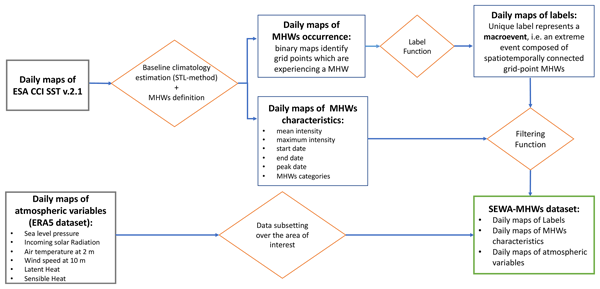
We present a unique observational dataset of marine heat wave (MHW) macroevents and their characteristics over southern Europe and western Asian (SEWA) basins in the SEWA-MHW dataset. This dataset is the first effort in the literature to archive extremely hot sea surface temperature macroevents. The advantages of the availability of SEWA-MHWs are avoiding the waste of computational resources to detect MHWs and building a consistent framework which would increase comparability among MHW studies.
Umesh Pranavam Ayyappan Pillai, Nadia Pinardi, Ivan Federico, Salvatore Causio, Francesco Trotta, Silvia Unguendoli, and Andrea Valentini
Nat. Hazards Earth Syst. Sci., 22, 3413–3433, https://doi.org/10.5194/nhess-22-3413-2022, https://doi.org/10.5194/nhess-22-3413-2022, 2022
Short summary
Short summary
The study presents the application of high-resolution coastal modelling for wave hindcasting on the Emilia-Romagna coastal belt. The generated coastal databases which provide an understanding of the prevailing wind-wave characteristics can aid in predicting coastal impacts.
Giulia Bonino, Doroteaciro Iovino, Laurent Brodeau, and Simona Masina
Geosci. Model Dev., 15, 6873–6889, https://doi.org/10.5194/gmd-15-6873-2022, https://doi.org/10.5194/gmd-15-6873-2022, 2022
Short summary
Short summary
The sea surface temperature (SST) is highly influenced by the transfer of energy driven by turbulent air–sea fluxes (TASFs). In the NEMO ocean general circulation model, TASFs are computed by means of bulk formulas. Bulk formulas require the choice of a given bulk parameterization, which influences the magnitudes of the TASFs. Our results show that parameterization-related SST differences are primarily sensitive to the wind stress differences across parameterizations.
Marco Reale, Gianpiero Cossarini, Paolo Lazzari, Tomas Lovato, Giorgio Bolzon, Simona Masina, Cosimo Solidoro, and Stefano Salon
Biogeosciences, 19, 4035–4065, https://doi.org/10.5194/bg-19-4035-2022, https://doi.org/10.5194/bg-19-4035-2022, 2022
Short summary
Short summary
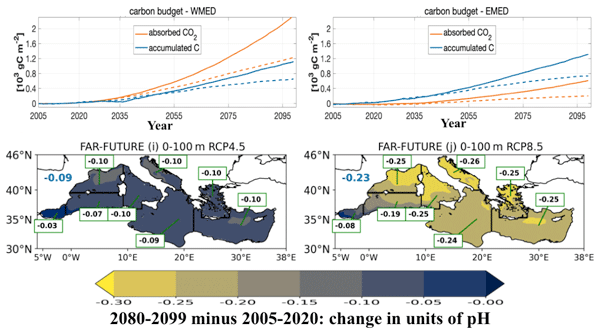
Future projections under the RCP8.5 and RCP4.5 emission scenarios of the Mediterranean Sea biogeochemistry at the end of the 21st century show different levels of decline in nutrients, oxygen and biomasses and an acidification of the water column. The signal intensity is stronger under RCP8.5 and in the eastern Mediterranean. Under RCP4.5, after the second half of the 21st century, biogeochemical variables show a recovery of the values observed at the beginning of the investigated period.
Giorgio Micaletto, Ivano Barletta, Silvia Mocavero, Ivan Federico, Italo Epicoco, Giorgia Verri, Giovanni Coppini, Pasquale Schiano, Giovanni Aloisio, and Nadia Pinardi
Geosci. Model Dev., 15, 6025–6046, https://doi.org/10.5194/gmd-15-6025-2022, https://doi.org/10.5194/gmd-15-6025-2022, 2022
Short summary
Short summary
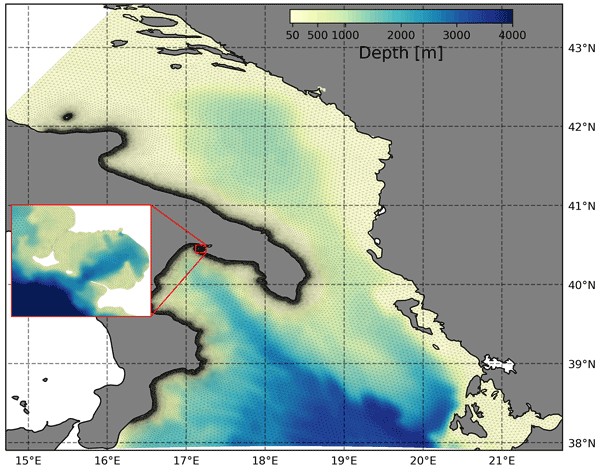
The full exploitation of supercomputing architectures requires a deep revision of the current climate models. This paper presents the parallelization of the three-dimensional hydrodynamic model SHYFEM (System of HydrodYnamic Finite Element Modules). Optimized numerical libraries were used to partition the model domain and solve the sparse linear system of equations in parallel. The performance assessment demonstrates a good level of scalability with a realistic configuration used as a benchmark.
Xiaohui Wang, Martin Verlaan, Jelmer Veenstra, and Hai Xiang Lin
Ocean Sci., 18, 881–904, https://doi.org/10.5194/os-18-881-2022, https://doi.org/10.5194/os-18-881-2022, 2022
Short summary
Short summary
The accuracy of the Global Tide and Surge Model is significantly affected by some parameters. We correct the bathymetry and bottom friction coefficient with mathematical methods to improve model accuracy. The lack of tide gauge data in many coastal areas affects the correction process. We propose using observations from altimetry tidal products like FES2014 that have higher accuracy than our model to offset the data lack. Model accuracy is greatly improved, especially in the European shelf.
Tuomas Kärnä, Patrik Ljungemyr, Saeed Falahat, Ida Ringgaard, Lars Axell, Vasily Korabel, Jens Murawski, Ilja Maljutenko, Anja Lindenthal, Simon Jandt-Scheelke, Svetlana Verjovkina, Ina Lorkowski, Priidik Lagemaa, Jun She, Laura Tuomi, Adam Nord, and Vibeke Huess
Geosci. Model Dev., 14, 5731–5749, https://doi.org/10.5194/gmd-14-5731-2021, https://doi.org/10.5194/gmd-14-5731-2021, 2021
Short summary
Short summary
We present Nemo-Nordic 2.0, a novel operational marine model for the Baltic Sea. The model covers the Baltic Sea and the North Sea with approximately 1 nmi resolution. We validate the model's performance against sea level, water temperature, and salinity observations, as well as sea ice charts. The skill analysis demonstrates that Nemo-Nordic 2.0 can reproduce the hydrographic features of the Baltic Sea.
Katherine M. Smith, Skyler Kern, Peter E. Hamlington, Marco Zavatarelli, Nadia Pinardi, Emily F. Klee, and Kyle E. Niemeyer
Geosci. Model Dev., 14, 2419–2442, https://doi.org/10.5194/gmd-14-2419-2021, https://doi.org/10.5194/gmd-14-2419-2021, 2021
Short summary
Short summary
We present a newly developed reduced-order biogeochemical flux model that is complex and flexible enough to capture open-ocean ecosystem dynamics but reduced enough to incorporate into highly resolved numerical simulations with limited additional computational cost. The model provides improved correlations between model output and field data, indicating that significant improvements in the reproduction of real-world data can be achieved with a small number of variables.
Giulia Bonino, Elisa Lovecchio, Nicolas Gruber, Matthias Münnich, Simona Masina, and Doroteaciro Iovino
Biogeosciences, 18, 2429–2448, https://doi.org/10.5194/bg-18-2429-2021, https://doi.org/10.5194/bg-18-2429-2021, 2021
Short summary
Short summary
Seasonal variations of processes such as upwelling and biological production that happen along the northwestern African coast can modulate the temporal variability of the biological activity of the adjacent open North Atlantic hundreds of kilometers away from the coast thanks to the lateral transport of coastal organic carbon. This happens with a temporal delay, which is smaller than a season up to roughly 500 km from the coast due to the intense transport by small-scale filaments.
Cited articles
Antony, C., Langodan, S., Dasari, H. P., Abualnaja, Y., and Hoteit, I.: Sea-level extremes of meteorological origin in the Red Sea, Weather and Climate Extremes, 35, 100409, https://doi.org/10.1016/j.wace.2022.100409, 2022.
Bloemendaal, N., de Moel, H., Muis, S., Haigh, I. D., and Aerts, J. C. J. H.: Estimation of global tropical cyclone wind speed probabilities using the STORM dataset, Scientific Data, 7, 1–11, https://doi.org/10.1038/s41597-020-00720-x, 2020.
Borile, F., Pinardi, N., Lyubartsev, V., Ghani, M. H., Navarra, A., Alessandri, J., Clementi, E., Coppini, G., Mentaschi, L., Verri, G., da Costa, V. S., Scoccimarro, E., Misurale, F., Novellino, A., and Oddo, P.: The Eastern Mediterranean Sea mean sea level decadal slowdown: the effects of the water budget, Frontiers in Climate, 7, 1472731, https://doi.org/10.3389/fclim.2025.1472731, 2025.
Brown, S.: Altimetry for coastal applications, in: Coastal Altimetry, edited by: Vignudelli, S., Kostianoy, A. G., Cipollini, P., and Benveniste, J., Springer, Berlin, Heidelberg, 3–25, https://doi.org/10.1007/978-3-642-12796-0_1, 2010.
Cazenave, A. and Moreira, L.: Contemporary sea-level changes from global to local scales: a review, P. R. Soc. A, 478, 20220049, https://doi.org/10.1098/rspa.2022.0049, 2022.
Cazenave, A., Dieng, H. B., Meyssignac, B., von Schuckmann, K., de Araújo, I. F., Ponte, R. M., and Leborgne, P.: The rate of sea-level rise, Nat. Clim. Change, 4, 358–361, https://doi.org/10.1038/nclimate2159, 2014.
Cazenave, A., Ablain, M., Fukumori, I., Goosse, H., Meyssignac, B., von Schuckmann, K., and Watson, C.: The Sea Level in the Emerging Climate System, Rev. Geophys., 56, 741–758, https://doi.org/10.1029/2018RG000600, 2018.
Climate Change Initiative Coastal Sea Level Team: ESA Climate Change Initiative (CCI) Sea Level – Coastal Sea Level product, European Space Agency (ESA), https://climate.esa.int/en/projects/sea-level/ (last access: 9 April 2026), 2020.
Copernicus Climate Data Store: Sea level gridded data from satellite observations for the global ocean from 1993 to present, Copernicus Climate Change Service (C3S) Climate Data Store (CDS) [data set], https://doi.org/10.24381/cds.adbb2d47, 2018.
Dangendorf, S., Frederikse, T., Chafik, L., Riva, R., Marcos, M., and Slangen, A. B. A.: Data-driven reconstruction reveals large-scale ocean circulation control on coastal sea level, Nat. Clim. Change, 11, 514–520, https://doi.org/10.1038/s41558-021-01046-1, 2021.
Dube, S. K., Jain, I., Rao, A. D., and Murty, T. S.: Storm surge modelling for the Bay of Bengal and Arabian Sea, Nat. Hazards, 51, 3–27, 2009.
Dullaart, J. C. M., Muis, S., Bloemendaal, N., and Aerts, J. C. J. H.: Advancing global storm surge modelling using the new ERA5 climate reanalysis, Clim. Dynam., 54, https://doi.org/10.1007/s00382-019-05044-0, 2020.
Dullaart, J. C. M., Muis, S., Bloemendaal, N., Chertova, M. V., Couasnon, A., and Aerts, J. C. J. H.: Accounting for tropical cyclones more than doubles the global population exposed to low-probability coastal flooding, Communications Earth and Environment, 2, 1–11, https://doi.org/10.1038/s43247-021-00204-9, 2021.
Ezer, T., Atkinson, L. P., Corlett, W. B., and Blanco, J. L.: Gulf Stream's induced sea level rise and variability along the U. S. mid-Atlantic coast, J. Geophys. Res.-Oceans, 118, 685–697, https://doi.org/10.1002/jgrc.20091, 2013.
Fang, Q., Liu, J., Hong, R., Guo, A., and Li, H.: Experimental investigation of focused wave action on coastal bridges with box girder, Coast. Eng., 165, 103857, https://doi.org/10.1016/j.coastaleng.2021.103857, 2021.
Fernandes, M. J., Lázaro, C., Nunes, A. L., and Scharroo, R.: Atmospheric corrections for altimetry studies over inland water and coastal zones, Remote Sens. Environ., 152, 69–87, https://doi.org/10.1016/j.rse.2014.06.009, 2014.
Han, W., Meehl, G. A., Rajagopalan, B., Fasullo, J. T., Hu, A., Lin, J., Large, W. G., Wang, J., Quan, X.-W., Trenary, L. L., Wallcraft, A., Shinoda, T., and Yeager, S.: Indian Ocean sea level change in a warming climate, Nat. Geosci., 3, 546–550, https://doi.org/10.1038/ngeo901, 2010.
Hersbach, H., Bell, B., Berrisford, P., Hirahara, S., Horányi, A., Mu noz-Sabater, J., Nicolas, J., Peubey, C., Radu, R., Schepers, D., Simmons, A., Soci, C., Abdalla, S., Abellan, X., Balsamo, G., Bechtold, P., Biavati, G., Bidlot, J., Bonavita, M., Chiara, G., Dahlgren, P., Dee, D., Diamantakis, M., Dragani, R., Flemming, J., Forbes, R., Fuentes, M., Geer, A., Haimberger, L., Healy, S., Hogan, R. J., Hólm, E., Janisková, M., Keeley, S., Laloyaux, P., Lopez, P., Lupu, C., Radnoti, G., Rosnay, P., Rozum, I., Vamborg, F., Villaume, S., and Thépaut, J. N.: The ERA5 global reanalysis, Q. J. Roy. Meteor. Soc., 146, 1999–2049, https://doi.org/10.1002/qj.3803, 2020.
Huang, L., Zhuang, W., Lu, W., Zhang, Y., Edwing, D., and Yan, X.-H.: Rapid sea level rise in the tropical Southwest Indian Ocean in the recent two decades, Geophys. Res. Lett., 51, e2023GL106011, https://doi.org/10.1029/2023GL106011, 2024.
IPCC: Climate Change 2021: The Physical Science Basis. Contribution of Working Group I to the Sixth Assessment Report of the Intergovernmental Panel on Climate Change, edited by: Masson-Delmotte, V., Zhai, P., Pirani, A., Connors, S. L., Péan, C., Berger, S., Caud, N., Chen, Y., Goldfarb, L., Gomis, M. I., Huang, M., Leitzell, K., Lonnoy, E., Matthews, J. B. R., Maycock, T. K., Waterfield, T., Yelekçi, O., Yu, R., and Zhou, B., Cambridge University Press, Cambridge, United Kingdom and New York, NY, USA, 2391 pp., https://doi.org/10.1017/9781009157896, 2021.
Lewis, M., Bates, P., Horsburgh, K., Neal, J., and Schumann, G.: A storm surge inundation model of the northern Bay of Bengal using publicly available data, Q. J. Roy. Meteor. Soc., 139, 358–369, 2013.
Lin, N. and Emanuel, K.: Grey swan tropical cyclones, Nat. Clim. Change, 6, 106–111, https://doi.org/10.1038/nclimate2777, 2016.
Mori, N. and Shimura, T.: Tropical cyclone-induced coastal sea level projection and the adaptation to a changing climate, Cambridge Prisms: Coastal Futures, 1, e4, https://doi.org/10.1017/cft.2022.6, 2023.
Muis, S., Verlaan, M., Winsemius, H. C., Aerts, J. C. J. H., and Ward, P. J.: A global reanalysis of storm surges and extreme sea levels, Nat. Commun., 7, 11969, https://doi.org/10.1038/ncomms11969, 2016.
Muis, S., Apecechea, M. I., Dullaart, J., de Lima Rego, J., Madsen, K. S., Su, J., Yan, K., and Verlaan, M.: A High-Resolution Global Dataset of Extreme Sea Levels, Tides, and Storm Surges, Including Future Projections, Frontiers in Marine Science, 7, 1–15, https://doi.org/10.3389/fmars.2020.00263, 2020.
Muis, S., Aerts, J. C. J. H., Á. Antolínez, J. A., Dullaart, J., Duong, T. M., Erikson, L., Haarmsa, R., Apecechea, M. I., Mengel, M., Le Bars, D., O'Neill, A., Ranasinghe, R., Roberts, M., Verlaan, M., Ward, P. J., and Yan, K.: Global projections of storm surges using high-resolution CMIP6 climate models, Earth's Future, 11, e2023EF003479, https://doi.org/10.1029/2023EF003479, 2023.
Needham, H. F., Keim, B. D., and Sathiaraj, D.: A review of tropical cyclone-generated storm surges: Global data sources, observations, and impacts, Rev. Geophys., 53, 545–591, https://doi.org/10.1002/2014rg000477, 2015.
Nerem, R. S., Beckley, B. D., Fasullo, J. T., Hamlington, B. D., Masters, D., and Mitchum, G. T.: Climate-change–driven accelerated sea-level rise detected in the altimeter era, P. Natl. Acad. Sci. USA, 115, 2022–2025, 2018.
Park, K., Federico, I., Di Lorenzo, E., Ezer, T., Cobb, K. M., Pinardi, N., and Wang, D.-W.: The contribution of hurricane remote ocean forcing to storm surge along the Southeastern U.S. coast, Coast. Eng., 173, 104098, https://doi.org/10.1016/j.coastaleng.2022.104098, 2022.
Peltier, W. R.: Global Glacial Isostasy and the Surface of the Ice-Age Earth: The ICE-5G (VM2) Model and GRACE, Annu. Rev. Earth Pl. Sc., 32, 111–149, 2004.
Pinardi, N., Bonaduce, A., Navarra, A., Dobricic, S., and Oddo, P.: The mean sea level equation and its application to the mediterranean sea, J. Climate, 27, 442–447, https://doi.org/10.1175/JCLI-D-13-00139.1, 2014.
Pugh, D. and Woodworth, P.: Sea-Level Science: Understanding Tides, Surges, Tsunamis and Mean Sea-Level Changes, Cambridge University Press, Cambridge, https://doi.org/10.1017/CBO9781139235778, 2015.
Qiu, B. and Chen, S.-S.: Interannual variability of the North Pacific Subtropical Countercurrent and its associated mesoscale eddy field, J. Phys. Oceanogr., 40, 811–832, https://doi.org/10.1175/2009JPO4311.1, 2010.
Santer, B. D., Wigley, T. M. L., Boyle, J. S., Gaffen, D. J., Hnilo, J. J., Nychka, D., Parker, D. E., and Taylor, K. E.: Statistical significance of trends and trend differences in layer-average atmospheric temperature time series, J. Geophys. Res., 105, 7337–7356, https://doi.org/10.1029/1999JD901105, 2000.
Schumacher, M., King, M., Rougier, J., Sha, Z., Khan, S. A., and Bamber, J. L.: A new global GPS data set for testing and improving modelled GIA uplift rates, Geophys. J. Int., 214, 2164–2176, https://doi.org/10.1093/gji/ggy235, 2018.
Shimura, T., Pringle, W. J., Mori, N., Miyashita, T., and Yoshida, K.: Seamless projections of global storm surge and ocean waves under a warming climate, Geophys. Res. Lett., 49, e2021GL097427, https://doi.org/10.1029/2021GL097427, 2022.
Sprintall, J., Gordon, A. L., Koch-Larrouy, A., Révelard, A., Tomczak, M., and Song, Q.: The Indonesian seas and their role in the coupled ocean–climate system, Nat. Geosci., 7, 487–492, https://doi.org/10.1038/ngeo2188, 2014.
Tebaldi, C., Ranasinghe, R., Vousdoukas, M., Rasmussen, D. J., Vega-Westhoff, B., Kirezci, E., Kopp, R. E., Sriver, R., and Mentaschi, L.: Extreme sea levels at different global warming levels, Nat. Clim. Change, 11, 746–751, https://doi.org/10.1038/s41558-021-01127-1, 2021.
van den Hurk, B., Pinardi, N., Kiefer, T., Larkin, K., Manderscheid, P., and Richter, K. (Eds.): Sea Level Rise in Europe: 1st Assessment Report of the Knowledge Hub on Sea Level Rise (SLRE1), Copernicus Publications, State Planet, 3-slre1, https://doi.org/10.5194/sp-3-slre1, 2024.
von Schuckmann, K., Le Traon, P.-Y., Smith, N., Pascual, A., Djavidnia, S., Brasseur, P., and Grégoire, M. (Eds.): Copernicus Ocean State Report, issue 6, J. Oper. Oceanogr., 15:sup1, s1–s220, https://doi.org/10.1080/1755876X.2022.2095169, 2022.
von Storch, H. and Zwiers, F. W.: Statistical Analysis in Climate Research, Cambridge University Press, https://doi.org/10.1017/CBO9780511612336, 1999.
Vousdoukas, M. I., Mentaschi, L., Voukouvalas, E., Verlaan, M., Jevrejeva, S., Jackson, L. P., and Feyen, L.: Global probabilistic projections of extreme sea levels show intensification of coastal flood hazard, Nat. Commun., 9, 2360, https://doi.org/10.1038/s41467-018-04692-w, 2018.
Xue, Y. Q., Zhang, Y., Ye, S. J., Xu, M. H., and Wang, Z. L.: Land subsidence in China, Environ. Geol., 48, 713–720, https://doi.org/10.1007/s00254-005-0010-6, 2005.
Wahl, T., Haigh, I. D., Nicholls, R. J., Arns, A., Dangendorf, S., Hinkel, J., and Slangen, A. B.: Understanding extreme sea levels for broad-scale coastal impact and adaptation analysis, Nat. Commun., 8, 16075, https://doi.org/10.1038/ncomms16075, 2017.
Zhang, H. and Sheng, J.: Examination of extreme sea levels due to storm surges and tides over the northwest Pacific Ocean, Cont. Shelf Res., 93, 81–97, https://doi.org/10.1016/j.csr.2014.12.001, 2015.
Zhang, Y., Guo, J., and Che, Z.: Discussion on evaluating the vulnerability of storm surge hazard-bearing bodies in the coastal areas of Wenzhou, Front. Earth Sci., 9, 300–307, 2015.
Zhao, R., Zhu, X., and Park, J.: Near 5-Day Non-isostatic Response to Atmospheric Surface Pressure and Coastal-Trapped Waves Observed in the Northern South China Sea, J. Phys. Oceanogr., 47, 2291–2303, 2017.
Zhou, Y., Yang, S., Luo, J., Ray, J., Huang, Y., and Li, J.: Global Glacial Isostatic Adjustment Constrained by GPS Measurements: Spherical Harmonic Analyses of Uplifts and Geopotential Variations, Remote Sens.-Basel, 12, 1209, https://doi.org/10.3390/rs12071209, 2020.
Zhu, J. Q., Yang, Y., Yu, J., and Gong, X. L.: Land subsidence of coastal areas of Jiangsu Province, China: historical review and present situation, Proc. IAHS, 372, 503–506, https://doi.org/10.5194/piahs-372-503-2015, 2015.
Short summary
This study explored how sea level is changing along the China-Europe Sea Route. By combining satellite and in-situ observations with advanced modeling, the research identified ongoing sea level rise and an increasing frequency of extreme water level events in some regions. These findings underscore the importance of continued monitoring and provide useful knowledge to support long-term planning, coastal resilience, and informed decision-making.
This study explored how sea level is changing along the China-Europe Sea Route. By combining...
Altmetrics
Final-revised paper
Preprint