
the Creative Commons Attribution 4.0 License.
the Creative Commons Attribution 4.0 License.
 | 08 Apr 2026
Review article: Reviewing Berlin's urban parks from the perspectives of socio-economic inequality, climate resilience, and sustainable management
Kei Namba
Katrin M. Nissen
Ehsan Razipoor
Stefan Heiland
Brigitta Schütt
Berlin, renowned for its rich history and vibrant cultural tapestry, possesses an extensive network of urban parks that function as vital lungs for the city, providing recreation, ecological services, and respite from urban life. Yet, these green spaces confront mounting pressures from shifting socio-economic dynamics and escalating climate-related impacts. This review investigates the intricate interplay between socio-economic conditions and climate change in shaping the resilience, accessibility, and sustainability of Berlin's parks. Drawing on more than 200 research articles, reports, and policy papers, it synthesises insights on park management, biodiversity, governance, and socio-economic disparities, with particular attention to their intersectionality. The findings highlight those socio-economic inequalities strongly influence patterns of access, quality, and affordability of green spaces, exposing disadvantaged communities to uneven benefits and environmental burdens. Processes of gentrification, often intensified by the appeal of green neighbourhoods, exacerbate displacement and exclusion, underscoring the need to integrate social justice into green space planning. Simultaneously, climate change introduces new threats, including rising temperatures, extreme weather events, and biodiversity loss, which compound urban vulnerabilities. Case studies from Berlin illustrate innovative strategies – ranging from community-driven initiatives to climate-resilient park design – that demonstrate pathways towards inclusive, adaptive, and sustainable management of urban parks in the face of complex socio-environmental challenges.
- Article
(5036 KB) - Full-text XML
- BibTeX
- EndNote


Urban parks and greens are crucial elements of city life, contributing significantly to live-ability, environmental quality, and residents' well-being (Panagopoulos et al., 2016; Parker and Simpson, 2018). In Berlin, a city with dynamic urban development, these green spaces characterize cityscape and hold large importance (Lachmund, 2013; Kronenberg et al., 2020). This study investigates how climate change and climate extreme events impact urban parks in Berlin, considering varying socio-economic conditions, and, thus, aims to foster sustainable urban ecosystems. The review paper explores how socio-economic factors, climate change highlighting extreme weather impact Berlin's urban parks, emphasizing the growing challenges posed by more frequent and intense climate-driven events. The primary objective is to comprehensively understand the intricate socio-environmental dynamics at play within urban parks, more specifically, which are public spaces, as opposed to other types of greenery such as private gardens or roadside trees. These other types of greenery will also be considered when discussing general bio-physical and social interactions. This in-depth analysis, based on a systematic review of literature either as peer-reviewed journal articles or government documents, endeavors not merely to mitigate impacts, but to elucidate the complex interplay of ecological, social, and economic factors. Through this nuanced understanding, we seek to develop informed recommendations that will foster the creation and maintenance of sustainable urban ecosystems.
Berlin, known for its history, culture, and urban life, has a strong connection to greenery (Brantz and Dümpelmann, 2011). Understanding Berlin's urban parks, thus, requires a historical perspective (Angelo, 2021). In contemporary Berlin, urban parks serve purposes beyond just aesthetics and leisure (Li, 2023). Ongoing urbanization demands a re-evaluation of their role (Lehmann, 2012). For example, the transformation of Tempelhofer Feld from an airport into a community park and then (partly) a refugee-shelter exemplifies this shift (Owens, 2018).
Reviewing sustainability for Berlin's urban parks from an intersecting society-ecosystem-policy perspective is a response to evolving climate and society. It emphasizes the interplay between ecological integrity, social equity, and economic viability within Berlin's green spaces (Ricci, 2022; Kotsila et al., 2023). This re-viewed sustainability encompasses unique ecosystem services (Fontaine, 2013), emphasizes inclusivity (Anguelovski et al., 2020), acknowledges economic benefits (Edwards, 2005), addresses climate resilience (Abbass et al., 2022), and calls for flexible and adaptive governance models (Renn and Klinke, 2013; Green et al., 2016). Despite challenges, such as in its traffic policies, Berlin's aspirations for sustainability and efforts to balance environmental responsibility, social equity, and economic goals offer valuable insights for advancing global green city initiatives (Alibašić, 2018; Ricci, 2022).
The concept of urban sustainability revolves around the capacity of cities to maintain or enhance the well-being of current and future urban residents while minimizing environmental impacts (Spiliotopoulou and Roseland, 2020; Sheikh and van Ameijde, 2022). This concept of multidimensionality serves as a central theme within the context of intersectionality, which is the primary focus of our paper. Intersectionality recognizes that individuals and communities possess multiple intersecting identities based on factors such as race, gender, class, age, and sexuality, which shape their experiences and access to resources (Davis, 2014; Lindley et al., 2021). Applying intersectionality to urban sustainability means acknowledging that sustainability challenges and benefits are not evenly distributed among all urban residents (Castán Broto and Neves Alves, 2018; Anguelovski et al., 2020). By critically assessing the literature, it becomes evident that this framework is essential for understanding the complexities of urban sustainability in a diverse city like Berlin.
The aim of this review is to examine how socio-economic conditions and climate-related extreme events shape the resilience and sustainable management of Berlin's urban parks. Specifically, it seeks to answer the following research question: “What scientific recommendations exist for maintaining and developing Berlin's urban parks in ways that safeguard their social functions and enhance their resilience to climate extremes, while accounting for the interlinkages between ecological, social, and economic dimensions?” Additionally, the review investigates whether these recommendations are reflected in the City of Berlin's current strategies and planning frameworks.
The review begins with a description of the methodology, detailing the systematic review process; it then presents an analysis of how socio-economic factors and climate change affect the ecological, social, and economic roles of urban parks. To ground these analyses in a concrete setting, Berlin is examined as a detailed case study. The city's historically layered and socially diverse park system – ranging from iconic spaces such as Tiergarten and Volkspark Friedrichshain to more recent transformations like Tempelhofer Feld and Mauerpark – offers valuable insights into resilience, inequality, and sustainable management. Finally, the discussion synthesizes these findings to propose recommendations for enhancing the sustainability and resilience of Berlin's green spaces in response to present and future challenges.
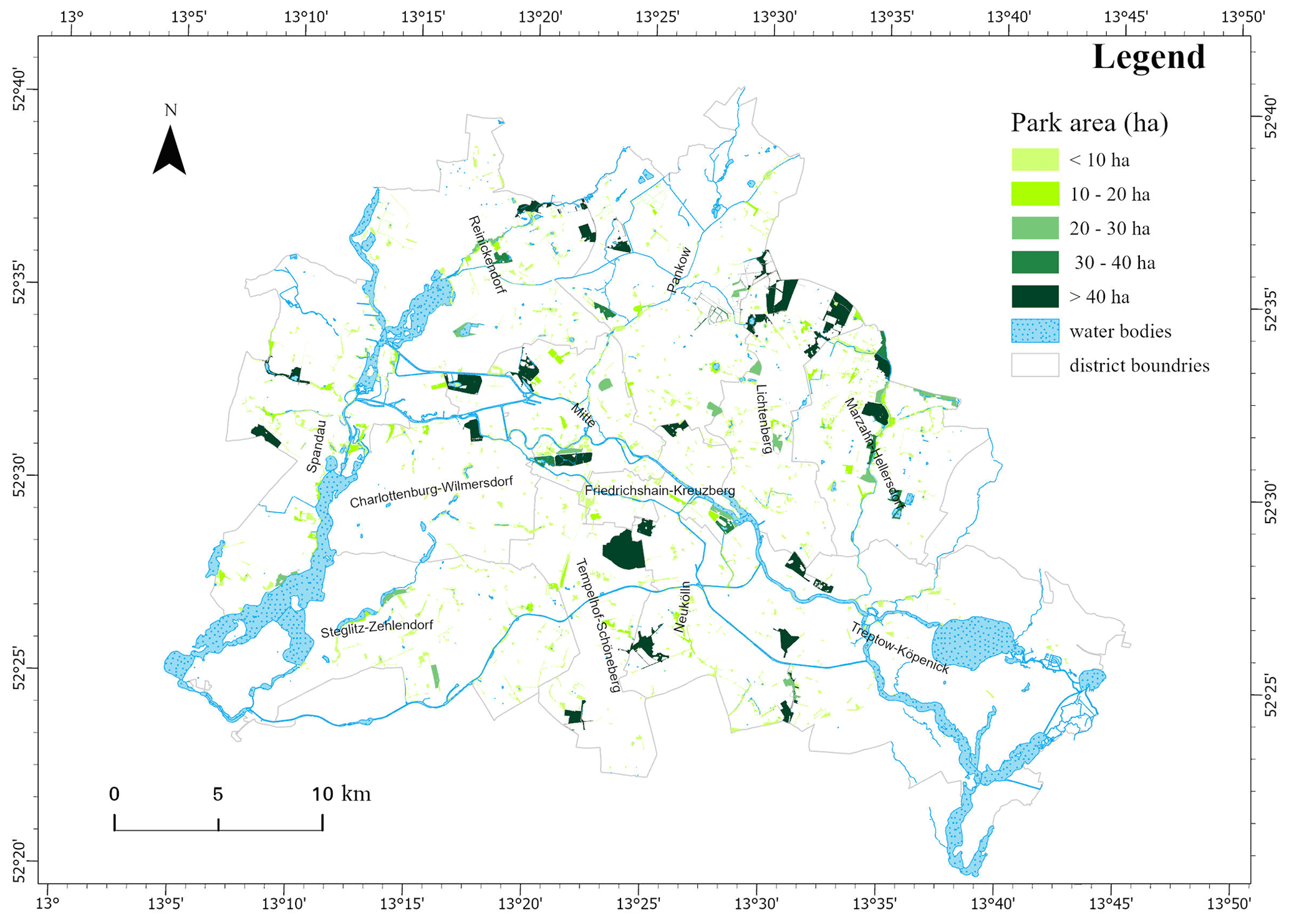
Figure 1Map depicting the study area: Berlin city and its parks categorized by area, including water bodies such as the River Spree (FIS-Broker, 2024).
Berlin, Germany's capital, presents a detailed case study for the development of its extensive urban green network amidst a rapidly growing population (Fig. 1). Spanning a city area of more than 89 000 ha, Berlin's population is projected to grow significantly, with forecasts predicting approximately 4 million residents by 2040; this growth trend is expected to continue (Amt für Statistik Berlin-Brandenburg, 2024). Additionally, Berlin hosts a substantial immigrant community, with over half a million residents contributing to the city's demographic composition (Amt für Statistik Berlin-Brandenburg, 2024).
Despite the notable population growth, Berlin maintains a substantial portion of its area as green spaces. Over 30 % of the city is covered by green spaces, including public parks, forests, private gardens, allotment gardens, cemeteries, recreational areas, sports grounds, and street greenery (Kabisch and Haase, 2014). Specifically, public green spaces excluding the forest areas around 5246 ha of the city, which is part of the total area designated as green (Kabisch and Haase, 2014). However, while residential areas have seen an 18 % increase over the past decade, the expansion of green spaces has not kept pace, highlighting the need for innovative integration of green spaces within the growing city (Amt für Statistik Berlin-Brandenburg, 2024).
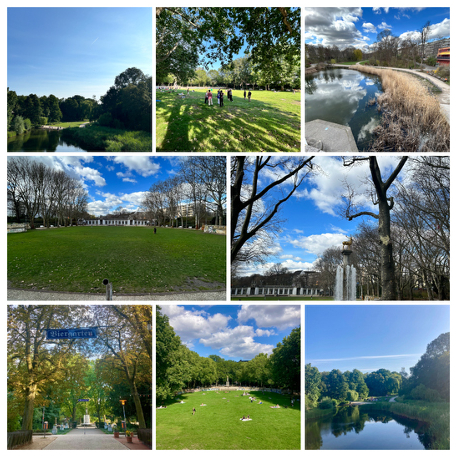
Figure 2Volkspark Wilmersdorf and Rudolph-Wilde-park as a representative historic urban park in Berlin: Developed in the early 20th century and later extended to form a continuous green corridor, Volkspark Wilmersdorf and Rudolph-Wilde-park exemplifies Berlin's tradition of multifunctional park design. Its expansive lawns, tree-lined avenues, and integrated play and sports areas support recreation, biodiversity, and climate regulation, illustrating the city's longstanding commitment to accessible and ecologically valuable public green spaces. (Photo courtesy: Kei Namba.)
The evolution of Berlin's urban green spaces is deeply intertwined with the city's historical narrative, reflecting its cultural, political, and social transformations. In the 19th century, landscape architects such as Peter Joseph Lenné played a pivotal role in converting royal estates into public parks like Tiergarten and Volkspark Friedrichshain. This transformation marked a shift towards recognizing the importance of greenery in urban life, making these spaces accessible for public leisure and recreation (Brantz and Dümpelmann, 2011; Wolschke-Bulmahn and Clark, 2021). In the 20th century, Berlin's parks became arenas of political significance, mirroring Berlin's turbulent socio-political landscape. Iconic spaces such as Tempelhofer Feld and Mauerpark today symbolize the city's division during the Cold War and its later reunification, illustrating the complex role of green spaces in reflecting and shaping societal changes (Angelo, 2021). Representative views of Berlin's historic urban parks, such as Volkspark Wilmersdorf and Rudolph-Wilde-park, demonstrate how these landscapes combine heritage, ecological functionality, and everyday recreation within the city's green network (Fig. 2).
Concurrently, Berlin's urban parks are integral to the city's ecological, social, and economic fabric. They contribute to biodiversity, mitigate the impacts of climate change, and serve as vital cultural and social hubs, enhancing the well-being of its residents (Gandy, 2014; Kowarik, 2023). Economically, these green spaces boost property values, attract tourism, and stimulate local economies, though this growth can lead to challenges such as gentrification, which necessitates a careful balance between economic development and social equity (Collins et al., 2022; Vargas-Hernández et al., 2023). Additionally, parks, in general, have been crucial for public health, offering essential spaces for relaxation and physical activity, particularly during the COVID-19 pandemic, underscoring their role in mental health and community resilience (Collins et al., 2022).
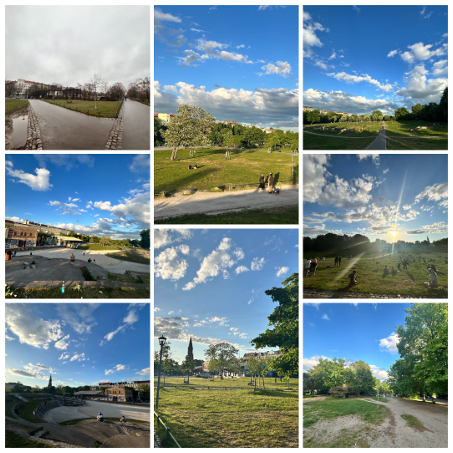
Figure 3Görlitzer park: Located in Kreuzberg, representing the social complexity of Berlin's green transformation – balancing everyday recreation, community informality, and contested governance. (Photo courtesy: Subham Mukherjee.)
However, Berlin's green spaces face significant challenges in ensuring ecological sustainability, social inclusivity, and economic balance. The city's efforts to adapt to climate change, ensure equitable access for all residents and manage economic disparities are critical to the future of these spaces (Stoetzer, 2018, 2022; Amorim-Maia et al., 2023). The repurposing of former industrial sites, such as the transformation of Görlitzer Bahnhof into Görlitzer park (Fig. 3) in the late 1980ies or Berlin-Tempelhof Airport into a vast urban park in the 2010s, exemplify the city's ongoing innovative approach to integrate green spaces into its urban landscape (Draus et al., 2021). These efforts highlight Berlin's commitment to use its green network as a tool to navigate the complex challenges posed by socio-economic shifts and climate change (Kabisch and Haase, 2014; Lachmund, 2013).
This review employs a systematic approach to identify, analyse, and synthesize relevant academic literature on urban parks in Berlin. The focus is on understanding the intersectionality between Berlin's evolving socio-economic conditions, climate change impacts, and the role of urban parks in fostering sustainability. By adhering to established systematic review protocols, the methodology involves a thorough, predefined search strategy, selection criteria, and critical evaluation process. This ensures a robust and unbiased examination of literature that spans socio-environmental studies, historical overviews, and case-specific investigations relevant to Berlin's urban parks.
The following key components are included:
-
Socio-environmental studies: To understand the contemporary significance of urban parks in Berlin, an analysis of existing research on socio-environmental studies have been conducted. These studies involve the collection of academic literatures related to the ecological impact of these green spaces, their cultural and social relevance, economic implications, and their role in enhancing residents' well-being.
-
Case-specific investigations: Further, case-specific literature survey on selected urban parks in Berlin is included, that offer detailed insights into how those urban parks in Berlin have been shaped by the city's history and continue to evolve in response to contemporary challenges. We investigated the transformations and adaptations of these spaces through localized data collection and analysis.
Applying a systematic analytical approach includes a including a representative sample of research articles were that address the intersectionality between Berlin's changing socio-economic conditions, climate change impacts, and their influence on urban parks, with a focus on achieving sustainability.
We conducted an exhaustive keyword search across major academic databases to identify peer-reviewed studies relevant to Berlin's urban parks, utilizing platforms such as PubMed, Scopus, Web of Science, and Google Scholar. We included only studies with empirical or conceptual relevance to Berlin, excluding grey literature unless it provided unique city-specific evidence. The following keywords and combinations were used:
-
Berlin
-
Urban parks
-
Greenspaces
-
Socio-economic conditions
-
Climate change
-
Sustainability
To be included in the review, academic papers had to meet the following criteria:
-
Relevance: Papers had to directly address the intersectionality of socio-economic conditions, climate change impacts, and urban parks and greens, in general, and urban parks, in particular, within the context of Berlin.
-
Publication type: Only peer-reviewed journal articles and conference papers published in English were considered.
-
Publication date: A comprehensive literature review was conducted to encompass the historical and contemporary understanding of urban green spaces and extreme weather events. Scholarly articles and reports were included from across the entire available publication spectrum, except for those specifically listed in the Appendix, till May 2024. This inclusive approach ensures the analysis considers the full range of relevant research, providing a robust foundation for understanding these critical issues.
Papers were excluded from consideration if they fell into any of the following categories:
-
Non-English language: Papers published in languages other than English were generally excluded due to limited translation resources. However, the study did include websites, reports, and articles in German, as well as other non-academic materials from both governmental and non-governmental organizations (after verification), to provide relevant examples. References to these non-academic articles and reports are typically provided in the footnotes.
-
Irrelevance: Papers that did not directly address the intersectionality of socio-economic conditions, climate change impacts, and urban parks and greens, in general, in Berlin were excluded.
-
Publication type: Books, theses, reports, and non-peer-reviewed articles were excluded to maintain the academic rigor of the selection.
The initial search yielded a total of 634 academic papers. These papers underwent screening based on title and abstract to exclude those not meeting the inclusion criteria. Following this screening, 308 papers remained for full-text review. Each of these papers underwent a critical assessment to evaluate its relevance to the research topic.
After the full-text review, a final selection of around 200 academic publications was made based on their direct relevance to the intersecting subject areas of Berlin's changing socio-economic conditions, impacts of climate change, and urban parks within the context of sustainability. These selected papers formed the foundation for the analysis and synthesis presented in this review article.
The final selection of papers covered a wide range of topics, methodologies, and findings, facilitating a comprehensive and multifaceted exploration of the research area. Incorporating these papers ensures that the review offers a well-rounded and informed perspective on the subject matter, integrating various research approaches and insights to inform the discussion and conclusions of the article.
By amalgamating background analysis, socio-environmental studies, and case-specific investigations, this review approach enables a comprehensive exploration of the complex relationships between Berlin's urban parks, socio-economic conditions, and climate change. Moreover, it provides a robust empirical foundation for the subsequent sections of this article, which delve into the multifaceted challenges and opportunities faced by these green spaces in Berlin.
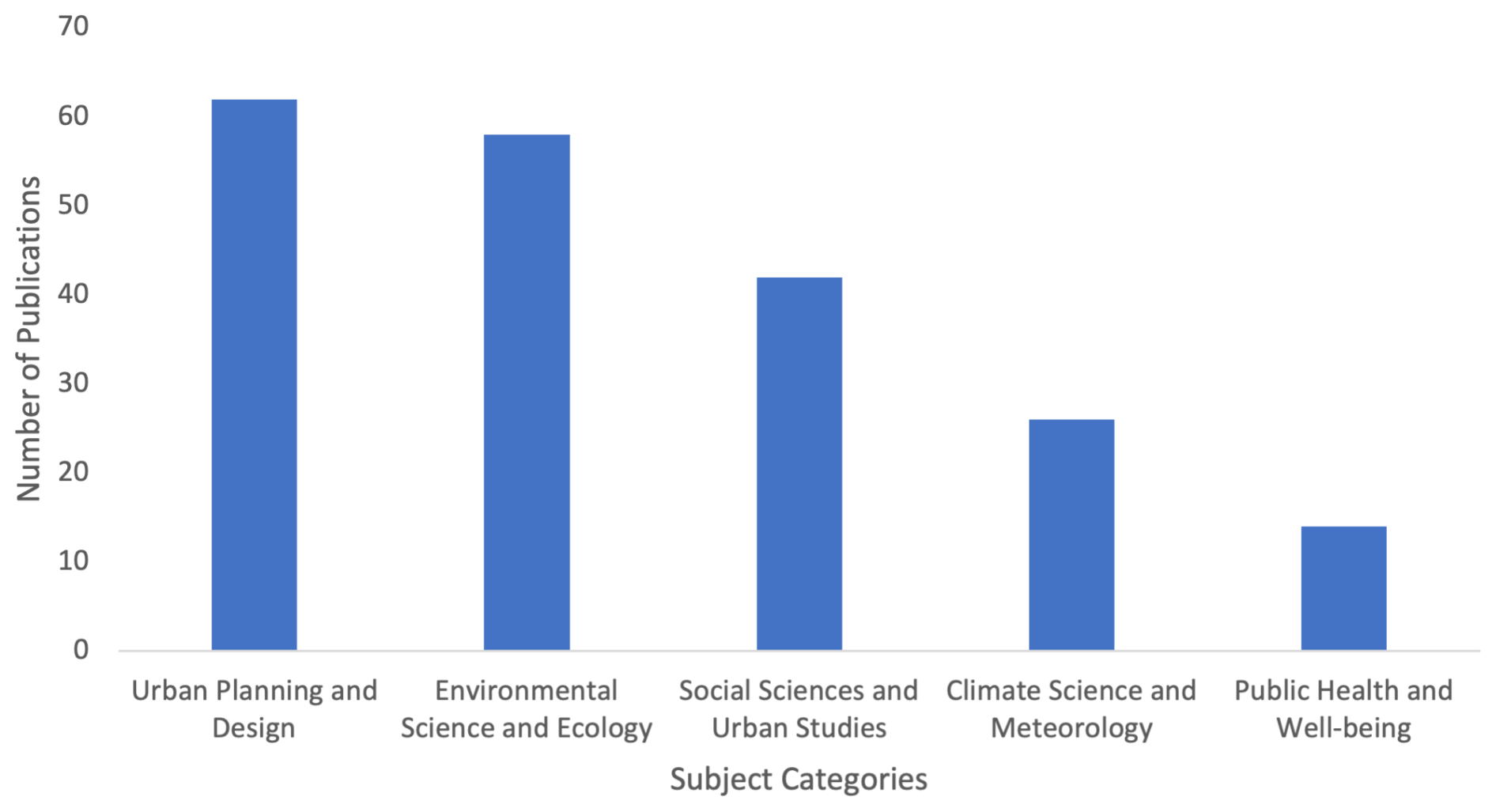
The extensive literature search on Berlin's parks as sustainability infrastructure in the face of climate change yielded a diverse array of academic papers. These papers (more than 200, altogether listed in the Reference section) span multiple disciplines, time periods, and geographical focuses, offering a comprehensive understanding of how urban green spaces in Berlin contribute to the city's resilience and sustainability. This section provides a critical analysis of the selected papers, categorized by discipline, year of publication, and focal study area, to contextualize their relevance within the broader discourse on urban sustainability and climate adaptation.
4.1 Disciplinary breakdown
The selected papers can be assigned to five primary disciplines (Fig. 4): Urban Planning and Design, Environmental Science and Ecology, Social Sciences and Urban Studies, Climate Science and Meteorology, and Public Health and Well-being.
- a.
Urban planning and design: This category comprise about 30.7 % of the selected papers. The focus here is on the planning, design, and implementation of green spaces in urban settings, specifically how these spaces function as critical infrastructure within the urban fabric of Berlin. Key contributions from this discipline include discussions on the integration of green spaces into urban planning frameworks, the challenges of densification, and the role of parks in enhancing urban liveability (e.g., Lachmund, 2013).
- b.
Environmental science and ecology: Approximately 28.7 % of the publications reviewed fall under this category. These studies primarily explore the ecological functions of urban green spaces, including biodiversity conservation, ecosystem services, and the role of green infrastructure in mitigating urban heat islands and managing stormwater. Berlin's parks are frequently examined as case studies for understanding urban biodiversity and the ecological benefits of green spaces in densely populated areas (e.g., Kowarik, 2023).
- c.
Social sciences and urban studies: This category account for roughly 20.8 % of the papers. The focus is on the socio-cultural implications of urban green spaces, such as their role in fostering social inclusion, mitigating gentrification, and promoting community well-being. The intersection of urban green space development with issues of social equity and justice is a recurring theme, particularly in studies examining the impacts of green gentrification in Berlin (e.g., Anguelovski et al., 2020).
- d.
Climate science and meteorology: Around 12.9 % of the selected papers are from these disciplines. These studies are crucial in understanding the direct and indirect impacts of climate change on urban areas, with a specific focus on Berlin. Topics include the increasing frequency and intensity of extreme weather events, such as heatwaves and heavy rainfall, and the role of green spaces in mitigating these effects. The papers highlight how Berlin's green infrastructure can help the city adapt to changing climatic conditions (e.g., Fenner et al., 2019).
- e.
Public health and well-being: The remaining 6.9 % of the papers focus on the health-related benefits of urban green spaces. These studies examine how access to parks and green areas contribute to physical and mental health, especially in the context of urban environments. In Berlin, the relationship between green space availability and public health outcomes is a key area of investigation, with several studies linking park accessibility to improved well-being during periods of extreme heat and other climate-related stressors (e.g., Kabisch et al., 2021).
4.2 Year of publication
The papers reviewed span over a decade, with an increase in publications over the last five years (Fig. 5). This temporal distribution reflects the growing importance of urban green spaces in climate adaptation strategies and the rising academic interest in Berlin's response to climate change.
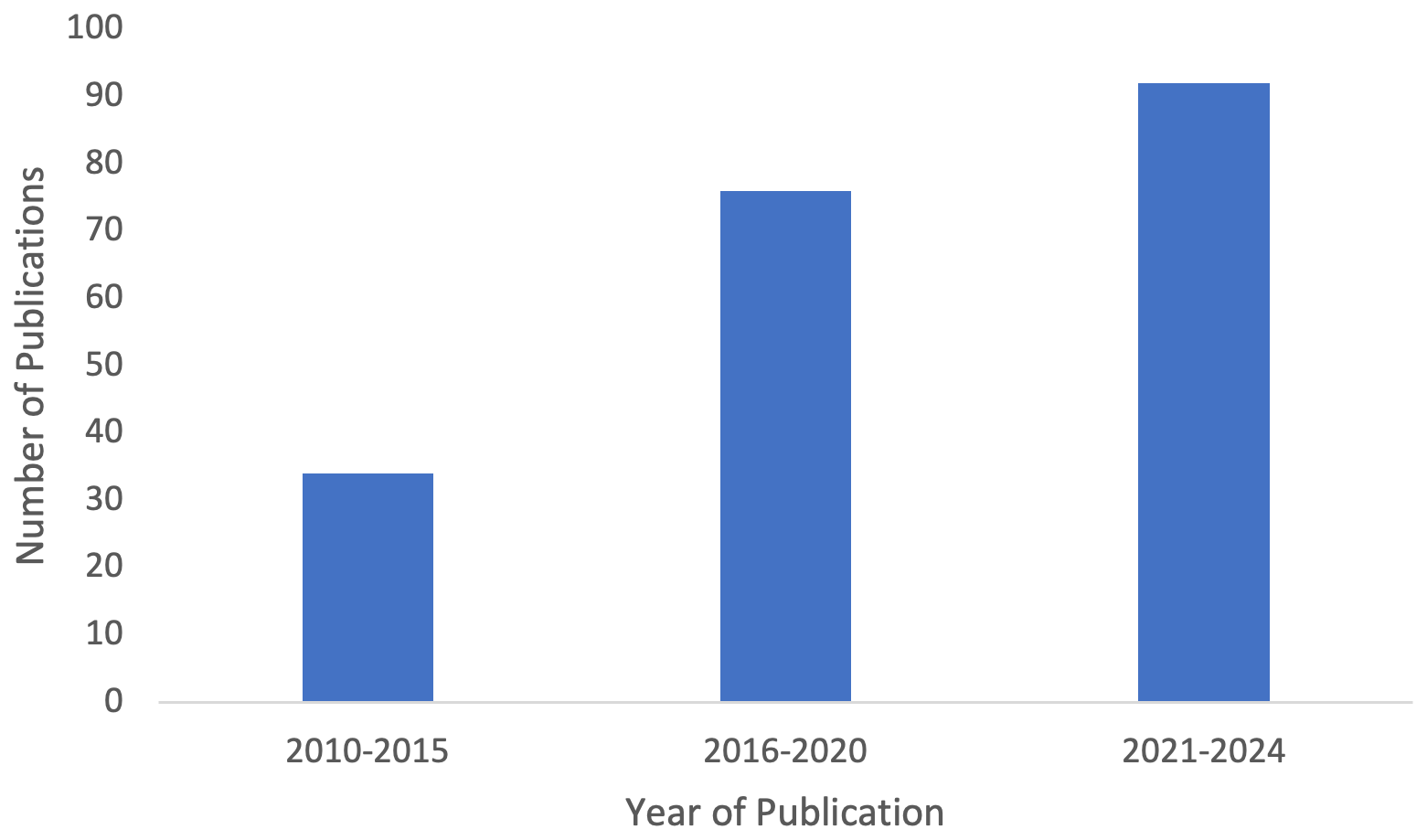
Figure 5Temporal distribution of the reviewed papers where the bars show the total number of publications during the time-interval mentioned.
- a.
2010–2015: During this period, about 16.8 % of the reviewed papers were published. These early studies primarily laid the groundwork for understanding the role of green spaces in urban planning and environmental management in Berlin. Topics included initial explorations into green infrastructure and its potential to enhance urban resilience (e.g., Wolch et al., 2014).
- b.
2016–2020: This period saw a significant increase in publications on the city's urban greens, accounting for 37.6 % of the publications, considered for review in this study. The focus shifted towards the integration of green spaces into broader urban sustainability frameworks and addressing the socio-political challenges associated with urban green space development, such as gentrification and social equity (e.g., Bernt, 2016).
- c.
2021–2024: The most recent period accounts for 45.5 % of the publications reviewed, reflecting the heightened urgency in addressing climate change impacts on urban areas. The studies from this period are particularly relevant to the current discourse on climate adaptation, exploring how Berlin's parks are leveraged as key infrastructure to mitigate the impacts of extreme weather events, such as heatwaves and heavy rainfall (e.g., Baganz and Baganz, 2023).
4.3 Focal study area
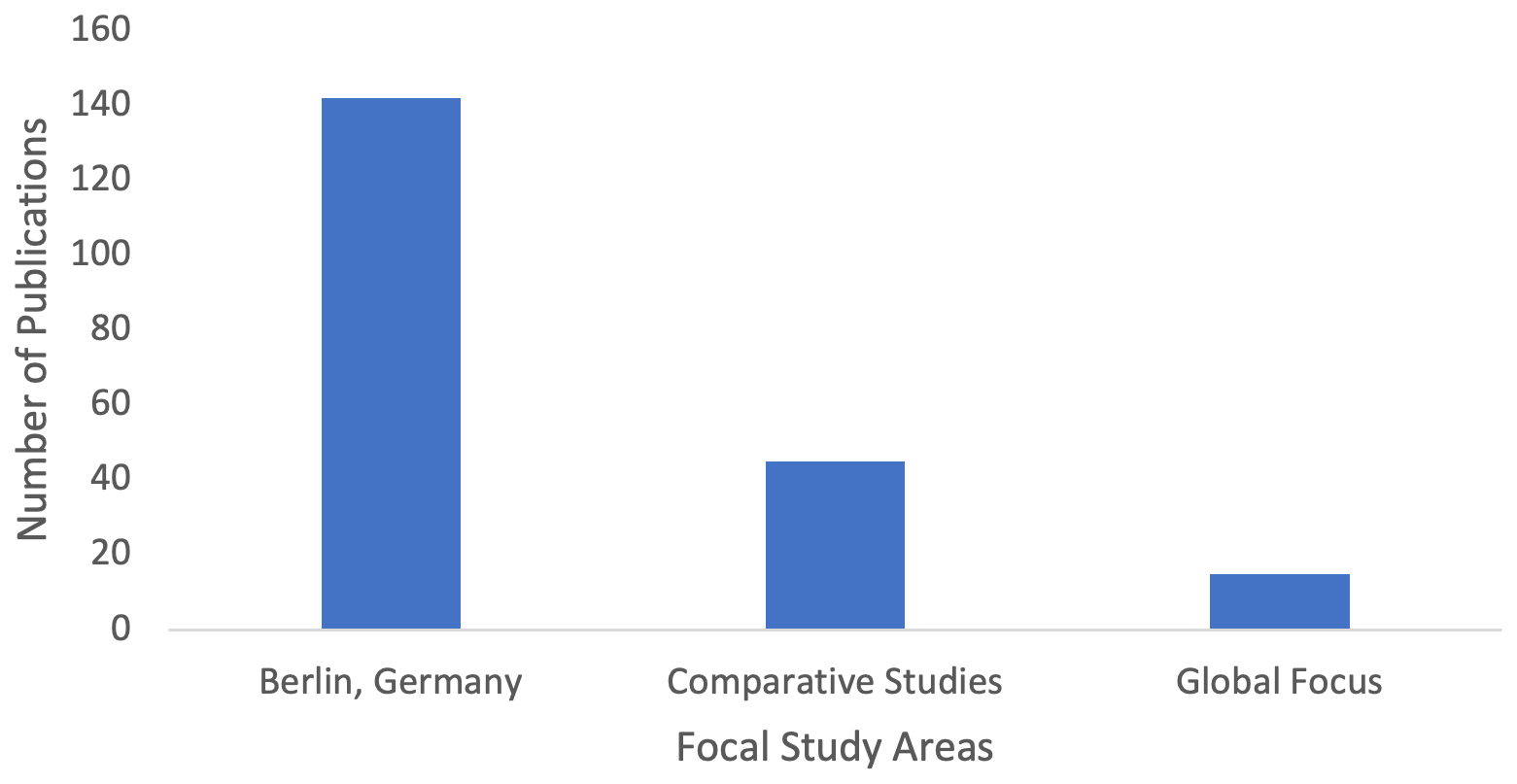
The focal study area of the selected papers primarily centres on Berlin, Germany, with some studies including comparative analyses with other global cities (Fig. 6). Berlin is a unique case study due to its historical, political, and social context, making it an ideal subject for examining the intersection of urban green spaces and sustainability.
- a.
Berlin, Germany: Approximately 70.3 % of the papers included in the review focus exclusively on Berlin. These studies explore a wide range of topics, from the ecological functions of parks to their role in social cohesion and climate adaptation. The emphasis on Berlin highlights the city's innovative approaches to urban green space management and its challenges in balancing development with environmental sustainability (e.g., Breuste and Breuste, 2022).
- b.
Comparative studies: About 22.3 % of the papers include Berlin as part of a comparative study with other cities, such as Leipzig, London, and New York. These studies provide valuable insights into how Berlin's green space strategies compare with those of other cities, offering lessons in good practices and highlighting areas where Berlin's approach can be improved (e.g., Ali et al., 2020).
- c.
Global focus: 7.4 % of the papers included in the review have a broad, global focus, but still reference Berlin as a case study within a wider context. These studies often discuss global trends in urban sustainability and climate resilience, positioning Berlin within the global discourse on how cities can adapt to and mitigate the effects of climate change (e.g., Gill et al., 2007).
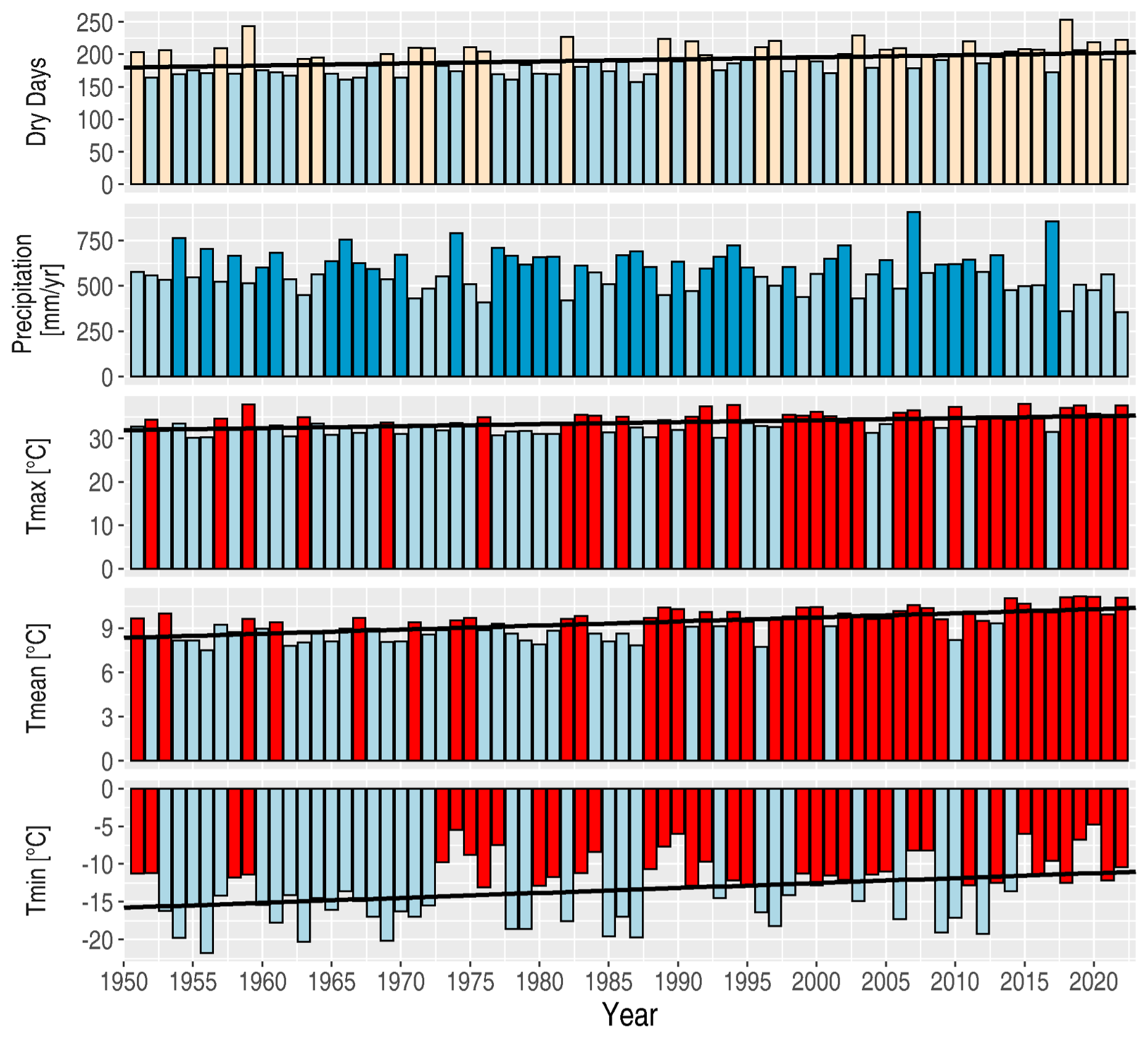
Figure 7Climate trends in Berlin (1950–2023): Precipitation and temperature variations with statistical significance. From top to bottom: The number of days without precipitation per year (beige/blue more/less than the long-term mean), Annual precipitation (light/dark blue less/more than the long-term mean), absolute temperature maximum of the year (blue/red lower/higher than the long-term mean), average temperature of the year (blue/red lower/higher than the long-term mean), and absolute temperature minimum of the year (blue/red lower/higher than the long-term mean). The long-term mean is based on the period 1950–2023. Black lines denote statistically significant linear trends (5 % level) (Data source: the weather station Berlin-Dahlem, Germany).
Urban parks in Berlin, like their counterparts around the world, face a growing threat from climate change (Fryd et al., 2012; Jansson, 2013; Shade et al., 2020; Angelo, 2021). In Berlin a statistically significant temperature increase can be observed since 1950; the linear trend implies a rise of the annual mean temperature of 2.1 °C (0.028 K yr−1; adj. R2: 0.39) as well as of the annual minimum (4.8 °C; trend: 0.07 K yr−1; adj. R2: 0.11) and maximum temperature (3.4 °C; trend:0.046 K yr−1; adj. R2: 0.21) (Fig. 7). The data stems from a weather station located in the Botanical Garden within the green district of Dahlem. A comparison with the Berlin–Brandenburg area-mean time series (DWD, 2025) indicates that the warming trend observed at the Dahlem station is broadly consistent with the regional climatic signal. Therefore, the increase is likely influenced mainly by large-scale climate warming, although local urbanisation effects cannot be fully excluded. While annual mean precipitation does not show any statistically significant trends, the number of dry days has increased (23.4 d, trend: 0.316 d yr−1; adj. R2: 0.09), indicating a shift towards lesser but extremer rainfall events. This shift is predicted to increase with rising greenhouse gas concentrations (e.g., Nissen and Ulbrich, 2017). The following subsections examine the impact of climate change on urban parks in Berlin exploring the implications of rising temperatures and extreme weather events.
5.1 Rising temperatures: Urban Heat Islands (UHI) effects
Rising annual temperatures are a global phenomenon driven by climate change, and Berlin reflects this broader trend (Abbass et al., 2022; Sander and Weißermel, 2023). At the same time, the urban heat island (UHI) effect, which occurs independently of climate change, significantly elevates local temperatures and aggravates the perceived impacts of warming. UHI arises from urban structures such as concrete, asphalt, and dense building forms that absorb and radiate heat, making cities – including their parks and green spaces – warmer than surrounding rural areas (Marando et al., 2022). While climate change amplifies this effect, UHI would persist even in the absence of global warming, as it is inherently linked to urban morphology and density (Tsoka et al., 2020; Marando et al., 2022; Irfeey et al., 2023). The interaction of these drivers means that urban parks in Berlin are increasingly exposed to heightened heat stress during summer months, with consequences for both ecological functioning and human well-being (Kabisch et al., 2021; Xu et al., 2022).
Climate Analytics (2024) conducted a study on heat stress and adaptation measures in Berlin and Brandenburg, commissioned by the Climate Change Centre Berlin Brandenburg. Their project report highlights the critical role of green spaces and sustainable urban planning in mitigating the combined impacts of climate change and urban heat, with a particular emphasis on reducing exposure to heat stress in densely built-up environments (Climate Analytics, 2024). Using the example of Greifswalder Strasse in Berlin, the authors analysed a range of development scenarios to evaluate resilience options for addressing heat stress. The study concludes that the most effective strategy involves a combination of reduced ground surface sealing and the establishment of large, contiguous biotope networks with tree cover, which together can substantially lower urban heat loads and strengthen ecological connectivity.
5.2 Current state and significance:
Implications for park functionality: Thermal stress in Berlin during hot spells is lower in parks and other green spaces compared to built-up areas, making them important cooling refuges (Langer et al., 2021). However, while excessive heat primarily discourages people from leaving their homes, those who do venture outside may still experience discomfort in parks, particularly if shade and water access are limited (Kabisch et al., 2021; Lo et al., 2022; Xu et al., 2022). For vulnerable populations, such as the elderly and young children, prolonged exposure to high temperatures – even in green spaces – can pose health risks (Kabisch et al., 2021). This underscores the need for urban parks to be designed with climate resilience in mind, ensuring they remain accessible, comfortable, and inclusive spaces for recreation and well-being (Reyes-Riveros et al., 2021).
Ecological consequences: Rising temperatures, both from climate change and the urban heat island effect, have significant ecological implications for Berlin's urban parks and green spaces (Kraemer and Kabisch, 2022; Kowarik, 2023). Some plant species may struggle to adapt to the warmer conditions, leading to shifts in biodiversity, where certain species thrive while others dwindle (Lehmann, 2021). However, such shifts are not inherently negative; urban biodiversity has historically been dynamic, particularly in cities where alien species have contributed to increased species richness, a unique feature of urban ecosystems (Kowarik and Langer, 1994; Kowarik, 2019, 2023). Wildlife inhabiting the urban spaces also faces challenges due to rising temperatures as changes in temperature can disrupt seasonal behaviors, affecting breeding, migration, and feeding patterns of birds, insects, and mammals (Hsiung et al., 2018; Kubelka et al., 2022). These disruptions may contribute to further shifts in biodiversity (Koleček et al., 2020), but as with plants, urban wildlife has shown resilience, with new and non-native species sometimes enriching the ecological fabric of cities (Kowarik, 2023; Stoetzer, 2022).
5.3 Extreme weather events
Climate change brings a heightened risk of extreme weather events, including droughts, heavy rainfall, storms, and flooding (Hettiarachchi et al., 2018; Caldas-Alvarez et al., 2022). Berlin's urban parks (and greens, in general) are not exempt from these impacts (Fenner et al., 2019; Eckstein et al., 2021).
Flooding: Intense rainfall events can lead to pluvial flooding in urban parks, causing damage to infrastructure (Alexander et al., 2019), eroding soil (Hazelton and Murphy, 2021), and potentially affecting plant life (Czaja et al., 2020; Zipperer et al., 2020). parks situated in low-lying areas are particularly susceptible (Mehtab and Kamal, 2023). Flooding not only disrupts park activities but also necessitates costly repairs and can pose safety hazards to visitors (Southon and van der Merwe, 2018).
Damage to park infrastructure due to natural hazards: According to the IPCC AR6 risk framework, a hazard is defined as the potential occurrence of a natural or human-induced physical event or impact that may cause loss of life, injury, or other health effects, as well as damage and loss to property, infrastructure, livelihoods, service provision, and environmental resources (IPCC, 2012, 2021; Reisinger et al., 2020). This definition underpins our assessment of how climate-related hazards interact with urban park ecosystems in Berlin. In the context of urban parks, the specific hazard is damage from extreme weather events, such as storms (Miller, 2020). Trees, pathways, recreational facilities, and infrastructure within parks are particularly vulnerable to such damage. This vulnerability can lead to temporary closures of parks, necessitate costly rehabilitation efforts, and pose safety risks (Yildirim et al., 2021). The functional capacity of these spaces and the services they provide to the community can be severely disrupted by storm-related damage (Karaye et al., 2019; Miller, 2020).
5.4 Biodiversity loss
Biodiversity is a fundamental component of urban park ecosystems, contributing to their resilience and sustainability (Gonçalves et al., 2021; Lehmann, 2021). It includes the variety of plant species, the presence of wildlife, and the intricate web of ecological relationships that develop in these green spaces (Aerts et al., 2018; Heydari et al., 2020). In Berlin, biodiversity loss emerges from the combined pressures of urbanisation and climate extremes. Habitat fragmentation, pollution, and the spread of invasive species are intensified by weather-related events such as heatwaves, droughts, and flash floods that overwhelm insufficient infrastructure like sewage systems. These processes interact to degrade habitats, reduce species populations, and disrupt ecological balance, further accelerating biodiversity decline (Lehmann, 2021). While biodiversity loss is driven by multiple causes, its significance in the climate crisis is amplified because reduced biodiversity diminishes urban parks' ability to mitigate and recover from extreme events (Heydari et al., 2020). Therefore, addressing biodiversity loss requires recognising the compounded role of both urban development and climate-driven stressors to understand the broader impacts on biophysical systems in urban parks.
Species migration: Climate change influences the distribution of plant and animal species (Mashwani, 2020). As temperatures rise, some species may need to migrate to more suitable habitats, both within and outside the city (Keeffe and Han, 2019). In the context of Berlin's urban parks, this migration can disrupt established ecological relationships (Stoetzer, 2018; Kowarik, 2023). The composition of species in these green spaces may shift, impacting the balance and dynamics of these ecosystems (Breuste and Artmann, 2020; Baganz and Baganz, 2023).
Vulnerability of native species: Native plant and animal species within urban parks may face increased competition from invasive species that are better adapted to warmer or more disturbed conditions (Alizadeh and Hitchmough, 2019). This competition for resources and habitat can lead to shifts in species composition and a potential decline in the richness of native flora and fauna (Storch et al., 2022). The loss of native species can have cascading effects on the overall functioning of the urban park ecosystem (Carboni et al., 2021; Park and Razafindratsima, 2019). Ecosystem services are a vital aspect of urban park functionality (Mexia et al., 2018). These services encompass a range of benefits provided by ecosystems, including urban parks, that contribute to the well-being and quality of life of the city's residents (Pukowiec-Kurda, 2022).
Pollination: Urban parks play a crucial role in supporting pollinators, such as bees and butterflies (Ayers and Rehan, 2021; Dylewski et al., 2019). These insects are essential for the pollination of plants, including many food crops (Requier et al., 2023). Climate change can disrupt the timing and availability of flowering plants, impacting pollinators' foraging patterns (Bhatnagar et al., 2019; Gérard et al., 2020). This disruption can ultimately affect the pollination of food crops within and beyond the city, potentially leading to reduced agricultural yields and increased food prices (Marshman et al., 2019; Requier et al., 2023).
Pest control: Ecosystem services provided by urban parks include natural pest control (Qiu, 2019; Sikorski et al., 2021). Predatory insects and birds that inhabit these green spaces help regulate pest populations in nearby agricultural areas (Rocha and Fellowes, 2020). Climate change can alter the distribution and behaviour of these species, potentially leading to increased pest problems in both urban and rural environments (Qiu, 2019; Skendžić et al., 2021).
5.5 Other effects of climate change on ecosystem:
Air quality and water regulation: Urban parks contribute to air and water purification by absorbing pollutants and filtering water. They act as green lungs in the city, helping to improve air quality and maintain water quality. Studies show that green spaces significantly reduce air pollution through deposition on leaf surfaces and improve water management by promoting infiltration and reducing surface runoff (Vieira et al., 2018). In Berlin, however, the effectiveness of these services is shaped more by local urban conditions than by long-term climatic trends. Elevated ozone levels, for instance, are largely linked to transportation emissions and the urban heat island (UHI) effect, which intensifies pollutant concentrations during warm periods (Xing and Brimblecombe, 2019). Climate change can exacerbate these stresses by prolonging heatwaves, but it is not the primary cause. Likewise, while Fig. 5 does not indicate a significant long-term reduction in precipitation, localised heavy rainfall events combined with extensive surface sealing can overwhelm park infrastructure, affecting infiltration and water purification capacity (Kuhlemann et al., 2020).
Climate regulation: Urban parks play a role in local climate regulation by providing shade, reducing heat, and mitigating the urban heat island effect (Langer et al., 2021). However, climate change can challenge the parks' capacities to provide these services effectively. Increased heatwaves can test the parks' ability to offer cooling and relief to visitors, especially to vulnerable population groups. Without proper adaptation measures, urban parks may become less effective in mitigating extreme temperatures, leading to heat-related health issues (Gabriel and Endlicher, 2011; Scherer et al., 2013).
Overall ecological stability: The ecosystem services provided by urban parks contribute to the overall ecological stability of the city. They support biodiversity, enhance resilience to environmental changes, and foster a healthier urban environment. parks in Berlin have been shown to host a variety of plant and animal species, contributing to urban biodiversity (Palliwoda et al., 2017). However, climate change-induced disruptions to these services can undermine the ecological stability of these green spaces, affecting both wildlife and human residents. Changes in temperature and precipitation patterns can alter the habitat conditions within parks, making them less suitable for certain species and reducing the overall biodiversity (Battisti et al., 2019).
The interplay between urban green spaces and park management provides a foundational understanding of how Berlin's urban infrastructure and planning strategies intersect with broader socio-economic dynamics. By contextualising these dimensions, this section establishes the relevance of green infrastructure policies and initiatives as critical enablers of equitable access and social inclusivity in the governance of urban nature. This approach bridges the gap between governance frameworks and socio-economic disparities, offering a comprehensive lens through which to examine Berlin's green infrastructure, with particular emphasis on public parks as the most multifunctional and socially significant spaces. The concept of urban green space covers multiple dimensions ranging from parks, community gardens, allotment colonies, cemeteries, and urban forests to buildings with green roofs and facades. Accordingly, policies must be analysed at different levels of governance (EU, federal, state, municipal) that influence the development and management of local green spaces in Berlin. At the global level, the Berlin Senate adopted the Berlin Urban Nature Pact in September 2024, an international initiative that aims to mobilise cities around the world to protect and restore nature in urban areas (https://www.berlin.de/rbmskzl/aktuelles/pressemitteilungen/2024/pressemitteilung.1481549.php, last access: 10 October 2025).
Urban green spaces could also offer effective nature-based solutions for sustainable urban drainage systems in reducing stormwater flows and combined sewer overflows for urban water management in Berlin (Wild et al., 2024). Implementing the Sponge City Concept especially in urban areas and using rainwater from private roofs to water public green spaces are also promoted in Germany's National Water Strategy (2023) (https://www.bmuv.de/download/nationale-wasserstrategie-2023, last access: 21 May 2025) At the municipal level, Berlin has introduced various policy incentives to promote water-sensitive or climate proof infrastructure. For example, the city's strategy to reduce flood risk is through decentralized rainwater harvesting (https://www.bwb.de/de/schwammstadt-berlin.php, last access: 21 May 2025). Berliner Regenwasseragentur (Berlin's Rainwater Agency), an initiative of Berliner Wasser Betriebe (BWB) and of Senatsverwaltung für Mobilität, Verkehr, Klimaschutz und Umwelt (SenUVK) promotes decentralized rainwater harvesting projects by installing green rooftops on buildings, unsealed parking places for storm water management etc. Berlin also provides incentives for those who use rainwater for private houses and gardens (Wild et al., 2024) (https://regenwasseragentur.berlin/massnahmen/regenwasser-sammeln-und-nutzen/, last access: 21 May 2025). Berlin's vision to develop climate friendly urban green spaces are reflected in StEP Klima (2011) and the StEP Klima KONKRET (2016), a strategic spatial concept followed by the city's Urban Development Plan Climate 2.0, StEP Klima 2.0 (2022).
Berlin's urban landscape strategy (Strategie Stadtlandschaft), adopted by the Senate in 2011, focuses on the development and enhancement of the city's diverse green spaces. The focus of the strategy is on climate change and resource-efficient cities, demographic change and cultural diversity. The strategy supported programs such as urban tree campaign and the mixed forest program (https://www.berlin.de/sen/uvk/natur-und-gruen/landschaftsplanung/strategie-stadtlandschaft/, last access: 10 October 2025).
In 2020, the Berlin's Senate established the Charter for Berlin's Urban Green “Charta für das Berliner Stadtgrün” in order to ensure that urban development is also green development and adapted the action program for Berlin's Urban Green 2030 “Handlungsprogramm für das Berliner Stadtgrün 2030” with concrete projects, measures and instruments (https://www.berlin.de/sen/uvk/natur-und-gruen/charta-stadtgruen/, last access: 10 October 2025, https://www.berlin.de/sen/uvk/_assets/natur-gruen/charta-stadtgruen/charta.pdf?ts=1683531724 last access: 10 October 2025).
Although Berlin's legal and strategic frameworks – such as the Public parks Law (1997), the Charter for Urban Green (2020), and the Urban Green 2030 Programme – apply to the city's entire green infrastructure, parks remain their principal focus. These policies highlight the dual challenge of safeguarding ecological functions and ensuring equitable access, underscoring the centrality of parks in shaping Berlin's green future.
Landschaftsprogramm: The landscape program, including the species protection program (LaPro), is a strategic, city-wide planning instrument for integrative environmental precautions. It pursues the goal of integrating ecological concerns into urban development at a city-wide level (https://www.berlin.de/sen/uvk/natur-und-gruen/landschaftsplanung/landschaftsprogramm/, last access: 10 October 2025). Moreover, the Berlin's administration has been engaged with the issues of environmental justice in its districts since 2008, not only due to population growth in the city but also because of growing concerns for climate related challenges.
Furthermore, the initiative called “Volksentscheid Baum” has drafted the “BäumePlus-Gesetz” (Berlin's Trees Plus Act) for Berlin, which is intended to enshrine measures to make Berlin “weather-proof and heat-proof” by 2035. According to the drafted law, Berliners would be allowed to plant trees and shrubs themselves on streets (https://www.baumentscheid.de/klimaanpassungsgesetz, last access: 10 October 2025).
There are diverse forms of how urban spaces are managed. For example, GrünBerlin is a state-owned public enterprise that implements Berlin's political guidelines, and which are accompanied by corresponding public supervisory bodies (Grün Berlin: https://gruen-berlin.de/en/company/about-gruen-berlin, last access: 10 October 2025). GrünBerlin runs several of the major parks in Berlin and represents a case of private organization and territorial governance of land (Colding et al., 2013).
Kabisch and Haase (2014) identifies key challenges in Berlin's urban green governance, including (a) increasing development pressure due to population growth and financial constraints on the municipal budget, (b) loss of expertise, and (c) low awareness of green space benefits among various stakeholders due to insufficient communication. Climate change is expected to further intensify these challenges. In addition to these issues, Berlin's urban green spaces are often shaped by informal practices, such as community-led initiatives, temporary land use, and adaptive greening efforts (Draus et al., 2020).
Berlin's urban green spaces, including community gardens, have been at the center of struggles between local governments, which were often skeptical of civic engagement, and social movements advocating for public access to green areas. These tensions became particularly visible in the early 1980s when the first community gardens emerged in West Berlin (Rosol, 2010; Colding et al., 2013).
After reunification, the city had an abundance of unused urban spaces or vacant lots (Brachen). However, financial constraints on the municipal budget limited green space development (Kabisch and Haase, 2014). The lack of public funds also led to various forms of temporary land use (Zwischennutzung), where former industrial areas were repurposed into cultural centers and informal green spaces. In response to these budgetary challenges, local politicians began advocating for increased civic engagement in managing green spaces (Rosol, 2010; Colding et al., 2013).
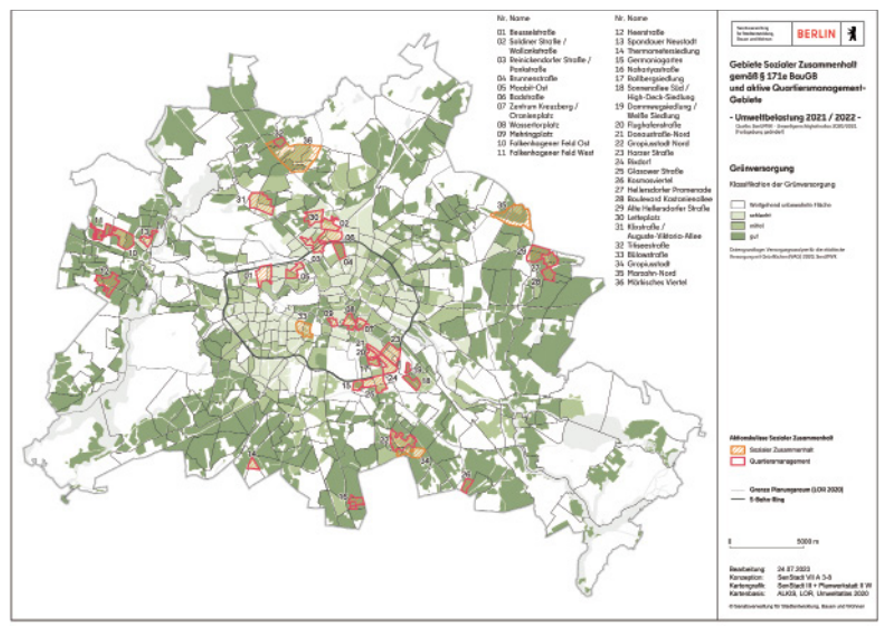
Figure 8Provision of green spaces within the framework of social cohesion. (Source: Praxisleitfaden Umweltgerechtigkeit in Berliner Quartieren (SenMVKU, 2023)).
6.1 Social disparities
Social disparities are a defining feature of urban life, including Berlin's urban life, and they have a direct influence on the utilization of urban parks, in particular, and greens, in general.
Access to greens: Income disparities can lead to unequal access to urban greens. Wealthier neighbourhoods often have more well-maintained parks, whereas low-income areas may lack such amenities. As a result, residents of economically disadvantaged areas may have limited access to these essential recreational and restorative spaces, exacerbating social inequalities. In terms of accessibility, there are strong disparities in green space provisions at household and individual levels in major German cities (Wüstemann et al., 2017). Also, in the context of European urban areas, vulnerable and unprivileged groups of residents receive below-average green cooling, while upper-income residents, nationals and homeowners experience above-average cooling provision (Rocha and Fellowes, 2020), corresponding to the findings for Berlin.
Berlin's Umweltgerechtigkeitsatlas (Environmental Justice Atlas) 2021/2022 identifies neighbourhoods most affected by environmental stressors such as air pollution, noise, and limited access to green spaces. In 2023, a guideline for promoting environmental justice in Berlin's neighbourhoods was developed through a participatory process involving local representatives and experts from the Senate (SenStadt, SenMVKU). Regarding green space provision, the neighbourhoods most negatively affected are highlighted in the map shown in Fig. 8 (https://climateanalytics.org/publications/hitzestress-und-anpassungsma%DFFnahmen-in-der-metropolregion-berlin-brandenburg, last access: 10 May 2024).
Residents who suffer from multiple environmental burdens earn less money than the average income in Berlin. The Senate classifies the social status of the neighbourhoods such as Glasower Straße listed as “very low”: around twelve percentage of people who live there are unemployed, and around 24 percent of the total population receive social security. 56 % of children grow up in families that receive social security (https://climateanalytics.org/publications/hitzestress-und-anpassungsma%DFnahmen-in-der-metropolregion-berlin-brandenburg, last access: 10 May 2024, https://www.rbb24.de/politik/beitrag/2022/08/, last access: 10 May 2024).
Affordability of leisure activities: The ability to engage in recreational activities within Berlin's parks can be limited for individuals and families with low financial means due to costs associated with certain amenities and activities (Blokland and Vief, 2021). This economic barrier further reinforces the exclusion of low-income communities from the benefits of urban green spaces, particularly parks (Blokland and Vief, 2021). Research has shown that low-income families often face challenges such as a lack of well-maintained facilities, limited free recreational programs, and fewer organized activities in parks (Rigolon, 2016; Cohen et al., 2019). Additionally, economic disparities play a significant role in determining access to community recreation resources, which are essential for promoting physical activity and overall well-being (McKenzie et al., 2013; Blokland and Vief, 2021).
6.2 Gentrification and displacement
Gentrification is a significant socio-economic phenomenon in Berlin, particularly in areas near urban parks. This process carries both opportunities and challenges for urban greens.
Investment and improvement: Gentrification often bring increased investment in the neighbourhood, which can lead to park improvements, enhanced safety, and overall revitalization. This can make these spaces more attractive and accessible, thereby increasing their relevance in the urban fabric (Kabisch and Haase, 2014).
Displacement and social exclusion: On the flip side, gentrification can lead to the displacement of long-standing, low-income residents. As high-income individuals and families move in, property values and rents rise. Consequently, the communities that so far relied on these green spaces for social and cultural activities may be pushed out, altering the socio-demographic makeup of neighbourhoods. This displacement disrupts the social bonds that parks facilitate and can lead to social exclusion (Ali et al., 2020). Moreover, the phenomenon of “green gentrification” highlights how improvements in green spaces can inadvertently contribute to these processes of exclusion (Triguero-Mas et al., 2022).
Informality and illicit activities: In addition to the transformation of the abandoned railroad site into Naturpark Südgelände, Berlin is also known for its green space, informality and illicit activities such as criminalities (drug dealing or prostitution) in parks (e.g., Görlitzer park) (Draus et al., 2020). These cases highlight that informality in Berlin's green spaces is not a unified phenomenon but a contested spectrum, ranging from celebrated “creative” uses to stigmatised illicit activities. A tension emerged when former Brachen or wasteland spaces transferred from informal social gathering areas into residential landscapes or public parks (Lachmund, 2013; Draus et al., 2020). The Berlin's city administration selectively promotes some activities, such as those of “urban pioneers” in Tempelhof and turns a blind eye to others. For Tempelhof, this was a deliberate strategy, as those urban “pioneers” were mobilized by the city government to occupy the space with “informal” activities such as urban gardening. However, once the territory was “settled”, the net of control began to be extended. In this context, the categories of formality and informality become confused (Draus et al., 2020).
6.3 Access and equity
The concept of access and equity in relation to urban parks is central to understand their intersectionality with socio-economic conditions.
Inequitable distribution: The uneven distribution of parks, often favouring more affluent neighbourhoods, results in an inequitable urban landscape. Low-income communities may have to travel relatively long distances to access green spaces or contend with overcrowded parks, limiting their ability to reap the associated physical, mental, and social benefits. Studies indicate significant disparities in green space provision across German cities, with income being a major factor influencing access to urban green spaces (Wüstemann et al., 2017). Additionally, the distribution of urban green spaces in Berlin shows considerable dissimilarity by immigrant status and age, highlighting the need for equitable planning (Kabisch and Haase, 2014).
Social inclusion: Urban parks play a crucial role in fostering social inclusion, yet access varies significantly among socio-economic groups. Wealthier communities often enjoy several opportunities for social interaction, leisure activities, and cultural engagement within these spaces. In contrast, socially vulnerable groups, including those with migration backgrounds and low-income levels, may encounter social barriers that limit their participation and integration within urban park settings. This disparity underscores the need for equitable access strategies to ensure that all residents can benefit from the social advantages offered by urban greens. The accessibility of urban green spaces can significantly impact social inclusion, with disparities evident in who benefits from these spaces (Wüstemann et al., 2017).
Economic resilience: Socio-economic conditions directly affect the economic resilience of communities living near urban parks. Gentrification can bring economic benefits, but it can also lead to housing and social instability for displaced populations. Low-income communities may experience gentrification as a threat rather than an opportunity, further accentuating income disparities. The phenomenon of green gentrification, where park improvements lead to increased property values and displacement of low-income residents, has been documented in various contexts, including Berlin (Ali et al., 2020).
In sum, while Berlin's governance frameworks and policies address the entire spectrum of urban green infrastructure, this review foregrounds public parks as a key entry point for analysis. parks remain the most multifunctional and socially significant spaces, making them particularly well suited for examining the intersections of socio-economic dynamics, governance challenges, and climate resilience.
This section critically explores strategies and approaches aimed at achieving sustainability within Berlin's urban parks, considering the intersectionality of socio-economic conditions and climate change impacts. It delves into innovative solutions and case studies that provide insights into how these essential green spaces can evolve to meet the challenges of the 21st century.
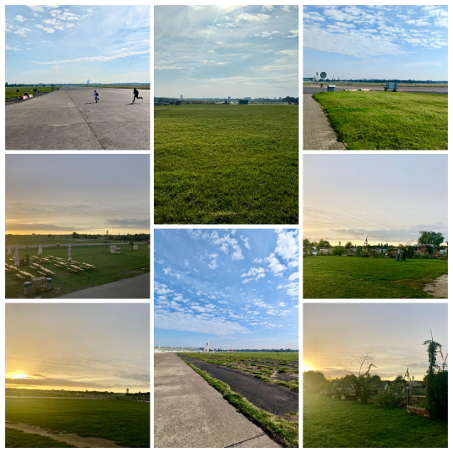
Figure 9Tempelhofer Feld: Converted from Berlin's former airport into a vast open parkland, illustrating adaptive reuse and community-driven urban greening, the site now accommodates diverse informal uses, from urban gardening to sports and cultural events. (Photo courtesy: Kei Namba and Asutosh Banerjee.)
7.1 Equitable access and inclusion
Redistributive green space planning: Equitable access to urban parks requires a redistributive approach to green space planning. It involves identifying areas with limited access to green spaces, particularly in low-income neighbourhoods, and strategically locating or expanding parks to ensure proximity and inclusivity. Additionally, considering residents' needs and preferences in the park design process can foster a sense of ownership and inclusivity.
Community engagement: Community engagement is a vital aspect of achieving equity and inclusion. Involving local communities in park design and decision-making processes can lead to more tailored and community-responsive green spaces. This approach enhances the sense of belonging and encourages active participation in park activities (Kurth, 2022).
Example 1 – The “Tempelhofer Freiheit”: Tempelhofer Freiheit, the former Tempelhof Airport turned urban park – Tempelhofer Feld (Fig. 9), exemplifies the potential of inclusive green space planning. Its adaptive reuse was guided by community input and ensured that the park remains accessible to a diverse range of Berliners. The park now hosts various recreational and cultural events, providing a model of community involvement and inclusive design (Bartoli and Heyden, 2017; van Ham and Klimmek, 2017; Pegorer, 2023; Ranzato and Broggini, 2023; Chen et al., 2021). Tempelhof also plays a crucial role as intersection between formal and informal space (Draus et al., 2020). The Helmholtz Center of Environmental Research (UFZ) conducted a study which concludes that the Tempelhofer Feld was a unique place for society and nature (Brenck et al., 2021). Maintaining the Tempelhofer Feld is also contested. One perspective favour preserving the parkland, while other political entities in Berlin advocate for developing at least some portions of the area of the park (https://leute.tagesspiegel.de/neukoelln/macher/2021/08/04/181017/was-die-parteien-mit-dem-tempelhofer-feld-vorhaben/, last access: 23 June 2025) for housing.
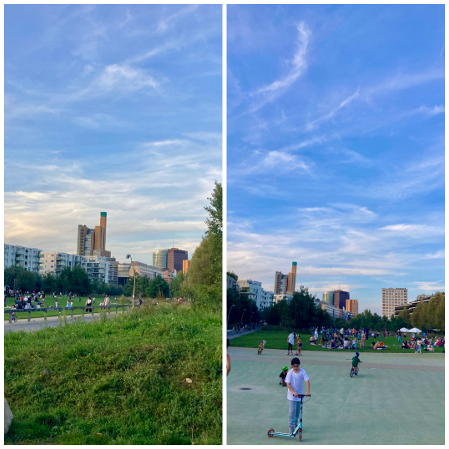
Figure 10Gleisdreieck park as a model of resilient urban design in Berlin: Created on a former railway junction, Gleisdreieck park exemplifies how post-industrial landscapes can be transformed into multifunctional green spaces that absorb heavy rainfall, reduce runoff, and enhance biodiversity. The park's adaptive design – featuring rainwater retention basins, native vegetation, and shaded recreation zones – illustrates how ecological resilience and social inclusivity can be integrated within Berlin's dense urban fabric. (Photo courtesy: Kei Namba.)
7.2 Resilience and climate adaptation
Resilient park design: To address the impact of climate change, parks need to be designed keeping resilience in mind. This involves implementing climate-adaptive features such as green infrastructure, tree planting, and water management systems (Pancewicz, 2021). Creating shaded areas, installing fountains, and incorporating natural elements can help to mitigate heat stress. In Berlin, parks can be envisioned as interconnected green corridors but also facilitate wildlife movement and enhance ecological resilience, even amidst the challenges of an already densely built-up city facing increasing population pressures. Figure 10 illustrates these principles through Gleisdreieck park, where climate-adaptive design transforms a former railway site into a multifunctional landscape resilient to heavy rainfall and urban stressors.
Example 2 – Gleisdreieck park: Gleisdreieck park in Berlin is a key example of resilient park design. It connects several neighbourhoods, addressing inequities in green space distribution and offering accessible green areas for diverse communities. The park's landscape is specifically designed to absorb heavy rainfall, reducing the risk of flash flooding in the area by enhancing local water management systems. In addition to its climate-adaptive features, it serves as an urban oasis that supports recreational activities and promotes biodiversity, while acting as an integral part of the city's green infrastructure network (Csizmadia et al., 2017; Naumann et al., 2018; Zaykova, 2021; Ferrari, 2023).
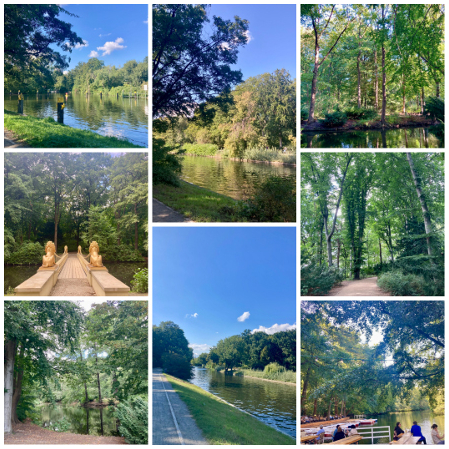
Figure 11The Tiergarten park as a site of community engagement and environmental learning in Berlin: As Berlin's largest and oldest park, the Tiergarten serves as both a biodiversity-rich urban forest and a civic landscape that hosts environmental education programs, cultural festivals, and eco-friendly public events. Its extensive green corridors, monuments, and open spaces provide opportunities for experiential learning and collective stewardship, exemplifying how heritage parks can support sustainability goals through community participation. (Photo courtesy: Kei Namba.)
7.3 Promoting sustainability through community engagement
Environmental education: Community-based sustainability programmes within urban parks involve the offer of environmental education and of awareness initiatives. These programs can educate residents about the importance of urban biodiversity, sustainable land management, and climate change resilience. Teaching people how they can contribute to park sustainability, such as through responsible waste management or wildlife protection, fosters a sense of stewardship.
Eco-friendly events: parks can host eco-friendly events that promote sustainable practices, such as zero-waste festivals or environmental workshops. Encouraging event organizers to adopt sustainable policies, reduce resource consumption, and minimize waste generation aligns these spaces with broader sustainability goals.
Example 3 – Tiergarten park: The Tiergarten park exemplifies sustainable community programming. It offers educational opportunities for residents and visitors, including wildlife observation and environmental education activities. The park also hosts eco-friendly events that promote sustainability and responsible resource management, aligning with the city's commitment to a greener future (Zefkili, 2011; Lachmund, 2013; Skandrani and Prévot, 2015; Bartoli and Heyden, 2017). Figure 11 illustrates the Tiergarten park as a space where environmental education, eco-friendly events, and everyday recreation converge, highlighting its role in fostering public awareness and community participation in sustainability.
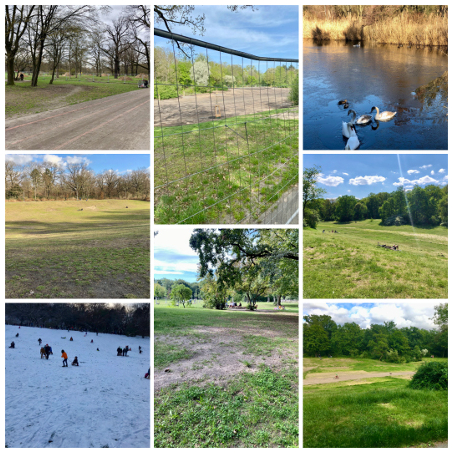
Figure 12Hasenheide park as a socially inclusive urban green space in Berlin: Located in the diverse district of Neukölln, Hasenheide park embodies the intersection of environmental quality and social equity. As surrounding areas experience rapid gentrification, the park remains a key recreational and cultural space that supports local diversity through community use and accessible public amenities. Its role in the neighbourhood highlights how urban green spaces, when supported by affordable housing and community benefit frameworks, can foster resilience against socio-spatial displacement. (Photo courtesy: Fabian Becker.)
7.4 Inclusivity in gentrification strategies
Affordable housing provisions: To ensure inclusivity in gentrifying areas near urban parks, city planners can implement affordable housing provisions (Sainburg, 2023). These policies aim to maintain socio-economic diversity in neighbourhoods experiencing gentrification, ensuring that low-income residents can remain in these communities.
Community benefits agreements: Collaborative agreements between developers, the city, and local communities can stipulate those investments in gentrified areas, including park improvements, come with community benefits (Rosen, 2023). These agreements can include the allocation of resources for affordable housing, job opportunities, and accessible green spaces that prioritize the needs of existing residents (Michels and Hindin, 2022).
Example 4 – Hasenheide park: Hasenheide park in Berlin's Neukölln district highlights the importance of affordable housing provisions and community benefits agreements (CBAs) in addressing gentrification (Skandrani and Prévot, 2015; Hardinghaus et al., 2021; Collins et al., 2022). As shown in Fig. 12, Hasenheide park serves as a socially vibrant green space where inclusive planning and equitable access help mitigate the socio-economic pressures of neighbourhood change. Affordable housing policies can maintain socio-economic diversity by enabling long-term residents to stay in gentrifying neighborhoods near urban parks (Kabisch and Haase, 2014). CBAs between developers, the city, and communities ensure investments in parks, like Hasenheide, also fund affordable housing, job opportunities, and accessible green spaces, prioritizing the needs of existing residents (Rigolon et al., 2020; Rigolon and Németh, 2020; Martens et al., 2022).
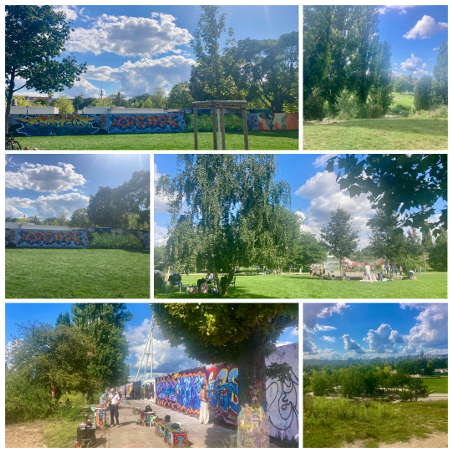
Figure 13Mauerpark as a vibrant “third place” in Berlin's socio-ecological landscape: The park exemplifies how public green spaces function as informal arenas of leisure, cultural exchange, and collective identity in a diverse metropolis. Its open lawns and amphitheatre attract residents and visitors for music, markets, and social interaction, reflecting the park's strong community character. Yet, as with many of Berlin's parks, Mauerpark's role as an inclusive third place is increasingly tested by climate-induced stresses such as heavy rainfall, soil compaction, and maintenance challenges, underscoring the need for adaptive and equitable management strategies. (Photo courtesy: Kei Namba.)
Urban parks serve as quintessential “third places,” offering informal public spaces where individuals gather for leisure, social interaction, and respite from urban life (Oldenburg, 1989). In Berlin, these parks hold particular significance, as they not only contribute to the city's ecological and cultural fabric but also serve as social hubs that bridge the divides between its diverse populations (Jeffres et al., 2009; Purnell, 2015). Figure 13 illustrates these dynamics through Mauerpark, where vibrant community life coexists with increasing environmental pressures, epitomising the dual social and climatic challenges faced by Berlin's parks. However, the function of parks as third places is increasingly compromised by the intensifying impacts of climate change, especially extreme rainfall events. This discussion comprehensively examines the challenges facing Berlin's urban parks, analysing both the environmental and social dimensions of climate change, financial constraints, and inequality in green space access. By integrating these perspectives, the following sections explore potential strategies to enhance the resilience and inclusivity of urban parks in Berlin.
While considering a range of meteorological phenomena, including heat waves and droughts, which are well-documented in literature, this review prioritizes heavy rainfall events due to their unique and significant challenges specific to Berlin's parks. While urban parks provide vital ecosystem services such as climate regulation, flood mitigation, and social well-being, studies like Schwindt et al. (2019) show that extreme rainfall events can overwhelm urban infrastructure, including parks, leading to significant disruptions. Caldas-Alvarez et al. (2022) demonstrate that heavy precipitation in Berlin, such as the June 2017 event, caused substantial economic damage and strained local resources. Unlike other meteorological events, heavy rainfall leads to immediate runoff issues, soil erosion, and infrastructure degradation in parks, as highlighted by Lorenz et al. (2019), who observed storm intensification in urbanized areas of Berlin. The unique interaction between urban environments and precipitation patterns, leading to increased risks from flash floods (heavy rainfall that cannot be managed by surface and sewage system), makes it imperative to prioritize research on rainfall impacts over other weather phenomena, which have already been extensively studied in Berlin's parks (Kabisch and Haase, 2014; Lorenz et al., 2019; Schwindt et al., 2020; Kabisch et al., 2021; Caldas-Alvarez et al., 2022).
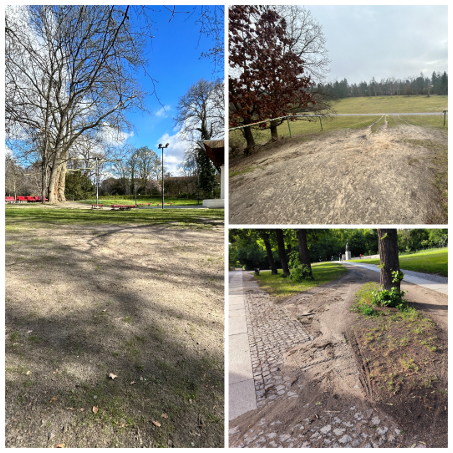
Figure 14Evidence of soil erosion and surface degradation in Berlin's urban parks: Photographs from (a) Stadtpark Steglitz, (b) Fischtalpark and (c) Volkspark Friedrichshain, illustrate the biophysical stresses caused by recurrent heavy rainfall and high visitor pressure. Erosion of topsoil, waterlogging, and compaction reduce infiltration capacity and vegetation resilience, exemplifying the challenges faced by Berlin's parks in maintaining ecological functionality under changing climatic conditions. (Photo courtesy: Ehsan Razipoor and Subham Mukherjee.)
8.1 Heavy rainfall and biophysical disruptions in parks
Berlin's parks are not immune to the escalating frequency and magnitude of heavy rainfall events due to climate change, which imposes significant stress on their biophysical environments. Intense rainfall leads to soil erosion, waterlogging, and increased surface runoff, all of which deteriorate the parks' ecological functions. Soil erosion, in particular, severely impacts the ability of parks to support vegetation, retain water, and provide natural habitats for urban biodiversity (Sarah et al., 2015). As erosion strips away topsoil, the ability of parks to absorb water and facilitate groundwater recharge is compromised, resulting in worsened flood risks and the degradation of green space quality (Kowarik, 2023).
Compaction from frequent foot traffic in popular parks, combined with insufficient vegetation cover, exacerbates these effects by reducing infiltration rates, which intensifies the volume of surface water runoff. This, in turn, not only threatens the ecological integrity of the affected parks but also limits their ability to function as refuges during extreme weather events, such as acting as cooling zones during heatwaves or spaces for respite during periods of heavy rain (Pancewicz, 2021). These disruptions underscore the pressing need for sustainable park design that incorporates climate-adaptive features, particularly in managing water flow and preventing soil degradation (Gill et al., 2007). As shown in Fig. 14, signs of soil erosion, surface runoff, and vegetation loss are evident in several of Berlin's parks, such as, Stadtpark Steglitz, Fischtalpark and Volkspark Friedrichshain, reflecting the cumulative impacts of heavy rainfall events and intensive public use on park soils and vegetation cover.
8.2 Social implications of heavy rainfall in third places
Beyond the biophysical impacts, heavy rainfall events also undermine the social functions of parks as third places. Waterlogged fields, flooded pathways, and damaged infrastructure render parks unusable for extended periods, limiting access to spaces crucial for community engagement, physical activity, and social interaction (Tomczyk et al., 2016). This problem is compounded for vulnerable populations – such as the elderly, low-income residents, and migrant communities – who rely heavily on public parks for recreation and as gathering places, especially in dense urban areas where private green spaces are limited (Kabisch and Haase, 2014).
Various studies document that climate-induced disruptions to park accessibility disproportionately affect these communities, exacerbating social inequalities in cities (Anguelovski et al., 2020). For instance, marginalized groups are more likely to live in areas with fewer high-quality parks, and when heavy rain renders these spaces unusable, their options for outdoor leisure become further restricted (Wüstemann et al., 2017). In this sense, climate change exacerbates not only environmental vulnerabilities but also entrenched social inequities, reinforcing the need for inclusive urban green space planning that addresses both environmental and social dimensions.
8.3 The ecological and social instability: A new reality for urban parks
Heavy rainfall directly challenges the ecological stability of Berlin's parks, which are essential for urban biodiversity and ecosystem services. Climate-driven shifts in precipitation patterns have been shown to alter species composition, with some plant species thriving while others decline due to water saturation or soil nutrient loss (Kowarik, 2023). Such shifts impact the broader urban ecosystem, leading to a reduction in biodiversity and the degradation of ecosystem services, including pollination and natural pest control, which are vital for maintaining healthy park environments (Reynaert et al., 2021).
This ecological instability also diminishes the parks' ability to function as social spaces, which is critical to their role as third places. Flooded and poorly maintained parks discourage their use for social gatherings, thereby weakening community ties. Studies on urban sociology emphasize that parks, as third places, are particularly important in fostering informal social interactions that contribute to social cohesion (Oldenburg, 1989; Purnell, 2019). The more parks are subjected to environmental degradation, the less they can fulfill this role, especially for socio-economically disadvantaged groups who have fewer alternatives for outdoor recreation (Byrne, 2017).
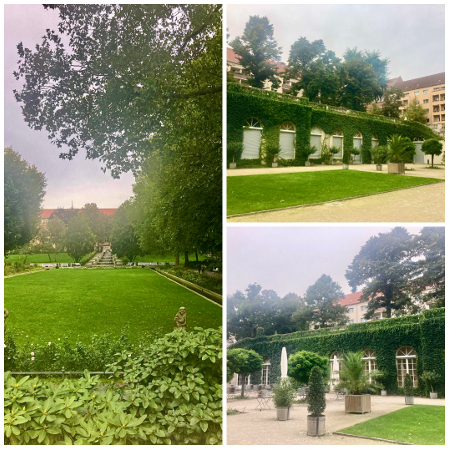
Figure 15Körnerpark as a reinterpreted heritage “third place” in Berlin: Originally created between 1912 and 1916 in a neo-baroque style on the site of a former gravel pit, Körnerpark in Neukölln exemplifies how historical garden design can be adapted to contemporary public needs. Its terraced lawns, fountains, and the Orangerie – now hosting an art gallery and café – create a lively civic space that merges cultural heritage with community interaction. As a reimagined third place, Körnerpark demonstrates how historic landscapes can foster social resilience and inclusivity while preserving ecological and aesthetic value in a dense urban environment. (Photo courtesy: Kei Namba.)
8.4 Redefining urban parks as resilient third places: The role of adaptive strategies
The compounded effects of climate change and social inequities necessitate a rethinking of how Berlin's parks can continue to function as third places under increasingly unpredictable environmental conditions. One critical approach is the integration of adaptive water management systems, such as Sustainable Urban Drainage Systems, which mitigate the impacts of heavy rainfall by controlling runoff and preventing soil erosion (Gill et al., 2007). These systems not only enhance the ecological resilience of parks but also ensure that they remain accessible during extreme weather events, safeguarding their role as social spaces (Masson-Delmotte et al., 2021).
In addition to biophysical solutions, there is a growing need for participatory planning processes that involve local communities in park management and adaptation efforts. Community engagement fosters a sense of ownership and ensures that park designs reflect the needs of diverse user groups, particularly those most affected by climate change (Kurth, 2022). Inclusive park planning that prioritizes climate resilience can help sustain the multifunctionality of parks as both ecological assets and social hubs, thereby enhancing their ability to act as third places even in the face of environmental challenges (Haaland and van den Bosch, 2015).
8.5 Equity in access: Addressing the social dimension of climate resilience
The uneven distribution of green spaces across Berlin's neighborhoods underscores the importance of redistributive green space planning as a strategy for fostering equity in access to parks. Ensuring that all residents – especially those from marginalized communities – have equal access to climate-resilient parks is essential for promoting social equity in the city (Kabisch and Haase, 2014). This can be achieved by targeting investments in green infrastructure toward underserved areas, which often experience the highest climate vulnerabilities (Jeffres et al., 2009; Purnell, 2019).
Equity in access must also be considered when designing adaptive features, such as shaded areas and rain shelters, which can help parks serve as refuges during extreme weather events (Pancewicz, 2021). Without intentional planning that addresses these disparities, the benefits of climate-resilient parks may disproportionately accrue to wealthier neighborhoods, further entrenching social divides.
8.6 Toward sustainable and inclusive third places
Berlin's urban parks are at a critical juncture, where their continued function as third places is threatened by the dual pressures of climate change and social inequities. Heavy rainfall events, in particular, pose significant risks to both the ecological health of these parks and their ability to serve as inclusive social spaces. Addressing these challenges requires a holistic approach that integrates climate-adaptive infrastructure with socially inclusive planning processes. By rethinking the design and management of parks to prioritize resilience and equity, Berlin can ensure that its green spaces remain accessible and functional as third places for all residents, even in an era of increasing environmental unpredictability. Körnerpark illustrates how historical garden landscapes in Berlin can be reinterpreted as accessible cultural and community-oriented public spaces, functioning in many respects as a modern “third place” – that is, a venue beyond home and work where social interaction, cultural expression and shared leisure converge (Fig. 15).
This review article critically examines the state of Berlin's urban parks, situating them within the city's wider green infrastructure but treating parks as the primary lens of analysis. The deliberate focus on parks reflects their prominence as the most multifunctional, accessible, and socially significant form of urban greenery in Berlin. While community gardens, allotments, green roofs, and other green spaces contribute to the city's resilience, this article analyses parks in particular to understand how socio-economic dynamics, governance challenges, and climate-related stressors converge.
Our findings highlight the interplay between socio-economic conditions and climate change in shaping the accessibility, functionality, and resilience of Berlin's parks. Strategies and policy incentives exist – such as the Sponge City Initiative, the Urban Development Plan Climate 2.0, and the Charter for Urban Green – but gaps remain in implementation. More systematic integration of resilience measures and stronger community involvement are needed to translate these frameworks into practice. Equity challenges are also persistent: income and social status influence access and quality, with disadvantaged groups disproportionately exposed to environmental burdens. These disparities underscore the urgency of embedding environmental justice principles into urban park governance.
By systematically synthesising literature across urban planning, environmental science, climate research, social sciences, and public health, this review provides a comprehensive interdisciplinary analysis. While ecological and planning perspectives remain foundational, emerging insights from social sciences and public health demonstrate the importance of equity, health, and well-being in resilience planning. Berlin's case illustrates both opportunities and tensions in managing parks to balance biodiversity conservation, climate adaptation, and social justice
Several research projects confirm the multifunctionality of Berlin's parks for climate mitigation, adaptation, and community well-being. Yet they also demonstrate that parks can reflect and exacerbate socio-economic disparities, particularly through processes of gentrification and uneven access. This synthesis highlights three interlinked priorities for sustainable management: enhancing resilience through climate-adaptive design, reducing socio-spatial inequalities in access and quality, and strengthening civic engagement in planning and stewardship.
Finally, the review points to a forward-looking research agenda. Quantifying the economic and ecological value of ecosystem services remains a complex challenge, requiring advanced interdisciplinary methods. Longitudinal studies are needed to trace biodiversity change, ecosystem services, and park utilisation over time. Partnerships with communities, supported by citizen science and co-produced knowledge, can enrich data collection while fostering stewardship. Future research should therefore integrate robust empirical evidence, inclusive governance, and adaptive design to ensure that Berlin's urban parks remain resilient, equitable, and vibrant in the face of escalating climate and social pressures.
No data sets were used in this article.
SM conceptualized the study and developed the initial framework of the manuscript, with support from KN and KMN. Together, SM, KN, and KMN conducted the systematic review, synthesizing key findings and drafting the manuscript. ER contributed to the visualization of results by creating maps and providing analytical insights. SH and BS critically reviewed and refined the manuscript, ensuring coherence and academic rigor.
At least one of the (co-)authors is a member of the editorial board of Natural Hazards and Earth System Sciences. The peer-review process was guided by an independent editor, and the authors also have no other competing interests to declare.
Publisher's note: Copernicus Publications remains neutral with regard to jurisdictional claims made in the text, published maps, institutional affiliations, or any other geographical representation in this paper. The authors bear the ultimate responsibility for providing appropriate place names. Views expressed in the text are those of the authors and do not necessarily reflect the views of the publisher.
This article is part of the special issue “Current and future water-related risks in the Berlin–Brandenburg region”. It is not associated with a conference.
We would like to express our sincere gratitude to the Einstein Research Unit Climate and Water under Change (CliWaC), a project generously funded by the Berlin Senate, for providing the financial support and collaborative platform that facilitated the research and writing of this review article. Additionally, our heartfelt thanks go to the Berlin University Alliances (BUA) for their invaluable contribution to the development and interdisciplinary approach of this project.
We would also like to acknowledge the professors, postdoctoral researchers, and PhD students whose insightful contributions and thought-provoking discussions have shaped the ideas and refined the arguments presented in this article. Their dedication to the topic and their constructive feedback were instrumental in advancing the research. In particular, we extend our gratitude to our colleague Dr. Lena Masch from the Otto-Suhr-Institut für Politikwissenschaft, Freie Universität Berlin, for her valuable input in shaping the ideas and sources for this article. We also sincerely thank Dr. Tim Moss from Humboldt-Universität zu Berlin for his insightful contributions, particularly in providing a historical and contextual background on Berlin.
The authors express their sincere gratitude to Dr. Asutosh Banerjee and Dr. Fabian Becker for generously sharing their photographs of Berlin's parks and granting permission for their use in this paper, in addition to the authors' own photographic documentation. We also thank Abesh Dasgupta for his valuable assistance in compiling and preparing the photographic materials and image collages that supported the visual documentation of the study.
Finally, we extend a special thanks to Dr. Tobias Otte from Freie Universität Berlin for his immense effort, leadership, and management skills in driving the success of the CliWaC projects. His unwavering motivation, guidance, and continuous support have been crucial to the progression of this research, and we deeply appreciate his commitment to the team and the overall project.
This work was supported by The Einstein Research Unit Climate and Water under Change (CliWaC) and the Freie Universität Berlin (FUB) in the framework of the Open Access Publishing Program.
The article processing charges for this open-access publication were covered by the Freie Universität Berlin.
This paper was edited by Tobias Sauter and reviewed by Thomas Panagopoulos and one anonymous referee.
Abbass, K., Qasim, M. Z., Song, H., Murshed, M., Mahmood, H., and Younis, I.: A review of the global climate change impacts, adaptation, and sustainable mitigation measures, Environ. Sci. Pollut. Res., 29, 42539–42559, https://doi.org/10.1007/s11356-022-19718-6, 2022.
Aerts, R., Honnay, O., and Van Nieuwenhuyse, A.: Biodiversity and human health: mechanisms and evidence of the positive health effects of diversity in nature and green spaces, Br. Med. Bull., 127, 5–22, https://doi.org/10.1093/bmb/ldy021, 2018.
Alexander, K., Hettiarachchi, S., Ou, Y., and Sharma, A.: Can integrated green spaces and storage facilities absorb the increased risk of flooding due to climate change in developed urban environments?, J. Hydrol., 579, 124201, https://doi.org/10.1016/j.jhydrol.2019.124201, 2019.
Ali, L., Haase, A., and Heiland, S.: Gentrification through green regeneration? analysing the interaction between inner-city green space development and neighbourhood change in the context of regrowth: the case of Lene-Voigt-park in Leipzig, eastern Germany, Land, 9, 24, https://doi.org/10.3390/land9010024, 2020.
Alibašić, H.: Sustainability and resilience planning for local governments, Springer International Publishing, Cham, https://doi.org/10.1007/978-3-319-72568-0, 2018.
Alizadeh, B. and Hitchmough, J.: A review of urban landscape adaptation to the challenge of climate change, Int. J. Clim. Change Strat. Manag., 11, 178–194, https://doi.org/10.1108/IJCCSM-02-2018-0015, 2019.
Amorim-Maia, A. T., Anguelovski, I., Connolly, J., and Chu, E.: Seeking refuge? the potential of urban climate shelters to address intersecting vulnerabilities, Landscape Urban Plan., 238, 104836, https://doi.org/10.1016/j.landurbplan.2023.104836, 2023.
Amt für Statistik Berlin-Brandenburg: Statistik Berlin-Brandenburg, https://www.statistik-berlin-brandenburg.de/ (last access: 10 May 2024), 2024.
Angelo, H.: How green became good: urbanized nature and the making of cities and citizens, University of Chicago Press, Chicago, https://doi.org/10.1111/1468-4446.12898, 2021.
Anguelovski, I., Brand, A. L., Connolly, J. J., Corbera, E., Kotsila, P., Steil, J., Garcia-Lamarca, M., Triguero-Mas, M., Cole, H., Baró, F., and Langemeyer, J.: Expanding the boundaries of justice in urban greening scholarship: toward an emancipatory, antisubordination, intersectional, and relational approach, Ann. Am. Assoc. Geogr., 110, 1743–1769, https://doi.org/10.1080/24694452.2020.1740579, 2020.
Ayers, A. C. and Rehan, S. M.: Supporting bees in cities: how bees are influenced by local and landscape features, Insects, 12, 128, https://doi.org/10.3390/insects12020128, 2021.
Baganz, G. F. and Baganz, D.: Compensating for loss of nature and landscape in a growing city – Berlin case study, Land, 12, 567, https://doi.org/10.3390/land12030567, 2023.
Bartoli, S. and Heyden, M.: Metropolitan commons: spatial commoning in Berlin's Großer Tiergarten and Tempelhofer Feld, in: The Social (Re) Production of Architecture, Routledge, London/New York, 191–210, https://doi.org/10.4324/9781315717180, 2017.
Battisti, L., Pille, L., Wachtel, T., Larcher, F., and Säumel, I.: Residential greenery: state of the art and health-related ecosystem services and disservices in the city of Berlin, Sustainability, 11, 1815, https://doi.org/10.3390/su11061815, 2019.
Bernt, M.: How post-socialist is gentrification? observations in East Berlin and Saint Petersburg, Eurasian Geogr. Econ., 57, 565–587, https://doi.org/10.1080/15387216.2016.1259079, 2016.
Bhatnagar, S., Meena, D., and Singh, S.: Effect of climate change on plants and their pollinators: a review, Int. J. Biotech Trends Technol., 9, 34–39, https://doi.org/10.14445/22490183/IJBTT-V9I3P606, 2019.
Blokland, T. and Vief, R.: Making sense of segregation in a well-connected city: the case of Berlin, in: Urban Socio-Economic Segregation and Income Inequality, 249–268, Routledge, London/New York, https://doi.org/10.1007/978-3-030-64569-4_13, 2021.
Brantz, D. and Dümpelmann, S. (Eds.): Greening the city: urban landscapes in the twentieth century, University of Virginia Press, Charlottesville, https://archive.org/search.php?query=external-identifier£"urn£lcp£greeningcityurba0000unse£lcpdf£b4085bfe-98cf-4e58-aa9b-ce2a028ca562" (last access: 10 May 2024), 2011.
Brenck, M., Hansjürgens, B., Schröter-Schlaack, C., Tröger, U., Wessner, A., and Wittmer, H.: Gesellschaftliche Wertigkeit des Tempelhofer Feldes: Qualitäten erfassen und sichtbar machen, UFZ Discussion Paper, 5/2021, Leipzig, https://hdl.handle.net/10419/246582, 2021.
Breuste, J. and Artmann, M.: Multi-functional urban green spaces, in: Making Green Cities, Springer International Publishing, Cham, 399–526, https://doi.org/10.1007/978-3-030-37716-8_7, 2020
Breuste, J. and Breuste, J.: What constitutes urban nature in the green city concept?, in: The Green City: Urban Nature as an Ideal, Provider of Services and Conceptual Urban Design Approach, Springer International Publishing, Cham, 255–314, https://doi.org/10.1007/978-3-662-63976-4_7, 2022.
Byrne, J.: Urban parks, gardens and greenspace, in: The Routledge Handbook of Environmental Justice, Routledge, London/New York, 437–448, https://doi.org/10.4324/9781315678986, 2017.
Caldas-Alvarez, A., Augenstein, M., Ayzel, G., Barfus, K., Cherian, R., Dillenardt, L., Fauer, F., Feldmann, H., Heistermann, M., Karwat, A., Kaspar, F., Kreibich, H., Lucio-Eceiza, E. E., Meredith, E. P., Mohr, S., Niermann, D., Pfahl, S., Ruff, F., Rust, H. W., Schoppa, L., Schwitalla, T., Steidl, S., Thieken, A. H., Tradowsky, J. S., Wulfmeyer, V., and Quaas, J.: Meteorological, impact and climate perspectives of the 29 June 2017 heavy precipitation event in the Berlin metropolitan area, Nat. Hazards Earth Syst. Sci., 22, 3701–3724, https://doi.org/10.5194/nhess-22-3701-2022, 2022.
Carboni, M., Livingstone, S. W., Isaac, M. E., and Cadotte, M. W.: Invasion drives plant diversity loss through competition and ecosystem modification, J. Ecol., 109, 3587–3601, https://doi.org/10.1111/1365-2745.13739, 2021.
Castán Broto, V. and Neves Alves, S.: Intersectionality challenges for the co-production of urban services: notes for a theoretical and methodological agenda, Environ. Urban., 30, 367–386, https://doi.org/10.1177/0956247818790208, 2018.
Chen, S., Haase, D., Xue, B., Wellmann, T., and Qureshi, S.: Integrating quantity and quality to assess urban green space improvement in the compact city, Land, 10, 1367, https://doi.org/10.3390/land10121367, 2021.
Climate Analytics: Hitzestress und Anpassungsmaßnahmen in der Metropolregion Berlin-Brandenburg, Climate Change Center Berlin Brandenburg, https://ca1-clm.edcdn.com/assets/Berlin-Bericht-final.pdf?v=1706627809 (last access: 24 June 2024), 2024.
Cohen, D. A., Han, B., Park, S., Williamson, S., and Derose, K. P.: Park use and park-based physical activity in low-income neighborhoods, J. Aging Phys. Act., 27, 334–342, https://doi.org/10.1123/japa.2018-0032, 2019.
Colding, J., Barthel, S., Bendt, P., Snep, R., Van der Knaap, W., and Ernstson, H.: Urban green commons: Insights on urban common property systems, Global Environmental Change, 23, 1039–1051 , https://doi.org/10.1016/j.gloenvcha.2013.05.006, 2013.
Collins, C., Haase, D., Heiland, S., and Kabisch, N.: Urban green space interaction and wellbeing: investigating the experience of international students in Berlin during the first COVID-19 lockdown, Urban For. Urban Green., 70, 127543, https://doi.org/10.1016/j.ufug.2022.127543, 2022.
Csizmadia, D., Säumel, I., Pille, L., Szilágyi, K., and Balogh, P. I.: Water sensitive design potentials in Paris, Berlin, and Budapest revisited, Czas. Tech., 1, 113–123, https://doi.org/10.4467/2353737XCT.17.009.6106, 2017.
Czaja, M., Kołton, A., and Muras, P.: The complex issue of urban trees–stress factor accumulation and ecological service possibilities, Forests, 11, 932, https://doi.org/10.3390/f11090932, 2020.
Davis, K.: Intersectionality as critical methodology, in: Writing Academic Texts Differently: Intersectional Feminist Methodologies and the Playful Art of Writing, Routledge, London/New York, 17–29, https://doi.org/10.4324/9781315818566, 2014.
Draus, P., Haase, D., Napieralski, J., Qureshi, S., and Roddy, J.: Lurking in the bushes: informality, illicit activity and transitional green space in Berlin and Detroit, Cult. Geogr., 28, 319–339, https://doi.org/10.1177/1474474020948876, 2021.
Draus, P., Haase, D., Napieralski, J., Sparks, A., Qureshi, S., and Roddy, J.: Wastelands, greenways and gentrification: introducing a comparative framework with a focus on Detroit, USA, Sustainability, 12, 6189, https://doi.org/10.3390/su12156189, 2020.
DWD: Klima und Umwelt, Klimaüberwachung, Zeitreihen und Trends, https://www.dwd.de/DE/leistungen/zeitreihen/zeitreihen.html (last access: 10 October 2025), 2025.
Dylewski, Ł., Maćkowiak, Ł., and Banaszak-Cibicka, W.: Are all urban green spaces a favourable habitat for pollinator communities? bees, butterflies and hoverflies in different urban green areas, Ecol. Entomol., 44, 678–689, https://doi.org/10.1111/een.12744, 2019.
Eckstein, D., Künzel, V., and Schäfer, L.: The global climate risk index 2021, Germanwatch, Bonn, ISBN 978-3-943704-77-8, 2021.
Edwards, A. R.: The sustainability revolution: portrait of a paradigm shift, New Society Publishers, Gabriola Island, ISBN 0-86571-531-9, 2005.
Fenner, D., Holtmann, A., Krug, A., and Scherer, D.: Heat waves in Berlin and Potsdam, Germany: long-term trends and comparison of heat wave definitions from 1893 to 2017, Int. J. Climatol., 39, 2422–2437, https://doi.org/10.1002/joc.5953, 2019.
Ferrari, E.: Along the western margin of Park am Gleisdreieck, an urban hybrid environment, Environ. Hist., 29, 467–475, https://doi.org/10.3197/096734023X16945097374236, 2023.
FIS-Broker: Berlin geodata portal, https://fbinter.stadt-berlin.de/fb/index.jsp (last access: 10 May 2024), 2024.
Fontaine, M.: Corporate social responsibility and sustainability: the new bottom line?, Int. J. Bus. Soc. Sci., 4, 1–8, https://doi.org/10.30845/ijbss, 2013.
Fryd, O., Pauleit, S., and Bühler, O.: The role of urban green space and trees in relation to climate change, CABI Rev., 1–18, https://doi.org/10.1079/PAVSNNR20116053, 2012.
Gabriel, K. M. and Endlicher, W. R.: Urban and rural mortality rates during heat waves in Berlin and Brandenburg, Germany, Environ. Pollut., 159, 2044–2050, https://doi.org/10.1016/j.envpol.2011.01.016, 2011.
Gandy, M.: The fabric of space: water, modernity, and the urban imagination, MIT Press, Cambridge, MA, https://doi.org/10.7551/mitpress/8313.001.0001, 2014.
Gérard, M., Vanderplanck, M., Wood, T., and Michez, D.: Global warming and plant–pollinator mismatches, Emerg. Top. Life Sci., 4, 77–86, https://doi.org/10.1042/ETLS20190139, 2020.
Gill, S. E., Handley, J. F., Ennos, A. R., and Pauleit, S.: Adapting cities for climate change: the role of the green infrastructure, Built Environ., 33, 115–133, https://doi.org/10.2148/benv.33.1.115, 2007.
Gonçalves, P., Grilo, F., Mendes, R. C., Vierikko, K., Elands, B., Marques, T. A., and Santos-Reis, M.: What's biodiversity got to do with it? perceptions of biodiversity and restorativeness in urban parks, Ecol. Soc., 26, 1–12, https://doi.org/10.5751/ ES-12598-260325, 2021.
Green, O. O., Garmestani, A. S., Albro, S., Ban, N. C., Berland, A., Burkman, C. E., Gardiner, M. M., Gunderson, L., Hopton, M. E., Schoon, M. L., and Shuster, W. D.: Adaptive governance to promote ecosystem services in urban green spaces, Urban Ecosyst., 19, 77–93, https://doi.org/10.1007/s11252-015-0476-2, 2016.
Haaland, C. and van den Bosch, C. K.: Challenges and strategies for urban green-space planning in cities undergoing densification: a review, Urban For. Urban Green., 14, 760–771, https://doi.org/10.1016/j.ufug.2015.07.009, 2015.
Hardinghaus, M., Wolf, C., and Cyganski, R.: Case studies of new urban planning policy: effects of redesigning and redistributing public space in Europe, https://elib.dlr.de/143827/1/215_Hardinghaus_ICTR21.pdf (last access: 10 October 2025), 2021.
Hazelton, P. and Murphy, B.: Understanding soils in urban environments, CSIRO Publishing, Clayton, https://doi.org/10.1079/9781789249934.0000, 2021.
Hettiarachchi, S., Wasko, C., and Sharma, A.: Increase in flood risk resulting from climate change in a developed urban watershed – the role of storm temporal patterns, Hydrol. Earth Syst. Sci., 22, 2041–2056, https://doi.org/10.5194/hess-22-2041-2018, 2018.
Heydari, M., Omidipour, R., and Greenlee, J.: Biodiversity: a review of the concept, measurement, opportunities, and challenges, J. Wildl. Biodivers., 4, 26–39, https://doi.org/10.22120/jwb.2020.123209.1124, 2020.
Hsiung, A. C., Boyle, W. A., Cooper, R. J., and Chandler, R. B.: Altitudinal migration: ecological drivers, knowledge gaps, and conservation implications, Biol. Rev., 93, 2049–2070, https://doi.org/10.1111/brv.12435, 2018.
IPCC: Glossary of terms, in: Managing the Risks of Extreme Events and Disasters to Advance Climate Change Adaptation, Cambridge University Press, Cambridge and New York, 555–564, https://archive.ipcc.ch/pdf/special-reports/srex/SREX-Annex_Glossary.pdf (last access: 10 March 2026), 2012.
IPCC: IPCC AR6 risk management framework and definitions: guidance for IPCC authors, Intergovernmental Panel on Climate Change, Geneva, https://www.ipcc.ch/site/assets/uploads/2021/02/Risk-guidance-FINAL_15Feb2021.pdf (last access: 10 October 2025), 2021.
Irfeey, A. M. M., Chau, H. W., Sumaiya, M. M. F., Wai, C. Y., Muttil, N., and Jamei, E.: Sustainable mitigation strategies for urban heat island effects in urban areas, Sustainability, 15, 10767, https://doi.org/10.3390/su151410767, 2023.
Jansson, Å.: Reaching for a sustainable, resilient urban future using the lens of ecosystem services, Ecol. Econ., 86, 285–291, https://doi.org/10.1016/j.ecolecon.2012.06.013, 2013.
Jeffres, L. W., Bracken, C. C., Jian, G., and Casey, M. F.: The impact of third places on community quality of life, Appl. Res. Qual. Life, 4, 333–345, https://doi.org/10.1007/s11482-009-9084-8, 2009.
Kabisch, N. and Haase, D.: Green justice or just green? provision of urban green spaces in Berlin, Germany, Landsc. Urban Plan., 122, 129–139, https://doi.org/10.1016/j.landurbplan.2013.11.016, 2014.
Kabisch, N., Kraemer, R., Masztalerz, O., Hemmerling, J., Püffel, C., and Haase, D.: Impact of summer heat on urban park visitation, perceived health and ecosystem service appreciation, Urban For. Urban Green., 60, 127058, https://doi.org/10.1016/j.ufug.2021.127058, 2021.
Karaye, I., Stone, K. W., Casillas, G. A., Newman, G., and Horney, J. A.: A spatial analysis of possible environmental exposures in recreational areas impacted by Hurricane Harvey flooding, Harris County, Texas, Environ. Manage., 64, 381–390, https://doi.org/10.1007/s00267-019-01204-4, 2019.
Keeffe, G. and Han, Q.: Mapping the flow of forest migration through the city under climate change, Urban Plan., 4, 139–151, https://doi.org/10.17645/up.v4i1.1753, 2019.
Koleček, J., Adamík, P., and Reif, J.: Shifts in migration phenology under climate change: temperature vs. abundance effects in birds, Clim. Change, 159, 177–194, https://doi.org/10.1007/s10584-020-02668-8, 2020.
Kotsila, P., Anguelovski, I., García-Lamarca, M., and Sekulova, F.: Injustice in urban sustainability: ten core drivers, Taylor & Francis, London, 170 pp., https://doi.org/10.4324/9781003221425, 2023.
Kowarik, I.: The “Green Belt Berlin”: establishing a greenway where the Berlin Wall once stood by integrating ecological, social and cultural approaches, Landsc. Urban Plan., 184, 12–22, https://doi.org/10.1016/j.landurbplan.2018.12.008, 2019.
Kowarik, I.: Urban biodiversity, ecosystems and the city: insights from 50 years of the Berlin School of urban ecology, Landsc. Urban Plan., 240, 104877, https://doi.org/10.1016/j.landurbplan.2023.104877, 2023.
Kowarik, I. and Langer, A.: Vegetation einer Berliner Eisenbahnfläche (Schöneberger Südgelände) im vierten Jahrzehnt der Sukzession, Verh. Bot. Ver. Berlin Brandenburg, 127, 5–43, 1994.
Kraemer, R. and Kabisch, N.: Parks under stress: air temperature regulation of urban green spaces under conditions of drought and summer heat, Front. Environ. Sci., 10, 318, https://doi.org/10.3389/fenvs.2022.849965, 2022.
Kronenberg, J., Haase, A., Łaszkiewicz, E., Antal, A., Baravikova, A., Biernacka, M., Dushkova, D., Filčak, R., Haase, D., Ignatieva, M., and Khmara, Y.: Environmental justice in the context of urban green space availability, accessibility, and attractiveness in postsocialist cities, Cities, 106, 102862, https://doi.org/10.1016/j.cities.2020.102862, 2020.
Kubelka, V., Sandercock, B. K., Székely, T., and Freckleton, R. P.: Animal migration to northern latitudes: environmental changes and increasing threats, Trends Ecol. Evol., 37, 30–41, https://doi.org/10.1016/j.tree.2021.08.010, 2022.
Kuhlemann, L., Tetzlaff, D., and Soulsby, C.: Urban water systems under climate stress: an isotopic perspective from Berlin, Germany, Hydrol. Process., 34, 3758–3776, https://doi.org/10.1002/hyp.13850, 2020.
Kurth, D.: City models and preventive planning strategies for resilient cities in Germany, Urban Plan., 7, 90–95, https://doi.org/10.17645/up.v7i4.5803, 2022.
Lachmund, J.: Greening Berlin: the co-production of science, politics, and urban nature, MIT Press, Cambridge, MA, https://doi.org/10.7551/mitpress/9159.001.0001, 2013.
Langer, I., Fakharizadehshirazi, E., and Werner, J.: Spatial variation of physiologically equivalent temperature in different local climate zones of a large city during a hot spell, Meteorol. Z., 30, 115–125, https://doi.org/10.17169/refubium-30928, 2021.
Lehmann, S.: Can rapid urbanisation ever lead to low carbon cities? the case of Shanghai in comparison to Potsdamer Platz Berlin, Sustain. Cities Soc., 3, 1–12, https://doi.org/10.1016/j.scs.2011.08.001, 2012.
Lehmann, S.: Growing biodiverse urban futures: renaturalization and rewilding as strategies to strengthen urban resilience, Sustainability, 13, 2932, https://doi.org/10.3390/su13052932, 2021.
Li, M. (Ed.): Large-scale urban parks on post-industrial sites in contemporary urban landscape conceptions, MDPI, Basel, https://doi.org/10.3390/books978-3-0365-5559-1, 2023.
Lindley, L. M., Nagoshi, J. L., Nagoshi, C. T., Hess, R. III, and Boscia, A.: An eco-developmental framework on the intersectionality of gender and sexual identities in transgender individuals, Psychol. Sex., 12, 261–278, https://doi.org/10.1080/19419899.2020.1713873, 2021.
Lo, A. Y., Jim, C. Y., Cheung, P. K., Wong, G. K., and Cheung, L. T.: Space poverty driving heat stress vulnerability and the adaptive strategy of visiting urban parks, Cities, 127, 103740, https://doi.org/10.1016/j.cities.2022.103740, 2022.
Lorenz, J. M., Kronenberg, R., Bernhofer, C., and Niyogi, D.: Urban rainfall modification: Observational climatology over Berlin, Germany, Journal of Geophysical Research: Atmospheres, 124, 731–746, https://doi.org/10.1029/2018JD028858, 2019.
Marando, F., Heris, M. P., Zulian, G., Udías, A., Mentaschi, L., Chrysoulakis, N., Parastatidis, D., and Maes, J.: Urban heat island mitigation by green infrastructure in European functional urban areas, Sustain. Cities Soc., 77, 103564, https://doi.org/10.1016/j.scs.2021.103564, 2022.
Marshman, J., Blay-Palmer, A., and Landman, K.: Anthropocene crisis: climate change, pollinators, and food security, Environ., 6, 22, https://doi.org/10.3390/environments6020022, 2019.
Martens, D., Öztürk, Ö., Rindt, L., Twarok, J., Steinhardt, U., and Molitor, H.: Supporting biodiversity: structures of participatory actions in urban green spaces, Front. Sustain. Cities, 4, 952790, https://doi.org/10.3389/frsc.2022.952790, 2022.
Mashwani, Z. U. R.: Environment, climate change and biodiversity, in: Environment, Climate, Plant and Vegetation Growth, Springer, Cham, 473–501, https://doi.org/10.1007/978-3-030-49732-3_19, 2020.
Masson-Delmotte, V. P., Zhai, P., Pirani, S. L., Connors, C., Péan, S., Berger, N., Caud, Y., Chen, L., Goldfarb, M. I., and Scheel Monteiro, P. M.: Summary for policymakers, in: Climate Change 2021: The Physical Science Basis, Contribution of Working Group I to the Sixth Assessment Report of the IPCC, Cambridge University Press, Cambridge and New York, 1–41, https://doi.org/10.1017/9781009157896.001, 2021.
McKenzie, T. L., Moody, J. S., Carlson, J. A., Lopez, N. V., and Elder, J. P.: Neighborhood income matters: disparities in community recreation facilities, amenities, and programs, J. Park Recreat. Admin., 31, 12–22, https://pmc.ncbi.nlm.nih.gov/articles/PMC4082954/ (last access: 30 October 2025), 2013.
Mehtab, T. and Kamal, M. A.: Investigating the impact of flood on low lying settlements of Delhi, India: a planning perspective, https://en.front-sci.com/index.php/aes/article/view/1249/1379 (last access: 25 January 2024), 2023.
Mexia, T., Vieira, J., Príncipe, A., Anjos, A., Silva, P., Lopes, N., Freitas, C., Santos-Reis, M., Correia, O., Branquinho, C., and Pinho, P.: Ecosystem services: urban parks under a magnifying glass, Environ. Res., 160, 469–478, https://doi.org/10.1016/j.envres.2017.10.023, 2018.
Michels, K. and Hindin, D. A.: Building collaboration among community land trusts providing affordable housing and conservation land trusts protecting land for ecological value, Lincoln Institute of Land Policy, Cambridge, MA, https://ctconservation.org/wp-content/uploads/Building-Collaboration-Hindin-Michels-LincolnInstitute.pdf (last access: 30 October 2025), 2022.
Miller, S.: Greenspace after a disaster: the need to close the gap with recovery for greater resilience, J. Am. Plan. Assoc., 86, 339–348, https://doi.org/10.1080/01944363.2020.1730223, 2020.
Naumann, S., McKenna, D., Röschel, L., and Barton, D. N.: Methodological review and framework: cultural ecosystem services provided by green and blue infrastructure (ENABLE Deliverable 3.0), https://www.ecologic.eu/sites/default/files/publication/2021/2288-Methodological-framework-Review-D3-0-Enable.pdf (last access: 14 December 2025), 2018.
Nissen, K. M. and Ulbrich, U.: Increasing frequencies and changing characteristics of heavy precipitation events threatening infrastructure in Europe under climate change, Nat. Hazards Earth Syst. Sci., 17, 1177–1190, https://doi.org/10.5194/nhess-17-1177-2017, 2017.
Oldenburg, R.: The great good place: cafés, coffee shops, community centers, beauty parlours, general stores, bars, hangouts, and how they get you through the day, Paragon House, New York, https://archive.org/search?query=external-identifier:"urn:lcp:greatgoodplaceca0000olde:lcpdf:2e9d8cc0-dd1c-4040-aa14-3fec2c8f4b97" (last access: 31 March 2026), 1989.
Owens, M. A.: Geopolitical ecologies: tracing the shift from citizen to user at Tempelhof and the Presidio, PhD thesis, University of California, Berkeley, https://escholarship.org/uc/item/40c4g4jn (last access: 10 March 2026), 2018.
Palliwoda, J., Kowarik, I., and Lippe, M.: Human-biodiversity interactions in urban parks: the species level matters, Landsc. Urban Plan., 157, 394–406, https://doi.org/10.1016/j.landurbplan.2016.09.003, 2017.
Panagopoulos, T., Duque, J. A. G., and Dan, M. B.: Urban planning with respect to environmental quality and human well-being, Environ. Pollut., 208, 137–144, https://doi.org/10.1016/j.envpol.2015.07.038, 2016.
Pancewicz, A.: Climate-friendly cities – blue–green infrastructure activities, IOP Conf. Ser. Mater. Sci. Eng., 1203, 022049, https://doi.org/10.1088/1757-899X/1203/2/022049, 2021.
Park, D. S. and Razafindratsima, O. H.: Anthropogenic threats can have cascading homogenizing effects on the phylogenetic and functional diversity of tropical ecosystems, Ecography, 42, 148–161, https://doi.org/10.1111/ecog.03825, 2019.
Parker, J. and Simpson, G. D.: Public green infrastructure contributes to city livability: a systematic quantitative review, Land, 7, 161, https://doi.org/10.3390/land7040161, 2018.
Pegorer, F.: A beautiful place: postmigrant trajectories in and around Berlin's Tempelhofer Feld, Crossings J. Migr. Cult., 14, 53–70, https://doi.org/10.1386/cjmc_00074_1, 2023.
Pukowiec-Kurda, K.: The urban ecosystem services index as a new indicator for sustainable urban planning and human well-being in cities, Ecol. Indic., 144, 109532, https://doi.org/10.1016/j.ecolind.2022.109532, 2022.
Purnell, D.: Expanding Oldenburg: homes as third places, J. Place Manag. Dev., 8, 51–62, https://doi.org/10.1177/1077800418806612, 2015.
Purnell, D.: Public parks: third places or places eliciting moral panic?, Qual. Inq., 25, 531–534, https://doi.org/10.1177/1077800418806612, 2019.
Qiu, J.: Effects of landscape pattern on pollination, pest control, water quality, flood regulation, and cultural ecosystem services: a literature review and future research prospects, Curr. Landsc. Ecol. Rep., 4, 113–124, https://doi.org/10.1007/s40823-019-00045-5, 2019.
Ranzato, M. and Broggini, F.: Adaptive reuse of an operating urban infrastructure: a conversation with raumlabor about the Floating University Berlin, J. Cult. Herit. Manag. Sustain. Dev., 14, 127–136, https://doi.org/10.1108/JCHMSD-04-2023-0040, 2023
Reisinger, A., Howden, M., Vera, C., Garschagen, M., Hurlbert, M., Kreibich, H., Mach, K. J., Mintenbeck, K., O'Neill, B., Otto, F., Pörtner, H. O., and Zommers, Z.: The concept of risk in the IPCC Sixth Assessment Report: a summary of cross-working group discussions, Intergovernmental Panel on Climate Change, Geneva, 130 pp., https://www.ipcc.ch/site/assets/uploads/2021/01/The-concept-of-risk-in-the-IPCC-Sixth-Assessment-Report.pdf (last access: 14 December 2025), 2020.
Renn, O. and Klinke, A.: A framework of adaptive risk governance for urban planning, Sustainability, 5, 2036–2059, https://doi.org/10.3390/su5052036, 2013.
Requier, F., Pérez-Méndez, N., Andersson, G. K., Blareau, E., Merle, I., and Garibaldi, L. A.: Bee and non-bee pollinator importance for local food security, Trends Ecol. Evol., 38, 196–205, https://doi.org/10.1016/j.tree.2022.10.006, 2023.
Reyes-Riveros, R., Altamirano, A., De La Barrera, F., Rozas-Vásquez, D., Vieli, L., and Meli, P.: Linking public urban green spaces and human well-being: a systematic review, Urban For. Urban Green., 61, 127105, https://doi.org/10.1016/j.ufug.2021.127105, 2021.
Reynaert, S., De Boeck, H. J., Verbruggen, E., Verlinden, M., Flowers, N., and Nijs, I.: Risk of short-term biodiversity loss under more persistent precipitation regimes, Glob. Change Biol., 27, 1614–1626, https://doi.org/10.1111/gcb.15501, 2021.
Ricci, L.: Integrated approaches to ecosystem services: linking culture, circular economy and environment through the re-use of open spaces and buildings in Europe, Land, 11, 1161, https://doi.org/10.3390/land11081161, 2022.
Rigolon, A.: A complex landscape of inequity in access to urban parks: a literature review, Landsc. Urban Plan., 153, 160–169, https://doi.org/10.1016/j.landurbplan.2016.05.017, 2016.
Rigolon, A., Keith, S. J., Harris, B., Mullenbach, L. E., Larson, L. R., and Rushing, J.: More than “just green enough”: helping park professionals achieve equitable greening and limit environmental gentrification, J. Park Recreat. Admin., 38, 1–20, https://doi.org/10.18666/JPRA-2019-9654, 2020.
Rocha, E. A. and Fellowes, M. D.: Urbanisation alters ecological interactions: ant mutualists increase and specialist insect predators decrease on an urban gradient, Sci. Rep., 10, 6406, https://doi.org/10.1038/s41598-020-62422-z, 2020.
Rosen, J.: Community benefits: developers, negotiations, and accountability, University of Pennsylvania Press, Philadelphia, https://www.pennpress.org/9781512824131/community-benefits/ (last access: 14 December 2025), 2023.
Rosol, M.: Public participation in post-Fordist urban green space governance: the case of community gardens in Berlin, Int. J. Urban Reg. Res., 34, 548–563, https://doi.org/10.1111/j.1468-2427.2010.00968.x, 2010.
Sainburg, E. I.: How parks and recreation system master plans are addressing displacement in gentrifying cities, Doctoral dissertation, https://doi.org/10.26153/tsw/46179, 2023.
Sander, H. and Weißermel, S.: Urban heat transition in Berlin: corporate strategies, political conflicts, and just solutions, Urban Plan., 8, 361–371, https://doi.org/10.17645/up.v8i1.6178, 2023.
Sarah, P., Zhevelev, H. M., and Atar, O. Z.: Urban park soil and vegetation: effects of natural and anthropogenic factors, Pedosphere, 25, 392–404, https://doi.org/10.1016/S1002-0160(15)30007-2, 2015.
Scherer, D., Fehrenbach, U., Lakes, T., Lauf, S., Meier, F., and Schuster, C.: Quantification of heat-stress related mortality hazard, vulnerability and risk in Berlin, Germany, Die Erde, 144, 238–259, https://doi.org/10.12854/erde-144-17, 2013.
Schwindt, S., Pasternack, G., Bratovich, P., Rabone, G., and Simodynes, D.: Hydro-morphological parameters generate lifespan maps for stream restoration management, UC Davis, https://doi.org/10.1016/j.jenvman.2018.11.010, 2019.
Senatsverwaltung für Mobilität, Verkehr, Klimaschutz und Umwelt (SenMVKU): Environmental Justice Atlas 2023/2024, http://www.berlin.de/sen/mvku (last access: 10 May 2024), 2023.
Shade, C., Kremer, P., Rockwell, J. S., and Henderson, K. G.: The effects of urban development and current green infrastructure policy on future climate change resilience, Ecol. Soc., 25, https://doi.org/10.5751/ES-12076-250437, 2020.
Sheikh, W. T. and van Ameijde, J.: Promoting livability through urban planning: a comprehensive framework based on the theory of human needs, Cities, 131, 103972, https://doi.org/10.1016/j.cities.2022.103972, 2022.
Sikorski, P., Gawryszewska, B., Sikorska, D., Chormański, J., Schwerk, A., Jojczyk, A., Ciężkowski, W., Archiciński, P., Łepkowski, M., Dymitryszyn, I., and Przybysz, A.: The value of doing nothing: how informal green spaces can provide comparable ecosystem services to cultivated urban parks, Ecosyst. Serv., 50, 101339, https://doi.org/10.1016/j.ecoser.2021.101339, 2021.
Skandrani, Z. and Prévot, A. C.: Beyond green-planning political orientations: contrasted public policies and their relevance to nature perceptions in two European capitals, Environ. Sci. Policy, 52, 140–149, https://doi.org/10.1016/j.envsci.2015.04.015, 2015.
Skendžić, S., Zovko, M., Pajač Živković, I., Lešić, V., and Lemić, D.: Effect of climate change on introduced and native agricultural invasive insect pests in Europe, Insects, 12, 985, https://doi.org/10.3390/insects12110985, 2021.
Southon, M. P. and van der Merwe, C. D.: Flooded with risks or opportunities: exploring flooding impacts on tourist accommodation, Afr. J. Hosp. Tour. Leisure, 7, 1–16, https://www.ajhtl.com/uploads/7/1/6/3/7163688/article_36_vol_7__1__2018.pdf (last access: 14 December 2025), 2018.
Spiliotopoulou, M. and Roseland, M.: Urban sustainability: from theory influences to practical agendas, Sustainability, 12, 7245, https://doi.org/10.3390/su12187245, 2020.
Stoetzer, B.: Ruderal ecologies: rethinking nature, migration, and the urban landscape in Berlin, Cult. Anthropol., 33, 295–323, 2018.
Stoetzer, B.: Ruderal City: Ecologies of Migration, Race, and Urban Nature in Berlin, Duke University Press, Durham, https://doi.org/10.14506/ca33.2.09, 2022.
Storch, D., Šímová, I., Smyčka, J., Bohdalková, E., Toszogyova, A., and Okie, J. G.: Biodiversity dynamics in the Anthropocene: how human activities change equilibria of species richness, Ecography, 2022, https://doi.org/10.1111/ecog.05778, 2022.
Tomczyk, A. M., White, P. C., and Ewertowski, M. W.: Effects of extreme natural events on the provision of ecosystem services in a mountain environment: The importance of trail design in delivering system resilience and ecosystem service co-benefits, Journal of Environmental Management, 166, 156–167, https://doi.org/10.1016/j.jenvman.2015.10.016, 2016.
Triguero-Mas, M., Anguelovski, I., Connolly, J., Martin, N., Matheney, A., Cole, H., Pérez-Del-Pulgar, C., García-Lamarca, M., Shokry, G., Argüelles, L., Conesa, D., Gallez, E., Sarzo, B., Beltrán, M., Máñez, J., Martínez-Minaya, J., Oscilowicz, E., Arcaya, M., and Baró, F.: Exploring green gentrification in 28 global North cities: the role of urban parks and other types of greenspaces, Environ. Res. Lett., 17, https://doi.org/10.1088/1748-9326/ac9325, 2022.
Tsoka, S., Tsikaloudaki, K., Theodosiou, T., and Bikas, D.: Urban warming and cities' microclimates: investigation methods and mitigation strategies – a review, Energies, 13, 1414, https://doi.org/10.3390/en13061414, 2020.
van Ham, C. and Klimmek, H.: Partnerships for nature-based solutions in urban areas – showcasing successful examples, in: Nature-Based Solutions to Climate Change Adaptation in Urban Areas: Linkages between Science, Policy and Practice, Springer, Cham, 275–289, https://doi.org/10.1007/978-3-319-56091-5, 2017.
Vargas-Hernández, J. G., Pallagst, K., and Zdunek-Wielgołaska, J.: Urban green spaces as a component of an ecosystem, in: Sustainable Development and Environmental Stewardship: Global Initiatives Towards Engaged Sustainability, Springer, Cham, 165–198, https://doi.org/10.1007/978-3-031-28885-2_8, 2023.
Vieira, J., Matos, P., Mexia, T., Silva, P., Lopes, N., Freitas, C., Correia, O., Santos-Reis, M., Branquinho, C., and Pinho, P.: Green spaces are not all the same for the provision of air purification and climate regulation services: the case of urban parks, Environ. Res., 160, 306–313, https://doi.org/10.1016/j.envres.2017.10.006, 2018.
Wild, T., Fuchs, G., and Davis, M.: Sitting in our own soup? Combined sewers, climate change and nature-based solutions for urban water management in Berlin, Nature-Based Solutions, 5, 100113, https://doi.org/10.1016/j.nbsj.2024.100113, 2024.
Wolch, J. R., Byrne, J., and Newell, J. P.: Urban green space, public health, and environmental justice: the challenge of making cities “just green enough”, Landsc. Urban Plan., 125, 234–244, 2014.
Wolschke-Bulmahn, J. and Clark, R. (Eds.): From Garden Art to Landscape Architecture: Traditions, Re-Evaluations, and Future Perspectives, Akademische Verlagsgemeinschaft München AVM, München, ISBN 978-3-95477-125-7, 2021.
Wüstemann, H., Kalisch, D., and Kolbe, J.: Access to urban green space and environmental inequalities in Germany, Landsc. Urban Plan., 164, 124–131, https://doi.org/10.1016/j.landurbplan.2017.04.002, 2017.
Xing, Y. and Brimblecombe, P.: Role of vegetation in deposition and dispersion of air pollution in urban parks, Atmos. Environ., https://doi.org/10.1016/j.atmosenv.2018.12.027, 2019.
Xu, C., Chen, G., Huang, Q., Su, M., Rong, Q., Yue, W., and Haase, D.: Can improving the spatial equity of urban green space mitigate the effect of urban heat islands? An empirical study, Sci. Total Environ., 841, 156687, https://doi.org/10.1016/j.scitotenv.2022.156687, 2022.
Yildirim, Y., Keshavarzihaghighi, G., and Aman, A. R.: Sustainable responses of an urban park for disaster resilience: a case study of Hurricane Harvey, Int. J. Sustain. Dev. World Ecol., 28, 720–732, https://doi.org/10.1080/13504509.2020.1870249, 2021.
Zaykova, E.: Nature restoration technologies as a tool for urbanisation management, in: E3S Web of Conferences, Vol. 263, EDP Sciences, 05037, https://doi.org/10.1051/e3sconf/202126305037, 2021.
Zefkili, A.: Urban sustainability, orientation theory and adult education infrastructure in the district – a common approach in the case of the Berlin District Centres of Adult Education, https://doi.org/10.14279/depositonce-2982, 2011.
Zipperer, W. C., Northrop, R., and Andreu, M.: Urban development and environmental degradation, Oxford Research Encyclopedia of Environmental Science, Oxford University Press, https://doi.org/10.1093/acrefore/9780199389414.013.97, 2020.
- Abstract
- Introduction
- Study area: Berlin
- Review approach
- Synthesizing key insights from reviewed literature
- Climate change and urban parks: Impacts on Berlin's biophysical systems
- Green spaces, governance, and socio-economic dynamics in urban park management in Berlin
- Examples of sustainability strategies unveiled in Berlin's parks
- Discussion of findings: Urban parks as essential “third places” in Berlin amidst socio-environmental challenges from heavy rainfall events
- Conclusions
- Data availability
- Author contributions
- Competing interests
- Disclaimer
- Special issue statement
- Acknowledgements
- Financial support
- Review statement
- References
- Abstract
- Introduction
- Study area: Berlin
- Review approach
- Synthesizing key insights from reviewed literature
- Climate change and urban parks: Impacts on Berlin's biophysical systems
- Green spaces, governance, and socio-economic dynamics in urban park management in Berlin
- Examples of sustainability strategies unveiled in Berlin's parks
- Discussion of findings: Urban parks as essential “third places” in Berlin amidst socio-environmental challenges from heavy rainfall events
- Conclusions
- Data availability
- Author contributions
- Competing interests
- Disclaimer
- Special issue statement
- Acknowledgements
- Financial support
- Review statement
- References