
Articles | Volume 26, issue 3
https://doi.org/10.5194/nhess-26-1183-2026
© Author(s) 2026. This work is distributed under
the Creative Commons Attribution 4.0 License.
the Creative Commons Attribution 4.0 License.
https://doi.org/10.5194/nhess-26-1183-2026
© Author(s) 2026. This work is distributed under
the Creative Commons Attribution 4.0 License.
the Creative Commons Attribution 4.0 License.
Research article
| 
09 Mar 2026
Research article |
| 09 Mar 2026
| 09 Mar 2026
Identification of hydro-meteorological drivers for forest low greenness events in Europe

Institute of Earth Surface Dynamics, Faculty of Geosciences and Environment, University of Lausanne, Lausanne, Switzerland
Laboratory of Cryospheric Sciences (CRYOS), School of Architecture, Civil and Environmental Engineering (ENAC), École Polytechnique Fédérale de Lausanne (EPFL), Lausanne, Switzerland
Sonia Dupuis
Institute of Geography, University of Bern, Bern, Switzerland
Oeschger Centre for Climate Change Research, University of Bern, Bern, Switzerland
Antoine Guisan
Institute of Earth Surface Dynamics, Faculty of Geosciences and Environment, University of Lausanne, Lausanne, Switzerland
Pascal Vittoz
Institute of Earth Surface Dynamics, Faculty of Geosciences and Environment, University of Lausanne, Lausanne, Switzerland
Daniela I. V. Domeisen
Institute of Earth Surface Dynamics, Faculty of Geosciences and Environment, University of Lausanne, Lausanne, Switzerland
Institute for Atmospheric and Climate Science, ETH Zurich, Zurich, Switzerland
Related authors
Kai Kornuber, Emanuele Bevacqua, Mariana Madruga de Brito, Wiebke S. Jäger, Pauline Rivoire, Cassandra D. W. Rogers, Fabiola Banfi, Fulden Batibeniz, James Carruthers, Carlo de Michele, Silvia de Angeli, Cristina Deidda, Marleen C. de Ruiter, Andreas H. Fink, Henrique M. D. Goulart, Katharina Küpfer, Patrick Ludwig, Douglas Maraun, Gabriele Messori, Shruti Nath, Fiachra O’Loughlin, Joaquim G. Pinto, Benjamin Poschlod, Alexandre M. Ramos, Colin Raymond, Andreia F. S. Ribeiro, Deepti Singh, Laura Suarez Gutierrez, Philip J. Ward, and Christopher J. White
EGUsphere, https://doi.org/10.5194/egusphere-2025-4683, https://doi.org/10.5194/egusphere-2025-4683, 2025
Short summary
Short summary
Impacts from extreme weather events are becoming increasingly severe under global warming, in particular when events occur simultaneously or successively. While these complex event combinations are often difficult to analyse as impact data, early warning schemes or modelling frameworks might not be fit for purpose. In this perspective we reflect on the usability of compound event research to bridge the gap between academic research and real-world applications, by formulating a set of guidelines.
Fabiola Banfi, Emanuele Bevacqua, Pauline Rivoire, Sérgio C. Oliveira, Joaquim G. Pinto, Alexandre M. Ramos, and Carlo De Michele
Nat. Hazards Earth Syst. Sci., 24, 2689–2704, https://doi.org/10.5194/nhess-24-2689-2024, https://doi.org/10.5194/nhess-24-2689-2024, 2024
Short summary
Short summary
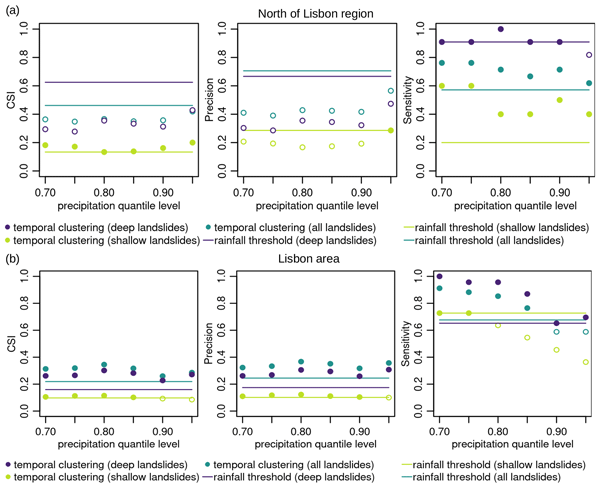
Landslides are complex phenomena causing important impacts in vulnerable areas, and they are often triggered by rainfall. Here, we develop a new approach that uses information on the temporal clustering of rainfall, i.e. multiple events close in time, to detect landslide events and compare it with the use of classical empirical rainfall thresholds, considering as a case study the region of Lisbon, Portugal. The results could help to improve the prediction of rainfall-triggered landslides.
Pauline Rivoire, Olivia Martius, Philippe Naveau, and Alexandre Tuel
Nat. Hazards Earth Syst. Sci., 23, 2857–2871, https://doi.org/10.5194/nhess-23-2857-2023, https://doi.org/10.5194/nhess-23-2857-2023, 2023
Short summary
Short summary
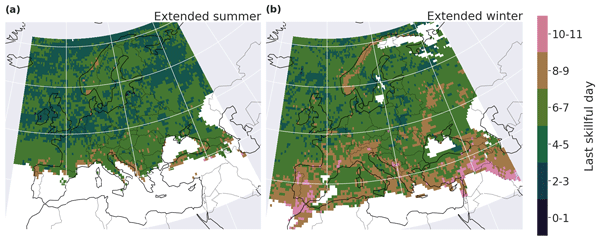
Heavy precipitation can lead to floods and landslides, resulting in widespread damage and significant casualties. Some of its impacts can be mitigated if reliable forecasts and warnings are available. In this article, we assess the capacity of the precipitation forecast provided by ECMWF to predict heavy precipitation events on a subseasonal-to-seasonal (S2S) timescale over Europe. We find that the forecast skill of such events is generally higher in winter than in summer.
Jérôme Kopp, Pauline Rivoire, S. Mubashshir Ali, Yannick Barton, and Olivia Martius
Hydrol. Earth Syst. Sci., 25, 5153–5174, https://doi.org/10.5194/hess-25-5153-2021, https://doi.org/10.5194/hess-25-5153-2021, 2021
Short summary
Short summary
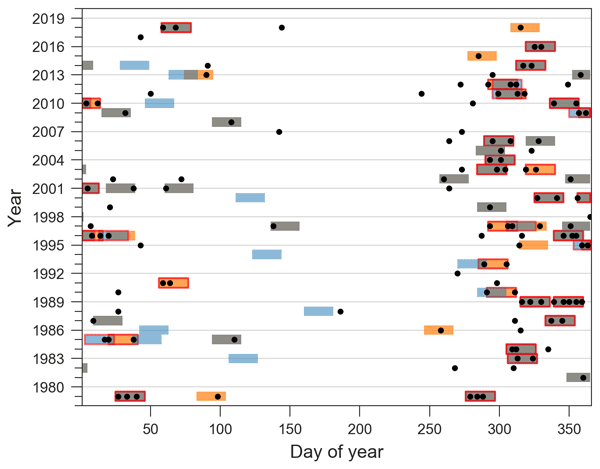
Episodes of extreme rainfall events happening in close temporal succession can lead to floods with dramatic impacts. We developed a novel method to individually identify those episodes and deduced the regions where they occur frequently and where their impact is substantial. Those regions are the east and northeast of the Asian continent, central Canada and the south of California, Afghanistan, Pakistan, the southwest of the Iberian Peninsula, and north of Argentina and south of Bolivia.
Andries-Jan de Vries, Steven B. Feldstein, Jake W. Casselman, Georgios Fragkoulidis, Jos Lelieveld, and Daniela I. V. Domeisen
Weather Clim. Dynam., 7, 1479–1505, https://doi.org/10.5194/wcd-7-1479-2026, https://doi.org/10.5194/wcd-7-1479-2026, 2026
Short summary
Short summary
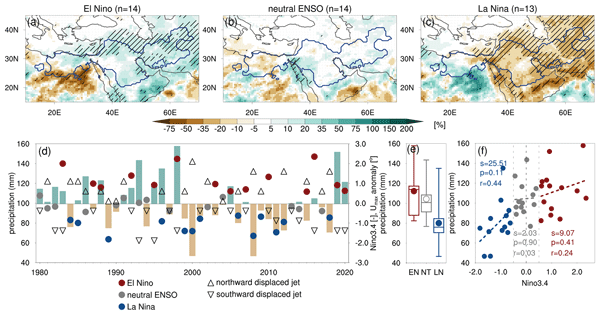
Precipitation in the arid Middle East experiences large yearly variation with direct relevance to drought and flooding. This study quantifies the influence of El Niño-Southern Oscillation on Middle East precipitation variability at local and regional scales during the cool season. Three mechanisms contribute to precipitation anomalies: a meridional shift in the subtropical jet, a barotropic Rossby wave response in the extratropics, and a baroclinic response in the regional tropical circulation.
Liping Wang, Gang Chen, Xiuyuan Ding, Haijun Yang, and Daniela I. V. Domeisen
EGUsphere, https://doi.org/10.5194/egusphere-2026-4150, https://doi.org/10.5194/egusphere-2026-4150, 2026
This preprint is open for discussion and under review for Weather and Climate Dynamics (WCD).
Short summary
Short summary
We investigate low-frequency Northern Hemisphere stratospheric variability using reanalysis and three multi-century climate model simulations. We identify an intermittent oscillation with a period of about 15 years. This signal is closely connected to the surface North Atlantic Oscillation and tends to precede it, whereas its link to North Pacific circulation is weaker. These results help improve our understanding of stratosphere-surface coupling on multi-year to multi-decadal timescales.
Romain Pilon, Andries Jan De Vries, and Daniela I. V. Domeisen
Weather Clim. Dynam., 7, 857–872, https://doi.org/10.5194/wcd-7-857-2026, https://doi.org/10.5194/wcd-7-857-2026, 2026
Short summary
Short summary
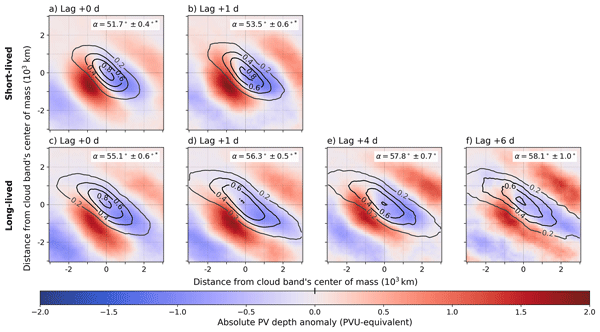
South Pacific cloud bands are vital rain sources. Using historical weather data, we investigated how atmospheric waves from the midlatitudes shape these cloud bands. We found that long-lasting cloud bands require sustained high-altitude waves to continuously steer tropical moisture southward. These persistent events occur strictly during the summer. Understanding this dynamic link is essential for improving climate models and predicting how regional rainfall patterns may change in the future.
Rachel Wai-Ying Wu, Dominik Büeler, Maria Pyrina, Jonathan Day, Adel Imamovic, Vincent Humphrey, and Daniela I.V. Domeisen
EGUsphere, https://doi.org/10.5194/egusphere-2026-2465, https://doi.org/10.5194/egusphere-2026-2465, 2026
Short summary
Short summary
Compound heat-drought events threaten health, agriculture, and energy. Using ECMWF sub-seasonal hindcasts, we find that physical coupling increases forecast skill by ~10 % relative to assuming event independence. However, skill drops significantly where land-atmosphere interactions – namely soil moisture feedbacks – are misrepresented. We identify European regions where these forecasts are most reliable and highlight physical biases as the primary barrier to accuracy elsewhere.
Lara C. Mercier, Hilla Afargan-Gerstman, Matthew D. K. Priestley, Jens H. Christensen, and Daniela I. V. Domeisen
EGUsphere, https://doi.org/10.5194/egusphere-2026-1805, https://doi.org/10.5194/egusphere-2026-1805, 2026
Preprint archived
Short summary
Short summary
The study examines how extreme extratropical cyclones in the North Atlantic will change in a warming climate using historical and future projections of CMIP6 models. It shows that while near-surface temperature gradients are weakening, increased moisture is likely to make future storms more intense, suggesting a shift toward moisture-driven dynamics. Our findings provide new insights for improving long-term climate adaptation and risk management for high-impact weather in the midlatitudes.
Mélanie Coleman, Andries-Jan de Vries, Caroline Roberts, and Daniela I. V. Domeisen
EGUsphere, https://doi.org/10.5194/egusphere-2026-1827, https://doi.org/10.5194/egusphere-2026-1827, 2026
Short summary
Short summary
This study compares flood impacts between countries in the European Union (EU) and in the Middle East and North Africa (MENA). We find that floods cause four times more fatalities in the MENA region, while they inflict more economic losses in the EU. By comparing recorded impacts and survey data available in the EU only, we find that the population overestimates flood risk in northern EU countries but underestimates it in southern EU countries relative to other natural hazards.
Camille Rieder, Eric P. Verrecchia, Saskia Bindschedler, Guillaume Cailleau, Aviram Rozin, Munisamy Anbarashan, Shubhendu Dasgupta, Thomas Junier, Nicolas Roeschli, Pascal Vittoz, and Mike C. Rowley
Biogeosciences, 22, 6979–6999, https://doi.org/10.5194/bg-22-6979-2025, https://doi.org/10.5194/bg-22-6979-2025, 2025
Short summary
Short summary
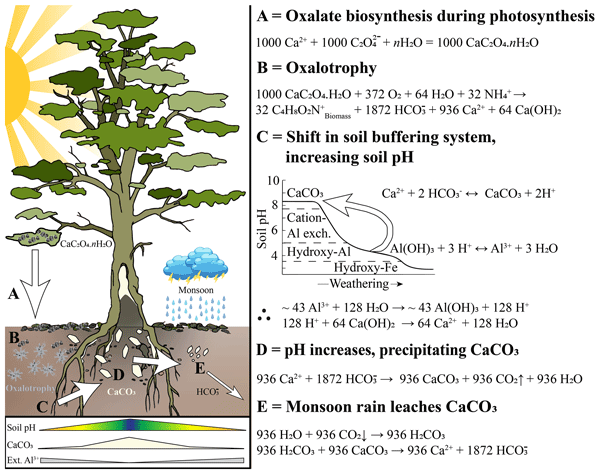
The oxalate-carbonate pathway, where trees and microbes store inorganic carbon as minerals, was studied on four tree species of the threatened tropical dry evergreen forest Indian forest. We used high-throughput sequencing of a gene to detect oxalate-degrading microbes. For all tree species, produced oxalate led to carbonate formation in soils and on wood. This carbon may be leached into water, suggesting a hidden source of inorganic carbon with implications for climate and conservation.
Kai Kornuber, Emanuele Bevacqua, Mariana Madruga de Brito, Wiebke S. Jäger, Pauline Rivoire, Cassandra D. W. Rogers, Fabiola Banfi, Fulden Batibeniz, James Carruthers, Carlo de Michele, Silvia de Angeli, Cristina Deidda, Marleen C. de Ruiter, Andreas H. Fink, Henrique M. D. Goulart, Katharina Küpfer, Patrick Ludwig, Douglas Maraun, Gabriele Messori, Shruti Nath, Fiachra O’Loughlin, Joaquim G. Pinto, Benjamin Poschlod, Alexandre M. Ramos, Colin Raymond, Andreia F. S. Ribeiro, Deepti Singh, Laura Suarez Gutierrez, Philip J. Ward, and Christopher J. White
EGUsphere, https://doi.org/10.5194/egusphere-2025-4683, https://doi.org/10.5194/egusphere-2025-4683, 2025
Short summary
Short summary
Impacts from extreme weather events are becoming increasingly severe under global warming, in particular when events occur simultaneously or successively. While these complex event combinations are often difficult to analyse as impact data, early warning schemes or modelling frameworks might not be fit for purpose. In this perspective we reflect on the usability of compound event research to bridge the gap between academic research and real-world applications, by formulating a set of guidelines.
Monika Feldmann, Daniela I. V. Domeisen, and Olivia Martius
Weather Clim. Dynam., 6, 1089–1106, https://doi.org/10.5194/wcd-6-1089-2025, https://doi.org/10.5194/wcd-6-1089-2025, 2025
Short summary
Short summary
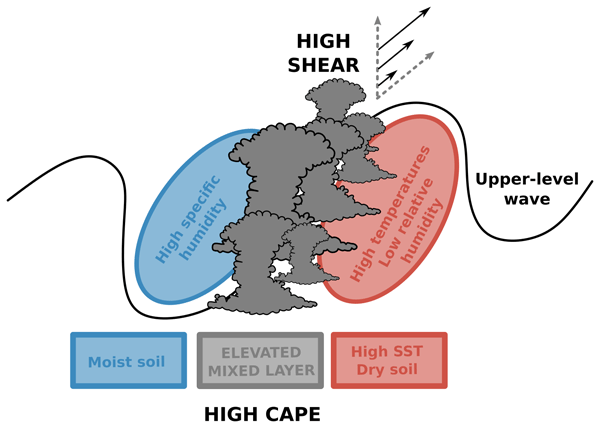
Severe thunderstorm outbreaks are a source of major damage across Europe. Using historical data, we analysed the large-scale weather patterns leading to these outbreaks in eight different regions. Three types of regions emerge: those limited by temperature, those limited by saturation, and those overall favourable for thunderstorms, consistent with their associated weather patterns and the general climate. These findings help explain regional differences and provide a basis for future forecast improvements.
Wolfgang Wicker, Emmanuele Russo, and Daniela I. V. Domeisen
Weather Clim. Dynam., 6, 965–979, https://doi.org/10.5194/wcd-6-965-2025, https://doi.org/10.5194/wcd-6-965-2025, 2025
Short summary
Short summary
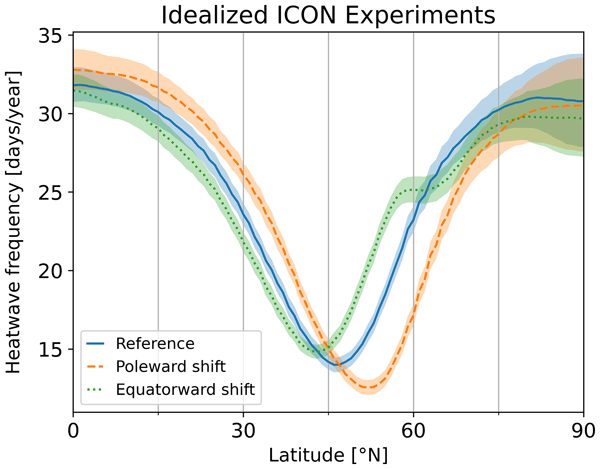
Heatwaves are becoming more frequent, but the contribution by atmospheric circulation changes is unclear. Experiments with an idealized model that simulates atmospheric dynamcis, but excludes clouds, radiation, and moisture, show how a poleward storm track shift increases the eastward phase speed of Rossby waves and reduces mid-latitude heatwave frequency. A comparison with real data for the Southern Hemisphere is attempted.
Annie Y.-Y. Chang, Shaun Harrigan, Maria-Helena Ramos, Massimiliano Zappa, Christian M. Grams, Daniela I. V. Domeisen, and Konrad Bogner
EGUsphere, https://doi.org/10.5194/egusphere-2025-3411, https://doi.org/10.5194/egusphere-2025-3411, 2025
Short summary
Short summary
This study presents a machine learning-aided hybrid forecasting framework to improve early warnings of low flows in the European Alps. It combines weather regime information, streamflow observations, and model simulations (EFAS). Even using only weather regime data improves predictions over climatology, while integrating different data sources yields the best result, emphasizing the value of integrating diverse data sources.
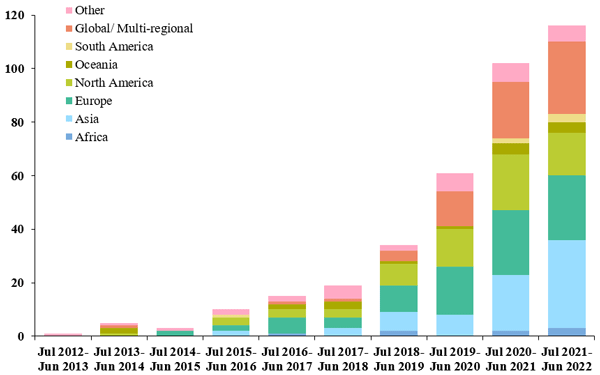
Lou Brett, Christopher J. White, Daniela I. V. Domeisen, Bart van den Hurk, Philip Ward, and Jakob Zscheischler
Nat. Hazards Earth Syst. Sci., 25, 2591–2611, https://doi.org/10.5194/nhess-25-2591-2025, https://doi.org/10.5194/nhess-25-2591-2025, 2025
Short summary
Short summary
Compound events, where multiple weather or climate hazards occur together, pose significant risks to both society and the environment. These events, like simultaneous wind and rain, can have more severe impacts than single hazards. Our review of compound event research from 2012–2022 reveals a rise in studies, especially on events that occur concurrently, hot and dry events, and compounding flooding. The review also highlights opportunities for research in the coming years.
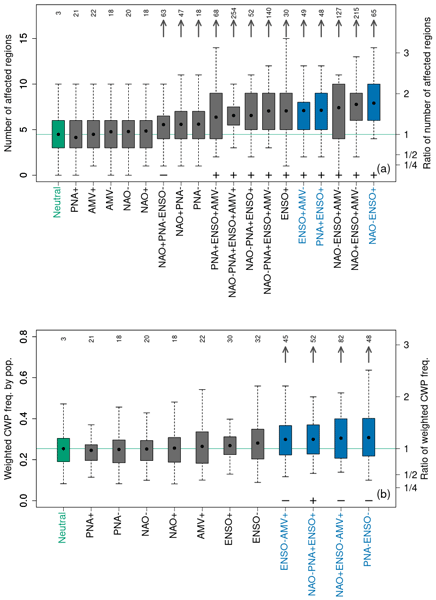
Bastien François, Khalil Teber, Lou Brett, Richard Leeding, Luis Gimeno-Sotelo, Daniela I. V. Domeisen, Laura Suarez-Gutierrez, and Emanuele Bevacqua
Earth Syst. Dynam., 16, 1029–1051, https://doi.org/10.5194/esd-16-1029-2025, https://doi.org/10.5194/esd-16-1029-2025, 2025
Short summary
Short summary
Spatially compounding wind and precipitation (CWP) extremes can lead to severe impacts on society. We find that concurrent climate variability modes favor the occurrence of such wintertime spatially compounding events in the Northern Hemisphere and can even amplify the number of regions and population exposed. Our analysis highlights the importance of considering the interplay between variability modes to improve risk management of such spatially compounding events.
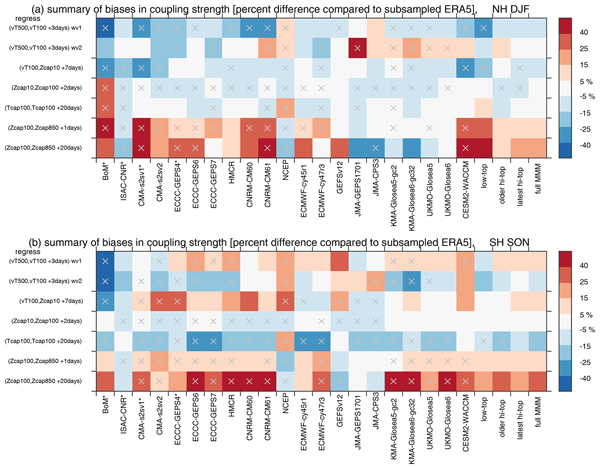
Chaim I. Garfinkel, Zachary D. Lawrence, Amy H. Butler, Etienne Dunn-Sigouin, Irene Erner, Alexey Y. Karpechko, Gerbrand Koren, Marta Abalos, Blanca Ayarzagüena, David Barriopedro, Natalia Calvo, Alvaro de la Cámara, Andrew Charlton-Perez, Judah Cohen, Daniela I. V. Domeisen, Javier García-Serrano, Neil P. Hindley, Martin Jucker, Hera Kim, Robert W. Lee, Simon H. Lee, Marisol Osman, Froila M. Palmeiro, Inna Polichtchouk, Jian Rao, Jadwiga H. Richter, Chen Schwartz, Seok-Woo Son, Masakazu Taguchi, Nicholas L. Tyrrell, Corwin J. Wright, and Rachel W.-Y. Wu
Weather Clim. Dynam., 6, 171–195, https://doi.org/10.5194/wcd-6-171-2025, https://doi.org/10.5194/wcd-6-171-2025, 2025
Short summary
Short summary
Variability in the extratropical stratosphere and troposphere is coupled, and because of the longer timescales characteristic of the stratosphere, this allows for a window of opportunity for surface prediction. This paper assesses whether models used for operational prediction capture these coupling processes accurately. We find that most processes are too weak; however downward coupling from the lower stratosphere to the near surface is too strong.
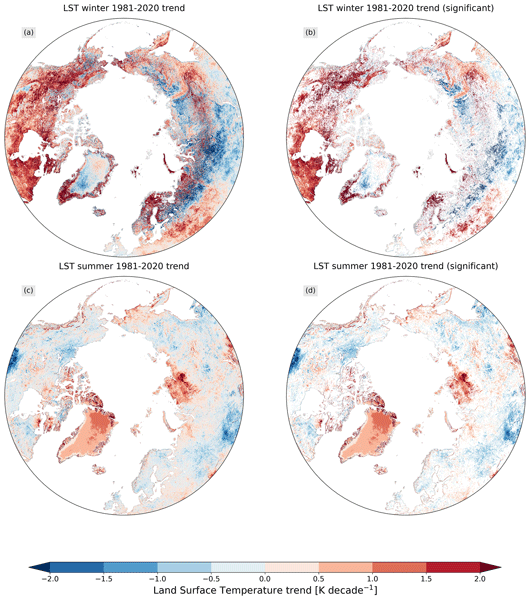
Sonia Dupuis, Frank-Michael Göttsche, and Stefan Wunderle
The Cryosphere, 18, 6027–6059, https://doi.org/10.5194/tc-18-6027-2024, https://doi.org/10.5194/tc-18-6027-2024, 2024
Short summary
Short summary
The Arctic has experienced pronounced warming the last few decades. This warming threatens ecosystems, vegetation dynamics, snow cover duration, and permafrost. Traditional monitoring methods like stations and climate models lack the detail needed. Land surface temperature (LST) data derived from satellites offer high spatial and temporal coverage, perfect for studying changes in the Arctic. In particular, LST information from AVHRR provides a 40-year record, valuable for analysing trends.
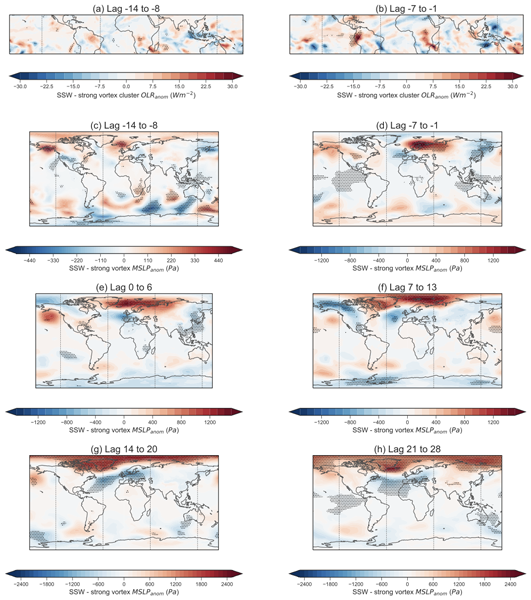
Rachel W.-Y. Wu, Gabriel Chiodo, Inna Polichtchouk, and Daniela I. V. Domeisen
Atmos. Chem. Phys., 24, 12259–12275, https://doi.org/10.5194/acp-24-12259-2024, https://doi.org/10.5194/acp-24-12259-2024, 2024
Short summary
Short summary
Strong variations in the strength of the stratospheric polar vortex can profoundly affect surface weather extremes; therefore, accurately predicting the stratosphere can improve surface weather forecasts. The research reveals how uncertainty in the stratosphere is linked to the troposphere. The findings suggest that refining models to better represent the identified sources and impact regions in the troposphere is likely to improve the prediction of the stratosphere and its surface impacts.
Fabiola Banfi, Emanuele Bevacqua, Pauline Rivoire, Sérgio C. Oliveira, Joaquim G. Pinto, Alexandre M. Ramos, and Carlo De Michele
Nat. Hazards Earth Syst. Sci., 24, 2689–2704, https://doi.org/10.5194/nhess-24-2689-2024, https://doi.org/10.5194/nhess-24-2689-2024, 2024
Short summary
Short summary
Landslides are complex phenomena causing important impacts in vulnerable areas, and they are often triggered by rainfall. Here, we develop a new approach that uses information on the temporal clustering of rainfall, i.e. multiple events close in time, to detect landslide events and compare it with the use of classical empirical rainfall thresholds, considering as a case study the region of Lisbon, Portugal. The results could help to improve the prediction of rainfall-triggered landslides.
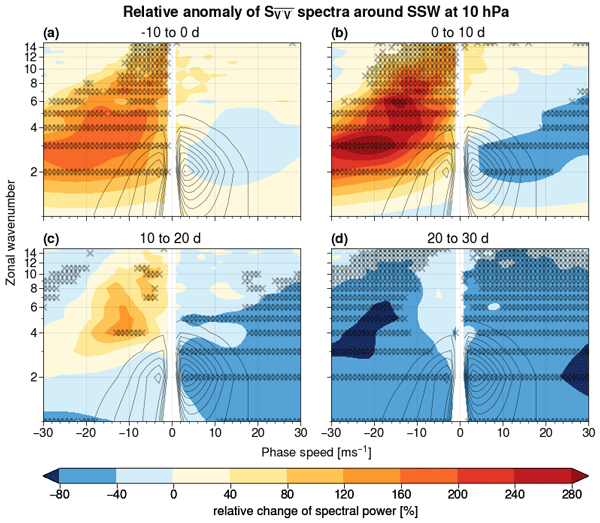
Michael Schutte, Daniela I. V. Domeisen, and Jacopo Riboldi
Weather Clim. Dynam., 5, 733–752, https://doi.org/10.5194/wcd-5-733-2024, https://doi.org/10.5194/wcd-5-733-2024, 2024
Short summary
Short summary
The winter circulation in the stratosphere, a layer of the Earth’s atmosphere between 10 and 50 km height, is tightly linked to the circulation in the lower atmosphere determining our daily weather. This interconnection happens in the form of waves propagating in and between these two layers. Here, we use space–time spectral analysis to show that disruptions and enhancements of the stratospheric circulation modify the shape and propagation of waves in both layers.
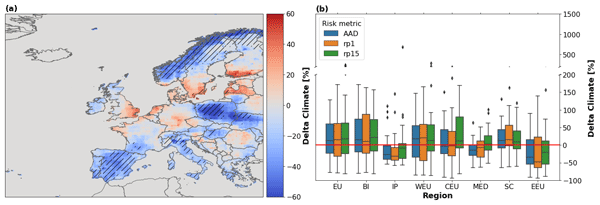
Luca G. Severino, Chahan M. Kropf, Hilla Afargan-Gerstman, Christopher Fairless, Andries Jan de Vries, Daniela I. V. Domeisen, and David N. Bresch
Nat. Hazards Earth Syst. Sci., 24, 1555–1578, https://doi.org/10.5194/nhess-24-1555-2024, https://doi.org/10.5194/nhess-24-1555-2024, 2024
Short summary
Short summary
We combine climate projections from 30 climate models with a climate risk model to project winter windstorm damages in Europe under climate change. We study the uncertainty and sensitivity factors related to the modelling of hazard, exposure and vulnerability. We emphasize high uncertainties in the damage projections, with climate models primarily driving the uncertainty. We find climate change reshapes future European windstorm risk by altering damage locations and intensity.
Olivier Broennimann and Antoine Guisan
Earth Syst. Sci. Data Discuss., https://doi.org/10.5194/essd-2024-79, https://doi.org/10.5194/essd-2024-79, 2024
Revised manuscript not accepted
Short summary
Short summary
CHclim25 is a high-resolution climatic dataset for Switzerland, offering daily, monthly, and yearly data on temperature, precipitation, sunshine duration, and other derived climatic variables for the baseline 1981–2010 period and future periods up to 2099. Downscaled to 25 m using local topography, it outperforms global datasets, especially at higher elevations. CHclim25 enhances both temporal and spatial resolution, opening avenues for ecological and environmental research in Switzerland.
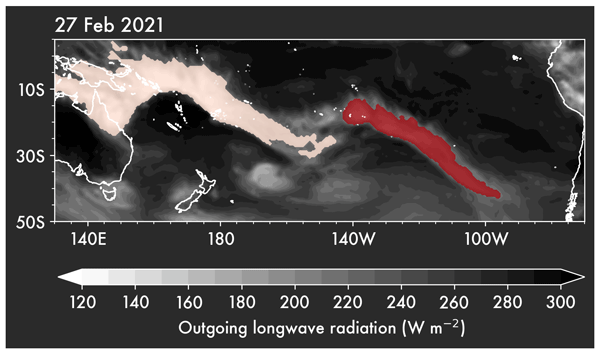
Romain Pilon and Daniela I. V. Domeisen
Geosci. Model Dev., 17, 2247–2264, https://doi.org/10.5194/gmd-17-2247-2024, https://doi.org/10.5194/gmd-17-2247-2024, 2024
Short summary
Short summary
This paper introduces a new method for detecting atmospheric cloud bands to identify long convective cloud bands that extend from the tropics to the midlatitudes. The algorithm allows for easy use and enables researchers to study the life cycle and climatology of cloud bands and associated rainfall. This method provides insights into the large-scale processes involved in cloud band formation and their connections between different regions, as well as differences across ocean basins.
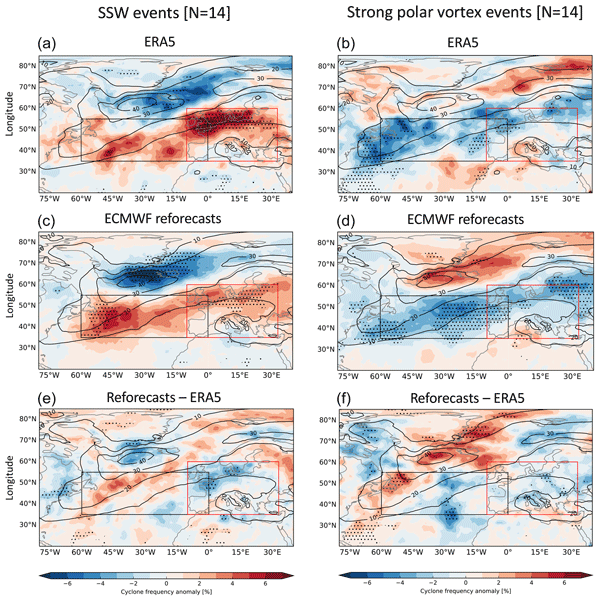
Hilla Afargan-Gerstman, Dominik Büeler, C. Ole Wulff, Michael Sprenger, and Daniela I. V. Domeisen
Weather Clim. Dynam., 5, 231–249, https://doi.org/10.5194/wcd-5-231-2024, https://doi.org/10.5194/wcd-5-231-2024, 2024
Short summary
Short summary
The stratosphere is a layer of Earth's atmosphere found above the weather systems. Changes in the stratosphere can affect the winds and the storm tracks in the North Atlantic region for a relatively long time, lasting for several weeks and even months. We show that the stratosphere can be important for weather forecasts beyond 1 week, but more work is needed to improve the accuracy of these forecasts for 3–4 weeks.
Maria Pyrina, Wolfgang Wicker, Andries Jan de Vries, Georgios Fragkoulidis, and Daniela I. V. Domeisen
EGUsphere, https://doi.org/10.5194/egusphere-2023-3088, https://doi.org/10.5194/egusphere-2023-3088, 2024
Preprint withdrawn
Short summary
Short summary
We investigate the atmospheric dynamics behind heatwaves, specifically of those occurring simultaneously across regions, known as concurrent heatwaves. We find that heatwaves are strongly modulated by Rossby wave packets, being Rossby waves whose amplitude has a local maximum and decays at larger distances. High amplitude Rossby wave packets increase the occurrence probabilities of concurrent and non-concurrent heatwaves by a factor of 15 and 18, respectively, over several regions globally.
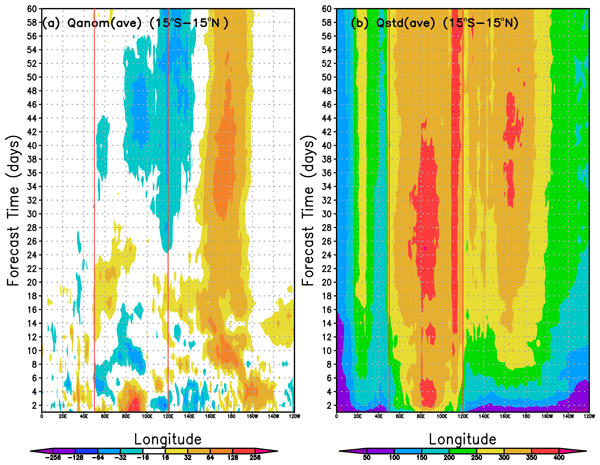
David Martin Straus, Daniela I. V. Domeisen, Sarah-Jane Lock, Franco Molteni, and Priyanka Yadav
Weather Clim. Dynam., 4, 1001–1018, https://doi.org/10.5194/wcd-4-1001-2023, https://doi.org/10.5194/wcd-4-1001-2023, 2023
Short summary
Short summary
The global response to the Madden–Julian oscillation (MJO) is potentially predictable. Yet the diabatic heating is uncertain even within a particular episode of the MJO. Experiments with a global model probe the limitations imposed by this uncertainty. The large-scale tropical heating is predictable for 25 to 45 d, yet the associated Rossby wave source that links the heating to the midlatitude circulation is predictable for 15 to 20 d. This limitation has not been recognized in prior work.
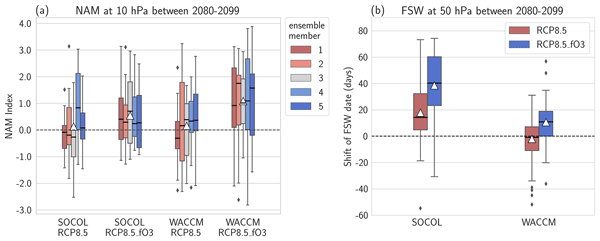
Gabriel Chiodo, Marina Friedel, Svenja Seeber, Daniela Domeisen, Andrea Stenke, Timofei Sukhodolov, and Franziska Zilker
Atmos. Chem. Phys., 23, 10451–10472, https://doi.org/10.5194/acp-23-10451-2023, https://doi.org/10.5194/acp-23-10451-2023, 2023
Short summary
Short summary
Stratospheric ozone protects the biosphere from harmful UV radiation. Anthropogenic activity has led to a reduction in the ozone layer in the recent past, but thanks to the implementation of the Montreal Protocol, the ozone layer is projected to recover. In this study, we show that projected future changes in Arctic ozone abundances during springtime will influence stratospheric climate and thereby actively modulate large-scale circulation changes in the Northern Hemisphere.
Pauline Rivoire, Olivia Martius, Philippe Naveau, and Alexandre Tuel
Nat. Hazards Earth Syst. Sci., 23, 2857–2871, https://doi.org/10.5194/nhess-23-2857-2023, https://doi.org/10.5194/nhess-23-2857-2023, 2023
Short summary
Short summary
Heavy precipitation can lead to floods and landslides, resulting in widespread damage and significant casualties. Some of its impacts can be mitigated if reliable forecasts and warnings are available. In this article, we assess the capacity of the precipitation forecast provided by ECMWF to predict heavy precipitation events on a subseasonal-to-seasonal (S2S) timescale over Europe. We find that the forecast skill of such events is generally higher in winter than in summer.
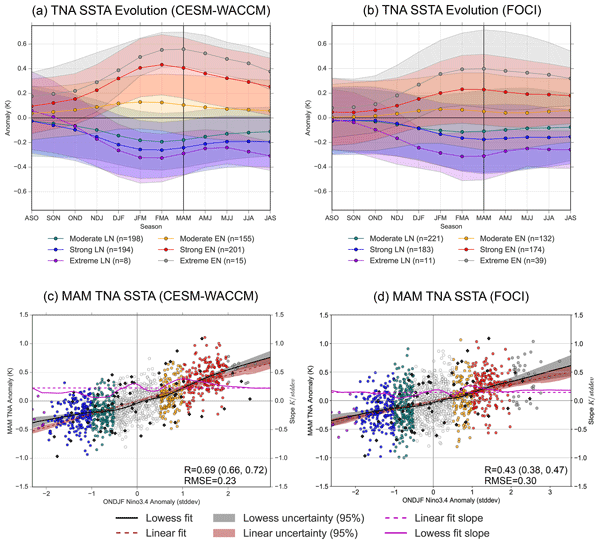
Jake W. Casselman, Joke F. Lübbecke, Tobias Bayr, Wenjuan Huo, Sebastian Wahl, and Daniela I. V. Domeisen
Weather Clim. Dynam., 4, 471–487, https://doi.org/10.5194/wcd-4-471-2023, https://doi.org/10.5194/wcd-4-471-2023, 2023
Short summary
Short summary
El Niño–Southern Oscillation (ENSO) has remote effects on the tropical North Atlantic (TNA), but the connections' nonlinearity (strength of response to an increasing ENSO signal) is not always well represented in models. Using the Community Earth System Model version 1 – Whole Atmosphere Community Climate Mode (CESM-WACCM) and the Flexible Ocean and Climate Infrastructure version 1, we find that the TNA responds linearly to extreme El Niño but nonlinearly to extreme La Niña for CESM-WACCM.

Raphaël de Fondeville, Zheng Wu, Enikő Székely, Guillaume Obozinski, and Daniela I. V. Domeisen
Weather Clim. Dynam., 4, 287–307, https://doi.org/10.5194/wcd-4-287-2023, https://doi.org/10.5194/wcd-4-287-2023, 2023
Short summary
Short summary
We propose a fully data-driven, interpretable, and computationally scalable framework to characterize sudden stratospheric warmings (SSWs), extract statistically significant precursors, and produce machine learning (ML) forecasts. By successfully leveraging the long-lasting impact of SSWs, the ML predictions outperform sub-seasonal numerical forecasts for lead times beyond 25 d. Post-processing numerical predictions using their ML counterparts yields a performance increase of up to 20 %.
Wolfgang Wicker, Inna Polichtchouk, and Daniela I. V. Domeisen
Weather Clim. Dynam., 4, 81–93, https://doi.org/10.5194/wcd-4-81-2023, https://doi.org/10.5194/wcd-4-81-2023, 2023
Short summary
Short summary
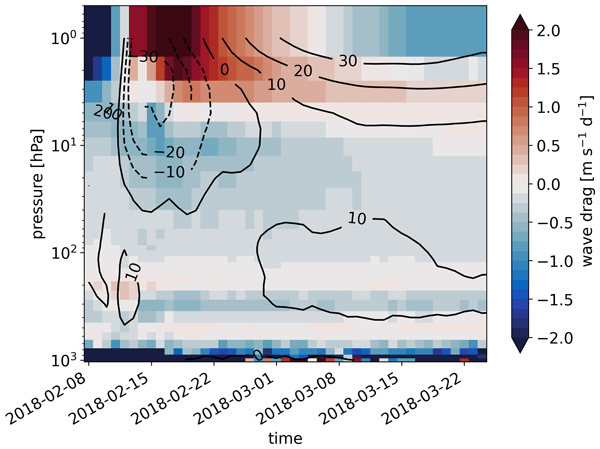
Sudden stratospheric warmings are extreme weather events where the winter polar stratosphere warms by about 25 K. An improved representation of small-scale gravity waves in sub-seasonal prediction models can reduce forecast errors since their impact on the large-scale circulation is predictable multiple weeks ahead. After a sudden stratospheric warming, vertically propagating gravity waves break at a lower altitude than usual, which strengthens the long-lasting positive temperature anomalies.
Marina Friedel, Gabriel Chiodo, Andrea Stenke, Daniela I. V. Domeisen, and Thomas Peter
Atmos. Chem. Phys., 22, 13997–14017, https://doi.org/10.5194/acp-22-13997-2022, https://doi.org/10.5194/acp-22-13997-2022, 2022
Short summary
Short summary
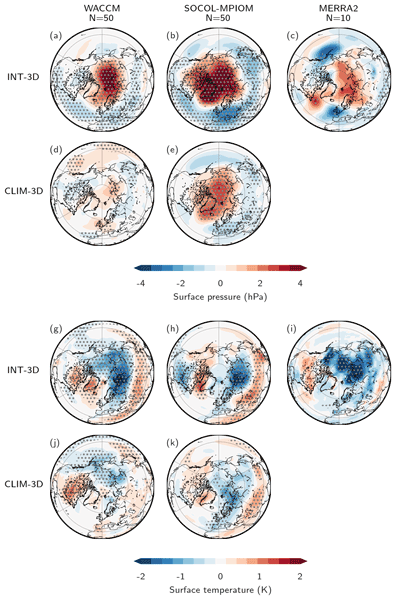
In spring, winds the Arctic stratosphere change direction – an event called final stratospheric warming (FSW). Here, we examine whether the interannual variability in Arctic stratospheric ozone impacts the timing of the FSW. We find that Arctic ozone shifts the FSW to earlier and later dates in years with high and low ozone via the absorption of UV light. The modulation of the FSW by ozone has consequences for surface climate in ozone-rich years, which may result in better seasonal predictions.
Nora Bergner, Marina Friedel, Daniela I. V. Domeisen, Darryn Waugh, and Gabriel Chiodo
Atmos. Chem. Phys., 22, 13915–13934, https://doi.org/10.5194/acp-22-13915-2022, https://doi.org/10.5194/acp-22-13915-2022, 2022
Short summary
Short summary
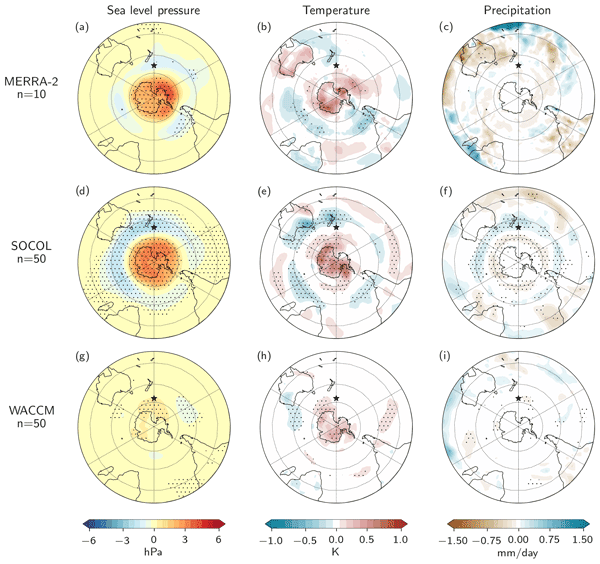
Polar vortex extremes, particularly situations with an unusually weak cyclonic circulation in the stratosphere, can influence the surface climate in the spring–summer time in the Southern Hemisphere. Using chemistry-climate models and observations, we evaluate the robustness of the surface impacts. While models capture the general surface response, they do not show the observed climate patterns in midlatitude regions, which we trace back to biases in the models' circulations.

Micol Genazzi, Antoine Guisan, and Ross T. Shackleton
Geogr. Helv., 77, 443–453, https://doi.org/10.5194/gh-77-443-2022, https://doi.org/10.5194/gh-77-443-2022, 2022
Short summary
Short summary
This paper assesses peoples' knowledge and perceptions of the invasive palm (Trachycarpus fortunei) in Ticino, Switzerland. Such information is important for guiding decision-making and management planning. In general, although the palm induces positive perceptions in most respondents, the majority of people realise the threat that invasions pose to the region. Therefore, most respondents supported the regulations and management for this popular ornamental plant.
Jake W. Casselman, Bernat Jiménez-Esteve, and Daniela I. V. Domeisen
Weather Clim. Dynam., 3, 1077–1096, https://doi.org/10.5194/wcd-3-1077-2022, https://doi.org/10.5194/wcd-3-1077-2022, 2022
Short summary
Short summary
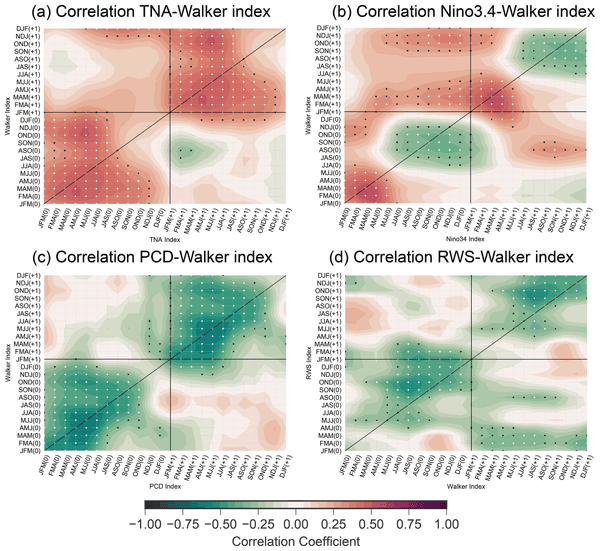
Using an atmospheric general circulation model, we analyze how the tropical North Atlantic influences the El Niño–Southern Oscillation connection towards the North Atlantic European region. We also focus on the lesser-known boreal spring and summer response following an El Niño–Southern Oscillation event. Our results show that altered tropical Atlantic sea surface temperatures may cause different responses over the Caribbean region, consequently influencing the North Atlantic European region.
Zachary D. Lawrence, Marta Abalos, Blanca Ayarzagüena, David Barriopedro, Amy H. Butler, Natalia Calvo, Alvaro de la Cámara, Andrew Charlton-Perez, Daniela I. V. Domeisen, Etienne Dunn-Sigouin, Javier García-Serrano, Chaim I. Garfinkel, Neil P. Hindley, Liwei Jia, Martin Jucker, Alexey Y. Karpechko, Hera Kim, Andrea L. Lang, Simon H. Lee, Pu Lin, Marisol Osman, Froila M. Palmeiro, Judith Perlwitz, Inna Polichtchouk, Jadwiga H. Richter, Chen Schwartz, Seok-Woo Son, Irene Erner, Masakazu Taguchi, Nicholas L. Tyrrell, Corwin J. Wright, and Rachel W.-Y. Wu
Weather Clim. Dynam., 3, 977–1001, https://doi.org/10.5194/wcd-3-977-2022, https://doi.org/10.5194/wcd-3-977-2022, 2022
Short summary
Short summary
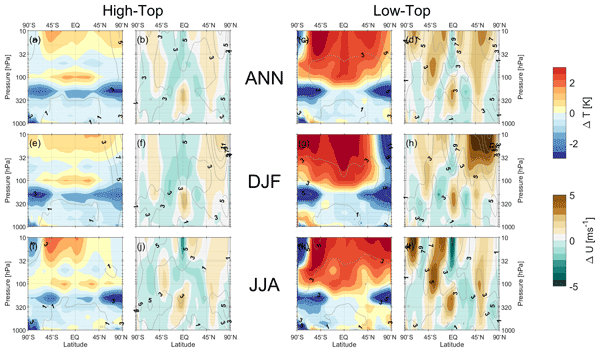
Forecast models that are used to predict weather often struggle to represent the Earth’s stratosphere. This may impact their ability to predict surface weather weeks in advance, on subseasonal-to-seasonal (S2S) timescales. We use data from many S2S forecast systems to characterize and compare the stratospheric biases present in such forecast models. These models have many similar stratospheric biases, but they tend to be worse in systems with low model tops located within the stratosphere.

Rachel Wai-Ying Wu, Zheng Wu, and Daniela I.V. Domeisen
Weather Clim. Dynam., 3, 755–776, https://doi.org/10.5194/wcd-3-755-2022, https://doi.org/10.5194/wcd-3-755-2022, 2022
Short summary
Short summary
Accurate predictions of the stratospheric polar vortex can enhance surface weather predictability. Stratospheric events themselves are less predictable, with strong inter-event differences. We assess the predictability of stratospheric acceleration and deceleration events in a sub-seasonal prediction system, finding that the predictability of events is largely dependent on event magnitude, while extreme drivers of deceleration events are not fully represented in the model.
Peter Hitchcock, Amy Butler, Andrew Charlton-Perez, Chaim I. Garfinkel, Tim Stockdale, James Anstey, Dann Mitchell, Daniela I. V. Domeisen, Tongwen Wu, Yixiong Lu, Daniele Mastrangelo, Piero Malguzzi, Hai Lin, Ryan Muncaster, Bill Merryfield, Michael Sigmond, Baoqiang Xiang, Liwei Jia, Yu-Kyung Hyun, Jiyoung Oh, Damien Specq, Isla R. Simpson, Jadwiga H. Richter, Cory Barton, Jeff Knight, Eun-Pa Lim, and Harry Hendon
Geosci. Model Dev., 15, 5073–5092, https://doi.org/10.5194/gmd-15-5073-2022, https://doi.org/10.5194/gmd-15-5073-2022, 2022
Short summary
Short summary
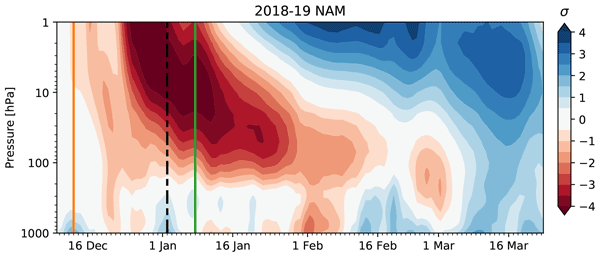
This paper describes an experimental protocol focused on sudden stratospheric warmings to be carried out by subseasonal forecast modeling centers. These will allow for inter-model comparisons of these major disruptions to the stratospheric polar vortex and their impacts on the near-surface flow. The protocol will lead to new insights into the contribution of the stratosphere to subseasonal forecast skill and new approaches to the dynamical attribution of extreme events.
Chen Schwartz, Chaim I. Garfinkel, Priyanka Yadav, Wen Chen, and Daniela I. V. Domeisen
Weather Clim. Dynam., 3, 679–692, https://doi.org/10.5194/wcd-3-679-2022, https://doi.org/10.5194/wcd-3-679-2022, 2022
Short summary
Short summary
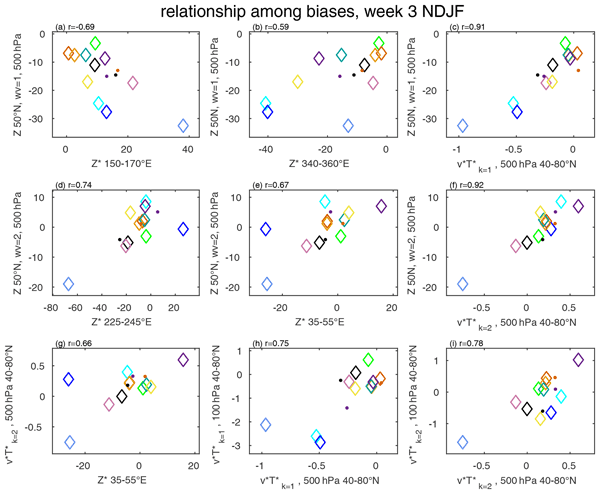
Eleven operational forecast models that run on subseasonal timescales (up to 2 months) are examined to assess errors in their simulated large-scale stationary waves in the Northern Hemisphere winter. We found that models with a more finely resolved stratosphere generally do better in simulating the waves in both the stratosphere (10–50 km) and troposphere below. Moreover, a connection exists between errors in simulated time-mean convection in tropical regions and errors in the simulated waves.
Adam A. Scaife, Mark P. Baldwin, Amy H. Butler, Andrew J. Charlton-Perez, Daniela I. V. Domeisen, Chaim I. Garfinkel, Steven C. Hardiman, Peter Haynes, Alexey Yu Karpechko, Eun-Pa Lim, Shunsuke Noguchi, Judith Perlwitz, Lorenzo Polvani, Jadwiga H. Richter, John Scinocca, Michael Sigmond, Theodore G. Shepherd, Seok-Woo Son, and David W. J. Thompson
Atmos. Chem. Phys., 22, 2601–2623, https://doi.org/10.5194/acp-22-2601-2022, https://doi.org/10.5194/acp-22-2601-2022, 2022
Short summary
Short summary
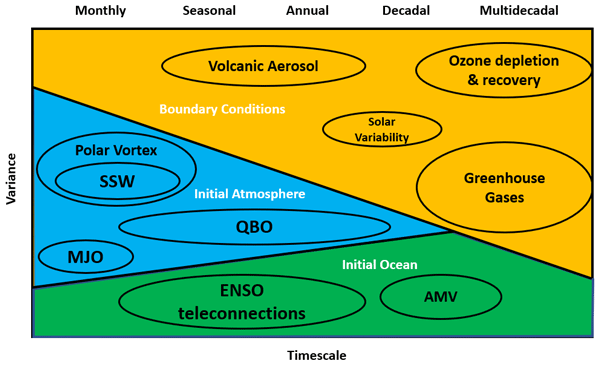
Great progress has been made in computer modelling and simulation of the whole climate system, including the stratosphere. Since the late 20th century we also gained a much clearer understanding of how the stratosphere interacts with the lower atmosphere. The latest generation of numerical prediction systems now explicitly represents the stratosphere and its interaction with surface climate, and here we review its role in long-range predictions and projections from weeks to decades ahead.
Jérôme Kopp, Pauline Rivoire, S. Mubashshir Ali, Yannick Barton, and Olivia Martius
Hydrol. Earth Syst. Sci., 25, 5153–5174, https://doi.org/10.5194/hess-25-5153-2021, https://doi.org/10.5194/hess-25-5153-2021, 2021
Short summary
Short summary
Episodes of extreme rainfall events happening in close temporal succession can lead to floods with dramatic impacts. We developed a novel method to individually identify those episodes and deduced the regions where they occur frequently and where their impact is substantial. Those regions are the east and northeast of the Asian continent, central Canada and the south of California, Afghanistan, Pakistan, the southwest of the Iberian Peninsula, and north of Argentina and south of Bolivia.
Zheng Wu, Bernat Jiménez-Esteve, Raphaël de Fondeville, Enikő Székely, Guillaume Obozinski, William T. Ball, and Daniela I. V. Domeisen
Weather Clim. Dynam., 2, 841–865, https://doi.org/10.5194/wcd-2-841-2021, https://doi.org/10.5194/wcd-2-841-2021, 2021
Short summary
Short summary
We use an advanced statistical approach to investigate the dynamics of the development of sudden stratospheric warming (SSW) events in the winter Northern Hemisphere. We identify distinct signals that are representative of these events and their event type at lead times beyond currently predictable lead times. The results can be viewed as a promising step towards improving the predictability of SSWs in the future by using more advanced statistical methods in operational forecasting systems.
Cited articles
Adams, H. D., Zeppel, M. J. B., Anderegg, W. R. L., et al.: A multi-species synthesis of physiological mechanisms in drought-induced tree mortality, Nature Ecology & Evolution, 1, 1285–1291, https://doi.org/10.1038/s41559-017-0248-x, 2017. a
Aklilu Tesfaye, A. and Gessesse Awoke, B.: Evaluation of the saturation property of vegetation indices derived from sentinel-2 in mixed crop-forest ecosystem, Spatial Information Research, 29, 109–121, https://doi.org/10.1007/s41324-020-00339-5, 2021. a
Alavi, G.: The impact of soil moisture on stem growth of spruce forest during a 22-year period, Forest Ecology and Management, 166, 17–33, https://doi.org/10.1016/S0378-1127(01)00661-2, 2002. a, b
Anderegg, W. R. L., Schwalm, C., Biondi, F., Camarero, J. J., Koch, G., Litvak, M., Ogle, K., Shaw, J. D., Shevliakova, E., Williams, A. P., Wolf, A., Ziaco, E., and Pacala, S.: Pervasive drought legacies in forest ecosystems and their implications for carbon cycle models, Science, 349, 528–532, https://doi.org/10.1126/science.aab1833, 2015. a, b
Asam, S., Eisfelder, C., Hirner, A., Reiners, P., Holzwarth, S., and Bachmann, M.: AVHRR NDVI Compositing Method Comparison and Generation of Multi-Decadal Time Series—A TIMELINE Thematic Processor, Remote Sensing, 15, 1631, https://doi.org/10.3390/rs15061631, 2023. a, b
Bannari, A., Morin, D., Bonn, F., and Huete, A. R.: A review of vegetation indices, Remote Sensing Reviews, 13, 95–120, https://doi.org/10.1080/02757259509532298, 1995. a
Barben, M., Wunderle, S., and Dupuis, S.: A 40-Year Time Series of Land Surface Emissivity Derived from AVHRR Sensors: A Fennoscandian Perspective, Remote Sensing, 16, 3686, https://doi.org/10.3390/rs16193686, 2024. a, b, c
Bastos, A., Ciais, P., Park, T., Zscheischler, J., Yue, C., Barichivich, J., Myneni, R. B., Peng, S., Piao, S., and Zhu, Z.: Was the extreme Northern Hemisphere greening in 2015 predictable?, Environmental Research Letters, 12, 044016, https://doi.org/10.1088/1748-9326/aa67b5, 2017. a
Beloiu, M., Stahlmann, R., and Beierkuhnlein, C.: Drought impacts in forest canopy and deciduous tree saplings in Central European forests, Forest Ecology and Management, 509, 120075, https://doi.org/10.1016/j.foreco.2022.120075, 2022. a
Benson, V., Robin, C., Requena-Mesa, C., Alonso, L., Carvalhais, N., Cortés, J., Gao, Z., Linscheid, N., Weynants, M., and Reichstein, M.: Multi-modal Learning for Geospatial Vegetation Forecasting, in: Proceedings of the IEEE/CVF Conference on Computer Vision and Pattern Recognition (CVPR), 27788–27799, https://doi.org/10.1109/CVPR52733.2024.02625, 2024. a
Borchers, H. W.: pracma: Practical Numerical Math Functions [code], https://CRAN.R-project.org/package=pracma (last access: 5 January 2026), 2024. a
Breiman, L.: Random Forests, Machine Learning, 45, 5–32, https://doi.org/10.1023/A:1010933404324, 2001. a, b
Brockerhoff, E. G., Barbaro, L., Castagneyrol, B., Forrester, D. I., Gardiner, B., Gonzalez-Olabarria, J. R., Lyver, P. O., Meurisse, N., Oxbrough, A., Taki, H., Thompson, I. D., van der Plas, F., and Jactel, H.: Forest biodiversity, ecosystem functioning and the provision of ecosystem services, Biodiversity and Conservation, 26, 3005–3035, https://doi.org/10.1007/s10531-017-1453-2, 2017. a, b
Brodribb, T. J., Powers, J., Cochard, H., and Choat, B.: Hanging by a thread? Forests and drought, Science, 368, 261–266, https://doi.org/10.1126/science.aat7631, 2020. a
Brun, P., Psomas, A., Ginzler, C., Thuiller, W., Zappa, M., and Zimmermann, N. E.: Large-scale early-wilting response of Central European forests to the 2018 extreme drought, Global Change Biology, 26, 7021–7035, https://doi.org/10.1111/gcb.15360, 2020. a, b, c
Buras, A., Rammig, A., and Zang, C. S.: Quantifying impacts of the 2018 drought on European ecosystems in comparison to 2003, Biogeosciences, 17, 1655–1672, https://doi.org/10.5194/bg-17-1655-2020, 2020. a
Buras, A., Rammig, A., and Zang, C. S.: The European Forest Condition Monitor: Using Remotely Sensed Forest Greenness to Identify Hot Spots of Forest Decline, Frontiers in Plant Science, 12, https://doi.org/10.3389/fpls.2021.689220, 2021. a
Cihlar, J., Manak, D., and D'Iorio, M.: Evaluation of compositing algorithms for AVHRR data over land, IEEE Transactions on Geoscience and Remote Sensing, 32, 427–437, https://doi.org/10.1109/36.295057, 1994. a
Didan, K.: MOD13Q1 MODIS/Terra Vegetation In- dices 16-Day L3 Global 250 m SIN Grid V006, NASA Land Processes Distributed Active Archive Center [data set], https://doi.org/10.5067/MODIS/MOD13Q1.006, 2015. a
Dobbertin, M., Wermelinger, B., Bigler, C., Bürgi, M., Carron, M., Forster, B., Gimmi, U., and Rigling, A.: Linking Increasing Drought Stress to Scots Pine Mortality and Bark Beetle Infestations, Scientific World Journal, 7, 231–239, https://doi.org/10.1100/tsw.2007.58, 2007. a
Domeisen, D. I., White, C. J., Afargan-Gerstman, H., Muñoz, Á. G., Janiga, M. A., Vitart, F., Wulff, C. O., Antoine, S., Ardilouze, C., Batté, L., Bloomfield, H. C., Brayshaw, D. J., Camargo, S. J., Charlton-Pérez, A., Collins, D., Cowan, T., del Mar Chaves, M., Ferranti, L., Gómez, R., González, P. L. M., González Romero, C., Infanti, J. M., Karozis, S., Kim, H., Kolstad, E. W., LaJoie, E., Lledó, L., Magnusson, L., Malguzzi, P., Manrique-Suñén, A., Mastrangelo, D., Materia, S., Medina, H., Palma, L., Pineda, L. E., Sfetsos, A., Son, S.-W., Soret, A., Strazzo, S., and Tian, D.: Advances in the subseasonal prediction of extreme events: Relevant case studies across the globe, Bulletin of the American Meteorological Society, 103, E1473–E1501, https://doi.org/10.1175/BAMS-D-20-0221.1, 2022. a
Dormann, C. F., Elith, J., Bacher, S., Buchmann, C., Carl, G., Carré, G., Marquéz, J. R. G., Gruber, B., Lafourcade, B., Leitão, P. J., Münkemüller, T., McClean, C., Osborne, P. E., Reineking, B., Schröder, B., Skidmore, A. K., Zurell, D., and Lautenbach, S.: Collinearity: a review of methods to deal with it and a simulation study evaluating their performance, Ecography, 36, 27–46, https://doi.org/10.1111/j.1600-0587.2012.07348.x, 2013. a
Dupuis, S., Rivoire, P., Barben, M., and Wunderle, S.: 40-year AVHRR top-of-atmosphere NDVI dataset, BORIS Portal [data set], https://doi.org/10.48620/400, 2024. a, b, c, d
EEA: CORINE Land Cover 2006 (vector), Europe, 6-yearly – version 2020 20u1, European Environment Agency [data set], https://doi.org/10.2909/08560441-2fd5-4eb9-bf4c-9ef16725726a, 2020a. a, b
EEA: CORINE Land Cover 2012 (vector), Europe, 6-yearly – version 2020 20u1, European Environment Agency [data set], https://doi.org/10.2909/916c0ee7-9711-4996-9876-95ea45ce1d27, 2020b. a
EEA: CORINE Land Cover 2018 (vector), Europe, 6-yearly – version 2020 20u1, European Environment Agency [data set], https://doi.org/10.2909/71c95a07-e296-44fc-b22b-415f42acfdf0, 2020c. a
EFI: What role do forests play in the water cycle?, European Forest Institute, https://efi.int/forestquestions/q7_en (last access: 25 March 2025), 2025. a
FAO: Global Forest Resources Assessment 2020: Main report, FAO, Rome, https://doi.org/10.4060/ca9825en, 2020. a
Ferreira, A. J. D., Alegre, S. P., Coelho, C. O. A., Shakesby, R. A., Páscoa, F. M., Ferreira, C. S. S., Keizer, J. J., and Ritsema, C.: Strategies to prevent forest fires and techniques to reverse degradation processes in burned areas, CATENA, 128, 224–237, https://doi.org/10.1016/j.catena.2014.09.002, 2015. a
Flores-Anderson, A. I., Cardille, J. A., Kellndorfer, J., Meyer, F. J., and Olofsson, P.: Early Deforestation Detection in the Tropics using L-band SAR and Optical multi-sensor data and Bayesian Statistics, International Journal of Applied Earth Observation and Geoinformation, 143, 104831, https://doi.org/10.1016/j.jag.2025.104831, 2025. a
Fontana, F. M., Trishchenko, A. P., Khlopenkov, K. V., Luo, Y., and Wunderle, S.: Impact of orthorectification and spatial sampling on maximum NDVI composite data in mountain regions, Remote Sensing of Environment, 113, 2701–2712, https://doi.org/10.1016/j.rse.2009.08.008, 2009. a, b
Fox, J. and Monette, G.: Generalized collinearity diagnostics, Journal of the American Statistical Association, 87, 178–183, https://doi.org/10.2307/2290467, 1992. a
Frei, E. R., Gossner, M. M., Vitasse, Y., Queloz, V., Dubach, V., Gessler, A., Ginzler, C., Hagedorn, F., Meusburger, K., Moor, M., Samblás Vives, E., Rigling, A., Uitentuis, I., von Arx, G., and Wohlgemuth, T.: European beech dieback after premature leaf senescence during the 2018 drought in northern Switzerland, Plant Biology, 24, 1132–1145, https://doi.org/10.1111/plb.13467, 2022. a, b
Friedman, J. H.: Greedy function approximation: A gradient boosting machine, Annals of Statistics, 29, 1189–1232, https://doi.org/10.1214/aos/1013203451, 2001. a
Friedman, J., Hastie, T., Tibshirani, R., Narasimhan, B., Tay, K., Simon, N., Qian, J., and Yang, J.: glmnet: Lasso and Elastic-Net Regularized Generalized Linear Models [code], https://CRAN.R-project.org/package=glmnet (last access: 5 January 2026), 2024. a
Gazol, A., Camarero, J. J., Vicente-Serrano, S. M., Sánchez-Salguero, R., Gutiérrez, E., de Luis, M., Sangüesa-Barreda, G., Novak, K., Rozas, V., Tíscar, P. A., Linares, J. C., Martín-Hernández, N., Martínez del Castillo, E., Ribas, M., García-González, I., Silla, F., Camisón, A., Génova, M., Olano, J. M., and Galván, J. D.: Forest resilience to drought varies across biomes, Global Change Biology, 24, 2143–2158, https://doi.org/10.1111/gcb.14082, 2018. a
Gharun, M., Shekhar, A., Xiao, J., Li, X., and Buchmann, N.: Effect of the 2022 summer drought across forest types in Europe, Biogeosciences, 21, 5481–5494, https://doi.org/10.5194/bg-21-5481-2024, 2024. a
Giannetti, F., Pecchi, M., Travaglini, D., Francini, S., D'Amico, G., Vangi, E., Cocozza, C., and Chirici, G.: Estimating VAIA Windstorm Damaged Forest Area in Italy Using Time Series Sentinel-2 Imagery and Continuous Change Detection Algorithms, Forests, 12, https://doi.org/10.3390/f12060680, 2021. a
Gregorutti, B., Michel, B., and Saint-Pierre, P.: Correlation and variable importance in random forests, arXiv [preprint], arXiv:1310.5726, 2013. a
Grossiord, C., Buckley, T. N., Cernusak, L. A., Novick, K. A., Poulter, B., Siegwolf, R. T. W., Sperry, J. S., and McDowell, N. G.: Plant responses to rising vapor pressure deficit, New Phytologist, 226, 1550–1566, https://doi.org/10.1111/nph.16485, 2020. a, b
Gudmundsson, L. and Seneviratne, S. I.: Anthropogenic climate change affects meteorological drought risk in Europe, Environmental Research Letters, 11, 044005, https://doi.org/10.1088/1748-9326/11/4/044005, 2016. a
Hersbach, H., Bell, B., Berrisford, P., Horányi, A., Sabater, J. M., Nicolas, J., Radu, R., Schepers, D., Simmons, A., Soci, C., and Dee, D.: Global reanalysis: goodbye ERA-Interim, hello ERA5, ECMWF Newsletter, 146, 17–24, https://doi.org/10.21957/vf291hehd7, 2019. a
Hinckley, T. M., Dougherty, P. M., Lassoie, J. P., Roberts, J. E., and Teskey, R. O.: A Severe Drought: Impact on Tree Growth, Phenology, Net Photosynthetic Rate and Water Relations, American Midland Naturalist, 102, 307–316, http://www.jstor.org/stable/2424658, 1979. a
Hoek van Dijke, A. J., Orth, R., Teuling, A. J., Herold, M., Schlerf, M., Migliavacca, M., Machwitz, M., van Hateren, T. C., Yu, X., and Mallick, K.: Comparing forest and grassland drought responses inferred from eddy covariance and Earth observation, Agricultural and Forest Meteorology, 341, 109635, https://doi.org/10.1016/j.agrformet.2023.109635, 2023. a
Holben, B. N.: Characteristics of maximum-value composite images from temporal AVHRR data, International Journal of Remote Sensing, 7, 1417–1434, https://doi.org/10.1080/01431168608948945, 1986. a
IPCC: Summary for Policymakers, edited by: Pörtner, H.-O., Roberts, D. C., Poloczanska, E. S., Mintenbeck, K., Tignor, M., Alegrìa, A., Craig, M., Langsdorf, S., Löschke, S., Möller, V., and Okem, A., in: Climate Change 2022: Impacts, Adaptation, and Vulnerability. Contribution of Working Group II to the Sixth Assessment Report of the Intergovernmental Panel on Climate Change, edited by: Pörtner, H.-O., Roberts, D. C., Tignor, M., Poloczanska, E. S., Mintenbeck, K., Alegrà, A., Craig, M., Langsdorf, S., Löschke, S., Möller, V., Okem, A., Rama , B., Cambridge University Press, https://doi.org/10.1017/9781009325844.001, 3–33, 2022. a
Jenkins, M. and Schaap, B.: Forest Ecosystem Services, UNFF13 Background Analytical Study, 1, United Nations Forum on Forests (UNFF), https://www.un.org/esa/forests/wp-content/uploads/2018/05/UNFF13_BkgdStudy_ForestsEcoServices.pdf (last access: 7 October 2024), 1–50, 2018. a
Jönsson, A. and Eklundh, L.: A review of methods for detecting phenological change from satellite data, International Journal of Remote Sensing, 23, 3701–3713, https://doi.org/10.1080/01431160210144679, 2002. a
Kladny, K.-R., Milanta, M., Mraz, O., Hufkens, K., and Stocker, B. D.: Enhanced prediction of vegetation responses to extreme drought using deep learning and Earth observation data, Ecological Informatics, 80, 102474, https://doi.org/10.1016/j.ecoinf.2024.102474, 2024. a, b
Klisch, A. and Atzberger, C.: Evaluating Phenological Metrics derived from the MODIS Time Series over the European Continent, Photogrammetrie-Fernerkundung-Geoinformation, 2014, 409–421, https://doi.org/10.1127/1432-8364/2014/0233, 2014. a
Knutzen, F., Averbeck, P., Barrasso, C., Bouwer, L. M., Gardiner, B., Grünzweig, J. M., Hänel, S., Haustein, K., Johannessen, M. R., Kollet, S., Müller, M. M., Pietikäinen, J.-P., Pietras-Couffignal, K., Pinto, J. G., Rechid, D., Rousi, E., Russo, A., Suarez-Gutierrez, L., Veit, S., Wendler, J., Xoplaki, E., and Gliksman, D.: Impacts on and damage to European forests from the 2018–2022 heat and drought events, Nat. Hazards Earth Syst. Sci., 25, 77–117, https://doi.org/10.5194/nhess-25-77-2025, 2025. a
Kriegler, F. J., Malila, W. A., Nalepka, R. F., and Richardson, W.: Preprocessing transformations and their effects on multispectral recognition, in: Proceedings of the Sixth International Symposium on Remote Sensing of Environment, University of Michigan, Ann Arbor, 97–131, 1969. a
Krouma, M., Specq, D., Magnusson, L., Ardilouze, C., Batté, L., and Yiou, P.: Improving subseasonal forecast of precipitation in Europe by combining a stochastic weather generator with dynamical models, Quarterly Journal of the Royal Meteorological Society, 150, 2744–2764, https://doi.org/10.1002/qj.4733, 2024. a
Kullman, L.: Cold-induced dieback of montane spruce forests in the Swedish Scandes – a modern analogue of paleoenvironmental processes, New Phytologist, 113, 377–389, https://doi.org/10.1111/j.1469-8137.1989.tb02416.x, 1989. a
Kullman, L.: Rise and demise of cold-climate Picea abies forest in Sweden, New Phytologist, 134, 243–256, https://doi.org/10.1111/j.1469-8137.1996.tb04629.x, 1996. a
Leuschner, C.: Drought response of European beech (Fagus sylvatica L.)—A review, Perspectives in Plant Ecology, Evolution and Systematics, 47, 125576, https://doi.org/10.1016/j.ppees.2020.125576, 2020. a
Leuschner, C. and Ellenberg, H.: Vegetation Ecology of Central Europe: Volume I: Ecology of Central European Forests, Springer Berlin Heidelberg, New York, NY, https://doi.org/10.1007/978-3-319-43042-3, 2017. a
Leuzinger, S., Zotz, G., Asshoff, R., and Körner, C.: Responses of deciduous forest trees to severe drought in Central Europe, Tree Physiology, 25, 641–650, 2005. a
Liaw, A. and Wiener, M.: randomForest: Breiman and Cutler's Random Forests for Classification and Regression [code], https://CRAN.R-project.org/package=randomForest (last access: 5 January 2026), 2024. a
Lindner, M., Fitzgerald, J. B., Zimmermann, N. E., Reyer, C., Delzon, S., van der Maaten, E., Schelhaas, M.-J., Lasch, P., Eggers, J., van der Maaten-Theunissen, M., Suckow, F., Psomas, A., Poulter, B., and Hanewinkel, M.: Climate change and European forests: what do we know, what are the uncertainties, and what are the implications for forest management?, Journal of Environmental Management, 146, 69–83, https://doi.org/10.1016/j.jenvman.2014.07.030, 2014. a
Liu, G., Liu, H., and Yin, Y.: Global patterns of NDVI-indicated vegetation extremes and their sensitivity to climate extremes, Environmental Research Letters, 8, 025009, https://doi.org/10.1088/1748-9326/8/2/025009, 2013. a
Mariën, B., Dox, I., De Boeck, H. J., Willems, P., Leys, S., Papadimitriou, D., and Campioli, M.: Does drought advance the onset of autumn leaf senescence in temperate deciduous forest trees?, Biogeosciences, 18, 3309–3330, https://doi.org/10.5194/bg-18-3309-2021, 2021. a
Masson-Delmotte, V., Zhai, P., Pirani, A., Connors, S., Péan, C., Berger, S., Caud, N., Chen, Y., Goldfarb, L., Gomis, M., Huang, M., Leitzell, K., Lonnoy, E., Matthews, J., Maycock, T., Waterfield, T., Yelekçi, O., Yu, R., and Zhou, B.: Summary for Policymakers, Cambridge University Press, Cambridge, UK and New York, NY, USA, https://doi.org/10.1017/9781009157896.001, pp. 3–32, 2021. a
Matkala, L., Kulmala, L., Kolari, P., Aurela, M., and Bäck, J.: Resilience of subarctic Scots pine and Norway spruce forests to extreme weather events, Agricultural and Forest Meteorology, 296, 108239, https://doi.org/10.1016/j.agrformet.2020.108239, 2021. a
McDowell, N. G., Sapes, G., Pivovaroff, A., Adams, H. D., Allen, C. D., Anderegg, W. R. L., Arend, M., Breshears, D. D., Brodribb, T., Choat, B., Cochard, H., Cáceres, M. D., Kauwe, M. G. D., Grossiord, C., Hammond, W. M., Hartmann, H., Hoch, G., Kahmen, A., Klein, T., Mackay, D. S., Mantova, M., Martínez-Vilalta, J., Medlyn, B. E., Mencuccini, M., Nardini, A., Oliveira, R. S., Sala, A., Tissue, D. T., Torres-Ruiz, J. M., Trowbridge, A. M., Trugman, A. T., Wiley, E., and Xu, C.: Mechanisms of woody-plant mortality under rising drought, CO2 and vapour pressure deficit, Nature Reviews Earth & Environment, 3, 294–308, https://doi.org/10.1038/s43017-022-00272-1, 2022. a
Meier, M., Vitasse, Y., Bugmann, H., and Bigler, C.: Phenological shifts induced by climate change amplify drought for broad-leaved trees at low elevations in Switzerland, Agricultural and Forest Meteorology, 307, 108485, https://doi.org/10.1016/j.agrformet.2021.108485, 2021. a
Muñoz-Sabater, J., Dutra, E., Agustí-Panareda, A., Albergel, C., Arduini, G., Balsamo, G., Boussetta, S., Choulga, M., Harrigan, S., Hersbach, H., Martens, B., Miralles, D. G., Piles, M., Rodríguez-Fernández, N. J., Zsoter, E., Buontempo, C., and Thépaut, J.-N.: ERA5-Land: a state-of-the-art global reanalysis dataset for land applications, Earth Syst. Sci. Data, 13, 4349–4383, https://doi.org/10.5194/essd-13-4349-2021, 2021. a
Müller, M., Olsson, P.-O., Eklundh, L., Jamali, S., and Ardö, J.: Features predisposing forest to bark beetle outbreaks and their dynamics during drought, Forest Ecology and Management, 523, 120480, https://doi.org/10.1016/j.foreco.2022.120480, 2022. a, b
Nash, M., Wickham, J., Christensen, J., and Wade, T.: Changes in Landscape Greenness and Climatic Factors over 25 Years (1989–2013) in the USA, Remote Sensing, 9, 295, https://doi.org/10.3390/rs9030295, 2017. a
Nay, J., Burchfield, E., and Gilligan, J.: A machine-learning approach to forecasting remotely sensed vegetation health, International Journal of Remote Sensing, 39, 1800–1816, https://doi.org/10.1080/01431161.2017.1410296, 2018. a
Neary, D. G., Ice, G. G., and Jackson, C. R.: Linkages between forest soils and water quality and quantity, Forest Ecology and Management, 258, 2269–2281, https://doi.org/10.1016/j.foreco.2009.05.027, 2009. a, b
Netherer, S., Lehmanski, L., Bachlehner, A., Rosner, S., Savi, T., Schmidt, A., Huang, J., Paiva, M. R., Mateus, E., Hartmann, H., and Gershenzon, J.: Drought increases Norway spruce susceptibility to the Eurasian spruce bark beetle and its associated fungi, New Phytologist, 242, 1000–1017, https://doi.org/10.1111/nph.19635, 2024. a
Silvestri, L., Saraceni, M., Brunone, B., Meniconi, S., Passadore, G., and Bongioannini Cerlini, P.: Assessment of seasonal soil moisture forecasts over the Central Mediterranean, Hydrol. Earth Syst. Sci., 29, 925–946, https://doi.org/10.5194/hess-29-925-2025, 2025. a
North, G. R. and Wu, Q.: Detecting Climate Signals Using Space–Time EOFs, Journal of Climate, 14, 1839–1863, https://www.jstor.org/stable/26247407 (last access: 5 January 2026), 2001. a
Obuchowicz, C., Poussin, C., and Giuliani, G.: Change in observed long-term greening across Switzerland – evidence from a three decades NDVI time-series and its relationship with climate and land cover factors, Big Earth Data, 8, 1–32, https://doi.org/10.1080/20964471.2023.2268322, 2023. a
Oliveira, S., Oehler, F., San-Miguel-Ayanz, J., Camia, A., and Pereira, J. M.: Modeling spatial patterns of fire occurrence in Mediterranean Europe using Multiple Regression and Random Forest, Forest Ecology and Management, 275, 117–129, https://doi.org/10.1016/j.foreco.2012.03.003, 2012. a
Ozenda, P.: Végétation du continent européen, Delachaux et Niestlé, Paris, ISBN-10: 2603009540, ISBN-13: 978-2603009543, 1994. a
Peters, J., Janzing, D., and Schölkopf, B.: Elements of Causal Inference: Foundations and Learning Algorithms, MIT Press, Cambridge, MA, USA, ISBN 9780262037310, 2017. a
Pettorelli, N., Vik, J. O., Mysterud, A., Gaillard, J. M., Tucker, C. J., and Stenseth, N. C.: Using the satellite-derived NDVI to assess ecological responses to environmental change, Trends in Ecology and Evolution, 20, 503–510, https://doi.org/10.1016/j.tree.2005.05.011, 2005. a
Postel, S. L. and Thompson Jr., B. H.: Watershed protection: Capturing the benefits of nature's water supply services, Natural Resources Forum, 29, 98–108, https://doi.org/10.1111/j.1477-8947.2005.00119.x, 2005. a
Pureswaran, D. S., Roques, A., and Battisti, A.: Forest Insects and Climate Change, Current Forestry Reports, 4, 35–50, https://doi.org/10.1007/s40725-018-0075-6, 2018. a
R Core Team: R: A Language and Environment for Statistical Computing, R Foundation for Statistical Computing, Vienna, Austria [code], https://www.R-project.org (last access: 5 January 2026), 2024. a
RDocumentation: partialPlot function, RDocumentation, https://www.rdocumentation.org/packages/randomForest/versions/4.7-1.1/topics/partialPlot (last access: 7 October 2024), 2024. a
Recalde-Coronel, G. C., Zubieta, R., and Lavado-Casimiro, W.: Contributions of initial conditions and meteorological forecast to subseasonal-to-seasonal hydrological forecast skill in Western Tropical South America, Journal of Hydrometeorology, 25, 1234–1250, https://doi.org/10.1175/JHM-D-23-0064.1, 2024. a
Rita, A., Brunetti, M., Nolè, A., Serio, C., Borghetti, M., Vicente-Serrano, S. M., Tramutoli, V., Camarero, J. J., Pergola, N., and Ripullone, F.: The impact of drought spells on forests depends on site conditions: The case of 2017 summer heat wave in southern Europe, Global Change Biology, 26, 851–863, https://doi.org/10.1111/gcb.14825, 2019. a, b
Rouse, J. W., Haas, R. H., Schell, J. A., and Deering, D. W.: Monitoring vegetation systems in the great plains with ERTS, in: Third Earth Resources Technology Satellite-1 Symposium – Volume I: Technical Presentations, edited by: Freden, S. C., Mercanti, E. P., and Becker, M. A., NASA, Washington, DC, NASA, 309 pp., 1974. a
Rubio-Cuadrado, Á., Camarero, J. J., del Río, M., Sánchez-González, M., Ruiz-Peinado, R., Bravo-Oviedo, A., Gil, L., and Montes, F.: Long-term impacts of drought on growth and forest dynamics in a temperate beech-oak-birch forest, Agricultural and Forest Meteorology, 259, 48–59, https://doi.org/10.1016/j.agrformet.2018.04.015, 2018. a
Rukh, S., Sanders, T. G. M., Krüger, I., Schad, T., and Bolte, A.: Distinct Responses of European Beech (Fagus sylvatica L.) to Drought Intensity and Length—A Review of the Impacts of the 2003 and 2018–2019 Drought Events in Central Europe, Forests, 14, 248, https://doi.org/10.3390/f14020248, 2023. a
Rumpf, S. B., Gravey, M., Brönnimann, O., Luoto, M., Cianfrani, C., Mariethoz, G., and Guisan, A.: From white to green: Snow cover loss and increased vegetation productivity in the European Alps, Science, 376, 1119–1122, https://doi.org/10.1126/science.abn6697, 2022. a
Schaefer, J. T.: The Critical Success Index as an Indicator of Warning Skill, Weather and Forecasting, 5, 570–575, https://doi.org/10.1175/1520-0434(1990)005<0570:TCSIAA>2.0.CO;2, 1990. a
Scharnweber, T., Manthey, M., Criegee, C., Bauwe, A., Schröder, C., and Wilmking, M.: Drought matters – Declining precipitation influences growth of Fagus sylvatica L. and Quercus robur L. in north-eastern Germany, Forest Ecology and Management, 262, 947–961, https://doi.org/10.1016/j.foreco.2011.05.026, 2011. a
Schnabel, F., Purrucker, S., Schmitt, L., Engelmann, R. A., Kahl, A., Richter, R., Seele-Dilbat, C., Skiadaresis, G., and Wirth, C.: Cumulative growth and stress responses to the 2018–2019 drought in a European floodplain forest, Global Change Biology, 28, https://doi.org/10.1111/gcb.16028, 2023. a
Senf, C., Buras, A., Zang, C. S., Rammig, A., and Seidl, R.: Excess forest mortality is consistently linked to drought across Europe, Nature Communications, 11, 6200, https://doi.org/10.1038/s41467-020-19924-1, 2020. a, b, c, d
Sperlich, D., Chang, C., Peñuelas, J., Gracia, C., and Sabaté, S.: Seasonal variability of foliar photosynthetic and morphological traits and drought impacts in a Mediterranean mixed forest, Tree Physiology, 35, 501–520, https://doi.org/10.1093/treephys/tpv017, 2015. a, b
Strobl, C., Boulesteix, A.-L., Kneib, T., Augustin, T., and Zeileis, A.: Conditional variable importance for random forests, BMC Bioinformatics, 9, 307, https://doi.org/10.1186/1471-2105-9-307, 2008. a
Sturm, J. T., Santos, M. J., Schmid, B., and Damm, A.: Satellite data reveal differential responses of Swiss forests to unprecedented 2018 drought, Global Change Biology, 28, 2956–2978, https://doi.org/10.1111/gcb.16136, 2022. a
Sun, H., Wang, J., Xiong, J., Bian, J., Jin, H., Cheng, W., and Li, A.: Vegetation Change and Its Response to Climate Change in Yunnan Province, China, Advances in Meteorology, 2021, 8857589, https://doi.org/10.1155/2021/8857589, 2021. a
Swets, J. A.: Measuring the accuracy of diagnostic systems, Science, 240, 1285–1293, https://doi.org/10.1126/science.3287615, 1988. a
Thompson, I. D., Okabe, K., Tylianakis, J. M., Kumar, P., Brockerhoff, E. G., Schellhorn, N. A., Parrotta, J. A., and Nasi, R.: Forest Biodiversity and the Delivery of Ecosystem Goods and Services: Translating Science into Policy, BioScience, 61, 972–981, https://doi.org/10.1525/bio.2011.61.12.7, 2011. a
Thonfeld, F., Gessner, U., Holzwarth, S., Kriese, J., da Ponte, E., Huth, J., and Kuenzer, C.: A First Assessment of Canopy Cover Loss in Germany's Forests after the 2018–2020 Drought Years, Remote Sensing, 14, 562, https://doi.org/10.3390/rs14030562, 2022. a
Trishchenko, A. P., Cihlar, J., and Li, Z.: Effects of spectral response function on surface reflectance and NDVI measured with moderate resolution satellite sensors, Remote Sensing of Environment, 81, 1–18, https://doi.org/10.1016/S0034-4257(01)00328-5, 2002. a, b
Verbesselt, J., Hyndman, R., Newnham, G., and Culvenor, D.: Detecting trend and seasonal changes in satellite image time series, Remote Sensing of Environment, 114, 106–115, https://doi.org/10.1016/j.rse.2009.08.014, 2010. a
Vicente-Serrano, S. M., Lopez-Moreno, J.-I., Beguería, S., Lorenzo-Lacruz, J., Sanchez-Lorenzo, A., García-Ruiz, J. M., Azorin-Molina, C., Morán-Tejeda, E., Revuelto, J., Trigo, R., Coelho, F., and Espejo, F.: Evidence of increasing drought severity caused by temperature rise in southern Europe, Environmental Research Letters, 9, 044001, https://doi.org/10.1088/1748-9326/9/4/044001, 2014. a
Vogel, J., Rivoire, P., Deidda, C., Rahimi, L., Sauter, C. A., Tschumi, E., van der Wiel, K., Zhang, T., and Zscheischler, J.: Identifying meteorological drivers of extreme impacts: an application to simulated crop yields, Earth Syst. Dynam., 12, 151–172, https://doi.org/10.5194/esd-12-151-2021, 2021. a, b, c
Wang, Q., Álvaro Moreno-Martínez, Muñoz-Marí, J., Campos-Taberner, M., and Camps-Valls, G.: Estimation of vegetation traits with kernel NDVI, ISPRS Journal of Photogrammetry and Remote Sensing, 195, 408–417, https://doi.org/10.1016/j.isprsjprs.2022.12.019, 2023. a
Wang, X., Biederman, J. A., Knowles, J. F., Scott, R. L., Turner, A. J., Dannenberg, M. P., Köhler, P., Frankenberg, C., Litvak, M. E., Flerchinger, G. N., Law, B. E., Kwon, H., Reed, S. C., Parton, W. J., Barron-Gafford, G. A., and Smith, W. K.: Satellite solar-induced chlorophyll fluorescence and near-infrared reflectance capture complementary aspects of dryland vegetation productivity dynamics, Remote Sensing of Environment, 270, 112858, https://doi.org/10.1016/j.rse.2021.112858, 2022. a
Wang, Z., Lyu, L., Liu, W., Liang, H., Huang, J., and Zhang, Q.-B.: Topographic patterns of forest decline as detected from tree rings and NDVI, CATENA, 198, 105011, https://doi.org/10.1016/j.catena.2020.105011, 2020. a
Weber, H., Naegeli, K., and Wunderle, S.: Impact of Forest Canopy Parameterization on Space-Borne Snow on Ground Detection, in: 2021 IEEE International Geoscience and Remote Sensing Symposium IGARSS, 864–867, https://doi.org/10.1109/IGARSS47720.2021.9553397, 2021. a, b
Wermelinger, B., Rigling, A., Mathis, D. S., and Dobbertin, M.: Assessing the role of bark- and wood-boring insects in the decline of Scots pine (Pinus sylvestris) in the Swiss Rhone valley, Ecological Entomology, 33, 239–249, https://doi.org/10.1111/j.1365-2311.2007.00960.x, 2008. a
Weslien, J., Öhrn, P., Rosenberg, O., and Schroeder, M.: Effects of sanitation logging in winter on the Eurasian spruce bark beetle and predatory long-legged flies, Forest Ecology and Management, 554, 121665, https://doi.org/10.1016/j.foreco.2023.121665, 2024. a
West, E., Morley, P., Jump, A., and Donoghue, D.: Satellite data track spatial and temporal declines in European beech forest canopy characteristics associated with intense drought events in the Rhön Biosphere Reserve, central Germany, Plant Biology Journal, 24, 1120–1131, https://doi.org/10.1111/plb.13391, 2022. a
West, E., Quinn, N., and Horswell, M.: Remote sensing for drought monitoring & impact assessment: Progress, past challenges and future opportunities, Remote Sensing of Environment, 232, https://doi.org/10.1016/j.rse.2019.111291, 2019. a, b
White, C. J., Domeisen, D. I., et al.: Advances in the application and utility of subseasonal-to-seasonal predictions, Bulletin of the American Meteorological Society, 103, E1448–E1472, 2022. a
Yan, Y., Hong, S., Chen, A., Peñuelas, J., Allen, C. D., Hammond, W. M., Munson, S. M., Myneni, R. B., and Piao, S.: Satellite-based evidence of recent decline in global forest recovery rate from tree mortality events, Nature Plants, 11, 731–742, https://doi.org/10.1038/s41477-025-01948-4, 2025. a
Young, D. J. N., Stevens, J. T., Earles, J. M., Moore, J., Ellis, A., Jirka, A. L., and Latimer, A. M.: Long-term climate and competition explain forest mortality patterns under extreme drought, Ecology Letters, 20, 78–86, https://doi.org/10.1111/ele.12711, 2017. a, b
Zampieri, M., Manzato, A., and Molteni, F.: Skillful subseasonal forecasts of aggregated temperature over Europe, Meteorological Applications, 25, 353–360, https://doi.org/10.1002/met.2169, 2018. a
Zeng, Y., Hao, D., Huete, A., Dechant, B., Berry, J., Chen, J. M., Joiner, J., Frankenberg, C., Bond-Lamberty, B., Ryu, Y., Xiao, J., Asrar, G. R., and Chen, M.: Optical vegetation indices for monitoring terrestrial ecosystems globally, Nature Reviews Earth & Environment, 3, 477–491, https://doi.org/10.1038/s43017-022-00298-5, 2022. a, b
Zhou, L., Kaufmann, R. K., Tian, Y., Myneni, R. B., and Tucker, C. J.: Relation between interannual variations in satellite measures of northern forest greenness and climate between 1982 and 1999, Journal of Geophysical Research-Atmospheres, 108, ACL 3-1–ACL 3-16, https://doi.org/10.1029/2002JD002510, 2003. a
Short summary
Our study investigates the temperature, precipitation, humidity, and soil moisture conditions leading to the browning of the European forests in summer. Using a Random Forest model and satellite measurements of vegetation greenness, we identify key conditions to predict forest damage. We conclude that hot and dry conditions in spring and summer are adverse conditions. The conditions during the preceding year can also have an impact, with the relevant period varying by forest type.
Our study investigates the temperature, precipitation, humidity, and soil moisture conditions...


Altmetrics
Final-revised paper
Preprint