
Articles | Volume 26, issue 3
https://doi.org/10.5194/nhess-26-1075-2026
© Author(s) 2026. This work is distributed under
the Creative Commons Attribution 4.0 License.
the Creative Commons Attribution 4.0 License.
https://doi.org/10.5194/nhess-26-1075-2026
© Author(s) 2026. This work is distributed under
the Creative Commons Attribution 4.0 License.
the Creative Commons Attribution 4.0 License.
Research article
| 
04 Mar 2026
Research article |
| 04 Mar 2026
| 04 Mar 2026
Harnessing multi-source hydro-meteorological data for high flows modelling in a partially glacierized Himalayan basin
Domenico De Santis
CORRESPONDING AUTHOR

Research Institute for Geo-Hydrological Protection, National Research Council, Rende, 87036, Italy
Silvia Barbetta
Research Institute for Geo-Hydrological Protection, National Research Council, Perugia, 06128, Italy
Sumit Sen
Department of Hydrology, Indian Institute of Technology Roorkee, Roorkee-247667, Uttarakhand, India
Viviana Maggioni
Department of Civil, Environmental & Infrastructure Engineering, George Mason University, Fairfax, VA 22030, USA
Farhad Bahmanpouri
Research Institute for Geo-Hydrological Protection, National Research Council, Perugia, 06128, Italy
Ashutosh Sharma
Department of Hydrology, Indian Institute of Technology Roorkee, Roorkee-247667, Uttarakhand, India
Ankit Agarwal
Department of Hydrology, Indian Institute of Technology Roorkee, Roorkee-247667, Uttarakhand, India
GFZ Helmholtz Centre for Geosciences, Section Hydrology, Potsdam, 14473, Germany
Sagar Gupta
Department of Hydrology, Indian Institute of Technology Roorkee, Roorkee-247667, Uttarakhand, India
Francesco Avanzi
CIMA Research Foundation, Savona, 17100, Italy
Christian Massari
Research Institute for Geo-Hydrological Protection, National Research Council, Perugia, 06128, Italy
Related authors
Marco Dionigi, Tommaso Moramarco, Domenico De Santis, Christian Massari, Silvia Barbetta, and Stefania Camici
EGUsphere, https://doi.org/10.5194/egusphere-2026-5965, https://doi.org/10.5194/egusphere-2026-5965, 2026
This preprint is open for discussion and under review for Natural Hazards and Earth System Sciences (NHESS).
Short summary
Short summary
Flood forecasting is challenging in river basins with sparse monitoring networks. We developed a database of pre-computed flood simulations for the Crati River basin in southern Italy, combining stochastically generated rainfall and air temperature with a hydrological model run under different soil moisture conditions. Satellite soil moisture observations select the most relevant simulations, providing river flows in real time. The same approach could be applied to other poorly gauged basins.
Adam Pasik, Alexander Gruber, Wolfgang Preimesberger, Domenico De Santis, and Wouter Dorigo
Geosci. Model Dev., 16, 4957–4976, https://doi.org/10.5194/gmd-16-4957-2023, https://doi.org/10.5194/gmd-16-4957-2023, 2023
Short summary
Short summary
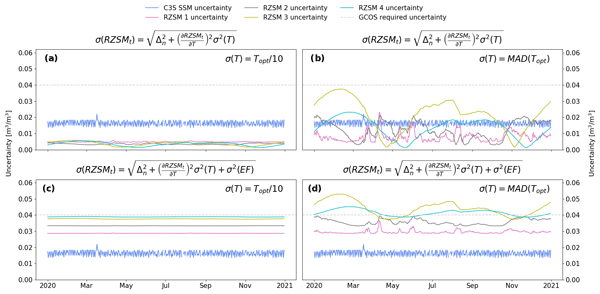
We apply the exponential filter (EF) method to satellite soil moisture retrievals to estimate the water content in the unobserved root zone globally from 2002–2020. Quality assessment against an independent dataset shows satisfactory results. Error characterization is carried out using the standard uncertainty propagation law and empirically estimated values of EF model structural uncertainty and parameter uncertainty. This is followed by analysis of temporal uncertainty variations.
Marco Dionigi, Tommaso Moramarco, Domenico De Santis, Christian Massari, Silvia Barbetta, and Stefania Camici
EGUsphere, https://doi.org/10.5194/egusphere-2026-5965, https://doi.org/10.5194/egusphere-2026-5965, 2026
This preprint is open for discussion and under review for Natural Hazards and Earth System Sciences (NHESS).
Short summary
Short summary
Flood forecasting is challenging in river basins with sparse monitoring networks. We developed a database of pre-computed flood simulations for the Crati River basin in southern Italy, combining stochastically generated rainfall and air temperature with a hydrological model run under different soil moisture conditions. Satellite soil moisture observations select the most relevant simulations, providing river flows in real time. The same approach could be applied to other poorly gauged basins.
Deepali Rawat, Abinesh Ganapathy, and Ankit Agarwal
EGUsphere, https://doi.org/10.5194/egusphere-2026-5903, https://doi.org/10.5194/egusphere-2026-5903, 2026
This preprint is open for discussion and under review for Hydrology and Earth System Sciences (HESS).
Short summary
Short summary
We investigate 175 catchments in Peninsular India spanning a broad gradient of regulation intensity, using catchment-scale, event-based, and long-term analyses. We find that multi-day precipitation and compound events are increasingly associated with extreme floods in regulated catchments compared with short-duration rainfall extremes.
Pragya Badika, Nithila Devi Nallasamy, Nadja Veigel, Laurens J. N. Oostwegel, Heidi Kreibich, and Ankit Agarwal
EGUsphere, https://doi.org/10.5194/egusphere-2026-4699, https://doi.org/10.5194/egusphere-2026-4699, 2026
This preprint is open for discussion and under review for Natural Hazards and Earth System Sciences (NHESS).
Short summary
Short summary
Our study explores how varying resolutions in hazard and exposure assessment affect flood hazard classification and impact estimates in the Upper Narmada Basin, India. Coarser resolutions may overestimate flood extent and exposed estimates, potentially skewing emergency planning. Study emphasizes that spatial resolution is a critical uncertainty factor that should align with research questions and decision-making scales.
Nunzio Romano, Harry Vereecken, Heye R. Bogena, Giorgio Cassiani, Matteo Censini, Giovanna Armiento, Marco Proposito, Lorenzo De Silvestri, Eyal Ben Dor, Nicolas Francos, Christian Massari, János Mészáros, Tünde Takáts, Caterina Mazzitelli, Benedetto Sica, Ugo Lazzaro, and Paolo Nasta
Earth Syst. Sci. Data Discuss., https://doi.org/10.5194/essd-2026-725, https://doi.org/10.5194/essd-2026-725, 2026
Preprint under review for ESSD
Short summary
Short summary
Understanding how climate and land-use change affect water resources requires observations that connect processes from soils and vegetation to groundwater and streams. The Alento dataset is presented that integrates environmental monitoring with targeted field observations across multiple Critical Zone components and scales. The dataset offers a distinctive resource for studying water storage and movement, evaluating environmental models, and improving understanding of water-limited regions.
Francesco Avanzi, Stefano Terzi, Mariapina Castelli, Francesca Munerol, Margherita Andreaggi, Marta Galvagno, Andrea Galletti, Tessa Maurer, Christian Massari, Grace Carlson, Manuela Girotto, Giacomo Bertoldi, Edoardo Cremonese, Simone Gabellani, Umberto Morra di Cella, Marco Altamura, Lauro Rossi, and Luca Ferraris
Hydrol. Earth Syst. Sci., 30, 5769–5790, https://doi.org/10.5194/hess-30-5769-2026, https://doi.org/10.5194/hess-30-5769-2026, 2026
Short summary
Short summary
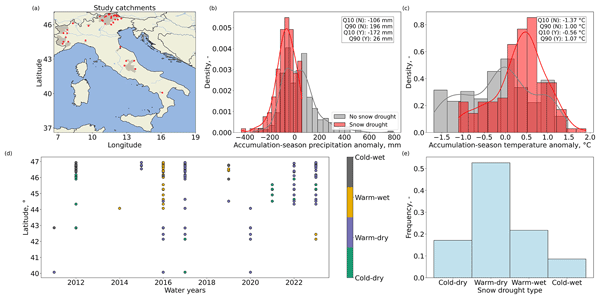
Snow droughts are periods with below-average snow accumulation and are becoming more frequent in a warming climate, yet their ecosystem and societal impacts remain poorly known. Using 13 years of data from 38 Italian catchments, we show that snow droughts reduced snow duration, increased winter melt-out events, and cut summer runoff by ~50 %. Photosynthesis increased by up to 10 % due to earlier meltout. These events also caused widespread water-supply reductions, especially in foothills.
Sakshi Tripathi, Praveen Kumar Thakur, Vaibhav Garg, Ashutosh Sharma, and Raghavendra P. Singh
Int. Arch. Photogramm. Remote Sens. Spatial Inf. Sci., XLIX-B3-2026, 853–858, https://doi.org/10.5194/isprs-archives-XLIX-B3-2026-853-2026, https://doi.org/10.5194/isprs-archives-XLIX-B3-2026-853-2026, 2026
Martina Leone, Francesco Avanzi, Umberto Morra di Cella, Simone Gabellani, Edoardo Cremonese, Michel Isabellon, Paolo Pogliotti, Riccardo Scotti, Andrea Monti, Luca Ferraris, and Roberto Colombo
Hydrol. Earth Syst. Sci., 30, 4649–4666, https://doi.org/10.5194/hess-30-4649-2026, https://doi.org/10.5194/hess-30-4649-2026, 2026
Short summary
Short summary
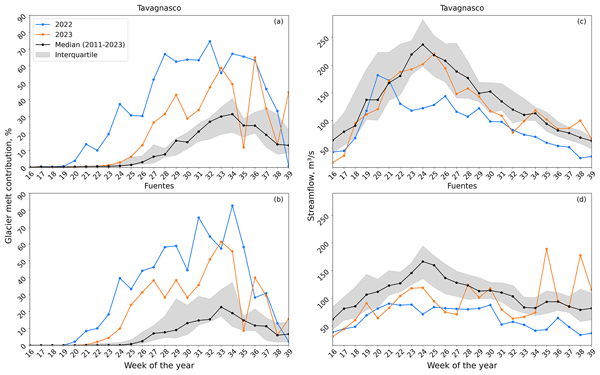
We investigated how glaciers helped sustain summer river flow during the severe snow shortages of 2022 and 2023 in the Italian Alps. Using high-resolution modeling and long-term data, we found that glacier melt contributed up to three times more than in average years. This enhanced melt partly compensated for low snow and precipitation, showing the critical role of glaciers in supporting water resources during droughts.
Pierre Laluet, Jacopo Dari, Louise Busschaert, Zdenko Heyvaert, Gabrielle De Lannoy, Pia Langhans, Sara Modanesi, Christian Massari, Luca Brocca, Carla Saltalippi, Renato Morbidelli, Clément Albergel, and Wouter Dorigo
Earth Syst. Sci. Data, 18, 4833–4853, https://doi.org/10.5194/essd-18-4833-2026, https://doi.org/10.5194/essd-18-4833-2026, 2026
Short summary
Short summary
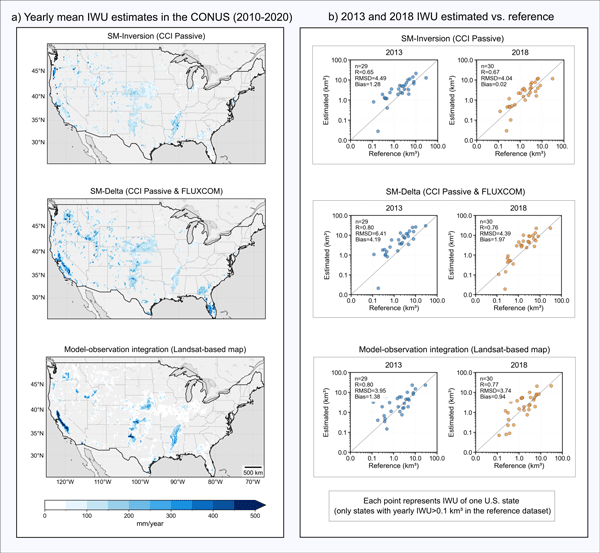
We developed a long-term dataset collection of irrigation water use based on about two decades of satellite observations, three distinct approaches, and many input datasets. The collection provides monthly estimates for major agricultural regions and helps describe how irrigation varies across locations, seasons, and years. It offers a foundation for improving how irrigation is quantified, compared across methods, and integrated into large-scale hydrological and climate studies.
Francesco Avanzi, Hans Lievens, Michael Matiu, Paolo Filippucci, Oscar M. Baez Villanueva, Simone Gabellani, Fabio Delogu, Lorenzo Alfieri, Andrea Libertino, Pere Quintana-Seguì, Diego G. Miralles, Luca Brocca, Christian Massari, and Gabriëlle J. M. De Lannoy
EGUsphere, https://doi.org/10.5194/egusphere-2026-2851, https://doi.org/10.5194/egusphere-2026-2851, 2026
Short summary
Short summary
We developed a new system to map and monitor snow and stored water across large mountain regions using satellite data and computer simulations. Tested in four major European river basins, the system reproduced snow conditions with high accuracy and realistically captured how snow changes with elevation. Because it does not rely on ground measurements, it can help provide consistent information on snow-water resources worldwide, supporting water management and climate adaptation.
Ather Abbas, Yuan Yang, Ming Pan, Yves Tramblay, Chaopeng Shen, Haoyu Ji, Solomon H. Gebrechorkos, Florian Pappenberger, JongCheol Pyo, Dapeng Feng, George Huffman, Phu Nguyen, Christian Massari, Luca Brocca, Jackson Tan, and Hylke E. Beck
Hydrol. Earth Syst. Sci., 30, 3399–3423, https://doi.org/10.5194/hess-30-3399-2026, https://doi.org/10.5194/hess-30-3399-2026, 2026
Short summary
Short summary
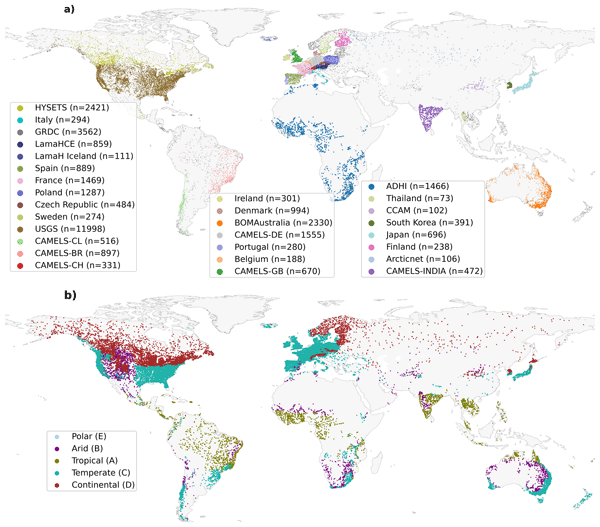
Our study evaluated 24 precipitation datasets using a hydrological model at global scale to assess their suitability and accuracy. We found that MSWEP (Multi-Source Weighted-Ensemble Precipitation) V2.8 excels due to its ability to integrate data from multiple sources, while others, such as IMERG (Integrated Multi-satellitE Retrievals for Global Precipitation Mission) and GDAS (Global Data Assimilation System), demonstrated strong regional performances. This research assists in selecting the appropriate dataset for applications in water resource management, hazard assessment, agriculture, and environmental monitoring.
Gökhan Sarigil, Mattia Neri, Francesco Avanzi, and Elena Toth
EGUsphere, https://doi.org/10.5194/egusphere-2026-2484, https://doi.org/10.5194/egusphere-2026-2484, 2026
Short summary
Short summary
The study evaluates Snow Water Equivalent estimates from three large-scale land-surface products against a national reference dataset in Italy. Highlighting the performances of the products over the different regions and relating them to the biases in the meteorological forcing, the results provide insights for using SWE estimates in long-term hydro-climatological assessments in Italy and for data selection when evaluating snow dynamics in mountainous regions lacking high-quality benchmark data.
Süleyman Selim Çallı, Kübra Özdemir Çallı, Brahim Akdim, Bruno Arfib, Aleksey Benderev, Sandra Beranger, Avi Burg, Onur Can, Jean-Baptiste Charlier, Mehmet Çelik, Arda Melih Çetin, Fehdi Chemseddine, Miroslava Deliyska, Lucio Di Matteo, Marco Dionigi, Romeo Eftimi, Jutta Eybl, Davide Fronzi, Nico Goldscheider, Ergin Gökkaya, Jorge Jodar, Herve Jourde, Eva Kaminsky, Konstantina Katsanou, Alireza Kavousi, Melike Kaya, David Labat, Tanja Liesch, Peter Malik, Christian Massari, Cyril Mayaud, Naomi Mazzilli, Pavel Pracny, Natasa Ravbar, Nathan Rispal, Simon Seelig, Vianney Sivelle, Marc Steinmann, Daniela Valigi, Gerfried Winkler, Ahmet Kemal Yahşi, and Andreas Hartmann
Earth Syst. Sci. Data Discuss., https://doi.org/10.5194/essd-2026-281, https://doi.org/10.5194/essd-2026-281, 2026
Revised manuscript under review for ESSD
Short summary
Short summary
Karst groundwater systems are vital but highly sensitive to climate change. Their complex underground flow makes them hard to manage without good data, so we gathered 118 high-quality records of spring discharge across Mediterranean mountain ranges. With an average of 19 years of data – including one nearly century-long record – this collection provides the detailed information needed to better predict water availability and protect these vulnerable groundwater sources.
Louise Busschaert, Michel Bechtold, Sara Modanesi, Christian Massari, Dirk Raes, Sujay V. Kumar, and Gabriëlle J. M. De Lannoy
Hydrol. Earth Syst. Sci., 30, 2579–2611, https://doi.org/10.5194/hess-30-2579-2026, https://doi.org/10.5194/hess-30-2579-2026, 2026
Short summary
Short summary
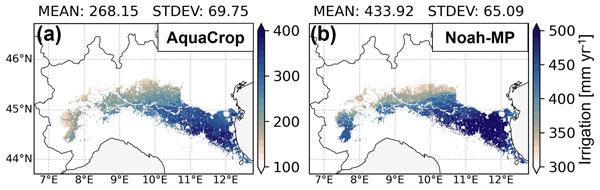
Two models, AquaCrop (crop model) and Noah-MP (land surface model), were compared estimating irrigation in Italy's Po Valley. Noah-MP simulated higher water use (434 mm/yr) than AquaCrop (268 mm/yr), mainly due to extra water losses like runoff. Once losses were accounted for, both aligned with basin-scale reports of around 500 to 600 mm/yr. The study highlights how complex irrigation modeling is, and the need for better observational data to validate results.
Oscar M. Baez-Villanueva, Alfredo Crespo-Otero, Sara Modanesi, Pierre Laluet, Sergio Vicente-Serrano, Jaap Schellekens, Jacopo Dari, Hylke E. Beck, Wouter Dorigo, Christian Massari, Chiara Corbari, Joppe Massant, Kwint Delbare, Olivier Bonte, Aaron Boone, Diego Fernández-Prieto, and Diego G. Miralles
EGUsphere, https://doi.org/10.5194/egusphere-2026-1856, https://doi.org/10.5194/egusphere-2026-1856, 2026
Short summary
Short summary
We developed a new method to estimate daily land evaporation at high resolution across the Iberian Peninsula, explicitly accounting for irrigation. By combining satellite and meteorological data, we show that irrigation can strongly increase evaporation in agricultural areas. The results better match ground observations and improve understanding of water use. This approach can support farming decisions and water management at the regional scale, and will be extended to global applications.
Sofia Ortenzi, Lucio Di Matteo, Daniela Valigi, Marco Donnini, Marco Dionigi, Davide Fronzi, Josie Geris, Fabio Guadagnano, Ivan Marchesini, Paolo Filippucci, Francesco Avanzi, Daniele Penna, and Christian Massari
Hydrol. Earth Syst. Sci., 30, 1755–1778, https://doi.org/10.5194/hess-30-1755-2026, https://doi.org/10.5194/hess-30-1755-2026, 2026
Short summary
Short summary
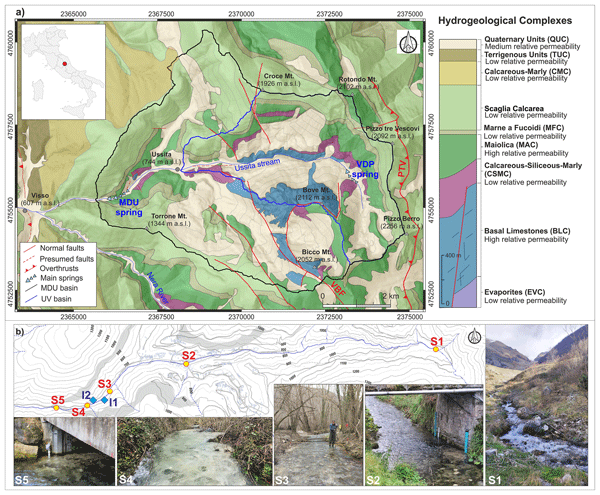
The study presents an integrated approach to analyze groundwater–surface water interactions in a Central Italy catchment, combining hydrological, hydrochemical–isotopic, thermal drone, and satellite data. Results indicate that fractured limestone aquifers sustain streamflow, with snowmelt accounting for about 18 % of recharge. The workflow is transferable and suitable for similar data-scarce Mediterranean basins.
Shima Azimi, Manuela Girotto, Riccardo Rigon, Gaia Roati, Silvia Barbetta, and Christian Massari
EGUsphere, https://doi.org/10.5194/egusphere-2026-793, https://doi.org/10.5194/egusphere-2026-793, 2026
Short summary
Short summary
Even ground-based precipitation observations, often considered the most reliable, can introduce substantial uncertainty into snow modeling due to sparse gauge coverage at high elevations in mountainous catchments.This challenge motivates the present study, in which we propose a data assimilation framework that integrates satellite-based snow depth into a hydrological model to correct snowfall estimates over the Italian Alps, with implications for water management in data-scarce mountain regions.
Sudhanshu Dixit, Sumit Sen, Tahmina Yasmin, Kieran Khamis, Debashish Sen, Wouter Buytaert, and David M. Hannah
Nat. Hazards Earth Syst. Sci., 26, 1251–1268, https://doi.org/10.5194/nhess-26-1251-2026, https://doi.org/10.5194/nhess-26-1251-2026, 2026
Short summary
Short summary
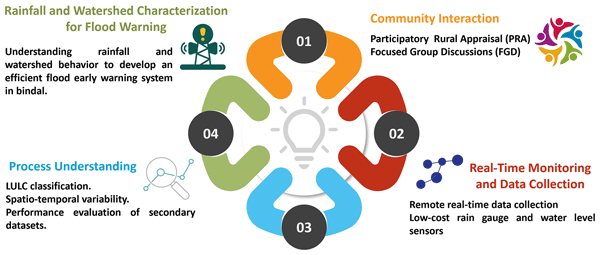
Flash floods are becoming more frequent in mountainous regions due to heavier rainstorms. To protect people and property, we are working to better understand local hydrology and improve the efficiency of early warning systems for urban flooding in Lesser Himalayas. By combining community knowledge, low-cost technology, we can enhance understanding of flood dynamics and strengthen preparedness in mountains. This work is a step toward building resilience by bridging science and community insight.
Senna Bouabdelli, Martin Morlot, Christian Massari, and Giuseppe Formetta
EGUsphere, https://doi.org/10.5194/egusphere-2026-464, https://doi.org/10.5194/egusphere-2026-464, 2026
Short summary
Short summary
Drought is becoming more common in the Alps as warmer winters reduce snow and alter river flow. We used hydrological model simulations in the Adige basin to understand when and why droughts occur. Results show that droughts are happening earlier, becoming more intense, and increasingly driven by lack of rain instead of melting snow at high elevations. This shift toward lower-elevation river behaviour calls for new strategies to manage water for hydropower, agriculture, and tourism.
Giulia Blandini, Francesco Avanzi, Lorenzo Campo, Simone Gabellani, Kristoffer Aalstad, Manuela Girotto, Satoru Yamaguchi, Hiroyuki Hirashima, and Luca Ferraris
The Cryosphere, 19, 4759–4783, https://doi.org/10.5194/tc-19-4759-2025, https://doi.org/10.5194/tc-19-4759-2025, 2025
Short summary
Short summary
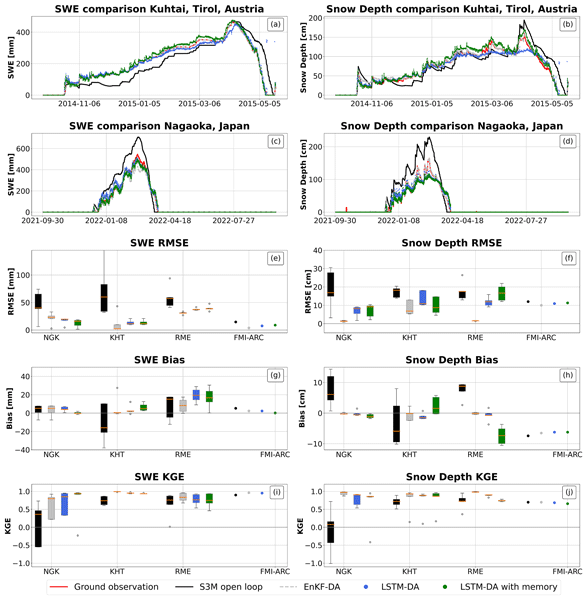
Reliable snow water equivalent and snow depth estimates are key for water management in snow regions. To tackle computational challenges in data assimilation, we propose a Long Short-Term Memory neural network for operational use in snow hydrology. Once trained, it reduces computational cost by 70 percent compared to the Ensemble Kalman Filter, with a slight decrease in performances. This deep learning approach provides a scalable, efficient, and cost-effective modeling solution for hydrology.
Paolo Filippucci, Luca Brocca, Luca Ciabatta, Hamidreza Mosaffa, Francesco Avanzi, and Christian Massari
Earth Syst. Sci. Data, 17, 5221–5258, https://doi.org/10.5194/essd-17-5221-2025, https://doi.org/10.5194/essd-17-5221-2025, 2025
Short summary
Short summary
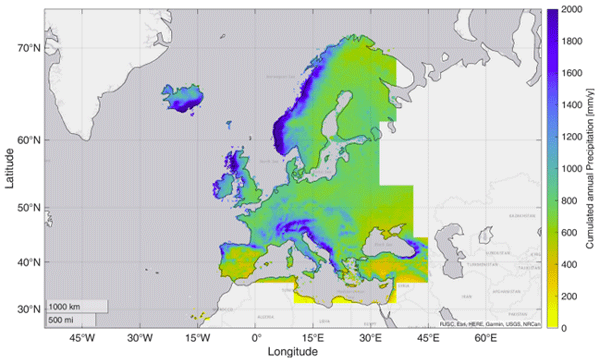
Accurate rainfall data is essential, yet measuring daily precipitation worldwide is challenging. This research presents HYdroclimatic PERformance-enhanced Precipitation (HYPER-P), a dataset combining satellite, ground, and reanalysis data to estimate precipitation at a 1 km scale from 2000 to 2022. HYPER-P improves accuracy, especially in areas with few rain gauges. This dataset supports scientists and decision-makers in understanding and managing water resources more effectively.
Xiangmei Liu, Peng Shen, Jiaqi Chen, David Andrew Barry, Christian Massari, Jiansheng Chen, Mingming Feng, Xi Zhang, Fenyan Ma, Fei Yang, and Haixia Jin
EGUsphere, https://doi.org/10.5194/egusphere-2025-4263, https://doi.org/10.5194/egusphere-2025-4263, 2025
Preprint archived
Short summary
Short summary
Our research in the Songnen Basin of Northeast China has revealed why numerous lakes remain unfrozen during winter. By studying Lake Chagan, we discovered that deep groundwater sustains these lakes, likely flowing through subterranean channels from the Tibetan Plateau. When earthquakes disrupt these conduits, water rises along fault lines to replenish the lakes. This finding challenges the theory that graben lakes primarily depend on local precipitation.
Nikunj K. Mangukiya, Kanneganti Bhargav Kumar, Pankaj Dey, Shailza Sharma, Vijaykumar Bejagam, Pradeep P. Mujumdar, and Ashutosh Sharma
Earth Syst. Sci. Data, 17, 461–491, https://doi.org/10.5194/essd-17-461-2025, https://doi.org/10.5194/essd-17-461-2025, 2025
Short summary
Short summary
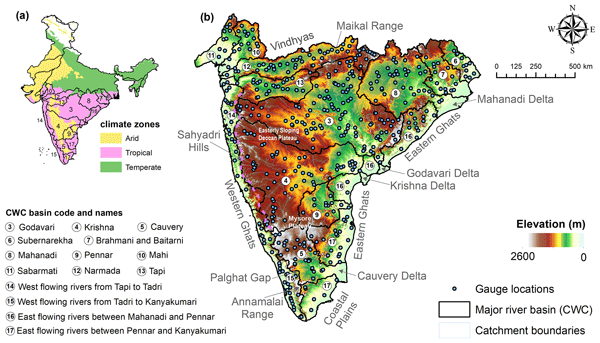
We introduce CAMELS-IND (Catchment Attributes and MEteorology for Large-sample Studies – India), which provides daily hydrometeorological time series and static catchment attributes representing the location, topography, climate, hydrological signatures, land use, land cover, soil, geology, and anthropogenic influences for 472 catchments in Peninsular India to foster large-sample hydrological studies in India and promote the inclusion of Indian catchments in global hydrological research.
Louise Busschaert, Michel Bechtold, Sara Modanesi, Christian Massari, Dirk Raes, Sujay V. Kumar, and Gabrielle J. M. De Lannoy
EGUsphere, https://doi.org/10.2139/ssrn.4974019, https://doi.org/10.2139/ssrn.4974019, 2024
Preprint archived
Short summary
Short summary
This study estimates irrigation in the Po Valley using AquaCrop and Noah-MP models with sprinkler irrigation. Noah-MP shows higher annual rates than AquaCrop due to more water losses. After adjusting, both align with reported irrigation ranges (500–600 mm/yr). Soil moisture estimates from both models match satellite data, though both have limitations in vegetation and evapotranspiration modeling. The study emphasizes the need for observations to improve irrigation estimates.
Wolfgang Schwanghart, Ankit Agarwal, Kristen Cook, Ugur Ozturk, Roopam Shukla, and Sven Fuchs
Nat. Hazards Earth Syst. Sci., 24, 3291–3297, https://doi.org/10.5194/nhess-24-3291-2024, https://doi.org/10.5194/nhess-24-3291-2024, 2024
Short summary
Short summary
The Himalayan landscape is particularly susceptible to extreme events, which interfere with increasing populations and the expansion of settlements and infrastructure. This preface introduces and summarizes the nine papers that are part of the special issue,
Estimating and predicting natural hazards and vulnerabilities in the Himalayan region.
Farhad Bahmanpouri, Tommaso Lazzarin, Silvia Barbetta, Tommaso Moramarco, and Daniele P. Viero
Hydrol. Earth Syst. Sci., 28, 3717–3737, https://doi.org/10.5194/hess-28-3717-2024, https://doi.org/10.5194/hess-28-3717-2024, 2024
Short summary
Short summary
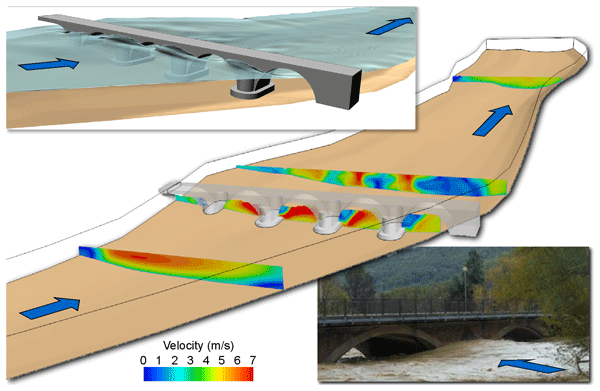
The entropy model is a reliable tool to estimate flood discharge in rivers using observed level and surface velocity. Often, level and velocity sensors are placed on bridges, which may disturb the flow. Using accurate numerical models, we explored the entropy model reliability nearby a multi-arch bridge. We found that it is better to place sensors and to estimate the discharge upstream of bridges; downstream, the entropy model needs the river-wide distribution of surface velocity as input data.
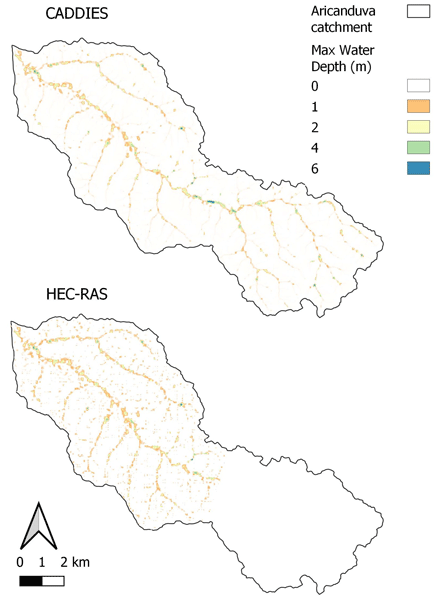
Marina Batalini de Macedo, Nikunj K. Mangukiya, Maria Clara Fava, Ashutosh Sharma, Roberto Fray da Silva, Ankit Agarwal, Maria Tereza Razzolini, Eduardo Mario Mendiondo, Narendra K. Goel, Mathew Kurian, and Adelaide Cássia Nardocci
Proc. IAHS, 386, 41–46, https://doi.org/10.5194/piahs-386-41-2024, https://doi.org/10.5194/piahs-386-41-2024, 2024
Short summary
Short summary
More and more extreme rainfall causes flooding problems in cities and communities, affecting the health and well-being of the population, as well as causing damage to the economy. To help design actions aiming at reducing the impacts of these floods, computational models can be used to simulate their extent. However, there are different types of models currently available. In this study, we evaluated three different models, for a city in Brazil and a region in India, to guide the best use of it.
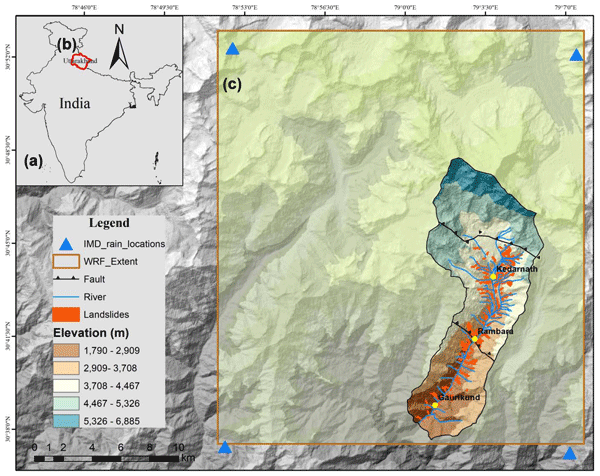
Sudhanshu Dixit, Srikrishnan Siva Subramanian, Piyush Srivastava, Ali P. Yunus, Tapas Ranjan Martha, and Sumit Sen
Nat. Hazards Earth Syst. Sci., 24, 465–480, https://doi.org/10.5194/nhess-24-465-2024, https://doi.org/10.5194/nhess-24-465-2024, 2024
Short summary
Short summary
Rainfall intensity–duration (ID) thresholds can aid in the prediction of natural hazards. Large-scale sediment disasters like landslides, debris flows, and flash floods happen frequently in the Himalayas because of their propensity for intense precipitation events. We provide a new framework that combines the Weather Research and Forecasting (WRF) model with a regionally distributed numerical model for debris flows to analyse and predict intense rainfall-induced landslides in the Himalayas.
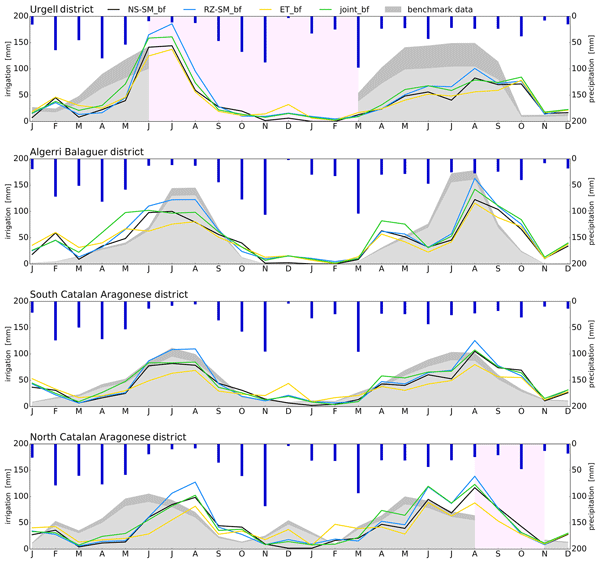
Søren Julsgaard Kragh, Jacopo Dari, Sara Modanesi, Christian Massari, Luca Brocca, Rasmus Fensholt, Simon Stisen, and Julian Koch
Hydrol. Earth Syst. Sci., 28, 441–457, https://doi.org/10.5194/hess-28-441-2024, https://doi.org/10.5194/hess-28-441-2024, 2024
Short summary
Short summary
This study provides a comparison of methodologies to quantify irrigation to enhance regional irrigation estimates. To evaluate the methodologies, we compared various approaches to quantify irrigation using soil moisture, evapotranspiration, or both within a novel baseline framework, together with irrigation estimates from other studies. We show that the synergy from using two equally important components in a joint approach within a baseline framework yields better irrigation estimates.
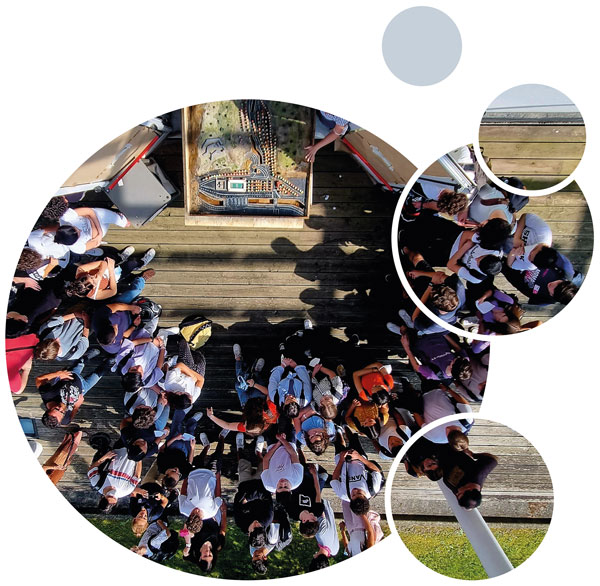
Francesca Munerol, Francesco Avanzi, Eleonora Panizza, Marco Altamura, Simone Gabellani, Lara Polo, Marina Mantini, Barbara Alessandri, and Luca Ferraris
Geosci. Commun., 7, 1–15, https://doi.org/10.5194/gc-7-1-2024, https://doi.org/10.5194/gc-7-1-2024, 2024
Short summary
Short summary
To contribute to advancing education in a warming climate and prepare the next generations to play their role in future societies, we designed “Water and Us”, a three-module initiative focusing on the natural and anthropogenic water cycle, climate change, and conflicts. This study aims to introduce the initiative's educational objectives, methods, and early results.
Shima Azimi, Christian Massari, Giuseppe Formetta, Silvia Barbetta, Alberto Tazioli, Davide Fronzi, Sara Modanesi, Angelica Tarpanelli, and Riccardo Rigon
Hydrol. Earth Syst. Sci., 27, 4485–4503, https://doi.org/10.5194/hess-27-4485-2023, https://doi.org/10.5194/hess-27-4485-2023, 2023
Short summary
Short summary
We analyzed the water budget of nested karst catchments using simple methods and modeling. By utilizing the available data on precipitation and discharge, we were able to determine the response lag-time by adopting new techniques. Additionally, we modeled snow cover dynamics and evapotranspiration with the use of Earth observations, providing a concise overview of the water budget for the basin and its subbasins. We have made the data, models, and workflows accessible for further study.
Giulia Blandini, Francesco Avanzi, Simone Gabellani, Denise Ponziani, Hervé Stevenin, Sara Ratto, Luca Ferraris, and Alberto Viglione
The Cryosphere, 17, 5317–5333, https://doi.org/10.5194/tc-17-5317-2023, https://doi.org/10.5194/tc-17-5317-2023, 2023
Short summary
Short summary
Automatic snow depth data are a valuable source of information for hydrologists, but they also tend to be noisy. To maximize the value of these measurements for real-world applications, we developed an automatic procedure to differentiate snow cover from grass or bare ground data, as well as to detect random errors. This procedure can enhance snow data quality, thus providing more reliable data for snow models.
Adam Pasik, Alexander Gruber, Wolfgang Preimesberger, Domenico De Santis, and Wouter Dorigo
Geosci. Model Dev., 16, 4957–4976, https://doi.org/10.5194/gmd-16-4957-2023, https://doi.org/10.5194/gmd-16-4957-2023, 2023
Short summary
Short summary
We apply the exponential filter (EF) method to satellite soil moisture retrievals to estimate the water content in the unobserved root zone globally from 2002–2020. Quality assessment against an independent dataset shows satisfactory results. Error characterization is carried out using the standard uncertainty propagation law and empirically estimated values of EF model structural uncertainty and parameter uncertainty. This is followed by analysis of temporal uncertainty variations.
Joel Z. Harms, Julien J. Malard-Adam, Jan F. Adamowski, Ashutosh Sharma, and Albert Nkwasa
Hydrol. Earth Syst. Sci., 27, 1683–1693, https://doi.org/10.5194/hess-27-1683-2023, https://doi.org/10.5194/hess-27-1683-2023, 2023
Short summary
Short summary
To facilitate the meaningful participation of stakeholders in water management, model choice is crucial. We show how system dynamics models (SDMs), which are very visual and stakeholder-friendly, can be automatically combined with physically based hydrological models that may be more appropriate for modelling the water processes of a human–water system. This allows building participatory SDMs with stakeholders and delegating hydrological components to an external hydrological model.
Jacopo Dari, Luca Brocca, Sara Modanesi, Christian Massari, Angelica Tarpanelli, Silvia Barbetta, Raphael Quast, Mariette Vreugdenhil, Vahid Freeman, Anaïs Barella-Ortiz, Pere Quintana-Seguí, David Bretreger, and Espen Volden
Earth Syst. Sci. Data, 15, 1555–1575, https://doi.org/10.5194/essd-15-1555-2023, https://doi.org/10.5194/essd-15-1555-2023, 2023
Short summary
Short summary
Irrigation is the main source of global freshwater consumption. Despite this, a detailed knowledge of irrigation dynamics (i.e., timing, extent of irrigated areas, and amounts of water used) are generally lacking worldwide. Satellites represent a useful tool to fill this knowledge gap and monitor irrigation water from space. In this study, three regional-scale and high-resolution (1 and 6 km) products of irrigation amounts estimated by inverting the satellite soil moisture signals are presented.
Tahmina Yasmin, Kieran Khamis, Anthony Ross, Subir Sen, Anita Sharma, Debashish Sen, Sumit Sen, Wouter Buytaert, and David M. Hannah
Nat. Hazards Earth Syst. Sci., 23, 667–674, https://doi.org/10.5194/nhess-23-667-2023, https://doi.org/10.5194/nhess-23-667-2023, 2023
Short summary
Short summary
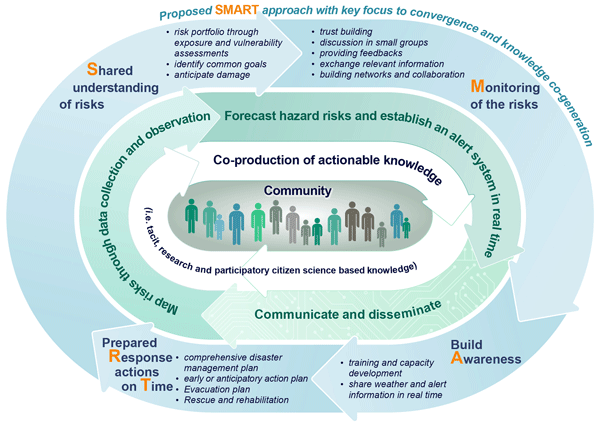
Floods continue to be a wicked problem that require developing early warning systems with plausible assumptions of risk behaviour, with more targeted conversations with the community at risk. Through this paper we advocate the use of a SMART approach to encourage bottom-up initiatives to develop inclusive and purposeful early warning systems that benefit the community at risk by engaging them at every step of the way along with including other stakeholders at multiple scales of operations.
Francesco Avanzi, Simone Gabellani, Fabio Delogu, Francesco Silvestro, Flavio Pignone, Giulia Bruno, Luca Pulvirenti, Giuseppe Squicciarino, Elisabetta Fiori, Lauro Rossi, Silvia Puca, Alexander Toniazzo, Pietro Giordano, Marco Falzacappa, Sara Ratto, Hervè Stevenin, Antonio Cardillo, Matteo Fioletti, Orietta Cazzuli, Edoardo Cremonese, Umberto Morra di Cella, and Luca Ferraris
Earth Syst. Sci. Data, 15, 639–660, https://doi.org/10.5194/essd-15-639-2023, https://doi.org/10.5194/essd-15-639-2023, 2023
Short summary
Short summary
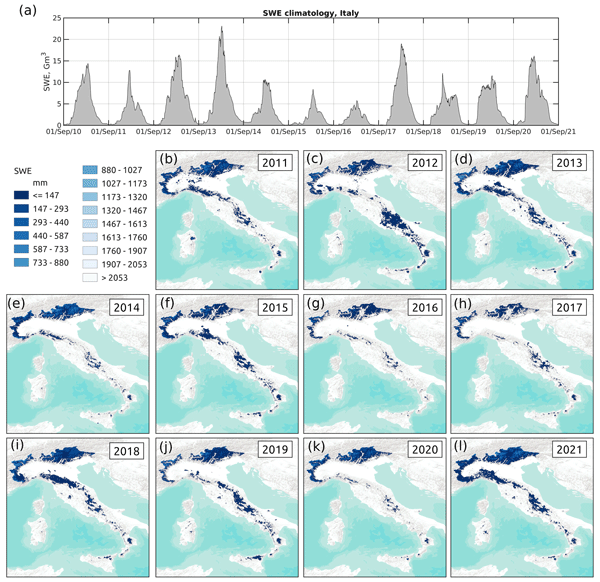
Snow cover has profound implications for worldwide water supply and security, but knowledge of its amount and distribution across the landscape is still elusive. We present IT-SNOW, a reanalysis comprising daily maps of snow amount and distribution across Italy for 11 snow seasons from September 2010 to August 2021. The reanalysis was validated using satellite images and snow measurements and will provide highly needed data to manage snow water resources in a warming climate.
Giulia Bruno, Doris Duethmann, Francesco Avanzi, Lorenzo Alfieri, Andrea Libertino, and Simone Gabellani
Hydrol. Earth Syst. Sci. Discuss., https://doi.org/10.5194/hess-2022-416, https://doi.org/10.5194/hess-2022-416, 2022
Manuscript not accepted for further review
Short summary
Short summary
Hydrological models often have issues during droughts. We used the distributed Continuum model over the Po river basin and independent datasets of streamflow (Q), evapotranspiration (ET), and storage. Continuum simulated Q well during wet years and moderate droughts. Performances declined for a severe drought and we explained this drop with an increased uncertainty in ET anomalies in human-affected croplands. These findings provide guidelines for assessments of model robustness during droughts.
Riccardo Rigon, Giuseppe Formetta, Marialaura Bancheri, Niccolò Tubini, Concetta D'Amato, Olaf David, and Christian Massari
Hydrol. Earth Syst. Sci., 26, 4773–4800, https://doi.org/10.5194/hess-26-4773-2022, https://doi.org/10.5194/hess-26-4773-2022, 2022
Short summary
Short summary
The
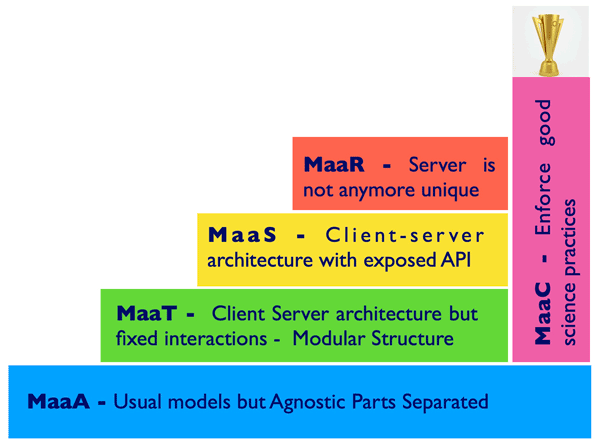
Digital Earth(DE) metaphor is very useful for both end users and hydrological modelers. We analyse different categories of models, with the view of making them part of a Digital eARth Twin Hydrology system (called DARTH). We also stress the idea that DARTHs are not models in and of themselves, rather they need to be built on an appropriate information technology infrastructure. It is remarked that DARTHs have to, by construction, support the open-science movement and its ideas.
Sara Modanesi, Christian Massari, Michel Bechtold, Hans Lievens, Angelica Tarpanelli, Luca Brocca, Luca Zappa, and Gabriëlle J. M. De Lannoy
Hydrol. Earth Syst. Sci., 26, 4685–4706, https://doi.org/10.5194/hess-26-4685-2022, https://doi.org/10.5194/hess-26-4685-2022, 2022
Short summary
Short summary
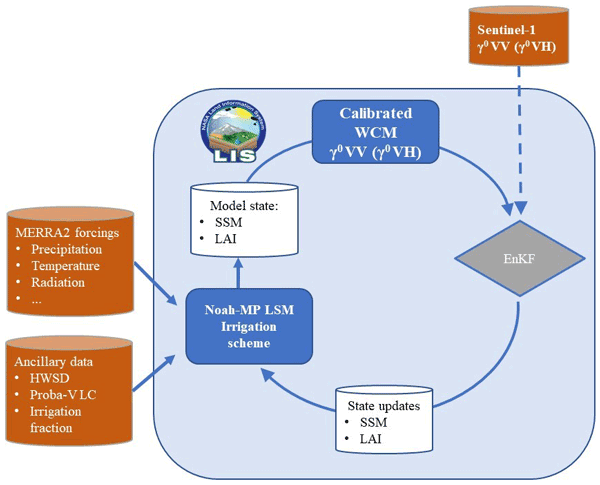
Given the crucial impact of irrigation practices on the water cycle, this study aims at estimating irrigation through the development of an innovative data assimilation system able to ingest high-resolution Sentinel-1 radar observations into the Noah-MP land surface model. The developed methodology has important implications for global water resource management and the comprehension of human impacts on the water cycle and identifies main challenges and outlooks for future research.

Stefania Camici, Gabriele Giuliani, Luca Brocca, Christian Massari, Angelica Tarpanelli, Hassan Hashemi Farahani, Nico Sneeuw, Marco Restano, and Jérôme Benveniste
Geosci. Model Dev., 15, 6935–6956, https://doi.org/10.5194/gmd-15-6935-2022, https://doi.org/10.5194/gmd-15-6935-2022, 2022
Short summary
Short summary
This paper presents an innovative approach, STREAM (SaTellite-based Runoff Evaluation And Mapping), to derive daily river discharge and runoff estimates from satellite observations of soil moisture, precipitation, and terrestrial total water storage anomalies. Potentially useful for multiple operational and scientific applications, the added value of the STREAM approach is the ability to increase knowledge on the natural processes, human activities, and their interactions on the land.
Ravi Kumar Meena, Sumit Sen, Aliva Nanda, Bhargabnanda Dass, and Anurag Mishra
Hydrol. Earth Syst. Sci., 26, 4379–4390, https://doi.org/10.5194/hess-26-4379-2022, https://doi.org/10.5194/hess-26-4379-2022, 2022
Short summary
Short summary
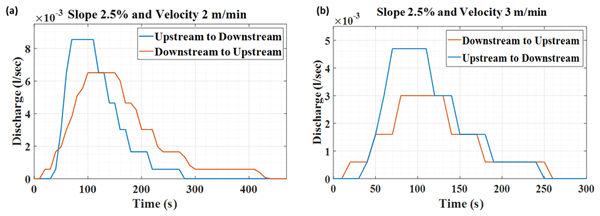
We developed a mobile operated programmable rainfall simulator (RS) to simulate the near-natural moving storm rainfall condition and to study its impact on runoff, soil erosion, and nutrient transport. The designed RS can be used for variable velocity and slope conditions along with the three different soil types at a time. Moreover, the soil flume of the RS is associated with the surface, subsurface, and base flow components.
Lorenzo Alfieri, Francesco Avanzi, Fabio Delogu, Simone Gabellani, Giulia Bruno, Lorenzo Campo, Andrea Libertino, Christian Massari, Angelica Tarpanelli, Dominik Rains, Diego G. Miralles, Raphael Quast, Mariette Vreugdenhil, Huan Wu, and Luca Brocca
Hydrol. Earth Syst. Sci., 26, 3921–3939, https://doi.org/10.5194/hess-26-3921-2022, https://doi.org/10.5194/hess-26-3921-2022, 2022
Short summary
Short summary
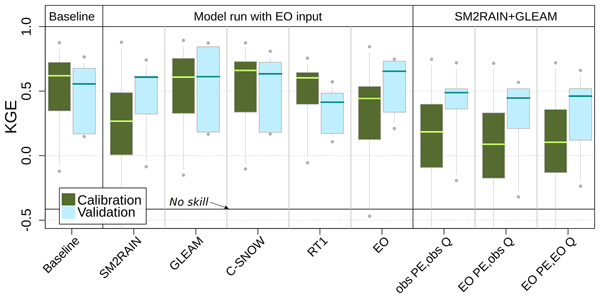
This work shows advances in high-resolution satellite data for hydrology. We performed hydrological simulations for the Po River basin using various satellite products, including precipitation, evaporation, soil moisture, and snow depth. Evaporation and snow depth improved a simulation based on high-quality ground observations. Interestingly, a model calibration relying on satellite data skillfully reproduces observed discharges, paving the way to satellite-driven hydrological applications.
Abhishek Kashyap, Mukunda Dev Behera, Anand Kumar Pandey, and Ankit Agarwal
EGUsphere, https://doi.org/10.5194/egusphere-2022-533, https://doi.org/10.5194/egusphere-2022-533, 2022
Preprint archived
Short summary
Short summary
Bedrock landslides are currently spatially dispersed over a process of landscape evolution in the NW Himalayan river catchments. Our analysis indicates that the zones with slope range between 24–32°, topographic relief ranges between 800–1200 m, and elevation range between 1200–2400 m, are compatible with precipitation intensity ranges between 1500–3000 mm/year in the NW Himalayan river catchments, have the highest probability of frequently occurring landslides.
Francesco Avanzi, Simone Gabellani, Fabio Delogu, Francesco Silvestro, Edoardo Cremonese, Umberto Morra di Cella, Sara Ratto, and Hervé Stevenin
Geosci. Model Dev., 15, 4853–4879, https://doi.org/10.5194/gmd-15-4853-2022, https://doi.org/10.5194/gmd-15-4853-2022, 2022
Short summary
Short summary
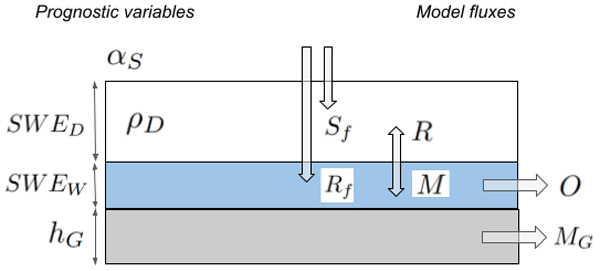
Knowing in real time how much snow and glacier ice has accumulated across the landscape has significant implications for water-resource management and flood control. This paper presents a computer model – S3M – allowing scientists and decision makers to predict snow and ice accumulation during winter and the subsequent melt during spring and summer. S3M has been employed for real-world flood forecasting since the early 2000s but is here being made open source for the first time.
Pankaj R. Dhote, Joshal K. Bansal, Vaibhav Garg, Praveen K. Thakur, and Ankit Agarwal
Nat. Hazards Earth Syst. Sci. Discuss., https://doi.org/10.5194/nhess-2022-101, https://doi.org/10.5194/nhess-2022-101, 2022
Preprint withdrawn
Short summary
Short summary
In the present paper, we have developed framework to establish virtual stage-discharge gauging network in sparsely gauged basin using hydrodynamic modelling and satellite altimetry data. The publication of the work will provide more insights to hydraulic community dealing with flood hazard in sparsely gauged basins, on how to monitor extreme river flow events using remote sensing data at ungauged locations.

Christian Massari, Francesco Avanzi, Giulia Bruno, Simone Gabellani, Daniele Penna, and Stefania Camici
Hydrol. Earth Syst. Sci., 26, 1527–1543, https://doi.org/10.5194/hess-26-1527-2022, https://doi.org/10.5194/hess-26-1527-2022, 2022
Short summary
Short summary
Droughts are a creeping disaster, meaning that their onset, duration and recovery are challenging to monitor and forecast. Here, we provide further evidence of an additional challenge of droughts, i.e. the fact that the deficit in water supply during droughts is generally much more than expected based on the observed decline in precipitation. At a European scale we explain this with enhanced evapotranspiration, sustained by higher atmospheric demand for moisture during such dry periods.

Tessa Maurer, Francesco Avanzi, Steven D. Glaser, and Roger C. Bales
Hydrol. Earth Syst. Sci., 26, 589–607, https://doi.org/10.5194/hess-26-589-2022, https://doi.org/10.5194/hess-26-589-2022, 2022
Short summary
Short summary
Predicting how much water will end up in rivers is more difficult during droughts because the relationship between precipitation and streamflow can change in unexpected ways. We differentiate between changes that are predictable based on the weather patterns and those harder to predict because they depend on the land and vegetation of a particular region. This work helps clarify why models are less accurate during droughts and helps predict how much water will be available for human use.
Sara Modanesi, Christian Massari, Alexander Gruber, Hans Lievens, Angelica Tarpanelli, Renato Morbidelli, and Gabrielle J. M. De Lannoy
Hydrol. Earth Syst. Sci., 25, 6283–6307, https://doi.org/10.5194/hess-25-6283-2021, https://doi.org/10.5194/hess-25-6283-2021, 2021
Short summary
Short summary
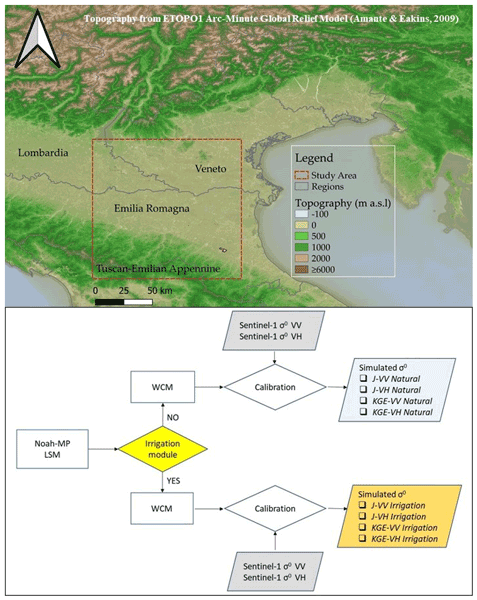
Worldwide, the amount of water used for agricultural purposes is rising and the quantification of irrigation is becoming a crucial topic. Land surface models are not able to correctly simulate irrigation. Remote sensing observations offer an opportunity to fill this gap as they are directly affected by irrigation. We equipped a land surface model with an observation operator able to transform Sentinel-1 backscatter observations into realistic vegetation and soil states via data assimilation.
Daniele Masseroni, Stefania Camici, Alessio Cislaghi, Giorgio Vacchiano, Christian Massari, and Luca Brocca
Hydrol. Earth Syst. Sci., 25, 5589–5601, https://doi.org/10.5194/hess-25-5589-2021, https://doi.org/10.5194/hess-25-5589-2021, 2021
Short summary
Short summary
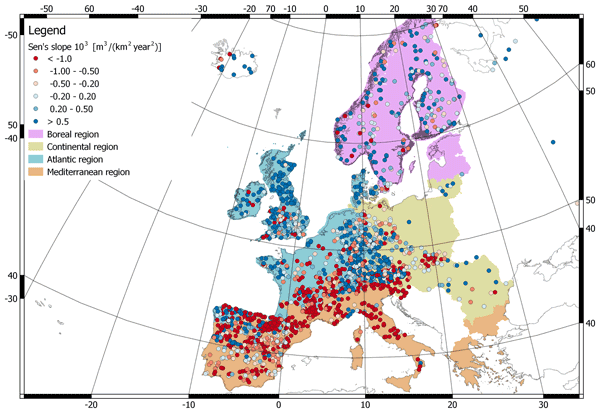
We evaluate 63 years of changes in annual streamflow volume across Europe, using a data set of more than 3000 stations, with a special focus on the Mediterranean basin. The results show decreasing (increasing) volumes in the southern (northern) regions. These trends are strongly consistent with the changes in temperature and precipitation.
Cited articles
Adam, J. C. and Lettenmaier, D. P.: Adjustment of global gridded precipitation for systematic bias, J. Geophys. Res., 108, 4257, https://doi.org/10.1029/2002JD002499, 2003.
Addor, N., Rössler, O., Köplin, N., Huss, M., Weingartner, R., and Seibert, J.: Robust changes and sources of uncertainty in the projected hydrological regimes of Swiss catchments, Water Resour. Res., 50, 7541–7562, https://doi.org/10.1002/2014WR015549, 2014.
Ahrens, B., Meier, T., and Brisson, E.: Diurnal cycle of precipitation in the Himalayan Foothills – Observations and model results, in: Himalayan Weather and Climate and their Impact on the Environment, edited by: Dimri, A., Bookhagen, B., Stoffel, M., and Yasunari, T., Springer, Cham, 73–89, https://doi.org/10.1007/978-3-030-29684-1_5, 2020.
Allen, R. G., Pereira, L. S., Raes, D., and Smith, M.: Crop evapotranspiration – Guidelines for computing crop water requirements, FAO Irrigation and Drainage Paper 56, ISBN 92-5-104219-5, 1998.
Allen, R. G., Pruitt, W. O., Wright, J. L., Howell, T. A., Ventura, F., Snyder, R., Itenfisu, D., Steduto, P., Berengena, J., Yrisarry, J. B., Smith, M., Pereira, L. S., Raes, D., Perrier, A., Alves, I., Walter, I., and Elliott, R.: A recommendation on standardized surface resistance for hourly calculation of reference ETo by the FAO56 Penman-Monteith method, Agr. Water Manage., 81, 1–22, https://doi.org/10.1016/j.agwat.2005.03.007, 2006.
Allen, S. K., Rastner, P., Arora, M., Huggel, C., and Stoffel, M.: Lake outburst and debris flow disaster at Kedarnath, June 2013: hydrometeorological triggering and topographic predisposition, Landslides, 13, 1479–1491, https://doi.org/10.1007/s10346-015-0584-3, 2016.
Arora, M., Singh, P., Goel, N. K., and Singh, R. D.: Spatial distribution and seasonal variability of rainfall in a mountainous basin in the Himalayan region, Water Resour. Manag., 20, 489–508, https://doi.org/10.1007/s11269-006-8773-4, 2006.
Azam, M. F., Kargel, J. S., Shea, J. M., Nepal, S., Haritashya, U. K., Srivastava, S., Maussion, F., Qazi, N., Chevallier, P., Dimri, A. P., Kulkarni, A. V., Cogley, J. G., and Bahuguna, I.: Glaciohydrology of the Himalaya-Karakoram, Science, 373, https://doi.org/10.1126/science.abf3668, 2021.
Azimi, S., Massari, C., Roati, G., Barbetta, S., and Rigon, R.: A new tool for correcting the spatial and temporal pattern of global precipitation products across mountainous terrain: precipitation and hydrological analysis, J. Hydrol., 660, 133530, https://doi.org/10.1016/j.jhydrol.2025.133530, 2025.
Bahr, D. B.: Global distributions of glacier properties: A stochastic scaling paradigm, Water Resour. Res., 33, 1669–1679, https://doi.org/10.1029/97WR00824, 1997.
Bahr, D. B.: Estimation of glacier volume and volume change by scaling methods, in: Encyclopedia of Snow, Ice and Glaciers. Encyclopedia of Earth Sciences Series, edited by: Singh, V. P., Singh, P., and Haritashya, U. K., Springer, Dordrecht, 278–280, https://doi.org/10.1007/978-90-481-2642-2_690, 2011.
Bahr, D. B., Pfeffer, W. T., and Kaser, G.: A review of volume-area scaling of glaciers, Rev. Geophys., 53, 95–140, https://doi.org/10.1002/2014RG000470, 2015.
Bandyopadhyay, D., Singh, G., and Kulkarni, A. V.: Spatial distribution of decadal ice-thickness change and glacier stored water loss in the Upper Ganga basin, India during 2000–2014, Sci. Rep.-UK, 9, 16730, https://doi.org/10.1038/s41598-019-53055-y, 2019.
Bannister, D., Orr, A., Jain, S. K., Holman, I. P., Momblanch, A., Phillips, T., Adeloye, A. J., Snapir, B., Waine, T. W., Hosking, J. S., and Allen-Sader, C.: Bias correction of High-Resolution Regional Climate Model precipitation output gives the best estimates of precipitation in Himalayan catchments, J. Geophys. Res.-Atmos., 124, 14220–14239, https://doi.org/10.1029/2019JD030804, 2019.
Baral, P., Kayastha, R. B., Immerzeel, W. W., Pradhananga, N. S., Bhattarai, B. C., Shahi, S., Galos, S., Springer, C., Joshi, S. P., and Mool, P. K.: Preliminary results of mass-balance observations of Yala Glacier and analysis of temperature and precipitation gradients in Langtang Valley, Nepal, Ann. Glaciol., 55, 9–14, https://doi.org/10.3189/2014AoG66A106, 2014.
Barandun, M. and Pohl, E.: Central Asia's spatiotemporal glacier response ambiguity due to data inconsistencies and regional simplifications, The Cryosphere, 17, 1343–1371, https://doi.org/10.5194/tc-17-1343-2023, 2023.
Barros, A. P., Kim, G., Williams, E., and Nesbitt, S. W.: Probing orographic controls in the Himalayas during the monsoon using satellite imagery, Nat. Hazards Earth Syst. Sci., 4, 29–51, https://doi.org/10.5194/nhess-4-29-2004, 2004.
Beven, K. and Young, P.: A guide to good practice in modeling semantics for authors and referees, Water Resour. Res., 49, 5092–5098, https://doi.org/10.1002/wrcr.20393, 2013.
Bhambri, R., Schmidt, S., Chand, P., Nüsser, M., Haritashya, U., Sain, K., Tiwari, S. K., and Yadav, J. S.: Heterogeneity in glacier thinning and slowdown of ice movement in the Garhwal Himalaya, India, Sci. Total Environ., 875, 162625, https://doi.org/10.1016/j.scitotenv.2023.162625, 2023.
Bhattacharya, A., Mukherjee, K., King, O., Karmakar, S., Remya, S. N., Kulkarni, A. V., Kropáček, J., and Bolch, T.: Influence of climate and non-climatic attributes on declining glacier mass budget and surging in Alaknanda Basin and its surroundings, Global Planet. Change, 230, 104260, https://doi.org/10.1016/j.gloplacha.2023.104260, 2023.
Brocca, L., Melone, F., and Moramarco, T.: Distributed rainfall-runoff modelling for flood frequency estimation and flood forecasting, Hydrol. Process., 25, 2801–2813, https://doi.org/10.1002/hyp.8042, 2011.
Brocca, L., Moramarco, T., Melone, F., Wagner, W., Hasenauer, S., and Hahn, S.: Assimilation of Surface- and Root-Zone ASCAT Soil Moisture Products Into Rainfall-Runoff Modeling, IEEE T. Geosci. Remote, 50, 2542–2555, https://doi.org/10.1109/TGRS.2011.2177468, 2012.
Burek, P., Satoh, Y., Kahil, T., Tang, T., Greve, P., Smilovic, M., Guillaumot, L., Zhao, F., and Wada, Y.: Development of the Community Water Model (CWatM v1.04) – a high-resolution hydrological model for global and regional assessment of integrated water resources management, Geosci. Model Dev., 13, 3267–3298, https://doi.org/10.5194/gmd-13-3267-2020, 2020.
Burlando, P., Pellicciotti, F., and Strasser, U.: Modelling mountainous water systems between learning and speculating looking for challenges, Hydrol. Res., 33, 47–74, https://doi.org/10.2166/nh.2002.0004, 2002.
Camici, S., Massari, C., Ciabatta, L., Marchesini, I., and Brocca, L.: Which rainfall score is more informative about the performance in river discharge simulation? A comprehensive assessment on 1318 basins over Europe, Hydrol. Earth Syst. Sci., 24, 4869–4885, https://doi.org/10.5194/hess-24-4869-2020, 2020.
Chakrapani, G. J. and Saini, R. K.: Temporal and spatial variations in water discharge and sediment load in the Alaknanda and Bhagirathi Rivers in Himalaya, India, J. Asian Earth Sci., 35, 545–553, https://doi.org/10.1016/j.jseaes.2009.04.002, 2009.
Chawla, I. and Mujumdar, P. P.: Evaluating rainfall datasets to reconstruct floods in data-sparse Himalayan region, J. Hydrol., 588, 125090, https://doi.org/10.1016/j.jhydrol.2020.125090, 2020.
Chen, R., Wang, G., Yang, Y., Liu, J., Han, C., Song, Y., Liu, Z., and Kang, E.: Effects of cryospheric change on Alpine hydrology: combining a model with observations in the upper reaches of the Hei River, China, J. Geophys. Res.-Atmos., 123, 3414–3442, https://doi.org/10.1002/2017JD027876, 2018.
Chen, X., Long, D., Hong, Y., Zeng, C., and Yan, D.: Improved modeling of snow and glacier melting by a progressive two-stage calibration strategy with GRACE and multisource data: How snow and glacier meltwater contributes to the runoff of the Upper Brahmaputra River basin?, Water Resour. Res., 53, 2431–2466, https://doi.org/10.1002/2016WR019656, 2017a.
Chen, Y., Li, W., Fang, G., and Li, Z.: Review article: Hydrological modeling in glacierized catchments of central Asia – status and challenges, Hydrol. Earth Syst. Sci., 21, 669–684, https://doi.org/10.5194/hess-21-669-2017, 2017b.
Chen, Y., Sharma, S., Zhou, X., Yang, K., Li, X., Niu, X., Hu, X., and Khadka, N.: Spatial performance of multiple reanalysis precipitation datasets on the southern slope of central Himalaya, Atmos. Res., 250, 105365, https://doi.org/10.1016/j.atmosres.2020.105365, 2021.
Chevuturi, A., Dimri, A. P., Das, S., Kumar, A., and Niyogi, D.: Numerical simulation of an intense precipitation event over Rudraprayag in the central Himalayas during 13–14 September 2012, J. Earth Syst. Sci., 124, 1545–1561, https://doi.org/10.1007/s12040-015-0622-5, 2015.
Collier, E. and Immerzeel, W. W.: High-resolution modeling of atmospheric dynamics in the Nepalese Himalaya, J. Geophys. Res.-Atmos., 120, 9882–9896, https://doi.org/10.1002/2015JD023266, 2015.
Collins, D. N., Davenport, J. L., and Stoffel, M.: Climatic variation and runoff from partially-glacierised Himalayan tributary basins of the Ganges, Sci. Total Environ., 468–469, S48–S59, https://doi.org/10.1016/j.scitotenv.2013.10.126, 2013.
Cui, T., Li, Y., Yang, L., Nan, Y., Li, K., Tudaji, M., Hu, H., Long, D., Shahid, M., Mubeen, A., He, Z., Yong, B., Lu, H., Li, C., Ni, G., Hu, C., and Tian, F.: Non-monotonic changes in Asian Water Towers' streamflow at increasing warming levels, Nat. Commun., 14, 1176, https://doi.org/10.1038/s41467-023-36804-6, 2023.
Dahri, Z. H., Ludwig, F., Moors, E., Ahmad, B., Khan, A., and Kabat, P.: An appraisal of precipitation distribution in the high-altitude catchments of the Indus basin, Sci. Total Environ., 548–549, 289–306, https://doi.org/10.1016/j.scitotenv.2016.01.001, 2016.
Deng, C. and Zhang, W.: Spatial distribution pattern of degree–day factors of glaciers on the Qinghai–Tibetan Plateau, Environ. Monit. Assess., 190, 475, https://doi.org/10.1007/s10661-018-6860-7, 2018.
De Santis, D., Biondi, D., Crow, W. T., Camici, S., Modanesi, S., Brocca, L., and Massari, C.: Assimilation of satellite soil moisture products for river flow prediction: an extensive experiment in over 700 catchments throughout Europe, Water Resour. Res., 57, https://doi.org/10.1029/2021WR029643, 2021.
Devkota, A., Bhattarai, P. K., Pandey, V. P., Pichuka, S., Pradhan, A. M. S., and Shrestha, S.: Hydrological performance of ERA5 land in the data-scarce Himalayan region of the Langtang catchment, Theor. Appl. Climatol., 157, 14, https://doi.org/10.1007/s00704-025-05933-x, 2026.
Dimri, A. P., Thayyen, R. J., Kibler, K., Stanton, A., Jain, S. K., Tullos, D., and Singh, V. P.: A review of atmospheric and land surface processes with emphasis on flood generation in the Southern Himalayan rivers, Sci. Total Environ., 556, 98–115, https://doi.org/10.1016/j.scitotenv.2016.02.206, 2016.
Dimri, A. P., Chevuturi, A., Niyogi, D., Thayyen, R. J., Ray, K., Tripathi, S. N., Pandey, A. K., and Mohanty, U. C.: Cloudbursts in Indian Himalayas: A review, Earth-Sci. Rev., 168, 1–23, https://doi.org/10.1016/j.earscirev.2017.03.006, 2017.
Dimri, A. P., Allen, S., Huggel, C., Mal, S., Ballesteros-Cánovas, J. A., Rohrer, M., Shukla, A., Tiwari, P., Maharana, P., Bolch, T., Thayyen, R. J., Stoffel, M., and Pandey, A.: Climate change, cryosphere and impacts in the Indian Himalayan region, Curr. Sci. India, 120, 774, https://doi.org/10.18520/cs/v120/i5/774-790, 2021.
Dorigo, W., Dietrich, S., Aires, F., Brocca, L., Carter, S., Cretaux, J.-F., Dunkerley, D., Enomoto, H., Forsberg, R., Güntner, A., Hegglin, M. I., Hollmann, R., Hurst, D. F., Johannessen, J. A., Kummerow, C., Lee, T., Luojus, K., Looser, U., Miralles, D. G., Pellet, V., Recknagel, T., Vargas, C. R., Schneider, U., Schoeneich, P., Schröder, M., Tapper, N., Vuglinsky, V., Wagner, W., Yu, L., Zappa, L., Zemp, M., and Aich, V.: Closing the Water Cycle from Observations across Scales: Where Do We Stand?, B. Am. Meteorol. Soc., 102, E1897–E1935, https://doi.org/10.1175/BAMS-D-19-0316.1, 2021.
Duethmann, D., Zimmer, J., Gafurov, A., Güntner, A., Kriegel, D., Merz, B., and Vorogushyn, S.: Evaluation of areal precipitation estimates based on downscaled reanalysis and station data by hydrological modelling, Hydrol. Earth Syst. Sci., 17, 2415–2434, https://doi.org/10.5194/hess-17-2415-2013, 2013.
Duethmann, D., Bolch, T., Farinotti, D., Kriegel, D., Vorogushyn, S., Merz, B., Pieczonka, T., Jiang, T., Su, B., and Güntner, A.: Attribution of streamflow trends in snow and glacier melt-dominated catchments of the Tarim River, Central Asia, Water Resour. Res., 51, 4727–4750, https://doi.org/10.1002/2014WR016716, 2015.
Efstratiadis, A. and Koutsoyiannis, D.: One decade of multi-objective calibration approaches in hydrological modelling: a review, Hydrolog. Sci. J., 55, 58–78, https://doi.org/10.1080/02626660903526292, 2010.
Evin, G., Le Lay, M., Fouchier, C., Penot, D., Colleoni, F., Mas, A., Garambois, P.-A., and Laurantin, O.: Evaluation of hydrological models on small mountainous catchments: impact of the meteorological forcings, Hydrol. Earth Syst. Sci., 28, 261–281, https://doi.org/10.5194/hess-28-261-2024, 2024.
Fenicia, F., Kavetski, D., and Savenije, H. H. G.: Elements of a flexible approach for conceptual hydrological modeling: 1. Motivation and theoretical development, Water Resour. Res., 47, https://doi.org/10.1029/2010WR010174, 2011.
Finger, D., Vis, M., Huss, M., and Seibert, J.: The value of multiple data set calibration versus model complexity for improving the performance of hydrological models in mountain catchments, Water Resour. Res., 51, 1939–1958, https://doi.org/10.1002/2014WR015712, 2015.
Fowler, H. J., Blenkinsop, S., and Tebaldi, C.: Linking climate change modelling to impacts studies: recent advances in downscaling techniques for hydrological modelling, Int. J. Climatol., 27, 1547–1578, https://doi.org/10.1002/joc.1556, 2007.
Freudiger, D., Kohn, I., Seibert, J., Stahl, K., and Weiler, M.: Snow redistribution for the hydrological modeling of alpine catchments, WIREs Water, 4, https://doi.org/10.1002/wat2.1232, 2017.
Fugger, S., Shaw, T. E., Jouberton, A., Miles, E. S., Buri, P., McCarthy, M., Fyffe, C., Fatichi, S., Kneib, M., Molnar, P., and Pellicciotti, F.: Hydrological regimes and evaporative flux partitioning at the climatic ends of high mountain Asia, Environ. Res. Lett., 19, 044057, https://doi.org/10.1088/1748-9326/ad25a0, 2024.
Gao, H., Ding, Y., Zhao, Q., Hrachowitz, M., and Savenije, H. H. G.: The importance of aspect for modelling the hydrological response in a glacier catchment in Central Asia, Hydrol. Process., 31, 2842–2859, https://doi.org/10.1002/hyp.11224, 2017.
Garcia, F., Folton, N., and Oudin, L.: Which objective function to calibrate rainfall–runoff models for low-flow index simulations?, Hydrolog. Sci. J., 62, 1149–1166, https://doi.org/10.1080/02626667.2017.1308511, 2017.
Garg, S., Jena, P., Devi, U., and Azad, S.: Performance evaluation of high-resolution IMDAA and IMERG for detecting cloudburst events over the Northwest Himalayas, Int. J. Climatol., 43, 3730–3748, https://doi.org/10.1002/joc.8055, 2023.
Ghatak, D., Zaitchik, B., Kumar, S., Matin, M. A., Bajracharya, B., Hain, C., and Anderson, M.: Influence of Precipitation Forcing Uncertainty on Hydrological Simulations with the NASA South Asia Land Data Assimilation System, Hydrology, 5, 57, https://doi.org/10.3390/hydrology5040057, 2018.
Girotto, M., Formetta, G., Azimi, S., Bachand, C., Cowherd, M., De Lannoy, G., Lievens, H., Modanesi, S., Raleigh, M. S., Rigon, R., and Massari, C.: Identifying snowfall elevation patterns by assimilating satellite-based snow depth retrievals, Sci. Total Environ., 906, 167312, https://doi.org/10.1016/j.scitotenv.2023.167312, 2024.
Givovich, F., Mendoza, P. A., Vásquez, N. A., Murillo, O., Muñoz-Castro, E., and Ayala, Á.: Representing subgrid precipitation variability in snowpack and hydrological modeling: Is adding complexity worth it?, J. Hydrol., 662, 134038, https://doi.org/10.1016/j.jhydrol.2025.134038, 2025.
Goteti, G. and Famiglietti, J.: Extent of gross underestimation of precipitation in India, Hydrol. Earth Syst. Sci., 28, 3435–3455, https://doi.org/10.5194/hess-28-3435-2024, 2024.
Grinsted, A.: An estimate of global glacier volume, The Cryosphere, 7, 141–151, https://doi.org/10.5194/tc-7-141-2013, 2013.
Gupta, H. V., Kling, H., Yilmaz, K. K., and Martinez, G. F.: Decomposition of the mean squared error and NSE performance criteria: Implications for improving hydrological modelling, J. Hydrol., 377, 80–91, https://doi.org/10.1016/j.jhydrol.2009.08.003, 2009.
Hansen, N., Müller, S. D., and Koumoutsakos, P.: Reducing the Time Complexity of the Derandomized Evolution Strategy with Covariance Matrix Adaptation (CMA-ES), Evol. Comput., 11, 1–18, https://doi.org/10.1162/106365603321828970, 2003.
Hegdahl, T. J., Tallaksen, L. M., Engeland, K., Burkhart, J. F., and Xu, C.-Y.: Discharge sensitivity to snowmelt parameterization: a case study for Upper Beas basin in Himachal Pradesh, India, Hydrol. Res., 47, 683–700, https://doi.org/10.2166/nh.2016.047, 2016.
Hock, R.: Temperature index melt modelling in mountain areas, J. Hydrol., 282, 104–115, https://doi.org/10.1016/S0022-1694(03)00257-9, 2003.
Hock, R.: Glacier melt: a review of processes and their modelling, Prog. Phys. Geog., 29, 362–391, https://doi.org/10.1191/0309133305pp453ra, 2005.
Hoeltgebaum, L. E. B. and Dias, N. L.: Evaluation of the storage and evapotranspiration terms of the water budget for an agricultural watershed using local and remote-sensing measurements, Agr. Forest Meteorol., 341, 109615, https://doi.org/10.1016/j.agrformet.2023.109615, 2023.
Horton, P., Schaefli, B., and Kauzlaric, M.: Why do we have so many different hydrological models? A review based on the case of Switzerland, WIREs Water, 9, https://doi.org/10.1002/wat2.1574, 2022.
Huang, J., Su, F., Yao, T., and Sun, H.: Runoff Regime, Change, and Attribution in the Upper Syr Darya and Amu Darya, Central Asia, J. Hydrometeorol., 23, 1563–1585, https://doi.org/10.1175/JHM-D-22-0036.1, 2022.
Huss, M.: Density assumptions for converting geodetic glacier volume change to mass change, The Cryosphere, 7, 877–887, https://doi.org/10.5194/tc-7-877-2013, 2013.
Huss, M. and Farinotti, D.: Distributed ice thickness and volume of all glaciers around the globe, J. Geophys. Res., 117, https://doi.org/10.1029/2012JF002523, 2012.
Huss, M., Jouvet, G., Farinotti, D., and Bauder, A.: Future high-mountain hydrology: a new parameterization of glacier retreat, Hydrol. Earth Syst. Sci., 14, 815–829, https://doi.org/10.5194/hess-14-815-2010, 2010.
Immerzeel, W. W., Pellicciotti, F., and Shrestha, A. B.: Glaciers as a proxy to quantify the spatial distribution of precipitation in the Hunza Basin, Mt. Res. Dev., 32, 30–38, https://doi.org/10.1659/MRD-JOURNAL-D-11-00097.1, 2012.
Immerzeel, W. W., Petersen, L., Ragettli, S., and Pellicciotti, F.: The importance of observed gradients of air temperature and precipitation for modeling runoff from a glacierized watershed in the Nepalese Himalayas, Water Resour. Res., 50, 2212–2226, https://doi.org/10.1002/2013WR014506, 2014.
Ismail, M. F., Bogacki, W., Disse, M., Schäfer, M., and Kirschbauer, L.: Estimating degree-day factors of snow based on energy flux components, The Cryosphere, 17, 211–231, https://doi.org/10.5194/tc-17-211-2023, 2023.
Jena, P., Garg, S., and Azad, S.: Performance Analysis of IMD High-Resolution Gridded Rainfall (0.25°×0.25°) and Satellite Estimates for Detecting Cloudburst Events over the Northwest Himalayas, J. Hydrometeorol., 21, 1549–1569, https://doi.org/10.1175/JHM-D-19-0287.1, 2020.
Jiang, Y., Yang, K., Yang, H., Lu, H., Chen, Y., Zhou, X., Sun, J., Yang, Y., and Wang, Y.: Characterizing basin-scale precipitation gradients in the Third Pole region using a high-resolution atmospheric simulation-based dataset, Hydrol. Earth Syst. Sci., 26, 4587–4601, https://doi.org/10.5194/hess-26-4587-2022, 2022.
Johnson, E. and Rupper, S.: An examination of physical processes that trigger the albedo-feedback on glacier surfaces and implications for regional glacier mass balance across High Mountain Asia, Front. Earth Sci., 8, https://doi.org/10.3389/feart.2020.00129, 2020.
Joshi, V. and Kumar, K.: Extreme rainfall events and associated natural hazards in Alaknanda valley, Indian Himalayan region, J. Mt. Sci., 3, 228–236, https://doi.org/10.1007/s11629-006-0228-0, 2006.
Jost, G., Moore, R. D., Menounos, B., and Wheate, R.: Quantifying the contribution of glacier runoff to streamflow in the upper Columbia River Basin, Canada, Hydrol. Earth Syst. Sci., 16, 849–860, https://doi.org/10.5194/hess-16-849-2012, 2012.
Karki, R., ul Hasson, S., Gerlitz, L., Schickhoff, U., Scholten, T., and Böhner, J.: Quantifying the added value of convection-permitting climate simulations in complex terrain: a systematic evaluation of WRF over the Himalayas, Earth Syst. Dynam., 8, 507–528, https://doi.org/10.5194/esd-8-507-2017, 2017.
Karki, R., ul Hasson, S., Gerlitz, L., Talchabhadel, R., Schenk, E., Schickhoff, U., Scholten, T., and Böhner, J.: WRF-based simulation of an extreme precipitation event over the Central Himalayas: Atmospheric mechanisms and their representation by microphysics parameterization schemes, Atmos. Res., 214, 21–35, https://doi.org/10.1016/j.atmosres.2018.07.016, 2018.
Kavya, M., Singh, A., Jha, S. K., Kouwen, N., and Srivastava, P.: Applicability of reanalysis data in calibrating a hydrological model in a data-scarce mountainous watershed, Int. J. River Basin Manag., 1–19, https://doi.org/10.1080/15715124.2024.2445236, 2025.
Kayastha, R. B., Ageta, Y., Nakawo, M., Fujita, K., Sakai, A., and Matsuda, Y.: Positive degree-day factors for ice ablation on four glaciers in the Nepalese Himalayas and Qinghai-Tibetan Plateau, Bull. Glaciol. Res., 20, 7–14, 2003.
Kayastha, R. B., Steiner, N., Kayastha, R., Mishra, S. K., and McDonald, K.: Comparative study of hydrology and icemelt in three Nepal river basins using the Glacio-Hydrological Degree-Day Model (GDM) and observations from the Advanced Scatterometer (ASCAT), Front. Earth Sci., 7, https://doi.org/10.3389/feart.2019.00354, 2020.
Khadka, A., Wagnon, P., Brun, F., Shrestha, D., Lejeune, Y., and Arnaud, Y.: Evaluation of ERA5-Land and HARv2 Reanalysis Data at High Elevation in the Upper Dudh Koshi Basin (Everest Region, Nepal), J. Appl. Meteorol. Clim., 61, 931–954, https://doi.org/10.1175/JAMC-D-21-0091.1, 2022.
Khadka, M., Kayastha, R. B., and Kayastha, R.: Future projection of cryospheric and hydrologic regimes in Koshi River basin, Central Himalaya, using coupled glacier dynamics and glacio-hydrological models, J. Glaciol., 66, 831–845, https://doi.org/10.1017/jog.2020.51, 2020.
Kobierska, F., Jonas, T., Zappa, M., Bavay, M., Magnusson, J., and Bernasconi, S. M.: Future runoff from a partly glacierized watershed in Central Switzerland: A two-model approach, Adv. Water Resour., 55, 204–214, https://doi.org/10.1016/j.advwatres.2012.07.024, 2013.
Konz, M. and Seibert, J.: On the value of glacier mass balances for hydrological model calibration, J. Hydrol., 385, 238–246, https://doi.org/10.1016/j.jhydrol.2010.02.025, 2010.
Kumar, A., Gupta, A. K., Bhambri, R., Verma, A., Tiwari, S. K., and Asthana, A. K. L.: Assessment and review of hydrometeorological aspects for cloudburst and flash flood events in the third pole region (Indian Himalaya), Polar Sci., 18, 5–20, https://doi.org/10.1016/j.polar.2018.08.004, 2018a.
Kumar, A., Verma, A., Gokhale, A. A., Bhambri, R., Misra, A., Sundriyal, S., Dobhal, D. P., and Kishore, N.: Hydrometeorological assessments and suspended sediment delivery from a central Himalayan glacier in the upper Ganga basin, Int. J. Sediment Res., 33, 493–509, https://doi.org/10.1016/j.ijsrc.2018.03.004, 2018b.
Kumar, M., Hodnebrog, Ø., Sophie Daloz, A., Sen, S., Badiger, S., and Krishnaswamy, J.: Measuring precipitation in Eastern Himalaya: Ground validation of eleven satellite, model and gauge interpolated gridded products, J. Hydrol., 599, 126252, https://doi.org/10.1016/j.jhydrol.2021.126252, 2021.
La Frenierre, J. and Mark, B. G.: A review of methods for estimating the contribution of glacial meltwater to total watershed discharge, Prog. Phys. Geog., 38, 173–200, https://doi.org/10.1177/0309133313516161, 2014.
Laha, S., Banerjee, A., Singh, A., Sharma, P., and Thamban, M.: Climate sensitivity of the summer runoff of two glacierised Himalayan catchments with contrasting climate, Hydrol. Earth Syst. Sci., 27, 627–645, https://doi.org/10.5194/hess-27-627-2023, 2023.
Li, D., Yang, K., Tang, W., Li, X., Zhou, X., and Guo, D.: Characterizing precipitation in high altitudes of the western Tibetan plateau with a focus on major glacier areas, Int. J. Climatol., 40, 5114–5127, https://doi.org/10.1002/joc.6509, 2020.
Li, F., Zhang, Y., Xu, Z., Liu, C., Zhou, Y., and Liu, W.: Runoff predictions in ungauged catchments in southeast Tibetan Plateau, J. Hydrol., 511, 28–38, https://doi.org/10.1016/j.jhydrol.2014.01.014, 2014.
Lundquist, J., Abel, M. R., Gutmann, E., and Kapnick, S.: Our Skill in Modeling Mountain Rain and Snow is Bypassing the Skill of Our Observational Networks, B. Am. Meteorol. Soc., 100, 2473–2490, https://doi.org/10.1175/BAMS-D-19-0001.1, 2019.
Luo, Y., Arnold, J., Liu, S., Wang, X., and Chen, X.: Inclusion of glacier processes for distributed hydrological modeling at basin scale with application to a watershed in Tianshan Mountains, northwest China, J. Hydrol., 477, 72–85, https://doi.org/10.1016/j.jhydrol.2012.11.005, 2013.
Lutz, A. F., Immerzeel, W. W., Gobiet, A., Pellicciotti, F., and Bierkens, M. F. P.: Comparison of climate change signals in CMIP3 and CMIP5 multi-model ensembles and implications for Central Asian glaciers, Hydrol. Earth Syst. Sci., 17, 3661–3677, https://doi.org/10.5194/hess-17-3661-2013, 2013.
Lutz, A. F., Immerzeel, W. W., Shrestha, A. B., and Bierkens, M. F. P.: Consistent increase in High Asia's runoff due to increasing glacier melt and precipitation, Nat. Clim. Change, 4, 587–592, https://doi.org/10.1038/nclimate2237, 2014.
Mackay, J. D., Barrand, N. E., Hannah, D. M., Krause, S., Jackson, C. R., Everest, J., and Aðalgeirsdóttir, G.: Glacio-hydrological melt and run-off modelling: application of a limits of acceptability framework for model comparison and selection, The Cryosphere, 12, 2175–2210, https://doi.org/10.5194/tc-12-2175-2018, 2018.
Magnusson, J., Farinotti, D., Jonas, T., and Bavay, M.: Quantitative evaluation of different hydrological modelling approaches in a partly glacierized Swiss watershed, Hydrol. Process., 25, 2071–2084, https://doi.org/10.1002/hyp.7958, 2011.
Martens, B., Miralles, D. G., Lievens, H., van der Schalie, R., de Jeu, R. A. M., Fernández-Prieto, D., Beck, H. E., Dorigo, W. A., and Verhoest, N. E. C.: GLEAM v3: satellite-based land evaporation and root-zone soil moisture, Geosci. Model Dev., 10, 1903–1925, https://doi.org/10.5194/gmd-10-1903-2017, 2017.
Massari, C., Camici, S., Ciabatta, L., and Brocca, L.: Exploiting Satellite-Based Surface Soil Moisture for Flood Forecasting in the Mediterranean Area: State Update Versus Rainfall Correction, Remote Sens.-Basel, 10, 292, https://doi.org/10.3390/rs10020292, 2018.
Masseroni, D., Cislaghi, A., Camici, S., Massari, C., and Brocca, L.: A reliable rainfall–runoff model for flood forecasting: review and application to a semi-urbanized watershed at high flood risk in Italy, Hydrol. Res., 48, 726–740, https://doi.org/10.2166/nh.2016.037, 2017.
Mayr, E., Hagg, W., Mayer, C., and Braun, L.: Calibrating a spatially distributed conceptual hydrological model using runoff, annual mass balance and winter mass balance, J. Hydrol., 478, 40–49, https://doi.org/10.1016/j.jhydrol.2012.11.035, 2013.
Meher, J. K., Das, L., Benestad, R. E., and Mezghani, A.: Analysis of winter rainfall change statistics over the Western Himalaya: the influence of internal variability and topography, Int. J. Climatol., 38, https://doi.org/10.1002/joc.5385, 2018.
Mehta, M., Shukla, T., Bhambri, R., Gupta, A. K., and Dobhal, D. P.: Terrain changes, caused by the 15–17 June 2013 heavy rainfall in the Garhwal Himalaya, India: A case study of Alaknanda and Mandakini basins, Geomorphology, 284, 53–71, https://doi.org/10.1016/j.geomorph.2016.11.001, 2017.
Mei, Y., Mai, J., Do, H. X., Gronewold, A., Reeves, H., Eberts, S., Niswonger, R., Regan, R. S., and Hunt, R. J.: Can hydrological models benefit from using global soil moisture, evapotranspiration, and runoff products as calibration targets?, Water Resour. Res., 59, https://doi.org/10.1029/2022WR032064, 2023.
Miao, C., Immerzeel, W. W., Xu, B., Yang, K., Duan, Q., and Li, X.: Understanding the Asian water tower requires a redesigned precipitation observation strategy, P. Natl. Acad. Sci. USA, 121, https://doi.org/10.1073/pnas.2403557121, 2024.
Mimeau, L., Esteves, M., Jacobi, H.-W., and Zin, I.: Evaluation of gridded and in situ precipitation datasets on modeled glacio-hydrologic response of a small glacierized Himalayan catchment, J. Hydrometeorol., 20, 1103–1121, https://doi.org/10.1175/JHM-D-18-0157.1, 2019a.
Mimeau, L., Esteves, M., Zin, I., Jacobi, H.-W., Brun, F., Wagnon, P., Koirala, D., and Arnaud, Y.: Quantification of different flow components in a high-altitude glacierized catchment (Dudh Koshi, Himalaya): some cryospheric-related issues, Hydrol. Earth Syst. Sci., 23, 3969–3996, https://doi.org/10.5194/hess-23-3969-2019, 2019b.
Miralles, D. G., Holmes, T. R. H., De Jeu, R. A. M., Gash, J. H., Meesters, A. G. C. A., and Dolman, A. J.: Global land-surface evaporation estimated from satellite-based observations, Hydrol. Earth Syst. Sci., 15, 453–469, https://doi.org/10.5194/hess-15-453-2011, 2011.
Miralles, D. G., Bonte, O., Koppa, A., Baez-Villanueva, O. M., Tronquo, E., Zhong, F., Beck, H. E., Hulsman, P., Dorigo, W., Verhoest, N. E. C., and Haghdoost, S.: GLEAM4: global land evaporation and soil moisture dataset at 0.1° resolution from 1980 to near present, Sci. Data, 12, 416, https://doi.org/10.1038/s41597-025-04610-y, 2025a.
Miralles, D. G., Bonte, O., Koppa, A., Baez-Villanueva, O. M., Tronquo, E., Zhong, F., Beck, H. E., Hulsman, P., Dorigo, W., Verhoest, N. E. C., and Haghdoost, S.: GLEAM4 (v4.2), Zenodo [data set], https://doi.org/10.5281/zenodo.14724263, 2025b.
Mishra, A., Nainwal, H. C., Bolch, T., Shah, S. S., and Shankar, R.: Glacier inventory and glacier changes (1994–2020) in the Upper Alaknanda Basin, Central Himalaya, J. Glaciol., 69, 591–606, https://doi.org/10.1017/jog.2022.87, 2023.
Mishra, P. K., Thayyen, R. J., Singh, H., Das, S., Nema, M. K., and Kumar, P.: Assessment of cloudbursts, extreme rainfall and vulnerable regions in the Upper Ganga basin, Uttarakhand, India, Int. J. Disast. Risk Re., 69, 102744, https://doi.org/10.1016/j.ijdrr.2021.102744, 2022.
Mishra, S. K., Rupper, S., Kapnick, S., Casey, K., Chan, H. G., Ciraci', E., Haritashya, U., Hayse, J., Kargel, J. S., Kayastha, R. B., Krakauer, N. Y., Kumar, S. V., Lammers, R. B., Maggioni, V., Margulis, S. A., Olson, M., Osmanoglu, B., Qian, Y., McLarty, S., Rittger, K., Rounce, D. R., Shean, D., Velicogna, I., Veselka, T. D., and Arendt, A.: Grand Challenges of Hydrologic Modeling for Food-Energy-Water Nexus Security in High Mountain Asia, Front. Water, 3, https://doi.org/10.3389/frwa.2021.728156, 2021.
Mizukami, N., Rakovec, O., Newman, A. J., Clark, M. P., Wood, A. W., Gupta, H. V., and Kumar, R.: On the choice of calibration metrics for “high-flow” estimation using hydrologic models, Hydrol. Earth Syst. Sci., 23, 2601–2614, https://doi.org/10.5194/hess-23-2601-2019, 2019.
Momblanch, A., Holman, I., and Jain, S.: Current practice and recommendations for modelling global change impacts on water resource in the Himalayas, Water-Sui, 11, 1303, https://doi.org/10.3390/w11061303, 2019.
Muñoz Sabater, J.: ERA5-Land hourly data from 1950 to present, Copernicus Climate Change Service (C3S) Climate Data Store (CDS) [data set], https://doi.org/10.24381/cds.e2161bac, 2019.
Muñoz-Sabater, J., Dutra, E., Agustí-Panareda, A., Albergel, C., Arduini, G., Balsamo, G., Boussetta, S., Choulga, M., Harrigan, S., Hersbach, H., Martens, B., Miralles, D. G., Piles, M., Rodríguez-Fernández, N. J., Zsoter, E., Buontempo, C., and Thépaut, J.-N.: ERA5-Land: a state-of-the-art global reanalysis dataset for land applications, Earth Syst. Sci. Data, 13, 4349–4383, https://doi.org/10.5194/essd-13-4349-2021, 2021.
NASA JPL: NASADEM Merged DEM Global 1 arc second V001, NASA Land Processes Distributed Active Archive Center [data set], https://doi.org/10.5067/MEASURES/NASADEM/NASADEM, 2020.
Naz, B. S., Frans, C. D., Clarke, G. K. C., Burns, P., and Lettenmaier, D. P.: Modeling the effect of glacier recession on streamflow response using a coupled glacio-hydrological model, Hydrol. Earth Syst. Sci., 18, 787–802, https://doi.org/10.5194/hess-18-787-2014, 2014.
Nazeer, A., Maskey, S., Skaugen, T., and McClain, M. E.: Simulating the hydrological regime of the snow fed and glaciarised Gilgit Basin in the Upper Indus using global precipitation products and a data parsimonious precipitation-runoff model, Sci. Total Environ., 802, 149872, https://doi.org/10.1016/j.scitotenv.2021.149872, 2022.
Nepal, S., Chen, J., Penton, D. J., Neumann, L. E., Zheng, H., and Wahid, S.: Spatial GR4J conceptualization of the Tamor glaciated alpine catchment in Eastern Nepal: evaluation of GR4JSG against streamflow and MODIS snow extent, Hydrol. Process., 31, 51–68, https://doi.org/10.1002/hyp.10962, 2017.
Nguyen, N. T., He, W., Zhu, Y., and Lü, H.: Influence of Calibration Parameter Selection on Flash Flood Simulation for Small to Medium Catchments with MISDc-2L Model, Water-Sui, 12, 3255, https://doi.org/10.3390/w12113255, 2020.
Nie, Y., Pritchard, H. D., Liu, Q., Hennig, T., Wang, W., Wang, X., Liu, S., Nepal, S., Samyn, D., Hewitt, K., and Chen, X.: Glacial change and hydrological implications in the Himalaya and Karakoram, Nat. Rev. Earth Environ., 2, 91–106, https://doi.org/10.1038/s43017-020-00124-w, 2021.
Nunchhani, V., Chiphang, N., Bandyopadhyay, A., and Bhadra, A.: Development of a Spatially Distributed Snow and Glacier Melt Runoff Model (SDSGRM) for data scarce high-altitude river basins, Environ. Modell. Softw., 175, 106004, https://doi.org/10.1016/j.envsoft.2024.106004, 2024.
Orth, R., Staudinger, M., Seneviratne, S. I., Seibert, J., and Zappa, M.: Does model performance improve with complexity? A case study with three hydrological models, J. Hydrol., 523, 147–159, https://doi.org/10.1016/j.jhydrol.2015.01.044, 2015.
Paul, S., Sharma, P. J., and Teegavarapu, R. S. V.: Indian Summer monsoon rainfall characteristics derived from multiple gridded precipitation datasets: A Comparative assessment, Int. J. Climatol., 45, e8708, https://doi.org/10.1002/joc.8708, 2025.
Pesci, M. H., Schulte Overberg, P., Bosshard, T., and Förster, K.: From global glacier modeling to catchment hydrology: bridging the gap with the WaSiM-OGGM coupling scheme, Front. Water, 5, https://doi.org/10.3389/frwa.2023.1296344, 2023.
Pohl, E., Knoche, M., Gloaguen, R., Andermann, C., and Krause, P.: Sensitivity analysis and implications for surface processes from a hydrological modelling approach in the Gunt catchment, high Pamir Mountains, Earth Surf. Dynam., 3, 333–362, https://doi.org/10.5194/esurf-3-333-2015, 2015.
Pritchard, H. D.: Global data gaps in our knowledge of the terrestrial cryosphere, Front. Clim., 3, https://doi.org/10.3389/fclim.2021.689823, 2021.
Radić, V. and Hock, R.: Regional and global volumes of glaciers derived from statistical upscaling of glacier inventory data, J. Geophys. Res.-Earth, 115, F01010, https://doi.org/10.1029/2009JF001373, 2010.
Ragettli, S., Pellicciotti, F., Bordoy, R., and Immerzeel, W. W.: Sources of uncertainty in modeling the glaciohydrological response of a Karakoram watershed to climate change, Water Resour. Res., 49, 6048–6066, https://doi.org/10.1002/wrcr.20450, 2013.
Ragettli, S., Cortés, G., McPhee, J., and Pellicciotti, F.: An evaluation of approaches for modelling hydrological processes in high-elevation, glacierized Andean watersheds, Hydrol. Process., 28, 5674–5695, https://doi.org/10.1002/hyp.10055, 2014.
Rana, N., Singh, S., Sundriyal, Y. P., and Juyal, N.: Recent and past floods in the Alaknanda valley: causes and consequences, Curr. Sci. India, 105, 1209–1212, 2013.
Rautela, K. S., Kumar, D., Gandhi, B. G. R., Kumar, A., Dubey, A. K., and Khati, B. S.: Evaluating hydroelectric potential in Alaknanda basin, Uttarakhand using the snowmelt runoff model (SRM), J. Water Clim. Change, 14, 4146–4161, https://doi.org/10.2166/wcc.2023.341, 2023a.
Rautela, K. S., Kumar, D., Gandhi, B. G. R., Kumar, A., and Dubey, A. K.: Long-term hydrological simulation for the estimation of snowmelt contribution of Alaknanda River Basin, Uttarakhand using SWAT, J. Water Supply Res. T., 72, 139–159, https://doi.org/10.2166/aqua.2023.176, 2023b.
Regmi, S. and Bookhagen, B.: The spatial pattern of extreme precipitation from 40 years of gauge data in the central Himalaya, Weather Clim. Extrem., 37, 100470, https://doi.org/10.1016/j.wace.2022.100470, 2022.
Remya, S. N., Syed, T. H., Kulkarni, A. V., and Anand, R.: Manifestation of topography and climate variations on long-term glacier changes in the Alaknanda Basin of Central Himalaya, India, Geocarto Int., 37, 11010–11029, https://doi.org/10.1080/10106049.2022.2044392, 2022.
RGI 7.0 Consortium: Randolph Glacier Inventory – A Dataset of Global Glacier Outlines, Version 7.0, NSIDC: National Snow and Ice Data Center [data set], https://doi.org/10.5067/f6jmovy5navz, 2023.
Ruelland, D.: Potential of snow data to improve the consistency and robustness of a semi-distributed hydrological model using the SAFRAN input dataset, J. Hydrol., 631, 130820, https://doi.org/10.1016/j.jhydrol.2024.130820, 2024.
Saddique, N., Muzammil, M., Jahangir, I., Sarwar, A., Ahmed, E., Aslam, R. A., and Bernhofer, C.: Hydrological evaluation of 14 satellite-based, gauge-based and reanalysis precipitation products in a data-scarce mountainous catchment, Hydrolog. Sci. J., 67, 436–450, https://doi.org/10.1080/02626667.2021.2022152, 2022.
Santos, L., Thirel, G., and Perrin, C.: Technical note: Pitfalls in using log-transformed flows within the KGE criterion, Hydrol. Earth Syst. Sci., 22, 4583–4591, https://doi.org/10.5194/hess-22-4583-2018, 2018.
Sattar, A., Goswami, A., Kulkarni, A. V., and Das, P.: Glacier-Surface velocity derived ice volume and retreat assessment in the Dhauliganga Basin, Central Himalaya – a remote sensing and modeling based approach, Front. Earth Sci., 7, https://doi.org/10.3389/feart.2019.00105, 2019.
Savéan, M., Delclaux, F., Chevallier, P., Wagnon, P., Gonga-Saholiariliva, N., Sharma, R., Neppel, L., and Arnaud, Y.: Water budget on the Dudh Koshi River (Nepal): Uncertainties on precipitation, J. Hydrol., 531, 850–862, https://doi.org/10.1016/j.jhydrol.2015.10.040, 2015.
Schaefli, B., Hingray, B., Niggli, M., and Musy, A.: A conceptual glacio-hydrological model for high mountainous catchments, Hydrol. Earth Syst. Sci., 9, 95–109, https://doi.org/10.5194/hess-9-95-2005, 2005.
Schaefli, B., Nicótina, L., Imfeld, C., Da Ronco, P., Bertuzzo, E., and Rinaldo, A.: SEHR-ECHO v1.0: a Spatially Explicit Hydrologic Response model for ecohydrologic applications, Geosci. Model Dev., 7, 2733–2746, https://doi.org/10.5194/gmd-7-2733-2014, 2014.
Shafeeque, M., Luo, Y., Wang, X., and Sun, L.: Revealing vertical distribution of precipitation in the glacierized Upper Indus Basin based on multiple datasets, J. Hydrometeorol., 20, 2291–2314, https://doi.org/10.1175/JHM-D-19-0081.1, 2019.
Shrestha, D., Singh, P., and Nakamura, K.: Spatiotemporal variation of rainfall over the central Himalayan region revealed by TRMM Precipitation Radar, J. Geophys. Res., 117, D22106, https://doi.org/10.1029/2012JD018140, 2012.
Shrestha, S., Yao, T., Kattel, D. B., and Devkota, L. P.: Precipitation characteristics of two complex mountain river basins on the southern slopes of the central Himalayas, Theor. Appl. Climatol., 138, 1159–1178, https://doi.org/10.1007/s00704-019-02897-7, 2019.
Singer, M. B., Asfaw, D. T., Rosolem, R., Cuthbert, M. O., Miralles, D. G., MacLeod, D., Quichimbo, E. A., and Michaelides, K.: Hourly potential evapotranspiration at 0.1° resolution for the global land surface from 1981–present, Sci. Data, 8, 224, https://doi.org/10.1038/s41597-021-01003-9, 2021.
Singh, H., Varade, D., and Mishra, P. K.: Cloudburst Events in the Indian Himalayas: A Historical Geospatial Perspective, in: International Handbook of Disaster Research, edited by: Singh, A., Springer, Singapore, 777–797, https://doi.org/10.1007/978-981-19-8388-7_192, 2023a.
Singh, J., Singh, V., and Ojha, C. S. P.: A cluster-based data assimilation approach to generate new daily gridded time series precipitation data in the Himalayan River Basins, Water Resour. Res., 61, e2024WR037324, https://doi.org/10.1029/2024WR037324, 2025.
Singh, P. and Kumar, N.: Effect of orography on precipitation in the western Himalayan region, J. Hydrol., 199, 183–206, https://doi.org/10.1016/S0022-1694(96)03222-2, 1997.
Singh, P., Kumar, N., and Arora, M.: Degree–day factors for snow and ice for Dokriani Glacier, Garhwal Himalayas, J. Hydrol., 235, 1–11, https://doi.org/10.1016/S0022-1694(00)00249-3, 2000.
Singh, S. and Kansal, M. L.: Cloudburst – A Major Disaster in The Indian Himalayan States, in: Civil Engineering for Disaster Risk Reduction, Springer Tracts in Civil Engineering, edited by: Kolathayar, S., Pal, I., Chian, S. C., and Mondal, A., Springer, Singapore, 115–126, https://doi.org/10.1007/978-981-16-5312-4_9, 2022.
Singh, S. and Pandey, P.: Decadal Changes in Glaciers in the Alaknanda Basin (Uttarakhand) Under Warming Climate, in: Climate Crisis and Sustainable Solutions, edited by: Singh, N. and Babu, S. A., Springer, Singapore, 17–34, https://doi.org/10.1007/978-981-97-7110-3_2, 2024.
Singh, S., Kumar, R., Bhardwaj, A., Sam, L., Shekhar, M., Singh, A., Kumar, R., and Gupta, A.: Changing climate and glacio-hydrology in Indian Himalayan Region: a review, WIREs Clim. Change, 7, 393–410, https://doi.org/10.1002/wcc.393, 2016a.
Singh, V., Goyal, M. K., and Chu, X.: Multicriteria Evaluation Approach for Assessing Parametric Uncertainty during Extreme Peak and Low Flow Conditions over Snow Glaciated and Inland Catchments, J. Hydrol. Eng., 21, https://doi.org/10.1061/(ASCE)HE.1943-5584.0001217, 2016b.
Singh, V., Jain, S. K., Nagale, D. S., and Singh, J.: Glacier changes and their impacts on the melt runoff in high and moderate elevation ranges of Himalayan Upper Ganges Basin, Hydrol. Process., 37, https://doi.org/10.1002/hyp.14897, 2023b.
Sleziak, P., Szolgay, J., Hlavčová, K., Danko, M., and Parajka, J.: The effect of the snow weighting on the temporal stability of hydrologic model efficiency and parameters, J. Hydrol., 583, 124639, https://doi.org/10.1016/j.jhydrol.2020.124639, 2020.
Su, F., Zhang, L., Ou, T., Chen, D., Yao, T., Tong, K., and Qi, Y.: Hydrological response to future climate changes for the major upstream river basins in the Tibetan Plateau, Global Planet. Change, 136, 82–95, https://doi.org/10.1016/j.gloplacha.2015.10.012, 2016.
Tang, G., Clark, M. P., Knoben, W. J. M., Liu, H., Gharari, S., Arnal, L., Beck, H. E., Wood, A. W., Newman, A. J., and Papalexiou, S. M.: The impact of meteorological forcing uncertainty on hydrological modeling: A global analysis of cryosphere basins, Water Resour. Res., 59, e2022WR033767, https://doi.org/10.1029/2022WR033767, 2023.
Tarasova, L., Knoche, M., Dietrich, J., and Merz, R.: Effects of input discretization, model complexity, and calibration strategy on model performance in a data-scarce glacierized catchment in Central Asia, Water Resour. Res., 52, 4674–4699, https://doi.org/10.1002/2015WR018551, 2016.
Terink, W., Lutz, A. F., Simons, G. W. H., Immerzeel, W. W., and Droogers, P.: SPHY v2.0: Spatial Processes in HYdrology, Geosci. Model Dev., 8, 2009–2034, https://doi.org/10.5194/gmd-8-2009-2015, 2015.
Thayyen, R. J. and Gergan, J. T.: Role of glaciers in watershed hydrology: a preliminary study of a “Himalayan catchment”, The Cryosphere, 4, 115–128, https://doi.org/10.5194/tc-4-115-2010, 2010.
Tsuruta, K. and Schnorbus, M. A.: Assessing the influence of calibration methodology and model structure on glacio-hydrological simulations in the Cheakamus River Basin, British Columbia, Canada, J. Hydrol. X, 17, 100144, https://doi.org/10.1016/j.hydroa.2022.100144, 2022.
Valentin, M. M., Viger, R. J., Van Beusekom, A. E., Hay, L. E., Hogue, T. S., and Foks, N. L.: Enhancement of a parsimonious water balance model to simulate surface hydrology in a glacierized watershed, J. Geophys. Res.-Earth, 123, 1116–1132, https://doi.org/10.1029/2017JF004482, 2018.
Van Beusekom, A. E. and Viger, R. J.: A glacier runoff extension to the Precipitation Runoff Modeling System, J. Geophys. Res.-Earth, 121, 2001–2021, https://doi.org/10.1002/2015JF003789, 2016.
Van Tiel, M., Teuling, A. J., Wanders, N., Vis, M. J. P., Stahl, K., and Van Loon, A. F.: The role of glacier changes and threshold definition in the characterisation of future streamflow droughts in glacierised catchments, Hydrol. Earth Syst. Sci., 22, 463–485, https://doi.org/10.5194/hess-22-463-2018, 2018.
van Tiel, M., Stahl, K., Freudiger, D., and Seibert, J.: Glacio-hydrological model calibration and evaluation, WIREs Water, 7, https://doi.org/10.1002/wat2.1483, 2020.
van Tiel, M., Weiler, M., Freudiger, D., Moretti, G., Kohn, I., Gerlinger, K., and Stahl, K.: Melting alpine water towers aggravate downstream low flows: A stress-test storyline approach. Earth's Future, 11, e2022EF003408, https://doi.org/10.1029/2022EF003408, 2023.
Viviroli, D., Zappa, M., Schwanbeck, J., Gurtz, J., and Weingartner, R.: Continuous simulation for flood estimation in ungauged mesoscale catchments of Switzerland – Part I: Modelling framework and calibration results, J. Hydrol., 377, 191–207, https://doi.org/10.1016/j.jhydrol.2009.08.023, 2009.
Viviroli, D., Archer, D. R., Buytaert, W., Fowler, H. J., Greenwood, G. B., Hamlet, A. F., Huang, Y., Koboltschnig, G., Litaor, M. I., López-Moreno, J. I., Lorentz, S., Schädler, B., Schreier, H., Schwaiger, K., Vuille, M., and Woods, R.: Climate change and mountain water resources: overview and recommendations for research, management and policy, Hydrol. Earth Syst. Sci., 15, 471–504, https://doi.org/10.5194/hess-15-471-2011, 2011.
Wagner, P. D., Duethmann, D., Kiesel, J., Pool, S., Hrachowitz, M., Ceola, S., Herzog, A., Houska, T., Loritz, R., Spieler, D., Staudinger, M., Tarasova, L., Thober, S., Fohrer, N., Tetzlaff, D., Wagener, T., and Guse, B.: The unexploited treasures of hydrological observations beyond streamflow for catchment modeling, WIREs Water, 12, https://doi.org/10.1002/wat2.70018, 2025.
Wang, L., Liu, H., Bhlon, R., Chen, D., Long, J., and Sherpa, T. C.: Modeling glacio-hydrological processes in the Himalayas: A review and future perspectives, Geogr. Sustain., 5, 179–192, https://doi.org/10.1016/j.geosus.2024.01.001, 2024.
Wang, N., Liu, W., Wang, H., Sun, F., Duan, W., Li, Z., Li, Z., and Chen, Y.: Improving streamflow and flood simulations in three headwater catchments of the Tarim River based on a coupled glacier-hydrological model, J. Hydrol., 603, 127048, https://doi.org/10.1016/j.jhydrol.2021.127048, 2021.
Wolvin, S., Strong, C., Rupper, S., and Steenburgh, W. J.: Climatology of orographic precipitation gradients over high mountain Asia derived from dynamical downscaling, J. Geophys. Res.-Atmos., 129, e2024JD041010, https://doi.org/10.1029/2024JD041010, 2024.
Wortmann, M., Bolch, T., Menz, C., Tong, J., and Krysanova, V.: Comparison and Correction of High-Mountain Precipitation Data Based on Glacio-Hydrological Modeling in the Tarim River Headwaters (High Asia), J. Hydrometeorol., 19, 777–801, https://doi.org/10.1175/JHM-D-17-0106.1, 2018.
Wortmann, M., Bolch, T., Su, B., and Krysanova, V.: An efficient representation of glacier dynamics in a semi-distributed hydrological model to bridge glacier and river catchment scales, J. Hydrol., 573, 136–152, https://doi.org/10.1016/j.jhydrol.2019.03.006, 2019.
Yadav, B. C., Thayyen, R. J., and Jain, K.: Topoclimatic zones and characteristics of the upper Ganga basin, Uttarakhand, India, Int. J. Climatol., 40, 6002–6019, https://doi.org/10.1002/joc.6562, 2020.
Yadav, M., Dimri, A. P., Mal, S., and Maharana, P.: Elevation-dependent precipitation in the Indian Himalayan Region, Theor. Appl. Climatol., 155, 815–828, https://doi.org/10.1007/s00704-023-04661-4, 2024.
Yang, C., Xu, M., Fu, C., Kang, S., and Luo, Y.: The Coupling of Glacier Melt Module in SWAT+ Model Based on Multi-Source Remote Sensing Data: A Case Study in the Upper Yarkant River Basin, Remote Sens.-Basel, 14, 6080, https://doi.org/10.3390/rs14236080, 2022.
Yang, C., Wang, X., Kang, S., Xu, M., Zhang, Y., Wei, J., and Fu, C.: A global perspective on the development and application of glacio-hydrological model, J. Hydrol., 653, 132797, https://doi.org/10.1016/j.jhydrol.2025.132797, 2025.
Zhang, M., Nan, Y., and Tian, F.: Runoff component quantification and future streamflow projection in a large mountainous basin based on a multidata-constrained cryospheric–hydrological model, Hydrol. Earth Syst. Sci., 29, 1033–1060, https://doi.org/10.5194/hess-29-1033-2025, 2025.
Short summary
A conceptual, semi-distributed hydrological model was tailored to simulate high flows in monsoon-dominated, glacier-influenced and flood-prone Himalayan basins. Multi-data calibration using satellite-based glacier mass loss and evapotranspiration estimates improved process realism in data-scarce environments. The proposed modelling approach captured key streamflow features despite significant input uncertainties, proving to be a useful tool for exploring the local hydrological response dynamics.
A conceptual, semi-distributed hydrological model was tailored to simulate high flows in...


Altmetrics
Final-revised paper
Preprint