
Articles | Volume 26, issue 2
https://doi.org/10.5194/nhess-26-1015-2026
© Author(s) 2026. This work is distributed under
the Creative Commons Attribution 4.0 License.
the Creative Commons Attribution 4.0 License.
https://doi.org/10.5194/nhess-26-1015-2026
© Author(s) 2026. This work is distributed under
the Creative Commons Attribution 4.0 License.
the Creative Commons Attribution 4.0 License.
Research article
| Highlight paper
| 
03 Mar 2026
Research article | Highlight paper |
| 03 Mar 2026
| 03 Mar 2026
Advancing glacial lake hazard and risk assessment in Bhutan through hydrodynamic flood mapping and exposure analysis

School of Geography, Politics and Sociology, Newcastle University, Newcastle upon Tyne, UK
JBA Consulting, Newcastle upon Tyne, UK
Stuart Dunning
School of Geography, Politics and Sociology, Newcastle University, Newcastle upon Tyne, UK
Rachel Joanne Carr
School of Geography, Politics and Sociology, Newcastle University, Newcastle upon Tyne, UK
Simon Allen
Department of Geography, University of Zurich, Zurich, Switzerland
Sonam Wangchuk
International Centre for Integrated Mountain Development, Kathmandu, Nepal
Ashim Sattar
School of Earth, Ocean and Climate Sciences, Indian Institute of Technology Bhubaneswar, Bhubaneswar, Odisha, India
Related authors
Sonam Rinzin, Stuart Dunning, Rachel Joanne Carr, Ashim Sattar, and Martin Mergili
Nat. Hazards Earth Syst. Sci., 25, 1841–1864, https://doi.org/10.5194/nhess-25-1841-2025, https://doi.org/10.5194/nhess-25-1841-2025, 2025
Short summary
Short summary
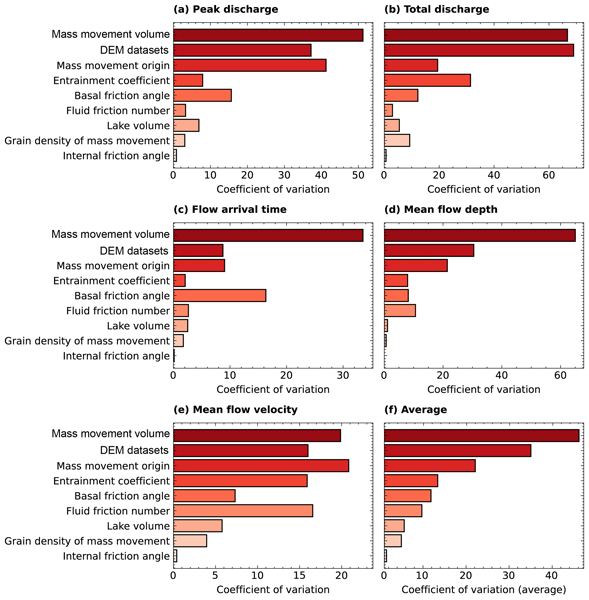
We modelled multiple glacial lake outburst flood (GLOF) scenarios (84 simulations) and tested the effect of nine key input parameters on the modelling results using r.avaflow. Our results highlight that GLOF modelling results are subject to uncertainty from the multiple input parameters. The variation in the volume of mass movement entering the lake causes the highest uncertainty in the modelled GLOF, followed by the DEM dataset and the origin of mass movement.
Nitesh Khadka, Vishnu Prasad Pandey, C. Scott Watson, Guoxiong Zheng, Tianpei Wu, Keshab Sharma, Lauren D. Rawlins, Simon Allen, Manish Raj Gouli, and Dibas Shrestha
Nat. Hazards Earth Syst. Sci., 26, 4131–4152, https://doi.org/10.5194/nhess-26-4131-2026, https://doi.org/10.5194/nhess-26-4131-2026, 2026
Short summary
Short summary
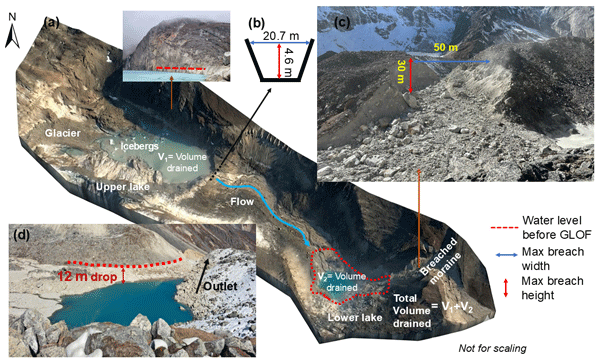
On 16 August 2024, a cascading glacial lake outburst flood destroyed Thame Village, Nepal. An upstream glacial lake formed in the late 2000s overtopped triggering a downstream lake breach. Combined release of ~770,000 m³ with peak discharge >800 m³/s reached the village within 22–25 min. Losses exceeded 6.18 million USD. Small, rapidly evolving lakes pose often overlooked GLOF risks in a warming climate.
Adam Emmer, Ashim Sattar, and Jan Hrebrina
Nat. Hazards Earth Syst. Sci., 26, 4045–4052, https://doi.org/10.5194/nhess-26-4045-2026, https://doi.org/10.5194/nhess-26-4045-2026, 2026
Short summary
Short summary
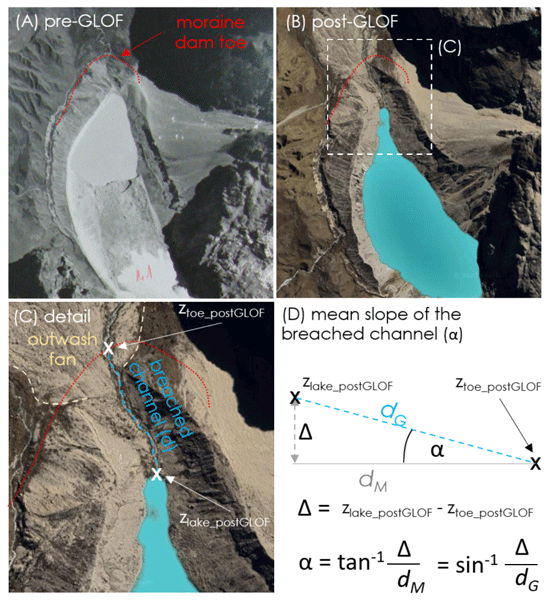
Glacial lake outburst floods (GLOFs) are major concern in high mountain regions across the globe and effective disaster risk management requires predictive modelling which needs various input data including potential flood volume. Building on the analysis of breached channels of largest documented GLOFs originating from moraine dam failures, we present new methodology that estimates maximum breach depth and so potential flood volumes of moraine-dammed lake outbursts.
Neil Ross, Rebecca J. Sanderson, Bernd Kulessa, Martin Siegert, Guy J. G. Paxman, Keir A. Nichols, Matthew R. Siegfried, Stewart S. R. Jamieson, Michael J. Bentley, Tom A. Jordan, Christine L. Batchelor, David Small, Olaf Eisen, Kate Winter, Robert G. Bingham, S. Louise Callard, Rachel Carr, Christine F. Dow, Helen A. Fricker, Emily Hill, Benjamin H. Hills, Coen Hofstede, Hafeez Jeofry, Felipe Napoleoni, and Wilson Sauthoff
The Cryosphere, 20, 3705–3737, https://doi.org/10.5194/tc-20-3705-2026, https://doi.org/10.5194/tc-20-3705-2026, 2026
Short summary
Short summary
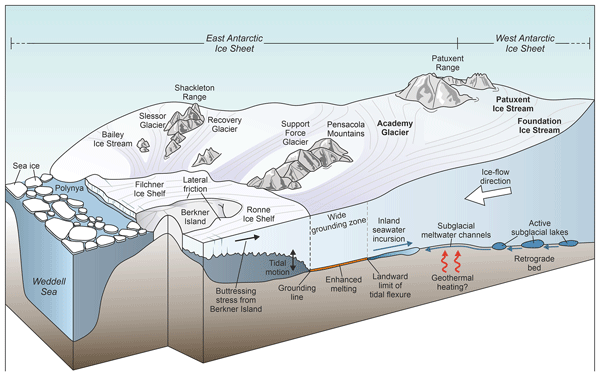
We review research about a group of fast-flowing Antarctic ice streams, the Foundation-Patuxent-Academy System. Previously, we knew little about how these ice streams flow, how they interact with each other and the ocean, what their geological history was, and how they might evolve in a warming world. By reviewing existing research, we have identified the future research needed to determine how these ice streams function, and how they might contribute to future global sea level rise.
Laura Niggli, Holger Frey, Simon Allen, Nazgul Alybaeva, Christian Huggel, Bolot Moldobekov, and Vitalii Zaginaev
Nat. Hazards Earth Syst. Sci., 26, 733–752, https://doi.org/10.5194/nhess-26-733-2026, https://doi.org/10.5194/nhess-26-733-2026, 2026
Short summary
Short summary
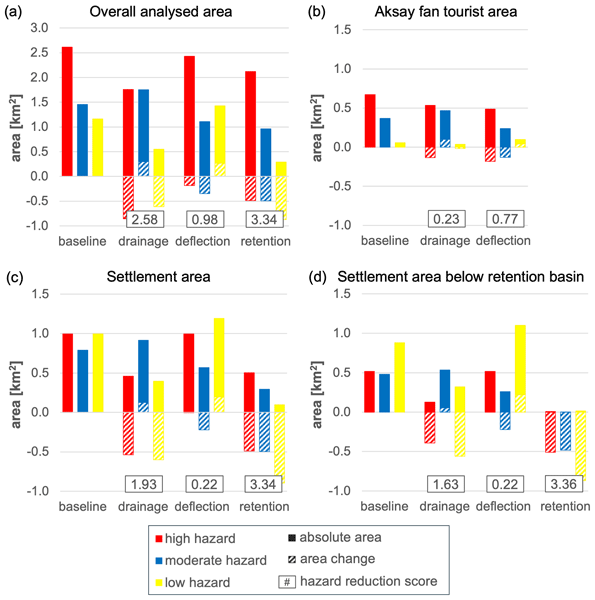
Glacial lake outburst floods (GLOF) pose significant risks to communities and infrastructure. Our study explores how effective different measures are in reducing such risks. Using numerical modelling, we evaluate three strategies: lowering lake levels, building a deflection dam, and creating a retention basin. We compared their hazard and exposure reduction and their costs and benefits. This offers insights that can improve GLOF risk management worldwide and support better decision-making.
Ashim Sattar, Shashi Kant Rai, Abhinav Alangadan, Adam Emmer, Sunil Dhar, Umesh Haritashya, and Mohd. Farooq Azam
EGUsphere, https://doi.org/10.5194/egusphere-2025-6281, https://doi.org/10.5194/egusphere-2025-6281, 2026
Short summary
Short summary
The Warwan basin in the western Himalaya is a remote region that harbours many glacial lakes. Many past events including avalanches and sudden glacial lake floods went unnoticed in the region. This study shows that past avalanches triggered a sudden burst of a glacial lake. The GLOF exposure in the valley remains high owing to the existing infrastructure in the valley. Early warnings can give sufficient lead time in case of potential GLOF in the valley.
Sonam Rinzin, Stuart Dunning, Rachel Joanne Carr, Ashim Sattar, and Martin Mergili
Nat. Hazards Earth Syst. Sci., 25, 1841–1864, https://doi.org/10.5194/nhess-25-1841-2025, https://doi.org/10.5194/nhess-25-1841-2025, 2025
Short summary
Short summary
We modelled multiple glacial lake outburst flood (GLOF) scenarios (84 simulations) and tested the effect of nine key input parameters on the modelling results using r.avaflow. Our results highlight that GLOF modelling results are subject to uncertainty from the multiple input parameters. The variation in the volume of mass movement entering the lake causes the highest uncertainty in the modelled GLOF, followed by the DEM dataset and the origin of mass movement.
Lucas R. Diaz, Clement J. F. Delcourt, Moritz Langer, Michael M. Loranty, Brendan M. Rogers, Rebecca C. Scholten, Tatiana A. Shestakova, Anna C. Talucci, Jorien E. Vonk, Sonam Wangchuk, and Sander Veraverbeke
Earth Syst. Dynam., 15, 1459–1482, https://doi.org/10.5194/esd-15-1459-2024, https://doi.org/10.5194/esd-15-1459-2024, 2024
Short summary
Short summary
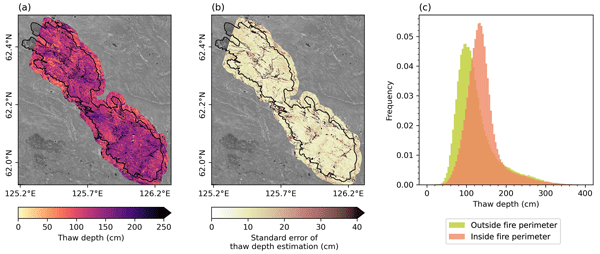
Our study in eastern Siberia investigated how fires affect permafrost thaw depth in larch forests. We found that fire induces deeper thaw, yet this process was mediated by topography and vegetation. By combining field and satellite data, we estimated summer thaw depth across an entire fire scar. This research provides insights into post-fire permafrost dynamics and the use of satellite data for mapping fire-induced permafrost thaw.
J. Rachel Carr, Emily A. Hill, and G. Hilmar Gudmundsson
The Cryosphere, 18, 2719–2737, https://doi.org/10.5194/tc-18-2719-2024, https://doi.org/10.5194/tc-18-2719-2024, 2024
Short summary
Short summary
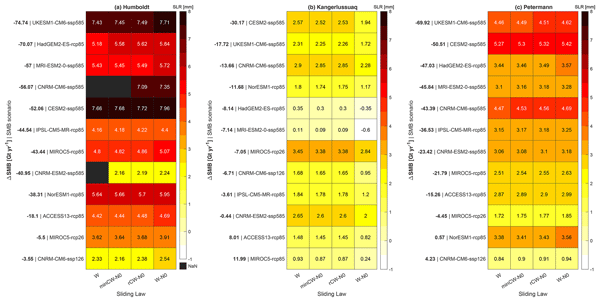
The Greenland Ice Sheet is one of the world's largest glaciers and is melting quickly in response to climate change. It contains fast-flowing channels of ice that move ice from Greenland's centre to its coasts and allow Greenland to react quickly to climate warming. As a result, we want to predict how these glaciers will behave in the future, but there are lots of uncertainties. Here we assess the impacts of two main sources of uncertainties in glacier models.
Léo C. P. Martin, Sebastian Westermann, Michele Magni, Fanny Brun, Joel Fiddes, Yanbin Lei, Philip Kraaijenbrink, Tamara Mathys, Moritz Langer, Simon Allen, and Walter W. Immerzeel
Hydrol. Earth Syst. Sci., 27, 4409–4436, https://doi.org/10.5194/hess-27-4409-2023, https://doi.org/10.5194/hess-27-4409-2023, 2023
Short summary
Short summary
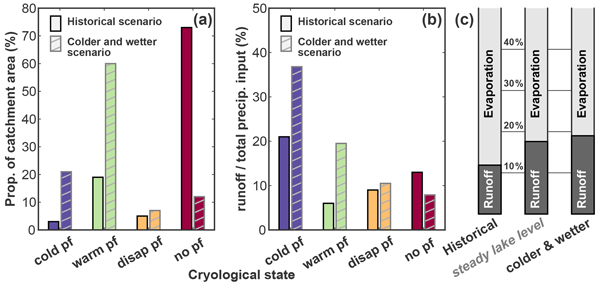
Across the Tibetan Plateau, many large lakes have been changing level during the last decades as a response to climate change. In high-mountain environments, water fluxes from the land to the lakes are linked to the ground temperature of the land and to the energy fluxes between the ground and the atmosphere, which are modified by climate change. With a numerical model, we test how these water and energy fluxes have changed over the last decades and how they influence the lake level variations.
Simon K. Allen, Ashim Sattar, Owen King, Guoqing Zhang, Atanu Bhattacharya, Tandong Yao, and Tobias Bolch
Nat. Hazards Earth Syst. Sci., 22, 3765–3785, https://doi.org/10.5194/nhess-22-3765-2022, https://doi.org/10.5194/nhess-22-3765-2022, 2022
Short summary
Short summary
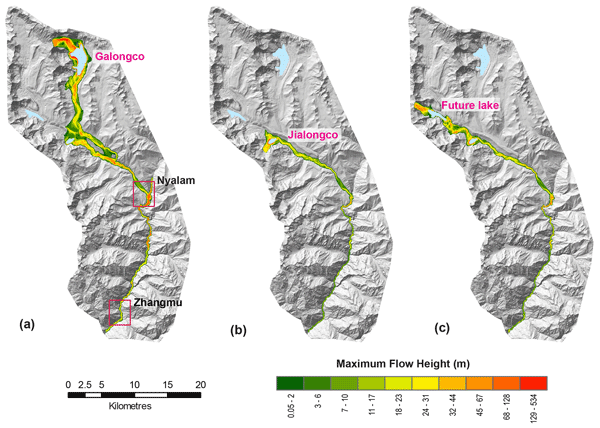
This study demonstrates how the threat of a very large outburst from a future lake can be feasibly assessed alongside that from current lakes to inform disaster risk management within a transboundary basin between Tibet and Nepal. Results show that engineering measures and early warning systems would need to be coupled with effective land use zoning and programmes to strengthen local response capacities in order to effectively reduce the risk associated with current and future outburst events.
Adam Emmer, Simon K. Allen, Mark Carey, Holger Frey, Christian Huggel, Oliver Korup, Martin Mergili, Ashim Sattar, Georg Veh, Thomas Y. Chen, Simon J. Cook, Mariana Correas-Gonzalez, Soumik Das, Alejandro Diaz Moreno, Fabian Drenkhan, Melanie Fischer, Walter W. Immerzeel, Eñaut Izagirre, Ramesh Chandra Joshi, Ioannis Kougkoulos, Riamsara Kuyakanon Knapp, Dongfeng Li, Ulfat Majeed, Stephanie Matti, Holly Moulton, Faezeh Nick, Valentine Piroton, Irfan Rashid, Masoom Reza, Anderson Ribeiro de Figueiredo, Christian Riveros, Finu Shrestha, Milan Shrestha, Jakob Steiner, Noah Walker-Crawford, Joanne L. Wood, and Jacob C. Yde
Nat. Hazards Earth Syst. Sci., 22, 3041–3061, https://doi.org/10.5194/nhess-22-3041-2022, https://doi.org/10.5194/nhess-22-3041-2022, 2022
Short summary
Short summary
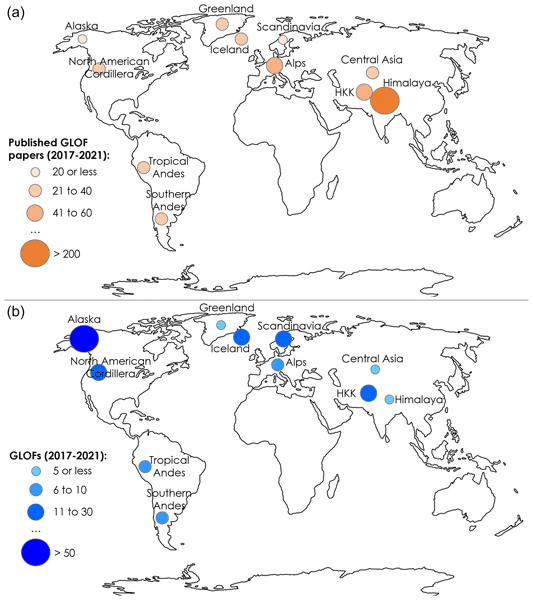
Glacial lake outburst floods (GLOFs) have attracted increased research attention recently. In this work, we review GLOF research papers published between 2017 and 2021 and complement the analysis with research community insights gained from the 2021 GLOF conference we organized. The transdisciplinary character of the conference together with broad geographical coverage allowed us to identify progress, trends and challenges in GLOF research and outline future research needs and directions.
Sophie Goliber, Taryn Black, Ginny Catania, James M. Lea, Helene Olsen, Daniel Cheng, Suzanne Bevan, Anders Bjørk, Charlie Bunce, Stephen Brough, J. Rachel Carr, Tom Cowton, Alex Gardner, Dominik Fahrner, Emily Hill, Ian Joughin, Niels J. Korsgaard, Adrian Luckman, Twila Moon, Tavi Murray, Andrew Sole, Michael Wood, and Enze Zhang
The Cryosphere, 16, 3215–3233, https://doi.org/10.5194/tc-16-3215-2022, https://doi.org/10.5194/tc-16-3215-2022, 2022
Short summary
Short summary
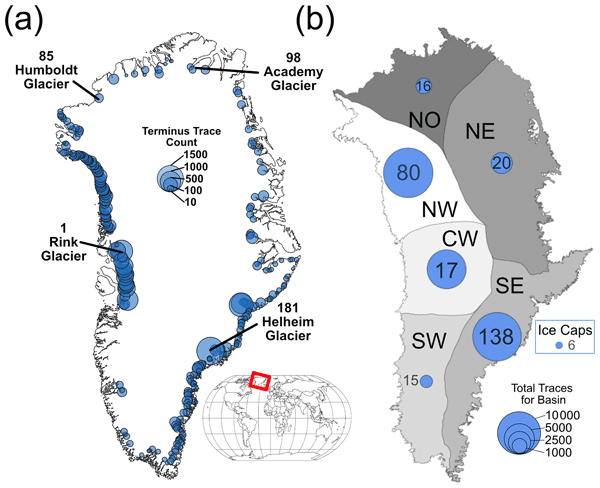
Terminus traces have been used to understand how Greenland's glaciers have changed over time; however, manual digitization is time-intensive, and a lack of coordination leads to duplication of efforts. We have compiled a dataset of over 39 000 terminus traces for 278 glaciers for scientific and machine learning applications. We also provide an overview of an updated version of the Google Earth Engine Digitization Tool (GEEDiT), which has been developed specifically for the Greenland Ice Sheet.
Chuanxi Zhao, Wei Yang, Matthew Westoby, Baosheng An, Guangjian Wu, Weicai Wang, Zhongyan Wang, Yongjie Wang, and Stuart Dunning
The Cryosphere, 16, 1333–1340, https://doi.org/10.5194/tc-16-1333-2022, https://doi.org/10.5194/tc-16-1333-2022, 2022
Short summary
Short summary
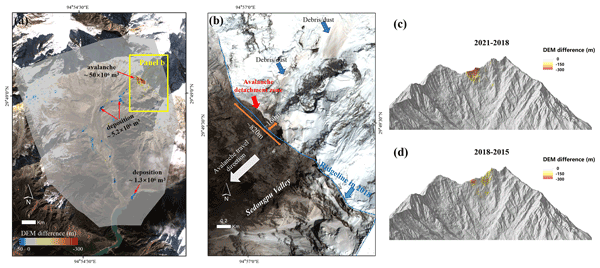
On 22 March 2021, a ~ 50 Mm 3 ice-rock avalanche occurred from 6500 m a.s.l. in the Sedongpu basin, southeastern Tibet. It caused temporary blockage of the Yarlung Tsangpo river, a major tributary of the Brahmaputra. We utilize field investigations, high-resolution satellite imagery, seismic records, and meteorological data to analyse the evolution of the 2021 event and its impact, discuss potential drivers, and briefly reflect on implications for the sustainable development of the region.
Cited articles
Allen, S., Frey, H., and Huggel, C.: Assessment of Glacier and Permafrost Hazards in Mountain Regions, Technical Guidance Document, GAPHAZ, https://doi.org/10.13140/RG.2.2.26332.90245, 2017.
Allen, S. K., Rastner, P., Arora, M., Huggel, C., and Stoffel, M.: Lake outburst and debris flow disaster at Kedarnath, June 2013: hydrometeorological triggering and topographic predisposition, Landslides, 13, 1479–1491, https://doi.org/10.1007/s10346-015-0584-3, 2015.
Allen, S. K., Linsbauer, A., Randhawa, S. S., Huggel, C., Rana, P., and Kumari, A.: Glacial lake outburst flood risk in Himachal Pradesh, India: an integrative and anticipatory approach considering current and future threats, Nat. Hazards, 84, 1741–1763, https://doi.org/10.1007/s11069-016-2511-x, 2016.
Allen, S. K., Zhang, G., Wang, W., Yao, T., and Bolch, T.: Potentially dangerous glacial lakes across the Tibetan Plateau revealed using a large-scale automated assessment approach, Sci. Bull., 64, 435–445, https://doi.org/10.1016/j.scib.2019.03.011, 2019.
Byers, A. C., Rounce, D. R., Shugar, D. H., Lala, J. M., Byers, E. A., and Regmi, D.: A rockfall-induced glacial lake outburst flood, Upper Barun Valley, Nepal, Landslides, 16, 533–549, https://doi.org/10.1007/s10346-018-1079-9, 2018.
Carr, J. R., Barrett, A., Rinzin, S., and Taylor, C.: Step-change in supraglacial pond area on Tshojo Glacier, Bhutan, and potential downstream inundation patterns due to pond drainage events, J. Glaciol., 71, e9, https://doi.org/10.1017/jog.2024.62, 2024.
Carrivick, J. L. and Tweed, F. S.: A global assessment of the societal impacts of glacier outburst floods, Global Planet. Change, 144, 1–16, https://doi.org/10.1016/j.gloplacha.2016.07.001, 2016.
Chow, V. T.: Open-channel Hydraulics, MacGraw-Hill Book Co, New York, ISBN: 0070107769, 1959.
Clausen, L. and Clark, P.: The development of criteria for predicting dambreak flood damages using modelling of historical dam failures, International conference on river flood hydraulics, John Wiley & Sons Ltd. Hydraulics Research Limited, Wallingford, England, 369–380, 1990.
Colavitto, B., Allen, S., Winocur, D., Dussaillant, A., Guillet, S., Munoz-Torrero Manchado, A., Gorsic, S., and Stoffel, M.: A glacial lake outburst floods hazard assessment in the Patagonian Andes combining inventory data and case-studies, Sci. Total Environ., 916, 169703, https://doi.org/10.1016/j.scitotenv.2023.169703, 2024.
Cook, K. L., Andermann, C., Gimbert, F., Adhikari, B. R., and Hovius, N.: Glacial lake outburst floods as drivers of fluvial erosion in the Himalaya, Science, 362, 53–57, https://doi.org/10.1126/science.aat4981, 2018.
Cook, S. J., Kougkoulos, I., Edwards, L. A., Dortch, J., and Hoffmann, D.: Glacier change and glacial lake outburst flood risk in the Bolivian Andes, The Cryosphere, 10, 2399–2413, https://doi.org/10.5194/tc-10-2399-2016, 2016.
Cutter, S. L. and Finch, C.: Temporal and spatial changes in social vulnerability to natural hazards, P. Natl. Acad. Sci. USA, 105, 2301–2306, https://doi.org/10.1073/pnas.0710375105, 2008.
Cutter, S. L., Boruff, B. J., and Shirley, W. L.: Social Vulnerability to Environmental Hazards, Soc. Sci. Quart., 84, 242–261, https://doi.org/10.1111/1540-6237.8402002, 2003.
Cutter, S. L., Barnes, L., Berry, M., Burton, C., Evans, E., Tate, E., and Webb, J.: A place-based model for understanding community resilience to natural disasters, Global Environ. Chang., 18, 598–606, https://doi.org/10.1016/j.gloenvcha.2008.07.013, 2008.
Das, S., Kar, N. S., and Bandyopadhyay, S.: Glacial lake outburst flood at Kedarnath, Indian Himalaya: a study using digital elevation models and satellite images, Nat. Hazards, 77, 769–786, https://doi.org/10.1007/s11069-015-1629-6, 2015.
Dunning, S. A., Rosser, N. J., Petley, D. N., and Massey, C. R.: Formation and failure of the Tsatichhu landslide dam, Bhutan, Landslides, 3, 107–113, https://doi.org/10.1007/s10346-005-0032-x, 2006.
Emmer, A.: Understanding the risk of glacial lake outburst floods in the twenty-first century, Nature Water, 2, 608–610, https://doi.org/10.1038/s44221-024-00254-1, 2024.
Evans, S. G.: The maximum discharge of outburst floods caused by the breaching of man-made and natural dams, Can. Geotech. J., 23, 385–387, https://doi.org/10.1139/t86-053, 1986.
Federal Emergency Management Agency: Direct physical damage–general building stock, HAZUS-MH Technical manual, Chap. 5, Federal Emergency Management Agency Washington, DC, https://www.fema.gov/sites/default/files/2020-09/fema_hazus_advanced-engineering-building-module_user-manual.pdf (last access: 5 February 2026), 2004.
Fujita, K., Sakai, A., Takenaka, S., Nuimura, T., Surazakov, A. B., Sawagaki, T., and Yamanokuchi, T.: Potential flood volume of Himalayan glacial lakes, Nat. Hazards Earth Syst. Sci., 13, 1827–1839, https://doi.org/10.5194/nhess-13-1827-2013, 2013.
Furian, W., Maussion, F., and Schneider, C.: Projected 21st-Century Glacial Lake Evolution in High Mountain Asia, Frontiers in Earth Science, 10, https://doi.org/10.3389/feart.2022.821798, 2022.
Hugonnet, R., McNabb, R., Berthier, E., Menounos, B., Nuth, C., Girod, L., Farinotti, D., Huss, M., Dussaillant, I., Brun, F., and Kaab, A.: Accelerated global glacier mass loss in the early twenty-first century, Nature, 592, 726–731, https://doi.org/10.1038/s41586-021-03436-z, 2021.
Japan Aerospace Exploration Agency: ALOS World 3D 30 meter DEM, Veriosn V3.2, OpenTopography [data set], https://doi.org/10.5069/G94M92HB, 2021.
Karra, K., Kontgis, C., Statman-Weil, Z., Mazzariello, J. C., Mathis, M., and Brumby, S. P.: Global land use/land cover with Sentinel 2 and deep learning, 2021 IEEE international geoscience and remote sensing symposium IGARSS, 4704–4707, https://doi.org/10.1109/IGARSS47720.2021.9553499, 2021.
Komori, J., Koike, T., Yamanokuchi, T., and Tshering, P.: Glacial Lake Outburst Events in the Bhutan Himalayas, Global Environmental Research, 16, 59–70, https://share.google/OI0bjh2OaeWPOswGm (last access: 5 February 2026), 2012.
Kropáček, J., Neckel, N., Tyrna, B., Holzer, N., Hovden, A., Gourmelen, N., Schneider, C., Buchroithner, M., and Hochschild, V.: Repeated glacial lake outburst flood threatening the oldest Buddhist monastery in north-western Nepal, Nat. Hazards Earth Syst. Sci., 15, 2425–2437, https://doi.org/10.5194/nhess-15-2425-2015, 2015.
Liu, K., Song, C., Ke, L., Jiang, L., Pan, Y., and Ma, R.: Global open-access DEM performances in Earth's most rugged region High Mountain Asia: A multi-level assessment, Geomorphology, 338, 16–26, https://doi.org/10.1016/j.geomorph.2019.04.012, 2019.
Lloyd's Register Foundation: World Risk Poll 2024 Report: Resilience in a Changing World, https://doi.org/10.60743/C0RM-H862, 2024.
Lützow, N., Veh, G., and Korup, O.: A global database of historic glacier lake outburst floods, Earth Syst. Sci. Data, 15, 2983–3000, https://doi.org/10.5194/essd-15-2983-2023, 2023.
Maurer, J. M., Schaefer, J. M., Russell, J. B., Rupper, S., Wangdi, N., Putnam, A. E., and Young, N.: Seismic observations, numerical modeling, and geomorphic analysis of a glacier lake outburst flood in the Himalayas, Science Advances, 6, eaba3645, https://doi.org/10.1126/sciadv.aba3645, 2020.
Ministry of Economic Affairs: Bhutan Sustainable Hydropower Development Policy 2021, Ministry of Economic Affairs, Thimphu, https://www.moenr.gov.bt/wp-content/uploads/2017/07/Sustainable-Hydropower-Development-Policy-2021-1.pdf (last access: 5 February 2026), 2021.
Mool, P. K., Wangda, D., Bajracharya, S. R., Joshi, S. P., Kunzang, K., and Gurung, D. R.: Inventory of Glaciers, Glacial Lakes and Glacial Lake Outburst Floods-Bhutan.pdf, International Centre for Integrated Mountain Development (ICIMOD), Kathmandu, Nepal, https://doi.org/10.53055/ICIMOD.373, 2001.
Nagai, H., Fujita, K., Sakai, A., Nuimura, T., and Tadono, T.: Comparison of multiple glacier inventories with a new inventory derived from high-resolution ALOS imagery in the Bhutan Himalaya, The Cryosphere, 10, 65–85, https://doi.org/10.5194/tc-10-65-2016, 2016.
Nagai, H., Ukita, J., Narama, C., Fujita, K., Sakai, A., Tadono, T., Yamanokuchi, T., and Tomiyama, N.: Evaluating the Scale and Potential of GLOF in the Bhutan Himalayas Using a Satellite-Based Integral Glacier–Glacial Lake Inventory, Geosciences, 7, https://doi.org/10.3390/geosciences7030077, 2017.
National Centre for Hydrology and Meteorology (NCHM): Reassessment of Potentially Dangerous Glacial Lakes in Bhutan, National Centre for Hydrology and Meteorology, Royal Government of Bhutan, Thimphu, Bhutan, ISBN: 978-99980-862-1-0, 2019.
National Centre for Hydrology and Meteorology (NCHM): Standard operating procedure (sop) for GLOF early warning system Punakha-Wangdue valley, https://www.nchm.gov.bt/attachment/ckfinder/userfiles/files/Final SOP.pdf (last access: 5 February 2026), 2021.
National Statistics Bureau of Bhutan (NSB): 2017 Population and housing census of Bhutan, National Statistics Bureau of Bhutan, Thimphu, Bhutan, ISBN: 978-99936-28-69-9, 2018.
Nie, Y., Liu, W., Liu, Q., Hu, X., and Westoby, M. J.: Reconstructing the Chongbaxia Tsho glacial lake outburst flood in the Eastern Himalaya: Evolution, process and impacts, Geomorphology, 370, https://doi.org/10.1016/j.geomorph.2020.107393, 2020.
Nie, Y., Liu, Q., Wang, J., Zhang, Y., Sheng, Y., and Liu, S.: An inventory of historical glacial lake outburst floods in the Himalayas based on remote sensing observations and geomorphological analysis, Geomorphology, 308, 91–106, https://doi.org/10.1016/j.geomorph.2018.02.002, 2018.
Nie, Y., Pritchard, H. D., Liu, Q., Hennig, T., Wang, W., Wang, X., Liu, S., Nepal, S., Samyn, D., Hewitt, K., and Chen, X.: Glacial change and hydrological implications in the Himalaya and Karakoram, Nature Reviews Earth & Environment, 2, 91–106, https://doi.org/10.1038/s43017-020-00124-w, 2021.
Nie, Y., Deng, Q., Pritchard, H. D., Carrivick, J. L., Ahmed, F., Huggel, C., Liu, L., Wang, W., Lesi, M., Wang, J., Zhang, H., Zhang, B., Lü, Q., and Zhang, Y.: Glacial lake outburst floods threaten Asia's infrastructure, Sci. Bull., 68, https://doi.org/10.1016/j.scib.2023.05.035, 2023.
Petrakov, D. A., Chernomorets, S. S., Viskhadzhieva, K. S., Dokukin, M. D., Savernyuk, E. A., Petrov, M. A., Erokhin, S. A., Tutubalina, O. V., Glazyrin, G. E., Shpuntova, A. M., and Stoffel, M.: Putting the poorly documented 1998 GLOF disaster in Shakhimardan River valley (Alay Range, Kyrgyzstan/Uzbekistan) into perspective, Sci. Total Environ., 724, https://doi.org/10.1016/j.scitotenv.2020.138287, 2020.
Petrucci, O.: The Impact of Natural Disasters: Simplified Procedures and Open Problems, in: Approaches to Managing Disaster, edited by: John, T., IntechOpen, Rijeka, Chap. 6, https://doi.org/10.5772/29147, 2012.
Rahmani, M., Muzwagi, A., and Pumariega, A. J.: Cultural Factors in Disaster Response Among Diverse Children and Youth Around the World, Curr. Psychiat. Rep., 24, 481–491, https://doi.org/10.1007/s11920-022-01356-x, 2022.
Rinzin, S., Zhang, G., and Wangchuk, S.: Glacial Lake Area Change and Potential Outburst Flood Hazard Assessment in the Bhutan Himalaya, Frontiers in Earth Science, 9, https://doi.org/10.3389/feart.2021.775195, 2021.
Rinzin, S., Dunning, S., Carr, R. J., Sattar, A., and Mergili, M.: Exploring implications of input parameter uncertainties in glacial lake outburst flood (GLOF) modelling results using the modelling code r.avaflow, Nat. Hazards Earth Syst. Sci., 25, 1841–1864, https://doi.org/10.5194/nhess-25-1841-2025, 2025.
Rinzin, S., Zhang, G., Sattar, A., Wangchuk, S., Allen, S. K., Dunning, S., and Peng, M.: GLOF hazard, exposure, vulnerability, and risk assessment of potentially dangerous glacial lakes in the Bhutan Himalaya, J. Hydrol., 619, https://doi.org/10.1016/j.jhydrol.2023.129311, 2023.
Rupper, S., Schaefer, J. M., Burgener, L. K., Koenig, L. S., Tsering, K., and Cook, E. R.: Sensitivity and response of Bhutanese glaciers to atmospheric warming, Geophys. Res. Lett., 39, L19503, https://doi.org/10.1029/2012gl053010, 2012.
Sattar, A., Emmer, A., Lhazom, T., Rai, S. K., and Azam, M. F.: Flood risk from small mountain lakes, Communications Earth & Environment, 6, https://doi.org/10.1038/s43247-025-02758-4, 2025a.
Sattar, A., Goswami, A., Kulkarni, A. V., Emmer, A., Haritashya, U. K., Allen, S., Frey, H., and Huggel, C.: Future Glacial Lake Outburst Flood (GLOF) hazard of the South Lhonak Lake, Sikkim Himalaya, Geomorphology, 388, https://doi.org/10.1016/j.geomorph.2021.107783, 2021.
Sattar, A., Allen, S., Mergili, M., Haeberli, W., Frey, H., Kulkarni, A. V., Haritashya, U. K., Huggel, C., Goswami, A., and Ramsankaran, R.: Modeling Potential Glacial Lake Outburst Flood Process Chains and Effects From Artificial Lake-Level Lowering at Gepang Gath Lake, Indian Himalaya, J. Geophys. Res.-Earth, 128, https://doi.org/10.1029/2022jf006826, 2023.
Sattar, A., Cook, K. L., Rai, S. K., Berthier, E., Allen, S., Rinzin, S., Van Wyk de Vries, M., Haeberli, W., Kushwaha, P., Shugar, D. H., Emmer, A., Haritashya, U. K., Frey, H., Rao, P., Gurudin, K. S. K., Rai, P., Rajak, R., Hossain, F., Huggel, C., Mergili, M., Azam, M. F., Gascoin, S., Carrivick, J. L., Bell, L. E., Ranjan, R. K., Rashid, I., Kulkarni, A. V., Petley, D., Schwanghart, W., Watson, C. S., Islam, N., Gupta, M. D., Lane, S. N., and Bhat, S. Y: The Sikkim flood of October 2023: Drivers, causes and impacts of a multihazard cascade, Science, 387, eads2659, https://doi.org/10.1126/science.ads2659, 2025b.
Schwanghart, W., Worni, R., Huggel, C., Stoffel, M., and Korup, O.: Uncertainty in the Himalayan energy–water nexus: estimating regional exposure to glacial lake outburst floods, Environ. Res. Lett.,11, 074005, https://doi.org/10.1088/1748-9326/11/7/074005, 2016.
Shrestha, F., Steiner, J. F., Shrestha, R., Dhungel, Y., Joshi, S. P., Inglis, S., Ashraf, A., Wali, S., Walizada, K. M., and Zhang, T.: A comprehensive and version-controlled database of glacial lake outburst floods in High Mountain Asia, Earth Syst. Sci. Data, 15, 3941–3961, https://doi.org/10.5194/essd-15-3941-2023, 2023.
Taylor, C., Robinson, T. R., Dunning, S., Rachel Carr, J., and Westoby, M.: Glacial lake outburst floods threaten millions globally, Nat. Commun., 14, 487, https://doi.org/10.1038/s41467-023-36033-x, 2023a.
Taylor, C. J., Robinson, T. R., Dunning, S., and Carr, J. R.: The rise of GLOF danger: trends, drivers and hotspots between 2000 and 2020, ESS Open Archive [preprint], https://doi.org/10.22541/essoar.168275988.80551902/v1, 2023b.
Uddin, K.: Land cover of HKH region, ICIMOD [data set], https://rds.icimod.org/Home/DataDetail?metadataId=1972511 (last access: 1 April 2024), 2021.
Uddin, K., Matin, M. A., Khanal, N., Maharjan, S., Bajracharya, B., Tenneson, K., Poortinga, A., Quyen, N. H., Aryal, R. R., Saah, D., Lee Ellenburg, W., Potapov, P., Flores-Anderson, A., Chishtie, F., Aung, K. S., Mayer, T., Pradhan, S., and Markert, A.: Regional Land Cover Monitoring System for Hindu Kush Himalaya, in: Earth Observation Science and Applications for Risk Reduction and Enhanced Resilience in Hindu Kush Himalaya Region: A Decade of Experience from SERVIR, edited by: Bajracharya, B., Thapa, R. B., and Matin, M. A., Springer International Publishing, Cham, 103–125, https://doi.org/10.1007/978-3-030-73569-2_6, 2021.
U.S. Army Corps of Engineers, Institute for Water Resources, and Hydrologic Engineering Center, CEIWR-HEC: HEC-RAS river analysis system, 2D modeling user's mannual, Institute for Water Resources, Hydrologic Engineering Center, Davis, USA, 289 pp., https://www.hec.usace.army.mil/confluence/rasdocs/r2dum/latest (last access: 5 February 2026), 2021.
Wang, W., Zhang, T., Yao, T., and An, B.: Monitoring and early warning system of Cirenmaco glacial lake in the central Himalayas, Int. J. Disast. Risk Re., 73, https://doi.org/10.1016/j.ijdrr.2022.102914, 2022.
World Bank: Bhutan – Institutional Strengthening and Modernization of Hydromet and Multi-hazard Early Warning Services in Bhutan: A Road Map for 2024-2034 (English)Institutional Strengthening and modernization of hydromet and multi-hazard early warning services in Bhutan: A road map for 2024 to 2034, World Bank Group, Washington, D.C., https://doi.org/10.1596/42315, 2024.
Zhang, G., Bolch, T., Yao, T., Rounce, D. R., Chen, W., Veh, G., King, O., Allen, S. K., Wang, M., and Wang, W.: Underestimated mass loss from lake-terminating glaciers in the greater Himalaya, Nat. Geosci., 16, 333–338, https://doi.org/10.1038/s41561-023-01150-1, 2023a.
Zhang, G., Carrivick, J. L., Emmer, A., Shugar, D. H., Veh, G., Wang, X., Labedz, C., Mergili, M., Mölg, N., Huss, M., Allen, S., Sugiyama, S., and Lützow, N.: Characteristics and changes of glacial lakes and outburst floods, Nature Reviews Earth & Environment, 5, 447–462, https://doi.org/10.1038/s43017-024-00554-w, 2024.
Zhang, G., Yao, T., Huss, M., Carrivick, J. L., Bolch, T., Li, X., Zheng, G., Peng, M., Wang, X., Steiner, J., Rashid, I., Rinzin, S., Wangchuk, S., Sattar, A., Tiwari, R. K., Quincey, D., and Ali, F.: A monitoring network for mitigating Himalayan glacial lake outburst floods, B. Am. Meteorol. Soc., 106, E2579–E2597, https://doi.org/10.1175/bams-d-24-0290.1, 2025a.
Zhang, T., Wang, W., An, B., and Wei, L.: Enhanced glacial lake activity threatens numerous communities and infrastructure in the Third Pole, Nat. Commun., 14, https://doi.org/10.1038/s41467-023-44123-z, 2023b.
Zhang, T., Wang, W., Kougkoulos, I., Cook, S. J., Li, S., Iribarren-Anacona, P., Watson, C. S., An, B., and Yao, T.: High frequency of moraine-dammed lake outburst floods driven by global warming, Nat. Commun., 16, 11173, https://doi.org/10.1038/s41467-025-67650-3, 2025b.
Zheng, G., Mergili, M., Emmer, A., Allen, S., Bao, A., Guo, H., and Stoffel, M.: The 2020 glacial lake outburst flood at Jinwuco, Tibet: causes, impacts, and implications for hazard and risk assessment, The Cryosphere, 15, 3159–3180, https://doi.org/10.5194/tc-15-3159-2021, 2021a.
Zheng, G., Allen, S. K., Bao, A., Ballesteros-Cánovas, J. A., Huss, M., Zhang, G., Li, J., Yuan, Y., Jiang, L., Yu, T., Chen, W., and Stoffel, M.: Increasing risk of glacial lake outburst floods from future Third Pole deglaciation, Nat. Clim. Change, 11, 411–417, https://doi.org/10.1038/s41558-021-01028-3, 2021b.
Zhou, H., Wang, J. A., Wan, J., and Jia, H.: Resilience to natural hazards: a geographic perspective, Nat. Hazards, 53, 21–41, https://doi.org/10.1007/s11069-009-9407-y, 2009.
Editorial statement
The paper advances GLOF risk assessment in Bhutan beyond lake-centric hazard analysis, through explicitly integrating downstream exposure and community vulnerability into lake-specific risk prioritisation. By modelling hypothetical GLOFs for all potentially dangerous lakes and revealing previously unrecognised high-hazard lakes and high-risk local government units, the study provides a more robust, decision-relevant basis for targeted preparedness and mitigation planning.
The paper advances GLOF risk assessment in Bhutan beyond lake-centric hazard analysis, through...
Short summary
Glacial lake outburst floods pose a major threat to mountain communities worldwide. We assessed glacial lake outburst flood risk in Bhutan by integrating hydrodynamic flood modelling with downstream exposure data. Over 11,000 people and around 2,500 buildings are exposed. Thorthormi Tsho is identified as a very high hazard lake, with five additional high hazard lakes. Thirteen downstream settlements face high to very high GLOF risk, five identified for the first time in this study.
Glacial lake outburst floods pose a major threat to mountain communities worldwide. We assessed...


Altmetrics
Final-revised paper
Preprint