
Articles | Volume 25, issue 12
https://doi.org/10.5194/nhess-25-4983-2025
© Author(s) 2025. This work is distributed under
the Creative Commons Attribution 4.0 License.
the Creative Commons Attribution 4.0 License.
https://doi.org/10.5194/nhess-25-4983-2025
© Author(s) 2025. This work is distributed under
the Creative Commons Attribution 4.0 License.
the Creative Commons Attribution 4.0 License.
Research article
| 
17 Dec 2025
Research article |
| 17 Dec 2025
| 17 Dec 2025
Polarization in Flood Risk Management? Sensitivity of Norm Perception and Responsibility Attribution to Frequent Flood Experience

Institute of Environmental Science and Geography, University of Potsdam, Potsdam, Germany
Torsten Masson
Institute of Psychology, Leipzig University, Leipzig, Germany
Sungju Han
Department of Urban and Environmental Sociology, Helmholtz-Centre for Environmental Research-UFZ Leipzig, Leipzig, Germany
Christian Kuhlicke
Department of Urban and Environmental Sociology, Helmholtz-Centre for Environmental Research-UFZ Leipzig, Leipzig, Germany
Institute of Environmental Science and Geography, University of Potsdam, Potsdam, Germany
Related authors
Lisa Köhler, Torsten Masson, Sabrina Köhler, and Christian Kuhlicke
Nat. Hazards Earth Syst. Sci., 23, 2787–2806, https://doi.org/10.5194/nhess-23-2787-2023, https://doi.org/10.5194/nhess-23-2787-2023, 2023
Short summary
Short summary
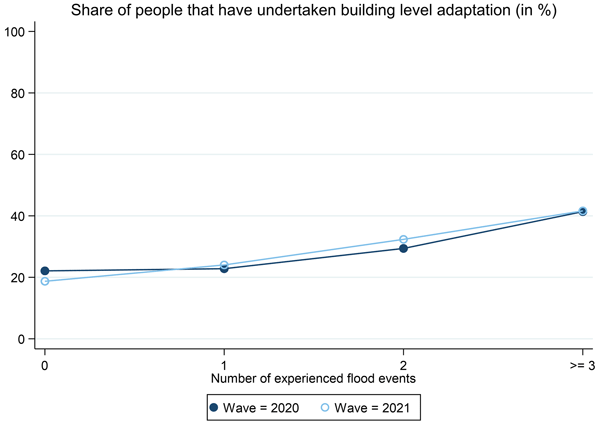
We analyzed the impact of flood experience on adaptive behavior and self-reported resilience. The outcomes draw a paradoxical picture: the most experienced people are the most adapted but the least resilient. We find evidence for non-linear relationships between the number of floods experienced and resilience. We contribute to existing knowledge by focusing specifically on the number of floods experienced and extending the rare scientific literature on the influence of experience on resilience.
Timothy Tiggeloven, Colin Raymond, Marleen C. de Ruiter, Jana Sillmann, Annegret H. Thieken, Sophie L. Buijs, Roxana Ciurean, Emma Cordier, Julia M. Crummy, Lydia Cumiskey, Kelley De Polt, Melanie Duncan, Davide M. Ferrario, Wiebke S. Jäger, Elco E. Koks, Nicole van Maanen, Heather J. Murdock, Jaroslav Mysiak, Sadhana Nirandjan, Benjamin Poschlod, Peter Priesmeier, Nivedita Sairam, Pia-Johanna Schweizer, Tristian R. Stolte, Marie-Luise Zenker, James E. Daniell, Alexander Fekete, Christian M. Geiß, Marc J. C. van den Homberg, Sirkku K. Juhola, Christian Kuhlicke, Karen Lebek, Robert Šakić Trogrlić, Stefan Schneiderbauer, Silvia Torresan, Cees J. van Westen, Judith N. Claassen, Bijan Khazai, Virginia Murray, Julius Schlumberger, and Philip J. Ward
Geosci. Commun., 9, 185–221, https://doi.org/10.5194/gc-9-185-2026, https://doi.org/10.5194/gc-9-185-2026, 2026
Short summary
Short summary
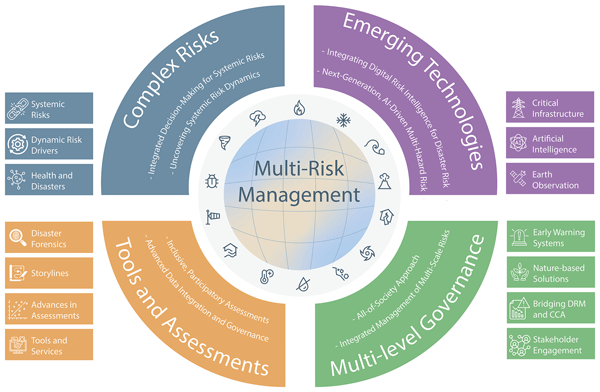
Natural hazards like floods, earthquakes, and landslides are often interconnected which may create bigger problems than when they occur alone. We studied expert discussions from an international conference to understand how scientists and policymakers can better prepare for these multi-hazards and use new technologies to protect its communities while contributing to dialogues about future international agreements beyond the Sendai Framework and supporting global sustainability goals.
Jan Sodoge, Christian Kuhlicke, Miguel D. Mahecha, and Mariana Madruga de Brito
Nat. Hazards Earth Syst. Sci., 24, 1757–1777, https://doi.org/10.5194/nhess-24-1757-2024, https://doi.org/10.5194/nhess-24-1757-2024, 2024
Short summary
Short summary
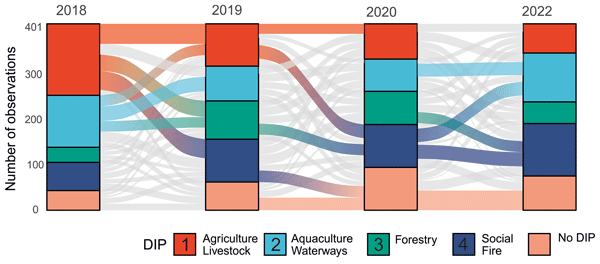
We delved into the socio-economic impacts of the 2018–2022 drought in Germany. We derived a dataset covering the impacts of droughts in Germany between 2000 and 2022 on sectors such as agriculture and forestry based on newspaper articles. Notably, our study illustrated that the longer drought had a wider reach and more varied effects. We show that dealing with longer droughts requires different plans compared to shorter ones, and it is crucial to be ready for the challenges they bring.
Lisa Köhler, Torsten Masson, Sabrina Köhler, and Christian Kuhlicke
Nat. Hazards Earth Syst. Sci., 23, 2787–2806, https://doi.org/10.5194/nhess-23-2787-2023, https://doi.org/10.5194/nhess-23-2787-2023, 2023
Short summary
Short summary
We analyzed the impact of flood experience on adaptive behavior and self-reported resilience. The outcomes draw a paradoxical picture: the most experienced people are the most adapted but the least resilient. We find evidence for non-linear relationships between the number of floods experienced and resilience. We contribute to existing knowledge by focusing specifically on the number of floods experienced and extending the rare scientific literature on the influence of experience on resilience.

Samuel Rufat, Mariana Madruga de Brito, Alexander Fekete, Emeline Comby, Peter J. Robinson, Iuliana Armaş, W. J. Wouter Botzen, and Christian Kuhlicke
Nat. Hazards Earth Syst. Sci., 22, 2655–2672, https://doi.org/10.5194/nhess-22-2655-2022, https://doi.org/10.5194/nhess-22-2655-2022, 2022
Short summary
Short summary
It remains unclear why people fail to act adaptively to reduce future losses, even when there is ever-richer information available. To improve the ability of researchers to build cumulative knowledge, we conducted an international survey – the Risk Perception and Behaviour Survey of Surveyors (Risk-SoS). We find that most studies are exploratory and often overlook theoretical efforts that would enable the accumulation of evidence. We offer several recommendations for future studies.
Cited articles
Adger, W. N., Dessai, S., Goulden, M., Hulme, M., Lorenzoni, I., Nelson, D. R., Naess, L. O., Wolf, J., and Wreford, A.: Are there social limits to adaptation to climate change?, Climatic Change, 93, 335–354, https://doi.org/10.1007/s10584-008-9520-z, 2009.
APA: Descriptive norm, https://dictionary.apa.org/descriptive-norm (last access: 10 October 2025), 2025a.
APA: Experience, https://dictionary.apa.org/experience (last access: 13 October 2025), 2025b.
APA: Group identification, https://dictionary.apa.org/group-identification (last access: 13 October 2025), 2025c.
APA: Helplessness, https://dictionary.apa.org/helplessness (last access: 13 October 2025), 2025d.
APA: Injunctive norm, https://dictionary.apa.org/injunctive-norm (last access: 13 October 2025), 2025e.
APA: Self-efficacy, https://dictionary.apa.org/self-efficacy (last access: 13 October 2025), 2025f.
APA: Social norm, https://dictionary.apa.org/social-norm (last access: 13 October 2025), 2025g.
Bamberg, S., Masson, T., Brewitt, K., and Nemetschek, N.: Threat, coping and flood prevention – A meta-analysis, J. Environ. Psychol., 54, 116–126, https://doi.org/10.1016/j.jenvp.2017.08.001, 2017.
Bandura, A.: Aggression: a social learning analysis, Prentice-Hall, New Jersey, https://doi.org/10.2307/1227918, 1973.
Bandura, A.: Self-efficacy: The exercise of control, W. H. Freeman and Company, New York, ISBN 0716726262, 1997.
Becker, J. S., Taylor, H. L., Doody, B. J., Wright, K. C., Gruntfest, E., and Webber, D.: A review of people's behavior in and around floodwater, Weather Clim. Soc., 7, 321–332, https://doi.org/10.1175/WCAS-D-14-00030.1, 2015.
Begg, C., Ueberham, M., Masson, T., and Kuhlicke, C.: Interactions between citizen responsibilization, flood experience and household resilience: insights from the 2013 flood in Germany, Int. J. Water Resour. Dev., 33, 591–608, https://doi.org/10.1080/07900627.2016.1200961, 2017.
Bichard, E. and Kazmierczak, A.: Are homeowners willing to adapt to and mitigate the effects of climate change?, Climatic Change, 112, 633–654, https://doi.org/10.1007/s10584-011-0257-8, 2012.
BMUV: Sofortprogramm Klimaanpassung: Förderung und Kompetenzaufbau-Beratung vor Ort-bessere Vernetzung (tech. rep.), https://www.bmuv.de/download/sofortprogramm-klimaanpassung (last access: 13 December 2025), 2022.
Botzen, W. J. W., Aerts, J. C. J. H., and Van Den Bergh, J. C. J. M.: Dependence of flood risk perceptions on socioeconomic and objective risk factors, Water Resour. Res., 45, 1–15, https://doi.org/10.1029/2009WR007743, 2009a.
Botzen, W. J. W., Aerts, J. C. J. H., and van den Bergh, J. C. J. M.: Willingness of homeowners to mitigate climate risk through insurance, Ecol. Econ., 68, 2265–2277, https://doi.org/10.1016/j.ecolecon.2009.02.019, 2009b.
Botzen, W. J. W., Kunreuther, H., and Michel-Kerjan, E.: Divergence between individual perceptions and objective indicators of tail risks: Evidence from floodplain residents in New York City, Judgm. Decis. Mak., 10, 365–385, https://doi.org/10.1017/s1930297500005179, 2015.
Botzen, W. J. W., Mol, J. M., Robinson, P. J., and Czajkowski, J.: Drivers of natural disaster risk-reduction actions and their temporal dynamics: Insights from surveys during an imminent hurricane threat and its aftermath, Risk Anal., 2448–2462, https://doi.org/10.1111/risa.14314, 2024.
Bouwer, L. M.: Projections of Future Extreme Weather Losses Under Changes in Climate and Exposure, Risk Anal., 33, 915–930, https://doi.org/10.1111/j.1539-6924.2012.01880.x, 2013.
Bubeck, P., Botzen, W. J. W., Laudan, J., Aerts, J. C. J. H., and Thieken, A. H.: Insights into Flood-Coping Appraisals of Protection Motivation Theory: Empirical Evidence from Germany and France, Risk Anal., 38, 1239–1257, https://doi.org/10.1111/risa.12938, 2018.
Bubeck, P., Berghäuser, L., Hudson, P., and Thieken, A. H.: Using Panel Data to Understand the Dynamics of Human Behavior in Response to Flooding, Risk Anal., 40, 2340–2359, https://doi.org/10.1111/risa.13548, 2020.
Cialdini, R. B., Reno, R. R., and Kallgren, C. A.: A Focus Theory of Normative Conduct: Recycling the Concept of Norms to Reduce Littering in Public Places, J. Pers. Soc. Psychol., 58, 1015–1026, 1990.
Cologna, V., Bark, R. H., and Paavola, J.: Flood risk perceptions and the UK media: Moving beyond “once in a lifetime” to “Be Prepared” reporting, Clim. Risk Manag., 17, 1–10, https://doi.org/10.1016/j.crm.2017.04.005, 2017.
de Wolf, L. A., Robinson, P. J., Botzen, W. J. W., Haer, T., Mol, J. M., and Czajkowski, J.: Factors of influence on flood risk perceptions related to Hurricane Dorian: an assessment of heuristics, time dynamics and accuracy of risk perceptions, 1303–1318, https://doi.org/10.5194/nhess-24-1303-2024, 2023.
Dillenardt, L., Hudson, P., and Thieken, A. H.: Urban pluvial flood adaptation: Results of a household survey across four German municipalities, Journal of Flood Risk Management, 15, 1–15, https://doi.org/10.1111/jfr3.12748, 2022.
DKKV: Das Hochwasser im Juni 2013. Bewährungsprobe für das Hochwasserrisikomanagement in Deutschland, DKKV-Schriftenreihe 53, DKKV, ISBN 978-3-933181-62-6, 2015.
Dorsch: perceived control, https://dorsch.hogrefe.com/stich
wort/kontrollwahrnehmung#search=d10ca571ee0aa0bdb3a862e
f44baff4e&offset=0 (last access: 13 October 2025), 2025.
Dow, K., Berkhout, F., Preston, B. L., Klein, R. J. T., Midgley, G., and Shaw, M. R.: Limits to adaptation, Nat. Clim. Chang., 3, 305–307, https://doi.org/10.1038/nclimate1847, 2013.
Duijndam, S. J., Botzen, W. J. W., Endendijk, T., de Moel, H., Slager, K., and Aerts, J. C. J. H.: A look into our future under climate change? Adaptation and migration intentions following extreme flooding in the Netherlands, Int. J. Disaster Risk Reduct., 95, 103840, https://doi.org/10.1016/j.ijdrr.2023.103840, 2023.
Fischer, L. and Wiswede, G.: Grundlagen der Sozialpsychologie, 3rd edn., Oldenbourg Wissenschaftsverlag, 537–546, ISBN 978-3-486-58756-2, 2009.
Fischer, P., Asal, K., and Krueger, J. L.: Sozialpsychologie für Bachelor: Lesen, Hören, Lernen im Web, Springer-Verlag, ISBN 978-3-642-30272-5, 2013.
Franceschinis, C., Thiene, M., Di Baldassarre, G., Mondino, E., Scolobig, A., and Borga, M.: Heterogeneity in flood risk awareness: A longitudinal, latent class model approach, J. Hydrol., 599, 126255, https://doi.org/10.1016/j.jhydrol.2021.126255, 2021.
Frey, D.: Die Theorie der kognitiven Dissonanz, in: Theorien der Sozialpsychologie, edited by: Frey, D. and Irle, M., Hans Huber, Bern, 243–292, ISBN 3456805764, 1984.
Frey, D.: Kognitive Theorien, in: Sozialpsychologie, edited by: Frey, D. and Greif, S., Psychologie Velrags Union, Weinheim, 50–67, ISBN 978-3-621-27842-3, 1997.
Fritsche, I.: Agency Through the We: Group-Based Control Theory, Curr. Dir. Psychol. Sci., 31, 194–201, https://doi.org/10.1177/09637214211068838, 2022.
Fritsche, I., Jonas, E., Ablasser, C., Beyer, M., Kuban, J., Manger, A. M., and Schultz, M.: The power of we: Evidence for group-based control, J. Exp. Soc. Psychol., 49, 19–32, https://doi.org/10.1016/j.jesp.2012.07.014, 2013.
GDV: Datenservice zum Naturgefahrenreport 2024, Gesamtverband der Deutschen Versicherungswirtschaft e.V., https://www.gdv.de/resource/blob/183710/ce0eff6cd00569d1f67d1289b16a7325/naturgefahrenreport-2024-datenservice-download-data.pdf (last access: 13 December 2025), 2024.
Geofabrik: Sachsen, https://download.geofabrik.de/europe/germany/sachsen.html (last access: 25 February 2025), 2024.
GeoSN – Landesamt für Geobasisinformation Sachsen: Downloadbereich Ortsteile, https://www.geodaten.sachsen.de/downloadbereich-ortsteile-4346.html (last access: 23 March 2025), 2024.
Gosling, P., Denizeau, M., and Oberlé, D.: Denial of responsibility: A new mode of dissonance reduction, J. Pers. Soc. Psychol., 90, 722–733, https://doi.org/10.1037/0022-3514.90.5.722, 2006.
Griffin, R. J., Dunwoody, S., and Neuwirth, K.: Proposed model of the relationship of risk information seeking and processing to the development of preventive behaviors, Environ. Res., 80, 230–245, https://doi.org/10.1006/enrs.1998.3940, 1999.
Grothmann, T. and Reusswig, F.: People at risk of flooding: Why some residents take precautionary action while others do not, Nat. Hazards, 38, 101–120, https://doi.org/10.1007/s11069-005-8604-6, 2006.
Heidenreich, A., Masson, T., and Bamberg, S.: Let's talk about flood risk – Evaluating a series of workshops on private flood protection, Int. J. Disaster Risk Reduct., 50, 101880, https://doi.org/10.1016/j.ijdrr.2020.101880, 2020.
Henderson, F., Bennett, B., Dohain-Lesueur, R., and Helwig, K.: “It's not really their problem”: Reactive institutional community engagement and flood policy implementation, Int. J. Disaster Risk Reduct., 116, https://doi.org/10.1016/j.ijdrr.2024.105096, 2025.
Hogg, M. A. and Reid, S. A.: Social identity, self-categorization, and the communication of group norms, Commun. Theory, 16, 7–30, https://doi.org/10.1111/j.1468-2885.2006.00003.x, 2006.
IPCC: Climate Change 2023: Synthesis Report, Contribution of Working Group I, II and III to the Sixth Assessment Report of the Intergovernmental Panel on Climate Change, edited by: Core Writing Team, Lee, H., and Romero, J., Geneva, Switzerland, https://doi.org/10.59327/IPCC/AR6-9789291691647, 184 pp., 2023.
Johnson, C. L. and Priest, S. J.: Flood risk management in England: A changing landscape of risk responsibility?, Int. J. Water Resour. Dev., 24, 513–525, https://doi.org/10.1080/07900620801923146, 2008.
Jonas, E., Schultz-Hardt, S., Fischer, P., and Frey, D.: Biased Information Seeking After Decisions: Cognitive and Motivational Bases, in: Knowledge and Action, Hogrefe & Huber Publishers, 23–51, ISBN 1616762993, 2006.
Kahlor, L. A.: PRISM: A Planned Risk Information Seeking Model, Health Commun., 25, 345–356, https://doi.org/10.1080/10410231003775172, 2010.
Kasperson, R. E., Renn, O., Slovic, P., Brown, H. S., Emel, J., Goble, R., Kasperson, J. X., and Ratick, S.: The Social Amplification of Risk: A Conceptual Framework, Risk Anal., 8, 177–187, https://doi.org/10.1111/j.1539-6924.1988.tb01168.x, 1988.
Köhler, L. and Han, S.: The driving effect of experience: How perceived frequency of floods and feeling of loss of control are linked to household-level adaptation, Int. J. Disaster Risk Reduct., 112, 104745, https://doi.org/10.1016/j.ijdrr.2024.104745, 2024.
Köhler, L., Masson, T., Köhler, S., and Kuhlicke, C.: Better prepared but less resilient: the paradoxical impact of frequent flood experience on adaptive behavior and resilience, Nat. Hazards Earth Syst. Sci., 23, 2787–2806, https://doi.org/10.5194/nhess-23-2787-2023, 2023.
Kreienkamp, F., Philip, S. Y., Tradowsky, J. S., Kew, S. F., Lorenz, P., Arrighi, J., Belleflamme, A., Bettmann, T., Caluwaerts, S., Chan, S. C., Ciavarella, A., De Cruz, L., de Vries, H., Demuth, N., Ferrone, A., Fischer, E. M., Fowler, H. J., Goergen, K., Heinrich, D., Henrichs, Y., Lenderink, G., Kaspar, F., Nilson, E., and Otto, F. E.: Rapid attribution of heavy rainfall events leading to the severe flooding in Western Europe during July 2021, R. Netherlands Meteorol. Inst., 13, 1–51, 2021.
Kuang, D. and Liao, K.: Learning from Floods: Linking flood experience and flood resilience, J. Environ. Manage., 271, 111025, https://doi.org/10.1016/j.jenvman.2020.111025, 2020.
Kuang, D. and Liao, K. H.: How does flood resistance affect learning from flood experiences? A study of two communities in Central China, Climatic Change, 173, 1–21, https://doi.org/10.1007/s10584-022-03401-3, 2022.
Kuhlicke, C., Masson, T., Kienzler, S., Sieg, T., Thieken, A. H., and Kreibich, H.: Multiple flood experiences and social resilience: findings from three surveys on households and companies exposed to the 2013 flood in germany, Weather Clim. Soc., 12, 63–88, https://doi.org/10.1175/WCAS-D-18-0069.1, 2020a.
Kuhlicke, C., Seebauer, S., Hudson, P., Begg, C., Bubeck, P., Dittmer, C., Grothmann, T., Heidenreich, A., Kreibich, H., Lorenz, D. F., Masson, T., Reiter, J., Thaler, T., Thieken, A. H., and Bamberg, S.: The behavioral turn in flood risk management, its assumptions and potential implications, WIREs Water, 7, 1–22, https://doi.org/10.1002/wat2.1418, 2020b.
Kurata, Y. B., Prasetyo, Y. T., Ong, A. K. S., Nadlifatin, R., and Chuenyindee, T.: Factors affecting perceived effectiveness of Typhoon Vamco (Ulysses) flood disaster response among Filipinos in Luzon, Philippines: An integration of protection motivation theory and extended theory of planned behavior, Int. J. Disaster Risk Reduct., 67, https://doi.org/10.1016/j.ijdrr.2021.102670, 2022.
Lawrence, J., Quade, D., and Becker, J.: Integrating the effect of flood experience on risk perception with responses to changing climate risk, Nat. Hazards, 74, 1773–1794, https://doi.org/10.1177/0146167292181006, 2014.
Lazrus, H., Morss, R. E., Demuth, J. L., Lazo, J. K., and Bostrom, A.: “Know What to Do If You Encounter a Flash Flood”: Mental Models Analysis for Improving Flash Flood Risk Communication and Public Decision Making, Risk Anal., 36, 411–427, https://doi.org/10.1111/risa.12480, 2016.
Leach, C. W., van Zomeren, M., Zebel, S., Vliek, M. L., Pennekamp, S. F., Doosje, B., Ouwerkerk, J. W., and Spears, R.: Group-level self-definition and self-investment: a hierarchical (multicomponent) model of in-group identification, Journal of Personality and Social Psychology, 95, 144–165, https://doi.org/10.1037/0022-3514.95.1.144, 2008.
Lo, A. Y.: The role of social norms in climate adaptation: Mediating risk perception and flood insurance purchase, Glob. Environ. Chang., 23, 1249–1257, https://doi.org/10.1016/j.gloenvcha.2013.07.019, 2013.
LTV: Hochwasserrisikomanagement: Gefahren- und Risikokarten, https://publikationen.sachsen.de/bdb/artikel/41375 (last access: 13 December 2025), 2022.
LUIS-Landwirtschaft- und Umweltinformationssystem für Geodaten: Gewässernetz (Fließgewässer und Standgewässer), https://luis.sachsen.de/wasser/gewaessernetz.html?_cp=%7B%22accordion-content-9615%22%3A%7B%220%22%3Atrue%7D%2C%22previousOpen%22%3A%7B%22group%22%3A%22accordion-content-9615%22%2C%22idx%22%3A0%7D%7D (last access: 23 March 2025), 2024.
Mackie, G., Moneti, F., Denny, E., and Shakya, H.: What are Social Norms? How are they Measured?, UNICEF/UCSD Cent. Glob. Justice Proj. Coop. Agreem., 1–100, 2014.
Masson, T. and Fritsche, I.: Adherence to climate change-related ingroup norms: Do dimensions of group identifi cation matter?, Eur. J. Soc. Psychol., 44, 455–465, 2014.
Masson, T., Jugert, P., and Fritsche, I.: Collective self-fulfilling prophecies: group identification biases perceptions of environmental group norms among high identifiers, Soc. Influ., 11, 185–198, https://doi.org/10.1080/15534510.2016.1216890, 2016.
Masson, T., Bamberg, S., Stricker, M., and Heidenreich, A.: “We can help ourselves”: does community resilience buffer against the negative impact of flooding on mental health?, Nat. Hazards Earth Syst. Sci., 19, 2371–2384, https://doi.org/10.5194/nhess-19-2371-2019, 2019.
McIvor, D. and Paton, D.: Preparing for natural hazards: Normative and attitudinal influences, Disaster Prev. Manag. An Int. J., 16, 79–88, https://doi.org/10.1108/09653560710729839, 2007.
Merz, B., Blöschl, G., Vorogushyn, S., Dottori, F., Aerts, J. C. J. H., Bates, P., Bertola, M., Kemter, M., Kreibich, H., Lall, U., and Macdonald, E.: Causes, impacts and patterns of disastrous river floods, Nat. Rev. Earth Environ., 2, 592–609, https://doi.org/10.1038/s43017-021-00195-3, 2021.
Mondino, E., Scolobig, A., Borga, M., Albrecht, F., Mård, J., Weyrich, P., Di, G., and Albrecht, F.: Exploring changes in hydrogeological risk awareness and preparedness over time: a case study in northeastern Italy, Hydrol. Sci. J., 65, 1049–1059, https://doi.org/10.1080/02626667.2020.1729361, 2020.
Norris, F. H., Smith, T., and Kaniasty, K.: Revisiting the experience-behavior hypothesis: The effects of Hurricane Hugo on hazard preparedness and other self-protective acts, Basic Appl. Soc. Psych., 21, 37–47, https://doi.org/10.1207/15324839951036542, 1999.
Ntontis, E., Drury, J., Amlôt, R., Rubin, G. J., and Williams, R.: Emergent social identities in a flood: Implications for community psychosocial resilience, J. Community Appl. Soc. Psychol., 28, 3–14, https://doi.org/10.1002/casp.2329, 2018.
Ommer, J., Blackburn, S., Kalas, M., Neumann, J., and Cloke, H. L.: Risk social contracts: Exploring responsibilities through the lens of citizens affected by flooding in Germany in 2021, Prog. Disaster Sci., 21, 100315, https://doi.org/10.1016/j.pdisas.2024.100315, 2024.
Osberghaus, D.: The effect of flood experience on household mitigation—Evidence from longitudinal and insurance data, Glob. Environ. Chang., 43, 126–136, https://doi.org/10.1016/j.gloenvcha.2017.02.003, 2017.
Rauter, M., Kaufmann, M., Thaler, T., and Fuchs, S.: Flood risk management in Austria: Analysing the shift in responsibility-sharing between public and private actors from a public stakeholder's perspective, Land Use Policy, 99, 105017, https://doi.org/10.1016/j.landusepol.2020.105017, 2020.
Reynaud, A. and Aubert, C.: Does flood experience modify risk preferences? Evidence from an artefactual field experiment in Vietnam, GENEVA Risk Insur. Rev., 45, 36–74, https://doi.org/10.1057/s10713-019-00044-w, 2020.
Rothbaum, F., Weisz, J. R., and Snyder, S. S.: Changing the world and changing the self: A two-process model of perceived control, J. Pers. Soc. Psychol., 42, 5–37, https://doi.org/10.1037/0022-3514.42.1.5, 1982.
Schrieks, T., Botzen, W. J. W., Haer, T., Wasonga, O. V., and Aerts, J. C. J. H.: Assessing key behavioural theories of drought risk adaptation: Evidence from rural Kenya, Risk Anal., 44, 1681–1699, https://doi.org/10.1111/risa.14266, 2024.
Schwartz, S. H.: Normative influences on altruism, Adv. Exp. Soc. Psychol., 10, 221–279, https://doi.org/10.1016/S0065-2601(08)60358-5, 1977.
Seebauer, S. and Babcicky, P.: The Sources of Belief in Personal Capability: Antecedents of Self-Efficacy in Private Adaptation to Flood Risk, Risk Anal., 40, 1967–1982, https://doi.org/10.1111/risa.13531, 2020.
Sherif, M.: A study of some social factors in perception, Archives of Psychology (Columbia University), https://web.mit.edu/curhan/www/docs/Articles/15341_Readings/Influence_Compliance/Sherif_A_Study_of_Some_Social_Factors_(1935)_Arch Psych.pdf (last access: 13 December 2025), 1935.
Siedschlag, D., Kuhlicke, C., Köhler, S., Masson, T., Bamberg, S., Olfert, A., Hutter, G., Osberghaus, D., and Barth, M.: Risikokommunikation zur Stärkung privater Eigenvorsorge, Umweltbundesamt, https://www.umweltbundesamt.de/publikationen/risikokommunikation-zur-staerkung-privater (last access: 13 December 2025), 2023.
Siegrist, M. and Gutscher, H.: Natural hazards and motivation for mitigation behavior: People cannot predict the aaffect evoked by a severe flood, Risk Anal., 28, 771–778, https://doi.org/10.1111/j.1539-6924.2008.01049.x, 2008.
Slotter, R., Trainor, J., Davidson, R., Kruse, J., and Nozick, L.: Homeowner mitigation decision-making: Exploring the theory of planned behaviour approach, J. Flood Risk Manag., 13, 1–15, https://doi.org/10.1111/jfr3.12667, 2020.
Snel, K. A. W., Priest, S. J., Hartmann, T., Witte, P. A., and Geertman, S. C. M.: “Do the resilient things.” Residents' perspectives on responsibilities for flood risk adaptation in England, J. Flood Risk Manag., 14, 1–14, https://doi.org/10.1111/jfr3.12727, 2021.
Soane, E., Schubert, I., Challenor, P., Lunn, R., Narendran, S., and pollard, S.: Flood perception and mitigation: The role of severity, agency, and experience in the purchase of flood protection, and the communication of flood information, Environ. Plan. A, 42, 3023–3038, https://doi.org/10.1068/a43238, 2010.
Statista: Durchschnittsalter der Bevölkerung in Sachsen, https://de.statista.com/statistik/daten/studie/1094209/umfrage/durchschnittsalter-der-bevoelkerung-in-sachsen/ (last access: 13 October 2025), 2025.
Steinhausen, M., Paprotny, D., Dottori, F., Sairam, N., Mentaschi, L., Alfieri, L., Lüdtke, S., Kreibich, H., and Schröter, K.: Drivers of future fluvial flood risk change for residential buildings in Europe, Glob. Environ. Chang., 76, https://doi.org/10.1016/j.gloenvcha.2022.102559, 2022.
Stern, P. C.: Toward a coherent theory of environmentally significant behavior, Journal of Social Issues, 56, 407–424, https://doi.org/10.1111/0022-4537.00175, 2000.
STLA: Zensus 2022: Bevölkerung, Haushalte, Familien und deren Wohnsituation am 15. Mai 2022, https://zensus.sachsen.de/05_01_Datenblatt_SN-Kreise/statistik-sachsen_zensus_bev-hh_freistaat-sachsen.pdf (last access: 13 October 2025), 2025a.
STLA: Zensus 2022: Gebäude und Wohnungen am 15. Mai 2022, https://zensus.sachsen.de/05_01_Datenblatt_SN-Kreise/statistik-sachsen_zensus_gwz_freistaat-sachsen.pdf (last access: 13 October 2025), 2025b.
Stollberg, J., Fritsche, I., and Bäcker, A.: Striving for group agency: threat to personal control increases the attractiveness of agentic groups, Front. Psychol., 6, 1–13, https://doi.org/10.3389/fpsyg.2015.00649, 2015.
Stollberg, J., Fritsche, I., and Jonas, E.: The groupy shift: Conformity to liberal in-group norms as a group-based response to threatened personal control, Soc. Cogn., 35, 374–394, https://doi.org/10.1521/soco.2017.35.4.374, 2017.
Tajfel, H. and Turner, J. C.: An integrative theory of inter-group conflict, in: The social psychology of inter-group relations, edited by: Austin, W. G. and Worchel, S., Brooks/Cole, Monterey, CA, 33–47, ISBN 0818502789, 1979.
Tajfel, H. and Turner, J. C.: The Social Identity Theory of Intergroup Behavior, in: Psychology of intergroup relations, edited by: Worchel, S. and Austing, W. G., Nelson-Hal, Chicago, 7–24, https://doi.org/10.4324/9780203505984-16, 1986.
Tankard, M. E. and Paluck, E. L.: Norm Perception as a Vehicle for Social Change, Soc. Issues Policy Rev., 10, 181–211, https://doi.org/10.1111/sipr.12022, 2016.
Terpstra, T. and Gutteling, J. M.: Households' perceived responsibilities in flood risk management in the Netherlands, Int. J. Water Resour. Dev., 24, 555–565, https://doi.org/10.1080/07900620801923385, 2008.
Thaler, T. and Seebauer, S.: Bottom-up citizen initiatives in natural hazard management: Why they appear and what they can do?, Environ. Sci. Policy, 94, 101–111, https://doi.org/10.1016/j.envsci.2018.12.012, 2019.
Thieken, A. H., Zenker, M., and Bubeck, P.: Flood-related fatalities in July 2021 in North Rhine-Westphalia, Germany: what can be learnt for future flood risk management?, J. Coast. Riverine Flood RiskFlood Risk, 2, 1–19, 2023.
Thistlethwaite, J., Henstra, D., Brown, C., and Scott, D.: How Flood Experience and Risk Perception Influences Protective Actions and Behaviours among Canadian Homeowners, Environ. Manage., 61, 197–208, https://doi.org/10.1007/s00267-017-0969-2, 2018.
Tradowsky, J. S., Philip, S. Y., Kreienkamp, F., Kew, S. F., Lorenz, P., Arrighi, J., Bettmann, T., Caluwaerts, S., Chan, S. C., De Cruz, L., de Vries, H., Demuth, N., Ferrone, A., Fischer, E. M., Fowler, H. J., Goergen, K., Heinrich, D., Henrichs, Y., Kaspar, F., Lenderink, G., Nilson, E., Otto, F. E. L., Ragone, F., Seneviratne, S. I., Singh, R. K., Skålevåg, A., Termonia, P., Thalheimer, L., van Aalst, M., Van den Bergh, J., Van de Vyver, H., Vannitsem, S., van Oldenborgh, G. J., Van Schaeybroeck, B., Vautard, R., Vonk, D., and Wanders, N.: Attribution of the heavy rainfall events leading to severe flooding in Western Europe during July 2021, Climatic Change, 176, https://doi.org/10.1007/s10584-023-03502-7, 2023.
Ueberham, M., Kabisch, S., and Kuhlicke, C.: Resilienz, Risikokommunikation und Verantwortung in der Hochwasservorsorge – Zum Verhältnis zwischen öffentlichem Schutz und privater Eigenvorsorge in überschwemmungsgefährdeten Gebieten, Hydrol. und Wasserbewirtschaftung, 58, 221–240, https://doi.org/10.5675/HyWa_2016,2_3, 2014.
UNISDR: Sendai Framework for Disaster Risk Reduction 2015–2030, United Nations, Geneva, Switzerland, 169–173, https://www.undrr.org/media/16176/download?startDownload=20251212 (last access: 13 December 2025), 2015.
van der Linden, S., Maibach, E., and Leiserowitz, A.: Improving Public Engagement With Climate Change: Five “Best Practice” Insights From Psychological Science, Perspect. Psychol. Sci., 10, 758–763, https://doi.org/10.1177/1745691615598516, 2015.
van Valkengoed, A. M. and Steg, L.: Meta-analyses of factors motivating climate change adaptation behaviour, Nat. Clim. Chang., 9, 158–163, https://doi.org/10.1038/s41558-018-0371-y, 2019.
Vinnell, L. J., Milfont, T. L., and McClure, J.: Do Social Norms Affect Support for Earthquake-Strengthening Legislation? Comparing the Effects of Descriptive and Injunctive Norms, Environ. Behav., 51, 376–400, https://doi.org/10.1177/0013916517752435, 2019.
Wood, M. M., Mileti, D. S., Kano, M., Kelley, M. M., Regan, R., and Bourque, L. B.: Communicating Actionable Risk for Terrorism and Other Hazards, Risk Anal., 32, 601–615, https://doi.org/10.1111/j.1539-6924.2011.01645.x, 2012.
Zhang, T., Wang, D., and Lu, Y.: Machine learning-enabled regional multi-hazards risk assessment considering social vulnerability, Sci. Rep., 13, 1–14, https://doi.org/10.1038/s41598-023-40159-9, 2023.
Short summary
This study examines how frequent flood experience relate to social norms and responsibility attribution. Using survey data from Saxony (Germany), we find that respondents with multiple flood experience are more likely to perceive social norms supporting individual protective behavior, ascribe more responsibility to public authorities and less to their community. This suggests a "we" vs. "them" polarization, potentially harming individual preparedness.
This study examines how frequent flood experience relate to social norms and responsibility...


Altmetrics
Final-revised paper
Preprint