
Articles | Volume 21, issue 1
https://doi.org/10.5194/nhess-21-463-2021
© Author(s) 2021. This work is distributed under
the Creative Commons Attribution 4.0 License.
the Creative Commons Attribution 4.0 License.
https://doi.org/10.5194/nhess-21-463-2021
© Author(s) 2021. This work is distributed under
the Creative Commons Attribution 4.0 License.
the Creative Commons Attribution 4.0 License.
Research article
| 
01 Feb 2021
Research article |
| 01 Feb 2021
| 01 Feb 2021
Data assimilation impact studies with the AROME-WMED reanalysis of the first special observation period of the Hydrological cycle in the Mediterranean Experiment
CNRM, Université de Toulouse, Météo-France, CNRS, Toulouse, France
Mathieu Nuret
CNRM, Université de Toulouse, Météo-France, CNRS, Toulouse, France
Pierre Brousseau
CNRM, Université de Toulouse, Météo-France, CNRS, Toulouse, France
Olivier Caumont
CNRM, Université de Toulouse, Météo-France, CNRS, Toulouse, France
Related authors
Francesca Vittorioso, Vincent Guidard, and Nadia Fourrié
Atmos. Meas. Tech., 17, 5279–5299, https://doi.org/10.5194/amt-17-5279-2024, https://doi.org/10.5194/amt-17-5279-2024, 2024
Short summary
Short summary
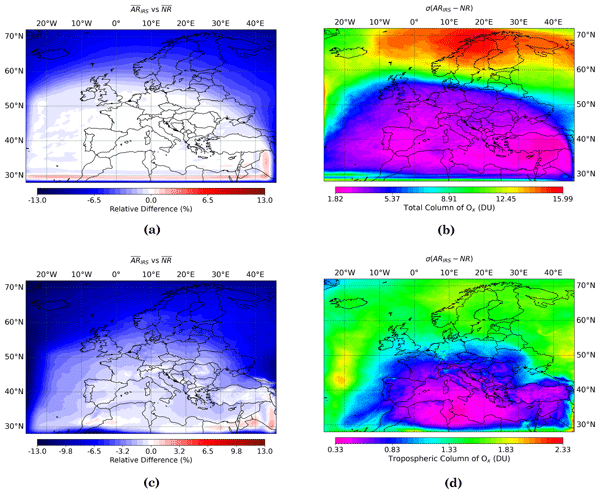
The future Meteosat Third Generation Infrared Sounder (MTG-IRS) will represent a major innovation for the monitoring of the chemical state of the atmosphere. MTG-IRS will have the advantage of being based on a geostationary platform and acquiring data with a high temporal frequency. This work aims to evaluate its potential impact over Europe within a chemical transport model (MOCAGE). The results indicate that the assimilation of these data always has a positive impact on ozone analysis.
Ethel Villeneuve, Philippe Chambon, and Nadia Fourrié
Atmos. Meas. Tech., 17, 3567–3582, https://doi.org/10.5194/amt-17-3567-2024, https://doi.org/10.5194/amt-17-3567-2024, 2024
Short summary
Short summary
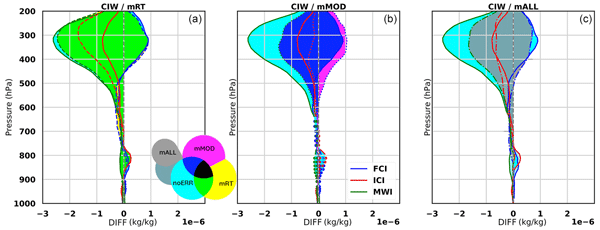
In cloudy situations, infrared and microwave observations are complementary, with infrared being sensitive to cloud tops and microwave sensitive to precipitation. However, infrared satellite observations are underused. This study aims to quantify if the inconsistencies in the modelling of clouds prevent the use of cloudy infrared observations in the process of weather forecasting. It shows that the synergistic use of infrared and microwave observations is beneficial, despite inconsistencies.
Samira Khodayar, Silvio Davolio, Paolo Di Girolamo, Cindy Lebeaupin Brossier, Emmanouil Flaounas, Nadia Fourrie, Keun-Ok Lee, Didier Ricard, Benoit Vie, Francois Bouttier, Alberto Caldas-Alvarez, and Veronique Ducrocq
Atmos. Chem. Phys., 21, 17051–17078, https://doi.org/10.5194/acp-21-17051-2021, https://doi.org/10.5194/acp-21-17051-2021, 2021
Short summary
Short summary
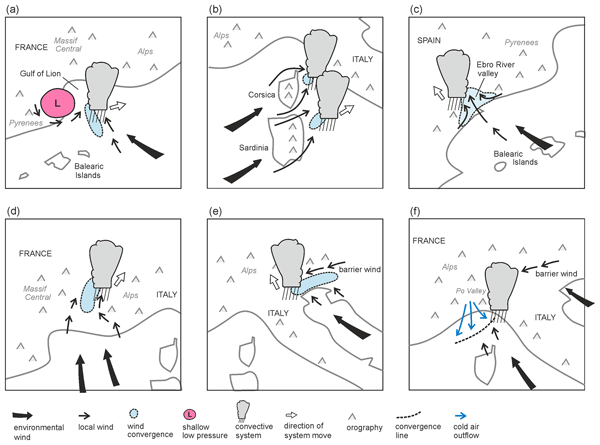
Heavy precipitation (HP) constitutes a major meteorological threat in the western Mediterranean. Every year, recurrent events affect the area with fatal consequences. Despite this being a well-known issue, open questions still remain. The understanding of the underlying mechanisms and the modeling representation of the events must be improved. In this article we present the most recent lessons learned from the Hydrological Cycle in the Mediterranean Experiment (HyMeX).
Pierre Brousseau, Valérie Vogt, Etienne Arbogast, Maud Martet, Guillaume Thomas, and Loïk Berre
EGUsphere, https://doi.org/10.5194/egusphere-2025-2642, https://doi.org/10.5194/egusphere-2025-2642, 2025
Short summary
Short summary
Since October 2024, the Météo-France operational convective scale model AROME-France uses a three-dimensional ensemble-based variational data assimilation system. This allows observations to be spatialised in a flow-dependent way, leading to improved initial conditions. Numerous sensitivity studies allowed to configure this scheme in an operational context. Major positive impacts on the forecast quality have been demonstrated over a long period and on several severe meteorological situations.
Alan Demortier, Marc Mandement, Vivien Pourret, and Olivier Caumont
Nat. Hazards Earth Syst. Sci., 25, 429–449, https://doi.org/10.5194/nhess-25-429-2025, https://doi.org/10.5194/nhess-25-429-2025, 2025
Short summary
Short summary
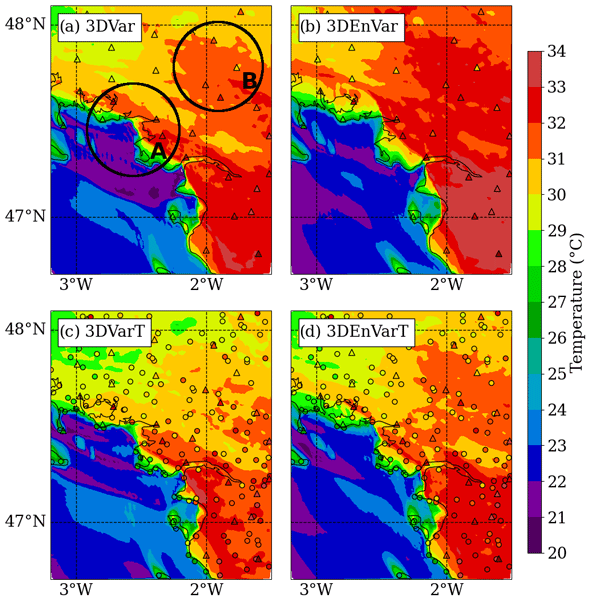
The use of numerical weather prediction models enables the forecasting of hazardous weather situations. The incorporation of new temperature and relative humidity observations from personal weather stations into the French limited-area model is evaluated in this study. This leads to the improvement of the associated near-surface variables of the model during the first hours of the forecast. Examples are provided for a sea breeze case during a heatwave and a fog episode.
Vincent Forcadell, Clotilde Augros, Olivier Caumont, Kévin Dedieu, Maxandre Ouradou, Cloé David, Jordi Figueras i Ventura, Olivier Laurantin, and Hassan Al-Sakka
Atmos. Meas. Tech., 17, 6707–6734, https://doi.org/10.5194/amt-17-6707-2024, https://doi.org/10.5194/amt-17-6707-2024, 2024
Short summary
Short summary
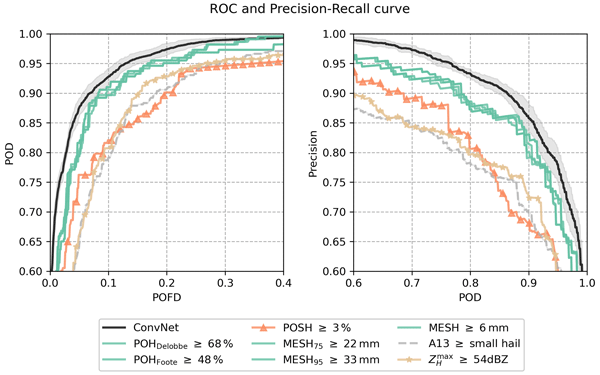
This study demonstrates the potential of enhancing severe-hail detection through the application of convolutional neural networks (CNNs) to dual-polarization radar data. It is shown that current methods can be calibrated to significantly enhance their performance for severe-hail detection. This study establishes the foundation for the solution of a more complex problem: the estimation of the maximum size of hailstones on the ground using deep learning applied to radar data.
Francesca Vittorioso, Vincent Guidard, and Nadia Fourrié
Atmos. Meas. Tech., 17, 5279–5299, https://doi.org/10.5194/amt-17-5279-2024, https://doi.org/10.5194/amt-17-5279-2024, 2024
Short summary
Short summary
The future Meteosat Third Generation Infrared Sounder (MTG-IRS) will represent a major innovation for the monitoring of the chemical state of the atmosphere. MTG-IRS will have the advantage of being based on a geostationary platform and acquiring data with a high temporal frequency. This work aims to evaluate its potential impact over Europe within a chemical transport model (MOCAGE). The results indicate that the assimilation of these data always has a positive impact on ozone analysis.
Ethel Villeneuve, Philippe Chambon, and Nadia Fourrié
Atmos. Meas. Tech., 17, 3567–3582, https://doi.org/10.5194/amt-17-3567-2024, https://doi.org/10.5194/amt-17-3567-2024, 2024
Short summary
Short summary
In cloudy situations, infrared and microwave observations are complementary, with infrared being sensitive to cloud tops and microwave sensitive to precipitation. However, infrared satellite observations are underused. This study aims to quantify if the inconsistencies in the modelling of clouds prevent the use of cloudy infrared observations in the process of weather forecasting. It shows that the synergistic use of infrared and microwave observations is beneficial, despite inconsistencies.
Alan Demortier, Marc Mandement, Vivien Pourret, and Olivier Caumont
Nat. Hazards Earth Syst. Sci., 24, 907–927, https://doi.org/10.5194/nhess-24-907-2024, https://doi.org/10.5194/nhess-24-907-2024, 2024
Short summary
Short summary
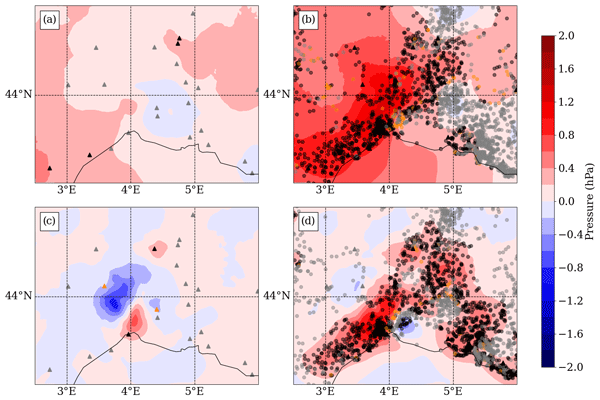
Improvements in numerical weather prediction models make it possible to warn of hazardous weather situations. The incorporation of new observations from personal weather stations into the French limited-area model is evaluated. It leads to a significant improvement in the modelling of the surface pressure field up to 9 h ahead. Their incorporation improves the location and intensity of the heavy precipitation event that occurred in the South of France in September 2021.
Felix Erdmann, Olivier Caumont, and Eric Defer
Nat. Hazards Earth Syst. Sci., 23, 2821–2840, https://doi.org/10.5194/nhess-23-2821-2023, https://doi.org/10.5194/nhess-23-2821-2023, 2023
Short summary
Short summary
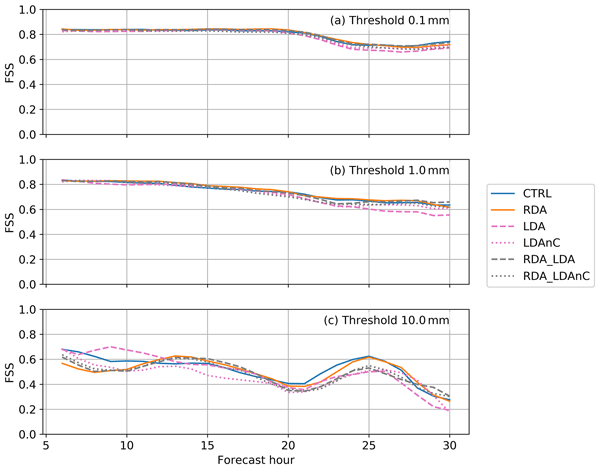
This work develops a novel lightning data assimilation (LDA) technique to make use of Meteosat Third Generation (MTG) Lightning Imager (LI) data in a regional, convection-permitting numerical weather prediction model. The approach combines statistical Bayesian and 3-dimensional variational methods. Our LDA can promote missing convection and suppress spurious convection in the initial state of the model, and it has similar skill to the operational radar data assimilation for rainfall forecasts.
Alistair Bell, Pauline Martinet, Olivier Caumont, Frédéric Burnet, Julien Delanoë, Susana Jorquera, Yann Seity, and Vinciane Unger
Atmos. Meas. Tech., 15, 5415–5438, https://doi.org/10.5194/amt-15-5415-2022, https://doi.org/10.5194/amt-15-5415-2022, 2022
Short summary
Short summary
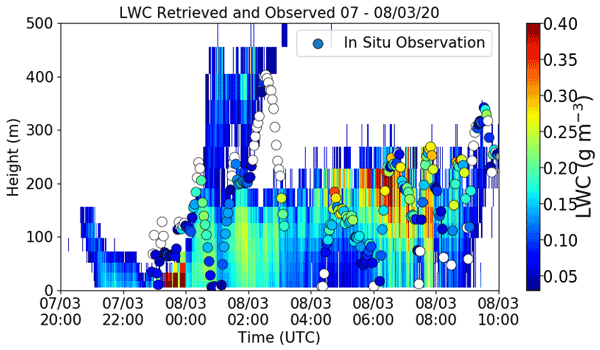
Cloud radars and microwave radiometers offer the potential to improve fog forecasts when assimilated into a high-resolution model. As this process can be complex, a retrieval of model variables is sometimes made as a first step. In this work, results from a 1D-Var algorithm for the retrieval of temperature, humidity and cloud liquid water content are presented. The algorithm is applied first to a synthetic dataset and then to a dataset of real measurements from a recent field campaign.
Pauline Combarnous, Felix Erdmann, Olivier Caumont, Éric Defer, and Maud Martet
Nat. Hazards Earth Syst. Sci., 22, 2943–2962, https://doi.org/10.5194/nhess-22-2943-2022, https://doi.org/10.5194/nhess-22-2943-2022, 2022
Short summary
Short summary
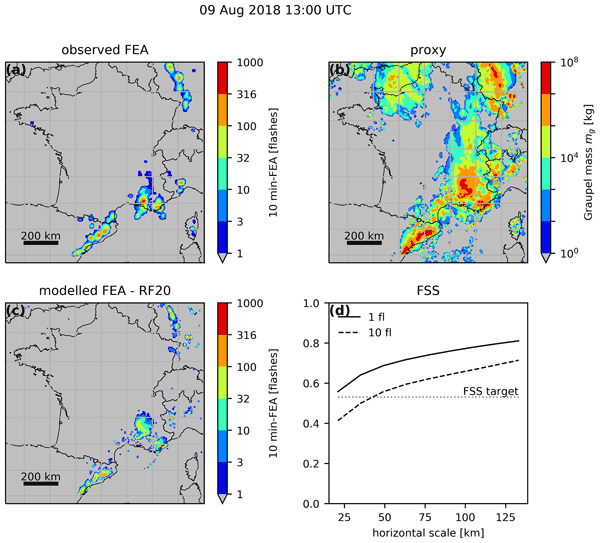
The objective of this study is to prepare the assimilation of satellite lightning data in the French regional numerical weather prediction system. The assimilation of lightning data requires an observation operator, based on empirical relationships between the lightning observations and a set of proxies derived from the numerical weather prediction system variables. We fit machine learning regression models to our data to yield those relationships and to investigate the best proxy for lightning.
Samira Khodayar, Silvio Davolio, Paolo Di Girolamo, Cindy Lebeaupin Brossier, Emmanouil Flaounas, Nadia Fourrie, Keun-Ok Lee, Didier Ricard, Benoit Vie, Francois Bouttier, Alberto Caldas-Alvarez, and Veronique Ducrocq
Atmos. Chem. Phys., 21, 17051–17078, https://doi.org/10.5194/acp-21-17051-2021, https://doi.org/10.5194/acp-21-17051-2021, 2021
Short summary
Short summary
Heavy precipitation (HP) constitutes a major meteorological threat in the western Mediterranean. Every year, recurrent events affect the area with fatal consequences. Despite this being a well-known issue, open questions still remain. The understanding of the underlying mechanisms and the modeling representation of the events must be improved. In this article we present the most recent lessons learned from the Hydrological Cycle in the Mediterranean Experiment (HyMeX).
Marc Mandement and Olivier Caumont
Weather Clim. Dynam., 2, 795–818, https://doi.org/10.5194/wcd-2-795-2021, https://doi.org/10.5194/wcd-2-795-2021, 2021
Short summary
Short summary
On 14–15 October 2018, in the Aude department (France), a heavy-precipitation event produced up to about 300 mm of rain in 11 h. Simulations carried out show that the former Hurricane Leslie, while involved, was not the first supplier of moisture over the entire event. The location of the highest rainfall was primarily driven by the location of a quasi-stationary front and secondarily by the location of precipitation bands downwind of mountains bordering the Mediterranean Sea.
Alistair Bell, Pauline Martinet, Olivier Caumont, Benoît Vié, Julien Delanoë, Jean-Charles Dupont, and Mary Borderies
Atmos. Meas. Tech., 14, 4929–4946, https://doi.org/10.5194/amt-14-4929-2021, https://doi.org/10.5194/amt-14-4929-2021, 2021
Short summary
Short summary
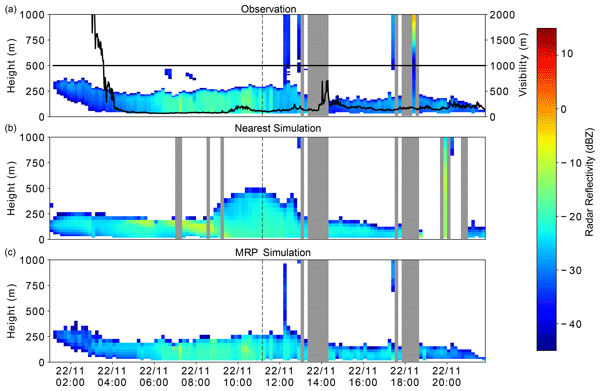
This paper presents work towards making retrievals on the liquid water content in fog and low clouds. Future retrievals will rely on a radar simulator and high-resolution forecast. In this work, real observations are used to assess the errors associated with the simulator and forecast. A selection method to reduce errors associated with the forecast is proposed. It is concluded that the distribution of errors matches the requirements for future retrievals.
Olivier Caumont, Marc Mandement, François Bouttier, Judith Eeckman, Cindy Lebeaupin Brossier, Alexane Lovat, Olivier Nuissier, and Olivier Laurantin
Nat. Hazards Earth Syst. Sci., 21, 1135–1157, https://doi.org/10.5194/nhess-21-1135-2021, https://doi.org/10.5194/nhess-21-1135-2021, 2021
Short summary
Short summary
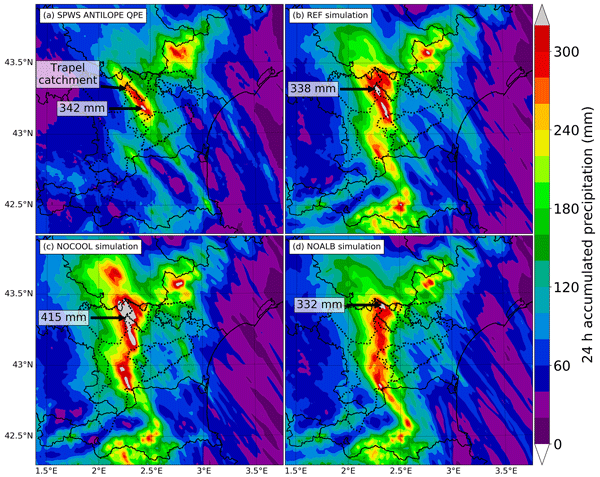
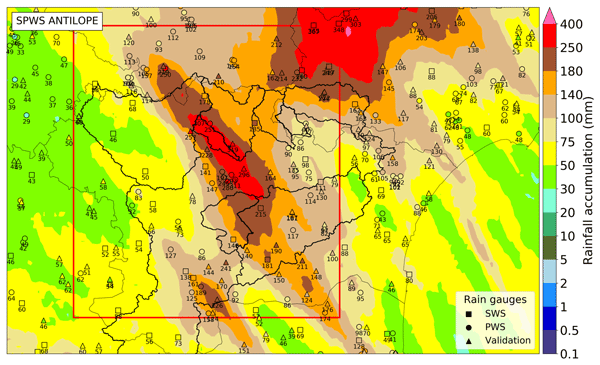
This study focuses on the heavy precipitation event of 14 and 15 October 2018, which caused deadly flash floods in the Aude basin in south-western France.
The case is studied from a meteorological point of view using various operational numerical weather prediction systems, as well as a unique combination of observations from both standard and personal weather stations. The peculiarities of this case compared to other cases of Mediterranean heavy precipitation events are presented.
Cited articles
Benjamin, S. G., Schwartz, B. E., Szoke, E. J., and Koch, S. E.: The Value of
Wind Profiler Data in U.S. Weather Forecasting, B. Am. Meteorol. Soc., 85, 1871–1886, https://doi.org/10.1175/BAMS-85-12-1871, 2004. a
Berre, L.: Estimation of Synoptic and Mesoscale Forecast Error Covariances in a Limited-Area Model, Mon. Weather Rev., 128, 644–667,
https://doi.org/10.1175/1520-0493(2000)128<0644:EOSAMF>2.0.CO;2, 2000. a
Bielli, S., Grzeschik, M., Richard, E., Flamant, C., Champollion, C., Kiemle,
C., Dorninger, M., and Brousseau, P.: Assimilation of water-vapour airborne
lidar observations: impact study on the COPS precipitation forecasts, Q. J. Roy. Meteorol. Soc., 138, 1652–1667, https://doi.org/10.1002/qj.1864, 2012. a, b
Bock, O., Bosser, P., Pacione, R., Nuret, M., Fourrié, N., and Parracho, A.: A high-quality reprocessed ground-based GPS dataset for atmospheric process studies, radiosonde and model evalu ation, and reanalysis of HyMeX Special Observing Period, Q. J. Roy. Meteorol. Soc., 142, 56–71,
https://doi.org/10.1002/qj.2701, 2016. a, b, c, d, e, f, g, h
Boniface, K., Ducrocq, V., Jaubert, G., Yan, X., Brousseau, P., Masson, F.,
Champollion, C., Chéry, J., and Doerflinger, E.: Impact of high-resolution data assimilation of GPS zenith delay on Mediterranean heavy rainfall forecasting, Ann. Geophys., 27, 2739–2753,
https://doi.org/10.5194/angeo-27-2739-2009, 2009. a
Borderies, M., Caumont, O., Delanoë, J., Ducrocq, V., and Fourrié, N.: Assimilation of wind data from airborne Doppler cloud-profiling radar in a kilometre-scale NWP system, Nat. Hazards Earth Syst. Sci., 19, 821–835, https://doi.org/10.5194/nhess-19-821-2019, 2019a. a
Borderies, M., Caumont, O., Delanoë, J., Ducrocq, V., Fourrié, N., and Marquet, P.: Impact of airborne cloud radar reflectivity data assimilation on kilometre-scale numerical weather prediction analyses and forecasts of heavy precipitation events, Natural Hazards and Earth System Sciences, 19, 907–926, https://doi.org/10.5194/nhess-19-907-2019, 2019b. a
Bouniol, D., Protat, A., Plana-Fattori, A., Giraud, M., Vinson, J.-P., and
Grand, N.: Comparison of Airborne and Spaceborne 95-GHz Radar Reflectivities
and Evaluation of Multiple Scattering Effects in Spaceborne Measurements, J. Atmos. Ocean. Tech., 25, 1983–1995, https://doi.org/10.1175/2008JTECHA1011.1, 2008. a
Brousseau, P., Berre, L., Bouttier, F., and Desroziers, G.: Background error
covariances for a convective-scale data-assimilation system : AROME-France
3D-Var, Q. J. Roy. Meteorol. Soc., 137, 409–422, https://doi.org/10.1002/qj.750, 2011. a, b
Brousseau, P., Seity, Y., Ricard, D., and Léger, J.: Improvement of the
forecast of convective activity from the AROME-France system, Q. J. Roy. Meteorol. Soc., 142, 2231–2243, https://doi.org/10.1002/qj.2822, 2016. a, b
Caniaux, G., Redelsperger, J.-L., and Lafore, J.-P.: A numerical study of the
stratiform region of a fast-moving squall line. Part I: General description
and water and heat budgets, J. Atmos. Sci., 51, 2046–2074, 1994. a
Caumont, O. and Ducrocq, V.: What should be considered when simulating Doppler velocities measured by ground-based weather radars?, J. Appl. Meteorol. Clim., 47, 2256–2262, https://doi.org/10.1175/2008JAMC1894.1, 2008. a
Caumont, O., Ducrocq, V., Wattrelot, E., Jaubert, G., and Pradier-Vabre, S.:
1D+3DVar assimilation of radar reflectivity data: a proof of concept, Tellus A, 62, 173–187, https://doi.org/10.1111/j.1600-0870.2009.00430.x, 2010. a
Chazette, P., Flamant, C., Shang, X., Totems, J., Raut, J.-C., Doerenbecher,
A., Ducrocq, V., Fourrié, N., Bock, O., and Cloché, S.: A multi-instrument and multi-model assessment of atmospheric moisture variability over the western Mediterranean during HyMeX, Q. J. Roy. Meteorol. Soc., 142, 7–22, https://doi.org/10.1002/qj.2671, 2016. a, b, c, d
Courtier, P., Freydier, C., Rabier, F., and Rochas, M.: The ARPEGE Project at
Météo-France, ECMWF Seminar Proceedings, 7, 193–231, 1991. a
Delanoë, J., Protat, A., Jourdan, O., Pelon, J., Papazzoni, M., Dupuy, R., Gayet, J.-F., and Jouan, C.: Comparison of Airborne In Situ, Airborne
Radar–Lidar, and Spaceborne Radar–Lidar Retrievals of Polar Ice Cloud
Properties Sampled during the POLARCAT Campaign, J. Atmos. Ocean. Tech., 30, 57–73, https://doi.org/10.1175/JTECH-D-11-00200.1, 2013. a
Di Girolamo, P., Flamant, C., Cacciani, M., Richard, E., Ducrocq, V., Summa,
D., Stelitano, D., Fourrié, N., and Saïd, F.: Observation of low-level wind reversals in the Gulf of Lion area and their impact on the water vapour variability, Q. J. Roy. Meteorol. Soc., 142, 153–172, https://doi.org/10.1002/qj.2767, 2016. a, b
Drobinski, P., Ducrocq, V., Alpert, P., Anagnostou, E., Béranger, K., Borga, M., Braud, I., Chanzy, A., Davolio, S., Delrieu, G., Estournel, C.,
Boubrahmi, N. F., Font, J., Grubišić, V., Gualdi, S., Homar, V.,
Ivančan-Picek, B., Kottmeier, C., Kotroni, V., Lagouvardos, K., Lionello,
P., Llasat, M. C., Ludwig, W., Lutoff, C., Mariotti, A., Richard, E., Romero,
R., Rotunno, R., Roussot, O., Ruin, I., Somot, S., Taupier-Letage, I.,
Tintore, J., Uijlenhoet, R., and Wernli, H.: HyMeX: A 10-Year Multidisciplinary Program on the Mediterranean Water Cycle, B. Am. Meteorol. Soc., 95, 1063–1082, https://doi.org/10.1175/BAMS-D-12-00242.1, 2014. a
Ducrocq, V., Braud, I., Davolio, S., Ferretti, R., Flamant, C., Jansa, A.,
Kalthoff, N., Richard, E., Taupier-Letage, I., Ayral, P.-A., Belamari, S.,
Berne, A., Borga, M., Boudevillain, B., Bock, O., Boichard, J.-L., Bouin,
M.-N., Bousquet, O., Bouvier, C., Chiggiato, J., Cimini, D., Corsmeier, U.,
Coppola, L., Cocquerez, P., Defer, E., Delanoë, J., Girolamo, P. D.,
Doerenbecher, A., Drobinski, P., Dufournet, Y., Fourrié, N., Gourley, J. J., Labatut, L., Lambert, D., Coz, J. L., Marzano, F. S., Molinié, G., Montani, A., Nord, G., Nuret, M., Ramage, K., Rison, W., Roussot, O., Said, F., Schwarzenboeck, A., Testor, P., Baelen, J. V., Vincendon, B., Aran, M., and Tamayo, J.: HyMeX-SOP1: The Field Campaign Dedicated to Heavy Precipitation and Flash Flooding in the Northwestern Mediterranean, B. Am. Meteorol. Soc., 95, 1083–1100, https://doi.org/10.1175/BAMS-D-12-00244.1, 2014. a
Duffourg, F. and Ducrocq, V.: Origin of the moisture feeding the Heavy Precipitating Systems over Southeastern France, Nat. Hazards Earth Syst. Sci., 11, 1163–1178, https://doi.org/10.5194/nhess-11-1163-2011, 2011. a, b, c
Duffourg, F., Nuissier, O., Ducrocq, V., Flamant, C., Chazette, P., Delanoë, J., Doerenbecher, A., Fourrié, N., Di Girolamo, P., Lac, C., Legain, D., Martinet, M., Saïd, F., and Bock, O.: Offshore deep convection initiation and maintenance during HyMeX IOP16a heavy precipitation event, Q. J. Roy. Meteorol. Soc., 142, 259–274, 2016. a, b
Fan, S., Zang, J.-F., Peng, X.-Y., Wu, S.-Q., Liu, Y.-X., and Zhang, K.-F.:
Validation of Atmospheric Water Vapor Derived from Ship-Borne GPS Measurements in the Chinese Bohai Sea, Ter. Atmos. Ocean. Sci., 27, 213–220, https://doi.org/10.3319/TAO.2015.11.04.01(A), 2016. a
Fourrié, N. and Nuret, M.: AROME_WMED reanalysis_2,
https://doi.org/10.14768/MISTRALS-HYMEX.1492, 2017. a
Fourrié, N., Bresson, E., Nuret, M., Jany, C., Brousseau, P., Doerenbecher, A., Kreitz, M., Nuissier, O., Sevault, E., Bénichou, H., Amodei, M., and Pouponneau, F.: AROME-WMED, a real-time mesoscale model designed for the HyMeX special observation periods, Geosci. Model Dev., 8,
1919–1941, https://doi.org/10.5194/gmd-8-1919-2015, 2015. a, b
Fourrié, N., Nuret, M., Brousseau, P., Caumont, O., Doerenbecher, A.,
Wattrelot, E., Moll, P., Bénichou, H., Puech, D., Bock, O., Bosser, P.,
Chazette, P., Flamant, C., Di Girolamo, P., Richard, E., and Saïd, F.:
The AROME-WMED reanalyses of the first special observation period of the
Hydrological cycle in the Mediterranean experiment (HyMeX), Geosci. Model Dev., 12, 2657–2678, https://doi.org/10.5194/gmd-12-2657-2019, 2019. a, b, c, d, e, f, g, h, i
Grzeschik, M., Bauer, H.-S., Wulfmeyer, V., Engelbart, D., Wandinger, U.,
Mattis, I., Althausen, D., Engelmann, R., Tesche, M., and Riede, A.:
Four-Dimensional Variational Data Analysis of Water Vapor Raman Lidar Data
and Their Impact on Mesoscale Forecasts, J. Atmos. Ocean. Tech., 25, 1437–1453, https://doi.org/10.1175/2007JTECHA974.1, 2008. a
Gustafsson, N., Janjić, T., Schraff, C., Leuenberger, D., Weissmann, M.,
Reich, H., Brousseau, P., Montmerle, T., Wattrelot, E., Bučánek, A., Mile,
M., Hamdi, R., Lindskog, M., Barkmeijer, J., Dahlbom, M., Macpherson, B.,
Ballard, S., Inverarity, G., Carley, J., Alexander, C., Dowell, D., Liu,S.,
Ikuta, Y., and Fujita, T.: Survey of data assimilation methods for
convective-scale numerical weather prediction at operational centres, Q. J. Roy. Meteorol. Soc., 144, 1218–1256, https://doi.org/10.1002/qj.3179, 2018. a
Gutman, S. I., Sahm, S. R., Benjamin, S. G., Schwartz, B. E., Holub, K. L.,
Stewart, J. Q., and Smith, T. L.: Rapid Retrieval and Assimilation of Ground
Based GPS Precipitable Water Observations at the NOAA Forecast Systems
Laboratory: Impact on Weather Forecasts, J. Meteorol. Soc. Jpn. Ser. II, 82, 351–360, https://doi.org/10.2151/jmsj.2004.351, 2004. a
HyMeX database: Welcome to The HyMeX Database, available at: http://mistrals.sedoo.fr/HyMeX/, last access: 19 August 2019. a
Kouba, J. and Héroux, P.: Precise Point Positioning Using IGS Orbit and Clock Products, GPS Solutions, 5, 12–28, https://doi.org/10.1007/PL00012883, 2001. a
Lindskog, M., Ridal, M., Thorsteinsson, S., and Ning, T.: Data assimilation of GNSS zenith total delays from a Nordic processing centre, Atmos. Chem. Phys., 17, 13983–13998, https://doi.org/10.5194/acp-17-13983-2017, 2017. a
Macpherson, S. R., Deblonde, G., Aparicio, J. M., and Casati, B.: Impact of
NOAA Ground-Based GPS Observations on the Canadian Regional Analysis and
Forecast System, Mon. Weather Rev., 136, 2727–2746, https://doi.org/10.1175/2007MWR2263.1, 2008. a
Martet, M., Guillaume, F., and Wattrelot, E.: Assimilation of OPERA radar data in AROME-FRANCE NWP MODEL: a challenge, in: 39th international conference on radar meterology, 16–20 September 2019, Nara Kasugano International Forum IRAKA, Nara, Japan, available at:
https://cscenter.co.jp/icrm2019/program/data/abstracts/Session3B-02_2.pdf,
(last access: 19 August 2020), 2019. a
Martinet, M., Nuissier, O., Duffourg, F., Ducrocq, V., and Ricard, D.:
Fine-scale numerical analysis of the sensitivity of the HyMeX IOP16a heavy
precipitating event to the turbulent mixing length parameterization, Q. J. Roy. Meteorol. Soc., 143, 3122–3135, 2017. a
Montmerle, T. and Faccani, C.: Mesoscale Assimilation of Radial Velocities from Doppler Radars in a Preoperational Framework, Mon. Weather Rev., 137,
1939–1953, https://doi.org/10.1175/2008MWR2725.1, 2009. a
Pinty, J.-P. and Jabouille, P.: A mixed-phased cloud parameterization for use
in a mesoscale non-hydrostatic model: simulations of a squall line and of
orographic precipitation, in: Proceeding, Conference on Cloud Physics, Amer. Meteor. Soc., Everett, WA, 217–220, 1998. a
Protat, A., Bouniol, D., Delanoë, J., O'Connor, E., May, P. T.,
Plana-Fattori, A., Hasson, A., Görsdorf, U., and Heymsfield, A. J.:
Assessment of Cloudsat Reflectivity Measurements and Ice Cloud Properties
Using Ground-Based and Airborne Cloud Radar Observations, J. Atmos. Ocean. Tech., 26, 1717–1741, https://doi.org/10.1175/2009JTECHA1246.1, 2009. a
Wattrelot, E., Caumont, O., and Mahfouf, J.-F.: Operational Implementation of
the 1D+3D-Var Assimilation Method of Radar Reflectivity Data in the AROME
Model, Mon. Weather Rev., 142, 1852–1873, https://doi.org/10.1175/MWR-D-13-00230.1, 2014. a, b, c
Short summary
The assimilation impact of four observation data sets on forecasts is studied in a mesoscale weather model. The ground-based Global Navigation Satellite System (GNSS) zenithal total delay data set with information on humidity has the largest impact on analyses and forecasts, representing an evenly spread and frequent data set for each analysis time over the model domain. Moreover, the reprocessing of these data also improves the forecast quality, but this impact is not statistically significant.
The assimilation impact of four observation data sets on forecasts is studied in a mesoscale...


Altmetrics
Final-revised paper
Preprint