
Articles | Volume 26, issue 2
https://doi.org/10.5194/nhess-26-901-2026
© Author(s) 2026. This work is distributed under
the Creative Commons Attribution 4.0 License.
the Creative Commons Attribution 4.0 License.
https://doi.org/10.5194/nhess-26-901-2026
© Author(s) 2026. This work is distributed under
the Creative Commons Attribution 4.0 License.
the Creative Commons Attribution 4.0 License.
Research article
| 
24 Feb 2026
Research article |
| 24 Feb 2026
| 24 Feb 2026
Atmospheric Rivers as Triggers of Compound Flooding: quantifying Extreme Joint Events in Western North America Under Climate Change
Andrew Vincent Grgas-Svirac
Department of Civil and Environmental Engineering, University of Western Ontario, London, Canada
Mohammad Fereshtehpour
Department of Civil and Environmental Engineering, University of Western Ontario, London, Canada
Northern Forestry Centre, Natural Resources Canada (NRCan), Edmonton, AB, Canada

Department of Civil and Environmental Engineering, University of Western Ontario, London, Canada
Alex J. Cannon
Climate Research Division, Environment and Climate Change Canada, Victoria, BC, Canada
Hamidreza Shirkhani
National Research Council Canada, Ottawa, ON, Canada
Related authors
No articles found.
Johnny Rutherford, Nick Rutter, Leanne Wake, Georgina Wooley, Julia Boike, and Alex J. Cannon
EGUsphere, https://doi.org/10.5194/egusphere-2026-3363, https://doi.org/10.5194/egusphere-2026-3363, 2026
This preprint is open for discussion and under review for The Cryosphere (TC).
Short summary
Short summary
The Arctic is warming rapidly, threatening to release vast carbon stores from frozen soils. Climate models consistently misrepresent Arctic snow, causing soils to appear artificially cold. We used a random forest model to better predict winter snow density and fed these improved estimates into a widely used climate model which raised projected soil temperatures by up to 7 °C, suggesting current forecasts of soil temperature and carbon release are likely underestimated.
Peter W. Thorne, John M. Nicklas, John J. Kennedy, Bruce Calvert, Baylor Fox-Kemper, Mark T. Richardson, Adrian Simmons, Ed Hawkins, Robert Rhode, Kathryn Cowtan, Nerilie J. Abram, Axel Andersson, Simon Noone, Phillipe Marbaix, Nathan Lenssen, Dirk Olonscheck, Tristram Walsh, Stephen Outten, Ingo Bethke, Bjorn H. Samset, Chris Smith, Anna Pirani, Jan Fuglestvedt, Lavanya Rajamani, Richard A. Betts, Elizabeth C. Kent, Blair Trewin, Colin Morice, Tim Osborn, Samantha N. Burgess, Oliver Geden, Andrew Parnell, Piers M. Forster, Chris Hewitt, Zeke Hausfather, Valerie Masson-Delmotte, Jochem Marotzke, Nathan Gillett, Sonia I. Seneviratne, Gavin A. Schmidt, Duo Chan, Stefan Brönnimann, Andy Reisinger, Matthew Menne, Maisa Rojas Corradi, Christopher Kadow, Peter Huybers, David B. Stephenson, Emily Wallis, Joeri Rogelj, Andrew Schurer, Karen McKinnon, Panmao Zhai, Fatima Driouech, Wilfran Moufouma Okia, Saeed Vazifehkhah, Sophie Szopa, Christopher J. Merchant, Shoji Hirahara, Masayoshi Ishii, Francois A. Engelbrecht, Qingxiang Li, June-Yi Lee, Alex J. Cannon, Christophe Cassou, Karina von Schuckmann, Amir H. Delju, and Ellie Murtagh
Earth Syst. Sci. Data Discuss., https://doi.org/10.5194/essd-2025-825, https://doi.org/10.5194/essd-2025-825, 2026
Preprint under review for ESSD
Short summary
Short summary
We reassess the basis for determining the present level of long-term global warming. Unbiased estimates of both realised warming and anthropogenic warming are possible that approximate a 20-year retrospective mean. Our resulting estimates of 1.40 [1.23–1.58] °C (realised) and 1.34 [1.18–1.50] °C (anthropogenic) as at end of 2024 highlight the urgency of immediate, far-reaching and sustained climate mitigation actions if we are to meet the long term temperature goal of the Paris Agreement.
Johnny Rutherford, Nick Rutter, Leanne Wake, and Alex J. Cannon
Biogeosciences, 22, 5031–5049, https://doi.org/10.5194/bg-22-5031-2025, https://doi.org/10.5194/bg-22-5031-2025, 2025
Short summary
Short summary
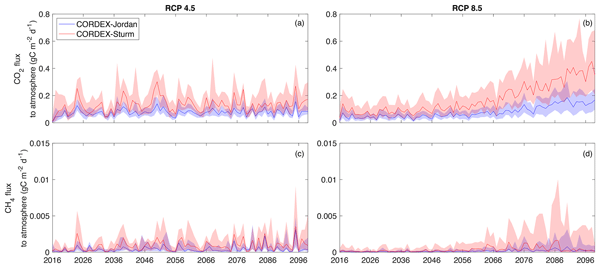
The Arctic winter is vulnerable to climate warming, and ~1700 Gt of carbon stored in high-latitude permafrost ecosystems is at risk of degradation in the future due to enhanced microbial activity. Poorly represented cold season processes, such as the simulation of snow thermal conductivity in land surface models (LSMs), cause uncertainty in projected carbon emission simulations. Improved snow conductivity parameterization in CLM5.0 significantly increases predicted winter CO2 emissions to 2100.
Rajesh R. Shrestha, Alex J. Cannon, Sydney Hoffman, Marie Whibley, and Aranildo Lima
Hydrol. Earth Syst. Sci., 29, 2881–2900, https://doi.org/10.5194/hess-29-2881-2025, https://doi.org/10.5194/hess-29-2881-2025, 2025
Short summary
Short summary
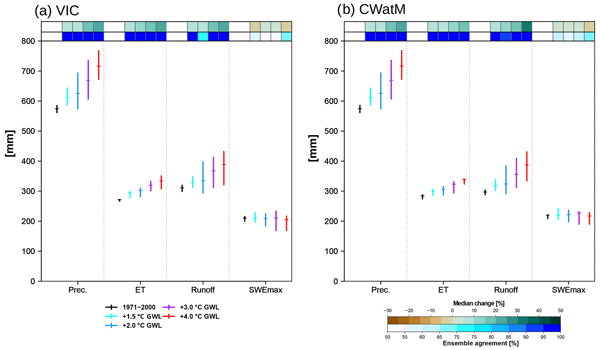
We evaluate the historical performance and future projections from a large-scale hydrologic model, the Community Water Model, against a watershed hydrologic model, Variable Infiltration Capacity, for the Liard River basin in Canada. Results from the two models are generally consistent at annual and monthly timescales, suggesting that a calibrated global hydrologic model can provide robust projections. We explain the differences in projections in terms of model uncertainties.
Cited articles
Barth, N. A., Villarini, G., Nayak, M. A., and White, K.: Mixed populations and annual flood frequency estimates in the western United States: The role of atmospheric rivers, Water Resour. Res., 53, 257–269, 2017.
Beniston, M. and Stoffel, M.: Rain-on-snow events, floods and climate change in the Alps: Events may increase with warming up to 4 °C and decrease thereafter, Sci. Total Environ., 571, 228–236, https://doi.org/10.1016/j.scitotenv.2016.07.146, 2016.
Bevacqua, E., Suarez-Gutierrez, L., Jézéquel, A., Lehner, F., Vrac, M., Yiou, P., and Zscheischler, J.: Advancing research on compound weather and climate events via large ensemble model simulations, Nat. Commun., 14, 2145, https://doi.org/10.1038/s41467-023-37847-5, 2023.
Blanusa, M. L., López-Zurita, C. J., and Rasp, S.: Internal variability plays a dominant role in global climate projections of temperature and precipitation extremes, Clim. Dyn., https://doi.org/10.1007/s00382-023-06664-3, 2023.
Bowers, C., Serafin, K. A., Tseng, K.-C., and Baker, J. W.: Atmospheric River Sequences as Indicators of Hydrologic Hazard in Historical Reanalysis and GFDL SPEAR Future Climate Projections, Earths Future, 11, e2023EF003536, https://doi.org/10.1029/2023EF003536, 2023.
Bowers, C., Serafin, K. A., and Baker, J. W.: Temporal compounding increases economic impacts of atmospheric rivers in California, Sci. Adv., 10, eadi7905, https://doi.org/10.1126/sciadv.adi7905, 2024.
Bukovsky, M. S.: Masks for the Bukovsky regionalization of North America, Bukovsky, 2011.
Cannon, A. J., Alford, H., Shrestha, R. R., Kirchmeier-Young, M. C., and Najafi, M. R.: Canadian Large Ensembles Adjusted Dataset version 1 (CanLEADv1): Multivariate bias-corrected climate model outputs for terrestrial modelling and attribution studies in North America, Geosci. Data J., 9, 288–303, https://doi.org/10.1002/gdj3.142, 2022.
Cassidy, E.: Another Atmospheric River Hits British Columbia, NASA Earth Obs., 21st October, 2024.
Chen, X., Leung, L. R., Wigmosta, M., and Richmond, M.: Impact of Atmospheric Rivers on Surface Hydrological Processes in Western U.S. Watersheds, J. Geophys. Res. Atmospheres, 124, 8896–8916, https://doi.org/10.1029/2019JD030468, 2019.
Cobb, A., Delle Monache, L., Cannon, F., and Ralph, F. M.: Representation of Dropsonde-Observed Atmospheric River Conditions in Reanalyses, Geophys. Res. Lett., 48, e2021GL093357, https://doi.org/10.1029/2021GL093357, 2021.
Collow, A. B. M., Shields, C. A., Guan, B., Kim, S., Lora, J. M., McClenny, E. E., Nardi, K., Payne, A., Reid, K., Shearer, E. J., Tomé, R., Wille, J. D., Ramos, A. M., Gorodetskaya, I. V., Leung, L. R., O'Brien, T. A., Ralph, F. M., Rutz, J., Ullrich, P. A., and Wehner, M.: An Overview of ARTMIP's Tier 2 Reanalysis Intercomparison: Uncertainty in the Detection of Atmospheric Rivers and Their Associated Precipitation, J. Geophys. Res. Atmospheres, 127, e2021JD036155, https://doi.org/10.1029/2021JD036155, 2022.
Curry, C. L., Islam, S. U., Zwiers, F. W., and Déry, S. J.: Atmospheric Rivers Increase Future Flood Risk in Western Canada's Largest Pacific River, Geophys. Res. Lett., 46, 1651–1661, https://doi.org/10.1029/2018GL080720, 2019.
Danielson, J. and Gesch, D.: Global Multi-resolution Terrain Elevation Data 2010 (GMTED2010), U.S. Geological Survey, United States of America, https://doi.org/10.5066/F7J38R2N, 2011a.
Danielson, J. J. and Gesch, B. D.: Global multi-resolution terrain elevation data 2010 (GMTED2010), Earth Resources Observation and Science (EROS) Center [data set], https://doi.org/10.3133/ofr20111073, 2011b.
Deser, C.: Certain Uncertainty: The Role of Internal Climate Variability in Projections of Regional Climate Change and Risk Management, Earths Future, 8, e2020EF001854, https://doi.org/10.1029/2020EF001854, 2020.
Deser, C., Phillips, A., Bourdette, V., and Teng, H.: Uncertainty in climate change projections: the role of internal variability, Clim. Dyn., 38, 527–546, https://doi.org/10.1007/s00382-010-0977-x, 2012.
Deser, C., Lehner, F., Rodgers, K. B., Ault, T., Delworth, T. L., DiNezio, P. N., Fiore, A., Frankignoul, C., Fyfe, J. C., Horton, D. E., Kay, J. E., Knutti, R., Lovenduski, N. S., Marotzke, J., McKinnon, K. A., Minobe, S., Randerson, J., Screen, J. A., Simpson, I. R., and Ting, M.: Insights from Earth system model initial-condition large ensembles and future prospects, Nat. Clim. Change, 10, 277–286, https://doi.org/10.1038/s41558-020-0731-2, 2020.
Dettinger, M.: Climate Change, Atmospheric Rivers, and Floods in California – A Multimodel Analysis of Storm Frequency and Magnitude Changes1, JAWRA J. Am. Water Resour. Assoc., 47, 514–523, 2011.
Dettinger, M. D.: Atmospheric Rivers as Drought Busters on the U.S. West Coast, J. Hydrometeorol., 14, 1721–1732, https://doi.org/10.1175/JHM-D-13-02.1, 2013.
Dettinger, M.: Historical and Future Relations Between Large Storms and Droughts in California, San Franc. Estuary Watershed Sci., 14, https://doi.org/10.15447/sfews.2016v14iss2art1, 2016.
Espinoza, V., Waliser, D. E., Guan, B., Lavers, D. A., and Ralph, F. M.: Global Analysis of Climate Change Projection Effects on Atmospheric Rivers, Geophys. Res. Lett., 45, 4299–4308, https://doi.org/10.1029/2017GL076968, 2018.
Fereshtehpour, M., Najafi, M. R., and Cannon, A. J.: Characterizing Compound Inland Flooding Mechanisms and Risks in North America Under Climate Change, Earths Future, 13, e2024EF005353, https://doi.org/10.1029/2024EF005353, 2025a.
Fereshtehpour, M., Najafi, M. R., Leach, J. A., and Wang, Y.: Quantifying the individual and combined influence of climate change, land cover transition, and internal climate variability on the hydrology of a snow-dominated forested watershed, Climatic Change, 178, https://doi.org/10.1007/s10584-024-03848-6, 2025b.
Fish, M. A., Done, J. M., Swain, D. L., Wilson, A. M., Michaelis, A. C., Gibson, P. B., and Ralph, F. M.: Large-Scale Environments of Successive Atmospheric River Events Leading to Compound Precipitation Extremes in California, J. Clim., 35, 1515–1536, https://doi.org/10.1175/JCLI-D-21-0168.1, 2022.
Freudiger, D., Kohn, I., Stahl, K., and Weiler, M.: Large-scale analysis of changing frequencies of rain-on-snow events with flood-generation potential, Hydrol. Earth Syst. Sci., 18, 2695–2709, https://doi.org/10.5194/hess-18-2695-2014, 2014.
Gao, Y., Lu, J., Leung, L. R., Yang, Q., Hagos, S., and Qian, Y.: Dynamical and thermodynamical modulations on future changes of landfalling atmospheric rivers over western North America, Geophys. Res. Lett., 42, 7179–7186, https://doi.org/10.1002/2015GL065435, 2015.
Gershunov, A., Shulgina, T., Ralph, F. M., Lavers, D. A., and Rutz, J. J.: Assessing the climate-scale variability of atmospheric rivers affecting western North America, Geophys. Res. Lett., 44, 7900–7908, https://doi.org/10.1002/2017GL074175, 2017.
Gershunov, A., Shulgina, T., Clemesha, R. E. S., Guirguis, K., Pierce, D. W., Dettinger, M. D., Lavers, D. A., Cayan, D. R., Polade, S. D., Kalansky, J., and Ralph, F. M.: Precipitation regime change in Western North America: The role of Atmospheric Rivers, Sci. Rep., 9, 9944, https://doi.org/10.1038/s41598-019-46169-w, 2019.
Gillett, N. P., Cannon, A. J., Malinina, E., Schnorbus, M., Anslow, F., Sun, Q., Kirchmeier-Young, M., Zwiers, F., Seiler, C., Zhang, X., Flato, G., Wan, H., Li, G., and Castellan, A.: Human influence on the 2021 British Columbia floods, Weather Clim. Extrem., 36, 100441, https://doi.org/10.1016/j.wace.2022.100441, 2022.
Gonzales, K. R., Swain, D. L., Nardi, K. M., Barnes, E. A., and Diffenbaugh, N. S.: Recent Warming of Landfalling Atmospheric Rivers Along the West Coast of the United States, J. Geophys. Res. Atmospheres, 124, 6810–6826, https://doi.org/10.1029/2018JD029860, 2019.
Gonzales, K. R., Swain, D. L., Roop, H. A., and Diffenbaugh, N. S.: Quantifying the Relationship Between Atmospheric River Origin Conditions and Landfall Temperature, J. Geophys. Res. Atmospheres, 127, e2022JD037284, https://doi.org/10.1029/2022JD037284, 2022.
Grillakis, M. G., Koutroulis, A. G., Komma, J., Tsanis, I. K., Wagner, W., and Blöschl, G.: Initial soil moisture effects on flash flood generation – A comparison between basins of contrasting hydro-climatic conditions, J. Hydrol., 541, 206–217, https://doi.org/10.1016/j.jhydrol.2016.03.007, 2016.
Guan, B. and Waliser, D. E.: Detection of atmospheric rivers: Evaluation and application of an algorithm for global studies, J. Geophys. Res. Atmospheres, 120, 12514–12535, https://doi.org/10.1002/2015JD024257, 2015.
Guan, B., Waliser, D. E., Ralph, F. M., Fetzer, E. J., and Neiman, P. J.: Hydrometeorological characteristics of rain-on-snow events associated with atmospheric rivers, Geophys. Res. Lett., 43, 2964–2973, https://doi.org/10.1002/2016GL067978, 2016.
Guan, B. and Waliser, D. E.: Tracking Atmospheric Rivers Globally: Spatial Distributions and Temporal Evolution of Life Cycle Characteristics, J. Geophys. Res. Atmospheres, 124, 12523–12552, https://doi.org/10.1029/2019JD031205, 2019.
Guan, B., Molotch, N. P., Waliser, D. E., Fetzer, E. J., and Neiman, P. J.: Extreme snowfall events linked to atmospheric rivers and surface air temperature via satellite measurements, Geophys. Res. Lett., 37, https://doi.org/10.1029/2010GL044696, 2010.
Guan, B., Waliser, D. E., and Ralph, F. M.: Global Application of the Atmospheric River Scale, J. Geophys. Res. Atmospheres, 128, e2022JD037180, https://doi.org/10.1029/2022JD037180, 2023.
Hagos, S. M., Leung, L. R., Yoon, J.-H., Lu, J., and Gao, Y.: A projection of changes in landfalling atmospheric river frequency and extreme precipitation over western North America from the Large Ensemble CESM simulations, Geophys. Res. Lett., 43, 1357–1363, https://doi.org/10.1002/2015GL067392, 2016.
Hao, Z. and Singh, V. P.: Compound Events under Global Warming: A Dependence Perspective, J. Hydrol. Eng., 25, 03120001, https://doi.org/10.1061/(ASCE)HE.1943-5584.0001991, 2020.
Haugen, M. A., Stein, M. L., Sriver, R. L., and Moyer, E. J.: Future climate emulations using quantile regressions on large ensembles, Adv. Stat. Climatol. Meteorol. Oceanogr., 5, 37–55, https://doi.org/10.5194/ascmo-5-37-2019, 2019.
Henn, B., Musselman, K. N., Lestak, L., Ralph, F. M., and Molotch, N. P.: Extreme Runoff Generation From Atmospheric River Driven Snowmelt During the 2017 Oroville Dam Spillways Incident, Geophys. Res. Lett., 47, e2020GL088189, https://doi.org/10.1029/2020GL088189, 2020.
Hersbach, H., Bell, B., Berrisford, P., Hirahara, S., Horányi, A., Muñoz-Sabater, J., Nicolas, J., Peubey, C., Radu, R., Schepers, D., Simmons, A., Soci, C., Abdalla, S., Abellan, X., Balsamo, G., Bechtold, P., Biavati, G., Bidlot, J., Bonavita, M., De Chiara, G., Dahlgren, P., Dee, D., Diamantakis, M., Dragani, R., Flemming, J., Forbes, R., Fuentes, M., Geer, A., Haimberger, L., Healy, S., Hogan, R. J., Hólm, E., Janisková, M., Keeley, S., Laloyaux, P., Lopez, P., Lupu, C., Radnoti, G., de Rosnay, P., Rozum, I., Vamborg, F., Villaume, S., and Thépaut, J.-N.: The ERA5 global reanalysis, Q. J. R. Meteorol. Soc., 146, 1999–2049, https://doi.org/10.1002/qj.3803, 2020.
Huang, X. and Swain, D. L.: Climate change is increasing the risk of a California megaflood, Sci. Adv., 8, eabq0995, https://doi.org/10.1126/sciadv.abq0995, 2022.
Il Jeong, D. and Cannon, A. J.: Projected changes to risk of wind-driven rain on buildings in Canada under +0.5 ° C to +3.5 ° C global warming above the recent period, Clim. Risk Manag., 30, 100261, https://doi.org/10.1016/j.crm.2020.100261, 2020.
Il Jeong, D. and Sushama, L.: Rain-on-snow events over North America based on two Canadian regional climate models, Clim. Dyn., 50, 303–316, https://doi.org/10.1007/s00382-017-3609-x, 2018.
IPCC (Ed.): Managing the risks of extreme events and disasters to advance climate change adaption, Cambridge university press, New York, 2012.
IPCC: Climate Change 2022: Impacts, Adaptation, and Vulnerability. Contribution of Working Group II to the SIxth Assessment Report of the Intergovernmental Panel on Climate Change, edited by: Pörtner, H.-O., Roberts, D. C., Tignor, M., Poloczanska, E. S., Mintenbeck, K., Alegria, A., Craig, M., Langsdorf, S., Löschke, S., Möller, V., Okem, A., and Rama, B., Cambridge University Press, Cambridge, UK and New York, NY, USA, 3056 pp., https://doi.org/10.1017/9781009325844, 2022.
Islam, M. R. and Najafi, M. R.: Machine learning-based regional flood frequency framework for climate resilient infrastructure, Journal of Hydrology, 133703, https://doi.org/10.1016/j.jhydrol.2025.133703, 2025.
Islam, M. R. and Najafi, M. R.: Dynamic and thermodynamic drivers of extreme precipitation under nonstationarity: implications for probable maximum precipitation across North America, Natural Hazards, 122, https://doi.org/10.1007/s11069-025-07886-w, 2026.
Kay, J. E., Deser, C., Phillips, A., Mai, A., Hannay, C., Strand, G., Arblaster, J. M., Bates, S. C., Danabasoglu, G., Edwards, J., Holland, M., Kushner, P., Lamarque, J.-F., Lawrence, D., Lindsay, K., Middleton, A., Munoz, E., Neale, R., Oleson, K., Polvani, L., and Vertenstein, M.: The Community Earth System Model (CESM) Large Ensemble Project: A Community Resource for Studying Climate Change in the Presence of Internal Climate Variability, Bull. Am. Meteorol. Soc., 96, 1333–1349, https://doi.org/10.1175/BAMS-D-13-00255.1, 2015.
Kelleher, M. K., Grise, K. M., and Schmidt, D. F.: Variability in Projected North American Mean and Extreme Temperature and Precipitation Trends for the 21st Century: Model-To-Model Differences Versus Internal Variability, Earths Future, 11, e2022EF003161, https://doi.org/10.1029/2022EF003161, 2023.
Kim, J., Waliser, D. E., Neiman, P. J., Guan, B., Ryoo, J.-M., and Wick, G. A.: Effects of atmospheric river landfalls on the cold season precipitation in California, Clim. Dyn., 40, 465–474, https://doi.org/10.1007/s00382-012-1322-3, 2013.
Konrad, C. P. and Dettinger, M. D.: Flood Runoff in Relation to Water Vapor Transport by Atmospheric Rivers Over the Western United States, 1949–2015, Geophys. Res. Lett., 44, 11456–11462, https://doi.org/10.1002/2017GL075399, 2017.
Lamjiri, M. A., Dettinger, M. D., Ralph, F. M., Oakley, N. S., and Rutz, J. J.: Hourly analyses of the large storms and atmospheric rivers that provide most of California's precipitation in only 10 to 100 hours per year, San Franc. Estuary Watershed Sci., 16, 1–17, https://doi.org/10.15447/sfews.2018v16iss4art1, 2018.
Lavers, D. A. and Villarini, G.: The contribution of atmospheric rivers to precipitation in Europe and the United States, J. Hydrol., 522, 382–390, https://doi.org/10.1016/j.jhydrol.2014.12.010, 2015.
Lavers, D. A., Waliser, D. E., Ralph, F. M., and Dettinger, M. D.: Predictability of horizontal water vapor transport relative to precipitation: Enhancing situational awareness for forecasting western U.S. extreme precipitation and flooding, Geophys. Res. Lett., 43, 2275–2282, https://doi.org/10.1002/2016GL067765, 2016.
Lora, J. M., Shields, C. A., and Rutz, J. J.: Consensus and Disagreement in Atmospheric River Detection: ARTMIP Global Catalogues, Geophys. Res. Lett., 47, e2020GL089302, https://doi.org/10.1029/2020GL089302, 2020.
Ma, W., Chen, G., Guan, B., Shields, C. A., Tian, B., and Yanez, E.: Evaluating the Representations of Atmospheric Rivers and Their Associated Precipitation in Reanalyses With Satellite Observations, J. Geophys. Res. Atmospheres, 128, e2023JD038937, https://doi.org/10.1029/2023JD038937, 2023.
Mahmoudi, M. H., Najafi, M. R., Singh, H., and Schnorbus, M.: Spatial and temporal changes in climate extremes over northwestern North America: the influence of internal climate variability and external forcing, Clim. Change, 165, https://doi.org/10.1007/s10584-021-03037-9, 2021.
McCabe, G. J., Clark, M. P., and Hay, L. E.: Rain-on-Snow Events in the Western United States, Bull. Am. Meteorol. Soc., 88, 319–328, https://doi.org/10.1175/BAMS-88-3-319, 2007.
Michaelis, A. C., Gershunov, A., Weyant, A., Fish, M. A., Shulgina, T., and Ralph, F. M.: Atmospheric River Precipitation Enhanced by Climate Change: A Case Study of the Storm That Contributed to California's Oroville Dam Crisis, Earths Future, 10, e2021EF002537, https://doi.org/10.1029/2021EF002537, 2022.
Mishra, A. N., Maraun, D., Schiemann, R., Hodges, K., Zappa, G., and Ossó, A.: Long-lasting intense cut-off lows to become more frequent in the Northern Hemisphere, Commun. Earth Environ., 6, 115, https://doi.org/10.1038/s43247-025-02078-7, 2025.
Mo, R., So, R., Brugman, M. M., Mooney, C., Liu, A. Q., Jakob, M., Castellan, A., and Vingarzan, R.: Column Relative Humidity and Primary Condensation Rate as Two Useful Supplements to Atmospheric River Analysis, Water Resour. Res., 57, e2021WR029678, https://doi.org/10.1029/2021WR029678, 2021.
Muñoz Sabater, J.: ERA5-Land hourly data from 1950 to present, Copernicus Climate Change Service (C3S) Climate Data Store (CDS) [data set], https://doi.org/10.24381/cds.e2161bac, 2019.
Musselman, K. N., Lehner, F., Ikeda, K., Clark, M. P., Prein, A. F., Liu, C., Barlage, M., and Rasmussen, R.: Projected increases and shifts in rain-on-snow flood risk over western North America, Nat. Clim. Change, 8, 808–812, https://doi.org/10.1038/s41558-018-0236-4, 2018.
Na, W., Grgas-Svirac, A. V., and Najafi, M. R.: Intensifying hydroclimatic swings under a warming climate: Disentangling anthropogenic climate change and internal variability in North America, Global and Planetary Change, 105171, https://doi.org/10.1016/j.gloplacha.2025.105171, 2025.
Nash, D., Rutz, J. J., and Jacobs, A.: Atmospheric Rivers in Southeast Alaska: Meteorological Conditions Associated With Extreme Precipitation, J. Geophys. Res. Atmospheres, 129, e2023JD039294, https://doi.org/10.1029/2023JD039294, 2024.
Nayak, M. A. and Villarini, G.: A long-term perspective of the hydroclimatological impacts of atmospheric rivers over the central United States, Water Resour. Res., 53, 1144–1166, https://doi.org/10.1002/2016WR019033, 2017.
Oakley, N. S., Lancaster, J. T., Kaplan, M. L., and Ralph, F. M.: Synoptic conditions associated with cool season post-fire debris flows in the Transverse Ranges of southern California, Nat. Hazards, 88, 327–354, https://doi.org/10.1007/s11069-017-2867-6, 2017.
O’Brien, T. A., Wehner, M. F., Payne, A. E., Shields, C. A., Rutz, J. J., Leung, L.-R., Ralph, F. M., Collow, A., Gorodetskaya, I., Guan, B., Lora, J. M., McClenny, E., Nardi, K. M., Ramos, A. M., Tomé, R., Sarangi, C., Shearer, E. J., Ullrich, P. A., Zarzycki, C., Loring, B., Huang, H., Inda-Díaz, H. A., Rhoades, A. M., and Zhou, Y.: Increases in Future AR Count and Size: Overview of the ARTMIP Tier 2 CMIP5/6 Experiment, J. Geophys. Res. Atmospheres, 127, e2021JD036013, https://doi.org/10.1029/2021JD036013, 2022.
Poschlod, B., Zscheischler, J., Sillmann, J., Wood, R. R., and Ludwig, R.: Climate change effects on hydrometeorological compound events over southern Norway, Weather Clim. Extrem., 28, 100253, https://doi.org/10.1016/j.wace.2020.100253, 2020.
Radić, V., Cannon, A. J., Menounos, B., and Gi, N.: Future changes in autumn atmospheric river events in British Columbia, Canada, as projected by CMIP5 global climate models, J. Geophys. Res. Atmospheres, 120, 9279–9302, https://doi.org/10.1002/2015JD023279, 2015.
Raghuvanshi, A. S. and Agarwal, A.: An Hourly Dataset of Moisture Budget Components Over the Indian Subcontinent (1940–2024), Sci. Data, 12, 1770, https://doi.org/10.1038/s41597-025-06044-y, 2025a.
Raghuvanshi, A. S. and Agarwal, A.: Complex network reveals propagation and moisture dynamics of Indian monsoon precipitation extremes, Clim. Dyn., 63, 443, https://doi.org/10.1007/s00382-025-07924-0, 2025b.
Ralph, F. M., Neiman, P. J., Wick, G. A., Gutman, S. I., Dettinger, M. D., Cayan, D. R., and White, A. B.: Flooding on California's Russian River: Role of atmospheric rivers, Geophys. Res. Lett., 33, https://doi.org/10.1029/2006GL026689, 2006.
Ralph, F. M., Coleman, T., Neiman, P. J., Zamora, R. J., and Dettinger, M. D.: Observed Impacts of Duration and Seasonality of Atmospheric-River Landfalls on Soil Moisture and Runoff in Coastal Northern California, J. Hydrometeorol., 14, 443–459, https://doi.org/10.1175/JHM-D-12-076.1, 2013.
Ralph, F. M., Dettinger, M., Lavers, D., Gorodetskaya, I. V., Martin, A., Viale, M., White, A. B., Oakley, N., Rutz, J., Spackman, J. R., Wernli, H., and Cordeira, J.: Atmospheric Rivers Emerge as a Global Science and Applications Focus, Bull. Am. Meteorol. Soc., 98, 1969–1973, 2017.
Ralph, F. M., Rutz, J. J., Cordeira, J. M., Dettinger, M., Anderson, M., Reynolds, D., Schick, L. J., and Smallcomb, C.: A Scale to Characterize the Strength and Impacts of Atmospheric Rivers, Bull. Am. Meteorol. Soc., 100, 269–289, https://doi.org/10.1175/BAMS-D-18-0023.1, 2019a.
Ralph, F. M., Wilson, A. M., Shulgina, T., Kawzenuk, B., Sellars, S., Rutz, J. J., Lamjiri, M. A., Barnes, E. A., Gershunov, A., Guan, B., Nardi, K. M., Osborne, T., and Wick, G. A.: ARTMIP-early start comparison of atmospheric river detection tools: how many atmospheric rivers hit northern California's Russian River watershed?, Clim. Dyn., 52, 4973–4994, https://doi.org/10.1007/s00382-018-4427-5, 2019b.
Ralph, F. M., Dettinger, M. D., Jonathan, R. J., and Waliser, D. E. (Eds.): Atmospheric Rivers, 1st Ed., Springer International Publishing, 284 pp., 2020.
Rhoades, A. M., Risser, M. D., Stone, D. A., Wehner, M. F., and Jones, A. D.: Implications of warming on western United States landfalling atmospheric rivers and their flood damages, Weather Clim. Extrem., 32, 100326, 2021.
Rhoades, A. M., Zarzycki, C. M., Hatchett, B. J., Inda-Diaz, H., Rudisill, W., Bass, B., Dennis, E., Heggli, A., McCrary, R., McGinnis, S., Ombadi, M., Rahimi-Esfarjani, S., Slinskey, E., Srivastava, A., Szinai, J., Ullrich, P. A., Wehner, M., Yates, D., and Jones, A. D.: Anticipating how rain-on-snow events will change through the 21st century: lessons from the 1997 new year’s flood event, Clim. Dyn., 62, 8615–8637, https://doi.org/10.1007/s00382-024-07351-7, 2024.
Richards-Thomas, T. S., Déry, S. J., Stewart, R. E., and Thériault, J. M.: Climatological context of the mid-November 2021 floods in the province of British Columbia, Canada, Weather Clim. Extrem., 45, 100705, https://doi.org/10.1016/j.wace.2024.100705, 2024.
Ridder, N., de Vries, H., and Drijfhout, S.: The role of atmospheric rivers in compound events consisting of heavy precipitation and high storm surges along the Dutch coast, Nat. Hazards Earth Syst. Sci., 18, 3311–3326, https://doi.org/10.5194/nhess-18-3311-2018, 2018.
Rutz, J. J., Steenburgh, W. J., and Ralph, F. M.: Climatological Characteristics of Atmospheric Rivers and Their Inland Penetration over the Western United States, Mon. Weather Rev., 142, 905–921, https://doi.org/10.1175/MWR-D-13-00168.1, 2014.
Rutz, J. J., Steenburgh, W. J., and Ralph, F. M.: The Inland Penetration of Atmospheric Rivers over Western North America: A Lagrangian Analysis, Mon. Weather Rev., 143, 1924–1944, https://doi.org/10.1175/MWR-D-14-00288.1, 2015.
Rutz, J. J., Shields, C. A., Lora, J. M., Payne, A. E., Guan, B., Ullrich, P., O'Brien, T., Leung, L. R., Ralph, F. M., Wehner, M., Brands, S., Collow, A., Goldenson, N., Gorodetskaya, I., Griffith, H., Kashinath, K., Kawzenuk, B., Krishnan, H., Kurlin, V., Lavers, D., Magnusdottir, G., Mahoney, K., McClenny, E., Muszynski, G., Nguyen, P. D., Prabhat, Mr., Qian, Y., Ramos, A. M., Sarangi, C., Sellars, S., Shulgina, T., Tome, R., Waliser, D., Walton, D., Wick, G., Wilson, A. M., and Viale, M.: The Atmospheric River Tracking Method Intercomparison Project (ARTMIP): Quantifying Uncertainties in Atmospheric River Climatology, J. Geophys. Res. Atmospheres, 124, 13777–13802, https://doi.org/10.1029/2019JD030936, 2019.
Scinocca, J. F., Kharin, V. V., Jiao, Y., Qian, M. W., Lazare, M., Solheim, L., Flato, G. M., Biner, S., Desgagne, M., and Dugas, B.: Coordinated Global and Regional Climate Modeling, J. Clim., 29, 17–35, https://doi.org/10.1175/JCLI-D-15-0161.1, 2016.
Sharma, A. R. and Déry, S. J.: Contribution of Atmospheric Rivers to Annual, Seasonal, and Extreme Precipitation Across British Columbia and Southeastern Alaska, J. Geophys. Res. Atmospheres, 125, e2019JD031823, https://doi.org/10.1029/2019JD031823, 2020a.
Sharma, A. R. and Déry, S. J.: Linking Atmospheric Rivers to Annual and Extreme River Runoff in British Columbia and Southeastern Alaska, J. Hydrometeorol., 21, 2457–2472, https://doi.org/10.1175/JHM-D-19-0281.1, 2020b.
Shields, C. A. and Kiehl, J. T.: Atmospheric river landfall-latitude changes in future climate simulations, Geophys. Res. Lett., 43, 8775–8782, https://doi.org/10.1002/2016GL070470, 2016.
Shields, C. A., Rutz, J. J., Leung, L.-Y., Ralph, F. M., Wehner, M., Kawzenuk, B., Lora, J. M., McClenny, E., Osborne, T., Payne, A. E., Ullrich, P., Gershunov, A., Goldenson, N., Guan, B., Qian, Y., Ramos, A. M., Sarangi, C., Sellars, S., Gorodetskaya, I., Kashinath, K., Kurlin, V., Mahoney, K., Muszynski, G., Pierce, R., Subramanian, A. C., Tome, R., Waliser, D., Walton, D., Wick, G., Wilson, A., Lavers, D., Prabhat, Collow, A., Krishnan, H., Magnusdottir, G., and Nguyen, P.: Atmospheric River Tracking Method Intercomparison Project (ARTMIP): project goals and experimental design, Geosci. Model Dev., 11, 2455–2474, https://doi.org/10.5194/gmd-11-2455-2018, 2018.
Shields, C. A., Payne, A. E., Shearer, E. J., Wehner, M. F., O’Brien, T. A., Rutz, J. J., Leung, L. R., Ralph, F. M., Marquardt Collow, A. B., Ullrich, P. A., Dong, Q., Gershunov, A., Griffith, H., Guan, B., Lora, J. M., Lu, M., McClenny, E., Nardi, K. M., Pan, M., Qian, Y., Ramos, A. M., Shulgina, T., Viale, M., Sarangi, C., Tomé, R., and Zarzycki, C.: Future Atmospheric Rivers and Impacts on Precipitation: Overview of the ARTMIP Tier 2 High-Resolution Global Warming Experiment, Geophys. Res. Lett., 50, e2022GL102091, https://doi.org/10.1029/2022GL102091, 2023.
Shulgina, T., Gershunov, A., Hatchett, B. J., Guirguis, K., Subramanian, A. C., Margulis, S. A., Fang, Y., Cayan, D. R., Pierce, D. W., Dettinger, M., Anderson, M. L., and Ralph, F. M.: Observed and projected changes in snow accumulation and snowline in California’s snowy mountains, Clim. Dyn., 61, 4809–4824, https://doi.org/10.1007/s00382-023-06776-w, 2023.
Singh, H., Najafi, M. R., and Cannon, A. J.: Characterizing non-stationary compound extreme events in a changing climate based on large-ensemble climate simulations, Clim. Dyn., 56, 1389–1406, https://doi.org/10.1007/s00382-020-05538-2, 2021.
Stein, M. L.: Some Statistical Issues in Climate Science, Stat. Sci., 35, 31–41, https://doi.org/10.1214/19-STS730, 2020.
Tebaldi, C., Dorheim, K., Wehner, M., and Leung, R.: Extreme metrics from large ensembles: investigating the effects of ensemble size on their estimates, Earth Syst. Dynam., 12, 1427–1501, https://doi.org/10.5194/esd-12-1427-2021, 2021.
Tseng, K.-C., Johnson, N. C., Kapnick, S. B., Cooke, W., Delworth, T. L., Jia, L., Lu, F., McHugh, C., Murakami, H., Rosati, A. J., Wittenberg, A. T., Yang, X., Zeng, F., and Zhang, L.: When Will Humanity Notice Its Influence on Atmospheric Rivers?, J. Geophys. Res. Atmospheres, 127, e2021JD036044, https://doi.org/10.1029/2021JD036044, 2022.
Ullrich, P. A., Zarzycki, C. M., McClenny, E. E., Pinheiro, M. C., Stansfield, A. M., and Reed, K. A.: TempestExtremes v2.1: a community framework for feature detection, tracking, and analysis in large datasets, Geosci. Model Dev., 14, 5023–5048, https://doi.org/10.5194/gmd-14-5023-2021, 2021.
Warden, J. W., Rezvani, R., Najafi, M. R., and Shrestha, R. R.: Projections of rain-on-snow events in a sub-arctic river basin under 1.5° C–4° C global warming, Hydrol. Process., 38, e15250, https://doi.org/10.1002/hyp.15250, 2024.
Wasko, C., Nathan, R., and Peel, M. C.: Changes in Antecedent Soil Moisture Modulate Flood Seasonality in a Changing Climate, Water Resour. Res., 56, e2019WR026300, https://doi.org/10.1029/2019WR026300, 2020.
Wazneh, H., Arain, M. A., Coulibaly, P., and Gachon, P.: Evaluating the Dependence between Temperature and Precipitation to Better Estimate the Risks of Concurrent Extreme Weather Events, Adv. Meteorol., 2020, e8763631, https://doi.org/10.1155/2020/8763631, 2020.
Whan, K. and Zwiers, F.: Evaluation of extreme rainfall and temperature over North America in CanRCM4 and CRCM5, Clim. Dyn., 46, 3821–3843, https://doi.org/10.1007/s00382-015-2807-7, 2016.
Wilks, D. S.: “The Stippling Shows Statistically Significant Grid Points”: How Research Results are Routinely Overstated and Overinterpreted, and What to Do about It, Bull. Am. Meteorol. Soc., 97, 2263–2273, https://doi.org/10.1175/BAMS-D-15-00267.1, 2016.
Zavadoff, B. L. and Kirtman, B. P.: Dynamic and Thermodynamic Modulators of European Atmospheric Rivers, J. Clim., 33, 4167–4185, https://doi.org/10.1175/JCLI-D-19-0601.1, 2020.
Zhang, A. T. and Gu, V. X.: Global Dam Tracker: A database of more than 35,000 dams with location, catchment, and attribute information, Sci. Data, 10, 111, https://doi.org/10.1038/s41597-023-02008-2, 2023a.
Zhang, A. T. and Gu, V. X.: Global Dam Tracker: A database of more than 35,000 dams with location, catchment, and attribute information, In Scientific Data (Version v1, Bd. 10, Nummer 1, S. 111), Zenodo [data set], https://doi.org/10.5281/zenodo.7616852, 2023b.
Zhou, Y., O'Brien, T. A., Ullrich, P. A., Collins, W. D., Patricola, C. M., and Rhoades, A. M.: Uncertainties in Atmospheric River Lifecycles by Detection Algorithms: Climatology and Variability, J. Geophys. Res. Atmospheres, 126, e2020JD033711, https://doi.org/10.1029/2020JD033711, 2021.
Zhu, Y. and Newell, R. E.: A Proposed Algorithm for Moisture Fluxes from Atmospheric Rivers, Mon. Weather Rev., 126, 725–735, 1998.
Zscheischler, J. and Seneviratne, S. I.: Dependence of drivers affects risks associated with compound events, Sci. Adv., 3, e1700263, https://doi.org/10.1126/sciadv.1700263, 2017.
Zscheischler, J., Martius, O., Westra, S., Bevacqua, E., Raymond, C., Horton, R. M., van den Hurk, B., AghaKouchak, A., Jézéquel, A., Mahecha, M. D., Maraun, D., Ramos, A. M., Ridder, N. N., Thiery, W., and Vignotto, E.: A typology of compound weather and climate events, Nat. Rev. Earth Environ., 1, 333–347, https://doi.org/10.1038/s43017-020-0060-z, 2020.
Short summary
This study explores how long, narrow bands of moist air known as atmospheric rivers increase the risk of inland flooding when combined with other factors. Using climate models, we found that these events are already important drivers of flooding in western North America and will likely become even more intense with climate change. Natural climate shifts also affect how often these events occur. The findings help inform future decisions about flood planning and protection.
This study explores how long, narrow bands of moist air known as atmospheric rivers increase the...


Altmetrics
Final-revised paper
Preprint