
the Creative Commons Attribution 4.0 License.
the Creative Commons Attribution 4.0 License.
 | 26 Nov 2026
Deep-learning prediction of high-frequency sea-level oscillations in the Adriatic Sea

Nikola Metličić
Jadranka Šepić
Marko Rus
Srđan Čupić
Matej Kristan
Matjaž Ličer
Related authors
In summer 2023, the Gulf of Trieste (Adriatic, Mediterranean Sea) experienced extreme bottom temperatures recorded by a thermometer at 20 m depth. However, the three-month bottom marine heatwave was not detectable from the surface. The event followed a prolonged drought: high salinity and density of surface waters caused unusually deep mixing, allowing warm surface waters to reach the seafloor and imposing extreme stress on bottom-dwelling biota.


Cited articles
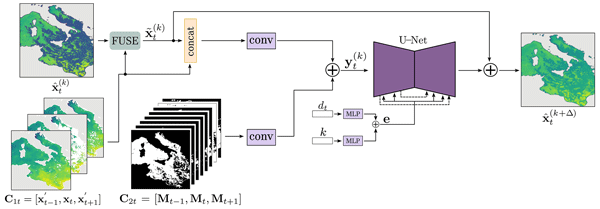
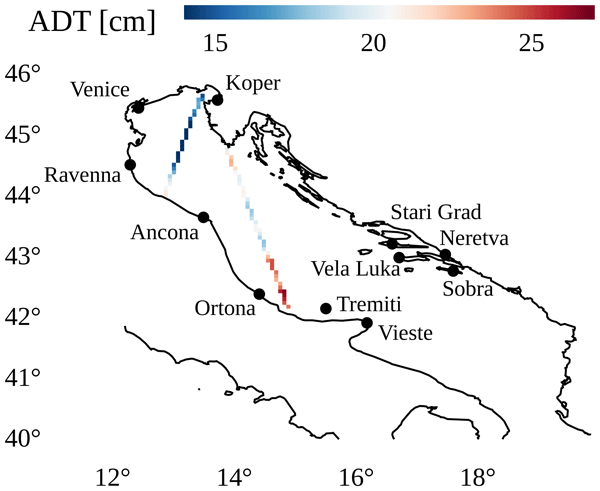
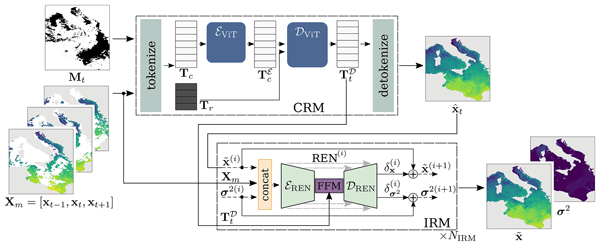
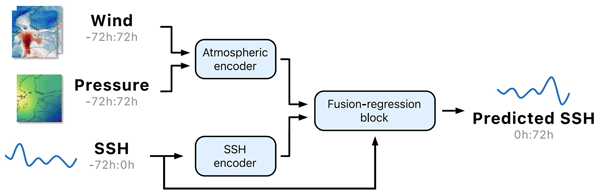
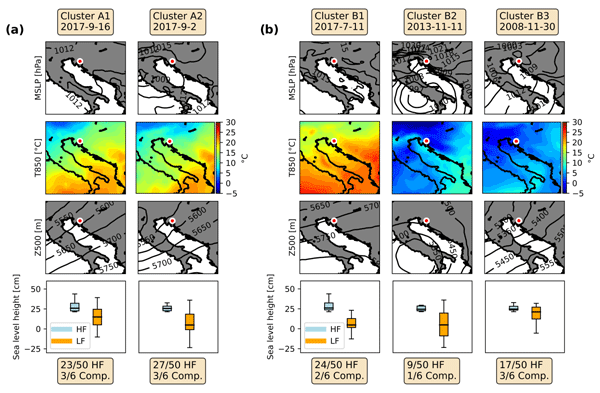
High-frequency sea-level oscillations can cause coastal flooding and damage along the Adriatic coast. Using over 20 years of sea-level observations and atmospheric reanalysis data, we evaluated two deep-learning architectures for predicting these events. Both performed well for regular oscillations but underestimated rare extremes, likely due to their limited representation in the training data and unresolved small-scale atmospheric processes.
High-frequency sea-level oscillations can cause coastal flooding and damage along the Adriatic...


