
Articles | Volume 26, issue 11
https://doi.org/10.5194/nhess-26-6137-2026
© Author(s) 2026. This work is distributed under
the Creative Commons Attribution 4.0 License.
https://doi.org/10.5194/nhess-26-6137-2026
© Author(s) 2026. This work is distributed under
the Creative Commons Attribution 4.0 License.
Research article
| 
25 Nov 2026
Research article |
| 25 Nov 2026
Detection of agricultural flash droughts using impact-informed thresholds
Ingrid Ubeda-Trujillo
CORRESPONDING AUTHOR

IHE Delft Institute for Water Education, P.O. Box 3015, 2601 DA Delft, the Netherlands
Department Water Management, Delft University of Technology, P.O. Box 5048, 2600 GA Delft, the Netherlands
Universidad Nacional Autónoma de Nicaragua, UNAN-Managua, Managua, Nicaragua
Micha Werner
IHE Delft Institute for Water Education, P.O. Box 3015, 2601 DA Delft, the Netherlands
Hydrology and Environmental Hydraulics Group, Wageningen University and Research, Wageningen, the Netherlands
Claudia Bertini
IHE Delft Institute for Water Education, P.O. Box 3015, 2601 DA Delft, the Netherlands
Miriam Coenders-Gerrits
Department Water Management, Delft University of Technology, P.O. Box 5048, 2600 GA Delft, the Netherlands
Graham Jewitt
IHE Delft Institute for Water Education, P.O. Box 3015, 2601 DA Delft, the Netherlands
Department Water Management, Delft University of Technology, P.O. Box 5048, 2600 GA Delft, the Netherlands
Related authors
No articles found.
Muhammad Ibrahim, Markus Hrachowitz, Miriam Coenders-Gerrits, and Ruud van der Ent
EGUsphere, https://doi.org/10.5194/egusphere-2026-4226, https://doi.org/10.5194/egusphere-2026-4226, 2026
Short summary
Short summary
Root zone storage capacity is an important parameter in hydrological and land-surface models and is often estimated using the memory method rather than through model calibration. We evaluated the uncertainty associated with this widely used method across thousands of catchments worldwide. Our results show that uncertainty varies systematically with climate, while memory method estimates remain in close agreement with calibrated values, supporting the commonly used 20-year return period.
Gijsbert A. Vis, Oscar K. Hartogensis, Marie-Claire ten Veldhuis, Bas J. H. van de Wiel, and Miriam Coenders-Gerrits
EGUsphere, https://doi.org/10.5194/egusphere-2025-6125, https://doi.org/10.5194/egusphere-2025-6125, 2026
Short summary
Short summary
Heat exchange between land and air mainly happens through turbulence. Usually turbulence is measured at one location over time, but it also happens over space. In this study, we use fiber optic cables (DTS) that can measure temperature to capture turbulence over time, as well as directly over space. If compared with conventional instruments, we found a good correlation but also an underestimation. We recommend using DTS alongside with conventional instruments so they can complement each other.
Luuk D. van der Valk, Oscar K. Hartogensis, Miriam Coenders-Gerrits, Rolf W. Hut, and Remko Uijlenhoet
Hydrol. Earth Syst. Sci., 29, 6589–6606, https://doi.org/10.5194/hess-29-6589-2025, https://doi.org/10.5194/hess-29-6589-2025, 2025
Short summary
Short summary
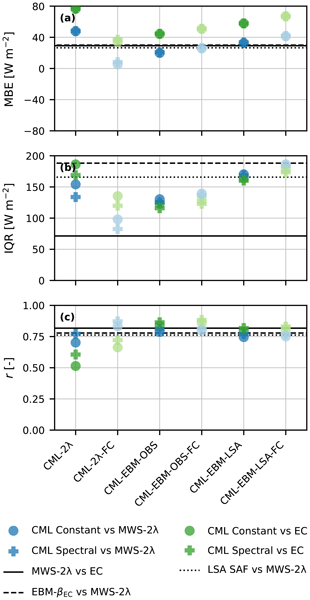
Commercial microwave links (CMLs), part of mobile phone networks, transmit comparable signals as instruments specially designed to estimate evaporation. Therefore, we investigate if CMLs could be used to estimate evaporation, even though they have not been designed for this purpose. Our results illustrate the potential of using CMLs to estimate evaporation, especially given their global coverage, but also outline some major drawbacks, often a consequence of unfavourable design choices for CMLs.
Luuk D. van der Valk, Oscar K. Hartogensis, Miriam Coenders-Gerrits, Rolf W. Hut, Bas Walraven, and Remko Uijlenhoet
Atmos. Meas. Tech., 18, 6143–6165, https://doi.org/10.5194/amt-18-6143-2025, https://doi.org/10.5194/amt-18-6143-2025, 2025
Short summary
Short summary
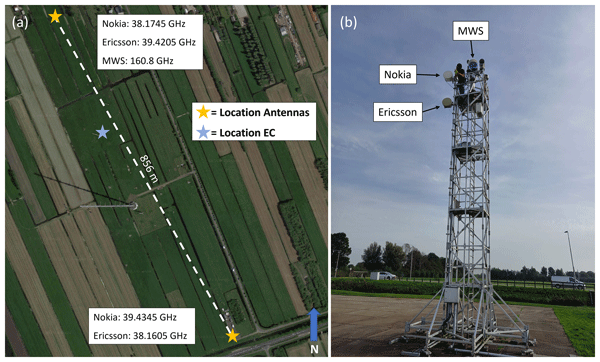
Commercial microwave links (CMLs), part of mobile phone networks, transmit comparable signals to instruments specially designed to estimate evaporation. Therefore, we investigate if CMLs could be used to estimate evaporation, even though they have not been designed for this purpose. Our results illustrate the potential for using CMLs to estimate evaporation, especially given their global coverage, but also outline some major drawbacks, often a consequence of unfavourable design choices for CMLs.
Xuan Chen, Job Augustijn van der Werf, Arjan Droste, Miriam Coenders-Gerrits, and Remko Uijlenhoet
Hydrol. Earth Syst. Sci., 29, 3447–3480, https://doi.org/10.5194/hess-29-3447-2025, https://doi.org/10.5194/hess-29-3447-2025, 2025
Short summary
Short summary
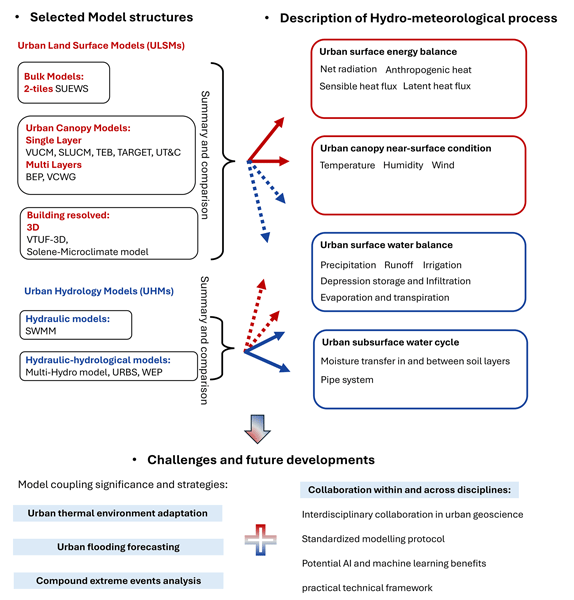
The review highlights the need to integrate urban land surface and hydrological models to better predict and manage compound climate events in cities. We find that inadequate representation of water surfaces, hydraulic systems and detailed building representations are key areas for improvement in future models. Coupled models show promise but face challenges at regional and neighbourhood scales. Interdisciplinary communication is crucial to enhance urban hydrometeorological simulations.
Muhammad Ibrahim, Miriam Coenders-Gerrits, Ruud van der Ent, and Markus Hrachowitz
Hydrol. Earth Syst. Sci., 29, 1703–1723, https://doi.org/10.5194/hess-29-1703-2025, https://doi.org/10.5194/hess-29-1703-2025, 2025
Short summary
Short summary
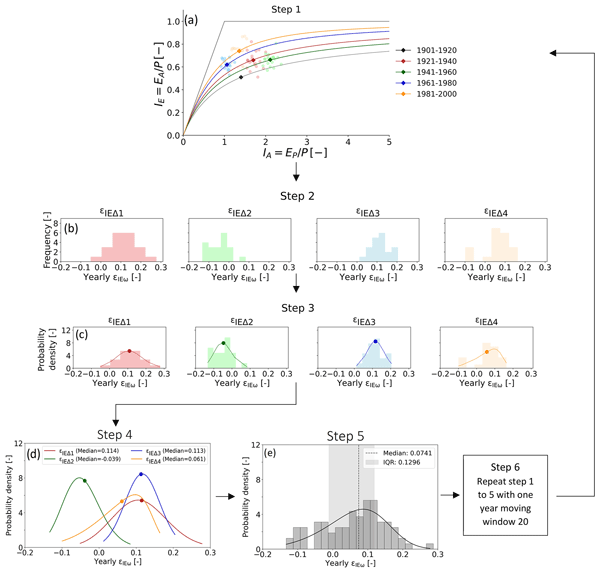
The quantification of precipitation into evaporation and runoff is vital for water resources management. The Budyko framework, based on aridity and evaporative indices of a catchment, can be an ideal tool for that. However, recent research highlights deviations of catchments from the expected evaporative index, casting doubt on its reliability. This study quantifies deviations of 2387 catchments, finding them minor and predictable. Integrating these into predictions upholds the framework's efficacy.
Anne F. Van Loon, Sarra Kchouk, Alessia Matanó, Faranak Tootoonchi, Camila Alvarez-Garreton, Khalid E. A. Hassaballah, Minchao Wu, Marthe L. K. Wens, Anastasiya Shyrokaya, Elena Ridolfi, Riccardo Biella, Viorica Nagavciuc, Marlies H. Barendrecht, Ana Bastos, Louise Cavalcante, Franciska T. de Vries, Margaret Garcia, Johanna Mård, Ileen N. Streefkerk, Claudia Teutschbein, Roshanak Tootoonchi, Ruben Weesie, Valentin Aich, Juan P. Boisier, Giuliano Di Baldassarre, Yiheng Du, Mauricio Galleguillos, René Garreaud, Monica Ionita, Sina Khatami, Johanna K. L. Koehler, Charles H. Luce, Shreedhar Maskey, Heidi D. Mendoza, Moses N. Mwangi, Ilias G. Pechlivanidis, Germano G. Ribeiro Neto, Tirthankar Roy, Robert Stefanski, Patricia Trambauer, Elizabeth A. Koebele, Giulia Vico, and Micha Werner
Nat. Hazards Earth Syst. Sci., 24, 3173–3205, https://doi.org/10.5194/nhess-24-3173-2024, https://doi.org/10.5194/nhess-24-3173-2024, 2024
Short summary
Short summary
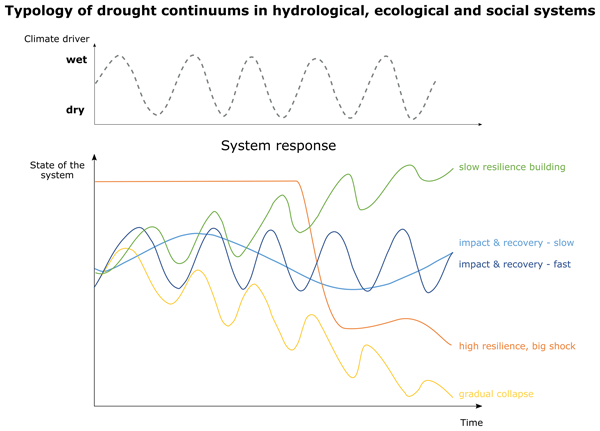
Drought is a creeping phenomenon but is often still analysed and managed like an isolated event, without taking into account what happened before and after. Here, we review the literature and analyse five cases to discuss how droughts and their impacts develop over time. We find that the responses of hydrological, ecological, and social systems can be classified into four types and that the systems interact. We provide suggestions for further research and monitoring, modelling, and management.
Henry M. Zimba, Miriam Coenders-Gerrits, Kawawa E. Banda, Petra Hulsman, Nick van de Giesen, Imasiku A. Nyambe, and Hubert H. G. Savenije
Hydrol. Earth Syst. Sci., 28, 3633–3663, https://doi.org/10.5194/hess-28-3633-2024, https://doi.org/10.5194/hess-28-3633-2024, 2024
Short summary
Short summary
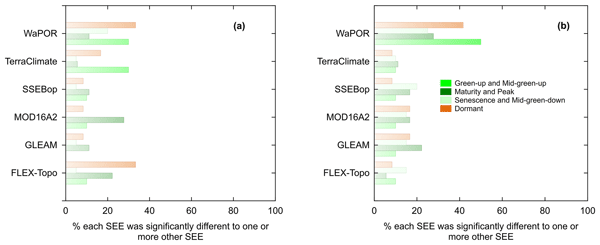
The fall and flushing of new leaves in the miombo woodlands co-occur in the dry season before the commencement of seasonal rainfall. The miombo species are also said to have access to soil moisture in deep soils, including groundwater in the dry season. Satellite-based evaporation estimates, temporal trends, and magnitudes differ the most in the dry season, most likely due to inadequate understanding and representation of the highlighted miombo species attributes in simulations.
Luuk D. van der Valk, Miriam Coenders-Gerrits, Rolf W. Hut, Aart Overeem, Bas Walraven, and Remko Uijlenhoet
Atmos. Meas. Tech., 17, 2811–2832, https://doi.org/10.5194/amt-17-2811-2024, https://doi.org/10.5194/amt-17-2811-2024, 2024
Short summary
Short summary
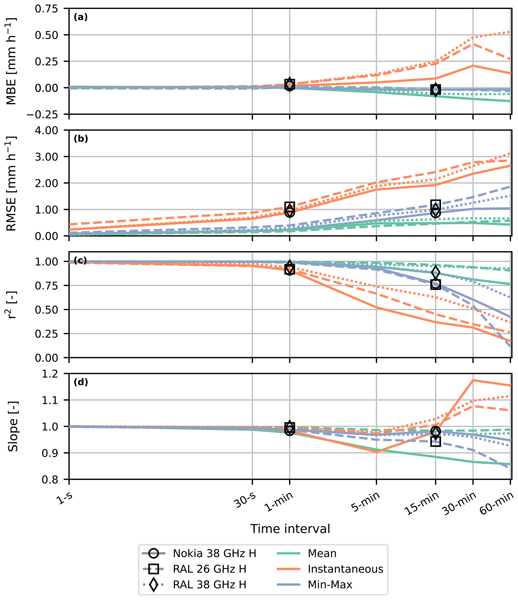
Microwave links, often part of mobile phone networks, can be used to measure rainfall along the link path by determining the signal loss caused by rainfall. We use high-frequency data of multiple microwave links to recreate commonly used sampling strategies. For time intervals up to 1 min, the influence of sampling strategies on estimated rainfall intensities is relatively little, while for intervals longer than 5–15 min, the sampling strategy can have significant influences on the estimates.

Bart Schilperoort, César Jiménez Rodríguez, Bas van de Wiel, and Miriam Coenders-Gerrits
Geosci. Instrum. Method. Data Syst., 13, 85–95, https://doi.org/10.5194/gi-13-85-2024, https://doi.org/10.5194/gi-13-85-2024, 2024
Short summary
Short summary
Heat storage in the soil is difficult to measure due to vertical heterogeneity. To improve measurements, we designed a 3D-printed probe that uses fiber-optic distributed temperature sensing to measure a vertical profile of soil temperature. We validated the temperature measurements against standard instrumentation. With the high-resolution data we were able to determine the thermal diffusivity of the soil at a resolution of 2.5 cm, which is much higher compared to traditional methods.
Bich Ngoc Tran, Johannes van der Kwast, Solomon Seyoum, Remko Uijlenhoet, Graham Jewitt, and Marloes Mul
Hydrol. Earth Syst. Sci., 27, 4505–4528, https://doi.org/10.5194/hess-27-4505-2023, https://doi.org/10.5194/hess-27-4505-2023, 2023
Short summary
Short summary
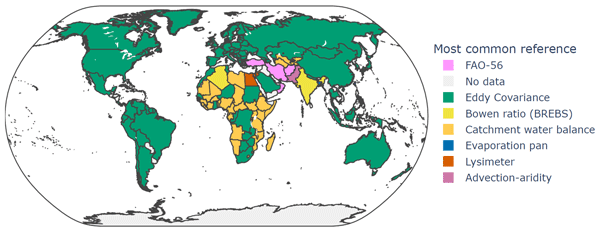
Satellite data are increasingly used to estimate evapotranspiration (ET) or the amount of water moving from plants, soils, and water bodies into the atmosphere over large areas. Uncertainties from various sources affect the accuracy of these calculations. This study reviews the methods to assess the uncertainties of such ET estimations. It provides specific recommendations for a comprehensive assessment that assists in the potential uses of these data for research, monitoring, and management.
Faisal Sardar, Muhammad Haris Ali, Ioana Popescu, Andreja Jonoski, Schalk Jan van Andel, and Claudia Bertini
Hydrol. Earth Syst. Sci. Discuss., https://doi.org/10.5194/hess-2023-276, https://doi.org/10.5194/hess-2023-276, 2023
Manuscript not accepted for further review
Short summary
Short summary
This article analyzes surface and groundwater interactions in a small transboundary lowland catchment. The study also investigates the influence of rainfall representation in model on surface subsurface hydrological simulations. Emphasizing the significance of these interactions, the research highlighted the role of subsurface baseflow in contributing to river discharge. Despite minimal impact on streamflow, spatial variability in rainfall can cause localized fluctuations in groundwater levels.
Claire I. Michailovsky, Bert Coerver, Marloes Mul, and Graham Jewitt
Hydrol. Earth Syst. Sci., 27, 4335–4354, https://doi.org/10.5194/hess-27-4335-2023, https://doi.org/10.5194/hess-27-4335-2023, 2023
Short summary
Short summary
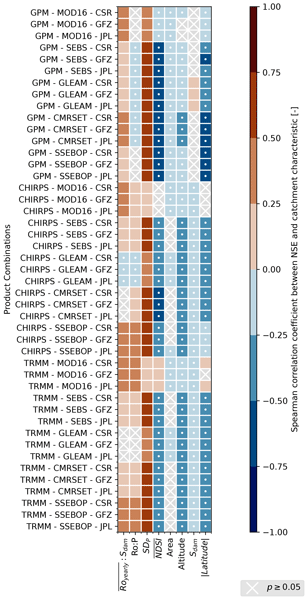
Many remote sensing products for precipitation, evapotranspiration, and water storage variations exist. However, when these are used with in situ runoff data in water balance closure studies, no single combination of products consistently outperforms others. We analyzed the water balance closure using different products in catchments worldwide and related the results to catchment characteristics. Our results can help identify the dataset combinations best suited for use in different catchments.
Henry Zimba, Miriam Coenders-Gerrits, Kawawa Banda, Bart Schilperoort, Nick van de Giesen, Imasiku Nyambe, and Hubert H. G. Savenije
Hydrol. Earth Syst. Sci., 27, 1695–1722, https://doi.org/10.5194/hess-27-1695-2023, https://doi.org/10.5194/hess-27-1695-2023, 2023
Short summary
Short summary
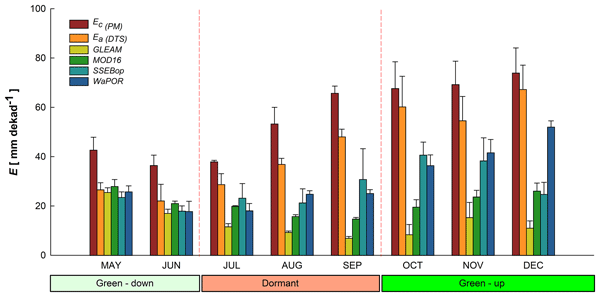
Miombo woodland plants continue to lose water even during the driest part of the year. This appears to be facilitated by the adapted features such as deep rooting (beyond 5 m) with access to deep soil moisture, potentially even ground water. It appears the trend and amount of water that the plants lose is correlated more to the available energy. This loss of water in the dry season by miombo woodland plants appears to be incorrectly captured by satellite-based evaporation estimates.
Silvana Bolaños Chavarría, Micha Werner, Juan Fernando Salazar, and Teresita Betancur Vargas
Hydrol. Earth Syst. Sci., 26, 4323–4344, https://doi.org/10.5194/hess-26-4323-2022, https://doi.org/10.5194/hess-26-4323-2022, 2022
Short summary
Short summary
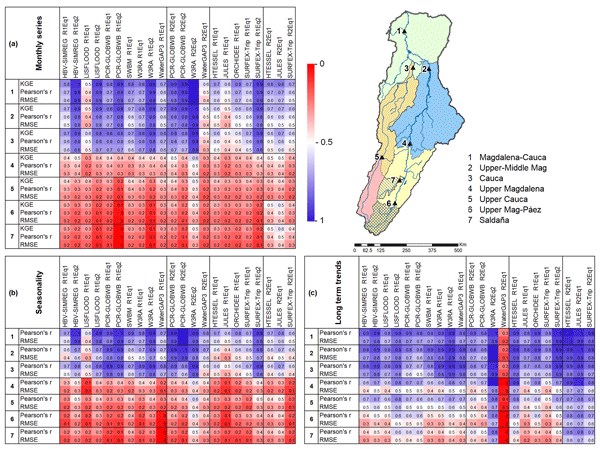
Using total water storage (TWS) from GRACE satellites, we assess the reliability of global hydrological and land surface models over a medium-sized tropical basin with a well-developed gauging network. We find the models poorly represent TWS for the monthly series, but they improve in representing seasonality and long-term trends. We conclude that GRACE provides a valuable dataset to benchmark global simulations of TWS change, offering a useful tool to improve global models in tropical basins.
Veit Blauhut, Michael Stoelzle, Lauri Ahopelto, Manuela I. Brunner, Claudia Teutschbein, Doris E. Wendt, Vytautas Akstinas, Sigrid J. Bakke, Lucy J. Barker, Lenka Bartošová, Agrita Briede, Carmelo Cammalleri, Ksenija Cindrić Kalin, Lucia De Stefano, Miriam Fendeková, David C. Finger, Marijke Huysmans, Mirjana Ivanov, Jaak Jaagus, Jiří Jakubínský, Svitlana Krakovska, Gregor Laaha, Monika Lakatos, Kiril Manevski, Mathias Neumann Andersen, Nina Nikolova, Marzena Osuch, Pieter van Oel, Kalina Radeva, Renata J. Romanowicz, Elena Toth, Mirek Trnka, Marko Urošev, Julia Urquijo Reguera, Eric Sauquet, Aleksandra Stevkov, Lena M. Tallaksen, Iryna Trofimova, Anne F. Van Loon, Michelle T. H. van Vliet, Jean-Philippe Vidal, Niko Wanders, Micha Werner, Patrick Willems, and Nenad Živković
Nat. Hazards Earth Syst. Sci., 22, 2201–2217, https://doi.org/10.5194/nhess-22-2201-2022, https://doi.org/10.5194/nhess-22-2201-2022, 2022
Short summary
Short summary
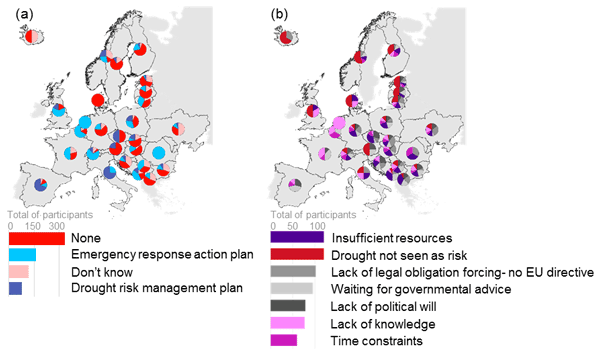
Recent drought events caused enormous damage in Europe. We therefore questioned the existence and effect of current drought management strategies on the actual impacts and how drought is perceived by relevant stakeholders. Over 700 participants from 28 European countries provided insights into drought hazard and impact perception and current management strategies. The study concludes with an urgent need to collectively combat drought risk via a European macro-level drought governance approach.
Henry Zimba, Miriam Coenders-Gerrits, Kawawa Banda, Petra Hulsman, Nick van de Giesen, Imasiku Nyambe, and Hubert Savenije
Hydrol. Earth Syst. Sci. Discuss., https://doi.org/10.5194/hess-2022-114, https://doi.org/10.5194/hess-2022-114, 2022
Manuscript not accepted for further review
Short summary
Short summary
We compare performance of evaporation models in the Luangwa Basin located in a semi-arid and complex Miombo ecosystem in Africa. Miombo plants changes colour, drop off leaves and acquire new leaves during the dry season. In addition, the plant roots go deep in the soil and appear to access groundwater. Results show that evaporation models with structure and process that do not capture this unique plant structure and behaviour appears to have difficulties to correctly estimating evaporation.
Lívia M. P. Rosalem, Miriam Coenders-Gerritis, Jamil A. A. Anache, Seyed M. M. Sadeghi, and Edson Wendland
Hydrol. Earth Syst. Sci. Discuss., https://doi.org/10.5194/hess-2022-59, https://doi.org/10.5194/hess-2022-59, 2022
Manuscript not accepted for further review
Short summary
Short summary
We monitored the interception process on an undisturbed savanna forest and applied two interception models to evaluate their performance at different time scales and study their seasonal response. As results, both models performed well at a monthly scale and could represent the seasonal trends observed. However, they presented some limitations to predict the evaporative processes on a daily basis.

Agathe Bucherie, Micha Werner, Marc van den Homberg, and Simon Tembo
Nat. Hazards Earth Syst. Sci., 22, 461–480, https://doi.org/10.5194/nhess-22-461-2022, https://doi.org/10.5194/nhess-22-461-2022, 2022
Short summary
Short summary
Local communities in northern Malawi have well-developed knowledge of the conditions leading to flash floods, spatially and temporally. Scientific analysis of catchment geomorphology and global reanalysis datasets corroborates this local knowledge, underlining the potential of these large-scale scientific datasets. Combining local knowledge with contemporary scientific datasets provides a common understanding of flash flood events, contributing to a more people-centred warning to flash floods.
Vassilis Aschonitis, Dimos Touloumidis, Marie-Claire ten Veldhuis, and Miriam Coenders-Gerrits
Earth Syst. Sci. Data, 14, 163–177, https://doi.org/10.5194/essd-14-163-2022, https://doi.org/10.5194/essd-14-163-2022, 2022
Short summary
Short summary
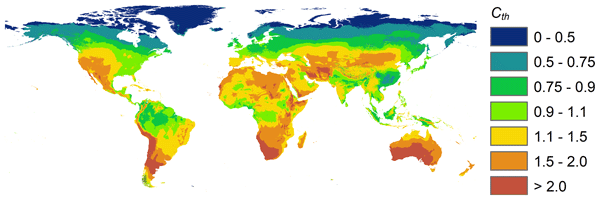
This work provides a global database of correction coefficients for improving the performance of the temperature-based Thornthwaite potential evapotranspiration formula and aridity indices (e.g., UNEP, Thornthwaite) that make use of this formula. The coefficients were produced using as a benchmark the ASCE-standardized reference evapotranspiration formula (formerly FAO-56) that requires temperature, solar radiation, wind speed, and relative humidity data.
Cited articles
Anderson, M. C., Zolin, C. A., Sentelhas, P. C., Hain, C. R., Semmens, K., Tugrul Yilmaz, M., Gao, F., Otkin, J. A., and Tetrault, R.: The evaporative stress index as an indicator of agricultural drought in Brazil: an assessment based on crop yield impacts, Remote Sens. Environ., 174, 82–99, https://doi.org/10.1016/j.rse.2015.11.034, 2016.
Bailey, R.: Famine early warning and early action: the cost of delay. Chatham House, London, 24 pp., https://www.chathamhouse.org/sites/default/files/public/Research (last access: 8 November 2023), 2012.
Basara, J. B., Christian, J. I., Wakefield, R. A., Otkin, J. A., Hunt, E. H., and Brown, D. P.: The evolution, propagation, and spread of flash drought in the Central United States during 2012, Environ. Res. Lett., 14, 084025, https://doi.org/10.1088/1748-9326/ab2cc0, 2019.
Bucheli, J., Dalhaus, T., and Finger, R.: The optimal drought index for designing weather index insurance, Eur. Rev. Agric. Econ., 48, 573–597, https://doi.org/10.1093/erae/jbaa014, 2021.
Buitink, J., van Hateren, T. C., and Teuling, A. J.: Hydrological system complexity induces a drought frequency paradox, Front. Water, 3, 640976, https://doi.org/10.3389/frwa.2021.640976, 2021.
Cao, K., Wei, C., Gaidon, A., Arechiga, N., and Ma, T.: Learning imbalanced datasets with label-distribution-aware margin loss, Adv. Neural Inf. Process. Syst., 32, 1567–1578, 2019.
Christian, J. I., Basara, J. B., Otkin, J. A., Hunt, E. D., Wakefield, R. A., Flanagan, P. X., and Xiao, X.: A methodology for flash drought identification: application of flash drought frequency across the United States, J. Hydrometeorol., 20, 833–846, https://doi.org/10.1175/JHM-D-18-0198.1, 2019.
DGOT–INETER: Atlas nacional de suelos de la República de Nicaragua, Managua, Nicaragua, https://www.ineter.gob.ni/mapa/pub/atlassuelo/1erAltasNacionaldeSuelos.pdf (last access: 8 November 2025), 2024.
Edris, S. G., Basara, J. B., Christian, J. I., Hunt, E. D., Otkin, J. A., Salesky, S. T., and Illston, B. G.: Analysis of the critical components of flash drought using the standardized evaporative stress ratio, Agric. For. Meteorol., 330, 109288, https://doi.org/10.1016/j.agrformet.2022.109288, 2023.
Efron, B. and Tibshirani, R.: Bootstrap methods for standard errors, confidence intervals, and other measures of statistical accuracy, Stat. Sci., 1, 54–75, https://doi.org/10.1214/ss/1177013815, 1986.
FAO: Vegetation health index near real time (Global – dekadal – 1 km) – ASIS (raster), FAO, https://www.fao.org/giews/earthobservation/access.jsp?lang=en (last access: 27 January 2024), 2014.
Fuganti, G., Minelli, M., and Rojas, O.: Practical guidelines for early warning–early action plans on agricultural drought, FAO, Rome, Italy, https://openknowledge.fao.org/items/dd8ad74b-8c2f-40e6-b899-62e52d2aad07 (last access: 8 November 2023), 2020.
Gallear, J. W., Valadares Galdos, M., Zeri, M., and Hartley, A.: Evaluation of machine learning approaches for large-scale agricultural drought forecasts to improve monitoring and preparedness in Brazil, Nat. Hazards Earth Syst. Sci., 25, 1521–1541, https://doi.org/10.5194/nhess-25-1521-2025, 2025.
Ghasemi, A. and Zahediasl, S.: Normality tests for statistical analysis: a guide for non-statisticians, Int. J. Endocrinol. Metab., 10, 486–489, https://doi.org/10.5812/ijem.3505, 2012.
Gou, Q., Zhu, Y., Lü, H., Horton, R., Yu, X., Zhang, H., Wang, X., Su, J., Liu, E., Ding, Z., Wang, Z., and Yuan, F.: Application of an improved spatio-temporal identification method of flash droughts, J. Hydrol., 604, 127224, https://doi.org/10.1016/j.jhydrol.2021.127224, 2022.
Gu, Y., Wylie, B. K., Howard, D. M., Phuyal, K. P., and Ji, L.: NDVI saturation adjustment: a new approach for improving cropland performance estimates in the Greater Platte River Basin, USA, Ecol. Indic., 30, 1–6, https://doi.org/10.1016/j.ecolind.2013.01.041, 2013.
Guimarães Nobre, G., Davenport, F., Bischiniotis, K., Veldkamp, T., Jongman, B., Funk, C. C., Husak, G., Ward, P. J., and Aerts, J. C. J. H.: Financing agricultural drought risk through ex-ante cash transfers, Sci. Total Environ., 653, 523–535, https://doi.org/10.1016/j.scitotenv.2018.10.406, 2019.
Guimarães Nobre, G., Pasqui, M., Quaresima, S., Pieretto, S., and Lemos Pereira Bonifácio, R. M.: Forecasting, thresholds, and triggers: towards developing a forecast-based financing system for droughts in Mozambique, Clim. Serv., 30, 100344, https://doi.org/10.1016/j.cliser.2023.100344, 2023.
Halwatura, D., McIntyre, N., Lechner, A. M., and Arnold, S.: Capability of meteorological drought indices for detecting soil moisture droughts, J. Hydrol.: Reg. Stud., 12, 396–412, https://doi.org/10.1016/j.ejrh.2017.06.001, 2017.
Hobbins, M., Dewes, C., and Huntington, J. L.: Evaporative demand: dynamics and opportunities in drought early warning, monitoring, and vulnerability assessment, in: Proceedings of the Sixth Interagency Conference on Research in the Watersheds, DRI, Shepherdstown, USA, 211, https://doi.org/10.2737/SRS-GTR-243, 2019.
Hobbins, M. T. and Huntington, J. L.: Evapotranspiration and evaporative demand, in: Handbook of applied hydrology, edited by: Singh, V. P., 2nd edn., McGraw-Hill Education, New York, USA, 42.1–42.18, ISBN 978-0-07-183509-1, https://www.researchgate.net/publication/309682507_Evapotranspiration_and_evaporative_demand (last access: 8 November 2024), 2016.
INETER, ANA, UNI, and GIZ-PROATAS: Cuencas Hidrográficas de Nicaragua bajo la metodología Pfafstetter, 2014. https://cira.unan.edu.ni/wp-content/uploads/2016/07/Album-Cuencas-Nic-Revisado_ANA.pdf (last access: 8 November 2025), 2014.
Jabro, J. D., Evans, R. G., Kim, Y., and Iversen, W. M.: Estimating in situ soil–water retention and field water capacity in two contrasting soil textures, Irrig. Sci., 27, 223–229, https://doi.org/10.1007/s00271-008-0137-9, 2009.
Kibler, C. L., Trugman, A. T., Roberts, D. A., Still, C. J., Scott, R. L., Caylor, K. K., Stella, J. C., and Singer, M. B.: Evapotranspiration regulates leaf temperature and respiration in dryland vegetation, Agric. For. Meteorol., 339, 109560, https://doi.org/10.1016/j.agrformet.2023.109560, 2023.
Kogan, F. N.: Application of vegetation index and brightness temperature for drought detection, Adv. Space Res., 15, 91–100, https://doi.org/10.1016/0273-1177(95)00079-T, 1995.
Kozlowski, T. T.: Water deficits and plant growth, Academic Press, New York, ISBN: 0124241549, https://openlibrary.org/books/OL5607338M/Water_deficits_and_plant_growth (last access: 8 February 2024), 1968.
Leasor, Z. T., Quiring, S. M., and Svoboda, M. D.: Utilizing objective drought severity thresholds to improve drought monitoring, J. Appl. Meteorol. Climatol., 59, 1455–1470, https://doi.org/10.1175/JAMC-D-19-0217.1, 2020.
Li, X., Piao, S., Huntingford, C., Peñuelas, J., Yang, H., Xu, H., Chen, A., Friedlingstein, P., Keenan, T. F., Sitch, S., Wang, X., Zscheischler, J., and Mahecha, M. D.: Global variations in critical drought thresholds that impact vegetation, Natl. Sci. Rev., 10, nwad049, https://doi.org/10.1093/nsr/nwad049, 2023.
Linés, C. and Werner, M.: How useful are seasonal forecasts for farmers facing drought? A user-based modelling approach, Clim. Serv., 39, 100595, https://doi.org/10.1016/j.cliser.2025.100595, 2025.
Linés, C., Iglesias, A., Garrote, L., Sotés, V., and Werner, M.: Do users benefit from additional information in support of operational drought management decisions in the Ebro basin?, Hydrol. Earth Syst. Sci., 22, 5901–5917, https://doi.org/10.5194/hess-22-5901-2018, 2018.
Lopez, A. and Haines, S.: Exploring the usability of probabilistic weather forecasts for water resources decision-making in the United Kingdom, Weather Clim. Soc., 9, 701–715, https://doi.org/10.1175/WCAS-D-16-0072.1, 2017.
Lovino, M. A., Pierrestegui, M. J., Müller, O. V., Müller, G. V., and Berbery, E. H.: The prevalent life cycle of agricultural flash droughts, npj Clim. Atmos. Sci., 7, 1–11, https://doi.org/10.1038/s41612-024-00618-0, 2024.
Ma, W., Zhang, X., Zhen, Q., and Zhang, Y.: Effect of soil texture on water infiltration in semiarid reclaimed land, Water Qual. Res. J., 51, 33–41, https://doi.org/10.2166/wqrjc.2015.025, 2015.
Marzban, C.: The ROC curve and the area under it as performance measures, Weather Forecast., 19, 1106–1114, https://doi.org/10.1175/825.1, 2004.
McEwen, L., Bryan, K., Black, A., Blake, J., and Afzal, M.: Science-narrative explorations of drought thresholds in the maritime Eden catchment, Scotland: implications for local drought risk management, Front. Environ. Sci., 9, 589980, https://doi.org/10.3389/fenvs.2021.589980, 2021.
Nan, Y., Chai, K. M., Lee, W. S., and Chieu, H. L.: Optimizing F-measure: a tale of two approaches, Proc. 29th Int. Conf. Mach. Learn., arXiv:1206.4625, https://doi.org/10.48550/arXiv.1206.4625, 2012.
Nguyen, N. M. and Choi, M.: Delving into flash droughts in Vietnam during last two decades using the standardized evaporative stress ratio, J. Hydrol., 634, 130669, https://doi.org/10.1016/j.jhydrol.2024.130669, 2024.
Noguera, I., Vicente-Serrano, S. M., and Domínguez-Castro, F.: The rise of atmospheric evaporative demand is increasing flash droughts in Spain during the warm season, Geophys. Res. Lett., 49, e2021GL097703, https://doi.org/10.1029/2021GL097703, 2022.
Or, D. and Lehmann, P.: Surface evaporative capacitance: how soil type and rainfall characteristics affect global-scale surface evaporation, Water Resour. Res., 55, 519–539, https://doi.org/10.1029/2018WR024050, 2019.
Otkin, J. A., Svoboda, M., Hunt, E. D., Ford, T. W., Anderson, M. C., Hain, C., and Basara, J. B.: Flash Droughts: A Review and Assessment of the Challenges Imposed by Rapid-Onset Droughts in the United States, B. Am. Meteorol. Soc., 99, 911–919, https://doi.org/10.1175/BAMS-D-17-0149.1, 2018.
Otkin, J. A., Svoboda, M., Hunt, E. D., Ford, T. W., Anderson, M. C., Hain, C., and Basara, J. B.: Flash droughts: a review and assessment of the challenges imposed by rapid-onset droughts in the United States, Bull. Am. Meteorol. Soc., 99, 911–919, https://doi.org/10.1175/BAMS-D-21-0288.1, 2022.
Padiyedath Gopalan, S., Kawamura, A., Amaguchi, H., Takasaki, T., and Azhikodan, G.: A bootstrap approach for the parameter uncertainty of an urban-specific rainfall–runoff model, J. Hydrol., 579, 124195, https://doi.org/10.1016/j.jhydrol.2019.124195, 2019.
Portele, T. C., Lorenz, C., Dibrani, B., Laux, P., Bliefernicht, J., and Kunstmann, H.: Seasonal forecasts offer economic benefit for hydrological decision making in semi-arid regions, Sci. Rep., 11, 10581, https://doi.org/10.1038/s41598-021-89564-y, 2021.
Quichimbo, E. A., Singer, M. B., Michaelides, K., Hobley, D. E. J., Rosolem, R., and Cuthbert, M. O.: DRYP 1.0: a parsimonious hydrological model of DRYland Partitioning of the water balance, Geosci. Model Dev., 14, 6893–6917, https://doi.org/10.5194/gmd-14-6893-2021, 2021.
Rojas, O.: Agricultural extreme drought assessment at global level using the FAO-Agricultural Stress Index System (ASIS), Weather Clim. Extremes, 27, 100184, https://doi.org/10.1016/j.wace.2018.09.001, 2020.
Rojas, O., Rodriguez de España, M. V., and Hernández, T.: New canicula index to study its impact on agriculture in the Central American Dry Corridor and its connection with El Niño, FAO, Rome, Italy, 67 pp., https://doi.org/10.4060/cb1818es, 2020.
Running, S., Mu, Q., Zhao, M., and Moreno, A.: MODIS/Aqua Net Evapotranspiration Gap-Filled 8-Day L4 Global 500m SIN Grid V061, NASA Land Processes Distributed Active Archive Center [data set], https://doi.org/10.5067/MODIS/MYD16A2GF.061, 2021.
Salinas Marcenaro, I., Jarquin Diaz, J. R., Ortega Flores, G. J., and Téllez Reyes, A. L.: La evapotranspiración potencial en Nicaragua usando sensores remotos, Universidad Nacional Agraria, Managua, Nicaragua, 2023, https://repositorio.una.edu.ni/4715/1/RENP40U58.pdf (last access: 8 November 2025), 2023.
Salmoral, G., Rey, D., Rudd, A., de Margon, P., and Holman, I.: A probabilistic risk assessment of the national economic impacts of regulatory drought management on irrigated agriculture, Earths Future, 7, 178–196, https://doi.org/10.1029/2018EF001092, 2019.
Sawilowsky, S.: Misconceptions leading to choosing the t test over the Wilcoxon Mann-Whitney test for shift in location parameter, J. Mod. Appl. Stat. Methods, 4, 598–600, https://doi.org/10.22237/jmasm/1130804700, 2005.
Shyrokaya, A., Pappenberger, F., Pechlivanidis, I., Messori, G., Khatami, S., Mazzoleni, M., and Di Baldassarre, G.: Advances and gaps in the science and practice of impact-based forecasting of droughts, WIREs Water, 11, e1698, https://doi.org/10.1002/wat2.1698, 2024.
Solh, M. and van Ginkel, M.: Drought preparedness and drought mitigation in the developing world's drylands, Weather Clim. Extremes, 3, 62–66, https://doi.org/10.1016/j.wace.2014.03.003, 2014.
Soltani, A., Meinke, H., and de Voil, P.: Assessing linear interpolation to generate daily radiation and temperature data for use in crop simulations, Eur. J. Agron., 21, 133–148, https://doi.org/10.1016/S1161-0301(03)00044-3, 2004.
Son, N.-T., Chen, C.-F., Chen, C.-R., Castellón, A., Masferrer, M.-G.-M., and Recinos, L.-E.-M.: Satellite characterization of drought over cultivated areas in Central America, Int. J. Remote Sens., 39, 8505–8526, https://doi.org/10.1080/01431161.2018.1488287, 2018.
Suliman, M., Scaini, A., Manzoni, S., and Vico, G.: Soil properties modulate actual evapotranspiration, and precipitation impacts on crop yields in the USA, Sci. Total Environ., 949, 175172, https://doi.org/10.1016/j.scitotenv.2024.175172, 2024.
Sun, X., Wilcox, B. P., and Zou, C. B.: Evapotranspiration partitioning in dryland ecosystems: a global meta-analysis of in situ studies, J. Hydrol., 576, 123–136, https://doi.org/10.1016/j.jhydrol.2019.06.022, 2019.
Svoboda, M., LeComte, D., Hayes, M., Heim, R., Gleason, K., Angel, J. J. R. J., Rippey, B., Tinker, R., Palecki, M., Stooksbury, D., Miskus, D., and Stephens, D.: The Drought Monitor, Bull. Am. Meteorol. Soc., 83, 1181–1190, https://doi.org/10.1175/1520-0477(2002)083<1181:TDM>2.3.CO;2, 2002.
Takáts, E. A.: theory of crying wolf: the economics of money laundering enforcement, IMF Work. Pap., 2007, https://doi.org/10.5089/9781451866452.001.A001, 2007.
Teleubay, Z., Quiring, S. M., and Leasor, Z.: Estimation of impacts-based drought thresholds for the U.S. Corn Belt, Agr. Forest Meteorol., 372, 110715, https://doi.org/10.1016/j.agrformet.2025.110715, 2025.
Teluguntla, P., Thenkabail, P., Oliphant, A., Gumma, M., Aneece, I., Foley, D., and McCormick, R.: Landsat-Derived Global Rainfed and Irrigated-Cropland Product 30 m V001, NASA Land Processes Distributed Active Archive Center [data set], https://doi.org/10.5067/COMMUNITY/LGRIP/LGRIP30.001, 2023.
Teoh, K. K., Ibrahim, H., and Bejo, S. K.: Investigation on several basic interpolation methods for use in remote sensing application, in: 2008 IEEE Conference on Innovative Technologies in Intelligent Systems and Industrial Applications, 60–65, https://doi.org/10.1109/CITISIA.2008.4607336, 2008.
Torelló-Sentelles, H. and Franzke, C. L. E.: Drought impact links to meteorological drought indicators and predictability in Spain, Hydrol. Earth Syst. Sci., 26, 1821–1844, https://doi.org/10.5194/hess-26-1821-2022, 2022.
Tu, Z. and Yang, Y.: On the estimation of potential evaporation under wet and dry conditions, Water Resour. Res., 58, e2021WR031486, https://doi.org/10.1029/2021WR031486, 2022.
Ubeda Trujillo, I. and Rocha, L.: Dinámica de coberturas de la tierra en la subcuenca III de la cuenca sur del Lago de Managua, Nicaragua, Rev. Torreón Univ., 9, 110–128, https://doi.org/10.5377/torreon.v9i25.9857, 2020.
van der Zee Arias, A., van der Zee, J., Meyrat, A., Poveda, C., and Picado, L.: Estudio de caracterización del Corredor Seco Centroamericano. FAO, Tegucigalpa, Honduras, https://bibliotecasemiaridos.ufv.br/jspui/handle/123456789/367 (last access: 8 November 2022), 2012.
Verbist, K., Maureira, H., and Aroche, R.: Midsummer drought atlas for Central America and the Caribbean. Water Centre for Arid and Semi-arid Zones of Latin America and the Caribbean (UNESCO), 46 pp., ISBN 978-92-3-100455-1, https://unesdoc.unesco.org/ark:/48223/pf0000377790 (last access: 21 September 2023), 2018.
Walker, D. W., Oliveira, J. L., Cavalcante, L., Kchouk, S., Ribeiro Neto, G., Melsen, L. A., Fernandes, F. B. P., Mitroi, V., Gondim, R. S., Martins, E. S. P. R., and van Oel, P. R.: It's not all about drought: What “drought impacts” monitoring can reveal, Int. J. Disaster Risk Reduct., 103, 104338, https://doi.org/10.1016/j.ijdrr.2024.104338, 2024.
Wankmüller, F. J. P., Delval, L., Lehmann, P., Baur, M. J., Cecere, A., Wolf, S., Or, D., Javaux, M., and Carminati, A.: Global influence of soil texture on ecosystem water limitation, Nature, 635, 631–636, https://doi.org/10.1038/s41586-024-08089-2, 2024.
Yu, M., Zhang, J., Wei, L., Wang, G., Dong, W., and Liu, X.: Impact of soil textures on agricultural drought evolution and field capacity estimation in humid regions, J. Hydrol., 626, 130257, https://doi.org/10.1016/j.jhydrol.2023.130257, 2023.
Yuan, X., Wang, L., Wu, P., Ji, P., Sheffield, J., and Zhang, M.: Anthropogenic shift towards higher risk of flash drought over China, Nat. Commun., 10, 4661, https://doi.org/10.1038/s41467-019-12692-7, 2019.
Yuan, X., Wang, Y., Ji, P., Wu, P., Sheffield, J., and Otkin, J. A.: A global transition to flash droughts under climate change, Science, 380, 187–191, https://doi.org/10.1126/science.abn6301, 2023.
Zhu, Y., Toth, Z., Wobus, R., Richardson, D., and Mylne, K.: Economic value of ensemble-based weather forecasts, Bull. Am. Meteorol. Soc., 83, 73–83, https://doi.org/10.1175/1520-0477(2002)083<0073:TEVOEB>2.3.CO;2, 2002.
Short summary
Some drought events develop so quickly that soils dry in a matter of days, and crops can be damaged before current methods notice them. These effects are harmful in dry rainfed areas, where crops rely on rainfall and farmers have limited resources. This study defines drought warning values indicating when soils dry quickly enough to affect crops. By setting specific values for each soil and crop stage, warnings become more reliable, helping farmers and planners act in time to reduce crop damage.
Some drought events develop so quickly that soils dry in a matter of days, and crops can be...


Altmetrics
Final-revised paper
Preprint