
Articles | Volume 26, issue 7
https://doi.org/10.5194/nhess-26-3345-2026
© Author(s) 2026. This work is distributed under
the Creative Commons Attribution 4.0 License.
the Creative Commons Attribution 4.0 License.
https://doi.org/10.5194/nhess-26-3345-2026
© Author(s) 2026. This work is distributed under
the Creative Commons Attribution 4.0 License.
the Creative Commons Attribution 4.0 License.
Research article
| Highlight paper
| 
22 Jul 2026
Research article | Highlight paper |
| 22 Jul 2026
| 22 Jul 2026
Europe's transport infrastructure is not ready to face climate change

Vrije Universiteit Brussel, Department of Water and Climate, Brussels, Belgium
Arpita Asha Khanna
M-Five GmbH Mobility, Futures, Innovation, Economics, Karlsruhe, Germany
Wolfgang Schade
M-Five GmbH Mobility, Futures, Innovation, Economics, Karlsruhe, Germany
Chris Smith
Vrije Universiteit Brussel, Department of Water and Climate, Brussels, Belgium
Energy, Climate and Environment Program, International Institute for Applied Systems Analysis (IIASA),Laxenburg, Austria
Wim Thiery
Vrije Universiteit Brussel, Department of Water and Climate, Brussels, Belgium
Related authors
Kai Kornhuber, Emanuele Bevacqua, Mariana Madruga de Brito, Wiebke S. Jäger, Pauline Rivoire, Cassandra D. W. Rogers, Fabiola Banfi, Fulden Batibeniz, James Carruthers, Carlo De Michele, Silvia De Angeli, Cristina Deidda, Marleen C. de Ruiter, Andreas H. Fink, Henrique M. D. Goulart, Katharina Küpfer, Patrick Ludwig, Douglas Maraun, Gabriele Messori, Shruti Nath, Fiachra O'Loughlin, Joaquim G. Pinto, Benjamin Poschlod, Alexandre M. Ramos, Colin Raymond, Andreia F. S. Ribeiro, Deepti Singh, Laura Suarez Gutierrez, Philip J. Ward, and Christopher J. White
Nat. Hazards Earth Syst. Sci., 26, 4309–4334, https://doi.org/10.5194/nhess-26-4309-2026, https://doi.org/10.5194/nhess-26-4309-2026, 2026
Short summary
Short summary
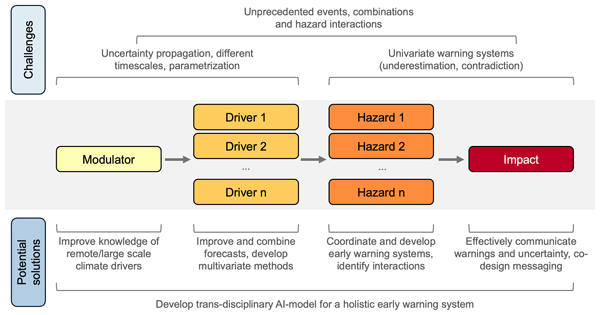
Impacts from extreme weather events may become more severe due to increased likelihood of compounding events under global warming, which challenge present day climate modelling and forecasting capacities. In this perspective we reflect on the usability of compound event research to bridge the gap between academic research and real-world applications.
Greta Cazzaniga, Carlo De Michele, Michele D'Amico, Cristina Deidda, Antonio Ghezzi, and Roberto Nebuloni
Hydrol. Earth Syst. Sci., 26, 2093–2111, https://doi.org/10.5194/hess-26-2093-2022, https://doi.org/10.5194/hess-26-2093-2022, 2022
Short summary
Short summary
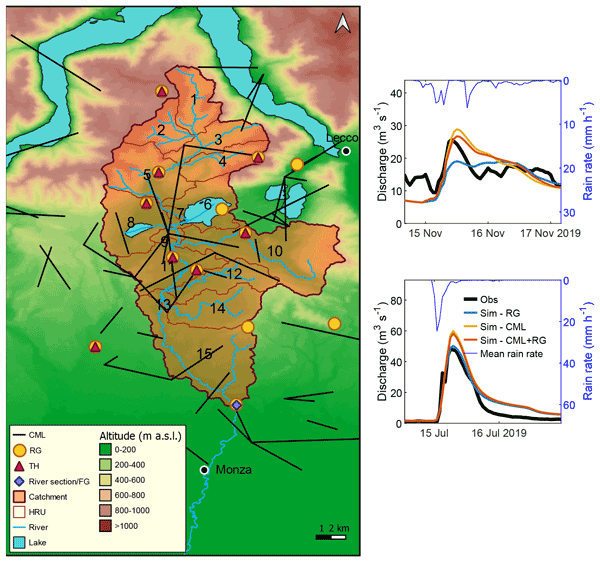
Rainfall estimates are usually obtained from rain gauges, weather radars, or satellites. An alternative is the measurement of the signal loss induced by rainfall on commercial microwave links (CMLs). In this work, we assess the hydrologic response of Lambro Basin when CML-retrieved rainfall is used as model input. CML estimates agree with rain gauge data. CML-driven discharge simulations show performance comparable to that from rain gauges if a CML-based calibration of the model is undertaken.
William Schoenberg, Benjamin Blanz, Jefferson K. Rajah, Beniamino Callegari, Christopher Wells, Theresia B. Putranti, Francisco Mahu, Maria Molina, Alexandre C. Köberle, Catherine Li, Wanderson Costa, David Collste, Karel Zwetsloot, Jannes Breier, Lennart Ramme, Chris Smith, and Cecilie Mauritzen
EGUsphere, https://doi.org/10.5194/egusphere-2026-5980, https://doi.org/10.5194/egusphere-2026-5980, 2026
This preprint is open for discussion and under review for Geoscientific Model Development (GMD).
Short summary
Short summary
We document an updated global simulation model, FRIDA v3.1, used to explore how climate, society, technology, land and the economy interact over time. The model reproduces historical trends and explores a myriad of possible futures while capturing new links among human decisions, climate impacts and economic change. Results show how changes can create wider effects than anticipated, providing a broader tool for exploring risk, uncertainty and the consequences of policy choices.
Derrick Muheki, Koen Hufkens, Kim Jacobsen, Hans Verbeeck, Pascal Boeckx, Dominique Kankonde Ntumba, Olivier Kapalay Moulasa, Bas Vercruysse, Julie M. Birkholz, Christophe Verbruggen, Ed Hawkins, Seppe Lampe, Emmanuel Kasongo Yakusu, Fils Makanzu Imwangana, José Mbifo, Théophile Besango Likwela, Félicien Meunier, Olivier Dewitte, Peter Thorne, and Wim Thiery
Earth Syst. Dynam., 17, 1455–1511, https://doi.org/10.5194/esd-17-1455-2026, https://doi.org/10.5194/esd-17-1455-2026, 2026
Short summary
Short summary
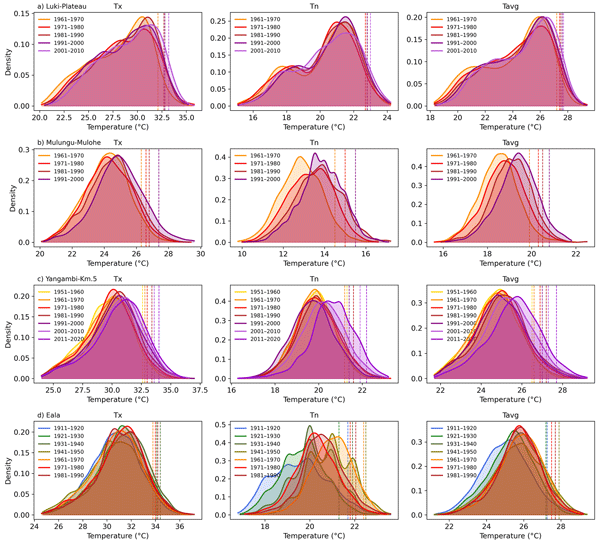
The Congo Basin is one of the least studied regions for climate change due to limited accessible data, despite large volumes of historical records stored on paper in archives. In this study, we digitised over 9000 sheets from 37 stations in the Democratic Republic of the Congo, producing more than one million daily weather observations. The results show clear warming since the 1960s, with more hot days and fewer cold days, highlighting the importance of data rescue in data-sparse regions.
Shannon de Roos, Sam Rabin, Danica Lombardozzi, and Wim Thiery
EGUsphere, https://doi.org/10.5194/egusphere-2026-5484, https://doi.org/10.5194/egusphere-2026-5484, 2026
This preprint is open for discussion and under review for Geoscientific Model Development (GMD).
Short summary
Short summary
In this study, we introduce crop heat stress effects in the Community Land Model v5 (CLM5), a model that simulates processes on the land surface, including crops. Different heat stress temperature thresholds are tested, along with two different methods to affect crop grain development; by accelerating leaf fall, or by directly reducing grain production. The heat stress implementation is a step forward to improving simulated impact of climate extremes on crops in global models.
Simon Scheiter, Jinfeng Chang, Philippe Ciais, Marie Dury, Louis Francois, Matthew Forrest, Alexandra Henrot, Christopher P. O. Reyer, Sonia Seneviratne, Jörg Steinkamp, Wim Thiery, Wenfang Xu, and Thomas Hickler
Biogeosciences, 23, 6409–6430, https://doi.org/10.5194/bg-23-6409-2026, https://doi.org/10.5194/bg-23-6409-2026, 2026
Short summary
Short summary
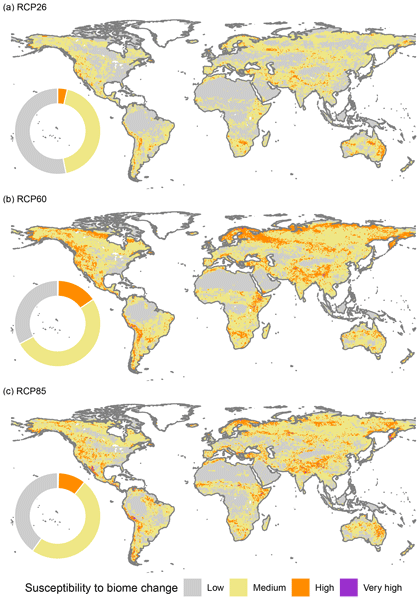
We show how climate change may reshape the world's major biomes, such as forests, grasslands, and tundra. Therefore, we combined dynamic vegetation models, machine learning and observation-based biome maps. We found that many biomes are likely to shift polewards as temperatures rise. Even under low-emission scenarios, large areas could change. These results help identify regions most susceptible to climate change and support global efforts to protect and manage natural ecosystems in the future.
Kai Kornhuber, Emanuele Bevacqua, Mariana Madruga de Brito, Wiebke S. Jäger, Pauline Rivoire, Cassandra D. W. Rogers, Fabiola Banfi, Fulden Batibeniz, James Carruthers, Carlo De Michele, Silvia De Angeli, Cristina Deidda, Marleen C. de Ruiter, Andreas H. Fink, Henrique M. D. Goulart, Katharina Küpfer, Patrick Ludwig, Douglas Maraun, Gabriele Messori, Shruti Nath, Fiachra O'Loughlin, Joaquim G. Pinto, Benjamin Poschlod, Alexandre M. Ramos, Colin Raymond, Andreia F. S. Ribeiro, Deepti Singh, Laura Suarez Gutierrez, Philip J. Ward, and Christopher J. White
Nat. Hazards Earth Syst. Sci., 26, 4309–4334, https://doi.org/10.5194/nhess-26-4309-2026, https://doi.org/10.5194/nhess-26-4309-2026, 2026
Short summary
Short summary
Impacts from extreme weather events may become more severe due to increased likelihood of compounding events under global warming, which challenge present day climate modelling and forecasting capacities. In this perspective we reflect on the usability of compound event research to bridge the gap between academic research and real-world applications.
Alexander Nauels, Tessa Möller, Victor Couplet, Robert E. Kopp, Praveen Kumar, Matthias Mengel, Gregory Munday, Zebedee R. J. Nicholls, Lennart Ramme, Aimée B. A. Slangen, Chris Smith, Jennifer H. Weeks, and Tony E. Wong
EGUsphere, https://doi.org/10.5194/egusphere-2026-3874, https://doi.org/10.5194/egusphere-2026-3874, 2026
This preprint is open for discussion and under review for Geoscientific Model Development (GMD).
Short summary
Short summary
Sea levels will keep rising for centuries, so coastal planning needs long-term outlooks. For the first time, we brought together seven simplified models, called emulators, and combined their estimates of future sea level rise to year 2300, including a scenario with strong temperature overshoot before returning to 1.5 °C of warming. The emulators differ most over how much ice Antarctica will lose. Even if global temperatures fall again, extra sea level rise stays locked in for centuries.
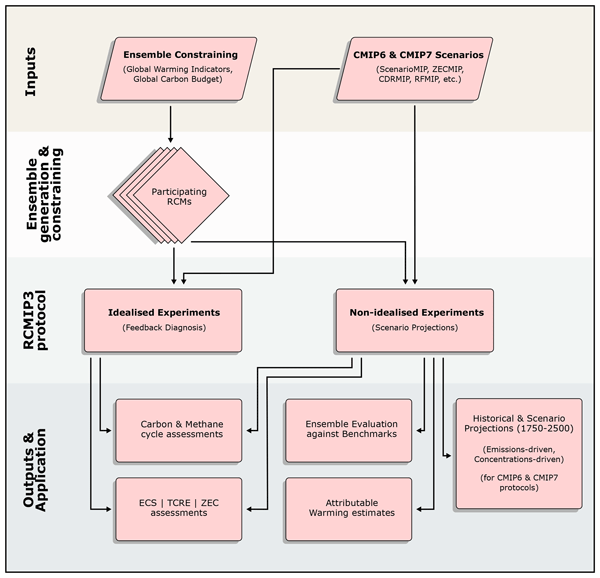
Alejandro Romero-Prieto, Marit Sandstad, Benjamin M. Sanderson, Zebedee R. J. Nicholls, Norman J. Steinert, Thomas Gasser, Camilla Mathison, Jarmo Kikstra, Thomas J. Aubry, Katsumasa Tanaka, Konstantin Weber, and Chris Smith
Geosci. Model Dev., 19, 7111–7133, https://doi.org/10.5194/gmd-19-7111-2026, https://doi.org/10.5194/gmd-19-7111-2026, 2026
Short summary
Short summary
Reduced-complexity models are an important tool in climate science, helping us understand and estimate future climate change. We present the experimental protocol for the next phase of the reduced-complexity model intercomparison project, which aims to compare results from many such models to better understand their behaviour. This knowledge will guide how these models are developed and used in the future, including in the upcoming Intergovernmental Panel on Climate Change (IPCC) assessment report (AR7).
Amen Al-Yaari, Chris Smith, Yi Yao, Kjetil S. Aas, L. Ruby Leung, Min-Hui Lo, Sonali McDermid, Larissa Nazarenko, Yadu Pokhrel, Yusuke Satoh, Tokuta Yokohata, and Wim Thiery
EGUsphere, https://doi.org/10.5194/egusphere-2026-4199, https://doi.org/10.5194/egusphere-2026-4199, 2026
Short summary
Short summary
In this study, we use the Irrigation Model Intercomparison Project (IRRMIP) to provide the first multi-model quantification of irrigation-induced effective radiative forcing (ERF) across seven Earth system models over 1902–2014. We find that the global multi-model mean ERF is positive but small (~0.023 W m⁻²). This small global signal masks regional heterogeneity: South Asia and West Central Asia show higher positive ERF (~0.25 W m⁻²), while East Asia shows a negative signal (−0.03 W m⁻²).
Adakudlu Muralidhar, Cecilie Mauritzen, Christopher D. Wells, Benjamin Blanz, William Schoenberg, Beniamino Callegari, Jannes Breier, Jefferson K. Rajah, Lennart Ramme, Andreas Nicolaidis Lindqvist, Alexandre C. Köberle, Axel E. Eriksson, and Chris Smith
EGUsphere, https://doi.org/10.5194/egusphere-2026-3072, https://doi.org/10.5194/egusphere-2026-3072, 2026
This preprint is open for discussion and under review for Earth System Dynamics (ESD).
Short summary
Short summary
Using the integrated assessment model FRIDA v2.1, we examine how climate impacts spread through interconnected human and Earth systems, including the economy, energy, food, water, finance, and behaviour. We find that interacting climate impacts can reduce economic growth strongly than models assuming isolated effects. Financial feedbacks are especially important, and nonlinear climate–society interactions can amplify risks across sectors even without explicit climate tipping points.
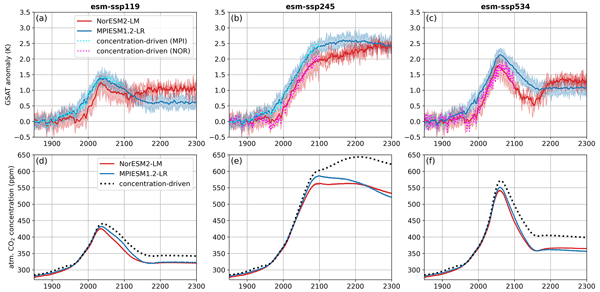
Chris Smith, Lennart Ramme, Christopher D. Wells, Ada Gjermundsen, Hongmei Li, Tatiana Ilyina, Adakudlu Muralidhar, Timothée Bourgeois, Jörg Schwinger, Alejandro Romero-Prieto, Chao Li, and Cecilie Mauritzen
Earth Syst. Dynam., 17, 893–911, https://doi.org/10.5194/esd-17-893-2026, https://doi.org/10.5194/esd-17-893-2026, 2026
Short summary
Short summary
We run two Earth System Models models in CO2 emissions-driven mode to 2300 for three climate scenarios. For climate overshoot scenarios, there is a large residual warming in the 22nd century in one model, despite negative CO2 emissions, related to Southern Ocean heat release. In both models, while global mean surface temperature is largely reversible, other global and regional climate models exhibit hysteresis and irreversibility.
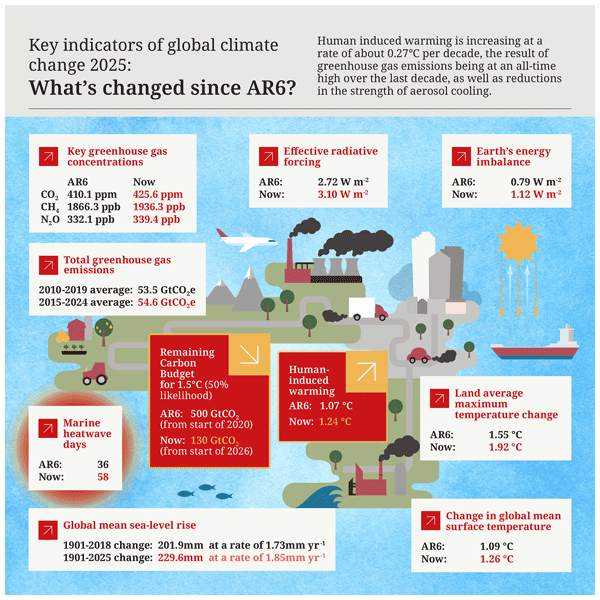
Piers M. Forster, Tristram Walsh, Chris Smith, William F. Lamb, Robin Lamboll, Christophe Cassou, Mathias Hauser, Zeke Hausfather, June-Yi Lee, Matthew D. Palmer, Karina von Schuckmann, Aimée B. A. Slangen, Sophie Szopa, Blair Trewin, Jeongeun Yun, Nathan P. Gillett, Stuart Jenkins, H. Damon Matthews, Krishnan Raghavan, Aurélien Ribes, Joeri Rogelj, Debbie Rosen, Xuebin Zhang, Myles Allen, Robbie M. Andrew, Chris Atkinson, Richard A. Betts, Antonio Bombelli, Samantha N. Burgess, Lijing Cheng, Helen E. Claxton, Pierre Friedlingstein, Thomas L. Frölicher, Catia M. Domingues, Thomas Gasser, Catherine H. Gregory, Rachel M. Hoesly, Daniel Huppmann, Masayoshi Ishii, Christopher Kadow, Alexia Karwat, John Kennedy, Rachel E. Killick, Mahesh V. M. Kovilakam, Paul B. Krummel, Xin Lan, Jean-François Lamarque, Aurélien Liné, Belén Martín-Míguez, Didier P. Monselesan, Colin Morice, Jens Mühle, Pino Mussak, Glen P. Peters, Anna Pirani, Julia Pongratz, Matthew Rigby, Robert Rohde, Abhishek Savita, Sonia I. Seneviratne, Steven J. Smith, Ghassan Taha, Caterina Tassone, Peter Thorne, Christopher Wells, Luke M. Western, Guido R. van der Werf, Susan E. Wijffels, Marco Zecchetto, Junting Zhong, Xiao-Ye Zhang, Valérie Masson-Delmotte, and Panmao Zhai
Earth Syst. Sci. Data, 18, 3889–3933, https://doi.org/10.5194/essd-18-3889-2026, https://doi.org/10.5194/essd-18-3889-2026, 2026
Short summary
Short summary
We give our annual update of key climate indicators. Our work quantifies the human contribution to global warming and the pace of climate change. This represents a large effort by the international community akin to an Intergovernmental Panel on Climate Change (IPCC) report.

Ni Li, Wim Thiery, Shorouq Zahra, Mariana Madruga de Brito, Koffi Worou, Murathan Kurfalı, Seppe Lampe, Paul Muñoz, Clare Flynn, Camila Trigoso, Joakim Nivre, Jakob Zscheischler, and Gabriele Messori
Nat. Hazards Earth Syst. Sci., 26, 2609–2636, https://doi.org/10.5194/nhess-26-2609-2026, https://doi.org/10.5194/nhess-26-2609-2026, 2026
Short summary
Short summary
Climate extremes threaten society and ecosystems, making impact understanding critical. Wikimpacts 1.0 provides an automated pipeline processing Wikipedia texts with underexploited information on climate impacts, yielding comprehensive socio-economic impact data for 2726 climate events from 1034–2024. It offers broader storm-related impacts and finer spatial resolution than established databases, showcasing natural language processing's potential to advance climate impact data.
Michael Gregory Windisch, Yann Quilcaille, Camilla Mathison, Claudia Tebaldi, Eleanor Burke, Laila Gohar, Chris Smith, Sarah Schöngart, Abigail Snyder, Siddarth Durga, Kalyn Dorheim, and Sonia Seneviratne
EGUsphere, https://doi.org/10.5194/egusphere-2026-2253, https://doi.org/10.5194/egusphere-2026-2253, 2026
Short summary
Short summary
Creating consistent climate scenarios remains challenging. The computational cost of comprehensive climate models leaves most scenarios without spatial climate outcomes, limiting feedback between climate consequences and scenario assumptions. We apply three spatial emulators to test their potential and current limitations in rapidly translating scenarios into spatial outcomes to identify regional risks, fill gaps in scenario coverage, and feed climate consequences back into scenario assumptions.
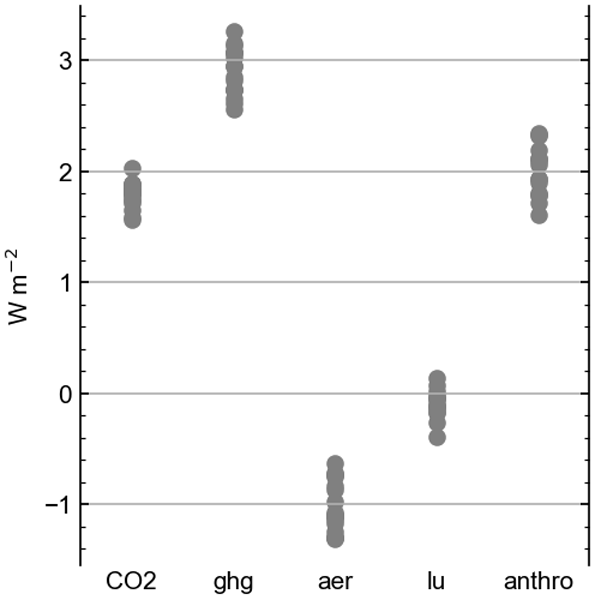
Ryan J. Kramer, Chris Smith, and Timothy Andrews
Geosci. Model Dev., 19, 4447–4466, https://doi.org/10.5194/gmd-19-4447-2026, https://doi.org/10.5194/gmd-19-4447-2026, 2026
Short summary
Short summary
Natural or anthropogenic activities can cause a perturbation in Earth's radiative energy budget known as a radiative forcing, which induces a climate response. Diagnosing radiative forcing and its uncertainty is foundational to understanding past and future climate change. Here we outline the protocol for the second iteration of the Radiative Forcing Model Intercomparison Project (RFMIP2.0), which provides a standardized method for diagnosing radiative forcing across Global Climate Models.
Benjamin M. Sanderson, Marit Sandstad, Alejandro Romero-Prieto, Stuart Jenkins, Charles Koven, Glen Peters, Roland Séfèrian, Andrew H. MacDougall, Ashwin Seshadri, Victor Brovkin, John Dunne, Abigail L. S. Swann, Torben Koenigk, Rosie A. Fisher, David Hohn, Tatiana Ilyina, Chris D. Jones, Hongmei Li, Peter Lawrence, Spencer Liddicoat, Nadine Mengis, Anastasia Romanou, Lori T. Sentman, Chris Smith, Norman J. Steinert, Jerry Tjiputra, and Tilo Ziehn
EGUsphere, https://doi.org/10.5194/egusphere-2026-1875, https://doi.org/10.5194/egusphere-2026-1875, 2026
Short summary
Short summary
When humanity stops emitting carbon dioxide, will temperatures keep rising, stabilize, or fall? Our study reveals in most models, temperatures remain nearly stable, but this hides a balance between the warming in response to radiation imbalance, and the cooling due to uptake of carbon in the land and ocean. Understanding this balance helps refine how much more CO2 we can safely emit.
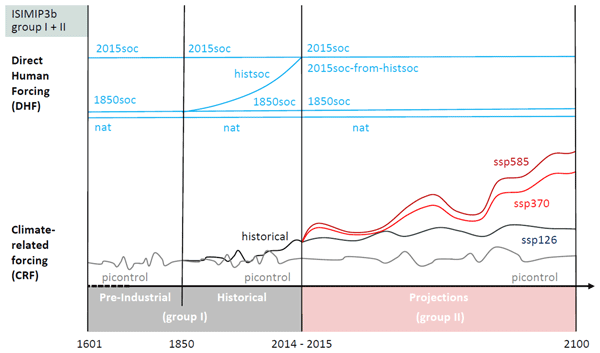
Katja Frieler, Stefan Lange, Jacob Schewe, Matthias Mengel, Simon Treu, Christian Otto, Jan Volkholz, Christopher P. O. Reyer, Stefanie Heinicke, Colin Jones, Julia L. Blanchard, Cheryl S. Harrison, Colleen M. Petrik, Tyler D. Eddy, Kelly Ortega-Cisneros, Camilla Novaglio, Ryan Heneghan, Derek P. Tittensor, Olivier Maury, Matthias Büchner, Thomas Vogt, Dánnell Quesada-Chacón, Kerry Emanuel, Chia-Ying Lee, Suzana J. Camargo, Linn Hamester, Jonas Jägermeyr, Sam Rabin, Jochen Klar, Iliusi D. Vega del Valle, Lisa Novak, Inga J. Sauer, Gitta Lasslop, Sarah Chadburn, Eleanor Burke, Angela Gallego-Sala, Noah Smith, Jinfeng Chang, Stijn Hantson, Chantelle Burton, Anne Gädeke, Fang Li, Simon N. Gosling, Hannes Müller Schmied, Fred Hattermann, Thomas Hickler, Rafael Marcé, Don Pierson, Wim Thiery, Daniel Mercado-Bettín, Robert Ladwig, Ana Isabel Ayala, Matthew Forrest, Michel Bechtold, Robert Reinecke, Inge de Graaf, Jed O. Kaplan, Alexander Koch, Matthieu Lengaigne, Rohini Kumar, and Maryna Strokal
Geosci. Model Dev., 19, 4095–4135, https://doi.org/10.5194/gmd-19-4095-2026, https://doi.org/10.5194/gmd-19-4095-2026, 2026
Short summary
Short summary
This paper describes the experiments and data sets necessary to run historic and future impact projections, and the underlying assumptions of future climate change as defined by the 3rd round of the ISIMIP Project (Inter-sectoral Impactmodel Intercomparison Project, isimip.org). ISIMIP provides a framework for cross-sectorally consistent climate impact simulations to contribute to a comprehensive and consistent picture of the world under different climate-change scenarios.
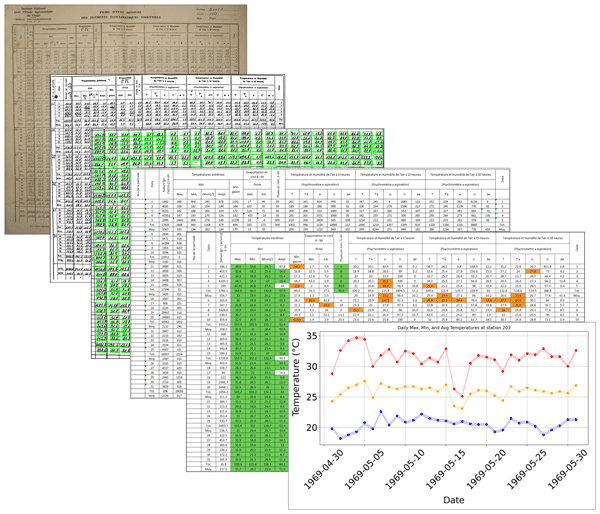
Derrick Muheki, Bas Vercruysse, Krishna Kumar Thirukokaranam Chandrasekar, Christophe Verbruggen, Julie M. Birkholz, Koen Hufkens, Hans Verbeeck, Pascal Boeckx, Seppe Lampe, Ed Hawkins, Peter Thorne, Dominique Kankonde Ntumba, Olivier Kapalay Moulasa, and Wim Thiery
Geosci. Model Dev., 19, 3213–3255, https://doi.org/10.5194/gmd-19-3213-2026, https://doi.org/10.5194/gmd-19-3213-2026, 2026
Short summary
Short summary
Archives worldwide host vast records of observed weather data crucial for understanding climate variability. However, most of these records are still in paper form, limiting their use. To address this, we developed MeteoSaver, an open-source tool, to transcribe these records to machine-readable format. Applied to ten handwritten temperature sheets, it achieved a median accuracy of 74 %. This tool offers a promising solution to preserve records from archives and unlock historical weather insights.
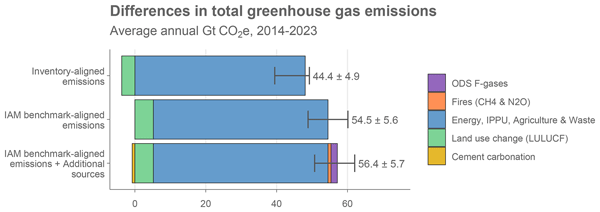
William F. Lamb, Robbie M. Andrew, Matthew Jones, Zebedee Nicholls, Glen P. Peters, Chris Smith, Marielle Saunois, Giacomo Grassi, Julia Pongratz, Steven J. Smith, Francesco N. Tubiello, Monica Crippa, Matthew Gidden, Pierre Friedlingstein, Jan Minx, and Piers M. Forster
Earth Syst. Sci. Data, 18, 2549–2572, https://doi.org/10.5194/essd-18-2549-2026, https://doi.org/10.5194/essd-18-2549-2026, 2026
Short summary
Short summary
This study explores why global greenhouse gas (GHG) emissions estimates vary. Key reasons include different coverage of gases and sectors, varying definitions of anthropogenic land use change emissions, and the Paris Agreement not covering all emission sources. The study highlights three main ways emissions data is reported, each with different objectives and resulting in varying global emission totals. It emphasizes the need for transparency in choosing datasets and setting assessment scopes.
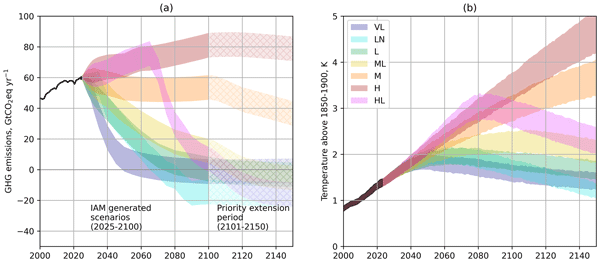
Detlef P. Van Vuuren, Brian C. O'Neill, Claudia Tebaldi, Benjamin M. Sanderson, Louise P. Chini, Pierre Friedlingstein, Tomoko Hasegawa, Keywan Riahi, Bala Govindasamy, Nico Bauer, Veronika Eyring, Cheikh M. N. Fall, Katja Frieler, Matthew J. Gidden, Laila K. Gohar, Annika Högner, Andrew D. Jones, Jarmo Kikstra, Andrew King, Reto Knutti, Elmar Kriegler, Peter Lawrence, Chris Lennard, Jason Lowe, Camilla Mathison, Shahbaz Mehmood, Zebedee Nicholls, Luciana F. Prado, Qiang Zhang, Steven K. Rose, Alex C. Ruane, Marit Sandstad, Carl-Friedrich Schleussner, Roland Seferian, Jana Sillmann, Chris Smith, Anna A. Sörensson, Swapna Panickal, Kaoru Tachiiri, Naomi Vaughan, Saritha S. Vishwanathan, Tokuta Yokohata, Marco Zecchetto, and Tilo Ziehn
Geosci. Model Dev., 19, 2627–2656, https://doi.org/10.5194/gmd-19-2627-2026, https://doi.org/10.5194/gmd-19-2627-2026, 2026
Short summary
Short summary
We propose a set of seven plausible 21st century emission scenarios, and their multi-century extensions, that will be used by the international community of climate modeling centers to produce the next generation of climate projections. These projections will support climate, impact and mitigation researchers, provide information to practitioners to address future risks from climate change, and contribute to policymakers’ considerations of the trade-offs among various levels of mitigation.
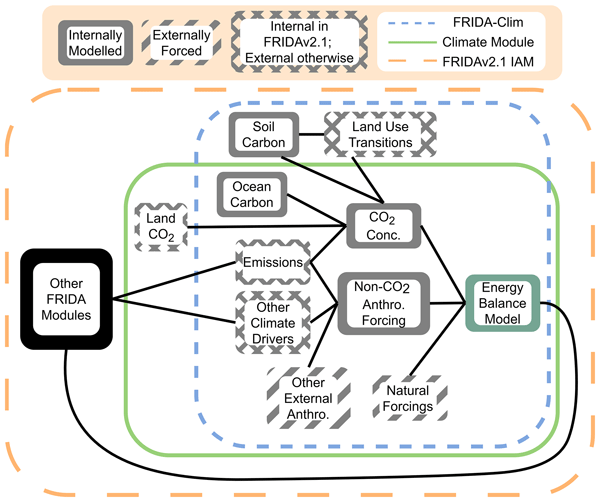
Christopher D. Wells, Lennart Ramme, Chris Smith, Jannes Breier, Adakudlu Muralidhar, Chao Li, Ada Gjermundsen, William Alexander Schoenberg, Benjamin Blanz, and Cecilie Mauritzen
Geosci. Model Dev., 19, 1429–1453, https://doi.org/10.5194/gmd-19-1429-2026, https://doi.org/10.5194/gmd-19-1429-2026, 2026
Short summary
Short summary
Understanding the change in climate that would occur under different future pathways of greenhouse gas emissions and changes in land use is crucial. Here, we develop a new simple climate model to help study this. We reduce the number of inputs so that our model can be connected to a model of the human causes of climate change. This way, we can study the interaction between climate change and society, including climate impacts. Our model broadly agrees with historical observations.
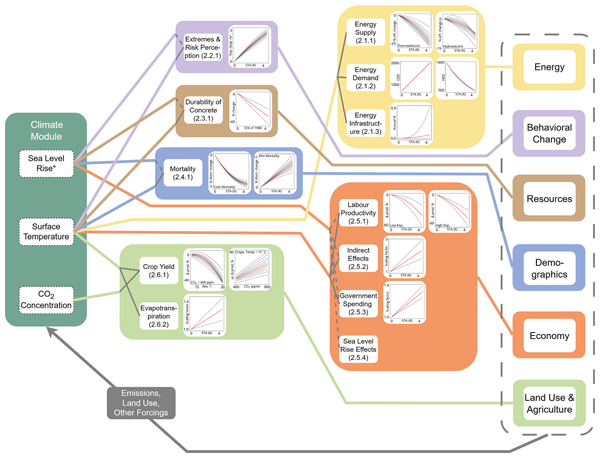
Christopher D. Wells, Benjamin Blanz, Lennart Ramme, Jannes Breier, Beniamino Callegari, Adakudlu Muralidhar, Jefferson K. Rajah, Andreas Nicolaidis Lindqvist, Axel E. Eriksson, William Alexander Schoenberg, Alexandre C. Köberle, Lan Wang-Erlandsson, Cecilie Mauritzen, Martin B. Grimeland, and Chris Smith
Geosci. Model Dev., 19, 1229–1260, https://doi.org/10.5194/gmd-19-1229-2026, https://doi.org/10.5194/gmd-19-1229-2026, 2026
Short summary
Short summary
Computer models built to study future developments of human activity and climate change often exclude the impacts of climate change. Here, we include these effects in a new model. We create functions connecting changes in global temperature, carbon dioxide, and sea level to energy supply and demand, food systems, mortality, economic damages, and other important quantities. Including these effects will allow us to explore their impact on future changes in the human and climate realms.
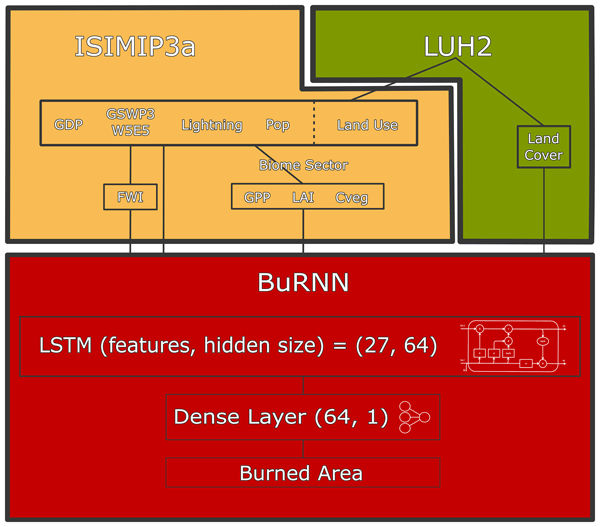
Seppe Lampe, Lukas Gudmundsson, Basil Kraft, Stijn Hantson, Douglas Kelley, Vincent Humphrey, Bertrand Le Saux, Emilio Chuvieco, and Wim Thiery
Geosci. Model Dev., 19, 955–988, https://doi.org/10.5194/gmd-19-955-2026, https://doi.org/10.5194/gmd-19-955-2026, 2026
Short summary
Short summary
We introduce BuRNN (BUrned area modelling by Recurrent Neural Networks), a model which estimates monthly burned area based on satellite observations and climate, vegetation, and socio-economic data using machine learning. BuRNN outperforms existing process-based fire models, which improves our capabilities of modelling past and future burned areas.
Peter W. Thorne, John M. Nicklas, John J. Kennedy, Bruce Calvert, Baylor Fox-Kemper, Mark T. Richardson, Adrian Simmons, Ed Hawkins, Robert Rhode, Kathryn Cowtan, Nerilie J. Abram, Axel Andersson, Simon Noone, Phillipe Marbaix, Nathan Lenssen, Dirk Olonscheck, Tristram Walsh, Stephen Outten, Ingo Bethke, Bjorn H. Samset, Chris Smith, Anna Pirani, Jan Fuglestvedt, Lavanya Rajamani, Richard A. Betts, Elizabeth C. Kent, Blair Trewin, Colin Morice, Tim Osborn, Samantha N. Burgess, Oliver Geden, Andrew Parnell, Piers M. Forster, Chris Hewitt, Zeke Hausfather, Valerie Masson-Delmotte, Jochem Marotzke, Nathan Gillett, Sonia I. Seneviratne, Gavin A. Schmidt, Duo Chan, Stefan Brönnimann, Andy Reisinger, Matthew Menne, Maisa Rojas Corradi, Christopher Kadow, Peter Huybers, David B. Stephenson, Emily Wallis, Joeri Rogelj, Andrew Schurer, Karen McKinnon, Panmao Zhai, Fatima Driouech, Wilfran Moufouma Okia, Saeed Vazifehkhah, Sophie Szopa, Christopher J. Merchant, Shoji Hirahara, Masayoshi Ishii, Francois A. Engelbrecht, Qingxiang Li, June-Yi Lee, Alex J. Cannon, Christophe Cassou, Karina von Schuckmann, Amir H. Delju, and Ellie Murtagh
Earth Syst. Sci. Data Discuss., https://doi.org/10.5194/essd-2025-825, https://doi.org/10.5194/essd-2025-825, 2026
Preprint under review for ESSD
Short summary
Short summary
We reassess the basis for determining the present level of long-term global warming. Unbiased estimates of both realised warming and anthropogenic warming are possible that approximate a 20-year retrospective mean. Our resulting estimates of 1.40 [1.23–1.58] °C (realised) and 1.34 [1.18–1.50] °C (anthropogenic) as at end of 2024 highlight the urgency of immediate, far-reaching and sustained climate mitigation actions if we are to meet the long term temperature goal of the Paris Agreement.
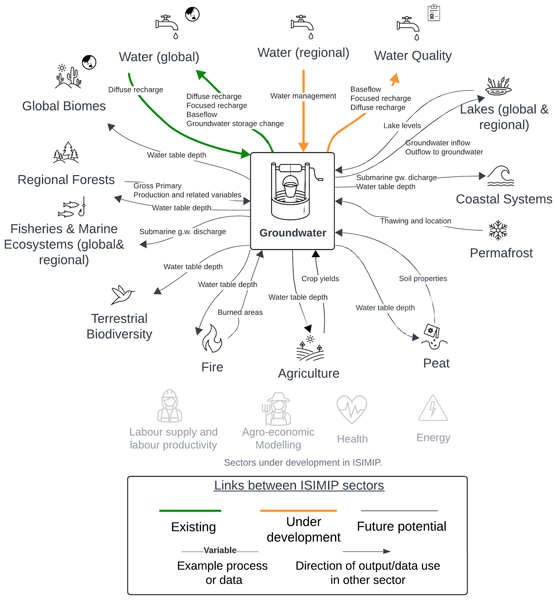
Robert Reinecke, Tanjila Akhter, Annemarie Bäthge, Ricarda Dietrich, Sebastian Gnann, Simon N. Gosling, Danielle Grogan, Andreas Hartmann, Stefan Kollet, Rohini Kumar, Richard Lammers, Sida Liu, Yan Liu, Nils Moosdorf, Bibi Naz, Sara Nazari, Chibuike Orazulike, Yadu Pokhrel, Jacob Schewe, Mikhail Smilovic, Maryna Strokal, Wim Thiery, Yoshihide Wada, Shan Zuidema, and Inge de Graaf
Geosci. Model Dev., 19, 523–542, https://doi.org/10.5194/gmd-19-523-2026, https://doi.org/10.5194/gmd-19-523-2026, 2026
Short summary
Short summary
Here we describe a collaborative effort to improve predictions of how climate change will affect groundwater. The ISIMIP (The Inter-Sectoral Impact Model Intercomparison Project) groundwater sector combines multiple global groundwater models to capture a range of possible outcomes and reduce uncertainty. Initial comparisons reveal significant differences between models in key metrics like water table depth and recharge rates, highlighting the need for structured model intercomparisons.
Benjamin M. Sanderson, Susanne Baur, Carl-Freidrich Schleussner, Glen P. Peters, Shivika Mittal, Marit Sandstad, Steffen Kallbekken, Chris Smith, Sabine Fuss, Bas van Ruijven, Rosie A. Fisher, Joeri Rogelj, Roland Séférian, Bjørn Samset, Norman J. Steinert, Laurent Terray, and Jan Fuglestvedt
EGUsphere, https://doi.org/10.5194/egusphere-2026-28, https://doi.org/10.5194/egusphere-2026-28, 2026
Preprint archived
Short summary
Short summary
Solar Radiation Modification by adding aerosols to the stratosphere could rapidly and temporarily cool the Earth, but this speed creates unprecedented risks. Fast climate responses coupled with political instability create risks of failure to decarbonise, super-rapid climate change, and conflict. Idealized scenarios or conventional modeling tools could lead to systematic ignorance of these risks. We thus introduce a framework outlining what must be represented in future modeling and assessment.
Alejandro Romero-Prieto, Camilla Mathison, and Chris Smith
Geosci. Model Dev., 19, 115–165, https://doi.org/10.5194/gmd-19-115-2026, https://doi.org/10.5194/gmd-19-115-2026, 2026
Short summary
Short summary
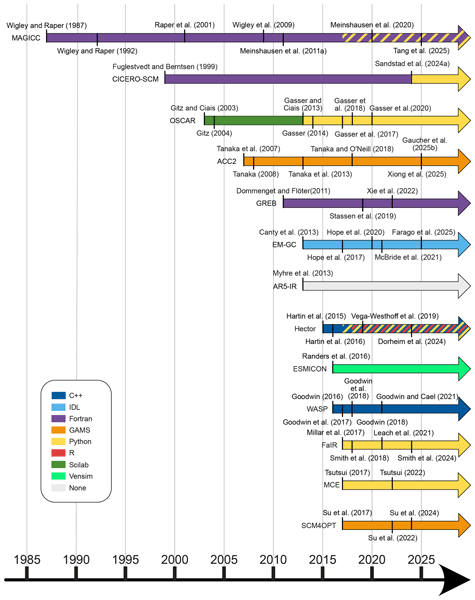
Simple Climate Models (SCMs) are widely used tools to explore how Earth's climate may change in the future. In recent decades, the number and types of SCMs have increased significantly, hindering efforts to understand cross-model differences. In this study, we provide an overview of the main principles guiding climate simulation by SCMs, as well as a description of most high-profile SCMs. This work offers a clear reference to support the informed use of these important tools.
Lennart Ramme, Benjamin Blanz, Christopher Wells, Tony E. Wong, William Schoenberg, Chris Smith, and Chao Li
Geosci. Model Dev., 18, 10017–10052, https://doi.org/10.5194/gmd-18-10017-2025, https://doi.org/10.5194/gmd-18-10017-2025, 2025
Short summary
Short summary
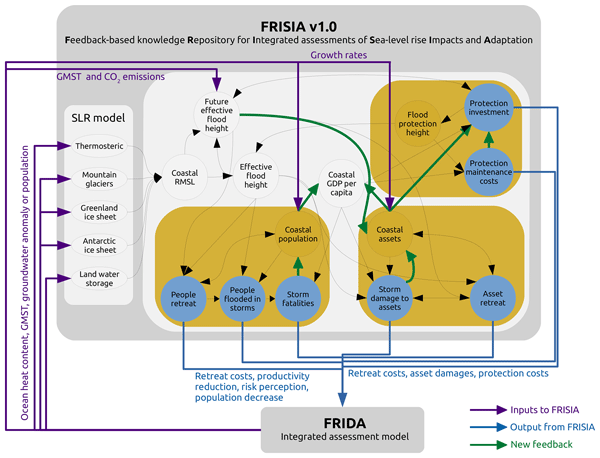
We present FRISIA version 1.0, a model for emulating sea level rise (SLR) and representing SLR impacts and adaptation in integrated assessment models (IAMs). FRISIA includes previously uncaptured coastal socio-economic feedback and a diverse set of impact strains, thereby improving the represenation of SLR impacts in IAMs. Here we describe the baseline behaviour of FRISIA, explore the effects of the additional feedback and showcase the coupling of FRISIA to an IAM.
William Schoenberg, Benjamin Blanz, Jefferson K. Rajah, Beniamino Callegari, Christopher Wells, Jannes Breier, Martin B. Grimeland, Andreas Nicolaidis Lindqvist, Lennart Ramme, Chris Smith, Chao Li, Sarah Mashhadi, Adakudlu Muralidhar, and Cecilie Mauritzen
Geosci. Model Dev., 18, 8047–8069, https://doi.org/10.5194/gmd-18-8047-2025, https://doi.org/10.5194/gmd-18-8047-2025, 2025
Short summary
Short summary
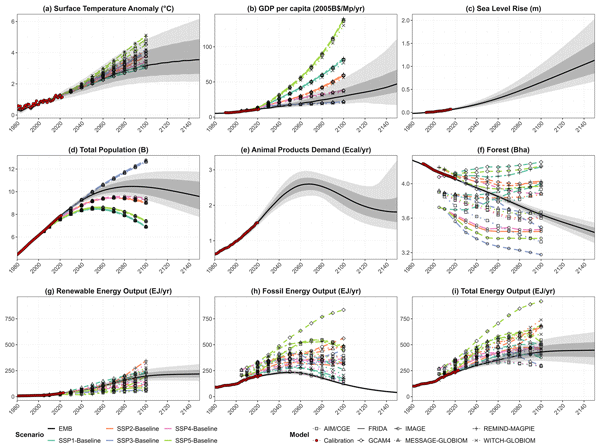
The current crop of models assessed by the Intergovernmental Panel on Climate Change to produce their assessment reports lack endogenous process-based representations of climate-driven changes to human activities, limiting understanding of the feedback between climate and humans. FRIDA (Feedback-based knowledge Repository for IntegrateD Assessments) v2.1 integrates these systems and generate results that suggest standard scenarios the shared socioeconomic pathways baseline scenarios may overestimate economic growth, highlighting the importance of feedbacks for realistic projections and informed policymaking.
Magali Verkerk, Thomas J. Aubry, Chris Smith, Peter O. Hopcroft, Michael Sigl, Jessica E. Tierney, Kevin Anchukaitis, Matthew Osman, Anja Schmidt, and Matthew Toohey
Clim. Past, 21, 1755–1778, https://doi.org/10.5194/cp-21-1755-2025, https://doi.org/10.5194/cp-21-1755-2025, 2025
Short summary
Short summary
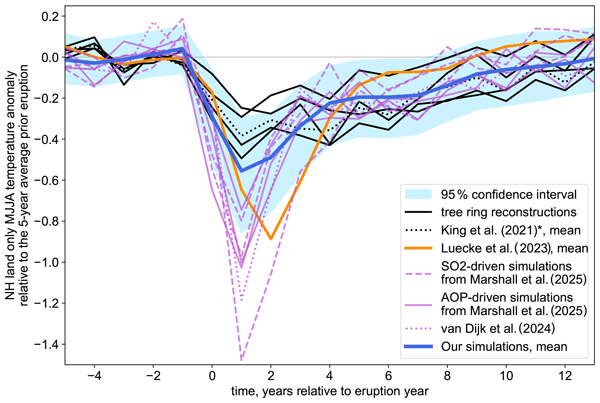
Large volcanic eruptions can trigger global cooling, affecting human societies. Using ice-core records and simple climate model to simulate volcanic effect over the last 8500 years, we show that volcanic eruptions cool the climate by 0.12 °C on average. By comparing model results with temperature recorded by tree rings over the last 1000 years, we demonstrate that our models can predict the large-scale cooling caused by volcanic eruptions and can be used in cases of large eruptions in the future.
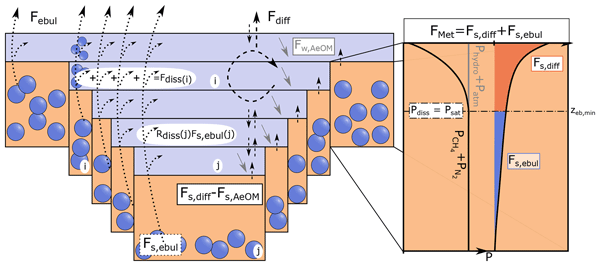
Manon Maisonnier, Maoyuan Feng, David Bastviken, Sandra Arndt, Ronny Lauerwald, Aidin Jabbari, Goulven Gildas Laruelle, Murray D. MacKay, Zeli Tan, Wim Thiery, and Pierre Regnier
Earth Syst. Dynam., 16, 1779–1808, https://doi.org/10.5194/esd-16-1779-2025, https://doi.org/10.5194/esd-16-1779-2025, 2025
Short summary
Short summary
A new process-based modelling framework, FLaMe-v1.0 (Fluxes of Lake Methane version 1.0), is developed to simulate methane (CH4) emissions from lakes at large scales. FLaMe couples the dynamics of organic carbon, oxygen and methane in lakes and rests on an innovative, computationally efficient lake clustering approach for the simulation of CH4 emissions across a large number of lakes. The model evaluation suggests that FLaMe captures the sub-annual and spatial variability of CH4 emissions well.
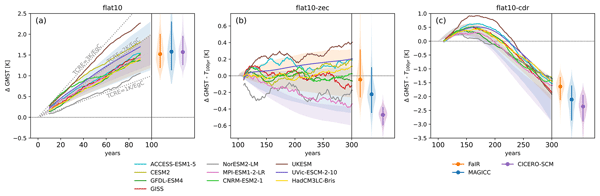
Benjamin M. Sanderson, Victor Brovkin, Rosie A. Fisher, David Hohn, Tatiana Ilyina, Chris D. Jones, Torben Koenigk, Charles Koven, Hongmei Li, David M. Lawrence, Peter Lawrence, Spencer Liddicoat, Andrew H. MacDougall, Nadine Mengis, Zebedee Nicholls, Eleanor O'Rourke, Anastasia Romanou, Marit Sandstad, Jörg Schwinger, Roland Séférian, Lori T. Sentman, Isla R. Simpson, Chris Smith, Norman J. Steinert, Abigail L. S. Swann, Jerry Tjiputra, and Tilo Ziehn
Geosci. Model Dev., 18, 5699–5724, https://doi.org/10.5194/gmd-18-5699-2025, https://doi.org/10.5194/gmd-18-5699-2025, 2025
Short summary
Short summary
This study investigates how climate models warm in response to simplified carbon emissions trajectories, refining the understanding of climate reversibility and commitment. Metrics are defined for warming response to cumulative emissions and for the cessation of emissions or ramp-down to net-zero and net-negative levels. Results indicate that previous concentration-driven experiments may have overstated the Zero Emissions Commitment due to emissions rates exceeding historical levels.
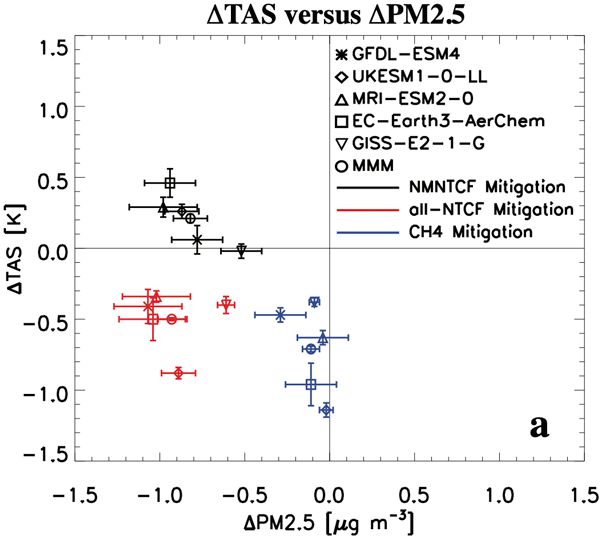
Paul T. Griffiths, Laura J. Wilcox, Robert J. Allen, Vaishali Naik, Fiona M. O'Connor, Michael Prather, Alex Archibald, Florence Brown, Makoto Deushi, William Collins, Stephanie Fiedler, Naga Oshima, Lee T. Murray, Bjørn H. Samset, Chris Smith, Steven Turnock, Duncan Watson-Parris, and Paul J. Young
Atmos. Chem. Phys., 25, 8289–8328, https://doi.org/10.5194/acp-25-8289-2025, https://doi.org/10.5194/acp-25-8289-2025, 2025
Short summary
Short summary
The Aerosol Chemistry Model Intercomparison Project (AerChemMIP) aimed to quantify the climate and air quality impacts of aerosols and chemically reactive gases. We review its contribution to AR6 (Sixth Assessment Report of the Intergovernmental Panel on Climate Change) and the wider understanding of the role of these species in climate and climate change. We identify challenges and provide recommendations to improve the utility and uptake of climate model data, detailed summary tables of CMIP6 models, experiments, and emergent diagnostics.
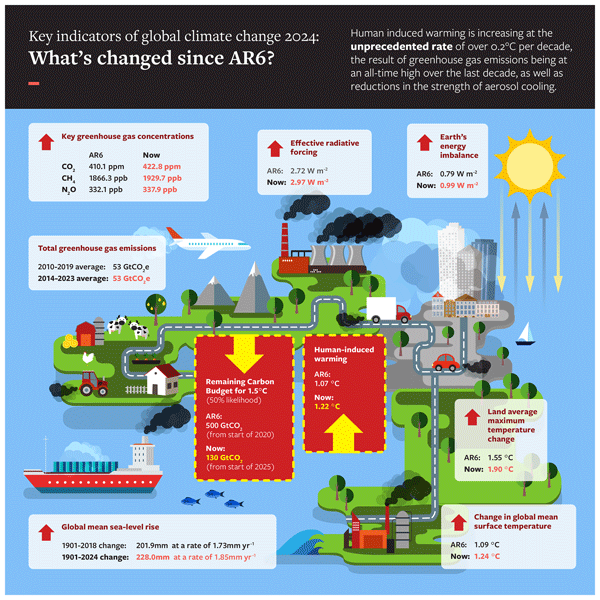
Piers M. Forster, Chris Smith, Tristram Walsh, William F. Lamb, Robin Lamboll, Christophe Cassou, Mathias Hauser, Zeke Hausfather, June-Yi Lee, Matthew D. Palmer, Karina von Schuckmann, Aimée B. A. Slangen, Sophie Szopa, Blair Trewin, Jeongeun Yun, Nathan P. Gillett, Stuart Jenkins, H. Damon Matthews, Krishnan Raghavan, Aurélien Ribes, Joeri Rogelj, Debbie Rosen, Xuebin Zhang, Myles Allen, Lara Aleluia Reis, Robbie M. Andrew, Richard A. Betts, Alex Borger, Jiddu A. Broersma, Samantha N. Burgess, Lijing Cheng, Pierre Friedlingstein, Catia M. Domingues, Marco Gambarini, Thomas Gasser, Johannes Gütschow, Masayoshi Ishii, Christopher Kadow, John Kennedy, Rachel E. Killick, Paul B. Krummel, Aurélien Liné, Didier P. Monselesan, Colin Morice, Jens Mühle, Vaishali Naik, Glen P. Peters, Anna Pirani, Julia Pongratz, Jan C. Minx, Matthew Rigby, Robert Rohde, Abhishek Savita, Sonia I. Seneviratne, Peter Thorne, Christopher Wells, Luke M. Western, Guido R. van der Werf, Susan E. Wijffels, Valérie Masson-Delmotte, and Panmao Zhai
Earth Syst. Sci. Data, 17, 2641–2680, https://doi.org/10.5194/essd-17-2641-2025, https://doi.org/10.5194/essd-17-2641-2025, 2025
Short summary
Short summary
In a rapidly changing climate, evidence-based decision-making benefits from up-to-date and timely information. Here we compile monitoring datasets to track real-world changes over time. To make our work relevant to policymakers, we follow methods from the Intergovernmental Panel on Climate Change (IPCC). Human activities are increasing the Earth's energy imbalance and driving faster sea-level rise compared to the IPCC assessment.
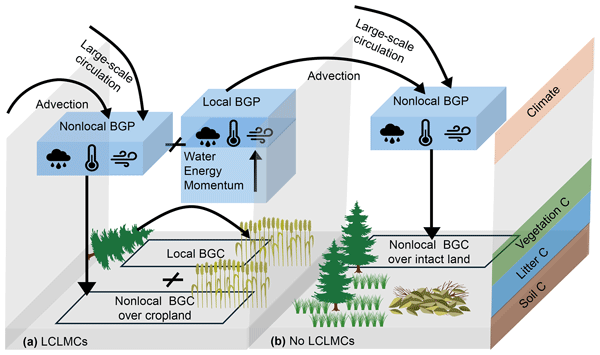
Suqi Guo, Felix Havermann, Steven J. De Hertog, Fei Luo, Iris Manola, Thomas Raddatz, Hongmei Li, Wim Thiery, Quentin Lejeune, Carl-Friedrich Schleussner, David Wårlind, Lars Nieradzik, and Julia Pongratz
Earth Syst. Dynam., 16, 631–666, https://doi.org/10.5194/esd-16-631-2025, https://doi.org/10.5194/esd-16-631-2025, 2025
Short summary
Short summary
Land cover and land management changes (LCLMCs) can alter climate even in intact areas, causing carbon changes in remote areas. This study is the first to assess these effects, finding they substantially alter global carbon dynamics, changing terrestrial stocks by up to dozens of gigatonnes. These results are vital for scientific and policy assessments, given the expected role of LCLMCs in achieving the Paris Agreement's goal to limit global warming below 1.5 °C.
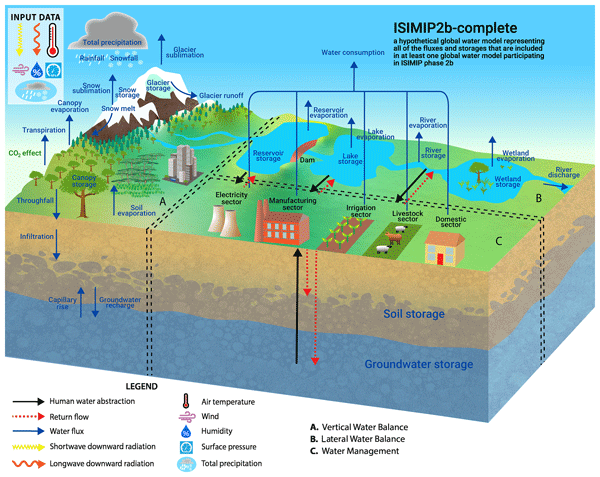
Hannes Müller Schmied, Simon Newland Gosling, Marlo Garnsworthy, Laura Müller, Camelia-Eliza Telteu, Atiq Kainan Ahmed, Lauren Seaby Andersen, Julien Boulange, Peter Burek, Jinfeng Chang, He Chen, Lukas Gudmundsson, Manolis Grillakis, Luca Guillaumot, Naota Hanasaki, Aristeidis Koutroulis, Rohini Kumar, Guoyong Leng, Junguo Liu, Xingcai Liu, Inga Menke, Vimal Mishra, Yadu Pokhrel, Oldrich Rakovec, Luis Samaniego, Yusuke Satoh, Harsh Lovekumar Shah, Mikhail Smilovic, Tobias Stacke, Edwin Sutanudjaja, Wim Thiery, Athanasios Tsilimigkras, Yoshihide Wada, Niko Wanders, and Tokuta Yokohata
Geosci. Model Dev., 18, 2409–2425, https://doi.org/10.5194/gmd-18-2409-2025, https://doi.org/10.5194/gmd-18-2409-2025, 2025
Short summary
Short summary
Global water models contribute to the evaluation of important natural and societal issues but are – as all models – simplified representation of reality. So, there are many ways to calculate the water fluxes and storages. This paper presents a visualization of 16 global water models using a standardized visualization and the pathway towards this common understanding. Next to academic education purposes, we envisage that these diagrams will help researchers, model developers, and data users.
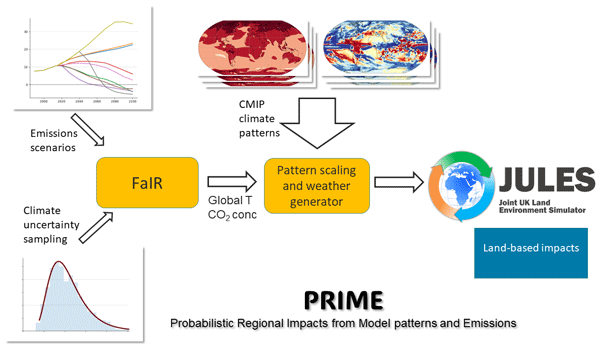
Camilla Mathison, Eleanor J. Burke, Gregory Munday, Chris D. Jones, Chris J. Smith, Norman J. Steinert, Andy J. Wiltshire, Chris Huntingford, Eszter Kovacs, Laila K. Gohar, Rebecca M. Varney, and Douglas McNeall
Geosci. Model Dev., 18, 1785–1808, https://doi.org/10.5194/gmd-18-1785-2025, https://doi.org/10.5194/gmd-18-1785-2025, 2025
Short summary
Short summary
We present PRIME (Probabilistic Regional Impacts from Model patterns and Emissions), which is designed to take new emissions scenarios and rapidly provide regional impact information. PRIME allows large ensembles to be run on multi-centennial timescales, including the analysis of many important variables for impact assessments. Our evaluation shows that PRIME reproduces the climate response for known scenarios, providing confidence in using PRIME for novel scenarios.
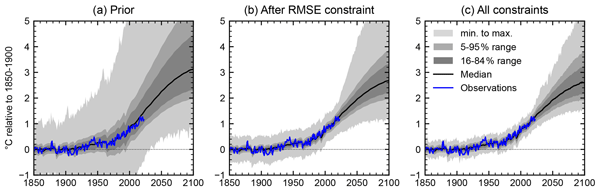
Chris Smith, Donald P. Cummins, Hege-Beate Fredriksen, Zebedee Nicholls, Malte Meinshausen, Myles Allen, Stuart Jenkins, Nicholas Leach, Camilla Mathison, and Antti-Ilari Partanen
Geosci. Model Dev., 17, 8569–8592, https://doi.org/10.5194/gmd-17-8569-2024, https://doi.org/10.5194/gmd-17-8569-2024, 2024
Short summary
Short summary
Climate projections are only useful if the underlying models that produce them are well calibrated and can reproduce observed climate change. We formalise a software package that calibrates the open-source FaIR simple climate model to full-complexity Earth system models. Observations, including historical warming, and assessments of key climate variables such as that of climate sensitivity are used to constrain the model output.
Benjamin M. Sanderson, Ben B. B. Booth, John Dunne, Veronika Eyring, Rosie A. Fisher, Pierre Friedlingstein, Matthew J. Gidden, Tomohiro Hajima, Chris D. Jones, Colin G. Jones, Andrew King, Charles D. Koven, David M. Lawrence, Jason Lowe, Nadine Mengis, Glen P. Peters, Joeri Rogelj, Chris Smith, Abigail C. Snyder, Isla R. Simpson, Abigail L. S. Swann, Claudia Tebaldi, Tatiana Ilyina, Carl-Friedrich Schleussner, Roland Séférian, Bjørn H. Samset, Detlef van Vuuren, and Sönke Zaehle
Geosci. Model Dev., 17, 8141–8172, https://doi.org/10.5194/gmd-17-8141-2024, https://doi.org/10.5194/gmd-17-8141-2024, 2024
Short summary
Short summary
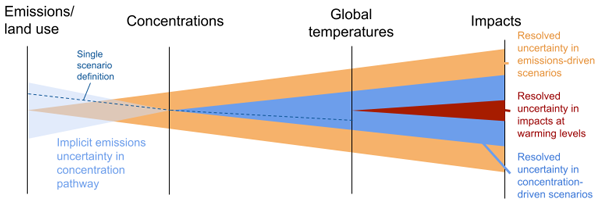
We discuss how, in order to provide more relevant guidance for climate policy, coordinated climate experiments should adopt a greater focus on simulations where Earth system models are provided with carbon emissions from fossil fuels together with land use change instructions, rather than past approaches that have largely focused on experiments with prescribed atmospheric carbon dioxide concentrations. We discuss how these goals might be achieved in coordinated climate modeling experiments.
Sabin I. Taranu, David M. Lawrence, Yoshihide Wada, Ting Tang, Erik Kluzek, Sam Rabin, Yi Yao, Steven J. De Hertog, Inne Vanderkelen, and Wim Thiery
Geosci. Model Dev., 17, 7365–7399, https://doi.org/10.5194/gmd-17-7365-2024, https://doi.org/10.5194/gmd-17-7365-2024, 2024
Short summary
Short summary
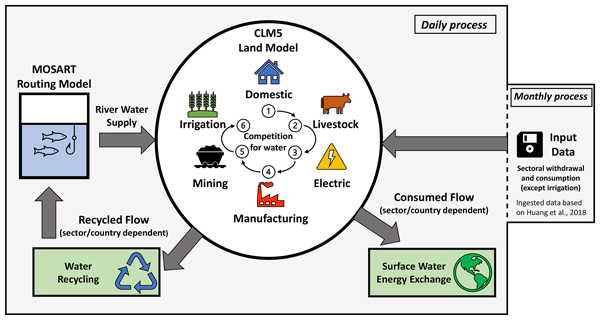
In this study, we improved a climate model by adding the representation of water use sectors such as domestic, industry, and agriculture. This new feature helps us understand how water is used and supplied in various areas. We tested our model from 1971 to 2010 and found that it accurately identifies areas with water scarcity. By modelling the competition between sectors when water availability is limited, the model helps estimate the intensity and extent of individual sectors' water shortages.
Robert J. Allen, Xueying Zhao, Cynthia A. Randles, Ryan J. Kramer, Bjørn H. Samset, and Christopher J. Smith
Atmos. Chem. Phys., 24, 11207–11226, https://doi.org/10.5194/acp-24-11207-2024, https://doi.org/10.5194/acp-24-11207-2024, 2024
Short summary
Short summary
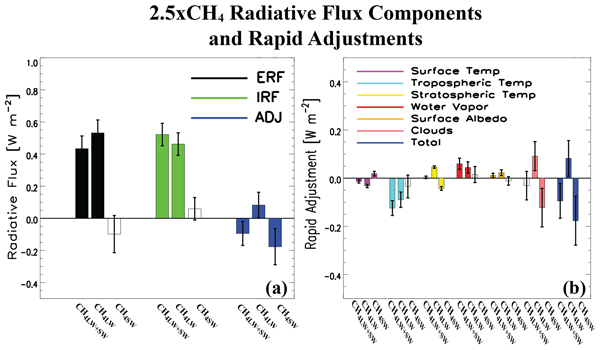
Present-day methane shortwave absorption mutes 28% (7–55%) of the surface warming associated with its longwave absorption. The precipitation increase associated with the longwave radiative effects of the present-day methane perturbation is also muted by shortwave absorption but not significantly so. Methane shortwave absorption also impacts the magnitude of its climate feedback parameter, largely through the cloud feedback.
Piers M. Forster, Chris Smith, Tristram Walsh, William F. Lamb, Robin Lamboll, Bradley Hall, Mathias Hauser, Aurélien Ribes, Debbie Rosen, Nathan P. Gillett, Matthew D. Palmer, Joeri Rogelj, Karina von Schuckmann, Blair Trewin, Myles Allen, Robbie Andrew, Richard A. Betts, Alex Borger, Tim Boyer, Jiddu A. Broersma, Carlo Buontempo, Samantha Burgess, Chiara Cagnazzo, Lijing Cheng, Pierre Friedlingstein, Andrew Gettelman, Johannes Gütschow, Masayoshi Ishii, Stuart Jenkins, Xin Lan, Colin Morice, Jens Mühle, Christopher Kadow, John Kennedy, Rachel E. Killick, Paul B. Krummel, Jan C. Minx, Gunnar Myhre, Vaishali Naik, Glen P. Peters, Anna Pirani, Julia Pongratz, Carl-Friedrich Schleussner, Sonia I. Seneviratne, Sophie Szopa, Peter Thorne, Mahesh V. M. Kovilakam, Elisa Majamäki, Jukka-Pekka Jalkanen, Margreet van Marle, Rachel M. Hoesly, Robert Rohde, Dominik Schumacher, Guido van der Werf, Russell Vose, Kirsten Zickfeld, Xuebin Zhang, Valérie Masson-Delmotte, and Panmao Zhai
Earth Syst. Sci. Data, 16, 2625–2658, https://doi.org/10.5194/essd-16-2625-2024, https://doi.org/10.5194/essd-16-2625-2024, 2024
Short summary
Short summary
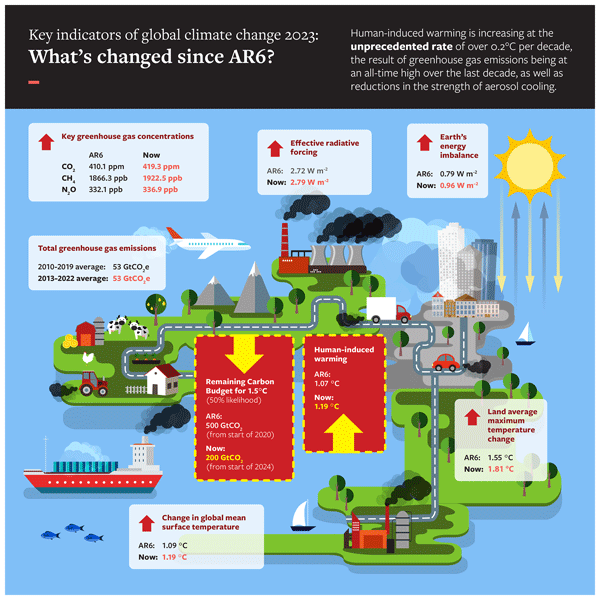
This paper tracks some key indicators of global warming through time, from 1850 through to the end of 2023. It is designed to give an authoritative estimate of global warming to date and its causes. We find that in 2023, global warming reached 1.3 °C and is increasing at over 0.2 °C per decade. This is caused by all-time-high greenhouse gas emissions.
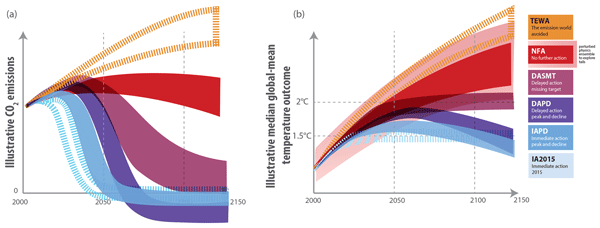
Malte Meinshausen, Carl-Friedrich Schleussner, Kathleen Beyer, Greg Bodeker, Olivier Boucher, Josep G. Canadell, John S. Daniel, Aïda Diongue-Niang, Fatima Driouech, Erich Fischer, Piers Forster, Michael Grose, Gerrit Hansen, Zeke Hausfather, Tatiana Ilyina, Jarmo S. Kikstra, Joyce Kimutai, Andrew D. King, June-Yi Lee, Chris Lennard, Tabea Lissner, Alexander Nauels, Glen P. Peters, Anna Pirani, Gian-Kasper Plattner, Hans Pörtner, Joeri Rogelj, Maisa Rojas, Joyashree Roy, Bjørn H. Samset, Benjamin M. Sanderson, Roland Séférian, Sonia Seneviratne, Christopher J. Smith, Sophie Szopa, Adelle Thomas, Diana Urge-Vorsatz, Guus J. M. Velders, Tokuta Yokohata, Tilo Ziehn, and Zebedee Nicholls
Geosci. Model Dev., 17, 4533–4559, https://doi.org/10.5194/gmd-17-4533-2024, https://doi.org/10.5194/gmd-17-4533-2024, 2024
Short summary
Short summary
The scientific community is considering new scenarios to succeed RCPs and SSPs for the next generation of Earth system model runs to project future climate change. To contribute to that effort, we reflect on relevant policy and scientific research questions and suggest categories for representative emission pathways. These categories are tailored to the Paris Agreement long-term temperature goal, high-risk outcomes in the absence of further climate policy and worlds “that could have been”.
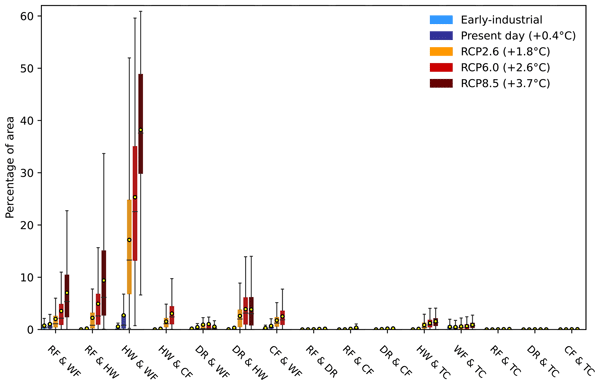
Derrick Muheki, Axel A. J. Deijns, Emanuele Bevacqua, Gabriele Messori, Jakob Zscheischler, and Wim Thiery
Earth Syst. Dynam., 15, 429–466, https://doi.org/10.5194/esd-15-429-2024, https://doi.org/10.5194/esd-15-429-2024, 2024
Short summary
Short summary
Climate change affects the interaction, dependence, and joint occurrence of climate extremes. Here we investigate the joint occurrence of pairs of river floods, droughts, heatwaves, crop failures, wildfires, and tropical cyclones in East Africa under past and future climate conditions. Our results show that, across all future warming scenarios, the frequency and spatial extent of these co-occurring extremes will increase in this region, particularly in areas close to the Nile and Congo rivers.
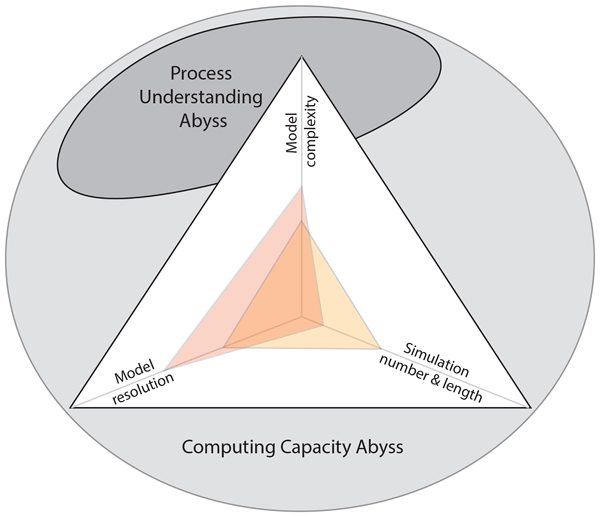
Stephanie Fiedler, Vaishali Naik, Fiona M. O'Connor, Christopher J. Smith, Paul Griffiths, Ryan J. Kramer, Toshihiko Takemura, Robert J. Allen, Ulas Im, Matthew Kasoar, Angshuman Modak, Steven Turnock, Apostolos Voulgarakis, Duncan Watson-Parris, Daniel M. Westervelt, Laura J. Wilcox, Alcide Zhao, William J. Collins, Michael Schulz, Gunnar Myhre, and Piers M. Forster
Geosci. Model Dev., 17, 2387–2417, https://doi.org/10.5194/gmd-17-2387-2024, https://doi.org/10.5194/gmd-17-2387-2024, 2024
Short summary
Short summary
Climate scientists want to better understand modern climate change. Thus, climate model experiments are performed and compared. The results of climate model experiments differ, as assessed in the latest Intergovernmental Panel on Climate Change (IPCC) assessment report. This article gives insights into the challenges and outlines opportunities for further improving the understanding of climate change. It is based on views of a group of experts in atmospheric composition–climate interactions.
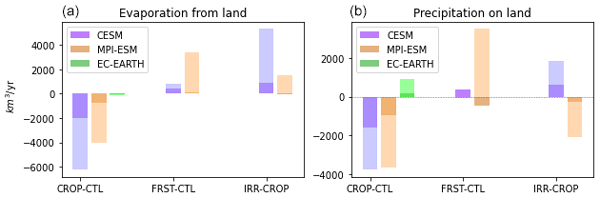
Steven J. De Hertog, Carmen E. Lopez-Fabara, Ruud van der Ent, Jessica Keune, Diego G. Miralles, Raphael Portmann, Sebastian Schemm, Felix Havermann, Suqi Guo, Fei Luo, Iris Manola, Quentin Lejeune, Julia Pongratz, Carl-Friedrich Schleussner, Sonia I. Seneviratne, and Wim Thiery
Earth Syst. Dynam., 15, 265–291, https://doi.org/10.5194/esd-15-265-2024, https://doi.org/10.5194/esd-15-265-2024, 2024
Short summary
Short summary
Changes in land use are crucial to achieve lower global warming. However, despite their importance, the effects of these changes on moisture fluxes are poorly understood. We analyse land cover and management scenarios in three climate models involving cropland expansion, afforestation, and irrigation. Results show largely consistent influences on moisture fluxes, with cropland expansion causing a drying and reduced local moisture recycling, while afforestation and irrigation show the opposite.
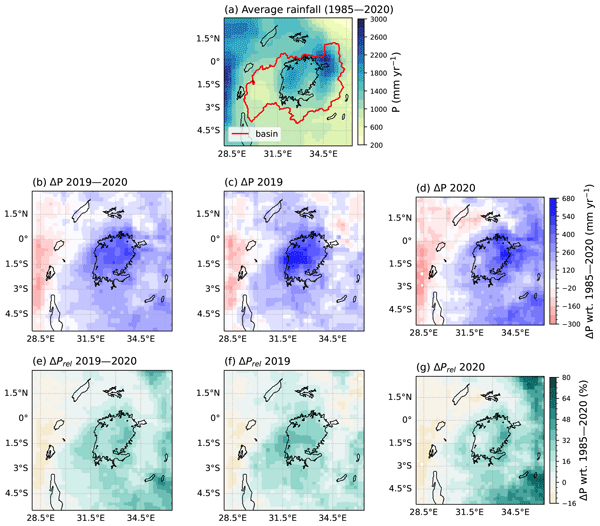
Rosa Pietroiusti, Inne Vanderkelen, Friederike E. L. Otto, Clair Barnes, Lucy Temple, Mary Akurut, Philippe Bally, Nicole P. M. van Lipzig, and Wim Thiery
Earth Syst. Dynam., 15, 225–264, https://doi.org/10.5194/esd-15-225-2024, https://doi.org/10.5194/esd-15-225-2024, 2024
Short summary
Short summary
Heavy rainfall in eastern Africa between late 2019 and mid 2020 caused devastating floods and landslides and drove the levels of Lake Victoria to a record-breaking maximum in May 2020. In this study, we characterize the spatial extent and impacts of the floods in the Lake Victoria basin and investigate how human-induced climate change influenced the probability and intensity of the record-breaking lake levels and flooding by applying a multi-model extreme event attribution methodology.
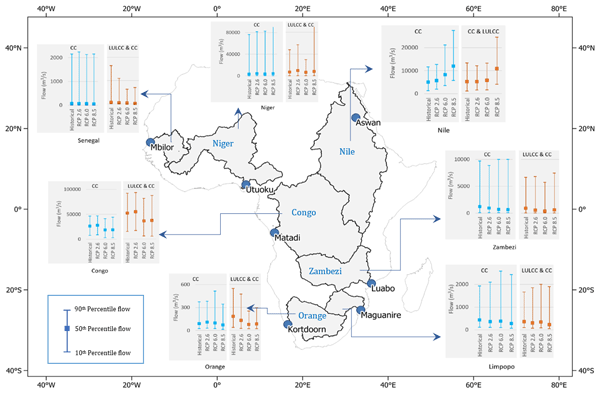
Celray James Chawanda, Albert Nkwasa, Wim Thiery, and Ann van Griensven
Hydrol. Earth Syst. Sci., 28, 117–138, https://doi.org/10.5194/hess-28-117-2024, https://doi.org/10.5194/hess-28-117-2024, 2024
Short summary
Short summary
Africa's water resources are being negatively impacted by climate change and land-use change. The SWAT+ hydrological model was used to simulate the hydrological cycle in Africa, and results show likely decreases in river flows in the Zambezi and Congo rivers and highest flows in the Niger River basins due to climate change. Land cover change had the biggest impact in the Congo River basin, emphasizing the importance of including land-use change in studies.
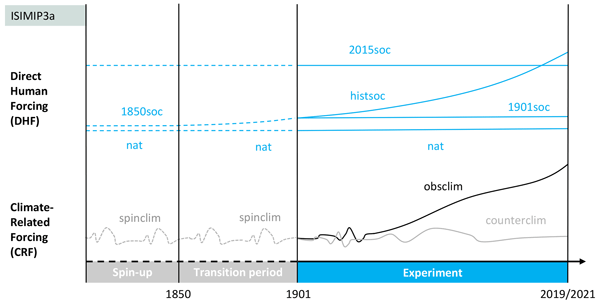
Katja Frieler, Jan Volkholz, Stefan Lange, Jacob Schewe, Matthias Mengel, María del Rocío Rivas López, Christian Otto, Christopher P. O. Reyer, Dirk Nikolaus Karger, Johanna T. Malle, Simon Treu, Christoph Menz, Julia L. Blanchard, Cheryl S. Harrison, Colleen M. Petrik, Tyler D. Eddy, Kelly Ortega-Cisneros, Camilla Novaglio, Yannick Rousseau, Reg A. Watson, Charles Stock, Xiao Liu, Ryan Heneghan, Derek Tittensor, Olivier Maury, Matthias Büchner, Thomas Vogt, Tingting Wang, Fubao Sun, Inga J. Sauer, Johannes Koch, Inne Vanderkelen, Jonas Jägermeyr, Christoph Müller, Sam Rabin, Jochen Klar, Iliusi D. Vega del Valle, Gitta Lasslop, Sarah Chadburn, Eleanor Burke, Angela Gallego-Sala, Noah Smith, Jinfeng Chang, Stijn Hantson, Chantelle Burton, Anne Gädeke, Fang Li, Simon N. Gosling, Hannes Müller Schmied, Fred Hattermann, Jida Wang, Fangfang Yao, Thomas Hickler, Rafael Marcé, Don Pierson, Wim Thiery, Daniel Mercado-Bettín, Robert Ladwig, Ana Isabel Ayala-Zamora, Matthew Forrest, and Michel Bechtold
Geosci. Model Dev., 17, 1–51, https://doi.org/10.5194/gmd-17-1-2024, https://doi.org/10.5194/gmd-17-1-2024, 2024
Short summary
Short summary
Our paper provides an overview of all observational climate-related and socioeconomic forcing data used as input for the impact model evaluation and impact attribution experiments within the third round of the Inter-Sectoral Impact Model Intercomparison Project. The experiments are designed to test our understanding of observed changes in natural and human systems and to quantify to what degree these changes have already been induced by climate change.
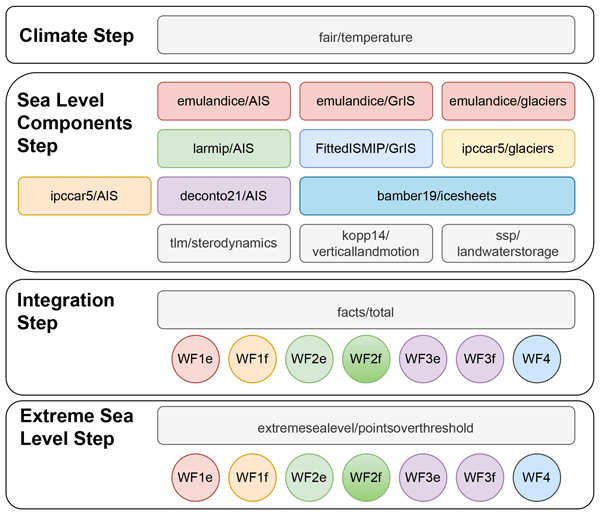
Robert E. Kopp, Gregory G. Garner, Tim H. J. Hermans, Shantenu Jha, Praveen Kumar, Alexander Reedy, Aimée B. A. Slangen, Matteo Turilli, Tamsin L. Edwards, Jonathan M. Gregory, George Koubbe, Anders Levermann, Andre Merzky, Sophie Nowicki, Matthew D. Palmer, and Chris Smith
Geosci. Model Dev., 16, 7461–7489, https://doi.org/10.5194/gmd-16-7461-2023, https://doi.org/10.5194/gmd-16-7461-2023, 2023
Short summary
Short summary
Future sea-level rise projections exhibit multiple forms of uncertainty, all of which must be considered by scientific assessments intended to inform decision-making. The Framework for Assessing Changes To Sea-level (FACTS) is a new software package intended to support assessments of global mean, regional, and extreme sea-level rise. An early version of FACTS supported the development of the IPCC Sixth Assessment Report sea-level projections.
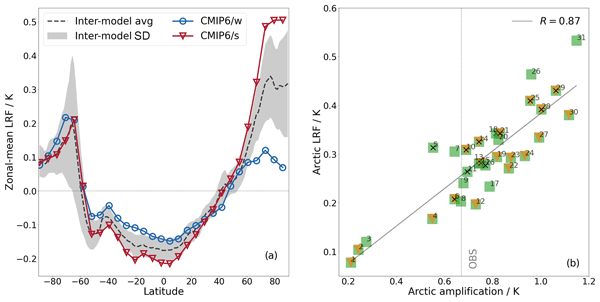
Olivia Linke, Johannes Quaas, Finja Baumer, Sebastian Becker, Jan Chylik, Sandro Dahlke, André Ehrlich, Dörthe Handorf, Christoph Jacobi, Heike Kalesse-Los, Luca Lelli, Sina Mehrdad, Roel A. J. Neggers, Johannes Riebold, Pablo Saavedra Garfias, Niklas Schnierstein, Matthew D. Shupe, Chris Smith, Gunnar Spreen, Baptiste Verneuil, Kameswara S. Vinjamuri, Marco Vountas, and Manfred Wendisch
Atmos. Chem. Phys., 23, 9963–9992, https://doi.org/10.5194/acp-23-9963-2023, https://doi.org/10.5194/acp-23-9963-2023, 2023
Short summary
Short summary
Lapse rate feedback (LRF) is a major driver of the Arctic amplification (AA) of climate change. It arises because the warming is stronger at the surface than aloft. Several processes can affect the LRF in the Arctic, such as the omnipresent temperature inversion. Here, we compare multimodel climate simulations to Arctic-based observations from a large research consortium to broaden our understanding of these processes, find synergy among them, and constrain the Arctic LRF and AA.
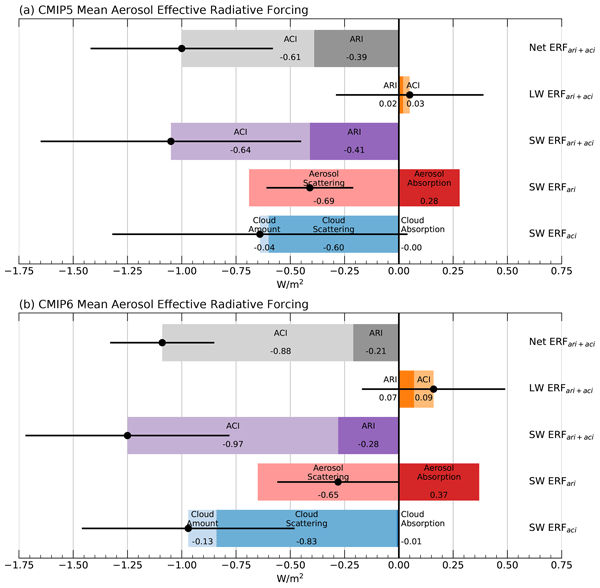
Mark D. Zelinka, Christopher J. Smith, Yi Qin, and Karl E. Taylor
Atmos. Chem. Phys., 23, 8879–8898, https://doi.org/10.5194/acp-23-8879-2023, https://doi.org/10.5194/acp-23-8879-2023, 2023
Short summary
Short summary
The primary uncertainty in how strongly Earth's climate has been perturbed by human activities comes from the unknown radiative impact of aerosol changes. Accurately quantifying these forcings – and their sub-components – in climate models is crucial for understanding the past and future simulated climate. In this study we describe biases in previously published estimates of aerosol radiative forcing in climate models and provide corrected estimates along with code for users to compute them.
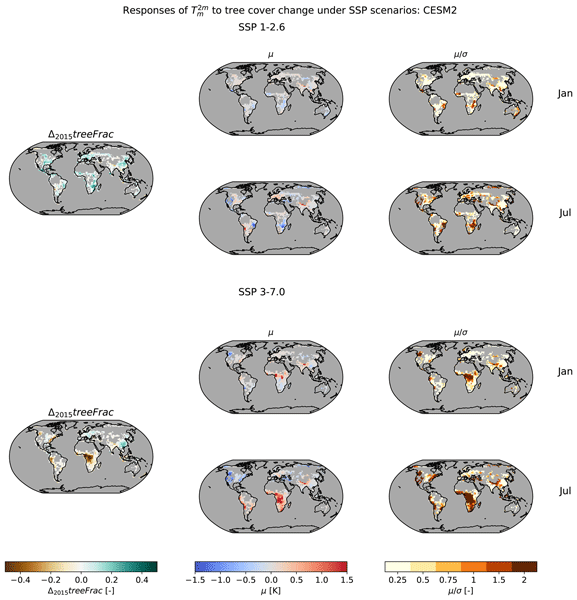
Shruti Nath, Lukas Gudmundsson, Jonas Schwaab, Gregory Duveiller, Steven J. De Hertog, Suqi Guo, Felix Havermann, Fei Luo, Iris Manola, Julia Pongratz, Sonia I. Seneviratne, Carl F. Schleussner, Wim Thiery, and Quentin Lejeune
Geosci. Model Dev., 16, 4283–4313, https://doi.org/10.5194/gmd-16-4283-2023, https://doi.org/10.5194/gmd-16-4283-2023, 2023
Short summary
Short summary
Tree cover changes play a significant role in climate mitigation and adaptation. Their regional impacts are key in informing national-level decisions and prioritising areas for conservation efforts. We present a first step towards exploring these regional impacts using a simple statistical device, i.e. emulator. The emulator only needs to train on climate model outputs representing the maximal impacts of aff-, re-, and deforestation, from which it explores plausible in-between outcomes itself.
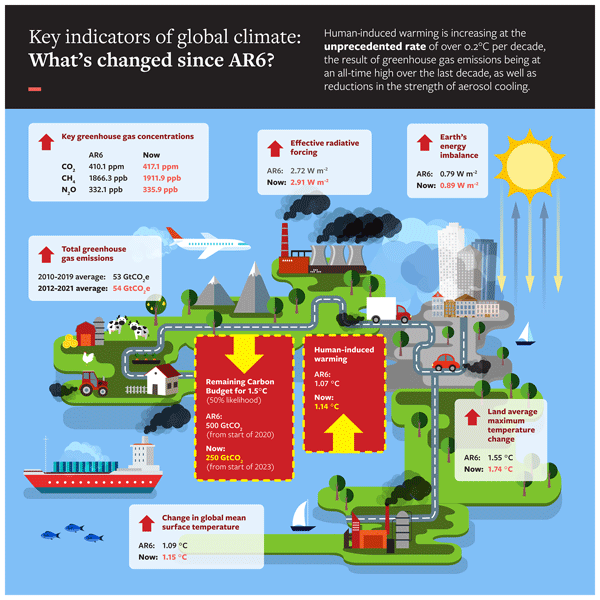
Piers M. Forster, Christopher J. Smith, Tristram Walsh, William F. Lamb, Robin Lamboll, Mathias Hauser, Aurélien Ribes, Debbie Rosen, Nathan Gillett, Matthew D. Palmer, Joeri Rogelj, Karina von Schuckmann, Sonia I. Seneviratne, Blair Trewin, Xuebin Zhang, Myles Allen, Robbie Andrew, Arlene Birt, Alex Borger, Tim Boyer, Jiddu A. Broersma, Lijing Cheng, Frank Dentener, Pierre Friedlingstein, José M. Gutiérrez, Johannes Gütschow, Bradley Hall, Masayoshi Ishii, Stuart Jenkins, Xin Lan, June-Yi Lee, Colin Morice, Christopher Kadow, John Kennedy, Rachel Killick, Jan C. Minx, Vaishali Naik, Glen P. Peters, Anna Pirani, Julia Pongratz, Carl-Friedrich Schleussner, Sophie Szopa, Peter Thorne, Robert Rohde, Maisa Rojas Corradi, Dominik Schumacher, Russell Vose, Kirsten Zickfeld, Valérie Masson-Delmotte, and Panmao Zhai
Earth Syst. Sci. Data, 15, 2295–2327, https://doi.org/10.5194/essd-15-2295-2023, https://doi.org/10.5194/essd-15-2295-2023, 2023
Short summary
Short summary
This is a critical decade for climate action, but there is no annual tracking of the level of human-induced warming. We build on the Intergovernmental Panel on Climate Change assessment reports that are authoritative but published infrequently to create a set of key global climate indicators that can be tracked through time. Our hope is that this becomes an important annual publication that policymakers, media, scientists and the public can refer to.
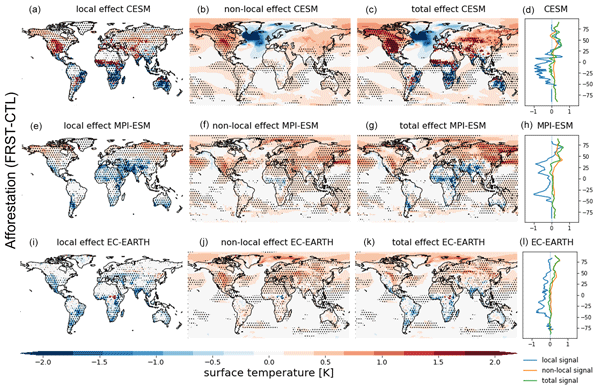
Steven J. De Hertog, Felix Havermann, Inne Vanderkelen, Suqi Guo, Fei Luo, Iris Manola, Dim Coumou, Edouard L. Davin, Gregory Duveiller, Quentin Lejeune, Julia Pongratz, Carl-Friedrich Schleussner, Sonia I. Seneviratne, and Wim Thiery
Earth Syst. Dynam., 14, 629–667, https://doi.org/10.5194/esd-14-629-2023, https://doi.org/10.5194/esd-14-629-2023, 2023
Short summary
Short summary
Land cover and land management changes are important strategies for future land-based mitigation. We investigate the climate effects of cropland expansion, afforestation, irrigation and wood harvesting using three Earth system models. Results show that these have important implications for surface temperature where the land cover and/or management change occur and in remote areas. Idealized afforestation causes global warming, which might offset the cooling effect from enhanced carbon uptake.
Steven J. De Hertog, Carmen E. Lopez-Fabara, Ruud van der Ent, Jessica Keune, Diego G. Miralles, Raphael Portmann, Sebastian Schemm, Felix Havermann, Suqi Guo, Fei Luo, Iris Manola, Quentin Lejeune, Julia Pongratz, Carl-Friedrich Schleussner, Sonia I. Seneviratne, and Wim Thiery
EGUsphere, https://doi.org/10.5194/egusphere-2023-953, https://doi.org/10.5194/egusphere-2023-953, 2023
Preprint archived
Short summary
Short summary
Land cover and management changes can affect the climate and water availability. In this study we use climate model simulations of extreme global land cover changes (afforestation, deforestation) and land management changes (irrigation) to understand the effects on the global water cycle and local to continental water availability. We show that cropland expansion generally leads to higher evaporation and lower amounts of precipitation and afforestation and irrigation expansion to the opposite.
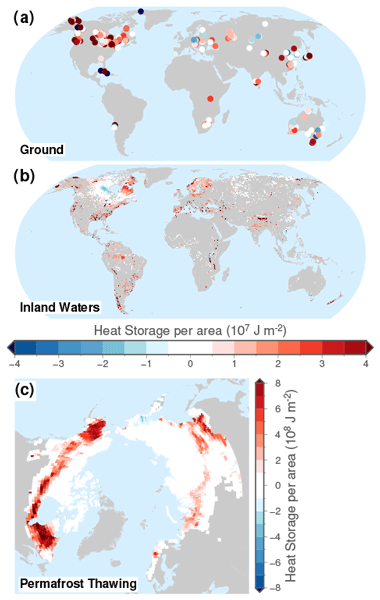
Francisco José Cuesta-Valero, Hugo Beltrami, Almudena García-García, Gerhard Krinner, Moritz Langer, Andrew H. MacDougall, Jan Nitzbon, Jian Peng, Karina von Schuckmann, Sonia I. Seneviratne, Wim Thiery, Inne Vanderkelen, and Tonghua Wu
Earth Syst. Dynam., 14, 609–627, https://doi.org/10.5194/esd-14-609-2023, https://doi.org/10.5194/esd-14-609-2023, 2023
Short summary
Short summary
Climate change is caused by the accumulated heat in the Earth system, with the land storing the second largest amount of this extra heat. Here, new estimates of continental heat storage are obtained, including changes in inland-water heat storage and permafrost heat storage in addition to changes in ground heat storage. We also argue that heat gains in all three components should be monitored independently of their magnitude due to heat-dependent processes affecting society and ecosystems.
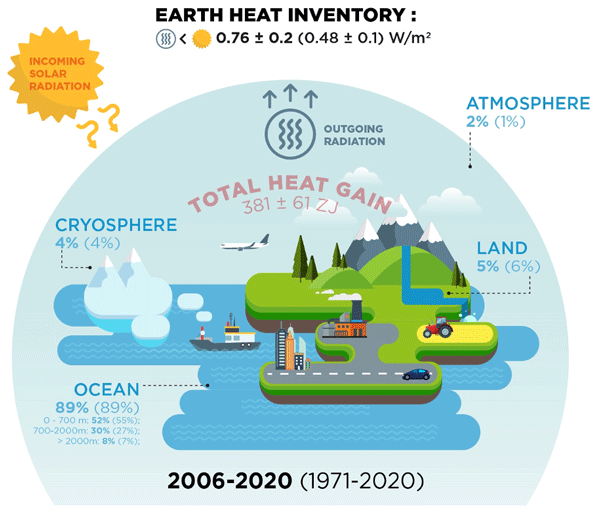
Karina von Schuckmann, Audrey Minière, Flora Gues, Francisco José Cuesta-Valero, Gottfried Kirchengast, Susheel Adusumilli, Fiammetta Straneo, Michaël Ablain, Richard P. Allan, Paul M. Barker, Hugo Beltrami, Alejandro Blazquez, Tim Boyer, Lijing Cheng, John Church, Damien Desbruyeres, Han Dolman, Catia M. Domingues, Almudena García-García, Donata Giglio, John E. Gilson, Maximilian Gorfer, Leopold Haimberger, Maria Z. Hakuba, Stefan Hendricks, Shigeki Hosoda, Gregory C. Johnson, Rachel Killick, Brian King, Nicolas Kolodziejczyk, Anton Korosov, Gerhard Krinner, Mikael Kuusela, Felix W. Landerer, Moritz Langer, Thomas Lavergne, Isobel Lawrence, Yuehua Li, John Lyman, Florence Marti, Ben Marzeion, Michael Mayer, Andrew H. MacDougall, Trevor McDougall, Didier Paolo Monselesan, Jan Nitzbon, Inès Otosaka, Jian Peng, Sarah Purkey, Dean Roemmich, Kanako Sato, Katsunari Sato, Abhishek Savita, Axel Schweiger, Andrew Shepherd, Sonia I. Seneviratne, Leon Simons, Donald A. Slater, Thomas Slater, Andrea K. Steiner, Toshio Suga, Tanguy Szekely, Wim Thiery, Mary-Louise Timmermans, Inne Vanderkelen, Susan E. Wjiffels, Tonghua Wu, and Michael Zemp
Earth Syst. Sci. Data, 15, 1675–1709, https://doi.org/10.5194/essd-15-1675-2023, https://doi.org/10.5194/essd-15-1675-2023, 2023
Short summary
Short summary
Earth's climate is out of energy balance, and this study quantifies how much heat has consequently accumulated over the past decades (ocean: 89 %, land: 6 %, cryosphere: 4 %, atmosphere: 1 %). Since 1971, this accumulated heat reached record values at an increasing pace. The Earth heat inventory provides a comprehensive view on the status and expectation of global warming, and we call for an implementation of this global climate indicator into the Paris Agreement’s Global Stocktake.
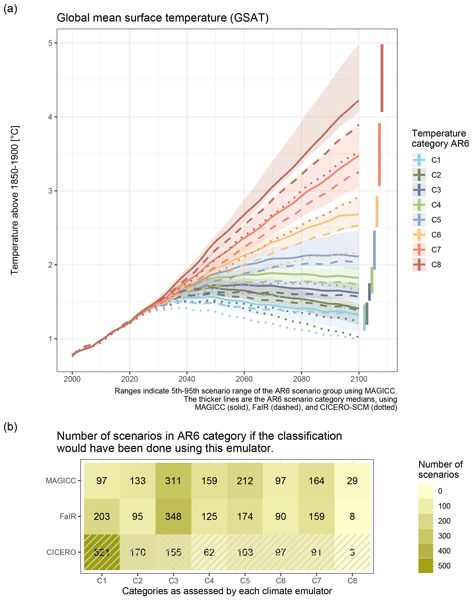
Jarmo S. Kikstra, Zebedee R. J. Nicholls, Christopher J. Smith, Jared Lewis, Robin D. Lamboll, Edward Byers, Marit Sandstad, Malte Meinshausen, Matthew J. Gidden, Joeri Rogelj, Elmar Kriegler, Glen P. Peters, Jan S. Fuglestvedt, Ragnhild B. Skeie, Bjørn H. Samset, Laura Wienpahl, Detlef P. van Vuuren, Kaj-Ivar van der Wijst, Alaa Al Khourdajie, Piers M. Forster, Andy Reisinger, Roberto Schaeffer, and Keywan Riahi
Geosci. Model Dev., 15, 9075–9109, https://doi.org/10.5194/gmd-15-9075-2022, https://doi.org/10.5194/gmd-15-9075-2022, 2022
Short summary
Short summary
Assessing hundreds or thousands of emission scenarios in terms of their global mean temperature implications requires standardised procedures of infilling, harmonisation, and probabilistic temperature assessments. We here present the open-source
climate-assessmentworkflow that was used in the IPCC AR6 Working Group III report. The paper provides key insight for anyone wishing to understand the assessment of climate outcomes of mitigation pathways in the context of the Paris Agreement.
Axel A. J. Deijns, Olivier Dewitte, Wim Thiery, Nicolas d'Oreye, Jean-Philippe Malet, and François Kervyn
Nat. Hazards Earth Syst. Sci., 22, 3679–3700, https://doi.org/10.5194/nhess-22-3679-2022, https://doi.org/10.5194/nhess-22-3679-2022, 2022
Short summary
Short summary
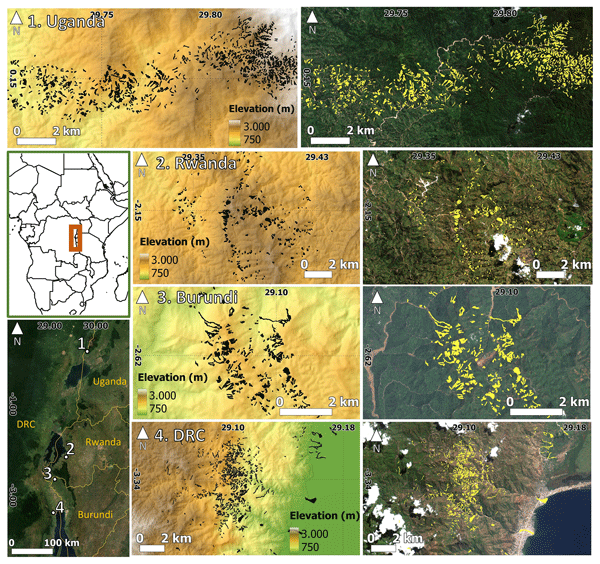
Landslides and flash floods are rainfall-induced processes that often co-occur and interact, generally very quickly. In mountainous cloud-covered environments, determining when these processes occur remains challenging. We propose a regional methodology using open-access satellite radar images that allow for the timing of landslide and flash floods events, in the contrasting landscapes of tropical Africa, with an accuracy of up to a few days. The methodology shows potential for transferability.
Johannes Quaas, Hailing Jia, Chris Smith, Anna Lea Albright, Wenche Aas, Nicolas Bellouin, Olivier Boucher, Marie Doutriaux-Boucher, Piers M. Forster, Daniel Grosvenor, Stuart Jenkins, Zbigniew Klimont, Norman G. Loeb, Xiaoyan Ma, Vaishali Naik, Fabien Paulot, Philip Stier, Martin Wild, Gunnar Myhre, and Michael Schulz
Atmos. Chem. Phys., 22, 12221–12239, https://doi.org/10.5194/acp-22-12221-2022, https://doi.org/10.5194/acp-22-12221-2022, 2022
Short summary
Short summary
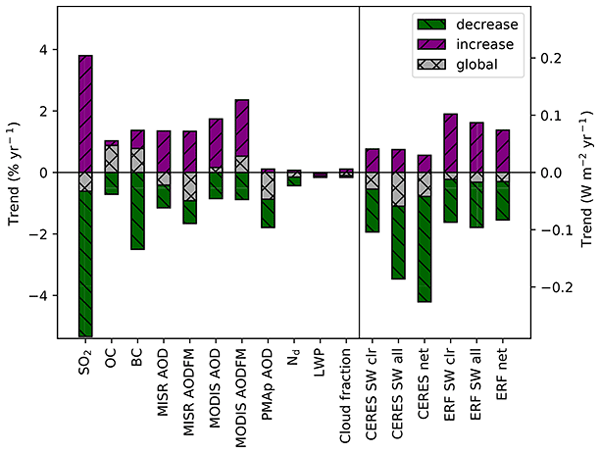
Pollution particles cool climate and offset part of the global warming. However, they are washed out by rain and thus their effect responds quickly to changes in emissions. We show multiple datasets to demonstrate that aerosol emissions and their concentrations declined in many regions influenced by human emissions, as did the effects on clouds. Consequently, the cooling impact on the Earth energy budget became smaller. This change in trend implies a relative warming.

Steven J. De Hertog, Felix Havermann, Inne Vanderkelen, Suqi Guo, Fei Luo, Iris Manola, Dim Coumou, Edouard L. Davin, Gregory Duveiller, Quentin Lejeune, Julia Pongratz, Carl-Friedrich Schleussner, Sonia I. Seneviratne, and Wim Thiery
Earth Syst. Dynam., 13, 1305–1350, https://doi.org/10.5194/esd-13-1305-2022, https://doi.org/10.5194/esd-13-1305-2022, 2022
Short summary
Short summary
Land cover and land management changes are important strategies for future land-based mitigation. We investigate the climate effects of cropland expansion, afforestation, irrigation, and wood harvesting using three Earth system models. Results show that these have important implications for surface temperature where the land cover and/or management change occurs and in remote areas. Idealized afforestation causes global warming, which might offset the cooling effect from enhanced carbon uptake.

Louise Busschaert, Shannon de Roos, Wim Thiery, Dirk Raes, and Gabriëlle J. M. De Lannoy
Hydrol. Earth Syst. Sci., 26, 3731–3752, https://doi.org/10.5194/hess-26-3731-2022, https://doi.org/10.5194/hess-26-3731-2022, 2022
Short summary
Short summary
Increasing amounts of water are used for agriculture. Therefore, we looked into how irrigation requirements will evolve under a changing climate over Europe. Our results show that, by the end of the century and under high emissions, irrigation water will increase by 30 % on average compared to the year 2000. Also, the irrigation requirement is likely to vary more from 1 year to another. However, if emissions are mitigated, these effects are reduced.
Malgorzata Golub, Wim Thiery, Rafael Marcé, Don Pierson, Inne Vanderkelen, Daniel Mercado-Bettin, R. Iestyn Woolway, Luke Grant, Eleanor Jennings, Benjamin M. Kraemer, Jacob Schewe, Fang Zhao, Katja Frieler, Matthias Mengel, Vasiliy Y. Bogomolov, Damien Bouffard, Marianne Côté, Raoul-Marie Couture, Andrey V. Debolskiy, Bram Droppers, Gideon Gal, Mingyang Guo, Annette B. G. Janssen, Georgiy Kirillin, Robert Ladwig, Madeline Magee, Tadhg Moore, Marjorie Perroud, Sebastiano Piccolroaz, Love Raaman Vinnaa, Martin Schmid, Tom Shatwell, Victor M. Stepanenko, Zeli Tan, Bronwyn Woodward, Huaxia Yao, Rita Adrian, Mathew Allan, Orlane Anneville, Lauri Arvola, Karen Atkins, Leon Boegman, Cayelan Carey, Kyle Christianson, Elvira de Eyto, Curtis DeGasperi, Maria Grechushnikova, Josef Hejzlar, Klaus Joehnk, Ian D. Jones, Alo Laas, Eleanor B. Mackay, Ivan Mammarella, Hampus Markensten, Chris McBride, Deniz Özkundakci, Miguel Potes, Karsten Rinke, Dale Robertson, James A. Rusak, Rui Salgado, Leon van der Linden, Piet Verburg, Danielle Wain, Nicole K. Ward, Sabine Wollrab, and Galina Zdorovennova
Geosci. Model Dev., 15, 4597–4623, https://doi.org/10.5194/gmd-15-4597-2022, https://doi.org/10.5194/gmd-15-4597-2022, 2022
Short summary
Short summary
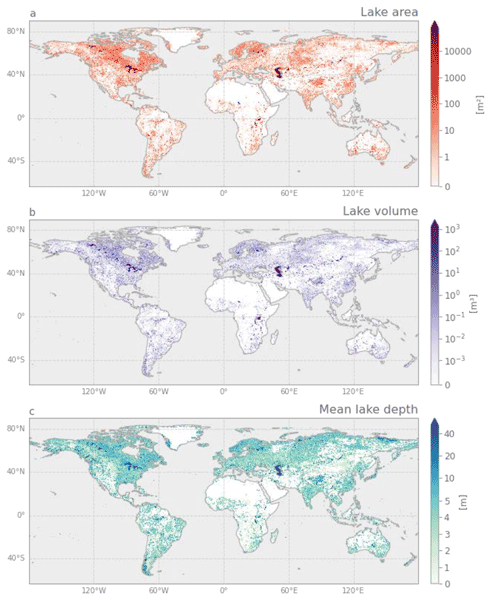
Lakes and reservoirs are warming across the globe. To better understand how lakes are changing and to project their future behavior amidst various sources of uncertainty, simulations with a range of lake models are required. This in turn requires international coordination across different lake modelling teams worldwide. Here we present a protocol for and results from coordinated simulations of climate change impacts on lakes worldwide.

Inne Vanderkelen, Shervan Gharari, Naoki Mizukami, Martyn P. Clark, David M. Lawrence, Sean Swenson, Yadu Pokhrel, Naota Hanasaki, Ann van Griensven, and Wim Thiery
Geosci. Model Dev., 15, 4163–4192, https://doi.org/10.5194/gmd-15-4163-2022, https://doi.org/10.5194/gmd-15-4163-2022, 2022
Short summary
Short summary
Human-controlled reservoirs have a large influence on the global water cycle. However, dam operations are rarely represented in Earth system models. We implement and evaluate a widely used reservoir parametrization in a global river-routing model. Using observations of individual reservoirs, the reservoir scheme outperforms the natural lake scheme. However, both schemes show a similar performance due to biases in runoff timing and magnitude when using simulated runoff.
Greta Cazzaniga, Carlo De Michele, Michele D'Amico, Cristina Deidda, Antonio Ghezzi, and Roberto Nebuloni
Hydrol. Earth Syst. Sci., 26, 2093–2111, https://doi.org/10.5194/hess-26-2093-2022, https://doi.org/10.5194/hess-26-2093-2022, 2022
Short summary
Short summary
Rainfall estimates are usually obtained from rain gauges, weather radars, or satellites. An alternative is the measurement of the signal loss induced by rainfall on commercial microwave links (CMLs). In this work, we assess the hydrologic response of Lambro Basin when CML-retrieved rainfall is used as model input. CML estimates agree with rain gauge data. CML-driven discharge simulations show performance comparable to that from rain gauges if a CML-based calibration of the model is undertaken.
Aine M. Gormley-Gallagher, Sebastian Sterl, Annette L. Hirsch, Sonia I. Seneviratne, Edouard L. Davin, and Wim Thiery
Earth Syst. Dynam., 13, 419–438, https://doi.org/10.5194/esd-13-419-2022, https://doi.org/10.5194/esd-13-419-2022, 2022
Short summary
Short summary
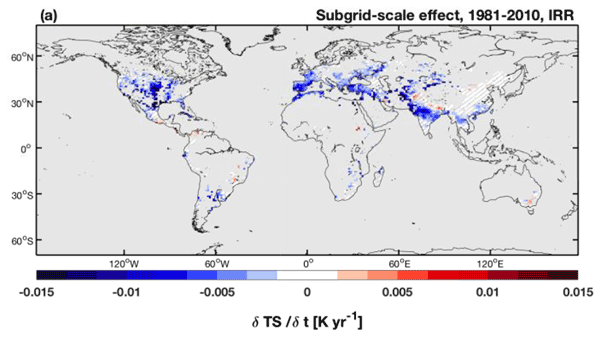
Our results show that agricultural management can impact the local climate and highlight the need to evaluate land management in climate models. We use regression analysis on climate simulations and observations to assess irrigation and conservation agriculture impacts on warming trends. This allowed us to distinguish between the effects of land management and large-scale climate forcings such as rising CO2 concentrations and thus gain insight into the impacts under different climate regimes.
Cited articles
Alcántara-Ayala, I.: Landslides in a changing world, Landslides, https://doi.org/10.1007/s10346-024-02451-1, 2025. a
Allen, T., Mcleod, G., and Hutt, S.: Sea level rise exposure assessment of U.S. East Coast cargo container terminals, Marit. Policy Manag., 49, 1–23, https://doi.org/10.1080/03088839.2021.1903597, 2021. a
Aon: Global Catastrophe Recap: July 2021, Aon, https://info.aon.de/wp-content/uploads/Aon-July-Global-Recap.pdf (last access: 11 June 2024), 2021. a
Arias, P., Bellouin, N., Coppola, E., Jones, R., Krinner, G., Marotzke, J., Naik, V., Palmer, M., Plattner, G.-K., Rogelj, J., Rojas, M., Sillmann, J., Storelvmo, T., Thorne, P., Trewin, B., Achuta Rao, K., Adhikary, B., Allan, R., Armour, K., Bala, G., Barimalala, R., Berger, S., Canadell, J., Cassou, C., Cherchi, A., Collins, W., Collins, W., Connors, S., Corti, S., Cruz, F., Dentener, F., Dereczynski, C., Di Luca, A., Diongue Niang, A., Doblas-Reyes, F., Dosio, A., Douville, H., Engelbrecht, F., Eyring, V., Fischer, E., Forster, P., Fox-Kemper, B., Fuglestvedt, J., Fyfe, J., Gillett, N., Goldfarb, L., Gorodetskaya, I., Gutierrez, J., Hamdi, R., Hawkins, E., Hewitt, H., Hope, P., Islam, A., Jones, C., Kaufman, D., Kopp, R., Kosaka, Y., Kossin, J., Krakovska, S., Lee, J.-Y., Li, J., Mauritsen, T., Maycock, T., Meinshausen, M., Min, S.-K., Monteiro, P., Ngo-Duc, T., Otto, F., Pinto, I., Pirani, A., Raghavan, K., Ranasinghe, R., Ruane, A., Ruiz, L., Sallée, J.-B., Samset, B., Sathyendranath, S., Seneviratne, S., Sörensson, A., Szopa, S., Takayabu, I., Tréguier, A.-M., van den Hurk, B., Vautard, R., von Schuckmann, K., Zaehle, S., Zhang, X., and Zickfeld, K.: Technical Summary, Cambridge University Press, Cambridge, United Kingdom and New York, NY, USA, 33–144, https://doi.org/10.1017/9781009157896.002, 2021. a, b
Arnell, N. W.: The implications of climate change for emergency planning, Int. J. Disast. Risk Re., 83, 103425, https://doi.org/10.1016/j.ijdrr.2022.103425, 2022. a
Asariotis, R., Benamara, H., and Mohos Naray, V.: Port Industry Survey on Climate Change Impacts and Adaptation, United Nations Conference on Trade and Development (UNCTAD), Geneva, Switzerland, https://doi.org/10.13140/RG.2.2.28176.66569, 2017. a, b, c, d
Asariotis, R., Monioudi, I., Mohos Naray, V., Velegrakis, A., Vousdoukas, M., Mentaschi, L., and Feyen, L.: Climate change and seaports: hazards, impacts and policies and legislation for adaptation, Anthropocene Coasts, 7, https://doi.org/10.1007/s44218-024-00047-9, 2024. a, b
Asghari, M., Jaber, M. Y., and Mirzapour Al-e-hashem, S.: Coordinating vessel recovery actions: Analysis of disruption management in a liner shipping service, Eur. J. Oper. Res., 307, 627–644, https://doi.org/10.1016/j.ejor.2022.08.039, 2023. a, b
Barnett, T., Adam, J., and Lettenmaier, D.: Potential Impacts of a Warming Climate on Water Availability in Snow-Dominated Regions, Nature, 438, 303–9, https://doi.org/10.1038/nature04141, 2005. a
Bauer, N., Keller, D., Garbe, J., Karstens, K., Piontek, F., Von Bloh, W., Thiery, W., Zeitz, M., Mengel, M., Strefler, J., Thonicke, K., and Winkelmann, R.: Exploring risks and benefits of overshooting a 1.5 °C carbon budget over space and time, Environ. Res. Lett., 18, 54015, https://doi.org/10.1088/1748-9326/accd83, 2023. a
Becker, A., Inoue, S., Fischer, M., and Schwegler, B.: Climate change impacts on international seaports: Knowledge, percep-tions, and planning efforts among port adminstrators, Clim. Change, 110, 5–29, https://doi.org/10.1007/s10584-011-0043-7, 2012. a
Bednar-Friedl, B., Biesbroek, R., Schmidt, D. N., Alexander, P., Børsheim, K. Y., Carnicer, J., Georgopoulou, E., Haasnoot, M., Le Cozannet, G., Lionello, P., Lipka, O., Möllmann, C., Muccione, V., Mustonen, T., Piepenburg, D., and Whitmarsh, L.: Europe, in: Climate Change 2022: Impacts, Adaptation and Vulnerability. Contribution of Working Group II to the Sixth Assessment Report of the Intergovernmental Panel on Climate Change, edited by: Pörtner, H.-O., Roberts, D. C., Tignor, M., Poloczanska, E. S., Mintenbeck, K., Alegría, A., Craig, M., Langsdorf, S., Löschke, S., Möller, V., Okem, A., and Rama, B., Cambridge University Press, Cambridge, UK and New York, NY, USA, 1817–1927, https://doi.org/10.1017/9781009325844.015, 2022. a
Best, M. J., Pryor, M., Clark, D. B., Rooney, G. G., Essery, R. L. H., Ménard, C. B., Edwards, J. M., Hendry, M. A., Porson, A., Gedney, N., Mercado, L. M., Sitch, S., Blyth, E., Boucher, O., Cox, P. M., Grimmond, C. S. B., and Harding, R. J.: The Joint UK Land Environment Simulator (JULES), model description – Part 1: Energy and water fluxes, Geosci. Model Dev., 4, 677–699, https://doi.org/10.5194/gmd-4-677-2011, 2011. a
Bevacqua, E., de michele, C., Manning, C., Couasnon, A., F S Ribeiro, A., Ramos, A., Vignotto, E., Bastos, A., Blesic, S., Durante, F., Hillier, J., Oliveira, S., Pinto, J., Ragno, E., Rivoire, P., Saunders, K., Wiel, K., Wu, W., Zhang, T., and Zscheischler, J.: Guidelines for Studying Diverse Types of Compound Weather and Climate Events, Earth's Future, 9, https://doi.org/10.1029/2021EF002340, 2021. a
Bevacqua, E., Rakovec, O., Schumacher, D., Kumar, R., Thober, S., Samaniego, L., Seneviratne, S., and Zscheischler, J.: Direct and lagged climate change effects strongly intensified the widespread 2022 European drought, Nat. Geosci., 17, 1100–1107, https://doi.org/10.1038/s41561-024-01559-2, 2024. a
Bles, T., Bessembinder, J., Chevreuil, M., Danielsson, P., Falemo, S., Venmans, A., Ennesser, Y., and Löfroth, H.: Climate Change Risk Assessments and Adaptation for Roads – Results of the ROADAPT Project, Transp. Res. Proc., 14, 58–67, https://doi.org/10.1016/j.trpro.2016.05.041, 2016. a
Britannia P&I: Climate Change: Severe Weather and Its Impact on Shipping Risks, https://britanniapandi.com/2025/01/climate-change-climate-change-severe-weather-and-its-impact-on-shipping-risks/#footnote1, last access: 4 March 2025. a, b
Broeckx, J., Maertens, M., Isabirye, M., Vanmaercke, M., Namazzi, B., Deckers, J., Tamale, J., Jacobs, L., Thiery, W., Kervyn, M., Vranken, L., and Poesen, J.: Landslide susceptibility and mobilization rates in the Mount Elgon region, Uganda, Landslides, 16, https://doi.org/10.1007/s10346-018-1085-y, 2018. a
Burbidge, R.: Climate change risks and resilience for European aviation, Transp. Res. Proc., 72, 3276–3282, https://doi.org/10.1016/j.trpro.2023.11.860, 2023. a
Burbidge, R., Paling, C., and Dunk, R. M.: A systematic review of adaption to climate change impacts in the aviation sector, Transport Rev., 44, 8–33, https://doi.org/10.1080/01441647.2023.2220917, 2024. a
Burgen, S.: Spain wildfires: up to 20 injured after passengers break out of train engulfed by flames, https://www.theguardian.com/world/2022/aug/17/spain-wildfires-injured-after-passengers-break-out-of-train-engulfed-by-flames (last access: 30 October 2024), 2022. a, b
Burton, C., Lampe, S., Kelley, D. I., et al.: Global burned area increasingly explained by climate change, Nat. Clim. Change, 14, 1186–1192, https://doi.org/10.1038/s41558-024-02140-w, 2024. a
Cattiaux, J., Vautard, R., Cassou, C., Yiou, P., Masson-Delmotte, V., and Codron, F.: Winter 2010 in Europe: A cold extreme in a warming climate, Geophys. Res. Lett., 37, https://doi.org/10.1029/2010GL044613, 2010. a
Chen, X. and Wang, H.: Enhancement of roadway pavement resilience to flooding: impact assessment and mitigation strategies, Transport. Res. D-Tr. E., 148, 104946, https://doi.org/10.1016/j.trd.2025.104946, 2025. a
Chini, M.: Hundreds of passengers stuck for hours on scorching train to Brussels, https://www.brusselstimes.com/259056/hundreds-of-passengers-stuck-for-hours-on-scorching-train-to-brussels (last access: 30 October 2024), 2022a. a
Chini, M.: Compensation for passengers stuck for hours on train to Brussels, https://www.brusselstimes.com/259362/compensation-for-passengers-stuck-for-hours-on-train-to-brussels (last access: 30 October 2024), 2022b. a
Chini, M.: Belgian Rail Scraps Over 30 Trains Due to Extreme Heat on Tuesday, https://www.brusselstimes.com/256674/belgian-rail-scraps-over-30-trains-due-to-extreme-heat-on-tuesday (last access: 30 October 2024), 2022c. a
Christodoulou, A., Christidis, P., and Demirel, H.: Sea-level rise in ports: a wider focus on impacts, Marit. Econ. Logist., 21, 482–496, https://doi.org/10.1057/s41278-018-0114-z, 2019. a, b, c, d
Christopher, Barros, V., Mastrandrea, M., Katharine, Abdrabo, M., Adger, W., Federation, Y., Anisimov, O., Arent, D., Jonathon, Virginia, Cai, R., Monalisa, Cohen, S., Wolfgang, Dasgupta, P., Davidson, D., Denton, F., Doell, P., and Yohe, G.: Climate change 2014: impacts, adaptation, and vulnerability – IPCC WGII AR5 summary for policymakers, 1–32, https://doi.org/10.1017/CBO9781107415379.003, 2014. a
Churm, P. A.: Severe Weather in France Grounds Flights, Leaves Thousands Without Power, https://www.euronews.com/2022/06/05/severe-weather-in-france-grounds-flights-leaves-thousands-without-power (last access: 24 March 2025), 2022. a
Cross, B. R.: Europe heatwave 2023: What's happening and how to cope with extreme heat, British Red Cross, https://www.redcross.org.uk/stories/disasters-and-emergencies/world/europe-heatwave-2023 (last access: 10 March 2024), 2023. a
de Vilder, S., Massey, C., Lukovic, B., Taig, T., and Morgenstern, R.: What drives landslide risk? Disaggregating risk analyses, an example from the Franz Josef Glacier and Fox Glacier valleys, New Zealand, Nat. Hazards Earth Syst. Sci., 22, 2289–2316, https://doi.org/10.5194/nhess-22-2289-2022, 2022. a
De Vivo, C., Ellena, M., Capozzi, V., Budillon, G., and Mercogliano, P.: Risk assessment framework for Mediterranean airports: a focus on extreme temperatures and precipitations and sea level rise, Nat. Hazards, 111, https://doi.org/10.1007/s11069-021-05066-0, 2022. a
Deijns, A., Michéa, D., Déprez, A., Malet, J.-P., Kervyn, F., Thiery, W., and Dewitte, O.: A semi-supervised multi-temporal landslide and flash flood event detection methodology for unexplored regions using massive satellite image time series, ISPRS J. Photogramm., 215, 400–418, https://doi.org/10.1016/j.isprsjprs.2024.07.010, 2024. a
Delahaye, J.: Breaking: Jet2 cancels all holidays and flights to Skiathos amid severe flooding in Greece, Mirror, https://www.mirror.co.uk/travel/news/breaking-jet2-cancels-holidays-flights-30879303 (last access: 7 July 2026), 2023. a
Deutsche Welle: Germany's Autobahns Crumble in Early Summer Heat, https://www.dw.com/en/germanys-autobahns-crumble-in-early-summer-heat/a-44050774 (last access: 4 March 2025), 2018. a
Die Zeit: Reparatur von Straßen und Brücken kostet 700 Millionen Euro, Zeit Online, https://www.zeit.de/gesellschaft/zeitgeschehen/2021-07/hochwasser-reparatur-infrastruktur-finanzhilfen (last access: 12 June 2024), 2021. a
Dobney, K., Baker, C., Quinn, A., and Chapman, L.: Quantifying the effects of high summer temperatures due to climate change on buckling and rail related delays in south–east United Kingdom, Meteorol. Appl., 16, 245–251, https://doi.org/10.1002/met.114, 2009. a
Donat, M. G., Leckebusch, G. C., Wild, S., and Ulbrich, U.: Future changes in European winter storm losses and extreme wind speeds inferred from GCM and RCM multi-model simulations, Nat. Hazards Earth Syst. Sci., 11, 1351–1370, https://doi.org/10.5194/nhess-11-1351-2011, 2011. a
DRMKC: DRMKC Risk Data Hub, https://drmkc.jrc.ec.europa.eu/risk-data-hub#/ (last access: 28 August 2024), 2024. a
Dury, M., Hambuckers, A., Warnant, P., Henrot, A., Favre, E., Ouberdous, M., and Francois, L.: Responses of European forest ecosystems to 21st century climate: assessing changes in interannual variability and fire intensity, iForest – Biogeosciences and Forestry, 82–99, https://doi.org/10.3832/ifor0572-004, 2011. a
Dutch News: Storm Causes Flash Flooding, Cancelled Flights but Few Problems, https://www.dutchnews.nl/2023/06/storm-causes-flash-flooding-cancelled-flights-but-few-problems/ (last access: 4 March 2025), 2023. a
Earth Systems: Geotechnical Effects of Prolonged Drought, Website, https://www.earthsystems.com/geotechnical-effects-of-prolonged-drought/, (last access: 10 March 2024), 2024. a
EASA: Managing the impact of climate change on aviation, https://www.easa.europa.eu/en/en/domains/safety-management/managing-impact-climate-change-aviation (last access: 29 August 2025), 2025. a
ECRA: European Climate Risk Assessment – Executive summary, https://doi.org/10.2800/204249, 2024. a
EEA: European Environment Agency (2024) Extreme sea levels and coastal flooding in Europe, https://www.eea.europa.eu/en/analysis/indicators/extreme-sea-levels-and-coastal-flooding?activeAccordion=, (last access: 9 April 2025), 2024. a
Etter, S., Addor, N., Huss, M., and Finger, D.: Climate change impacts on future snow, ice and rain runoff in a Swiss mountain catchment using multi-dataset calibration, J. Hydrol., 13, 222–239, https://doi.org/10.1016/j.ejrh.2017.08.005, 2017. a
Euronews: Europe heatwave: Airport runways melt amid hottest day of the year in UK, https://www.euronews.com/2022/07/18/heatwave-red-alert-as-temperatures-soar-to-extreme-highs-across-europe (last access: 4 March 2025), 2022. a
Fernandez-Perez, A., Lara, J. L., Lucio, D., and Losada, I. J.: Compound climate change risk analysis for port infrastructures, Coast. Eng., 193, 104560, https://doi.org/10.1016/j.coastaleng.2024.104560, 2024. a
Fidanza, C.: Closure of the Frejus tunnel: a threat to the internal market and cross-border goods traffic – P-003740/2023, European Parliament, https://www.europarl.europa.eu/doceo/document/P-9-2023-003740_EN.html (last access: 28 August 2024), 2023. a
Fischer, E. and Knutti, R.: Anthropogenic contribution to global occurrence of heavy-precipitation and high-temperature extremes, Nat. Clim. Change, 5, https://doi.org/10.1038/NCLIMATE2617, 2015. a
Folberth, C., Gaiser, T., Abbaspour, K. C., Schulin, R., and Yang, H.: Regionalization of a large-scale crop growth model for sub-Saharan Africa: Model setup, evaluation, and estimation of maize yields, Agr. Ecosyst. Environ., 151, 21–33, https://doi.org/10.1016/j.agee.2012.01.026, 2012. a
Forzieri, G., Bianchi, A., Silva, F., Marin, M., Leblois, A., Lavalle, C., and Feyen, L.: Escalating impacts of climate extremes on critical infrastructures in Europe, Global Environ. Change, 48, 97–107, https://doi.org/10.1016/j.gloenvcha.2017.11.007, 2018. a
Frieler, K., Lange, S., Piontek, F., Reyer, C. P. O., Schewe, J., Warszawski, L., Zhao, F., Chini, L., Denvil, S., Emanuel, K., Geiger, T., Halladay, K., Hurtt, G., Mengel, M., Murakami, D., Ostberg, S., Popp, A., Riva, R., Stevanovic, M., Suzuki, T., Volkholz, J., Burke, E., Ciais, P., Ebi, K., Eddy, T. D., Elliott, J., Galbraith, E., Gosling, S. N., Hattermann, F., Hickler, T., Hinkel, J., Hof, C., Huber, V., Jägermeyr, J., Krysanova, V., Marcé, R., Müller Schmied, H., Mouratiadou, I., Pierson, D., Tittensor, D. P., Vautard, R., van Vliet, M., Biber, M. F., Betts, R. A., Bodirsky, B. L., Deryng, D., Frolking, S., Jones, C. D., Lotze, H. K., Lotze-Campen, H., Sahajpal, R., Thonicke, K., Tian, H., and Yamagata, Y.: Assessing the impacts of 1.5 °C global warming – simulation protocol of the Inter-Sectoral Impact Model Intercomparison Project (ISIMIP2b), Geosci. Model Dev., 10, 4321–4345, https://doi.org/10.5194/gmd-10-4321-2017, 2017. a
Frieler, K., Volkholz, J., Lange, S., Schewe, J., Mengel, M., del Rocío Rivas López, M., Otto, C., Reyer, C. P. O., Karger, D. N., Malle, J. T., Treu, S., Menz, C., Blanchard, J. L., Harrison, C. S., Petrik, C. M., Eddy, T. D., Ortega-Cisneros, K., Novaglio, C., Rousseau, Y., Watson, R. A., Stock, C., Liu, X., Heneghan, R., Tittensor, D., Maury, O., Büchner, M., Vogt, T., Wang, T., Sun, F., Sauer, I. J., Koch, J., Vanderkelen, I., Jägermeyr, J., Müller, C., Rabin, S., Klar, J., Vega del Valle, I. D., Lasslop, G., Chadburn, S., Burke, E., Gallego-Sala, A., Smith, N., Chang, J., Hantson, S., Burton, C., Gädeke, A., Li, F., Gosling, S. N., Müller Schmied, H., Hattermann, F., Wang, J., Yao, F., Hickler, T., Marcé, R., Pierson, D., Thiery, W., Mercado-Bettín, D., Ladwig, R., Ayala-Zamora, A. I., Forrest, M., and Bechtold, M.: Scenario setup and forcing data for impact model evaluation and impact attribution within the third round of the Inter-Sectoral Impact Model Intercomparison Project (ISIMIP3a), Geosci. Model Dev., 17, 1–51, https://doi.org/10.5194/gmd-17-1-2024, 2024. a
Gariano, S. L. and Guzzetti, F.: Landslides in a changing climate, Earth-Sci. Rev., 162, 227–252, https://doi.org/10.1016/j.earscirev.2016.08.011, 2016. a
Geerts, E.: Fires Near Tracks and Heat Complaints: Hot Spell Shakes Up European Railways, https://www.railtech.com/infrastructure/2022/07/19/fires-near-tracks-and-heat-complaints-hot-spell-shakes-up-european-railways/?gdpr=accept&gdpr=deny (last access: 4 March 2025), 2022. a, b
González-Alemán, J. J., Pascale, S., Gutierrez-Fernandez, J., Murakami, H., Gaertner, M. A., and Vecchi, G. A.: Potential Increase in Hazard From Mediterranean Hurricane Activity With Global Warming, Geophys. Res. Lett., 46, 1754–1764, https://doi.org/10.1029/2018GL081253, 2019. a, b
Guglielmo, R., Ellena, M., Giuliana, B., Alcaras, E., Parente, C., Carcasi, G., Zarelli, C., Franciosi, A., and Mercogliano, P.: Risk assessment of national railway infrastructure due to sea-level rise: an application of a methodological framework in Italian coastal railways, Environ. Monit. Assess., 196, https://doi.org/10.1007/s10661-024-12942-2, 2024. a
Guimberteau, M., Zhu, D., Maignan, F., Huang, Y., Yue, C., Dantec-Nédélec, S., Ottlé, C., Jornet-Puig, A., Bastos, A., Laurent, P., Goll, D., Bowring, S., Chang, J., Guenet, B., Tifafi, M., Peng, S., Krinner, G., Ducharne, A., Wang, F., Wang, T., Wang, X., Wang, Y., Yin, Z., Lauerwald, R., Joetzjer, E., Qiu, C., Kim, H., and Ciais, P.: ORCHIDEE-MICT (v8.4.1), a land surface model for the high latitudes: model description and validation, Geosci. Model Dev., 11, 121–163, https://doi.org/10.5194/gmd-11-121-2018, 2018. a
Hagemann, S. and Gates, L.: Improving a subgrid runoff parameterization scheme for climate models by the use of high resolution data derived from satellite observations, Clim. Dynam., 21, 349–359, https://doi.org/10.1007/s00382-003-0349-x, 2003. a
Haghighi, E., Kasraei, A., Famurewa, S., Strandberg, G., Sas, G., and Garmabaki, A.: Climate change risks on railway infrastructure: A systematic review and analysis, Sustain. Cities Soc., 129, 106504, https://doi.org/10.1016/j.scs.2025.106504, 2025a. a
Haghighi, E., Kasraei, A., Famurewa, S., Strandberg, G., Sas, G., and Garmabaki, A.: Climate change risks on railway infrastructure: A systematic review and analysis, Sustain. Cities Soc., 129, 106504, https://doi.org/10.1016/j.scs.2025.106504, 2025b. a, b
Hanasaki, N., Yoshikawa, S., Pokhrel, Y., and Kanae, S.: A global hydrological simulation to specify the sources of water used by humans, Hydrol. Earth Syst. Sci., 22, 789–817, https://doi.org/10.5194/hess-22-789-2018, 2018. a
Handwerger, A., Huang, M.-H., Fielding, E., Booth, A., and Burgmann, R.: A shift from drought to extreme rainfall drives a stable landslide to catastrophic failure, Sci. Rep., 9, https://doi.org/10.1038/s41598-018-38300-0, 2019. a
Harrison, A. M., Heaton, M., and Entwisle, D. C.: Increasing road network resilience to the impacts of ground movement due to climate change: a case study from Lincolnshire, UK, Q. J. Eng. Geol. Hydroge., 56, qjegh2023–002, https://doi.org/10.1144/qjegh2023-002, 2023. a
Hausfather, Z.: An assessment of current policy scenarios over the 21st century and the reduced plausibility of high-emissions pathways, Dialogues on Climate Change, 2, https://doi.org/10.1177/29768659241304854, 2025. a
Hausfather, Z. and Betts, R.: Analysis: How “carbon-cycle feedbacks” could make global warming worse, https://www.carbonbrief.org/analysis-how-carbon-cycle-feedbacks-could-make-global-warming-worse/ (last access: 28 August 2025), 2020. a
Huang, F., Mao, D., Jiang, S.-H., Zhou, C., Fan, X., Zeng, Z., Catani, F., Yu, C., Chang, Z., Huang, J., Jiang, B., and Li, Y.: Uncertainties in landslide susceptibility prediction modeling: A review on the incompleteness of landslide inventory and its influence rules, Geosci. Front., 15, 101 886, https://doi.org/10.1016/j.gsf.2024.101886, 2024. a
Iliopoulou, C. and Makridis, M. A.: Critical multi-link disruption identification for public transport networks: A multi-objective optimization framework, Physica A, 626, 129100, https://doi.org/10.1016/j.physa.2023.129100, 2023. a
Infrabel: Infrabel: schade spoor door overstromingen tientallen miljoenen euro's, https://www.spoorpro.nl/spoorbouw/2021/07/19/infrabel-schade-spoor-door-overstromingen-tientallen-miljoenen-euros/ (last access: 2024-08-28), 2021. a
IPCC: Summary for Policymakers, Tech. rep., Intergovernmental Panel on Climate Change (IPCC), https://doi.org/10.1017/9781009157988.001, 2019. a
ITV: Why Can't UK Roads and Rail Cope with the Heat?, https://www.itv.com/news/anglia/2022-07-19/why-cant-uk-roads-and-rail-cope-with-the-heat (last access: 4 March 2025), 2022. a
Jacobs, L., Maes, J., Mertens, K., Sekajugo, J., Thiery, W., Lipzig, N., Poesen, J., Kervyn, M., and Dewitte, O.: Reconstruction of a flash flood event through a multi-hazard approach: focus on the Rwenzori Mountains, Uganda, Nat. Hazards, 84, https://doi.org/10.1007/s11069-016-2458-y, 2016. a
Jacobs, L., Dewitte, O., Poesen, J., Sekajugo, J., Nobile, A., Rossi, M., Thiery, W., and Kervyn, M.: Field-based landslide susceptibility assessment in a data-scarce environment: the populated areas of the Rwenzori Mountains, Nat. Hazards Earth Syst. Sci., 18, 105–124, https://doi.org/10.5194/nhess-18-105-2018, 2018. a
Jemec Auflič, M., Bezak, N., Šegina, E., Frantar, P., Gariano, S. L., Medved, A., and Peternel, T.: Climate change increases the number of landslides at the juncture of the Alpine, Pannonian and Mediterranean regions, Sci. Rep., 13, https://doi.org/10.1038/s41598-023-50314-x, 2023. a
Jonkeren, O., Jourquin, B., and Rietveld, P.: Modal-split effects of climate change: The effect of low water levels on the competitive position of inland waterway transport in the river Rhine area, Transport. Res. A-Pol., 45, 1007–1019, https://doi.org/10.1016/j.tra.2009.01.004, 2011. a
Joughin, I., Abdalati, W., and Fahnestock, M.: Large fluctuations in speed on Greenland's Jakobshavn Isbræ glacier, Nature, 432, 608–610, https://doi.org/10.1038/nature03130, 2004. a
Journée, M., Goudenhoofdt, E., Vannitsem, S., and Delobbe, L.: Quantitative rainfall analysis of the 2021 mid-July flood event in Belgium, Hydrol. Earth Syst. Sci., 27, 3169–3189, https://doi.org/10.5194/hess-27-3169-2023, 2023. a, b
Kasraei, A., Garmabaki, A., Odelius, J., Famurewa, S. M., Chamkhorami, K. S., and Strandberg, G.: Climate change impacts assessment on railway infrastructure in urban environments, Sustain. Cities Soc., 101, 105084, https://doi.org/10.1016/j.scs.2023.105084, 2024. a
Keep Talking Greece: Heavy rainstorm floods Crete, forces Heraklio airport to shut down, https://www.keeptalkinggreece.com/2020/10/21/crete-floods-airport-heraklio/ (last access: 4 March 2025), 2020. a
Kettle, A. J.: Storm Xaver over Europe in December 2013: Overview of energy impacts and North Sea events, Adv. Geosci., 54, 137–147, https://doi.org/10.5194/adgeo-54-137-2020, 2020. a
Khodayar, S., Kushta, J., Catto, J. L., Dafis, S., Davolio, S., Ferrarin, C., Flaounas, E., Groenemeijer, P., Hatzaki, M., Hochman, A., Kotroni, V., Landa, J., Láng-Ritter, I., Lazoglou, G., Liberato, M. L. R., Miglietta, M. M., Papagiannaki, K., Patlakas, P., Stojanov, R., and Zittis, G.: Mediterranean Cyclones in a Changing Climate: A Review on Their Socio-Economic Impacts, Rev. Geophys., 63, e2024RG000853, https://doi.org/10.1029/2024RG000853, 2025. a
Koks, E., Rozenberg, J., Zorn, C., Tariverdi, M., Vousdoukas, M., Fraser, S., Hall, J., and Hallegatte, S.: A global multi-hazard risk analysis of road and railway infrastructure assets, Nat. Commun., 10, https://doi.org/10.1038/s41467-019-10442-3, 2019. a, b
Kreienkamp, F., Philip, S. Y., Tradowsky, J. S., et al.: Rapid Attribution of Heavy Rainfall Events Leading to the Severe Flooding in Western Europe during July 2021, World Weather Attribution, https://www.worldweatherattribution.org/wp-content/uploads/Scientific-report-Western-Europe-floods-2021-attribution.pdf (last access: 4 March 2025), 2021. a, b
Kundzewicz, Kanae, Seneviratne, S., Handmer, Nicholls, N., Peduzzi, P., Mechler, R., Bouwer, L., Arnell, Mach, Muir-Wood, R., Brakenridge, R., Kron, W., Benito, G., Honda, Takahashi, and Sherstyukov, B.: Flood risk and climate change – Global and regional perspectives, Hydrolog. Sci. J., 59, https://doi.org/10.1080/02626667.2013.857411, 2014. a, b
Lange, S.: Bias correction of surface downwelling longwave and shortwave radiation for the EWEMBI dataset, Earth Syst. Dynam., 9, 627–645, https://doi.org/10.5194/esd-9-627-2018, 2018. a
Lange, S., Volkholz, J., Geiger, T., Zhao, F., Vega, I., Veldkamp, T., Reyer, C. P., Warszawski, L., Huber, V., Jägermeyr, J., Schewe, J., Bresch, D. N., Büchner, M., Chang, J., Ciais, P., Dury, M., Emanuel, K., Folberth, C., Gerten, D., Gosling, S. N., Grillakis, M., Hanasaki, N., Henrot, A. J., Hickler, T., Honda, Y., Ito, A., Khabarov, N., Koutroulis, A., Liu, W., Müller, C., Nishina, K., Ostberg, S., Müller Schmied, H., Seneviratne, S. I., Stacke, T., Steinkamp, J., Thiery, W., Wada, Y., Willner, S., Yang, H., Yoshikawa, M., Yue, C., and Frieler, K.: Projecting Exposure to Extreme Climate Impact Events Across Six Event Categories and Three Spatial Scales, Earth's Future, 8, https://doi.org/10.1029/2020EF001616, 2020. a, b, c, d, e, f
Laudani, A.: Incendio aeroporto Catania: costa 40 milioni al dì. Dubbi sulla manutenzione, https://focusicilia.it/incendio-aeroporto-catania-costa-40-milioni-al-di-dubbi-sulla-manutenzione/ (last access: 2024-08-28), 2023. a
Lawrence, D. M., Oleson, K. W., Flanner, M. G., Thornton, P. E., Swenson, S. C., Lawrence, P. J., Zeng, X., Yang, Z.-L., Levis, S., Sakaguchi, K., Bonan, G. B., and Slater, A. G.: Parameterization improvements and functional and structural advances in Version 4 of the Community Land Model, J. Adv. Model. Earth Sy., 3, https://doi.org/10.1029/2011MS00045, 2011. a
Lenderink, G., de Vries, H., van Meijgaard, E., de Rooy, W., van Ulft, L., Thompson, V., Qiu, X., and Fowler, H. J.: A pseudo global warming based system to study how climate change affects high impact rainfall events, Weather and Climate Extremes, 49, 100781, https://doi.org/10.1016/j.wace.2025.100781, 2025. a
Leviäkangas, P., Tuominen, A., Molarius, R., Schabel, J., Toivonen, S., Keränen, J., Törnqvist, J., Makkonen, L., Vajda, A., Tuomenvirta, H., Juga, I., Nurmi, P., Rauhala, J., Rehm, F., Mühlhausen, T., Gerz, T., Schweighofer, J., Michaelides, S., Papadakis, M., and Ludvigsen, J.: Review on Extreme Weather Impacts on Transport Systems, VTT Technical Research Centre of Finland, technical report, 2014. a
Li, S., Chen, Y., Wei, W., Fang, G., and Duan, W.: The increase in extreme precipitation and its proportion over global land, J. Hydrol., 628, 130456, https://doi.org/10.1016/j.jhydrol.2023.130456, 2024. a
Liu, W., Yang, H., Folberth, C., Wang, X., Luo, Q., and Schulin, R.: Global investigation of impacts of PET methods on simulating crop-water relations for maize, Agr. Forest Meteorol., 221, 164–175, https://doi.org/10.1016/j.agrformet.2016.02.017, 2016. a
Llasat, M.: Floods evolution in the Mediterranean region in a context of climate and environmental change, Cuadernos de Investigación Geográfica, 47, https://doi.org/10.18172/cig.4897, 2021. a, b
Lloyd's List: Port of Valencia Reopens After Devastating Floods, https://www.lloydslist.com/LL1151259/Port-of-Valencia-reopens-after-devastating-floods (last access: 4 March 2025), 2024. a
Lorenz, R., Stalhandske, Z., and Fischer, E. M.: Detection of a Climate Change Signal in Extreme Heat, Heat Stress, and Cold in Europe From Observations, Geophys. Res. Lett., 46, 8363–8374, https://doi.org/10.1029/2019GL082062, 2019. a
Ma, B., Liu, X., Tong, Z., Zhang, J., and Wang, X.: Coupled Effects of High Temperatures and Droughts on Forest Fires in Northeast China, Remote Sens., 16, https://doi.org/10.3390/rs16203784, 2024. a
Marechal, A.: By altering rainfall patterns, climate change has an impact on the risk of landslides, Polytechnique Insights, https://www.polytechnique-insights.com/en/columns/planet/by-altering-rainfall-patterns-climate-change-has-an-impact-on-the-risk-of-landslides/ (last access: 10 March 2024), 2024. a
Maritime Executive: A Week After Devastating Floods, Spain's Valencia Port is Restoring Service, https://maritime-executive.com/article/a-week-after-devastating-floods-spain-s-valencia-port-is-restoring-service (last access: 4 March 2025), 2024. a
Marra, F., Koukoula, M., Canale, A., and Peleg, N.: Predicting extreme sub-hourly precipitation intensification based on temperature shifts, Hydrol. Earth Syst. Sci., 28, 375–389, https://doi.org/10.5194/hess-28-375-2024, 2024. a, b
Mcloughlin, B.: Milan flood chaos: Airport underwater as dozens evacuated after horror storms ravage Italy, https://www.express.co.uk/news/world/1492452/Milan-floods-Malpensa-Airport-evacuated-storms-flooding-video-pictures-Italy-emergency (last access: 4 March 2025), 2021. a
Messori, G., Muheki, D., Batibeniz, F., Bevacqua, E., Suarez-Gutierrez, L., and Thiery, W.: Global Mapping of Concurrent Hazards and Impacts Associated With Climate Extremes Under Climate Change, Earth's Future, 13, e2025EF006325, https://doi.org/10.1029/2025EF006325, 2025. a, b
Moreira, F., Ascoli, D., Safford, H., Adams, M., Moreno, J., Pereira, J., Catry, F., Armesto, J., Bond, W., González, M., Curt, T., Koutsias, N., Mccaw, L., Price, O., Pausas, J., Rigolot, E., Stephens, S., Tavşanoǧlu, Ã., Vallejo, V., and Fernandes, P.: Wildfire management in Mediterranean-type regions: paradigm change needed, Environ. Res. Lett., 15, 011001, https://doi.org/10.1088/1748-9326/ab541e, 2020. a
Muheki, D., Deijns, A. A. J., Bevacqua, E., Messori, G., Zscheischler, J., and Thiery, W.: The perfect storm? Co-occurring climate extremes in East Africa, Earth Syst. Dynam., 15, 429–466, https://doi.org/10.5194/esd-15-429-2024, 2024. a, b
Müller Schmied, H., Eisner, S., Franz, D., Wattenbach, M., Portmann, F. T., Flörke, M., and Döll, P.: Sensitivity of simulated global-scale freshwater fluxes and storages to input data, hydrological model structure, human water use and calibration, Hydrol. Earth Syst. Sci., 18, 3511–3538, https://doi.org/10.5194/hess-18-3511-2014, 2014. a
Müller Schmied, H., Adam, L., Eisner, S., Fink, G., Flörke, M., Kim, H., Oki, T., Portmann, F. T., Reinecke, R., Riedel, C., Song, Q., Zhang, J., and Döll, P.: Variations of global and continental water balance components as impacted by climate forcing uncertainty and human water use, Hydrol. Earth Syst. Sci., 20, 2877–2898, https://doi.org/10.5194/hess-20-2877-2016, 2016. a
Mühr, B., Kubisch, S., Marx, A., Stötzer, J., Wisotzky, C., Latt, C., Siegmann, F., Glattfelder, M., Mohr, S., and Kunz, M.: CEDIM Forensic Disaster Analysis Group (FDA) – Dürre & Hitzewelle Sommer 2018 (Deutschland) – 18 August 2018 – Report No. 1, https://www.cedim.kit.edu/download/FDA_Duerre_Hitzewelle_Deutschland_report.pdf (last access: 28 August 2024), 2018. a, b, c, d, e, f, g, h, i
Nemry, F. and Demirel, H.: Impacts of climate change on transport – A focus on road and rail transport infrastructures, Publications Office of the European Union, https://doi.org/10.2791/15504, 2012. a
Nezval, V., Andrášik, R., and Bíl, M.: Vegetation fires along the Czech rail network, Fire Ecology, https://doi.org/10.1186/s42408-022-00141-8, 2022. a, b, c
Nissen, K., Leckebusch, G., Pinto, J., and Ulbrich, U.: Mediterranean cyclones and windstorms in a changing climate, Reg. Environ. Change, 14, https://doi.org/10.1007/s10113-012-0400-8, 2013. a
Noëth, B.: Ajaccio Airport Closed for the Weekend as Runway Gets Flooded, https://www.aviation24.be/airports/ajaccio-airport-aja/closed-for-the-weekend-as-runway-gets-flooded/ (last access: 4 March 2025), 2019. a
Noëth, B.: Heraklion Airport (Greece) closed due to torrential rain and flooding on the island; at least 25 flights divert, https://www.aviation24.be/airlines/closed-due-to-heavy-rainfalls-on-the-island-at-least-25-flights-divert/ (last access: 4 March 2025), 2022. a, b
NTPR: Flood Impact on Inland Waterway Transport (IWT), https://www.ntpr.nl/news/news/2021/07/21/Flood-Impact-IWT.html (last access: 4 March 2025), 2021. a
OECD: Infrastructure for a Climate-Resilient Future, OECD Publishing, Paris, https://doi.org/10.1787/a74a45b0-en, 2024. a
Palin, E. J., Stipanovic Oslakovic, I., Gavin, K., and Quinn, A.: Implications of climate change for railway infrastructure, WIREs Climate Change, 12, e728, https://doi.org/10.1002/wcc.728, 2021. a, b, c
Pandey, P., Huidobro, G., Lopes, L., Ganteaume, A., Ascoli, D., Colaço, M. C., Xanthopoulos, G., Giannaropoulos, T., Gazzard, R., Boustras, G., Steelman, T., Charlton, V., Ferguson, E., Kirschner, J., Little, K., Stoof, C., Nikolakis, W., Rodríguez Fernández-Blanco, C., Ribotta, C., and Dossi, S.: A global outlook on increasing wildfire risk: Current policy situation and future pathways, Trees, Forests and People, 14, 100431, https://doi.org/10.1016/j.tfp.2023.100431, 2023. a
Peleg, N., Koukoula, M., and Marra, F.: A 2 °C warming can double the frequency of extreme summer downpours in the Alps, npj Climate and Atmospheric Science, 8, https://doi.org/10.1038/s41612-025-01081-1, 2025. a
Pelz, S., Ganti, G., Lamboll, R., Grant, L., Smith, C., Pachauri, S., Rogelj, J., Riahi, K., Thiery, W., and Gidden, M. J.: Using net-zero carbon debt to track climate overshoot responsibility, P. Natl. Acad. Sci. USA, 122, e2409316122, https://doi.org/10.1073/pnas.2409316122, 2025. a
Pietroiusti, R., Vanderkelen, I., Otto, F. E. L., Barnes, C., Temple, L., Akurut, M., Bally, P., van Lipzig, N. P. M., and Thiery, W.: Possible role of anthropogenic climate change in the record-breaking 2020 Lake Victoria levels and floods, Earth Syst. Dynam., 15, 225–264, https://doi.org/10.5194/esd-15-225-2024, 2024. a
Pleasance: Spain Fires: Moment Passengers Terrorized as Train Surrounded by Wildfires, https://www.dailymail.co.uk/news/article-11023807/Spain-fires-Moment-passengers-terror-train-surrounded-wildfires.html (last access: 4 March 2025), 2022. a
Pohle, I., Zeilfelder, S., Birner, J., and Creutzfeldt, B.: The 2018–2023 drought in Berlin: impacts and analysis of the perspective of water resources management, Nat. Hazards Earth Syst. Sci., 25, 1293–1313, https://doi.org/10.5194/nhess-25-1293-2025, 2025. a
Portillo Juan, N., Negro Valdecantos, V., and del Campo, J. M.: Review of the Impacts of Climate Change on Ports and Harbours and Their Adaptation in Spain, Sustainability, 14, https://doi.org/10.3390/su14127507, 2022. a
Delahaye J.: Breaking: Jet2 cancels all holidays and flights to Skiathos amid severe flooding in Greece, https://www.mirror.co.uk/travel/news/breaking-jet2-cancels-holidays-flights-30879303 (last access: 7 July 2026), 2023.
PreventionWeb: Greece's record rainfall and flash floods are part of a trend across the Mediterranean with weather becoming more extreme, PreventionWeb, https://www.preventionweb.net/news/greeces-record-rainfall-and-flash-floods-are-part-trend-across-mediterranean-weather-becoming (last access: 10 March 2024), 2023. a, b
ProRail: Hoe is het met het spoor in Limburg?, ProRail, https://www.prorail.nl/nieuws/hoe-is-het-met-het-spoor-in-limburg (last access: 3 October 2025), 2021. a
Quintana, J. R., Martín-Sanz, J. P., Valverde-Asenjo, I., and Molina, J. A.: Drought differently destabilizes soil structure in a chronosequence of abandoned agricultural lands, CATENA, 222, 106871, https://doi.org/10.1016/j.catena.2022.106871, 2023. a, b
Rahman, M. U. and Kim, A. M.: Recovery times for highway disruptions due to natural hazard events, Transport. Res. D-Tr. E., 139, 104537, https://doi.org/10.1016/j.trd.2024.104537, 2025. a
Railway Technology: Sea change: protecting coastal railways from rising sea levels, Railway Technology, https://www.railway-technology.com/features/sea-level-impact-on-railways/?cf-view (last access: 2024-03-10), 2024. a
Reale, M., Cabos Narvaez, W. D., Cavicchia, L., Conte, D., Coppola, E., Flaounas, E., Giorgi, F., Gualdi, S., Hochman, A., Li, L., Lionello, P., Podrascanin, Z., Salon, S., Sanchez-Gomez, E., Scoccimarro, E., Sein, D., and Somot, S.: Future projections of Mediterranean cyclone characteristics using the Med-CORDEX ensemble of coupled regional climate system models, Clim. Dynam., 58, https://doi.org/10.1007/s00382-021-06018-x, 2022. a, b, c
Rebally, A., Valeo, C., He, J., and Saidi, S.: Flood Impact Assessments on Transportation Networks: A Review of Methods and Associated Temporal and Spatial Scales, Frontiers in Sustainable Cities, 3, https://doi.org/10.3389/frsc.2021.732181, 2021. a
Redazione, L.: Incendi in Sicilia: ecco cosa accade, La Redazione, https://www.laredazione.net/incendi-in-sicilia-ecco-cosa-accade/ (last access: 10 March 2024), 2023. a
Reuters: Heavy Rains Trigger Floods in Portugal's Capital, One Dead, https://www.reuters.com/world/europe/heavy-rains-trigger-floods-portugals-capital-one-dead-2022-12-08/ (last access: 4 March 2025), 2025. a
Ridder, N., Ukkola, A., Pitman, A., and Perkins-Kirkpatrick, S.: Increased occurrence of high impact compound events under climate change, npj Climate and Atmospheric Science, 5, https://doi.org/10.1038/s41612-021-00224-4, 2022. a
Rogelj, J., Fransen, T., den Elzen, M. G. J., Lamboll, R. D., Schumer, C., Kuramochi, T., Hans, F., Mooldijk, S., and Portugal-Pereira, J.: Credibility gap in net-zero climate targets leaves world at high risk, Science, 380, 1014–1016, https://doi.org/10.1126/science.adg6248, 2023. a
Rossi, L., Wens, M., Moel, H., Cotti, D., Siemons, A.-S., Toreti, A., Maetens, W., Masante, D., Loon, A., Hagenlocher, M., Rudari, R., Meroni, M., Avanzi, F., Isabellon, M., Naumann, G., and Barbosa, P.: European Drought Risk Atlas, Publications Office of the European Union, technical report, https://doi.org/10.2760/608737, 2023. a, b, c, d, e, f, g, h, i
Rosvold, E. L. and Buhaug, H.: GDIS, a global dataset of geocoded disaster locations, Sci. Data, 8, https://doi.org/10.1038/s41597-021-00846-6, 2021. a, b
Rovithakis, A., Burke, E., Burton, C., Kasoar, M., Grillakis, M. G., Seiradakis, K. D., and Voulgarakis, A.: Estimating future wildfire burnt area over Greece using the JULES-INFERNO model, Nat. Hazards Earth Syst. Sci., 25, 3185–3200, https://doi.org/10.5194/nhess-25-3185-2025, 2025. a
Rozendaal, J.: Treinverbinding Nessonvaux-Pepinster heropend na schade door overstromingen, RailTech, https://www.railtech.be/nl/infrastructuur/2021/09/13/volgende-waalse-lijn-heropend-nog-twee-te-gaan/ (last access: 13 June 2024), 2021. a
Russo, S., Sillmann, J., and Fischer, E. M.: Top ten European heatwaves since 1950 and their occurrence in the coming decades, Environ. Res. Lett., 10, 124003, https://doi.org/10.1088/1748-9326/10/12/124003, 2015. a
Russo, S., Sillmann, J., and Sterl, A.: Humid heat waves at different warming levels, Sci. Rep., 7, https://doi.org/10.1038/s41598-017-07536-7, 2017. a
SAFARI Ports: Facing the Storm: The Threat of Extreme Weather to European Ports, https://www.safariports.eu/journal-post/facing-the-storm-the-threat-of-extreme-weather-to-european-ports (last access: 4 March 2025), 2023. a
Sami, I. and Keith, L.: How do streetcar transit users and streetcar decision-makers perceive heat risk?, J. Public Transport., 25, 100045, https://doi.org/10.1016/j.jpubtr.2023.100045, 2023. a
Sánchez, M., Wang, D., Briaud, J.-L., and Douglas, C.: Typical geomechanical problems associated with railroads on shrink-swell soils, Transportation Geotechnics, 1, https://doi.org/10.1016/j.trgeo.2014.07.002, 2014. a
Schaphoff, S., Forkel, M., Müller, C., Knauer, J., von Bloh, W., Gerten, D., Jägermeyr, J., Lucht, W., Rammig, A., Thonicke, K., and Waha, K.: LPJmL4 – a dynamic global vegetation model with managed land – Part 2: Model evaluation, Geosci. Model Dev., 11, 1377–1403, https://doi.org/10.5194/gmd-11-1377-2018, 2018. a
Schlögl, M. and Matulla, C.: Potential future exposure of European land transport infrastructure to rainfall-induced landslides throughout the 21st century, Nat. Hazards Earth Syst. Sci., 18, 1121–1132, https://doi.org/10.5194/nhess-18-1121-2018, 2018. a
Schweighofer, J.: The impact of extreme weather and climate change on inland waterway transport, Nat. Hazards, 72, https://doi.org/10.1007/s11069-012-0541-6, 2014. a, b, c
Seneviratne, S., Nicholls, N., Easterling, D., Goodess, C., Kanae, S., Kossin, J., Luo, Y., Marengo, J., Mcinnes, K., Rahimi, M., Reichstein, M., Sorteberg, A., Vera, C., and Zhang, X.: Changes in climate extremes and their impacts on the natural physical environment, Cambridge University Press, Cambridge, UK, and New York, NY, USA, pp. 109–230, 2012. a
Seneviratne, S., Donat, M., Pitman, A., Knutti, R., and Wilby, R.: Allowable CO2 emissions based on regional and impact-related climate targets, Nature, 529, https://doi.org/10.1038/nature16542, 2016. a
Seneviratne, S., Zhang, X., Adnan, M., Badi, W., Dereczynski, C., Di Luca, A., Ghosh, S., Iskandar, I., Kossin, J., Lewis, S., Otto, F., Pinto, I., Satoh, M., Vicente-Serrano, S., Wehner, M., and Zhou, B.: Weather and Climate Extreme Events in a Changing Climate, in: Climate Change 2021: The Physical Science Basis. Contribution of Working Group I to the Sixth Assessment Report of the Intergovernmental Panel on Climate Change, edited by: Masson-Delmotte, V., Zhai, P., Pirani, A., Connors, S., Péan, C., Berger, S., Caud, N., Chen, Y., Goldfarb, L., Gomis, M., Huang, M., Leitzell, K., Lonnoy, E., Matthews, J., Maycock, T., Waterfield, T., Yelekçi, O., Yu, R., and Zhou, B., Cambridge University Press, Cambridge, United Kingdom and New York, NY, USA, 1513–1766, https://doi.org/10.1017/9781009157896.013, 2021. a
Severino, L. G., Kropf, C. M., Afargan-Gerstman, H., Fairless, C., de Vries, A. J., Domeisen, D. I. V., and Bresch, D. N.: Projections and uncertainties of winter windstorm damage in Europe in a changing climate, Nat. Hazards Earth Syst. Sci., 24, 1555–1578, https://doi.org/10.5194/nhess-24-1555-2024, 2024. a
Shafizadeh-Moghadam, H., Minaei, M., Shahabi, H., and Hagenauer, J.: Big Data in Geohazard; Pattern Mining and Large Scale Analysis of Landslides in Iran, Earth Sci. Inform., 12, https://doi.org/10.1007/s12145-018-0354-6, 2019. a
Slavicek, M.: How the Heat Wave is Damaging Rail Infrastructure and Forcing Trains to Run at Low Speed, https://www.lemonde.fr/en/economy/article/2022/07/25/how-the-heat-wave-is-damaging-rail-infrastructure-and-forcing-trains-to-run-at-low-speed_5991396_19.html (last access: 4 March 2025), 2022. a
Smith, B., Wårlind, D., Arneth, A., Hickler, T., Leadley, P., Siltberg, J., and Zaehle, S.: Implications of incorporating N cycling and N limitations on primary production in an individual-based dynamic vegetation model, Biogeosciences, 11, 2027–2054, https://doi.org/10.5194/bg-11-2027-2014, 2014. a
Spiegel: The Never-Ending Summer: Is Germany's Heat Wave a Preview of the Future?, https://www.spiegel.de/international/germany/the-never-ending-summer-is-germany-s-heat-wave-a-preview-of-the-future-a-1221557.html (last access: 4 March 2025), 2019. a
Stacke, T. and Hagemann, S.: Development and evaluation of a global dynamical wetlands extent scheme, Hydrol. Earth Syst. Sci., 16, 2915–2933, https://doi.org/10.5194/hess-16-2915-2012, 2012. a
Staib, J.: Ein kolossales, apokalyptisches ausmaß, https://www.faz.net/aktuell/politik/inland/hochwasser-in-rheinland-pfalz-roger-lewentz-zieht-erste-bilanz-17449104.html (last access: 2024-08-28), 2021. a
Sullivan, A.: Can German roads hold up against the heat?, https://www.dw.com/en/can-germanys-supposedly-crumbling-infrastructure-hold-up-against-extreme-heat/a-44854931 (last access: 4 March 2025), 2018. a, b
Sullivan, H. and Tondo, L.: “˜Like a blowtorch”: Mediterranean on fire as blazes spread across nine countries, https://www.theguardian.com/environment/2023/jul/26/northern-hemisphere-heatwaves-mediterranean-fires-croatia-portugal (last access: 28 August 2024), 2023. a
Tabari, H.: Climate change impact on flood and extreme precipitation increases with water availability, Sci. Rep., 10, 13768, https://doi.org/10.1038/s41598-020-70816-2, 2020. a
Task Force Fact Finding hoogwater: Hoogwater 2021: Feiten en Duiding, Expertise Netwerk Waterveiligheid, Expertise Netwerk Waterveiligheid, https://doi.org/10.4233/uuid:06b03772-ebe0-4949-9c4d-7c1593fb094e, 2021. a
TEN-T: Trans-European Transport Network (TEN-T), https://transport.ec.europa.eu/transport-themes/infrastructure-and-investment/trans-european-transport-network-ten-t_en (last access: 3 October 2024), 2024. a
The Vibes: Valencia Airport Briefly Shut as Lightning Hits Runway, https://www.thevibes.com/articles/world/77144/valencia-airport-briefly-shut-as-lightning-hits-runway (last access: 4 March 2025), 2022. a
Thiery, W., Davin, E. L., Lawrence, D. M., Hirsch, A. L., Hauser, M., and Seneviratne, S. I.: Present-day irrigation mitigates heat extremes, J. Geophys. Res.-Atmos., 122, 1403–1422, https://doi.org/10.1002/2016JD025740, 2017. a
Thiery, W., Visser, A. J., Fischer, E. M., Hauser, M., Hirsch, A. L., Lawrence, D. M., Lejeune, Q., Davin, E. L., and Seneviratne, S. I.: Warming of hot extremes alleviated by expanding irrigation, Nat. Commun., 11, https://doi.org/10.1038/s41467-019-14075-4, 2020. a
Thiery, W., Lange, S., Rogelj, J., Schleussner, C. F., Gudmundsson, L., Seneviratne, S. I., Andrijevic, M., Frieler, K., Emanuel, K., Geiger, T., Bresch, D. N., Zhao, F., Willner, S. N., Büchner, M., Volkholz, J., Bauer, N., Chang, J., Ciais, P., Dury, M., François, L., Grillakis, M., Gosling, S. N., Hanasaki, N., Hickler, T., Huber, V., Ito, A., Jägermeyr, J., Khabarov, N., Koutroulis, A., Liu, W., Lutz, W., Mengel, M., Müller, C., Ostberg, S., Reyer, C. P., Stacke, T., and Wada, Y.: Intergenerational inequities in exposure to climate extremes, Inter. Inequities Exp. Clim. Extrem., 374, https://doi.org/10.1126/science.abi7339, 2021a. a, b, c
Thiery, W., Lange, S., Rogelj, J., et al.: Age-dependent extreme event exposure – data accompanying journal publication, in: Science: Vol. in press (1.0), Zenodo [data set], https://doi.org/10.5281/zenodo.5497633, 2021b. a
Tichavský, R., Ballesteros-Canovas, J., Šilhán, K., and Tolasz, R.: Dry Spells and Extreme Precipitation are The Main Trigger of Landslides in Central Europe, Sci. Rep., 9, https://doi.org/10.1038/s41598-019-51148-2, 2019. a
Tradowsky, J. S., Philip, S. Y., Kreienkamp, F., Kew, S. F., Lorenz, P., Arrighi, J., Bettmann, T., Caluwaerts, S., Chan, S. C., Cruz, L. D., de Vries, H., Demuth, N., Ferrone, A., Fischer, E. M., Fowler, H. J., Goergen, K., Heinrich, D., Henrichs, Y., Kaspar, F., Lenderink, G., Nilson, E., Otto, F. E., Ragone, F., Seneviratne, S. I., Singh, R. K., Skålevåg, A., Termonia, P., Thalheimer, L., van Aalst, M., den Bergh, J. V., de Vyver, H. V., Vannitsem, S., van Oldenborgh, G. J., Schaeybroeck, B. V., Vautard, R., Vonk, D., and Wanders, N.: Attribution of the heavy rainfall events leading to severe flooding in Western Europe during July 2021, Clim. Change, 176, https://doi.org/10.1007/s10584-023-03502-7, 2023. a, b, c, d
van Ginkel, K. C. H., Dottori, F., Alfieri, L., Feyen, L., and Koks, E. E.: Flood risk assessment of the European road network, Nat. Hazards Earth Syst. Sci., 21, 1011–1027, https://doi.org/10.5194/nhess-21-1011-2021, 2021. a
Verschuur, J., Koks, E., and Hall, J.: Port disruptions due to natural disasters: Insights into port and logistics resilience, Transport. Res. D-Tr. E., 85, 102393, https://doi.org/10.1016/j.trd.2020.102393, 2020. a, b
Vidas, M.: Port of Manzanillo: Climate Risk Management, Inter-American Development Bank (IDB), https://doi.org/10.18235/0012813, 2015. a
Vinke, F., Turpijn, B., Gelder, P., and Koningsveld, M.: Inland shipping response to discharge extremes– A 10-years case study of the Rhine, Climate Risk Management, 43, 100578, https://doi.org/10.1016/j.crm.2023.100578, 2024. a
Vivo, C. D., Ellena, M., Barbato, G., Pugliese, A., Marinucci, F., Barilli, T., and Mercogliano, P.: A co-design matrix-based approach to evaluate the climate risks for airports: A case study of Bologna airport, Climate Services, 37, 100536, https://doi.org/10.1016/j.cliser.2024.100536, 2025. a
Voskaki, A., Budd, T., and Mason, K.: The impact of climate hazards to airport systems: a synthesis of the implications and risk mitigation trends, Transport Rev., 43, 652–675, https://doi.org/10.1080/01441647.2022.2163319, 2023. a
Vousdoukas, M. I., Voukouvalas, E., Mentaschi, L., Dottori, F., Giardino, A., Bouziotas, D., Bianchi, A., Salamon, P., and Feyen, L.: Developments in large-scale coastal flood hazard mapping, Nat. Hazards Earth Syst. Sci., 16, 1841–1853, https://doi.org/10.5194/nhess-16-1841-2016, 2016. a, b, c
Vousdoukas, M. I., Mentaschi, L., Voukouvalas, E., Verlaan, M., and Feyen, L.: Extreme sea levels on the rise along Europe's coasts, Earth's Future, 5, 304–323, https://doi.org/10.1002/2016EF000505, 2017. a, b
VUB-HYDR: 2025_Deidda_etal_NHESS, GitHub [code], https://github.com/VUB-HYDR/2025_Deidda_etal_NHESS (last access: 26 June 2025), 2025. a
Wada, Y., Wisser, D., and Bierkens, M. F. P.: Global modeling of withdrawal, allocation and consumptive use of surface water and groundwater resources, Earth Syst. Dynam., 5, 15–40, https://doi.org/10.5194/esd-5-15-2014, 2014. a
Wada, Y., de Graaf, I. E. M., and van Beek, L. P. H.: High-resolution modeling of human and climate impacts on global water resources, J. Adv. Model. Earth Sy., 8, 735–763, https://doi.org/10.1002/2015MS000618, 2016. a
Wang, D., Sánchez, M., and Briaud, J.-L.: Behavior of railroads on shrink-swell soils, E3S Web of Conferences, 9, 20007, https://doi.org/10.1051/e3sconf/20160920007, 2016. a
Wehmann, J.: A1, A61, A553 nach Flut: Engpässe zwischen Hürth und Dreieck Erfttal, 24rhein, https://www.24rhein.de/leben-im-westen/verkehr/freigabe-a1-a61-a553-sperrung-kreuz-kerpen-frei-bauarbeiten-planung-90985671.html (last access: 13 June 2024), 2022. a
Xie, C., Bao, Z., and Chen, A.: Disrupted transportation networks under different information availability and stochasticity situations, Transport. Res. C-Emer., 150, 104097, https://doi.org/10.1016/j.trc.2023.104097, 2023. a
Yao, Y., Thiery, W., and Sterl, S.: Winter is leaving: Reduced occurrence of extremely cold days in Belgium and implications for power system planning, Vrije Universiteit Brussel, https://researchportal.vub.be/en/publications/winter-is-leaving-reduced-occurrence-of-extremely-cold-days-in-be (last access: 26 June 2025), 2020. a
Zachariah, M., Philip, S., Pinto, I., Vahlberg, M., Singh, R., Otto, F., Barnes, C., and Kimutai, J.: Extreme heat in North America, Europe and China in July 2023 made much more likely by climate change, World Weather Attribution, https://www.worldweatherattribution.org/extreme-heat-in-north-america-europe-and-china-in-july-2023-made-much-more-likely-by-climate-change/ (last access: 10 March 2024), 2023. a, b, c
Zare, A. and Miller-Hooks, E.: A risk analysis approach to transportation infrastructure climate protection investment, Transport.Res. D-Tr. E., 104931, https://doi.org/10.1016/j.trd.2025.104931, 2025. a
Zscheischler, J. and Fischer, E. M.: The record-breaking compound hot and dry 2018 growing season in Germany, Weather and Climate Extremes, 29, 100270, https://doi.org/10.1016/j.wace.2020.100270, 2020. a, b, c, d
Zscheischler, J. and Seneviratne, S.: Dependence of drivers affects risks associated with compound events, Sci. Adv., 3, e1700263, https://doi.org/10.1126/sciadv.1700263, 2017. a, b
Zscheischler, J., Martius, O., Westra, S., Bevacqua, E., Raymond, C., Horton, R., Hurk, B., AghaKouchak, A., Jézéquel, A., Mahecha, M., Maraun, D., Ramos, A., Ridder, N., Thiery, W., and Vignotto, E.: A typology of compound weather and climate events, Nat. Rev. Earth Environ., 1, 1–15, https://doi.org/10.1038/s43017-020-0060-z, 2020. a
Editorial statement
This paper provides policy-relevant insights into how climate extremes threaten transport infrastructure across Europe. Using a structured multi-hazard framework, it offers a Europe-wide assessment of the exposure of roads, railways, and inland waterways under different warming scenarios, showing that exposure to heatwaves, floods, and wildfires could increase substantially by mid-century. These findings are directly relevant to EU climate adaptation and transport policy, particularly for strategic investment in the TEN-T network. By translating complex climate data into actionable insights for infrastructure planning, the paper has strong potential to inform policymakers and engage the wider public.
This paper provides policy-relevant insights into how climate extremes threaten transport...
Short summary
Climate extremes like floods, heatwaves, droughts, and wildfires are disrupting Europe’s transport. This study combines a review of past events and future projections to assess current losses and the future exposure of transport infrastructure. Exposure to extremes is projected to rise, but lower emissions can reduce it. Urgent action is needed to reduce emissions and adapt the Trans-European Transport Network to a changing climate.
Climate extremes like floods, heatwaves, droughts, and wildfires are disrupting Europe’s...


Altmetrics
Final-revised paper
Preprint