Articles | Volume 26, issue 7
https://doi.org/10.5194/nhess-26-3077-2026
© Author(s) 2026. This work is distributed under
the Creative Commons Attribution 4.0 License.
https://doi.org/10.5194/nhess-26-3077-2026
© Author(s) 2026. This work is distributed under
the Creative Commons Attribution 4.0 License.
Brief communication: A century of landslide records in Calabria, southern Italy, looking for changes and trends through a dynamic analysis

Stefano Luigi Gariano
CORRESPONDING AUTHOR
CNR-IRPI Italian National Research Council, Research Institute for Geo-Hydrological Protection, Via della Madonna Alta 126, 06128, Perugia, Italy
Olga Petrucci
CNR-IRPI Italian National Research Council, Research Institute for Geo-Hydrological Protection, Via Cavour 4–6, Rende, 87036 Cosenza, Italy
Related authors
Silvia Peruccacci, Stefano Luigi Gariano, Massimo Melillo, Monica Solimano, Fausto Guzzetti, and Maria Teresa Brunetti
Earth Syst. Sci. Data, 15, 2863–2877, https://doi.org/10.5194/essd-15-2863-2023, https://doi.org/10.5194/essd-15-2863-2023, 2023
Short summary
Short summary
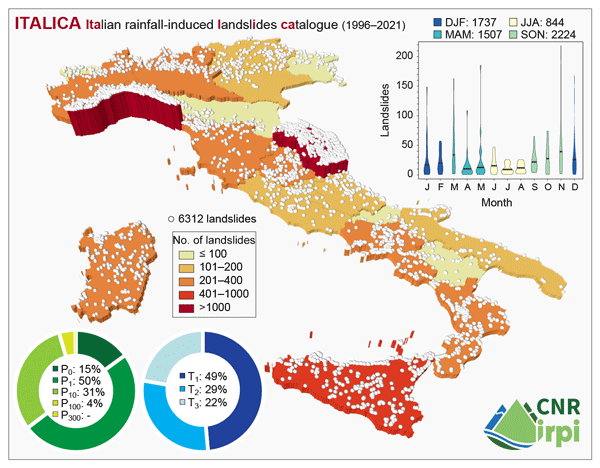
ITALICA (ITAlian rainfall-induced LandslIdes CAtalogue) is the largest catalogue of rainfall-induced landslides accurately located in space and time available in Italy. ITALICA currently lists 6312 landslides that occurred between January 1996 and December 2021. The information was collected using strict objective and homogeneous criteria. The high spatial and temporal accuracy makes the catalogue suitable for reliably defining the rainfall conditions capable of triggering future landslides.
Stefan Steger, Mateo Moreno, Alice Crespi, Peter James Zellner, Stefano Luigi Gariano, Maria Teresa Brunetti, Massimo Melillo, Silvia Peruccacci, Francesco Marra, Robin Kohrs, Jason Goetz, Volkmar Mair, and Massimiliano Pittore
Nat. Hazards Earth Syst. Sci., 23, 1483–1506, https://doi.org/10.5194/nhess-23-1483-2023, https://doi.org/10.5194/nhess-23-1483-2023, 2023
Short summary
Short summary
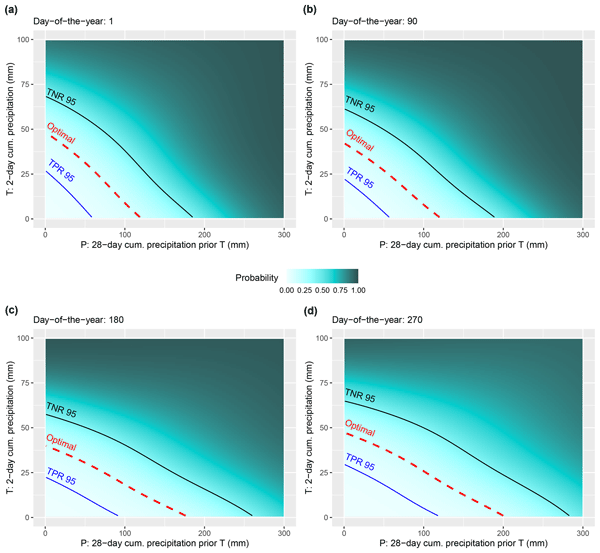
We present a novel data-driven modelling approach to determine season-specific critical precipitation conditions for landslide occurrence. It is shown that the amount of precipitation required to trigger a landslide in South Tyrol varies from season to season. In summer, a higher amount of preparatory precipitation is required to trigger a landslide, probably due to denser vegetation and higher temperatures. We derive dynamic thresholds that directly relate to hit rates and false-alarm rates.
Silvia Peruccacci, Stefano Luigi Gariano, Massimo Melillo, Monica Solimano, Fausto Guzzetti, and Maria Teresa Brunetti
Earth Syst. Sci. Data, 15, 2863–2877, https://doi.org/10.5194/essd-15-2863-2023, https://doi.org/10.5194/essd-15-2863-2023, 2023
Short summary
Short summary
ITALICA (ITAlian rainfall-induced LandslIdes CAtalogue) is the largest catalogue of rainfall-induced landslides accurately located in space and time available in Italy. ITALICA currently lists 6312 landslides that occurred between January 1996 and December 2021. The information was collected using strict objective and homogeneous criteria. The high spatial and temporal accuracy makes the catalogue suitable for reliably defining the rainfall conditions capable of triggering future landslides.
Heidi Kreibich, Kai Schröter, Giuliano Di Baldassarre, Anne F. Van Loon, Maurizio Mazzoleni, Guta Wakbulcho Abeshu, Svetlana Agafonova, Amir AghaKouchak, Hafzullah Aksoy, Camila Alvarez-Garreton, Blanca Aznar, Laila Balkhi, Marlies H. Barendrecht, Sylvain Biancamaria, Liduin Bos-Burgering, Chris Bradley, Yus Budiyono, Wouter Buytaert, Lucinda Capewell, Hayley Carlson, Yonca Cavus, Anaïs Couasnon, Gemma Coxon, Ioannis Daliakopoulos, Marleen C. de Ruiter, Claire Delus, Mathilde Erfurt, Giuseppe Esposito, Didier François, Frédéric Frappart, Jim Freer, Natalia Frolova, Animesh K. Gain, Manolis Grillakis, Jordi Oriol Grima, Diego A. Guzmán, Laurie S. Huning, Monica Ionita, Maxim Kharlamov, Dao Nguyen Khoi, Natalie Kieboom, Maria Kireeva, Aristeidis Koutroulis, Waldo Lavado-Casimiro, Hong-Yi Li, Maria Carmen LLasat, David Macdonald, Johanna Mård, Hannah Mathew-Richards, Andrew McKenzie, Alfonso Mejia, Eduardo Mario Mendiondo, Marjolein Mens, Shifteh Mobini, Guilherme Samprogna Mohor, Viorica Nagavciuc, Thanh Ngo-Duc, Huynh Thi Thao Nguyen, Pham Thi Thao Nhi, Olga Petrucci, Nguyen Hong Quan, Pere Quintana-Seguí, Saman Razavi, Elena Ridolfi, Jannik Riegel, Md Shibly Sadik, Nivedita Sairam, Elisa Savelli, Alexey Sazonov, Sanjib Sharma, Johanna Sörensen, Felipe Augusto Arguello Souza, Kerstin Stahl, Max Steinhausen, Michael Stoelzle, Wiwiana Szalińska, Qiuhong Tang, Fuqiang Tian, Tamara Tokarczyk, Carolina Tovar, Thi Van Thu Tran, Marjolein H. J. van Huijgevoort, Michelle T. H. van Vliet, Sergiy Vorogushyn, Thorsten Wagener, Yueling Wang, Doris E. Wendt, Elliot Wickham, Long Yang, Mauricio Zambrano-Bigiarini, and Philip J. Ward
Earth Syst. Sci. Data, 15, 2009–2023, https://doi.org/10.5194/essd-15-2009-2023, https://doi.org/10.5194/essd-15-2009-2023, 2023
Short summary
Short summary
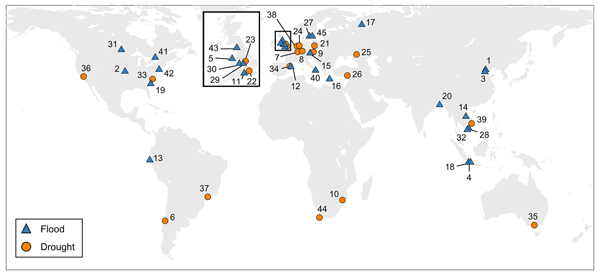
As the adverse impacts of hydrological extremes increase in many regions of the world, a better understanding of the drivers of changes in risk and impacts is essential for effective flood and drought risk management. We present a dataset containing data of paired events, i.e. two floods or two droughts that occurred in the same area. The dataset enables comparative analyses and allows detailed context-specific assessments. Additionally, it supports the testing of socio-hydrological models.
Stefan Steger, Mateo Moreno, Alice Crespi, Peter James Zellner, Stefano Luigi Gariano, Maria Teresa Brunetti, Massimo Melillo, Silvia Peruccacci, Francesco Marra, Robin Kohrs, Jason Goetz, Volkmar Mair, and Massimiliano Pittore
Nat. Hazards Earth Syst. Sci., 23, 1483–1506, https://doi.org/10.5194/nhess-23-1483-2023, https://doi.org/10.5194/nhess-23-1483-2023, 2023
Short summary
Short summary
We present a novel data-driven modelling approach to determine season-specific critical precipitation conditions for landslide occurrence. It is shown that the amount of precipitation required to trigger a landslide in South Tyrol varies from season to season. In summer, a higher amount of preparatory precipitation is required to trigger a landslide, probably due to denser vegetation and higher temperatures. We derive dynamic thresholds that directly relate to hit rates and false-alarm rates.
Olga Petrucci
Nat. Hazards Earth Syst. Sci., 22, 71–83, https://doi.org/10.5194/nhess-22-71-2022, https://doi.org/10.5194/nhess-22-71-2022, 2022
Short summary
Short summary
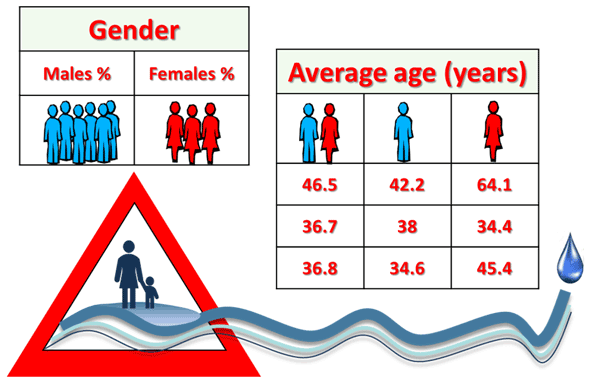
This systematic review highlights flood mortality factors and the strategies to mitigate them, as obtained from 44 scientific articles published between 2010 and 2020. The findings are the classification of flood mortality drivers in two groups and the identification of strategies to cope with them. Future studies should fill the data gaps regarding flood fatalities in developing countries and information on people who have survived floods, which can be useful in educational campaigns.
Gerard van der Schrier, Richard P. Allan, Albert Ossó, Pedro M. Sousa, Hans Van de Vyver, Bert Van Schaeybroeck, Roberto Coscarelli, Angela A. Pasqua, Olga Petrucci, Mary Curley, Mirosław Mietus, Janusz Filipiak, Petr Štěpánek, Pavel Zahradníček, Rudolf Brázdil, Ladislava Řezníčková, Else J. M. van den Besselaar, Ricardo Trigo, and Enric Aguilar
Clim. Past, 17, 2201–2221, https://doi.org/10.5194/cp-17-2201-2021, https://doi.org/10.5194/cp-17-2201-2021, 2021
Short summary
Short summary
The 1921 drought was the most severe drought to hit Europe since the start of the 20th century. Here the climatological description of the drought is coupled to an overview of its impacts, sourced from newspapers, and an analysis of its drivers. The area from Ireland to the Ukraine was affected but hardest hit was the triangle between Brussels, Paris and Lyon. The drought impacts lingered on until well into autumn and winter, affecting water supply and agriculture and livestock farming.
Cited articles
Antronico, L., Borrelli, L., and Coscarelli, R.: Recent damaging events on alluvial fans along a stretch of the Tyrrhenian coast of Calabria (southern Italy), B. Eng. Geol. Environ., 76, 1399–1416, https://doi.org/10.1007/s10064-016-0922-2, 2017
Antronico, L., Borrelli, L., Coscarelli, R., Pasqua, A. A., Petrucci, O., and Gullà, G.: Slope movements induced by rainfalls damaging an urban area: The Catanzaro case study (Calabria, southern Italy), Landslides, 10, 801–814, https://doi.org/10.1007/s10346-013-0431-3, 2013.
Bezak, N. and Mikoš, M.: Changes in the rainfall event characteristics above the empirical global rainfall thresholds for landslide initiation at the pan-European level, Landslides, 18, 1859–1873, https://doi.org/10.1007/s10346-020-01579-0, 2021.
Brunetti, M. T., Peruccacci, S., Rossi, M., Luciani, S., Valigi, D., and Guzzetti, F.: Rainfall thresholds for the possible occurrence of landslides in Italy, Nat. Hazards Earth Syst. Sci., 10, 447–458, https://doi.org/10.5194/nhess-10-447-2010, 2010.
Caloiero, T., Filice, E., Marsico, L., Zimbo, F., and Petrucci, O.: Characterization of the November 2020 damaging hydrogeological event affecting the Calabria region (southern Italy), Euro-Mediterr. J. Environ. Integr., 9, 1815–1832, https://doi.org/10.1007/s41207-024-00658-1, 2024.
Calvello, M. and Pecoraro, G.: FraneItalia: a catalog of recent Italian landslides, Geoenvironmental Disasters, 5, 13, https://doi.org/10.1186/s40677-018-0105-5, 2018.
Conforti, M., Scarcella, G. E., Cosentini, G., and Petrucci, O.: Historical damaging geo-hydrological events affecting the Catanzaro municipality (Calabria, Southern Italy), 1830–2023, J. Maps, 21, 1–11, https://doi.org/10.1080/17445647.2025.2498977, 2025.
Gariano, S. L. and Rianna, G.: How will the projected climate change influence rainfall-induced landslides in Europe? A review of modelling approaches, Landslides, 22, 3011–3027, https://doi.org/10.1007/s10346-025-02550-7, 2025.
Gariano, S. L., Melillo, M., Peruccacci, S., and Brunetti, M. T.: How much does the rainfall temporal resolution affect rainfall thresholds for landslide triggering?, Nat. Hazards, 100, 655–670, https://doi.org/10.1007/s11069-019-03830-x, 2020.
Gariano, S. L., Petrucci, O., and Guzzetti, F.: Changes in the occurrence of rainfall-induced landslides in Calabria, southern Italy, in the 20th century, Nat. Hazards Earth Syst. Sci., 15, 2313–2330, https://doi.org/10.5194/nhess-15-2313-2015, 2015.
Kapucu, N., Okhai, R., Ge, Y., and Zobel, C.: The use of documentary data for network analysis in emergency and crisis management, Nat. Hazards, 116, 425–445, https://doi.org/10.1007/s11069-022-05681-5, 2023.
Melillo, M., Brunetti, M. T., Peruccacci, S., Gariano, S. L., Roccati, A., and Guzzetti, F.: A tool for the automatic calculation of rainfall thresholds for landslide occurrence, Environ. Model. Softw., 105, 230–243, https://doi.org/10.1016/j.envsoft.2018.03.024, 2018.
Peres, D. J., Bonaccorso, B., Palazzolo, N., Cancelliere, A., Mendicino, G., and Senatore, A.: A dynamic approach for assessing climate change impacts on drought: an analysis in Southern Italy, Hydrolog. Sci. J., 68, 1213–1228, https://doi.org/10.1080/02626667.2023.2217332, 2023.
Peruccacci, S., Gariano, S. L., Melillo, M., Solimano, M., Guzzetti, F., and Brunetti, M. T.: The ITAlian rainfall-induced LandslIdes CAtalogue, an extensive and accurate spatio-temporal catalogue of rainfall-induced landslides in Italy, Earth Syst. Sci. Data, 15, 2863–2877, https://doi.org/10.5194/essd-15-2863-2023, 2023.
Petrucci, O.: Changes in human vulnerability to flood and landslide: evidences from historical data, Sustainability, 16, 6715, https://doi.org/10.3390/su16166715, 2024.
Petrucci, O., Mercuri, M., and Conforti, M.: SCIBA: A geo-dataset of damaging rainfall related landslides and floods throughout 113 years on a Mediterranean study area, Geosci. Data J., 12, e70026, https://doi.org/10.1002/gdj3.70026, 2025.
Rago, V., Chiaravalloti, F., Chiodo, G., Gabriele, S., Lupiano, V., Nicastro, R., Pellegrino, A. D., Procopio, A., Siviglia, S., and Terranova, O. G.: Geomorphic effects caused by heavy rainfall in southern Calabria (Italy) on 30 October–1 November 2015, J. Maps, 13, 836–843, https://doi.org/10.1080/17445647.2017.13842399, 2017.
Rago, V., Lupiano, V., Chiaravalloti, F., Chiodo, G., Gabriele, S., Pellegrino, A. D., Terranova, O. G., and Iovine, G.: Geomorphic effects caused by heavy rainfall in the Corigliano-Rossano area (NE Calabria, Italy) on 12 August 2015, J. Maps, 17, 40–53, https://doi.org/10.1080/17445647.2020.1867248, 2021.
Rilo, A., Tavares, A. O., Freire, P., Zêzere, J. L., and Haigh, I. D.: Improving estuarine flood risk knowledge through documentary data using multiple correspondence analysis, Water, 14, 3161, https://doi.org/10.3390/w14193161, 2022.
Sangelantoni, L., Gioia, E., and Marincioni, F.: Impact of climate change on landslides frequency: the Esino river basin case study (Central Italy), Nat. Hazards, 93, 849–884, https://doi.org/10.1007/s11069-018-3328-6, 2018.
Simón, J. L., Simón-Porcar, G., and Peiro, A.: Memory of the Earth and human memory of natural disasters: the 1953 earthquake in Western Aragón (Spain), Geoheritage, 14, 114, https://doi.org/10.1007/s12371-022-00758-w, 2022.
Terranova, O. G., Gariano, S. L., Bruno, C., Greco, R., Pellegrino, A. D., and Iovine, G. G. R.: Landslide-risk scenario of the Costa Viola mountain ridge (Calabria, Southern Italy), J. Maps, 12, 261–270, https://doi.org/10.1080/17445647.2016.1195300, 2016.
van der Schrier, G., Allan, R. P., Ossó, A., Sousa, P. M., Van de Vyver, H., Van Schaeybroeck, B., Coscarelli, R., Pasqua, A. A., Petrucci, O., Curley, M., Mietus, M., Filipiak, J., Štěpánek, P., Zahradníček, P., Brázdil, R., Řezníčková, L., van den Besselaar, E. J. M., Trigo, R., and Aguilar, E.: The 1921 European drought: impacts, reconstruction and drivers, Clim. Past, 17, 2201–2221, https://doi.org/10.5194/cp-17-2201-2021, 2021.
Vennari, C., Gariano, S. L., Antronico, L., Brunetti, M. T., Iovine, G., Peruccacci, S., Terranova, O., and Guzzetti, F.: Rainfall thresholds for shallow landslide occurrence in Calabria, southern Italy, Nat. Hazards Earth Syst. Sci., 14, 317–330, https://doi.org/10.5194/nhess-14-317-2014, 2014.
Short summary
Long-term changes in rainfall conditions triggering landslides in Calabria (Southern Italy) over 1921–2020 are analysed through a dynamic approach in rainfall threshold definition. Shifts in seasonality and a decreasing trend in triggering rainfall are observed over the years, suggesting an increased propensity of the territory to generate landslides, even with less severe triggering rainfall in recent decades. The work highlights the essential role of landslide data collection and archiving.
Long-term changes in rainfall conditions triggering landslides in Calabria (Southern Italy) over...
Altmetrics
Final-revised paper
Preprint