
Articles | Volume 26, issue 6
https://doi.org/10.5194/nhess-26-2975-2026
© Author(s) 2026. This work is distributed under
the Creative Commons Attribution 4.0 License.
the Creative Commons Attribution 4.0 License.
https://doi.org/10.5194/nhess-26-2975-2026
© Author(s) 2026. This work is distributed under
the Creative Commons Attribution 4.0 License.
the Creative Commons Attribution 4.0 License.
Review article
| 
26 Jun 2026
Review article |
| 26 Jun 2026
| 26 Jun 2026
Review article: Harnessing data-driven methods for climate multi-hazard and multi-risk assessment
Davide Mauro Ferrario
Department of environmental sciences, informatics and statistics, Ca' Foscari University Venice, 30170, Venice, Italy
CMCC Foundation, EURO Mediterranean Center on Climate change, 73100, Lecce, Italy
Institute for Advanced Study IUSS Pavia, 27100, Pavia, Italy
Marcello Sanò
Department of environmental sciences, informatics and statistics, Ca' Foscari University Venice, 30170, Venice, Italy
CMCC Foundation, EURO Mediterranean Center on Climate change, 73100, Lecce, Italy
Griffith University, 4222, Gold Coast, Australia
Margherita Maraschini
Department of environmental sciences, informatics and statistics, Ca' Foscari University Venice, 30170, Venice, Italy
CMCC Foundation, EURO Mediterranean Center on Climate change, 73100, Lecce, Italy

Department of environmental sciences, informatics and statistics, Ca' Foscari University Venice, 30170, Venice, Italy
CMCC Foundation, EURO Mediterranean Center on Climate change, 73100, Lecce, Italy
Silvia Torresan
Department of environmental sciences, informatics and statistics, Ca' Foscari University Venice, 30170, Venice, Italy
CMCC Foundation, EURO Mediterranean Center on Climate change, 73100, Lecce, Italy
Related authors
Timothy Tiggeloven, Colin Raymond, Marleen C. de Ruiter, Jana Sillmann, Annegret H. Thieken, Sophie L. Buijs, Roxana Ciurean, Emma Cordier, Julia M. Crummy, Lydia Cumiskey, Kelley De Polt, Melanie Duncan, Davide M. Ferrario, Wiebke S. Jäger, Elco E. Koks, Nicole van Maanen, Heather J. Murdock, Jaroslav Mysiak, Sadhana Nirandjan, Benjamin Poschlod, Peter Priesmeier, Nivedita Sairam, Pia-Johanna Schweizer, Tristian R. Stolte, Marie-Luise Zenker, James E. Daniell, Alexander Fekete, Christian M. Geiß, Marc J. C. van den Homberg, Sirkku K. Juhola, Christian Kuhlicke, Karen Lebek, Robert Šakić Trogrlić, Stefan Schneiderbauer, Silvia Torresan, Cees J. van Westen, Judith N. Claassen, Bijan Khazai, Virginia Murray, Julius Schlumberger, and Philip J. Ward
Geosci. Commun., 9, 185–221, https://doi.org/10.5194/gc-9-185-2026, https://doi.org/10.5194/gc-9-185-2026, 2026
Short summary
Short summary
Natural hazards like floods, earthquakes, and landslides are often interconnected which may create bigger problems than when they occur alone. We studied expert discussions from an international conference to understand how scientists and policymakers can better prepare for these multi-hazards and use new technologies to protect its communities while contributing to dialogues about future international agreements beyond the Sendai Framework and supporting global sustainability goals.
Philip J. Ward, Sophie L. Buijs, Roxana Ciurean, Judith N. Claassen, James Daniell, Kelley De Polt, Melanie Duncan, Stefania Gottardo, Stefan Hochrainer-Stigler, Robert Šakić Trogrlić, Julius Schlumberger, Timothy Tiggeloven, Silvia Torresan, Nicole van Maanen, Andrew Warren, Carmen D. Álvarez-Albelo, Vanessa Banks, Benjamin Blanz, Veronica Casartelli, Jordan Correa, Julia Crummy, Anne Sophie Daloz, Marleen C. de Ruiter, Juan José Díaz-Hernández, Jaime Díaz-Pacheco, Pedro Dorta Antequera, Davide Ferrario, David Geurts, Sara García-González, Joel C. Gill, Raúl Hernández-Martín, Wiebke S. Jäger, Abel López-Díez, Lin Ma, Jaroslav Mysiak, Diep Ngoc Nguyen, Noemi Padrón Fumero, Eva-Cristina Petrescu, Karina Reiter, Jana Sillmann, Lara Smale, and Tristian Stolte
Nat. Hazards Earth Syst. Sci., 26, 1325–1345, https://doi.org/10.5194/nhess-26-1325-2026, https://doi.org/10.5194/nhess-26-1325-2026, 2026
Short summary
Short summary
Disasters often result from interactions between different hazards, like floods triggering landslides, or earthquakes followed by tropical cyclones, so-called multi-hazards. People and societies are increasingly exposed and vulnerable to these multi-hazards. Assessing these aspects is referred to as multi-risk assessment and management. In this paper we synthesise key learnings from the MYRIAD-EU (Multi-hazard and sYstemic framework for enhancing Risk-Informed mAnagement and Decision-making in the E.U.) project, reflecting on progress and challenges faced in addressing multi-hazards and multi-risk.
Timothy Tiggeloven, Colin Raymond, Marleen C. de Ruiter, Jana Sillmann, Annegret H. Thieken, Sophie L. Buijs, Roxana Ciurean, Emma Cordier, Julia M. Crummy, Lydia Cumiskey, Kelley De Polt, Melanie Duncan, Davide M. Ferrario, Wiebke S. Jäger, Elco E. Koks, Nicole van Maanen, Heather J. Murdock, Jaroslav Mysiak, Sadhana Nirandjan, Benjamin Poschlod, Peter Priesmeier, Nivedita Sairam, Pia-Johanna Schweizer, Tristian R. Stolte, Marie-Luise Zenker, James E. Daniell, Alexander Fekete, Christian M. Geiß, Marc J. C. van den Homberg, Sirkku K. Juhola, Christian Kuhlicke, Karen Lebek, Robert Šakić Trogrlić, Stefan Schneiderbauer, Silvia Torresan, Cees J. van Westen, Judith N. Claassen, Bijan Khazai, Virginia Murray, Julius Schlumberger, and Philip J. Ward
Geosci. Commun., 9, 185–221, https://doi.org/10.5194/gc-9-185-2026, https://doi.org/10.5194/gc-9-185-2026, 2026
Short summary
Short summary
Natural hazards like floods, earthquakes, and landslides are often interconnected which may create bigger problems than when they occur alone. We studied expert discussions from an international conference to understand how scientists and policymakers can better prepare for these multi-hazards and use new technologies to protect its communities while contributing to dialogues about future international agreements beyond the Sendai Framework and supporting global sustainability goals.
Philip J. Ward, Sophie L. Buijs, Roxana Ciurean, Judith N. Claassen, James Daniell, Kelley De Polt, Melanie Duncan, Stefania Gottardo, Stefan Hochrainer-Stigler, Robert Šakić Trogrlić, Julius Schlumberger, Timothy Tiggeloven, Silvia Torresan, Nicole van Maanen, Andrew Warren, Carmen D. Álvarez-Albelo, Vanessa Banks, Benjamin Blanz, Veronica Casartelli, Jordan Correa, Julia Crummy, Anne Sophie Daloz, Marleen C. de Ruiter, Juan José Díaz-Hernández, Jaime Díaz-Pacheco, Pedro Dorta Antequera, Davide Ferrario, David Geurts, Sara García-González, Joel C. Gill, Raúl Hernández-Martín, Wiebke S. Jäger, Abel López-Díez, Lin Ma, Jaroslav Mysiak, Diep Ngoc Nguyen, Noemi Padrón Fumero, Eva-Cristina Petrescu, Karina Reiter, Jana Sillmann, Lara Smale, and Tristian Stolte
Nat. Hazards Earth Syst. Sci., 26, 1325–1345, https://doi.org/10.5194/nhess-26-1325-2026, https://doi.org/10.5194/nhess-26-1325-2026, 2026
Short summary
Short summary
Disasters often result from interactions between different hazards, like floods triggering landslides, or earthquakes followed by tropical cyclones, so-called multi-hazards. People and societies are increasingly exposed and vulnerable to these multi-hazards. Assessing these aspects is referred to as multi-risk assessment and management. In this paper we synthesise key learnings from the MYRIAD-EU (Multi-hazard and sYstemic framework for enhancing Risk-Informed mAnagement and Decision-making in the E.U.) project, reflecting on progress and challenges faced in addressing multi-hazards and multi-risk.
Nicole van Maanen, Marleen de Ruiter, Wiebke Jäger, Veronica Casartelli, Roxana Ciurean, Noemi Padrón-Fumero, Anne Sophie Daloz, David Geurts, Stefania Gottardo, Stefan Hochrainer-Stigler, Abel López Diez, Jaime Díaz Pacheco, Pedro Dorta Antequera, Tamara Febles Arévalo, Sara García González, Raúl Hernández-Martín, Carmen Alvarez-Albelo, Juan José Diaz-Hernandez, Lin Ma, Letizia Monteleone, Karina Reiter, Tristian Stolte, Robert Šakić Trogrlić, Silvia Torresan, Sharon Tatman, David Romero Manrique de Lara, Yeray Hernández González, and Philip J. Ward
Earth Syst. Dynam., 16, 2295–2311, https://doi.org/10.5194/esd-16-2295-2025, https://doi.org/10.5194/esd-16-2295-2025, 2025
Short summary
Short summary
Disaster risk management faces growing challenges from multiple, changing hazards. Interviews with stakeholders in five European regions reveal that climate change, urban growth, and socio-economic shifts increase vulnerability and exposure. Measures to reduce one risk can worsen others, highlighting the need for better coordination. The study calls for flexible, context-specific strategies that connect scientific risk assessments with real-world decision-making.
Philip J. Ward, James Daniell, Melanie Duncan, Anna Dunne, Cédric Hananel, Stefan Hochrainer-Stigler, Annegien Tijssen, Silvia Torresan, Roxana Ciurean, Joel C. Gill, Jana Sillmann, Anaïs Couasnon, Elco Koks, Noemi Padrón-Fumero, Sharon Tatman, Marianne Tronstad Lund, Adewole Adesiyun, Jeroen C. J. H. Aerts, Alexander Alabaster, Bernard Bulder, Carlos Campillo Torres, Andrea Critto, Raúl Hernández-Martín, Marta Machado, Jaroslav Mysiak, Rene Orth, Irene Palomino Antolín, Eva-Cristina Petrescu, Markus Reichstein, Timothy Tiggeloven, Anne F. Van Loon, Hung Vuong Pham, and Marleen C. de Ruiter
Nat. Hazards Earth Syst. Sci., 22, 1487–1497, https://doi.org/10.5194/nhess-22-1487-2022, https://doi.org/10.5194/nhess-22-1487-2022, 2022
Short summary
Short summary
The majority of natural-hazard risk research focuses on single hazards (a flood, a drought, a volcanic eruption, an earthquake, etc.). In the international research and policy community it is recognised that risk management could benefit from a more systemic approach. In this perspective paper, we argue for an approach that addresses multi-hazard, multi-risk management through the lens of sustainability challenges that cut across sectors, regions, and hazards.
Stefano Terzi, Janez Sušnik, Stefan Schneiderbauer, Silvia Torresan, and Andrea Critto
Nat. Hazards Earth Syst. Sci., 21, 3519–3537, https://doi.org/10.5194/nhess-21-3519-2021, https://doi.org/10.5194/nhess-21-3519-2021, 2021
Short summary
Short summary
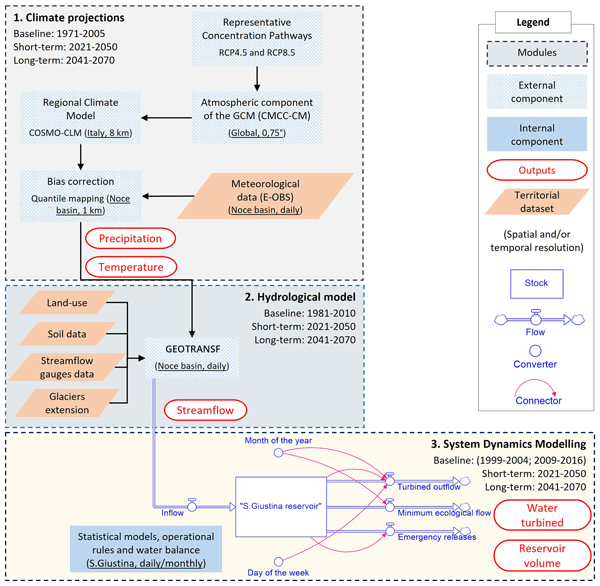
This study combines outputs from multiple models with statistical assessments of past and future water availability and demand for the Santa Giustina reservoir (Autonomous Province of Trento, Italy). Considering future climate change scenarios, results show high reductions for stored volume and turbined water, with increasing frequency, duration and severity. These results call for the need to adapt to reductions in water availability and effects on the Santa Giustina reservoir management.
Cited articles
Abu El-Magd, S. A., Ali, S. A., and Pham, Q. B.: Spatial modeling and susceptibility zonation of landslides using random forest, naïve bayes and K-nearest neighbor in a complicated terrain, Earth Sci. Inform., 14, 1227–1243, https://doi.org/10.1007/s12145-021-00653-y, 2021.
Adam, E., Mutanga, O., Odindi, J., and Abdel-Rahman, E. M.: Land-use/cover classification in a heterogeneous coastal landscape using RapidEye imagery: evaluating the performance of random forest and support vector machines classifiers, Int. J. Remote Sens., 35, 3440–3458, https://doi.org/10.1080/01431161.2014.903435, 2014.
AghaKouchak, A., Chiang, F., Huning, L. S., Love, C. A., Mallakpour, I., Mazdiyasni, O., Moftakhari, H., Papalexiou, S. M., Ragno, E., and Sadegh, M.: Climate Extremes and Compound Hazards in a Warming World, Annu. Rev. Earth Pl. Sc., 48, 519–548, https://doi.org/10.1146/annurev-earth-071719-055228, 2020.
Agrawal, S.: The Effectiveness of Copulas for Modeling Compound Climate Extreme Events in Boulder County, Colorado, ProQuest ID: Agrawal_ucla_0031N_21275, Merritt ID: ark:/13030/m59m1m6w, https://escholarship.org/uc/item/92p410ff (last access: 24 June 2026), 2022.
Ahmad, S., Kalra, A., and Stephen, H.: Estimating soil moisture using remote sensing data: A machine learning approach, Adv. Water Resour., 33, 69–80, https://doi.org/10.1016/j.advwatres.2009.10.008, 2010.
Ahmadlou, M., Al-Fugara, A., Al-Shabeeb, A. R., Arora, A., Al-Adamat, R., Pham, Q. B., Al-Ansari, N., Linh, N. T. T., and Sajedi, H.: Flood susceptibility mapping and assessment using a novel deep learning model combining multilayer perceptron and autoencoder neural networks, J. Flood Risk Manage., 14, https://doi.org/10.1111/jfr3.12683, 2021.
Albulescu, A.-C. and Armaș, I.: An impact-chain-based exploration of multi-hazard vulnerability dynamics: the multi-hazard of floods and the COVID-19 pandemic in Romania, Nat. Hazards Earth Syst. Sci., 24, 2895–2922, https://doi.org/10.5194/nhess-24-2895-2024, 2024.
Al-Selwi, S. M., Hassan, M. F., Abdulkadir, S. J., Muneer, A., Sumiea, E. H., Alqushaibi, A., and Ragab, M. G.: RNN-LSTM: From applications to modeling techniques and beyond – Systematic review, Journal of King Saud University – Computer and Information Sciences, 36, 102068, https://doi.org/10.1016/j.jksuci.2024.102068, 2024
Amato, F., Guignard, F., Robert, S., and Kanevski, M.: A novel framework for spatio-temporal prediction of environmental data using deep learning, Sci. Rep., 10, 22243, https://doi.org/10.1038/s41598-020-79148-7, 2020.
Andersson, T. R., Bruinsma, W. P., Markou, S., Requeima, J., Coca-Castro, A., Vaughan, A., Ellis, A.-L., Lazzara, M. A., Jones, D., Hosking, S., and Turner, R. E.: Environmental sensor placement with convolutional Gaussian neural processes, Environmental Data Science, 2, e32, https://doi.org/10.1017/eds.2023.22, 2023.
Angelov, D.: Top2Vec: Distributed Representations of Topics, arXiv [preprint], https://doi.org/10.48550/arXiv.2008.09470, 2020.
Anshuka, A., Van Ogtrop, F. F., Sanderson, D., and Leao, S. Z.: A systematic review of agent-based model for flood risk management and assessment using the ODD protocol, Nat. Hazards, 112, 2739–2771, https://doi.org/10.1007/s11069-022-05286-y, 2022.
Arosio, M., Martina, M. L. V., and Figueiredo, R.: The whole is greater than the sum of its parts: a holistic graph-based assessment approach for natural hazard risk of complex systems, Nat. Hazards Earth Syst. Sci., 20, 521–547, https://doi.org/10.5194/nhess-20-521-2020, 2020.
Arosio, M., Cesarini, L., and Martina, M. L. V.: Assessment of the Disaster Resilience of Complex Systems: The Case of the Flood Resilience of a Densely Populated City, Water, 13, 2830, https://doi.org/10.3390/w13202830, 2021.
Arvin, M., Beiki, P., Hejazi, S. J., Sharifi, A., and Atashafrooz, N.: Assessment of infrastructure resilience in multi-hazard regions: A case study of Khuzestan Province, Int. J. Disast. Risk Re., 88, 103601, https://doi.org/10.1016/j.ijdrr.2023.103601, 2023.
Asinthara, K., Jayan, M., and Jacob, L.: Classification of Disaster Tweets using Machine Learning and Deep Learning Techniques. 2022 International Conference on Trends in Quantum Computing and Emerging Business Technologies (TQCEBT), 1–5, https://doi.org/10.1109/TQCEBT54229.2022.10041629, 2022.
Ayyad, M., Hajj, M. R., and Marsooli, R.: Machine learning-based assessment of storm surge in the New York metropolitan area, Sci. Rep., 12, 19215, https://doi.org/10.1038/s41598-022-23627-6, 2022.
Ayyad, M., Hajj, M. R., and Marsooli, R.: Climate change impact on hurricane storm surge hazards in New York/New Jersey Coastlines using machine-learning, Npj Clim. Atmos. Sci., 6, 88, https://doi.org/10.1038/s41612-023-00420-4, 2023.
Bai, T., Wang, L., Yin, D., Sun, K., Chen, Y., Li, W., and Li, D.: Deep learning for change detection in remote sensing: a review, Geo-Spatial Information Science, 26, 262–288, https://doi.org/10.1080/10095020.2022.2085633, 2023.
Bai, Y., Mas, E., and Koshimura, S.: Towards Operational Satellite-Based Damage-Mapping Using U-Net Convolutional Network: A Case Study of 2011 Tohoku Earthquake-Tsunami, Remote Sens., 10, 1626, https://doi.org/10.3390/rs10101626, 2018.
Bankoff, G. and Hilhorst, H.: Why Vulnerability Still Matters: The Politics of Disaster Risk Creation, Routledge, https://doi.org/10.4324/9781003219453, 2022.
Barrett, A. B., Duivenvoorden, S., Salakpi, E. E., Muthoka, J. M., Mwangi, J., Oliver, S., and Rowhani, P.: Forecasting vegetation condition for drought early warning systems in pastoral communities in Kenya, arXiv [preprint], https://doi.org/10.48550/arXiv.1911.10339, 2020.
Bentivoglio, R., Isufi, E., Jonkman, S. N., and Taormina, R.: Rapid spatio-temporal flood modelling via hydraulics-based graph neural networks, Hydrol. Earth Syst. Sci., 27, 4227–4246, https://doi.org/10.5194/hess-27-4227-2023, 2023.
Bevacqua, E., Maraun, D., Hobæk Haff, I., Widmann, M., and Vrac, M.: Multivariate statistical modelling of compound events via pair-copula constructions: analysis of floods in Ravenna (Italy), Hydrol. Earth Syst. Sci., 21, 2701–2723, https://doi.org/10.5194/hess-21-2701-2017, 2017.
Bevacqua, E., De Michele, C., Manning, C., Couasnon, A., Ribeiro, A. F. S., Ramos, A. M., Vignotto, E., Bastos, A., Blesić, S., Durante, F., Hillier, J., Oliveira, S. C., Pinto, J. G., Ragno, E., Rivoire, P., Saunders, K., Wiel, K., Wu, W., Zhang, T., and Zscheischler, J.: Guidelines for Studying Diverse Types of Compound Weather and Climate Events, Earths Future, 9, https://doi.org/10.1029/2021EF002340, 2021.
Bevacqua, E., Suarez-Gutierrez, L., Jézéquel, A., Lehner, F., Vrac, M., Yiou, P., and Zscheischler, J.: Advancing research on compound weather and climate events via large ensemble model simulations, Nat. Commun., 14, 2145, https://doi.org/10.1038/s41467-023-37847-5, 2023.
Beven, K.: Environmental Modelling, CRC Press, https://doi.org/10.1201/9781482288575, 2018.
Bhowmik, R. T., Jung, Y. S., Aguilera, J. A., Prunicki, M., and Nadeau, K.: A multi-modal wildfire prediction and early-warning system based on a novel machine learning framework, J. Environ. Manage., 341, 117908, https://doi.org/10.1016/j.jenvman.2023.117908, 2023.
Bi, K., Xie, L., Zhang, H., Chen, X., Gu, X., and Tian, Q.: Pangu-Weather: A 3D High-Resolution Model for Fast and Accurate Global Weather Forecast, arXiv [preprint], https://doi.org/10.48550/arXiv.2211.02556, 2022.
Bo, W., Liu, J., Fan, X., Tjahjadi, T., Ye, Q., and Fu, L.: BASNet: Burned Area Segmentation Network for Real-Time Detection of Damage Maps in Remote Sensing Images, IEEE T. Geosci. Remote, 60, 1–13, https://doi.org/10.1109/TGRS.2022.3197647, 2022.
Bonino, G., Galimberti, G., Masina, S., McAdam, R., and Clementi, E.: Machine learning methods to predict sea surface temperature and marine heatwave occurrence: a case study of the Mediterranean Sea, Ocean Sci., 20, 417–432, https://doi.org/10.5194/os-20-417-2024, 2024.
Bordbar, M., Aghamohammadi, H., Pourghasemi, H. R., and Azizi, Z.: Multi-hazard spatial modeling via ensembles of machine learning and meta-heuristic techniques, Sci. Rep., 12, 1451, https://doi.org/10.1038/s41598-022-05364-y, 2022.
Boudreault, J., Campagna, C., and Chebana, F.: Machine and deep learning for modelling heat-health relationships, Sci. Total Environ., 892, 164660, https://doi.org/10.1016/j.scitotenv.2023.164660, 2023.
Bretherton, C. S., Henn, B., Kwa, A., Brenowitz, N. D., Watt-Meyer, O., McGibbon, J., Perkins, W. A., Clark, S. K., and Harris, L.: Correcting Coarse-Grid Weather and Climate Models by Machine Learning From Global Storm-Resolving Simulations, J. Adv. Model. Earth Syst., 14, https://doi.org/10.1029/2021MS002794, 2022.
Busker, T., van den Hurk, B., de Moel, H., van den Homberg, M., van Straaten, C., Odongo, R. A., and Aerts, J. C. J. H.: Predicting Food-Security Crises in the Horn of Africa Using Machine Learning, Earths Future, 12, https://doi.org/10.1029/2023EF004211, 2024.
Cammalleri, C. and Toreti, A.: A Generalized Density-Based Algorithm for the Spatiotemporal Tracking of Drought Events, J. Hydrometeorol., 24, 537–548, https://doi.org/10.1175/JHM-D-22-0115.1, 2023.
Campbell, A. M., Racault, M.-F., Goult, S., and Laurenson, A.: Cholera Risk: A Machine Learning Approach Applied to Essential Climate Variables, Int. J. Env. Res. Pub. He., 17, 9378, https://doi.org/10.3390/ijerph17249378, 2020.
Cannon, T.: Social Vulnerability and Environmental Hazards, International Encyclopedia of Geography, Wiley, https://doi.org/10.1002/9781118786352.wbieg0845, 2017.
Cao, J., Zhang, Z., Du, J., Zhang, L., Song, Y., and Sun, G.: Multi-geohazards susceptibility mapping based on machine learning – a case study in Jiuzhaigou, China, Nat. Hazards, 102, 851–871, https://doi.org/10.1007/s11069-020-03927-8, 2020.
Carannante, M., D'amato, V., Fersini, P., and Forte, S.: Machine learning-based climate risk sharing for an insured loan in the tourism industry, Quality and Quantity, https://doi.org/10.1007/s11135-024-01958-y, 2024.
Carvalho, D. V., Pereira, E. M., and Cardoso, J. S.: Machine Learning Interpretability: A Survey on Methods and Metrics, Electronics, 8, 832, https://doi.org/10.3390/electronics8080832, 2019.
Castangia, M., Grajales, L. M. M., Aliberti, A., Rossi, C., Macii, A., Macii, E., and Patti, E.: Transformer neural networks for interpretable flood forecasting, Environ. Model. Softw., 160, 105581, https://doi.org/10.1016/j.envsoft.2022.105581, 2023.
Chang-Hoi, H., Park, I., Oh, H.-R., Gim, H.-J., Hur, S.-K., Kim, J., and Choi, D.-R.: Development of a PM2.5 prediction model using a recurrent neural network algorithm for the Seoul metropolitan area, Republic of Korea, Atmos. Environ., 245, 118021, https://doi.org/10.1016/j.atmosenv.2020.118021, 2021.
Chen, K., Han, T., Gong, J., Bai, L., Ling, F., Luo, J.-J., Chen, X., Ma, L., Zhang, T., Su, R., Ci, Y., Li, B., Yang, X., and Ouyang, W.: FengWu: Pushing the Skillful Global Medium-range Weather Forecast beyond 10 Days Lead, arXiv [preprint], https://doi.org/10.48550/arXiv.2304.02948, 2023.
Chen, S., Zhang, Z., Lin, J., and Huang, J.: Machine learning-based estimation of riverine nutrient concentrations and associated uncertainties caused by sampling frequencies, PLOS ONE, 17, e0271458, https://doi.org/10.1371/journal.pone.0271458, 2022.
Claassen, J. N., Ward, P. J., Daniell, J., Koks, E. E., Tiggeloven, T., and de Ruiter, M. C.: A new method to compile global multi-hazard event sets, Sci. Rep., 13, 13808, https://doi.org/10.1038/s41598-023-40400-5, 2023.
Claassen, J. N., Koks, E. E., de Ruiter, M. C., Ward, P. J., and Jäger, W. S.: VineCopulas: an open-source Python package for vine copula modelling, Journal of Open Source Software, 9, 6728, https://doi.org/10.21105/joss.06728, 2024.
Clark, S. K., Brenowitz, N. D., Henn, B., Kwa, A., McGibbon, J., Perkins, W. A., Watt-Meyer, O., Bretherton, C. S., and Harris, L. M.: Correcting a 200 km Resolution Climate Model in Multiple Climates by Machine Learning From 25 km Resolution Simulations, J. Adv. Model. Earth Syst., 14, https://doi.org/10.1029/2022MS003219, 2022.
Clarke, K. C., Hoppen, S., and Gaydos, L.: A self-modifying cellular automaton model of historical urbanization in the San Francisco Bay area, Environ. Plann. B, 24, 247–261, https://doi.org/10.1068/b240247, 1997.
Côté, J.-N., Germain, M., Levac, E., and Lavigne, E.: Vulnerability assessment of heat waves within a risk framework using artificial intelligence, Sci. Total Environ., 912, 169355, https://doi.org/10.1016/j.scitotenv.2023.169355, 2024.
Couasnon, A., Sebastian, A., and Morales-Nápoles, O.: A Copula-Based Bayesian Network for Modeling Compound Flood Hazard from Riverine and Coastal Interactions at the Catchment Scale: An Application to the Houston Ship Channel, Texas, Water, 10, 1190, https://doi.org/10.3390/w10091190, 2018.
Cushman, S. A., Macdonald, E. A., Landguth, E. L., Malhi, Y., and Macdonald, D. W.: Multiple-scale prediction of forest loss risk across Borneo, Landscape Ecol., 32, 1581–1598, https://doi.org/10.1007/s10980-017-0520-0, 2017.
Dal Barco, M. K., Maraschini, M., Ferrario, D. M., Nguyen, N. D., Torresan, S., Vascon, S., and Critto, A.: A machine learning approach to evaluate coastal risks related to extreme weather events in the Veneto region (Italy), Int. J. Disast. Risk Re., 108, 104526, https://doi.org/10.1016/j.ijdrr.2024.104526, 2024.
Dasgupta, A., Hybbeneth, L., and Waske, B.: Towards Daily High-resolution Inundation Observations using Deep Learning and EO, arXiv [preprint], https://doi.org/10.48550/arXiv.2208.09135, 2022.
Dawkins, L. C., Bernie, D. J., Pianosi, F., Lowe, J. A., and Economou T.: Quantifying Uncertainty and Sensitivity in Climate Risk Assessments: Varying Hazard, Exposure and Vulnerability Modelling Choices, Climate Risk Management, 40, 100511, https://doi.org/10.1016/j.crm.2023.100511, 2023.
De Angeli, S., Malamud, B. D., Rossi, L., Taylor, F. E., Trasforini, E., and Rudari, R.: A multi-hazard framework for spatial-temporal impact analysis, Int. J. Disast. Risk Re., 73, 102829, https://doi.org/10.1016/j.ijdrr.2022.102829, 2022.
de Ruiter, M. C. and van Loon, A. F.: The challenges of dynamic vulnerability and how to assess it, IScience, 25, 104720, https://doi.org/10.1016/j.isci.2022.104720, 2022.
Di Martino, F., Pedrycz, W., and Sessa, S.: Spatiotemporal extended fuzzy C-means clustering algorithm for hotspots detection and prediction, Fuzzy Set. Syst., 340, 109–126, https://doi.org/10.1016/j.fss.2017.11.011, 2018.
Du, M., Liu, N., Yang, F., Ji, S., and Hu, X.: On Attribution of Recurrent Neural Network Predictions via Additive Decomposition, The World Wide Web Conference, 383–393, https://doi.org/10.1145/3308558.3313545, 2019.
Erion, G., Janizek, J. D., Sturmfels, P., Lundberg, S. M., and Lee, S.-I.: Improving performance of deep learning models with axiomatic attribution priors and expected gradients, Nature Machine Intelligence, 3, 620–631, https://doi.org/10.1038/s42256-021-00343-w, 2021.
Ester, M., Kriegel, H.-P., Sander, J., and Xu, X.: A Density-Based Algorithm for Discovering Clusters in Large Spatial Databases with Noise, Proceedings of the Second International Conference on Knowledge Discovery and Data Mining, AAAI Press, 226–231, https://dl.acm.org/doi/10.5555/3001460.3001507 (last access: 24 June 2026), 1996.
Faiza, B., Yuhaniz, S. S., Hashim, S. Z. M., and AbdulRahman, K. K.: A Review and Analysis of Image Misalignment Problem in Remote Sensing, International Journal of Scientific and Engineering Research, 3, 82–86, 2012.
Fang, K., Shen, C., Kifer, D., and Yang, X.: Prolongation of SMAP to Spatiotemporally Seamless Coverage of Continental U.S, Using a Deep Learning Neural Network, Geophys. Res. Lett., 44, https://doi.org/10.1002/2017GL075619, 2017.
Flora, M. L., Potvin, C. K., Skinner, P. S., Handler, S., and McGovern, A.: Using Machine Learning to Generate Storm-Scale Probabilistic Guidance of Severe Weather Hazards in the Warn-on-Forecast System, Mon. Weather Rev., 149, 1535–1557, https://doi.org/10.1175/MWR-D-20-0194.1, 2021.
Freeman, B. S., Taylor, G., Gharabaghi, B., and Thé, J.: Forecasting air quality time series using deep learning, J. Air Waste Manage. Assoc., 68, 866–886, https://doi.org/10.1080/10962247.2018.1459956, 2018.
Fuchs, S., Keiler, M., and Zischg, A.: A spatiotemporal multi-hazard exposure assessment based on property data, Nat. Hazards Earth Syst. Sci., 15, 2127–2142, https://doi.org/10.5194/nhess-15-2127-2015, 2015.
Gallina, V., Torresan, S., Zabeo, A., Critto, A., Glade, T., and Marcomini, A.: A multi-risk methodology for the assessment of climate change impacts in coastal zones, Sustainability, 12, https://doi.org/10.3390/su12093697, 2020.
García-León, D., Masselot, P., Mistry, M. N., Gasparrini, A., Motta, C., Feyen, L., and Ciscar, J.-C.: Temperature-related mortality burden and projected change in 1368 European regions: a modelling study, The Lancet Public Health, 9, e644–e653, https://doi.org/10.1016/S2468-2667(24)00179-8, 2024.
Garg, S., Rasp, S., and Thuerey, N.: WeatherBench Probability: A benchmark dataset for probabilistic medium-range weather forecasting along with deep learning baseline models, arXiv [preprint], https://doi.org/10.48550/arXiv.2205.00865, 2022.
Garnelo, M., Schwarz, J., Rosenbaum, D., Viola, F., Rezende, D. J., Eslami, S. M. A., and Teh, Y. W.: Neural Processes, arXiv [preprint], https://doi.org/10.48550/arXiv.1807.01622, 2018.
Gasparrini, A.: Modeling exposure–lag–response associations with distributed lag non-linear models, Stat. Med., 33, 881–899, https://doi.org/10.1002/sim.5963, 2014.
Genkin, A., Lewis, D. D., and Madigan, D.: Large-Scale Bayesian Logistic Regression for Text Categorization, Technometrics, 49, 291–304, https://doi.org/10.1198/004017007000000245, 2007.
Ghaffarian, S. and Emtehani, S.: Monitoring Urban Deprived Areas with Remote Sensing and Machine Learning in Case of Disaster Recovery, Climate, 9, 58, https://doi.org/10.3390/cli9040058, 2021.
Ghaffarian, S., Taghikhah, F. R., and Maier, H. R.: Explainable artificial intelligence in disaster risk management: Achievements and prospective futures, Int. J. Disast. Risk Re., 98, 104123, https://doi.org/10.1016/j.ijdrr.2023.104123, 2023.
Ghanbari, M., Arabi, M., Kao, S., Obeysekera, J., and Sweet, W.: Climate Change and Changes in Compound Coastal-Riverine Flooding Hazard Along the U.S, Coasts, Earths Future, 9, https://doi.org/10.1029/2021EF002055, 2021.
Ghiggi, G., Humphrey, V., Seneviratne, S. I., and Gudmundsson, L.: GRUN: an observation-based global gridded runoff dataset from 1902 to 2014, Earth Syst. Sci. Data, 11, 1655–1674, https://doi.org/10.5194/essd-11-1655-2019, 2019.
Gierszewska, M. and Berezowski, T.: A physics-guided neural network for flooding area detection using SAR imagery and local river gauge observations, arXiv [preprint], https://doi.org/10.48550/arXiv.2410.08837, 2024.
Gill, J. C. and Malamud, B. D.: Reviewing and visualizing the interactions of natural hazards, Rev. Geophys., 52, 680–722, https://doi.org/10.1002/2013RG000445, 2014.
Guo, Q., Mistry, M. N., Zhou, X., Zhao, G., Kino, K., Wen, B., Yoshimura, K., Satoh, Y., Cvijanovic, I., Kim, Y., Ng, C. F. S., Vicedo-Cabrera, A. M., Armstrong, B., Urban, A., Katsouyanni, K., Masselot, P., Tong, S., Sera, F., Huber, V., Bell, M. L., Kyselý, J., Gasparrini, A., Hashizume, M., and Oki, T.: Regional variation in the role of humidity on city-level heat-related mortality, PNAS Nexus, 3, https://doi.org/10.1093/pnasnexus/pgae290, 2024.
Haer, T., Botzen, W. J. W., and Aerts, J. C. J. H.: Advancing disaster policies by integrating dynamic adaptive behaviour in risk assessments using an agent-based modelling approach, Environ. Res. Lett., 14, 044022, https://doi.org/10.1088/1748-9326/ab0770, 2019.
Haggag, M., Siam, A. S., El-Dakhakhni, W., Coulibaly, P., and Hassini, E.: A deep learning model for predicting climate-induced disasters, Nat. Hazards, 107, 1009–1034, https://doi.org/10.1007/s11069-021-04620-0, 2021.
Han, Q., Zeng, Y., Zhang, L., Wang, C., Prikaziuk, E., Niu, Z., and Su, B.: Global long term daily 1 km surface soil moisture dataset with physics informed machine learning, Scientific Data, 10, 101, https://doi.org/10.1038/s41597-023-02011-7, 2023.
Hao, Z. and Singh, V. P.: Review of dependence modeling in hydrology and water resources, Progress in Physical Geography: Earth and Environment, 40, 549–578, https://doi.org/10.1177/0309133316632460, 2016.
Harris, L., McRae, A. T. T., Chantry, M., Dueben, P. D., and Palmer, T. N.: A Generative Deep Learning Approach to Stochastic Downscaling of Precipitation Forecasts, J. Adv. Model. Earth Syst., 14, https://doi.org/10.1029/2022MS003120, 2022.
Hawkins, E. and Sutton, R.: The Potential to Narrow Uncertainty in Regional Climate Predictions, B. Am. Meteorol. Soc., 90, 1095–1108, https://doi.org/10.1175/2009BAMS2607.1, 2009.
He, X., Chaney, N. W., Schleiss, M., and Sheffield, J.: Spatial downscaling of precipitation using adaptable random forests, Water Resour. Res., 52, 8217–8237, https://doi.org/10.1002/2016WR019034, 2016.
He, X., Li, Y., Liu, S., Xu, T., Chen, F., Li, Z., Zhang, Z., Liu, R., Song, L., Xu, Z., Peng, Z., and Zheng, C.: Improving regional climate simulations based on a hybrid data assimilation and machine learning method, Hydrol. Earth Syst. Sci., 27, 1583–1606, https://doi.org/10.5194/hess-27-1583-2023, 2023.
Hoch, J. M., de Bruin, S. P., Buhaug, H., Von Uexkull, N., van Beek, R., and Wanders, N.: Projecting armed conflict risk in Africa towards 2050 along the SSP-RCP scenarios: a machine learning approach, Environ. Res. Lett., 16, 124068, https://doi.org/10.1088/1748-9326/ac3db2, 2021.
Hochrainer-Stigler, S., Balkovič, J., Silm, K., and Timonina-Farkas, A.: Large scale extreme risk assessment using copulas: an application to drought events under climate change for Austria, Computational Management Science, 16, 651–669, https://doi.org/10.1007/s10287-018-0339-4, 2019.
Huynh, N. N. T., Garambois, P.-A., Renard, B., Colleoni, F., Monnier, J., and Roux, H.: A distributed hybrid physics–AI framework for learning corrections of internal hydrological fluxes and enhancing high-resolution regionalized flood modeling, Hydrol. Earth Syst. Sci., 29, 3589–3613, https://doi.org/10.5194/hess-29-3589-2025, 2025.
Ionita, M., Caldarescu, D. E., and Nagavciuc, V.: Compound Hot and Dry Events in Europe: Variability and Large-Scale Drivers, Front. Clim., 3, https://doi.org/10.3389/fclim.2021.688991, 2021.
Islam, A. R. Md. T., Talukdar, S., Mahato, S., Ziaul, S., Eibek, K. U., Akhter, S., Pham, Q. B., Mohammadi, B., Karimi, F., and Linh, N. T. T.: Machine learning algorithm-based risk assessment of riparian wetlands in Padma River Basin of Northwest Bangladesh, Environ. Sci. Pollut. Res., 28, 34450–34471, https://doi.org/10.1007/s11356-021-12806-z, 2021.
Jain, P., Coogan, S. C. P., Subramanian, S. G., Crowley, M., Taylor, S., and Flannigan, M. D.: A review of machine learning applications in wildfire science and management, Environ. Rev., https://doi.org/10.1139/er-2020-0019, 2020.
Janizadeh, S., Chandra Pal, S., Saha, A., Chowdhuri, I., Ahmadi, K., Mirzaei, S., Mosavi, A. H., and Tiefenbacher, J. P.: Mapping the spatial and temporal variability of flood hazard affected by climate and land-use changes in the future, J. Environ. Manage., 298, 113551, https://doi.org/10.1016/j.jenvman.2021.113551, 2021.
Javidan, N., Kavian, A., Pourghasemi, H. R., Conoscenti, C., Jafarian, Z., and Rodrigo-Comino, J.: Evaluation of multi-hazard map produced using MaxEnt machine learning technique, Sci. Rep., 11, 6496, https://doi.org/10.1038/s41598-021-85862-7, 2021.
Jean, N., Burke, M., Xie, M., Davis, W. M., Lobell, D. B., and Ermon, S.: Combining satellite imagery and machine learning to predict poverty, Science, 353, 790–794, https://doi.org/10.1126/science.aaf7894, 2016.
Ji, Y., Sri Sumantyo, J., Chua, M., and Waqar, M.: Earthquake/Tsunami Damage Assessment for Urban Areas Using Post-Event PolSAR Data, Remote Sens., 10, 1088, https://doi.org/10.3390/rs10071088, 2018.
Jiang, L., Li, C., Wang, S., and Zhang, L.: Deep feature weighting for naive Bayes and its application to text classification, Eng. Appl. Artif. Intell., 52, 26–39, https://doi.org/10.1016/j.engappai.2016.02.002, 2016.
Jiang, M., Pedrielli, G., and Ng, S. H: Gaussian Processes for High-Dimensional, Large Data Sets: A Review, 2022 Winter Simulation Conference (WSC), 49–60, https://doi.org/10.1109/WSC57314.2022.10015416, 2022a.
Jiang, S., Bevacqua, E., and Zscheischler, J.: River flooding mechanisms and their changes in Europe revealed by explainable machine learning, Hydrol. Earth Syst. Sci., 26, 6339–6359, https://doi.org/10.5194/hess-26-6339-2022, 2022b.
Jiang, S., Zheng, Y., Wang, C., and Babovic, V.: Uncovering Flooding Mechanisms Across the Contiguous United States Through Interpretive Deep Learning on Representative Catchments, Water Resour. Res., 58, https://doi.org/10.1029/2021WR030185, 2022c.
Jiang, S., Sweet, L., Blougouras, G., Brenning, A., Li, W., Reichstein, M., Denzler, J., Shangguan, W., Yu, G., Huang, F., and Zscheischler, J.: How Interpretable Machine Learning Can Benefit Process Understanding in the Geosciences, Earths Future, 12, https://doi.org/10.1029/2024EF004540, 2024.
Jiang, T., Su, X., Zhang, G., Zhang, T., and Wu, H.: Estimating propagation probability from meteorological to ecological droughts using a hybrid machine learning copula method, Hydrol. Earth Syst. Sci., 27, 559–576, https://doi.org/10.5194/hess-27-559-2023, 2023.
Jiang, W., Chen, Z., Lei, X., Jia, K., and Wu, Y.: Simulating urban land use change by incorporating an autologistic regression model into a CLUE-S model, J. Geogr. Sci., 25, 836–850, https://doi.org/10.1007/s11442-015-1205-8, 2015.
Jing, W., Yang, Y., Yue, X., and Zhao, X.: A Comparison of Different Regression Algorithms for Downscaling Monthly Satellite-Based Precipitation over North China, Remote Sens., 8, 835, https://doi.org/10.3390/rs8100835, 2016a.
Jing, W., Yang, Y., Yue, X., and Zhao, X.: A Spatial Downscaling Algorithm for Satellite-Based Precipitation over the Tibetan Plateau Based on NDVI, DEM, and Land Surface Temperature, Remote Sens., 8, 655, https://doi.org/10.3390/rs8080655, 2016b.
Kabiru, P., Kuffer, M., Sliuzas, R., and Vanhuysse, S.: The relationship between multiple hazards and deprivation using open geospatial data and machine learning, Nat. Hazards, 119, 907–941, https://doi.org/10.1007/s11069-023-05897-z, 2023.
Kang, J., Jin, R., Li, X., Zhang, Y., and Zhu, Z.: Spatial Upscaling of Sparse Soil Moisture Observations Based on Ridge Regression, Remote Sens., 10, 192, https://doi.org/10.3390/rs10020192, 2018.
Karakas, G., Kocaman, S., and Gokceoglu, C.: A Hybrid Multi-Hazard Susceptibility Assessment Model for a Basin in Elazig Province, Türkiye, Int. J. Disast. Risk Sc., 14, 326–341, https://doi.org/10.1007/s13753-023-00477-y, 2023.
Kariminejad, N., Pourghasemi, H. R., and Hosseinalizadeh, M.: Analytical techniques for mapping multi-hazard with geo-environmental modeling approaches and UAV images, Sci. Rep., 12, 14946, https://doi.org/10.1038/s41598-022-18757-w, 2022.
Kashinath, K., Mustafa, M., Albert, A., Wu, J.-L., Jiang, C., Esmaeilzadeh, S., Azizzadenesheli, K., Wang, R., Chattopadhyay, A., Singh, A., Manepalli, A., Chirila, D., Yu, R., Walters, R., White, B., Xiao, H., Tchelepi, H. A., Marcus, P., Anandkumar, A., Hassanzadeh, P., and Prabhat: Physics-informed machine learning: case studies for weather and climate modelling, Philos. T. Roy. Soc. A, 379, 20200093, https://doi.org/10.1098/rsta.2020.0093, 2021.
Kazadi, A., Doss-Gollin, J., Sebastian, A., and Silva, A.: FloodGNN-GRU: a spatio-temporal graph neural network for flood prediction, Environmental Data Science, 3, e21, https://doi.org/10.1017/eds.2024.19, 2024.
Keisler, R.: Forecasting Global Weather with Graph Neural Networks, arXiv [preprint], https://doi.org/10.48550/arXiv.2202.07575, 2022.
Khan, F., Spöck, G., Liou, Y.-A., and Ali, S.: Association of precipitation extremes and crops production and projecting future extremes using machine learning approaches with CMIP6 data, Environ. Sci. Pollut. Res., 31, 54979–54999, https://doi.org/10.1007/s11356-024-34652-5, 2024.
Khatakho, R., Gautam, D., Aryal, K. R., Pandey, V. P., Rupakhety, R., Lamichhane, S., Liu, Y.-C., Abdouli, K., Talchabhadel, R., Thapa, B. R., and Adhikari, R.: Multi-Hazard Risk Assessment of Kathmandu Valley, Nepal, Sustainability, 13, 5369, https://doi.org/10.3390/su13105369, 2021.
Kim, Y., Evans, J. P., and Sharma, A.: Correcting biases in regional climate model boundary variables for improved simulation of high-impact compound events, IScience, 26, 107696, https://doi.org/10.1016/j.isci.2023.107696, 2023.
Kipf, T. N. and Welling, M.: Semi-Supervised Classification with Graph Convolutional Networks, arXiv [preprint], https://doi.org/10.48550/arXiv.1609.02907, 2016.
Koshy, R. and Elango, S.: Multimodal tweet classification in disaster response systems using transformer-based bidirectional attention model, Neural Comput. Appl., 35, 1607–1627, https://doi.org/10.1007/s00521-022-07790-5, 2023.
Kotaridis, I. and Lazaridou, M.: Integration of convolutional neural networks for flood risk mapping in Tuscany, Italy, Nat. Hazards, 114, 3409–3424, https://doi.org/10.1007/s11069-022-05525-2, 2022.
Kraft, B., Jung, M., Körner, M., Requena Mesa, C., Cortés, J., and Reichstein, M.: Identifying Dynamic Memory Effects on Vegetation State Using Recurrent Neural Networks, Frontiers in Big Data, 2, https://doi.org/10.3389/fdata.2019.00031, 2019.
Kratzert, F., Klotz, D., Brenner, C., Schulz, K., and Herrnegger, M.: Rainfall–runoff modelling using Long Short-Term Memory (LSTM) networks, Hydrol. Earth Syst. Sci., 22, 6005–6022, https://doi.org/10.5194/hess-22-6005-2018, 2018.
Kratzert, F., Klotz, D., Brandstetter, J., Hoedt, P.-J., Nearing, G., and Hochreiter, S.: Using LSTMs for climate change assessment studies on droughts and floods, arXiv [preprint], https://doi.org/10.48550/arXiv.1911.03941, 2019a.
Kratzert, F., Klotz, D., Shalev, G., Klambauer, G., Hochreiter, S., and Nearing, G.: Towards learning universal, regional, and local hydrological behaviors via machine learning applied to large-sample datasets, Hydrol. Earth Syst. Sci., 23, 5089–5110, https://doi.org/10.5194/hess-23-5089-2019, 2019b.
Kropf, C. M., Ciullo, A., Otth, L., Meiler, S., Rana, A., Schmid, E., McCaughey, J. W., and Bresch, D. N.: Uncertainty and sensitivity analysis for probabilistic weather and climate-risk modelling: an implementation in CLIMADA v.3.1.0, Geosci. Model Dev., 15, 7177–7201, https://doi.org/10.5194/gmd-15-7177-2022, 2022.
Lam, R., Sanchez-Gonzalez, A., Willson, M., Wirnsberger, P., Fortunato, M., Pritzel, A., Ravuri, S., Ewalds, T., Alet, F., Eaton-Rosen, Z., Hu, W., Merose, A., Hoyer, S., Holland, G., Stott, J., Vinyals, O., Mohamed, S., and Battaglia, P.: GraphCast: Learning skillful medium-range global weather forecasting, arXiv [preprint], https://doi.org/10.48550/arXiv.2212.12794, 2022.
Lecun, Y., Bottou, L., Bengio, Y., and Haffner, P.: Gradient-based learning applied to document recognition, P. IEEE, 86, 2278–2324, https://doi.org/10.1109/5.726791, 1998.
Lei, T., Zhang, Q., Xue, D., Chen, T., Meng, H., and Nandi, A. K.: End-to-end Change Detection Using a Symmetric Fully Convolutional Network for Landslide Mapping, ICASSP 2019 – 2019 IEEE International Conference on Acoustics, Speech and Signal Processing (ICASSP), 3027–3031, https://doi.org/10.1109/ICASSP.2019.8682802, 2019.
Leng, G. and Hall, J. W.: Predicting spatial and temporal variability in crop yields: an inter-comparison of machine learning, regression and process-based models, Environ. Res. Lett., 15, 044027, https://doi.org/10.1088/1748-9326/ab7b24, 2020.
Li, L., Qiao, J., Yu, G., Wang, L., Li, H.-Y., Liao, C., and Zhu, Z.: Interpretable tree-based ensemble model for predicting beach water quality, Water Res., 211, 118078, https://doi.org/10.1016/j.watres.2022.118078, 2022.
Liang, X., Guan, Q., Clarke, K. C., Liu, S., Wang, B., and Yao, Y.: Understanding the drivers of sustainable land expansion using a patch-generating land use simulation (PLUS) model: A case study in Wuhan, China, Computers, Environment and Urban Systems, 85, 101569, https://doi.org/10.1016/j.compenvurbsys.2020.101569, 2021.
Liao, Z., Chen, Y., Li, W., and Zhai, P.: Growing Threats From Unprecedented Sequential Flood-Hot Extremes Across China, Geophys. Res. Lett., 48, https://doi.org/10.1029/2021GL094505, 2021.
Lim, C.-H. and Kim, H.-J.: Can Forest-Related Adaptive Capacity Reduce Landslide Risk Attributable to Climate Change? – Case of Republic of Korea, Forests, 13, 49, https://doi.org/10.3390/f13010049, 2022.
Lin, H., Tang, J., Wang, S., Wang, S., and Dong, G.: Deep learning downscaled high-resolution daily near surface meteorological datasets over East Asia, Scientific Data, 10, 890, https://doi.org/10.1038/s41597-023-02805-9, 2023.
Ling, F., Lu, Z., Luo, J.-J., Bai, L., Behera, S. K., Jin, D., Pan, B., Jiang, H., and Yamagata, T.: Diffusion model-based probabilistic downscaling for 180-year East Asian climate reconstruction, Npj Clim. Atmos. Sci., 7, 131, https://doi.org/10.1038/s41612-024-00679-1, 2024.
Linkov, I., Trump, B., Trump, J., Pescaroli, G., Mavrodieva, A., and Panda, A.: Stress-test the resilience of critical infrastructure, Nature, 603, 578–578, https://doi.org/10.1038/d41586-022-00784-2, 2022.
Liu, G., Gao, Z., Chen, B., Fu, H., Jiang, S., Wang, L., Wang, G., and Chen, Z.: Extreme values of storm surge elevation in Hangzhou Bay, Ships Offshore Struc., 15, 431–442, https://doi.org/10.1080/17445302.2019.1661618, 2020.
Liu, G., Yang, B., Nong, X., Kou, Y., Wu, F., Zhao, D., and Yu, P.: Risk Level Assessment of Typhoon Hazard Based on Loss Utility, Journal of Marine Science and Engineering, 11, 2177, https://doi.org/10.3390/jmse11112177, 2023a.
Liu, J., Qiu, Z., Feng, J., Wong, K. P., Tsou, J. Y., Wang, Y., and Zhang, Y.: Monitoring Total Suspended Solids and Chlorophyll-a Concentrations in Turbid Waters: A Case Study of the Pearl River Estuary and Coast Using Machine Learning, Remote Sens., 15, 5559, https://doi.org/10.3390/rs15235559, 2023b.
Liu, K., Wang, M., Cao, Y., Zhu, W., and Yang, G.: Susceptibility of existing and planned Chinese railway system subjected to rainfall-induced multi-hazards, Transport. Res. A-Pol., 117, 214–226, https://doi.org/10.1016/j.tra.2018.08.030, 2018a.
Liu, X., Guo, H., Lin, Y., Li, Y., and Hou, J.: Analyzing Spatial-Temporal Distribution of Natural Hazards in China by Mining News Sources, Nat. Hazards Rev., 19, https://doi.org/10.1061/(ASCE)NH.1527-6996.0000291, 2018b.
Liu, Y., Racah, E., Prabhat, Correa, J., Khosrowshahi, A., Lavers, D., Kunkel, K., Wehner, M., and Collins, W.: Application of Deep Convolutional Neural Networks for Detecting Extreme Weather in Climate Datasets, arXiv [preprint], https://doi.org/10.48550/arXiv.1605.01156, 2016.
Lütjens, B., Crawford, C. H., Veillette, M., and Newman, D.: PCE-PINNs: Physics-Informed Neural Networks for Uncertainty Propagation in Ocean Modeling, arXiv [preprint], https://doi.org/10.48550/arXiv.2105.02939, 2021.
Luu, C., Forino, G., Yorke, L., Ha, H., Bui, Q. D., Tran, H. H., Nguyen, D. Q., Duong, H. C., and Kervyn, M.: Integrating susceptibility maps of multiple hazards and building exposure distribution: a case study of wildfires and floods for the province of Quang Nam, Vietnam, Nat. Hazards Earth Syst. Sci., 24, 4385–4408, https://doi.org/10.5194/nhess-24-4385-2024, 2024.
Macdonald, E., Tubaldi, E., and Patelli, E.: Robust storm surge forecasts for early warning system: a machine learning approach using Monte Carlo Bayesian model selection algorithm, Stoch. Env. Res. Risk A., 39, 2789–2816, https://doi.org/10.1007/s00477-025-02993-3, 2025.
Mandal, P., Maiti, A., Paul, S., Bhattacharya, S., and Paul, S.: Mapping the multi-hazards risk index for coastal block of Sundarban, India using AHP and machine learning algorithms, Tropical Cyclone Research and Review, 11, 225–243, https://doi.org/10.1016/j.tcrr.2023.03.001, 2022.
Mattei, G., Di Luccio, D., Benassai, G., Anfuso, G., Budillon, G., and Aucelli, P.: Characteristics and coastal effects of a destructive marine storm in the Gulf of Naples (southern Italy), Nat. Hazards Earth Syst. Sci., 21, 3809–3825, https://doi.org/10.5194/nhess-21-3809-2021, 2021.
McGovern, A., Lagerquist, R., John Gagne, D., Jergensen, G. E., Elmore, K. L., Homeyer, C. R., and Smith, T.: Making the Black Box More Transparent: Understanding the Physical Implications of Machine Learning, B. Am. Meteorol. Soc., 100, 2175–2199, https://doi.org/10.1175/BAMS-D-18-0195.1, 2019.
McGovern, A., Ebert-Uphoff, I., Gagne, D. J., and Bostrom, A.: Why we need to focus on developing ethical, responsible, and trustworthy artificial intelligence approaches for environmental science, Environmental Data Science, 1, e6, https://doi.org/10.1017/eds.2022.5, 2022.
Mehrotra, H., Mishra, A., and Pal, S.: A Multi-stage Classification Framework for Disaster-Specific Tweets, SN Computer Science, 3, 24, https://doi.org/10.1007/s42979-021-00930-z, 2022.
Miyoshi, G. T., Arruda, M. dos S., Osco, L. P., Marcato Junior, J., Gonçalves, D. N., Imai, N. N., Tommaselli, A. M. G., Honkavaara, E., and Gonçalves, W. N.: A Novel Deep Learning Method to Identify Single Tree Species in UAV-Based Hyperspectral Images, Remote Sens., 12, 1294, https://doi.org/10.3390/rs12081294, 2020.
Moezzi, M., Janda, K. B., and Rotmann, S.: Using stories, narratives, and storytelling in energy and climate change research, Energy Research and Social Science, 31, 1–10, https://doi.org/10.1016/j.erss.2017.06.034, 2017.
Mukherjee, S., Nateghi, R., and Hastak, M.: A multi-hazard approach to assess severe weather-induced major power outage risks in the U.S, Reliab. Eng. Syst. Safe., 175, 283–305, https://doi.org/10.1016/j.ress.2018.03.015, 2018.
Munawar, H. S., Ullah, F., Qayyum, S., Khan, S. I., and Mojtahedi, M.: UAVs in Disaster Management: Application of Integrated Aerial Imagery and Convolutional Neural Network for Flood Detection, Sustainability, 13, 7547, https://doi.org/10.3390/su13147547, 2021.
Nam, J., Kim, J., Loza Mencía, E., Gurevych, I., and Fürnkranz, J.: Large-Scale Multi-label Text Classification – Revisiting Neural Networks, Proceedings ECML/PKDD, 437–452, https://doi.org/10.1007/978-3-662-44851-9_28, 2014.
Naudé, W. and Vinuesa, R.: Data Deprivations, Data Gaps and Digital Divides: Lessons from the COVID-19 Pandemic, Big Data and Society, 8, 20539517211025545, https://doi.org/10.1177/20539517211025545, 2021.
Nazeer, M., Bilal, M., Alsahli, M., Shahzad, M., and Waqas, A.: Evaluation of Empirical and Machine Learning Algorithms for Estimation of Coastal Water Quality Parameters, ISPRS Int. Geo-Inf., 6, 360, https://doi.org/10.3390/ijgi6110360, 2017.
Nelsen, R.: An Introduction to Copulas, Springer New York, https://doi.org/10.1007/0-387-28678-0, 2006.
Nguyen, H. D., Dang, D., Bui, Q., and Petrisor, A.: Multi-hazard assessment using machine learning and remote sensing in the North Central region of Vietnam, T. GIS, 27, 1614–1640, https://doi.org/10.1111/tgis.13091, 2023.
Nguyen, M., Wilson, M., Lane, E., Brasington, J., and Pearson, R.: Estimating uncertainty in flood model outputs using machine learning informed by Monte Carlo analysis, 2024 International Conference on Machine Intelligence for GeoAnalytics and Remote Sensing (MIGARS), 1–3, https://doi.org/10.1109/MIGARS61408.2024.10544837, 2024.
Novellino, A., Pennington, C., Leeming, K., Taylor, S., Alvarez, I. G., McAllister, E., Arnhardt, C., and Winson, A.: Mapping landslides from space: A review, Landslides, 21, 1041–1052, https://doi.org/10.1007/s10346-024-02215-x, 2024.
O, S. and Orth, R.: Global soil moisture data derived through machine learning trained with in-situ measurements, Scientific Data, 8, 170, https://doi.org/10.1038/s41597-021-00964-1, 2021.
O'Dea, R. E., Lagisz, M., Jennions, M. D., Koricheva, J., Noble, D. W. A., Parker, T. H., Gurevitch, J., Page, M. J., Stewart, G., Moher, D., and Nakagawa, S.: Preferred reporting items for systematic reviews and meta-analyses in ecology and evolutionary biology: a PRISMA extension, Biol. Rev., 96, 1695–1722, https://doi.org/10.1111/brv.12721, 2021.
Oh, D. H. and Patton, A. J.: Modelling Dependence in High Dimensions with Factor Copulas, Finance and Economics Discussion Series, 2015.0, 1–41, https://doi.org/10.17016/feds.2015.051, 2015.
Orth, R., O, S., Zscheischler, J., Mahecha, M. D., and Reichstein, M.: Contrasting biophysical and societal impacts of hydro-meteorological extremes, Environ. Res. Lett., 17, 014044, https://doi.org/10.1088/1748-9326/ac4139, 2022.
Pan, S. J. and Yang, Q.: A Survey on Transfer Learning, IEEE T. Knowl. Data En., 22, 1345–1359, https://doi.org/10.1109/TKDE.2009.191, 2010.
Pan, Y., Zeng, X., Xu, H., Sun, Y., Wang, D., and Wu, J.: Evaluation of Gaussian process regression kernel functions for improving groundwater prediction, J. Hydrol., 603, 126960, https://doi.org/10.1016/j.jhydrol.2021.126960, 2021.
Park, S., Sohn, W., Piao, Y., and Lee, D.: Adaptation strategies for future coastal flooding: Performance evaluation of green and grey infrastructure in South Korea, J. Environ. Manage., 334, 117495, https://doi.org/10.1016/j.jenvman.2023.117495, 2023.
Park, S. J. and Lee, D. K.: Prediction of coastal flooding risk under climate change impacts in South Korea using machine learning algorithms, Environ. Res. Lett., 15, https://doi.org/10.1088/1748-9326/ABA5B3, 2020.
Patil, K. R., Doi, T., and Behera, S. K.: Predicting extreme floods and droughts in East Africa using a deep learning approach, Npj Clim. Atmos. Sci., 6, 108, https://doi.org/10.1038/s41612-023-00435-x, 2023.
Pescaroli, G. and Alexander, D.: Understanding Compound, Interconnected, Interacting, and Cascading Risks: A Holistic Framework, Risk Anal., 38, 2245–2257, https://doi.org/10.1111/risa.13128, 2018.
Pham, H. V., Dal Barco, M. K., Cadau, M., Harris, R., Furlan, E., Torresan, S., Rubinetti, S., Zanchettin, D., Rubino, A., Kuznetsov, I., Barbariol, F., Benetazzo, A., Sclavo, M., and Critto, A.: Multi-model chain for climate change scenario analysis to support coastal erosion and water quality risk management for the Metropolitan city of Venice, Sci. Total Environ., 904, 166310, https://doi.org/10.1016/j.scitotenv.2023.166310, 2023.
Piao, Y., Lee, D., Park, S., Kim, H. G., and Jin, Y.: Multi-hazard mapping of droughts and forest fires using a multi-layer hazards approach with machine learning algorithms, Geomatics, Natural Hazards and Risk, 13, 2649–2673, https://doi.org/10.1080/19475705.2022.2128440, 2022.
Pilkington, S. and Mahmoud, H.: Spatial and temporal variations in resilience to tropical cyclones along the United States coastline as determined by the multi-hazard hurricane impact level model, Palgrave Communications, 3, 14, https://doi.org/10.1057/s41599-017-0016-1, 2017.
Pourghasemi, H. R., Gayen, A., Panahi, M., Rezaie, F., and Blaschke, T.: Multi-hazard probability assessment and mapping in Iran, Sci. Total Environ., 692, 556–571, https://doi.org/10.1016/j.scitotenv.2019.07.203, 2019.
Pourghasemi, H. R., Kariminejad, N., Amiri, M., Edalat, M., Zarafshar, M., Blaschke, T., and Cerda, A: Assessing and mapping multi-hazard risk susceptibility using a machine learning technique, Sci. Rep., 10, 3203, https://doi.org/10.1038/s41598-020-60191-3, 2020.
Pouyan, S., Pourghasemi, H. R., Bordbar, M., Rahmanian, S., and Clague, J. J.: A multi-hazard map-based flooding, gully erosion, forest fires, and earthquakes in Iran, Sci. Rep., 11, 14889, https://doi.org/10.1038/s41598-021-94266-6, 2021.
Powers, C. J., Devaraj, A., Ashqeen, K., Dontula, A., Joshi, A., Shenoy, J., and Murthy, D.: Using artificial intelligence to identify emergency messages on social media during a natural disaster: A deep learning approach, International Journal of Information Management Data Insights, 3, 100164, https://doi.org/10.1016/j.jjimei.2023.100164, 2023.
Qiang, Y., Huang, Q., and Xu, J.: Observing community resilience from space: Using nighttime lights to model economic disturbance and recovery pattern in natural disaster, Sustain. Cities Soc., 57, 102115, https://doi.org/10.1016/j.scs.2020.102115, 2020.
Racah, E., Beckham, C., Maharaj, T., Kahou, S. E., Prabhat, and Pal, C.: ExtremeWeather: A large-scale climate dataset for semi-supervised detection, localization, and understanding of extreme weather events, arXiv [preprint], https://doi.org/10.48550/arXiv.1612.02095, 2016.
Rahman, M., Shufeng, T., Tumon, M. S. H., Hossain, M. A., Kim, H.-J., Islam, M. M., Alam, M., Sadiq, S., Ningsheng, C., Ullah, K., Zafor, M. A., and Raju, M. R.: Multi-hazard could exacerbate in coastal Bangladesh in the context of climate change, J. Clean. Prod., 457, 142289, https://doi.org/10.1016/j.jclepro.2024.142289, 2024.
Ray, K., Giri, R. K., Ray, S. S., Dimri, A. P., and Rajeevan, M.: An assessment of long-term changes in mortalities due to extreme weather events in India: A study of 50 years' data, 1970–2019, Weather and Climate Extremes, 32, 100315, https://doi.org/10.1016/j.wace.2021.100315, 2021.
Read, J. S., Jia, X., Willard, J., Appling, A. P., Zwart, J. A., Oliver, S. K., Karpatne, A., Hansen, G. J. A., Hanson, P. C., Watkins, W., Steinbach, M., and Kumar, V.: Process-Guided Deep Learning Predictions of Lake Water Temperature, Water Resour. Res., 55, 9173–9190, https://doi.org/10.1029/2019WR024922, 2019.
Reichstein, M., Camps-Valls, G., Stevens, B., Jung, M., Denzler, J., Carvalhais, N., and Prabhat: Deep learning and process understanding for data-driven Earth system science, Nature, 566, 195–204, https://doi.org/10.1038/s41586-019-0912-1, 2019.
Reichstein, M., Benson, V., Blunk, J., Camps-Valls, G., Creutzig, F., Fearnley, C. J., Han, B., Kornhuber, K., Rahaman, N., Schölkopf, B., Tárraga, J. M., Vinuesa, R., Dall, K., Denzler, J., Frank, D., Martini, G., Nganga, N., Maddix, D. C., and Weldemariam, K.: Early warning of complex climate risk with integrated artificial intelligence, Nat. Commun., 16, 2564, https://doi.org/10.1038/s41467-025-57640-w, 2025.
Ribeiro, A. F. S., Russo, A., Gouveia, C. M., Páscoa, P., and Zscheischler, J.: Risk of crop failure due to compound dry and hot extremes estimated with nested copulas, Biogeosciences, 17, 4815–4830, https://doi.org/10.5194/bg-17-4815-2020, 2020.
Ridder, N. N., Pitman, A. J., and Ukkola, A. M.: Do CMIP6 Climate Models Simulate Global or Regional Compound Events Skillfully?, Geophys. Res. Lett., 48, https://doi.org/10.1029/2020GL091152, 2021.
Ridder, N. N., Ukkola, A. M., Pitman, A. J., and Perkins-Kirkpatrick, S. E.: Increased occurrence of high impact compound events under climate change, Npj Clim. Atmos. Sci., 5, 3, https://doi.org/10.1038/s41612-021-00224-4, 2022.
Rolnick, D., Donti, P. L., Kaack, L. H., Kochanski, K., Lacoste, A., Sankaran, K., Ross, A. S., Milojevic-Dupont, N., Jaques, N., Waldman-Brown, A., Luccioni, A., Maharaj, T., Sherwin, E. D., Mukkavilli, S. K., Kording, K. P., Gomes, C., Ng, A. Y., Hassabis, D., Platt, J. C., Creutzig, F., Chayes, J., and Bengio, Y.: Tackling Climate Change with Machine Learning, arXiv [preprint], https://doi.org/10.48550/arXiv.1906.05433, 2019.
Rusk, J., Maharjan, A., Tiwari, P., Chen, T.-H. K., Shneiderman, S., Turin, M., and Seto, K. C.: Multi-hazard susceptibility and exposure assessment of the Hindu Kush Himalaya, Sci. Total Environ., 804, 150039, https://doi.org/10.1016/j.scitotenv.2021.150039, 2022.
Sadegh, M., Ragno, E., and AghaKouchak, A.: Multivariate Copula Analysis Toolbox (MvCAT): Describing dependence and underlying uncertainty using a Bayesian framework, Water Resour. Res., 53, 5166–5183, https://doi.org/10.1002/2016WR020242, 2017.
Sagan, V., Peterson, K. T., Maimaitijiang, M., Sidike, P., Sloan, J., Greeling, B. A., Maalouf, S., and Adams, C.: Monitoring inland water quality using remote sensing: potential and limitations of spectral indices, bio-optical simulations, machine learning, and cloud computing, Earth-Sci. Rev., 205, 103187, https://doi.org/10.1016/j.earscirev.2020.103187, 2020.
Saha, A. and Ravela, S.: Downscaling Extreme Rainfall Using Physical-Statistical Generative Adversarial Learning, arXiv [preprint], https://doi.org/10.48550/arXiv.2212.01446, 2022.
Saha, A., Pal, S. C., Santosh, M., Janizadeh, S., Chowdhuri, I., Norouzi, A., Roy, P., and Chakrabortty, R.: Modelling multi-hazard threats to cultural heritage sites and environmental sustainability: The present and future scenarios, J. Clean. Prod., 320, 128713, https://doi.org/10.1016/j.jclepro.2021.128713, 2021.
Šakić Trogrlić, R., Reiter, K., Ciurean, R. L., Gottardo, S., Torresan, S., Daloz, A. S., Ma, L., Padrón Fumero, N., Tatman, S., Hochrainer-Stigler, S., de Ruiter, M. C., Schlumberger, J., Harris, R., Garcia-Gonzalez, S., García-Vaquero, M., Arévalo, T. L. F., Hernandez-Martin, R., Mendoza-Jimenez, J., Ferrario, D. M. Geurts, D., Stuparu, D., Tiggeloven, T., Duncan, M. J., and Ward, P. J.: Challenges in assessing and managing multi-hazard risks: A European stakeholders perspective, Environ. Sci. Policy, 157, 103774, https://doi.org/10.1016/j.envsci.2024.103774, 2024.
Salcedo-Sanz, S., Pérez-Aracil, J., Ascenso, G., Del Ser, J., Casillas-Pérez, D., Kadow, C., Fister, D., Barriopedro, D., García-Herrera, R., Restelli, M., Giuliani, M., and Castelletti, A.: Analysis, Characterization, Prediction and Attribution of Extreme Atmospheric Events with Machine Learning: a Review, arXiv [preprint], https://doi.org/10.48550/arXiv.2207.07580, 2022.
Sammonds, P., Alam, A., Day, S., Stavrianaki, K., and Kelman, I.: Hurricane risk assessment in a multi-hazard context for Dominica in the Caribbean, Sci. Rep., 13, 20565, https://doi.org/10.1038/s41598-023-47527-5, 2023.
Sarkis-Onofre, R., Catalá-López, F., Aromataris, E., and Lockwood, C.: How to properly use the PRISMA Statement, Systematic Reviews, 10, 117, https://doi.org/10.1186/s13643-021-01671-z, 2021.
Schiefer, F., Kattenborn, T., Frick, A., Frey, J., Schall, P., Koch, B., and Schmidtlein, S.: Mapping forest tree species in high resolution UAV-based RGB-imagery by means of convolutional neural networks, ISPRS J. Photogramm., 170, 205–215, https://doi.org/10.1016/j.isprsjprs.2020.10.015, 2020.
Schmidt, H., Radinger, J., Teschlade, D., and Stoll, S.: The role of spatial units in modelling freshwater fish distributions: Comparing a subcatchment and river network approach using MaxEnt, Ecol. Model., 418, 108937, https://doi.org/10.1016/j.ecolmodel.2020.108937, 2020.
Schneider, T., Behera, S., Boccaletti, G., Deser, C., Emanuel, K., Ferrari, R., Leung, L. R., Lin, N., Müller, T., Navarra, A., Ndiaye, O., Stuart, A., Tribbia, J., and Yamagata, T.: Harnessing AI and computing to advance climate modelling and prediction, Nat. Clim. Change, 13, 887–889, https://doi.org/10.1038/s41558-023-01769-3, 2023.
Sfetsos, A., Politi, N., and Vlachogiannis, D.: Multi-Hazard Extreme Scenario Quantification Using Intensity, Duration, and Return Period Characteristics, Climate, 11, 242, https://doi.org/10.3390/cli11120242, 2023.
Shah, K., Patel, H., Sanghvi, D., and Shah, M.: A Comparative Analysis of Logistic Regression, Random Forest and KNN Models for the Text Classification, Augmented Human Research, 5, 12, https://doi.org/10.1007/s41133-020-00032-0, 2020.
Shepherd, T. G., Boyd, E., Calel, R. A., Chapman, S. C., Dessai, S., Dima-West, I. M., Fowler, H. J., James, R., Maraun, D., Martius, O., Senior, C. A., Sobel, A. H., Stainforth, D. A., Tett, S. F. B., Trenberth, K. E., van den Hurk, B. J. J. M., Watkins, N. W., Wilby, R. L., and Zenghelis, D. A.: Storylines: an alternative approach to representing uncertainty in physical aspects of climate change, Climatic Change, 151, 555–571, https://doi.org/10.1007/s10584-018-2317-9, 2018.
Siddique, T., Mahmud, M., Keesee, A., Ngwira, C., and Connor, H.: A Survey of Uncertainty Quantification in Machine Learning for Space Weather Prediction, Geosciences, 12, 27, https://doi.org/10.3390/geosciences12010027, 2022.
Sillmann, J., Shepherd, T. G., van den Hurk, B., Hazeleger, W., Martius, O., Slingo, J., and Zscheischler, J.: Event-Based Storylines to Address Climate Risk, Earths Future, 9, https://doi.org/10.1029/2020EF001783, 2021.
Simpson, E. S., Wadsworth, J. L., and Tawn, J. A.: A geometric investigation into the tail dependence of vine copulas, J. Multivariate Anal., https://doi.org/10.1016/j.jmva.2021.104736, 2020.
Singh, T. P., Nandimath, P., Kumbhar, V., Das, S., and Barne, P.: Drought risk assessment and prediction using artificial intelligence over the southern Maharashtra state of India, Modeling Earth Systems and Environment, 7, 2005–2013, https://doi.org/10.1007/s40808-020-00947-y, 2021.
Sippel, S., Otto, F. E. L., Forkel, M., Allen, M. R., Guillod, B. P., Heimann, M., Reichstein, M., Seneviratne, S. I., Thonicke, K., and Mahecha, M. D.: A novel bias correction methodology for climate impact simulations, Earth Syst. Dynam., 7, 71–88, https://doi.org/10.5194/esd-7-71-2016, 2016.
Sit, M., Demiray, B. Z., Xiang, Z., Ewing, G. J., Sermet, Y., and Demir, I.: A comprehensive review of deep learning applications in hydrology and water resources, Water Sci. Technol., 82, 2635–2670, https://doi.org/10.2166/wst.2020.369, 2020.
Sodoge, J., Kuhlicke, C., and de Brito, M. M.: Automatized spatio-temporal detection of drought impacts from newspaper articles using natural language processing and machine learning, Weather and Climate Extremes, 41, 100574, https://doi.org/10.1016/j.wace.2023.100574, 2023.
Sperotto, A., Molina, J. L., Torresan, S., Critto, A., and Marcomini, A.: Reviewing Bayesian Networks potentials for climate change impacts assessment and management: A multi-risk perspective, J. Environ. Manage., 202, 320–331, https://doi.org/10.1016/j.jenvman.2017.07.044, 2017.
Stolte, T. R., Koks, E. E., de Moel, H., Reimann, L., van Vliet, J., de Ruiter, M. C., and Ward, P. J.: VulneraCity – drivers and dynamics of urban vulnerability based on a global systematic literature review, Int. J. Disast. Risk Re., 108, 104535, https://doi.org/10.1016/j.ijdrr.2024.104535, 2024.
Sublime, J. and Kalinicheva, E.: Automatic Post-Disaster Damage Mapping Using Deep-Learning Techniques for Change Detection: Case Study of the Tohoku Tsunami, Remote Sens., 11, 1123, https://doi.org/10.3390/rs11091123, 2019.
Sun, A. Y., Jiang, P., Mudunuru, M. K., and Chen, X.: Explore Spatio-Temporal Learning of Large Sample Hydrology Using Graph Neural Networks, Water Resour. Res., 57, https://doi.org/10.1029/2021WR030394, 2021.
Sun, X., Sun, Q., Zhou, X., Li, X., Yang, M., Yu, A., and Geng, F.: Heat wave impact on mortality in Pudong New Area, China in 2013, Sci. Total Environ., 493, 789–794, https://doi.org/10.1016/j.scitotenv.2014.06.042, 2014.
Sutanto, S. J., Vitolo, C., Di Napoli, C., D'Andrea, M., and Van Lanen, H. A. J.: Heatwaves, droughts, and fires: Exploring compound and cascading dry hazards at the pan-European scale, Environ. Int., 134, 105276, https://doi.org/10.1016/j.envint.2019.105276, 2020.
Sweet, L., Müller, C., Anand, M., and Zscheischler, J.: Cross-Validation Strategy Impacts the Performance and Interpretation of Machine Learning Models, Artificial Intelligence for the Earth Systems, 2, https://doi.org/10.1175/AIES-D-23-0026.1, 2023.
Tabari, H. and Willems, P.: Global risk assessment of compound hot-dry events in the context of future climate change and socioeconomic factors, Npj Clim. Atmos. Sci., 6, 74, https://doi.org/10.1038/s41612-023-00401-7, 2023.
Tárraga, J. M., Sevillano-Marco, E., Muñoz-Marí, J., Piles, M., Sitokonstantinou, V., Ronco, M., Miranda, M. T., Cerdà, J., and Camps-Valls, G.: Causal discovery reveals complex patterns of drought-induced displacement, IScience, 27, 110628, https://doi.org/10.1016/j.isci.2024.110628, 2024.
Tazi, K., Lin, J. A., Viljoen, R., Gardner, A., John, S., Ge, H., and Turner, R. E.: Beyond intuition, a Framework for Applying GPs to Real-World Data, ICML Workshop on Structured Probabilistic Inference and Generative Modelling, arXiv [preprint], https://doi.org/10.48550/arXiv.2307.03093, 2023.
Tazi, K., Orr, A., Hernandez-González, J., Hosking, S., and Turner, R. E.: Downscaling precipitation over High-mountain Asia using multi-fidelity Gaussian processes: improved estimates from ERA5, Hydrol. Earth Syst. Sci., 28, 4903–4925, https://doi.org/10.5194/hess-28-4903-2024, 2024.
Teichert, N., Borja, A., Chust, G., Uriarte, A., and Lepage, M.: Restoring fish ecological quality in estuaries: Implication of interactive and cumulative effects among anthropogenic stressors, Sci. Total Environ., 542, 383–393, https://doi.org/10.1016/j.scitotenv.2015.10.068, 2016.
Terzi, S., Torresan, S., Schneiderbauer, S., Critto, A., Zebisch, M., and Marcomini, A.: Multi-risk assessment in mountain regions: A review of modelling approaches for climate change adaptation, J. Environ. Manage., 232, 759–771, https://doi.org/10.1016/j.jenvman.2018.11.100, 2019.
Tiggeloven, T., Couasnon, A., van Straaten, C., Muis, S., and Ward, P. J.: Exploring deep learning capabilities for surge predictions in coastal areas, Sci. Rep., 11, 17224, https://doi.org/10.1038/s41598-021-96674-0, 2021.
Tiggeloven, T., Pfeiffer, S., Matanó, A., van den Homberg, M., Thalheimer, L., Reichstein, M., and Torresan, S.: The Role of Artificial Intelligence for Early Warning Systems: Status, Applicability, Guardrails, and Ways Forward, iScience, 28, https://doi.org/10.1016/j.isci.2025.113689, 2025.
Tilloy, A., Malamud, B. D., Winter, H., and Joly-Laugel, A.: A review of quantification methodologies for multi-hazard interrelationships, Earth-Sci. Rev., 196, 102881, https://doi.org/10.1016/j.earscirev.2019.102881, 2019.
Tilloy, A., Malamud, B. D., and Joly-Laugel, A.: A methodology for the spatiotemporal identification of compound hazards: wind and precipitation extremes in Great Britain (1979–2019), Earth Syst. Dynam., 13, 993–1020, https://doi.org/10.5194/esd-13-993-2022, 2022.
Tootoonchi, F., Sadegh, M., Haerter, J. O., Räty, O., Grabs, T., and Teutschbein, C.: Copulas for hydroclimatic analysis: A practice-oriented overview, WIREs Water, 9, https://doi.org/10.1002/wat2.1579, 2022.
Tran, D. Q., Park, M., Jung, D., and Park, S.: Damage-Map Estimation Using UAV Images and Deep Learning Algorithms for Disaster Management System, Remote Sens., 12, 4169, https://doi.org/10.3390/rs12244169, 2020.
Tripathy, K. P. and Mishra, A. K., Deep learning in hydrology and water resources disciplines: Concepts, methods, applications, and research directions, J. Hydrol., 628, 130458, https://doi.org/10.1016/j.jhydrol.2023.130458, 2024.
Ullah, K., Wang, Y., Fang, Z., Wang, L., and Rahman, M.: Multi-hazard susceptibility mapping based on Convolutional Neural Networks, Geosci. Front., 13, 101425, https://doi.org/10.1016/j.gsf.2022.101425, 2022.
UNDRR: UNDRR Annual Report 2019, https://www.undrr.org/publication/undrr-annual-report-2019 (last access: 24 June 2026), 2020.
Vaswani, A., Shazeer, N., Parmar, N., Uszkoreit, J., Jones, L., Gomez, A. N., Kaiser, L., and Polosukhin, I.: Attention Is All You Need, arXiv [preprint], https://doi.org/10.48550/arXiv.1706.03762, 2017.
Veličković, P., Cucurull, G., Casanova, A., Romero, A., Liò, P., and Bengio, Y.: Graph Attention Networks, arXiv [preprint], https://doi.org/10.48550/arXiv.1710.10903, 2017.
Veras, H. F. P., Ferreira, M. P., da Cunha Neto, E. M., Figueiredo, E. O., Corte, A. P. D., and Sanquetta, C. R.: Fusing multi-season UAS images with convolutional neural networks to map tree species in Amazonian forests, Ecol. Inform., 71, 101815, https://doi.org/10.1016/j.ecoinf.2022.101815, 2022.
Wang, J.: An Intuitive Tutorial to Gaussian Process Regression, Comput. Sci. Eng., 25, 4–11, https://doi.org/10.1109/MCSE.2023.3342149, 2023.
Wang, J. and Yan, Z.: Rapid rises in the magnitude and risk of extreme regional heat wave events in China, Weather and Climate Extremes, 34, 100379, https://doi.org/10.1016/j.wace.2021.100379, 2021.
Wang, J., Kuffer, M., Roy, D., and Pfeffer, K.: Deprivation pockets through the lens of convolutional neural networks, Remote Sens. Environ., 234, 111448, https://doi.org/10.1016/j.rse.2019.111448, 2019a.
Wang, Q., Zhang, X., Chen, G., Dai, F., Gong, Y., and Zhu, K.: Change detection based on Faster R-CNN for high-resolution remote sensing images, Remote Sens. Lett., 9, 923–932, https://doi.org/10.1080/2150704X.2018.1492172, 2018.
Wang, R., Kim, J.-H., and Li, M.-H.: Predicting stream water quality under different urban development pattern scenarios with an interpretable machine learning approach, Sci. Total Environ., 761, 144057, https://doi.org/10.1016/j.scitotenv.2020.144057, 2021a.
Wang, X., Ma, Z., and Dong, J.: Quantitative Impact Analysis of Climate Change on Residents' Health Conditions with Improving Eco-Efficiency in China: A Machine Learning Perspective, Int. J. Env. Res. Pub. He., 18, 12842, https://doi.org/10.3390/ijerph182312842, 2021b.
Wang, Y., Song, Q., Du, Y., Wang, J., Zhou, J., Du, Z., and Li, T.: A random forest model to predict heatstroke occurrence for heatwave in China, Sci. Total Environ., 650, 3048–3053, https://doi.org/10.1016/j.scitotenv.2018.09.369, 2019b.
Ward, P. J., Daniell, J., Duncan, M., Dunne, A., Hananel, C., Hochrainer-Stigler, S., Tijssen, A., Torresan, S., Ciurean, R., Gill, J. C., Sillmann, J., Couasnon, A., Koks, E., Padrón-Fumero, N., Tatman, S., Tronstad Lund, M., Adesiyun, A., Aerts, J. C. J. H., Alabaster, A., Bulder, B., Campillo Torres, C., Critto, A., Hernández-Martín, R., Machado, M., Mysiak, J., Orth, R., Palomino Antolín, I., Petrescu, E.-C., Reichstein, M., Tiggeloven, T., Van Loon, A. F., Vuong Pham, H., and de Ruiter, M. C.: Invited perspectives: A research agenda towards disaster risk management pathways in multi-(hazard-)risk assessment, Nat. Hazards Earth Syst. Sci., 22, 1487–1497, https://doi.org/10.5194/nhess-22-1487-2022, 2022.
Willard, J., Jia, X., Xu, S., Steinbach, M., and Kumar, V.: Integrating Scientific Knowledge with Machine Learning for Engineering and Environmental Systems, arXiv [preprint], https://doi.org/10.48550/arXiv.2003.04919, 2022.
Wu, H., Su, X., and Singh, V. P.: Increasing Risks of Future Compound Climate Extremes With Warming Over Global Land Masses, Earths Future, 11, https://doi.org/10.1029/2022EF003466, 2023.
Wu, H., Su, X., Singh, V. P., and Niu, J.: Predicting compound agricultural drought and hot events using a Cascade Modeling framework combining Bayesian Model Averaging ensemble with Vine Copula (CaMBMAViC), J. Hydrol., 642, 131901, https://doi.org/10.1016/j.jhydrol.2024.131901, 2024.
Wu, Q. and Lin, H.: A novel optimal-hybrid model for daily air quality index prediction considering air pollutant factors, Sci. Total Environ., 683, 808–821, https://doi.org/10.1016/j.scitotenv.2019.05.288, 2019.
Wubalem, A.: Landslide Inventory, Susceptibility, Hazard and Risk Mapping, In Landslides, IntechOpen, https://doi.org/10.5772/intechopen.100504, 2022.
Xu, L., Chen, N., Yang, C., Yu, H., and Chen, Z.: Quantifying the uncertainty of precipitation forecasting using probabilistic deep learning, Hydrol. Earth Syst. Sci., 26, 2923–2938, https://doi.org/10.5194/hess-26-2923-2022, 2022.
Ya, R., Wu, J., Tang, R., and Zhou, Q.: Increased flood susceptibility in the Tibetan Plateau with climate and land use changes, Ecol. Indic., 156, 111086, https://doi.org/10.1016/j.ecolind.2023.111086, 2023.
Yeğin, M. N. and Amasyalı, M. F: Theoretical research on generative diffusion models: an overview, Neurocomputing, 608, 128373, https://doi.org/10.1016/j.neucom.2024.128373, 2024.
Yousefi, S., Pourghasemi, H. R., Emami, S. N., Pouyan, S., Eskandari, S., and Tiefenbacher, J. P.: A machine learning framework for multi-hazards modeling and mapping in a mountainous area, Sci. Rep., 10, 1–14, https://doi.org/10.1038/s41598-020-69233-2, 2020.
Yu, H., Lu, N., Fu, B., Zhang, L., Wang, M., and Tian, H.: Hotspots, co-occurrence, and shifts of compound and cascading extreme climate events in Eurasian drylands, Environ. Int., 169, 107509, https://doi.org/10.1016/j.envint.2022.107509, 2022.
Yu, S. and Ma, J.: Deep Learning for Geophysics: Current and Future Trends, Rev. Geophys., 59, https://doi.org/10.1029/2021RG000742, 2021.
Yu, S., Hu, Z., Subramaniam, A., Hannah, W., Peng, L., Lin, J., Bhouri, M. A., Gupta, R., Lütjens, B., Will, J. C., Behrens, G., Busecke, J. J. M., Loose, N., Stern, C. I., Beucler, T., Harrop, B., Heuer, H., Hillman, B. R., Jenney, A., Liu, N., White, A., Zheng, T., Kuang, Z., Ahmed, F., Barnes, E., Brenowitz, N. D, Bretherton, C., Eyring, V., Ferretti, S., Lutsko, N., Gentine, P., Mandt, S., Neelin, J. D., Yu, R., Zanna, L., Urban, N., Yuval, J., Abernathey, R., Baldi, P., Chuang, W., Huang, Y., Iglesias-Suarez, F., Jantre, S., Ma, P. L., Shamekh, S., Zhang, G., and Pritchard, M.: ClimSim-Online: A Large Multi-scale Dataset and Framework for Hybrid ML-physics Climate Emulation, arXiv [preprint], https://doi.org/10.48550/arXiv.2306.08754, 2024.
Yuh, Y. G., Tracz, W., Matthews, H. D., and Turner, S. E.: Application of machine learning approaches for land cover monitoring in northern Cameroon, Ecol. Inform., 74, 101955, https://doi.org/10.1016/j.ecoinf.2022.101955, 2023.
Zanetti, M., Allegri, E., Sperotto, A., Torresan, S., and Critto, A.: Spatio-temporal cross-validation to predict pluvial flood events in the Metropolitan City of Venice, J. Hydrol., 612, 128150, https://doi.org/10.1016/j.jhydrol.2022.128150, 2022.
Zanini, E., Eastoe, E., Jones, M. J., Randell, D., and Jonathan, P.: Flexible covariate representations for extremes, Environmetrics, 31, https://doi.org/10.1002/env.2624, 2020.
Zennaro, F., Furlan, E., Simeoni, C., Torresan, S., Aslan, S., Critto, A., and Marcomini, A.: Exploring machine learning potential for climate change risk assessment, Earth-Sci. Rev., 220, 103752, https://doi.org/10.1016/j.earscirev.2021.103752, 2021.
Zerrouki, N., Harrou, F., Sun, Y., and Hocini, L.: A Machine Learning-Based Approach for Land Cover Change Detection Using Remote Sensing and Radiometric Measurements, IEEE Sens. J., 19, 5843–5850, https://doi.org/10.1109/JSEN.2019.2904137, 2019.
Zhao, G., Pang, B., Xu, Z., Peng, D., and Zuo, D: Urban flood susceptibility assessment based on convolutional neural networks, J. Hydrol., 590, 125235, https://doi.org/10.1016/j.jhydrol.2020.125235, 2020.
Zhu, X., Yang, Y., and Tang, J.: Compound wind and precipitation extremes at a global scale based on CMIP6 models: Evaluation, projection and uncertainty, Int. J. Climatol., 43, 7588–7605, https://doi.org/10.1002/joc.8281, 2023.
Zhuo, L. and Han, D.: Agent-based modelling and flood risk management: A compendious literature review, J. Hydrol., 591, 125600, https://doi.org/10.1016/j.jhydrol.2020.125600, 2020.
Zschau, J.: Where are we with multihazards, multirisks assessment capacities?, Science for disaster risk management 2017: knowing better and losing less, edited by: Poljansek, K., Marin Ferrer, M., De Groeve, T., and Clark, I., European Union, Brussels, Belgium, https://drmkc.jrc.ec.europa.eu/knowledge/science-for-drm/science-for-disaster-risk-management-2017 (last access: 24 June 2026), 2017.
Zscheischler, J., Orth, R., and Seneviratne, S. I.: Bivariate return periods of temperature and precipitation explain a large fraction of European crop yields, Biogeosciences, 14, 3309–3320, https://doi.org/10.5194/bg-14-3309-2017, 2017.
Zscheischler, J., Westra, S., van den Hurk, B. J. J. M., Seneviratne, S. I., Ward, P. J., Pitman, A., AghaKouchak, A., Bresch, D. N., Leonard, M., Wahl, T., and Zhang, X.: Future climate risk from compound events, Nat. Clim. Change, 8, 469–477, https://doi.org/10.1038/s41558-018-0156-3, 2018.
Short summary
This review examines how machine learning methods can improve the assessment of interacting climate hazards and their risks, covering data processing, hazard prediction, risk assessment, and future scenarios. Machine learning is widely used, from analysing satellite data to predicting extreme events and estimating impacts. Key research gaps include better modelling of hazard interactions and changing vulnerability, transparent model outputs, and frameworks including uncertainty quantification.
This review examines how machine learning methods can improve the assessment of interacting...


Altmetrics
Final-revised paper
Preprint