
Articles | Volume 26, issue 6
https://doi.org/10.5194/nhess-26-2897-2026
© Author(s) 2026. This work is distributed under
the Creative Commons Attribution 4.0 License.
the Creative Commons Attribution 4.0 License.
https://doi.org/10.5194/nhess-26-2897-2026
© Author(s) 2026. This work is distributed under
the Creative Commons Attribution 4.0 License.
the Creative Commons Attribution 4.0 License.
Brief communication
| 
23 Jun 2026
Brief communication |
| 23 Jun 2026
| 23 Jun 2026
Brief communication: “Multi-hazard-to-health-outcome” (MH2O) pathways: the known, the unknown, and ten most urgent priorities

Lincoln Institute for Rural and Coastal Health, University of Lincoln, Lincoln, LN6 7TS, UK
Qiuhua Liang
School of Architecture, Building and Civil Engineering, Loughborough University, Loughborough, LE11 3TT, UK
Lee Bosher
College of Business, University of Leicester, Leicester, LE1 7RH, UK
John Atanbori
School of Engineering and Physical Sciences, University of Lincoln, Lincoln, LN6 7TS, UK
Mark Gussy
Lincoln Institute for Rural and Coastal Health, University of Lincoln, Lincoln, LN6 7TS, UK
Amogh Mudbhatkal
Lincoln Institute for Rural and Coastal Health, University of Lincoln, Lincoln, LN6 7TS, UK
Joe Swift
Public Health Team, Environment Agency, Bristol, BS1 5AH, UK
Jaspreet Phull
Lincolnshire Integrated Care Board, Sleaford, NG34 8GG, UK
Kirsten Guy
Lincolnshire Integrated Care Board, Sleaford, NG34 8GG, UK
Lynsey Collinson
developmentPlus, Lincoln, LN5 8EW, UK
Andy Penny
developmentPlus, Lincoln, LN5 8EW, UK
Maria Athanassiadou
Met Office, Exeter, EX1 3PB, UK
Kaja Milczewska
Environmental Hazards and Emergencies, UK Health Security Agency, London, SE1 8UG, UK
Ebenezer Amankwaa
Department of Geography and Resource Development, University of Ghana, Accra, G4-489-4642, Ghana
Lucy Kennedy
Spottitt Ltd, Harwell, OX11 0QR, UK
Edward Hanna
School of Natural Sciences, University of Lincoln, Lincoln, LN6 7TS, UK
Gregory Sutton
School of Natural Sciences, University of Lincoln, Lincoln, LN6 7TS, UK
Bartholomew Hill
School of Natural Sciences, University of Lincoln, Lincoln, LN6 7TS, UK
Colin Hopkirk
Every-One, Lincoln, LN5 OHU, UK
Related authors
Mark Schuerch, Hannah L. Mossman, Harriet E. Moore, Elizabeth Christie, and Joshua Kiesel
Nat. Hazards Earth Syst. Sci., 22, 2879–2890, https://doi.org/10.5194/nhess-22-2879-2022, https://doi.org/10.5194/nhess-22-2879-2022, 2022
Short summary
Short summary
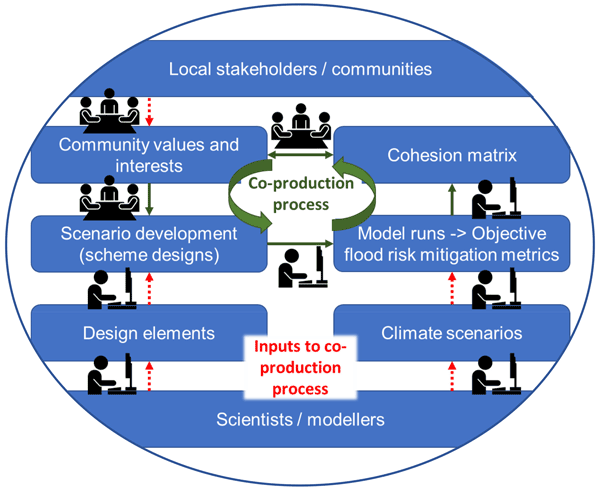
Coastal nature-based solutions to adapt to sea-level rise, such as managed realignments (MRs), are becoming increasingly popular amongst scientists and coastal managers. However, local communities often oppose these projects, partly because scientific evidence for their efficiency is limited. Here, we propose a framework to work with stakeholders and communities to define success variables of MR projects and co-produce novel knowledge on the projects’ efficiency to mitigate coastal flood risks.
Ian Simpson, Edward Hanna, Ryan S. Williams, Linh Luu, Andrew Orr, Julie Jones, Xavier Fettweis, Jose Abraham Torres Alavez, Ole Bøssing Christensen, Ella Gilbert, Sid Gumber, Christoph Kittel, Sihan Li, Damien Maure, Ruth Mottram, Tony Phillips, Willem Jan van de Berg, and Kristiina Verro
EGUsphere, https://doi.org/10.5194/egusphere-2026-2270, https://doi.org/10.5194/egusphere-2026-2270, 2026
Short summary
Short summary
The warming trend in global temperatures has potential to result in accelerated break up of the Antarctic ice shelves, which would contribute to rising sea levels. Here we present a novel database of Antarctic extreme weather events over a selection of the Antarctic ice shelves. We examine air temperature, precipitation, wind and surface pressure. In addition, we examine trends in the frequency of extreme events and the links with weather patterns around Antarctica.
Huili Chen, Qiuhua Liang, Jiaheng Zhao, and Sudan Bikash Maharjan
Hydrol. Earth Syst. Sci., 29, 733–752, https://doi.org/10.5194/hess-29-733-2025, https://doi.org/10.5194/hess-29-733-2025, 2025
Short summary
Short summary
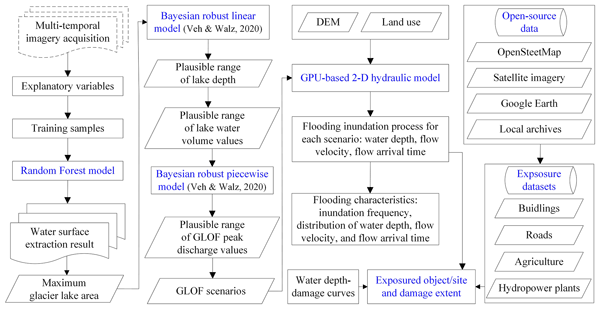
Glacial lake outburst floods (GLOFs) can cause serious damage. To assess their risks, we developed an innovative framework using remote sensing, Bayesian models, flood modelling, and open-source data. This enables us to evaluate GLOFs on a national scale, despite limited data and challenges accessing high-altitude lakes. We evaluated dangerous lakes in Nepal, identifying those most at risk. This work is crucial for understanding GLOF risks, and the framework can be transferred to other areas.
Thomas J. Ballinger, Kent Moore, Qinghua Ding, Amy H. Butler, James E. Overland, Richard L. Thoman, Ian Baxter, Zhe Li, and Edward Hanna
Weather Clim. Dynam., 5, 1473–1488, https://doi.org/10.5194/wcd-5-1473-2024, https://doi.org/10.5194/wcd-5-1473-2024, 2024
Short summary
Short summary
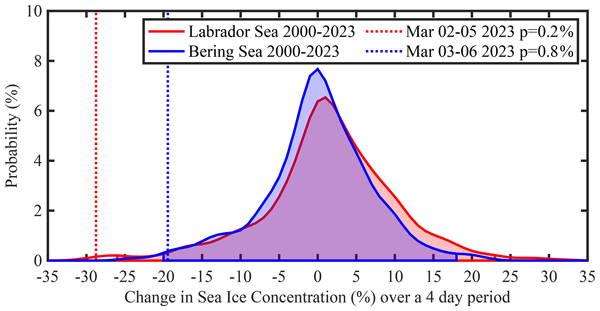
This study chronicles the meteorological conditions that led to the anomalous, tandem March 2023 ice melt event in the Labrador and Bering seas. A sudden stratospheric warming event initiated the development of an anticyclonic circulation pattern over the Greenland–Labrador region, while the La Niña background state supported ridging conditions over Alaska, both of which aided northward transport of warm, moist air and drove the concurrent sea ice melt extremes.
Zhen Lei Wei, Yue Quan Shang, Qiu Hua Liang, and Xi Lin Xia
Nat. Hazards Earth Syst. Sci., 24, 3357–3379, https://doi.org/10.5194/nhess-24-3357-2024, https://doi.org/10.5194/nhess-24-3357-2024, 2024
Short summary
Short summary
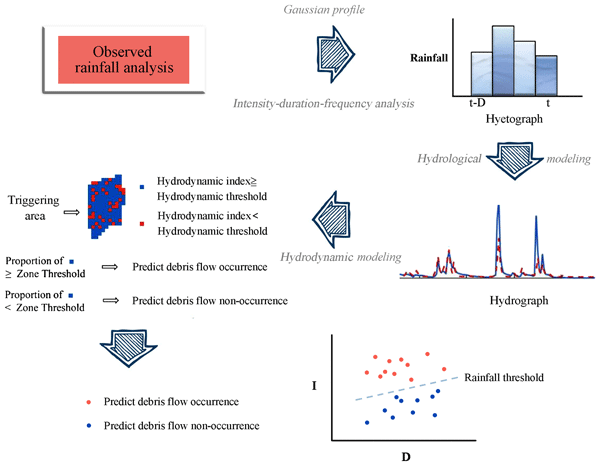
The initiation of debris flows is significantly influenced by rainfall-induced hydrological processes. We propose a novel framework based on an integrated hydrological and hydrodynamic model and aimed at estimating intensity–duration (ID) rainfall thresholds responsible for triggering debris flows. In comparison to traditional statistical approaches, this physically based framework is particularly suitable for application in ungauged catchments where historical debris flow data are scarce.
Mark Schuerch, Hannah L. Mossman, Harriet E. Moore, Elizabeth Christie, and Joshua Kiesel
Nat. Hazards Earth Syst. Sci., 22, 2879–2890, https://doi.org/10.5194/nhess-22-2879-2022, https://doi.org/10.5194/nhess-22-2879-2022, 2022
Short summary
Short summary
Coastal nature-based solutions to adapt to sea-level rise, such as managed realignments (MRs), are becoming increasingly popular amongst scientists and coastal managers. However, local communities often oppose these projects, partly because scientific evidence for their efficiency is limited. Here, we propose a framework to work with stakeholders and communities to define success variables of MR projects and co-produce novel knowledge on the projects’ efficiency to mitigate coastal flood risks.
Cited articles
AghaKouchak, A., Chiang, F., Huning, L. S., Love, C. A., Mallakpour, I., Mazdiyasni, O., Moftakhari, H., Papalexiou, S. M., Ragno, E., and Sadegh, M.: Climate extremes and compound hazards in a warming world, Ann. Rev. Earth Planet. Sci., 48, 519–548, 2020.
Austin, E. K. and Kiem, A. S.: A review of the relationship between mental health, wellbeing and drought resilience in rural, regional and remote communities, Psychiatry J., 16, p. 1528573, https://doi.org/10.3389/fpsyt.2025.1528573, 2025.
Boult, V. L., Black, E., Abdillahi, H. S., Bailey, M., Harris, C., Kilavi, M., Kniveton, D., MacLeod, D., Mwangi, E., Otieno, G., and Rees, E.: Towards drought impact-based forecasting in a multi-hazard context, Clim. Risk Manage., 35, 100402, https://doi.org/10.1016/j.crm.2022.100402, 2022.
Bryant, R. A., Waters, E., Gibbs, L., Gallagher, H. C., Pattison, P., Lusher, D., MacDougall, C., Harms, L., Block, K., Snowdon, E., and Sinnott, V.: Psychological outcomes following the Victorian Black Saturday bushfires, Aust. NZ J. Psychiatry, 48, 634–643, https://doi.org/10.1177/0004867414534476, 2014.
Chambers, R.: Paradigm shifts and the Practice of Participatory Research and Development. Institute of Development Studies Working Paper 2, https://hdl.handle.net/20.500.12413/3712 (last access: 21 June 2026), 1994.
Chapman, S., Trancoso, R., Syktus, J., Eccles, R., and Toombs, N.: Impacts on compound drought heatwave events in Australia per global warming level, Environ. Res. Lett., 20, 054070, https://doi.org/10.1088/1748-9326/adc8bd, 2025.
Chiu, G. L. and Chock, G. Y.: Multihazard performance based objective design for managing natural hazards damage, IFAC Proc. Vol, 31, 159–164, https://doi.org/10.1016/S1474-6670(17)38490-2, 1998.
Claassen, J. N., Ward, P. J., Daniell, J., Koks, E. E., Tiggeloven, T., and de Ruiter, M. C.: A new method to compile global multi-hazard event sets, Sci. Rep., 13, p.13808, https://doi.org/10.1038/s41598-023-40400-5, 2023.
Ferrario, D. M., Sanò, M., Maraschini, M., Critto, A., and Torresan, S.: Review article: Harnessing Machine Learning methods for climate multi-hazard and multi-risk assessment, EGUsphere [preprint], https://doi.org/10.5194/egusphere-2025-670, 2025.
Forsyth, T.: Political ecology and the epistemology of social justice, Geoforum, 39, 756–764, 2008.
Gallina, V., Torresan, S., Critto, A., Sperotto, A., Glade, T., and Marcomini, A.: A review of multi-risk methodologies for natural hazards: Consequences and challenges for a climate change impact assessment, J. Environ. Man., 168, 123–132, https://doi.org/10.1016/j.jenvman.2015.11.011, 2016.
Gbegbelegbe, S., Chikoye, D., Alene, A., Kyei-Boahen, S., and Chigeza, G.: Strategic Foresight analysis of droughts in southern Africa and implications for food security, Front. Sustain. Food Syst., 7, 1159901, https://doi.org/10.3389/fsufs.2023.1159901, 2024.
Guerreiro, S. B., Dawson, R. J., Kilsby, C., Lewis, E., and Ford, A.: Future heat-waves, droughts and floods in 571 European cities, Environ. Res. Lett., 13, 034009, https://doi.org/10.1088/1748-9326/aaaad3, 2018.
Hendry, A., Haigh, I. D., Nicholls, R. J., Winter, H., Neal, R., Wahl, T., Joly-Laugel, A., and Darby, S. E.: Assessing the characteristics and drivers of compound flooding events around the UK coast, Hydrol. Earth Syst. Sci., 23, 3117–3139, https://doi.org/10.5194/hess-23-3117-2019, 2019.
Ishiwatari, M. and Hirai, H.: Challenges in Promoting All-Hazard Approach in Japan: Institutional Arrangements for Managing Cascading Effects, in: All-Hazards Approach: Towards Resilience Building, edited by: Izumi, T., pp. 191–205, Springer Nature Singapore, Singapore, https://doi.org/10.1007/978-981-97-1860-3_13, 2024.
Jasanoff, S.: The idiom of co-production, in: States of Knowledge, edited by: Jasanoff, S., pp. 1–12, Routledge, London, https://doi.org/10.4324/9780203413845, 2004.
Kappes, M. S., Keiler, M., von Elverfeldt, K., and Glade, T.: Challenges of analyzing multi-hazard risk: a review, Nat. Hazards, 64, 1925–1958, 2012.
Kolstad, E. W. and Johansson, K. A.: Uncertainties associated with quantifying climate change impacts on human health: a case study for diarrhea, Environ. Health Perspect., 119, p. 299, 2010.
Leiren, M. D. and Jacobsen, J. K. S.: Silos as barriers to public sector climate adaptation and preparedness: insights from road closures in Norway, Local Gov. Stud., 44, 492–511, https://doi.org/10.1080/03003930.2018.1465933, 2018.
Lenette, C.: Participatory action research: Ethics and decolonization. Oxford University Press, https://doi.org/10.1093/oso/9780197512456.001.0001, 2022.
Lewis, J.: A multi‐hazard history of Antigua, Disasters, 8, 190–197, 1984.
Massazza, A., Teyton, A., Charlson, F., Benmarhnia, T., and Augustinavicius, J. L.: Quantitative methods for climate change and mental health research: Current trends and future directions, Lancet Planet. Health, 6, e613–e627, https://doi.org/10.1016/S2542-5196(22)00120-6, 2022.
Miller, C. A.: Climate science and the making of a global political order, in: States of Knowledge, edited by: Jasanoff, S., pp. 46–66, Routledge, London, https://doi.org/10.4324/9780203413845, 2004.
Moore, H. E., Atanbori, J., Amankwaa, E. F., Gussy, M., Siriwardena, A. N., and Hanna, E.: Interdisciplinary methods for researching climate-mental health links through the Methane Early Warning Network (ME-NET): improving “visibility” and integrating complex multi-datasets, Research Directions: Depression, 1, p. e24, https://doi.org/10.1017/dep.2024.4, 2024.
Mulyani, R., Ahmadi, R., Pilakoutas, K., and Hajirasouliha, I.: A multi-hazard risk assessment of buildings in Padang city, Procedia Eng., 125, 1094–1100, https://doi.org/10.1016/j.proeng.2015.11.093, 2015.
Nohrstedt, D. and Parker, C. F.: Revisiting the role of disasters in climate policy-making, Clim. Policy, 24, 428–439, https://doi.org/10.1080/14693062.2024.2301781, 2024.
Norström, A. V., Cvitanovic, C., Löf, M. F., West, S., Wyborn, C., Balvanera, P., Bednarek, A. T., Bennett, E. M., Biggs, R., de Bremond, A., and Campbell, B. M.: Principles for knowledge co-production in sustainability research, Nat. Sustain., 3, 182–190, https://doi.org/10.1038/s41893-019-0448-2, 2020.
Ridder, N. N., Pitman, A. J., Westra, S., Ukkola, A., Do, H. X., Bador, M., Hirsch, A. L., Evans, J. P., Di Luca, A., and Zscheischler, J.: Global hotspots for the occurrence of compound events, Nat. Commun., 11, p. 5956, https://doi.org/10.1038/s41467-020-19639-3, 2020.
Romanello, M., Walawender, M., Hsu, S. C., Moskeland, A., Palmeiro-Silva, Y., Scamman, D., Ali, Z., Ameli, N., Angelova, D., Ayeb-Karlsson, S., and Basart, S.: The 2024 report of the Lancet Countdown on health and climate change: facing record-breaking threats from delayed action, Lancet, 404, 1847–1896, https://doi.org/10.1016/S0140-6736(24)01822-1, 2024.
Spence, R. J. S., Kelman, I., Baxter, P. J., Zuccaro, G., and Petrazzuoli, S.: Residential building and occupant vulnerability to tephra fall, Nat. Hazards Earth Syst. Sci., 5, 477–494, https://doi.org/10.5194/nhess-5-477-2005, 2005.
United Nations: Transforming our world: the 2030 agenda for sustainable development, A/RES/70/1, p. 35, https://documents-dds-ny.un.org/doc/UNDOC/GEN/N15/291/89/PDF/N1529189.pdf?OpenElement (last access: 5 April 2026), 2015.
Yiran, G. A., Stringer, L. C., Attua, E. M., Evans, A. J., Challinor, A. J., and Gyasi, E. A.: Mapping vulnerability to multiple hazards in the savannah Ecosystem in Ghana, Reg. Environ. Change, 17, 665–676, https://doi.org/10.1007/s10113-016-1054-8, 2017.
Short summary
Climate change will increase the frequency of extreme weather events like floods, droughts and storms. These hazards have impacts on human health. Some hazards, like storms, cause additional hazards like flooding. Little is known about the compound effects of multiple hazards on health, or how impacts vary between communities and areas. We present ten urgent research priorities related to the impact of multiple hazards on health to guide future decision-making towards climate resilience.
Climate change will increase the frequency of extreme weather events like floods, droughts and...


Altmetrics
Final-revised paper
Preprint