
Articles | Volume 26, issue 6
https://doi.org/10.5194/nhess-26-2817-2026
© Author(s) 2026. This work is distributed under
the Creative Commons Attribution 4.0 License.
the Creative Commons Attribution 4.0 License.
https://doi.org/10.5194/nhess-26-2817-2026
© Author(s) 2026. This work is distributed under
the Creative Commons Attribution 4.0 License.
the Creative Commons Attribution 4.0 License.
Research article
| 
12 Jun 2026
Research article |
| 12 Jun 2026
| 12 Jun 2026
Unravelling wind-driven impact of storm clusters, a case study for the insurer Generali France
Laboratoire des Sciences du Climat et de l'Environnement, UMR8212 CEA-CNRS-UVSQ, Université Paris-Saclay & IPSL, 91191, Gif sur Yvette, France
Generali France, 93210, Saint Denis, France
Pascal Yiou
Laboratoire des Sciences du Climat et de l'Environnement, UMR8212 CEA-CNRS-UVSQ, Université Paris-Saclay & IPSL, 91191, Gif sur Yvette, France
Quentin Hénaff
Generali France, 93210, Saint Denis, France
Laurent Boissier
Generali France, 93210, Saint Denis, France
Univ Paul Valéry Montpellier, LAGAM, 34000, Montpellier, France
Arthur Perringaux
Generali France, 93210, Saint Denis, France
Related authors
No articles found.
Davide Faranda, Lucas Taligrot, Pascal Yiou, and Nada Caud
Geosci. Commun., 9, 115–125, https://doi.org/10.5194/gc-9-115-2026, https://doi.org/10.5194/gc-9-115-2026, 2026
Short summary
Short summary
We developed a free online game called ClimarisQ to help people better understand climate change and extreme weather. By playing the game, users learn how decisions about the environment, money, and public opinion affect future risks. We studied how players reacted and found that the game makes climate issues easier to grasp and encourages discussion. This shows that interactive tools like games can support learning and action on climate and environmental challenges.
Camille Cadiou and Pascal Yiou
Earth Syst. Dynam., 16, 1759–1778, https://doi.org/10.5194/esd-16-1759-2025, https://doi.org/10.5194/esd-16-1759-2025, 2025
Short summary
Short summary
Cold spells affect healthcare and energy systems. Global warming is expected to reduce the amplitude and frequency of these climate extremes. We show that the intense cold spells of the 20th century will become nearly impossible in France by the end of the 21st century for high warming levels. We also demonstrate that events in France as intense as that in 1985 may still occur in the near future. These events are linked to specific atmospheric patterns that bring cold air from high latitudes into Europe.
Robin Noyelle, Davide Faranda, Yoann Robin, Mathieu Vrac, and Pascal Yiou
Weather Clim. Dynam., 6, 817–839, https://doi.org/10.5194/wcd-6-817-2025, https://doi.org/10.5194/wcd-6-817-2025, 2025
Short summary
Short summary
Properties of extreme meteorological and climatological events are changing under human-caused climate change. Extreme event attribution methods seek to estimate the contribution of global warming in the probability and intensity changes of extreme events. Here we propose a procedure to estimate these quantities for the flow analogue method, which compares the observed event to similar events in the past.
Ferran Lopez-Marti, Mireia Ginesta, Davide Faranda, Anna Rutgersson, Pascal Yiou, Lichuan Wu, and Gabriele Messori
Earth Syst. Dynam., 16, 169–187, https://doi.org/10.5194/esd-16-169-2025, https://doi.org/10.5194/esd-16-169-2025, 2025
Short summary
Short summary
Explosive cyclones and atmospheric rivers are two main drivers of extreme weather in Europe. In this study, we investigate their joint changes in future climates over the North Atlantic. Our results show that both the concurrence of these events and the intensity of atmospheric rivers increase by the end of the century across different future scenarios. Furthermore, explosive cyclones associated with atmospheric rivers last longer and are deeper than those without atmospheric rivers.
Camille Cadiou and Pascal Yiou
Weather Clim. Dynam., 6, 1–15, https://doi.org/10.5194/wcd-6-1-2025, https://doi.org/10.5194/wcd-6-1-2025, 2025
Short summary
Short summary
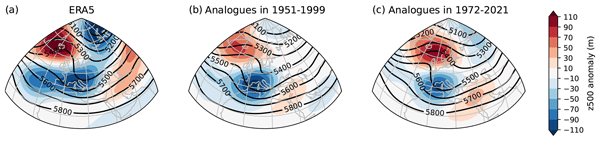
Extreme cold winter temperatures in Europe have huge societal impacts. This study focuses on extreme cold events, such as the winter of 1963 in France, which are expected to become rarer due to climate change. We use a light and efficient rare-event algorithm to simulate a large number of extreme cold winters over France to analyse their characteristics. We find that despite fewer occurrences, their intensity remains steady. We analyse prevailing atmospheric circulation during these events.
Sebastian Sippel, Clair Barnes, Camille Cadiou, Erich Fischer, Sarah Kew, Marlene Kretschmer, Sjoukje Philip, Theodore G. Shepherd, Jitendra Singh, Robert Vautard, and Pascal Yiou
Weather Clim. Dynam., 5, 943–957, https://doi.org/10.5194/wcd-5-943-2024, https://doi.org/10.5194/wcd-5-943-2024, 2024
Short summary
Short summary
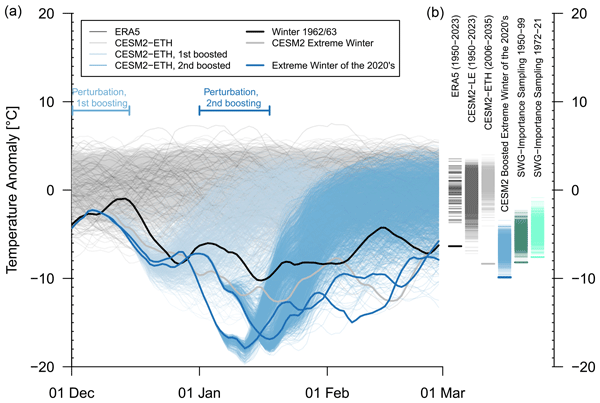
Winter temperatures in central Europe have increased. But cold winters can still cause problems for energy systems, infrastructure, or human health. Here we tested whether a record-cold winter, such as the one observed in 1963 over central Europe, could still occur despite climate change. The answer is yes: it is possible, but it is very unlikely. Our results rely on climate model simulations and statistical rare event analysis. In conclusion, society must be prepared for such cold winters.
Davide Faranda, Gabriele Messori, Erika Coppola, Tommaso Alberti, Mathieu Vrac, Flavio Pons, Pascal Yiou, Marion Saint Lu, Andreia N. S. Hisi, Patrick Brockmann, Stavros Dafis, Gianmarco Mengaldo, and Robert Vautard
Weather Clim. Dynam., 5, 959–983, https://doi.org/10.5194/wcd-5-959-2024, https://doi.org/10.5194/wcd-5-959-2024, 2024
Short summary
Short summary
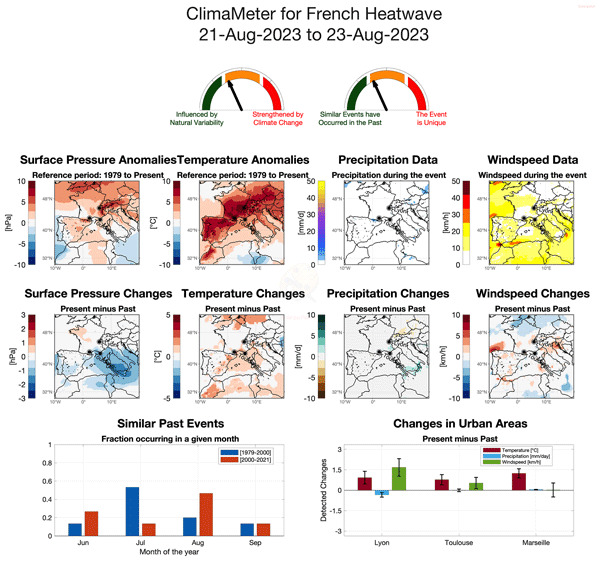
We introduce ClimaMeter, a tool offering real-time insights into extreme-weather events. Our tool unveils how climate change and natural variability affect these events, affecting communities worldwide. Our research equips policymakers and the public with essential knowledge, fostering informed decisions and enhancing climate resilience. We analysed two distinct events, showcasing ClimaMeter's global relevance.
Meriem Krouma, Riccardo Silini, and Pascal Yiou
Earth Syst. Dynam., 14, 273–290, https://doi.org/10.5194/esd-14-273-2023, https://doi.org/10.5194/esd-14-273-2023, 2023
Short summary
Short summary
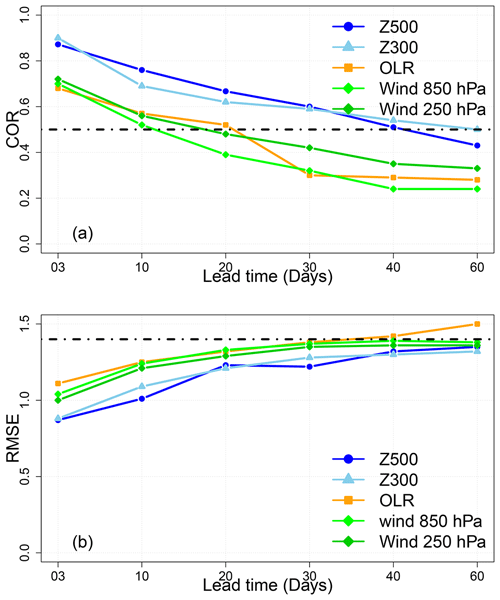
We present a simple system to forecast the Madden–Julian Oscillation (MJO). We use atmospheric circulation as input to our system. We found a good-skill forecast of the MJO amplitude within 40 d using this methodology. Comparing our results with ECMWF and machine learning forecasts confirmed the good skill of our system.
Davide Faranda, Stella Bourdin, Mireia Ginesta, Meriem Krouma, Robin Noyelle, Flavio Pons, Pascal Yiou, and Gabriele Messori
Weather Clim. Dynam., 3, 1311–1340, https://doi.org/10.5194/wcd-3-1311-2022, https://doi.org/10.5194/wcd-3-1311-2022, 2022
Short summary
Short summary
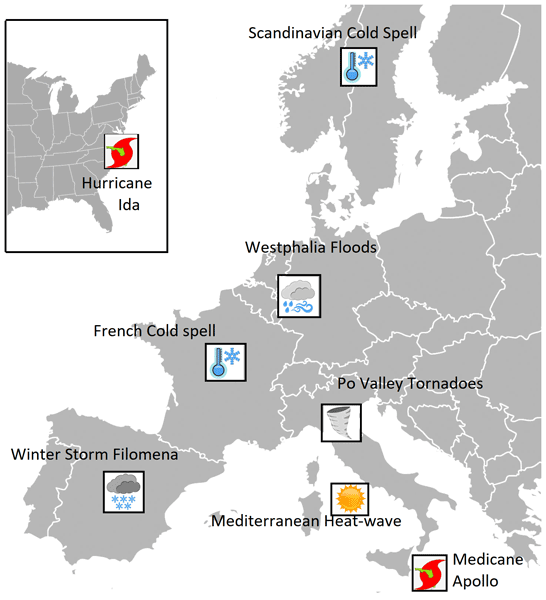
We analyze the atmospheric circulation leading to impactful extreme events for the calendar year 2021 such as the Storm Filomena, Westphalia floods, Hurricane Ida and Medicane Apollo. For some of the events, we find that climate change has contributed to their occurrence or enhanced their intensity; for other events, we find that they are unprecedented. Our approach underscores the importance of considering changes in the atmospheric circulation when performing attribution studies.
Meriem Krouma, Pascal Yiou, Céline Déandreis, and Soulivanh Thao
Geosci. Model Dev., 15, 4941–4958, https://doi.org/10.5194/gmd-15-4941-2022, https://doi.org/10.5194/gmd-15-4941-2022, 2022
Short summary
Short summary
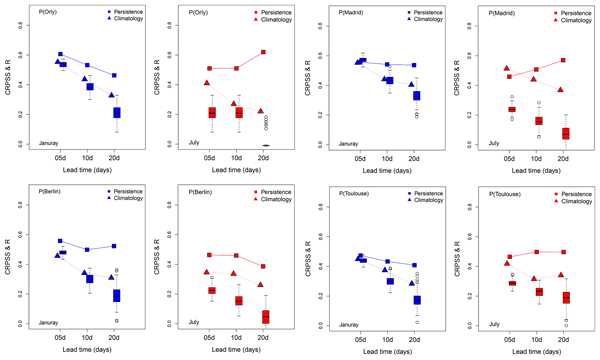
We evaluated the skill of a stochastic weather generator (SWG) to forecast precipitation at different time scales and in different areas of western Europe from analogs of Z500 hPa. The SWG has the skill to simulate precipitation for 5 and 10 d. We found that forecast weaknesses can be associated with specific weather patterns. The comparison with ECMWF forecasts confirms the skill of our model. This work is important because it provides information about weather forecasts over specific areas.
Miriam D'Errico, Flavio Pons, Pascal Yiou, Soulivanh Tao, Cesare Nardini, Frank Lunkeit, and Davide Faranda
Earth Syst. Dynam., 13, 961–992, https://doi.org/10.5194/esd-13-961-2022, https://doi.org/10.5194/esd-13-961-2022, 2022
Short summary
Short summary
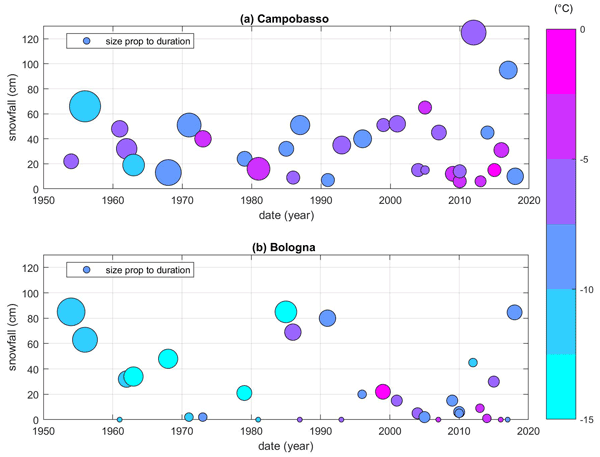
Climate change is already affecting weather extremes. In a warming climate, we will expect the cold spells to decrease in frequency and intensity. Our analysis shows that the frequency of circulation patterns leading to snowy cold-spell events over Italy will not decrease under business-as-usual emission scenarios, although the associated events may not lead to cold conditions in the warmer scenarios.
Linh N. Luu, Robert Vautard, Pascal Yiou, and Jean-Michel Soubeyroux
Earth Syst. Dynam., 13, 687–702, https://doi.org/10.5194/esd-13-687-2022, https://doi.org/10.5194/esd-13-687-2022, 2022
Short summary
Short summary
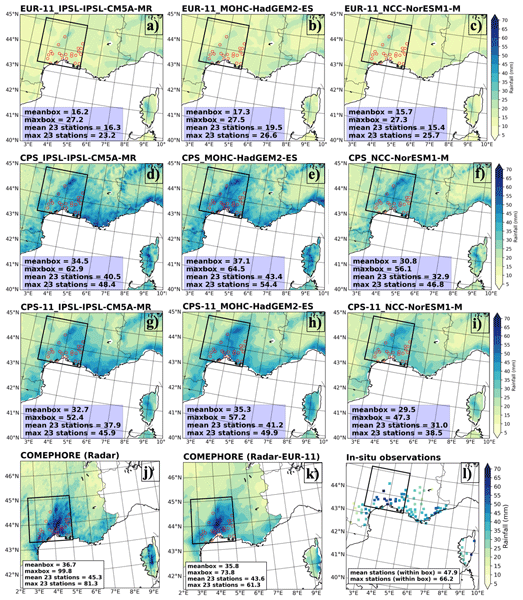
This study downscales climate information from EURO-CORDEX (approx. 12 km) output to a higher horizontal resolution (approx. 3 km) for the south of France. We also propose a matrix of different indices to evaluate the high-resolution precipitation output. We find that a higher resolution reproduces more realistic extreme precipitation events at both daily and sub-daily timescales. Our results and approach are promising to apply to other Mediterranean regions and climate impact studies.

Pascal Yiou and Nicolas Viovy
Earth Syst. Dynam., 12, 997–1013, https://doi.org/10.5194/esd-12-997-2021, https://doi.org/10.5194/esd-12-997-2021, 2021
Short summary
Short summary
This paper presents a model of tree ruin as a response to drought hazards. This model is inspired by a standard model of ruin in the insurance industry. We illustrate how ruin can occur in present-day conditions and the sensitivity of ruin and time to ruin to hazard statistical properties. We also show how tree strategies to cope with hazards can affect their long-term reserves and the probability of ruin.
Cited articles
AIR: European Winter Storm Klaus, https://alert.risksolutions.verisk.com/extratropical-cyclone/2009/european-winter-storm-klaus/update-3/#summary (last access: 1 June 2026), 2009. a
APREF: Réassurance des événements naturels : problématique de la définition de l'événement, Note, APREF, https://www.apref.org/wp-content/uploads/2020/10/3._note_apref_septembre_2014_-_reassurance_des_evenements_naturels_-_problematique_de_la_definition_de_levenement.pdf (last access: 12 May 2026), 2014. a
Base Adresse Nationale: Base Adresse Nationale (BAN), https://www.data.gouv.fr/datasets/base-adresse-nationale/informations (last access: 12 May 2026), 2025. a
Birkmann, J., Cardona, O. D., Carreño, M. L., Barbat, A. H., Pelling, M., Schneiderbauer, S., Kienberger, S., Keiler, M., Alexander, D., Zeil, P., and Welle, T.: Framing vulnerability, risk and societal responses: the MOVE framework, Nat. Hazards, 67, 193–211, https://doi.org/10.1007/s11069-013-0558-5, 2013. a
Bjerknes, J. and Solberg, H.: Life Cycle of Cyclones and the Polar Front Theory of Atmospheric Circulation, Geophys. Publik., 3, 3–18, https://geofysikk.org/NGF/GeoPub/NGF_GP_Vol03_no1.pdf (last access: 12 May 2026), 1922. a
Bresch, D. N., Bispig, M., and Lemcke, G.: Storm over Europe: An underestimated risk, Technical report, Swiss Re Publishing, https://www.ipcc.ch/apps/njlite/srex/njlite_download.php?id=6598 (last access: 12 May 2026), 2000. a
Bründl, M. and Rickli, C.: The storm Lothar 1999 in Switzerland–an incident analysis, Forest Snow and Landscape Research, 77, 207–216, 2002. a
Copernicus C3S: Windstorm tracks and footprints derived from reanalysis over Europe between 1940 to present, Copernicus Climate Change Service (C3S) Climate Data Store (CDS) [data set], https://doi.org/10.24381/BF1F06A9, 2025. a
Copernicus Climate Change Service: Winter windstorm indicators for Europe from 1979 to 2021 derived from reanalysis, Copernicus Climate Change Service (C3S) Climate Data Store (CDS) [data set], https://doi.org/10.24381/CDS.9B4EA013, 2020. a, b
Copernicus Climate Change Service: ERA5 hourly data on pressure levels from 1940 to present, Copernicus Climate Change Service (C3S) Climate Data Store (CDS) [data set], https://doi.org/10.24381/cds.bd0915c6, 2026. a
Cornér, J., Bouvier, C., Doiteau, B., Pantillon, F., and Sinclair, V. A.: Classification of North Atlantic and European extratropical cyclones using multiple measures of intensity, Nat. Hazards Earth Syst. Sci., 25, 207–229, https://doi.org/10.5194/nhess-25-207-2025, 2025. a
Cusack, S.: The observed clustering of damaging extratropical cyclones in Europe, Nat. Hazards Earth Syst. Sci., 16, 901–913, https://doi.org/10.5194/nhess-16-901-2016, 2016. a, b
Cusack, S.: A long record of European windstorm losses and its comparison to standard climate indices, Nat. Hazards Earth Syst. Sci., 23, 2841–2856, https://doi.org/10.5194/nhess-23-2841-2023, 2023. a, b, c
Dacre, H. F. and Pinto, J. G.: Serial clustering of extratropical cyclones: a review of where, when and why it occurs, npj Climate and Atmospheric Science, 3, 48, https://doi.org/10.1038/s41612-020-00152-9, 2020. a, b, c
Deroche, M.-S., Choux, M., Codron, F., and Yiou, P.: Three variables are better than one: detection of european winter windstorms causing important damages, Nat. Hazards Earth Syst. Sci., 14, 981–993, https://doi.org/10.5194/nhess-14-981-2014, 2014. a
Dorland, C., Tol, R. S. J., and Palutikof, J. P.: Vulnerability of the Netherlands and Northwest Europe to storm damage under climate change, Climatic Change, 43, 513–535, https://doi.org/10.1023/A:1005492126814, 1999. a
ECMWF: Insurance impacts of European windstorms, https://stories.ecmwf.int/insurance-impacts-of-european-windstorms/index.html (last access: 13 February 2025), 2024. a
Economou, T., Stephenson, D. B., Pinto, J. G., Shaffrey, L. C., and Zappa, G.: Serial clustering of extratropical cyclones in a multi model ensemble of historical and future simulations, Q. J. Roy. Meteor. Soc., 141, 3076–3087, https://doi.org/10.1002/qj.2591, 2015. a
ESRI: Geocode Addresses (Geocoding), https://pro.arcgis.com/en/pro-app/latest/tool-reference/geocoding/geocode-addresses.htm (last access: 12 May 2026), 2025. a
European Parliament and Council of the European Union: Directive 2009/138/EC of 25 November 2009 on the taking-up and pursuit of the business of Insurance and Reinsurance (Solvency II) (recast) (text with EEA relevance), Official Journal of the European Union, L 335/1, Document 32009L0138, http://data.europa.eu/eli/dir/2009/138/oj (last access: 12 May 2026), 2009. a
Fédération France Assureurs: L'assurance habitation en 2023, https://www.franceassureurs.fr/nos-chiffres-cles/ assurance-de-dommages-et-responsabilite/lassurance-habitation-en-2023/ (last access: 12 May 2026), 2024a. a
Fehlman, C. A., Ryan, S. C., Lysne, K. G., Rundgren, Q. M., Spurlock, T. J., Orbison, R. O., Runkle, J. D., and Sugg, M. M.: Scoping review of the societal impacts of compound climate events, Discover Environment, 3, 2, https://doi.org/10.1007/s44274-025-00185-y, 2025. a
Feser, F., Barcikowska, M., Krueger, O., Schenk, F., Weisse, R., and Xia, L.: Storminess over the North Atlantic and northwestern Europe – a review, Q. J. Roy. Meteor. Soc., 141, 350–382, https://doi.org/10.1002/qj.2364, 2015. a
Flaounas, E., Aragão, L., Bernini, L., Dafis, S., Doiteau, B., Flocas, H., Gray, S. L., Karwat, A., Kouroutzoglou, J., Lionello, P., Miglietta, M. M., Pantillon, F., Pasquero, C., Patlakas, P., Picornell, M. Á., Porcù, F., Priestley, M. D. K., Reale, M., Roberts, M. J., Saaroni, H., Sandler, D., Scoccimarro, E., Sprenger, M., and Ziv, B.: A composite approach to produce reference datasets for extratropical cyclone tracks: application to Mediterranean cyclones, Weather Clim. Dynam., 4, 639–661, https://doi.org/10.5194/wcd-4-639-2023, 2023. a
Flynn, C. M., Moemken, J., Pinto, J. G., Schutte, M. K., and Messori, G.: CLIMK–WINDS: a new database of extreme European winter windstorms, Earth Syst. Sci. Data, 17, 4431–4453, https://doi.org/10.5194/essd-17-4431-2025, 2025. a, b, c
Gall, M.: The suitability of disaster loss databases to measure loss and damage from climate change, Int. J. Global Warm., 8, 170, https://doi.org/10.1504/IJGW.2015.071966, 2015. a, b
Ginesta, M., Yiou, P., Messori, G., and Faranda, D.: A methodology for attributing severe extratropical cyclones to climate change based on reanalysis data: the case study of storm Alex 2020, Clim. Dynam., 61, 229–253, https://doi.org/10.1007/s00382-022-06565-x, 2023. a, b
Gramcianinov, C., Campos, R., De Camargo, R., Hodges, K., Guedes Soares, C., and Da Silva Dias, P.: Analysis of Atlantic extratropical storm tracks characteristics in 41 years of ERA5 and CFSR/CFSv2 databases, Ocean Eng., 216, 108111, https://doi.org/10.1016/j.oceaneng.2020.108111, 2020. a
Hasbini, L.: Unravelling the wind impact of clusters of storms, a case study over the French insurer Generali – Scripts, Zenodo [code], https://doi.org/10.5281/zenodo.15771837, 2025. a
Hauser, S., Mueller, S., Chen, X., Chen, T., Pinto, J. G., and Grams, C. M.: The linkage of serial cyclone clustering in Western Europe and weather regimes in the North Atlantic European region in boreal winter, Geophys. Res. Lett., 50, e2022GL101900, https://doi.org/10.1029/2022GL101900, 2023. a
Hawcroft, M., Walsh, E., Hodges, K., and Zappa, G.: Significantly increased extreme precipitation expected in Europe and North America from extratropical cyclones, Environ. Res. Lett., 13, 124006, https://doi.org/10.1088/1748-9326/aaed59, 2018. a
Hawcroft, M. K., Shaffrey, L. C., Hodges, K. I., and Dacre, H. F.: How much Northern Hemisphere precipitation is associated with extratropical cyclones?, Geophys. Res. Lett., 39, 2012GL053866, https://doi.org/10.1029/2012GL053866, 2012. a
Heneka, P., Hofherr, T., Ruck, B., and Kottmeier, C.: Winter storm risk of residential structures – model development and application to the German state of Baden-Württemberg, Nat. Hazards Earth Syst. Sci., 6, 721–733, https://doi.org/10.5194/nhess-6-721-2006, 2006. a
Hillier, J. K., Bloomfield, H. C., Manning, C., Garry, F., Shaffrey, L., Bates, P., and Kumar, D.: Increasingly seasonal jet stream raises risk of co occurring flooding and extreme wind in Great Britain, Int. J. Climatol., 45, e8763, https://doi.org/10.1002/joc.8763, 2025. a
Hodges, K. I.: A general method for tracking analysis and its application to meteorological data, Mon. Weather Rev., 122, 2573–2586, https://doi.org/10.1175/1520-0493(1994)122<2573:AGMFTA>2.0.CO;2, 1994. a
Hodges, K. I.: Adaptive constraints for feature tracking, Mon. Weather Rev., 127, 1362–1373, https://doi.org/10.1175/1520-0493(1999)127<1362:ACFFT>2.0.CO;2, 1999. a
INSEE: Coefficient de transformation de l'euro ou du franc d'une année, en euro ou en franc d'une autre année – Base 2015, https://www.insee.fr/fr/statistiques/serie/010605954 (last access: 12 May 2026), 2025. a
Intergovernmental Panel On Climate Change: Climate Change 2021 – The Physical Science Basis: Working Group I Contribution to the Sixth Assessment Report of the Intergovernmental Panel on Climate Change, Cambridge University Press, 1st edn., https://doi.org/10.1017/9781009157896, 2023. a
Jaison, A., Sorteberg, A., Michel, C., and Breivik, Ø.: Assessment of wind–damage relations for Norway using 36 years of daily insurance data, Nat. Hazards Earth Syst. Sci., 24, 1341–1355, https://doi.org/10.5194/nhess-24-1341-2024, 2024. a
Kaas, R.: Modern actuarial risk theory: using R, Springer, Berlin [New York], 2nd edn., https://doi.org//10.1007/978-3-540-70998-5, 2009. a
Karwat, A., Franzke, C. L. E., Pinto, J. G., Lee, S.-S., and Blender, R.: Northern Hemisphere extra-tropical cyclone clustering in ERA5 reanalysis and the CESM2 large ensemble, J. Climate, https://doi.org/10.1175/JCLI-D-23-0160.1, 2023. a
Kettle, A. J.: Storm Anatol over Europe in December 1999: impacts on societal and energy infrastructure, Adv. Geosci., 56, 141–153, https://doi.org/10.5194/adgeo-56-141-2021, 2021. a
Khare, S., Bonazzi, A., Mitas, C., and Jewson, S.: Modelling clustering of natural hazard phenomena and the effect on re/insurance loss perspectives, Nat. Hazards Earth Syst. Sci., 15, 1357–1370, https://doi.org/10.5194/nhess-15-1357-2015, 2015. a
Klawa, M. and Ulbrich, U.: A model for the estimation of storm losses and the identification of severe winter storms in Germany, Nat. Hazards Earth Syst. Sci., 3, 725–732, https://doi.org/10.5194/nhess-3-725-2003, 2003. a
Kron, W., Steuer, M., Löw, P., and Wirtz, A.: How to deal properly with a natural catastrophe database – analysis of flood losses, Nat. Hazards Earth Syst. Sci., 12, 535–550, https://doi.org/10.5194/nhess-12-535-2012, 2012. a
Liberato, M. L. R., Pinto, J. G., Trigo, I. F., and Trigo, R. M.: Klaus – an exceptional winter storm over northern Iberia and southern France, Weather, 66, 330–334, https://doi.org/10.1002/wea.755, 2011. a
Lloyd's of London: Catastrophe Modelling and Climate Change – Lloyd's, https://www.lloyds.com/insights/risk-reports/catastrophe-modelling-and-climate-change (last access: 12 May 2026), 2026. a
Lockwood, J. F., Guentchev, G. S., Alabaster, A., Brown, S. J., Palin, E. J., Roberts, M. J., and Thornton, H. E.: Using high-resolution global climate models from the PRIMAVERA project to create a European winter windstorm event set, Nat. Hazards Earth Syst. Sci., 22, 3585–3606, https://doi.org/10.5194/nhess-22-3585-2022, 2022. a
Ludwig, P., Pinto, J. G., Hoepp, S. A., Fink, A. H., and Gray, S. L.: Secondary cyclogenesis along an occluded front leading to damaging wind gusts: windstorm Kyrill, January 2007, Mon. Weather Rev., 143, 1417–1437, https://doi.org/10.1175/MWR-D-14-00304.1, 2015. a
Mailier, P. J., Stephenson, D. B., Ferro, C. A. T., and Hodges, K. I.: Serial clustering of extratropical cyclones, Mon. Weather Rev., 134, 2224–2240, https://doi.org/10.1175/MWR3160.1, 2006. a, b, c
Meteo France: Tempêtes et changement climatique, https://meteofrance.com/changement-climatique/observer/tempetes-et-changement-climatique (last access: 12 May 2026), 2023. a
Michèle Lai: Twenty years after storms Anatol, Lothar and Martin: Memories from the end of the millennium, https://www.moodys.com/web/en/us/insights/insurance/twenty-years-after-storms-anatol-lothar-and-martin-memories-from-the-end-of-the-millennium.html (last access: 19 February 2025), 2019. a
Moemken, J., Alifdini, I., Ramos, A. M., Georgiadis, A., Brocklehurst, A., Braun, L., and Pinto, J. G.: Insurance loss model vs. meteorological loss index – how comparable are their loss estimates for European windstorms?, Nat. Hazards Earth Syst. Sci., 24, 3445–3460, https://doi.org/10.5194/nhess-24-3445-2024, 2024a. a, b
Moemken, J., Messori, G., and Pinto, J. G.: Windstorm losses in Europe – What to gain from damage datasets, Weather and Climate Extremes, 44, 100661, https://doi.org/10.1016/j.wace.2024.100661, 2024b. a, b, c, d
Munich RE: Data on natural disasters since 1980 – Munich RE's NatCatSERVICE, https://www.munichre.com/en/solutions/for-industry-clients/natcatservice.html, last access: 20 February 2025. a
Neu, U., Akperov, M. G., Bellenbaum, N., Benestad, R., Blender, R., Caballero, R., Cocozza, A., Dacre, H. F., Feng, Y., Fraedrich, K., Grieger, J., Gulev, S., Hanley, J., Hewson, T., Inatsu, M., Keay, K., Kew, S. F., Kindem, I., Leckebusch, G. C., Liberato, M. L. R., Lionello, P., Mokhov, I. I., Pinto, J. G., Raible, C. C., Reale, M., Rudeva, I., Schuster, M., Simmonds, I., Sinclair, M., Sprenger, M., Tilinina, N. D., Trigo, I. F., Ulbrich, S., Ulbrich, U., Wang, X. L., and Wernli, H.: IMILAST: a community effort to intercompare extratropical cyclone detection and tracking algorithms, B. Am. Meteorol. Soc., 94, 529–547, https://doi.org/10.1175/BAMS-D-11-00154.1, 2013. a, b, c
Pardowitz, T., Osinski, R., Kruschke, T., and Ulbrich, U.: An analysis of uncertainties and skill in forecasts of winter storm losses, Nat. Hazards Earth Syst. Sci., 16, 2391–2402, https://doi.org/10.5194/nhess-16-2391-2016, 2016. a
Pinto, J. G., Gómara, I., Masato, G., Dacre, H. F., Woollings, T., and Caballero, R.: Large scale dynamics associated with clustering of extratropical cyclones affecting Western Europe, J. Geophys. Res.-Atmos., 119, https://doi.org/10.1002/2014JD022305, 2014. a, b, c, d
Pinto, J. G., Ulbrich, S., Economou, T., Stephenson, D. B., Karremann, M. K., and Shaffrey, L. C.: Robustness of serial clustering of extratropical cyclones to the choice of tracking method, Tellus A, 68, 32204, https://doi.org/10.3402/tellusa.v68.32204, 2016. a, b
Prahl, B. F., Rybski, D., Burghoff, O., and Kropp, J. P.: Comparison of storm damage functions and their performance, Nat. Hazards Earth Syst. Sci., 15, 769–788, https://doi.org/10.5194/nhess-15-769-2015, 2015. a, b, c
Priestley, M. D. K., Pinto, J. G., Dacre, H. F., and Shaffrey, L. C.: The role of cyclone clustering during the stormy winter of 2013/2014, Weather, 72, 187–192, https://doi.org/10.1002/wea.3025, 2017a. a
Priestley, M. D. K., Pinto, J. G., Dacre, H. F., and Shaffrey, L. C.: Rossby wave breaking, the upper level jet, and serial clustering of extratropical cyclones in western Europe, Geophys. Res. Lett., 44, 514–521, https://doi.org/10.1002/2016GL071277, 2017b. a
Priestley, M. D. K., Dacre, H. F., Shaffrey, L. C., Schemm, S., and Pinto, J. G.: The role of secondary cyclones and cyclone families for the North Atlantic storm track and clustering over western Europe, Q. J. Roy. Meteor. Soc., 146, 1184–1205, https://doi.org/10.1002/qj.3733, 2020. a, b, c
Priestley, M. D. K., Stephenson, D. B., Scaife, A. A., Bannister, D., Allen, C. J. T., and Wilkie, D.: Forced trends and internal variability in climate change projections of extreme European windstorm frequency and severity, Q. J. Roy. Meteor. Soc., 150, 4933–4950, https://doi.org/10.1002/qj.4849, 2024. a, b
Raible, C. C., Della-Marta, P. M., Schwierz, C., Wernli, H., and Blender, R.: Northern Hemisphere extratropical cyclones: a comparison of detection and tracking methods and different reanalyses, Mon. Weather Rev., 136, 880–897, https://doi.org/10.1175/2007MWR2143.1, 2008. a
Risk Management Solutions, Inc: Modeling Fundamentals: Accounting for the Hours Clause, https://www.verisk.com/blog/modeling-fundamental--accounting-for-the-hours-clause/ (last access: 6 January 2026), 2019. a
Rivière, G., Arbogast, P., Maynard, K., and Joly, A.: The essential ingredients leading to the explosive growth stage of the European wind storm Lothar of Christmas 1999, Q. J. Roy. Meteor. Soc., 136, 638–652, https://doi.org/10.1002/qj.585, 2010. a, b
Roberts, J. F., Champion, A. J., Dawkins, L. C., Hodges, K. I., Shaffrey, L. C., Stephenson, D. B., Stringer, M. A., Thornton, H. E., and Youngman, B. D.: The XWS open access catalogue of extreme European windstorms from 1979 to 2012, Nat. Hazards Earth Syst. Sci., 14, 2487–2501, https://doi.org/10.5194/nhess-14-2487-2014, 2014. a, b
Schindler, D., Grebhan, K., Albrecht, A., and Schönborn, J.: Modelling the wind damage probability in forests in Southwestern Germany for the 1999 winter storm “Lothar”, Int. J. Biometeorol., 53, 543–554, https://doi.org/10.1007/s00484-009-0242-3, 2009. a
Schmoeckel, J. and Kottmeier, C.: Storm damage in the Black Forest caused by the winter storm ”Lothar” – Part 1: Airborne damage assessment, Nat. Hazards Earth Syst. Sci., 8, 795–803, https://doi.org/10.5194/nhess-8-795-2008, 2008. a
Schwierz, C., Köllner-Heck, P., Zenklusen Mutter, E., Bresch, D. N., Vidale, P.-L., Wild, M., and Schär, C.: Modelling European winter wind storm losses in current and future climate, Climatic Change, 101, 485–514, https://doi.org/10.1007/s10584-009-9712-1, 2010. a
Severino, L. G., Kropf, C. M., Afargan-Gerstman, H., Fairless, C., de Vries, A. J., Domeisen, D. I. V., and Bresch, D. N.: Projections and uncertainties of winter windstorm damage in Europe in a changing climate, Nat. Hazards Earth Syst. Sci., 24, 1555–1578, https://doi.org/10.5194/nhess-24-1555-2024, 2024. a
Sinclair, V. A. and Catto, J. L.: The relationship between extra-tropical cyclone intensity and precipitation in idealised current and future climates, Weather Clim. Dynam., 4, 567–589, https://doi.org/10.5194/wcd-4-567-2023, 2023. a
Stucki, P., Brönnimann, S., Martius, O., Welker, C., Imhof, M., von Wattenwyl, N., and Philipp, N.: A catalog of high-impact windstorms in Switzerland since 1859, Nat. Hazards Earth Syst. Sci., 14, 2867–2882, https://doi.org/10.5194/nhess-14-2867-2014, 2014. a, b, c, d
Van Ederen, D., Fonseca-Cerda, M. D. S., Botzen, W. J. W., Aerts, J. C. J. H., Lupi, V., Scussolini, P., and Gubbels, K. B.: A high-resolution compound vulnerability function for European winter storm losses, npj Natural Hazards, 2, 43, https://doi.org/10.1038/s44304-025-00091-6, 2025. a
Vitolo, R., Stephenson, D. B., Cook, I. M., and Mitchell-Wallace, K.: Serial clustering of intense European storms, Meteorol. Z., 18, 411–424, https://doi.org/10.1127/0941-2948/2009/0393, 2009. a, b
Welker, C., Röösli, T., and Bresch, D. N.: Comparing an insurer's perspective on building damages with modelled damages from pan-European winter windstorm event sets: a case study from Zurich, Switzerland, Nat. Hazards Earth Syst. Sci., 21, 279–299, https://doi.org/10.5194/nhess-21-279-2021, 2021. a
Wernli, H., Dirren, S., Liniger, M. A., and Zillig, M.: Dynamical aspects of the life cycle of the winter storm “Lothar” (24–26 December 1999), Q. J. Roy. Meteor. Soc., 128, 405–429, https://doi.org/10.1256/003590002321042036, 2002. a
William, O. D.: Event-based aggregation in focus, Chap. 4, Contemporary Commercial Law Series, Taylor and Francis Group, Milton, https://doi.org/10.4324/9781003080480, 2023. a, b, c
Zappa, G., Shaffrey, L. C., and Hodges, K. I.: The ability of CMIP5 models to simulate North Atlantic extratropical cyclones, J. Climate, 26, 5379–5396, https://doi.org/10.1175/JCLI-D-12-00501.1, 2013. a
Zscheischler, J., Westra, S., Van Den Hurk, B. J. J. M., Seneviratne, S. I., Ward, P. J., Pitman, A., AghaKouchak, A., Bresch, D. N., Leonard, M., Wahl, T., and Zhang, X.: Future climate risk from compound events, Nat. Clim. Change, 8, 469–477, https://doi.org/10.1038/s41558-018-0156-3, 2018. a
Zscheischler, J., Martius, O., Westra, S., Bevacqua, E., Raymond, C., Horton, R. M., Van Den Hurk, B., AghaKouchak, A., Jézéquel, A., Mahecha, M. D., Maraun, D., Ramos, A. M., Ridder, N. N., Thiery, W., and Vignotto, E.: A typology of compound weather and climate events, Nature Reviews Earth and Environment, 1, 333–347, https://doi.org/10.1038/s43017-020-0060-z, 2020. a
Short summary
Winter windstorms are the main natural hazard for Generali France. We present a method linking storm events to insurance claims, with a focus on clustered events (multiple storms hitting the same region within 96 h). These account for 85 % of losses over the period 1998-2024 and include major events like Lothar and Klaus. Damaging storms are twice as likely to occur in clusters, underlining the need to account for their impact in risk, loss, and reinsurance modelling.
Winter windstorms are the main natural hazard for Generali France. We present a method linking...


Altmetrics
Final-revised paper
Preprint