
Articles | Volume 26, issue 6
https://doi.org/10.5194/nhess-26-2743-2026
© Author(s) 2026. This work is distributed under
the Creative Commons Attribution 4.0 License.
the Creative Commons Attribution 4.0 License.
https://doi.org/10.5194/nhess-26-2743-2026
© Author(s) 2026. This work is distributed under
the Creative Commons Attribution 4.0 License.
the Creative Commons Attribution 4.0 License.
Research article
| 
11 Jun 2026
Research article |
| 11 Jun 2026
| 11 Jun 2026
Multi-hazard susceptibility mapping in a karst context using a machine-learning method (MaxEnt)
Hedieh Soltanpour
CORRESPONDING AUTHOR

UMR 7324 CITERES, University of Tours, Tours, France
Kamal Serrhini
UMR 7324 CITERES, University of Tours, Tours, France
Joel C. Gill
School of Earth and Environmental Sciences, Cardiff University, Cardiff, UK
Sven Fuchs
Department of Landscape, Water and Infrastructure, BOKU University, Vienna, Austria
Solmaz Mohadjer
Transdisciplinary Course Program, University of Tübingen, Tübingen, Germany
Related authors
No articles found.
Sven Fuchs, Konstantinos Karagiorgos, Margreth Keiler, Lars Nyberg, Maria Papathoma-Köhle, and Annemarie Polderman
Nat. Hazards Earth Syst. Sci., 26, 1785–1794, https://doi.org/10.5194/nhess-26-1785-2026, https://doi.org/10.5194/nhess-26-1785-2026, 2026
Short summary
Short summary
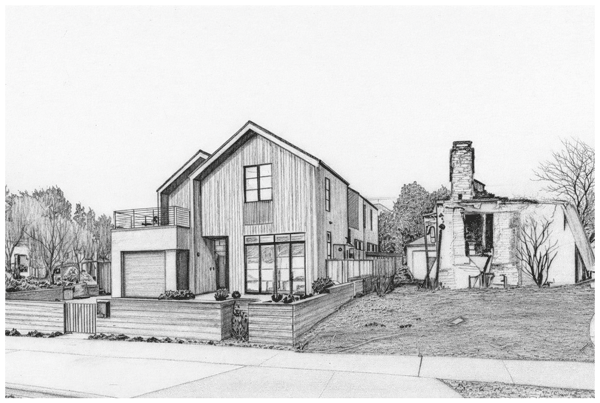
The 2025 California wildfires revealed persistent gaps between what we know about reducing disaster risk and what communities actually do. Limited awareness, weak resources, misaligned incentives, and complex rules leave people exposed. Similar patterns appear in floods, earthquakes and other disasters worldwide, highlighting the urgent need for stronger institutions, clearer policies, and active community engagement to build fair, practical, and lasting resilience.
Philip J. Ward, Sophie L. Buijs, Roxana Ciurean, Judith N. Claassen, James Daniell, Kelley De Polt, Melanie Duncan, Stefania Gottardo, Stefan Hochrainer-Stigler, Robert Šakić Trogrlić, Julius Schlumberger, Timothy Tiggeloven, Silvia Torresan, Nicole van Maanen, Andrew Warren, Carmen D. Álvarez-Albelo, Vanessa Banks, Benjamin Blanz, Veronica Casartelli, Jordan Correa, Julia Crummy, Anne Sophie Daloz, Marleen C. de Ruiter, Juan José Díaz-Hernández, Jaime Díaz-Pacheco, Pedro Dorta Antequera, Davide Ferrario, David Geurts, Sara García-González, Joel C. Gill, Raúl Hernández-Martín, Wiebke S. Jäger, Abel López-Díez, Lin Ma, Jaroslav Mysiak, Diep Ngoc Nguyen, Noemi Padrón Fumero, Eva-Cristina Petrescu, Karina Reiter, Jana Sillmann, Lara Smale, and Tristian Stolte
Nat. Hazards Earth Syst. Sci., 26, 1325–1345, https://doi.org/10.5194/nhess-26-1325-2026, https://doi.org/10.5194/nhess-26-1325-2026, 2026
Short summary
Short summary
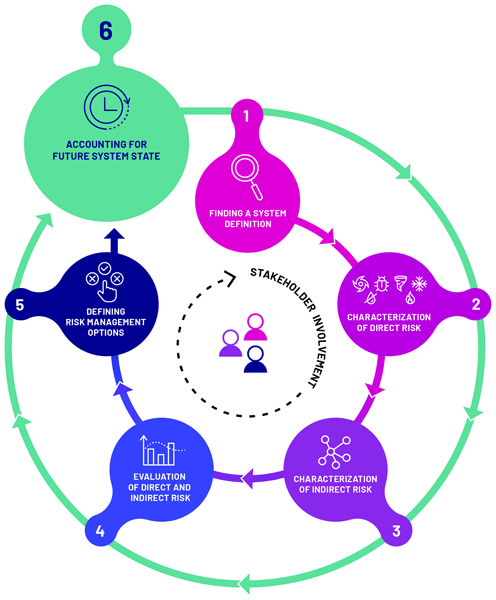
Disasters often result from interactions between different hazards, like floods triggering landslides, or earthquakes followed by tropical cyclones, so-called multi-hazards. People and societies are increasingly exposed and vulnerable to these multi-hazards. Assessing these aspects is referred to as multi-risk assessment and management. In this paper we synthesise key learnings from the MYRIAD-EU (Multi-hazard and sYstemic framework for enhancing Risk-Informed mAnagement and Decision-making in the E.U.) project, reflecting on progress and challenges faced in addressing multi-hazards and multi-risk.
Joel C. Gill
Nat. Hazards Earth Syst. Sci., 26, 271–278, https://doi.org/10.5194/nhess-26-271-2026, https://doi.org/10.5194/nhess-26-271-2026, 2026
Short summary
Short summary
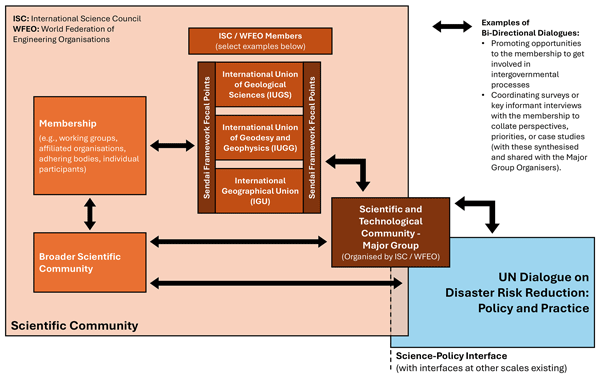
This article looks at how science connects with policy to reduce disaster risks. Although the Sendai Framework says science is key, current efforts to bring together scientists and share their perspectives with other stakeholders are not as effective as they could be. We suggest three ways to improve this: include more voices, better share research, and create spaces to discuss key topics.
Molly Gilmour, Peter McGowran, Joel Gill, and Faith Taylor
EGUsphere, https://doi.org/10.5194/egusphere-2025-5704, https://doi.org/10.5194/egusphere-2025-5704, 2025
Short summary
Short summary
The term “household preparedness” refers to households being prepared to absorb and recover from disasters. “Multi-hazard disasters” are caused by multiple, interacting hazards (e.g. droughts followed by floods). We analysed academic literature to understand what household preparedness means for multi-hazard disasters. We conclude that more qualitative data is needed to better support household preparedness, particularly in ‘Global South’ countries.
Christopher J. White, Mohammed Sarfaraz Gani Adnan, Marcello Arosio, Stephanie Buller, YoungHwa Cha, Roxana Ciurean, Julia M. Crummy, Melanie Duncan, Joel Gill, Claire Kennedy, Elisa Nobile, Lara Smale, and Philip J. Ward
Nat. Hazards Earth Syst. Sci., 25, 4263–4281, https://doi.org/10.5194/nhess-25-4263-2025, https://doi.org/10.5194/nhess-25-4263-2025, 2025
Short summary
Short summary
Indicators contain observable and measurable characteristics to understand the state of a concept or phenomenon and/or monitor it over time. There have been limited efforts to understand how indicators are being used in multi-hazard and multi-risk contexts. We find most of existing indicators do not include the interactions between hazards or risks. We propose a set of recommendations to enable the development and uptake of multi-hazard and multi-risk indicators.
Harriet E. Thompson, Joel C. Gill, Robert Šakić Trogrlić, Faith E. Taylor, and Bruce D. Malamud
Nat. Hazards Earth Syst. Sci., 25, 353–381, https://doi.org/10.5194/nhess-25-353-2025, https://doi.org/10.5194/nhess-25-353-2025, 2025
Short summary
Short summary
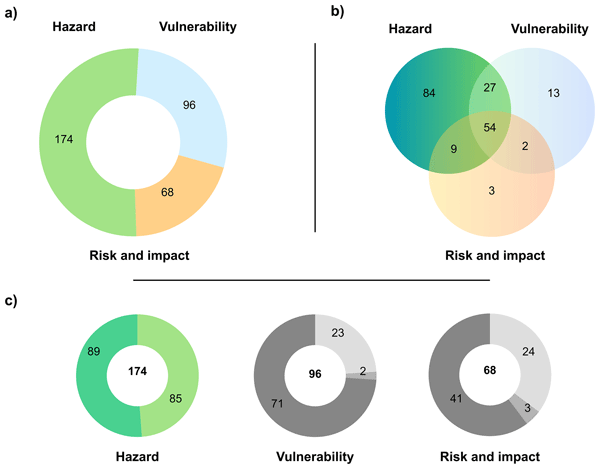
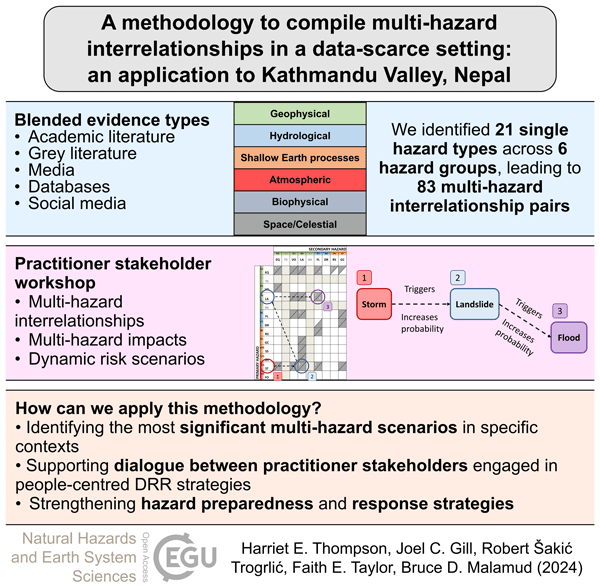
We present a methodology to compile single hazards and multi-hazard interrelationships in data-scarce urban settings, which we apply to the Kathmandu Valley, Nepal. Using blended sources, we collate evidence of 21 single natural hazard types and 83 multi-hazard interrelationships that could impact the Kathmandu Valley. We supplement these exemplars with multi-hazard scenarios developed by practitioner stakeholders, emphasising the need for inclusive disaster preparedness and response approaches.

Shahzad Gani, Louise Arnal, Lucy Beattie, John Hillier, Sam Illingworth, Tiziana Lanza, Solmaz Mohadjer, Karoliina Pulkkinen, Heidi Roop, Iain Stewart, Kirsten von Elverfeldt, and Stephanie Zihms
Geosci. Commun., 7, 251–266, https://doi.org/10.5194/gc-7-251-2024, https://doi.org/10.5194/gc-7-251-2024, 2024
Short summary
Short summary
Science communication in geosciences has societal and scientific value but often operates in “shadowlands”. This editorial highlights these issues and proposes potential solutions. Our objective is to create a transparent and responsible geoscience communication landscape, fostering scientific progress, the well-being of scientists, and societal benefits.
Wolfgang Schwanghart, Ankit Agarwal, Kristen Cook, Ugur Ozturk, Roopam Shukla, and Sven Fuchs
Nat. Hazards Earth Syst. Sci., 24, 3291–3297, https://doi.org/10.5194/nhess-24-3291-2024, https://doi.org/10.5194/nhess-24-3291-2024, 2024
Short summary
Short summary
The Himalayan landscape is particularly susceptible to extreme events, which interfere with increasing populations and the expansion of settlements and infrastructure. This preface introduces and summarizes the nine papers that are part of the special issue,
Estimating and predicting natural hazards and vulnerabilities in the Himalayan region.

Caitlyn A. Hall, Sam Illingworth, Solmaz Mohadjer, Mathew Koll Roxy, Craig Poku, Frederick Otu-Larbi, Darryl Reano, Mara Freilich, Maria-Luisa Veisaga, Miguel Valencia, and Joey Morales
Geosci. Commun., 5, 275–280, https://doi.org/10.5194/gc-5-275-2022, https://doi.org/10.5194/gc-5-275-2022, 2022
Short summary
Short summary
In this manifesto, we offer six points of reflection that higher education geoscience educators can act upon to recognise and unlearn their biases and diversify the geosciences in higher education, complementing current calls for institutional and organisational change. This serves as a starting point to gather momentum to establish community-built opportunities for implementing and strengthening diversity, equity, inclusion, and justice holistically in geoscience education.
Philip J. Ward, James Daniell, Melanie Duncan, Anna Dunne, Cédric Hananel, Stefan Hochrainer-Stigler, Annegien Tijssen, Silvia Torresan, Roxana Ciurean, Joel C. Gill, Jana Sillmann, Anaïs Couasnon, Elco Koks, Noemi Padrón-Fumero, Sharon Tatman, Marianne Tronstad Lund, Adewole Adesiyun, Jeroen C. J. H. Aerts, Alexander Alabaster, Bernard Bulder, Carlos Campillo Torres, Andrea Critto, Raúl Hernández-Martín, Marta Machado, Jaroslav Mysiak, Rene Orth, Irene Palomino Antolín, Eva-Cristina Petrescu, Markus Reichstein, Timothy Tiggeloven, Anne F. Van Loon, Hung Vuong Pham, and Marleen C. de Ruiter
Nat. Hazards Earth Syst. Sci., 22, 1487–1497, https://doi.org/10.5194/nhess-22-1487-2022, https://doi.org/10.5194/nhess-22-1487-2022, 2022
Short summary
Short summary
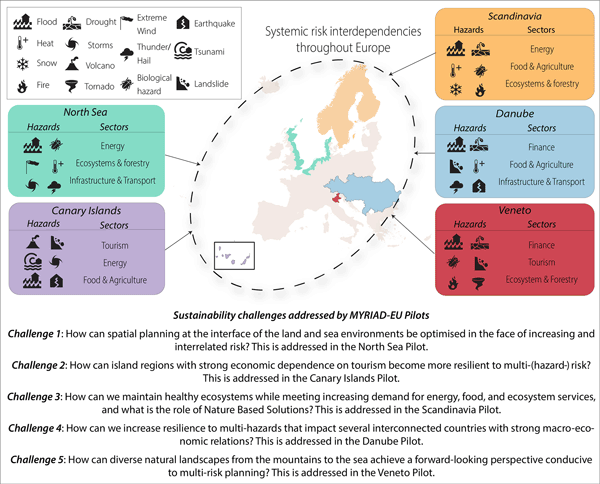
The majority of natural-hazard risk research focuses on single hazards (a flood, a drought, a volcanic eruption, an earthquake, etc.). In the international research and policy community it is recognised that risk management could benefit from a more systemic approach. In this perspective paper, we argue for an approach that addresses multi-hazard, multi-risk management through the lens of sustainability challenges that cut across sectors, regions, and hazards.
Cited articles
Appelquist, L. R. and Balstrøm, T.: Application of a new methodology for coastal multi-hazard-assessment and management on the state of Karnataka, India, J. Environ. Manage., 152, 1–10, https://doi.org/10.1016/j.jenvman.2014.12.017, 2015.
Auterives, C., Binet, S., and Albéric, P.: Inferred conduit network geometry from geological evidences and water-head in a fluvio-karstic system (Val d'Orleans, France), in: H2Karst Research in Limestone Hydrogeology, edited by: Mudry, J., Zwahlen, F., Bertrand, C., and LaMoreaux, J., Springer, Cham, 49–58, https://doi.org/10.1007/978-3-319-06139-9_3, 2014.
Azareh, A., Rahmati, O., Rafiei-Sardooi, E., Sankey, J. B., Lee, S., Shahabi, H., and Ahmad, B. B.: Modelling gully-erosion susceptibility in a semi-arid region, Iran: Investigation of applicability of certainty factor and maximum entropy models, Sci. Total Environ., 655, 684–696, https://doi.org/10.1016/j.scitotenv.2018.11.235, 2019.
Baker, D.: Quantitative parsimony and explanatory power, Brit. J. Philos. Sci., 54, 245–259, 2003.
Bianchini, S., Confuorto, P., Intrieri, E., Sbarra, P., Di Martire, D., Calcaterra, D., and Fanti, R.: Machine learning for sinkhole risk mapping in Guidonia-Bagni di Tivoli plain (Rome), Italy, Geocarto Int., 37, https://doi.org/10.1080/10106049.2022.2113455, 2022.
Blanchard, R.: Le Val d'Orléans, Ann. Geogr., 12, 307–323, https://doi.org/10.3406/geo.1903.6348, 1903.
Breiman, L.: Random forests, Mach. Learn., 45, 5–32, https://doi.org/10.1023/A:1010933404324, 2001.
Brinkmann, R.: Florida sinkholes: Science and policy, University Press of Florida, ISBN: 978-0-8130-4495-8, 2013.
Brinkmann, R., Parise, M., and Dye, D.: Sinkhole distribution in a rapidly developing urban environment: Hillsborough County, Tampa Bay area, Florida, Eng. Geol., 99, 169–184, https://doi.org/10.1016/j.enggeo.2007.11.020, 2008.
Cerema (Direction Territoriale Normandie-Centre): L'aléa effondrement lié à des phénomènes karstiques dans le Val d'Orléans _Approche bibliographique, Cerema DDT45, Rapport no. 131320/A, 2014.
Chatterjee, S. and Hadi, A. S.: Regression Analysis by Example, John Wiley & Sons, Hoboken, New Jersey, 5th edn., https://doi.org/10.1002/9781118532843, 2013.
Ciurean, R., Gill, J., Reeves, H. J., O'grady, S., and Aldridge, T.: Review of environmental multihazards research and risk assessments, British Geological Survey Open Report, OR/18/057, 86 pp., https://nora.nerc.ac.uk/id/eprint/524399/1/OR18057.pdf (last access: 16 May 2026), 2018.
Clark, P. J. and Evans, F. C.: Distance to nearest neighbor as a measure of spatial relationships in populations, Ecology, 35, 445–453, https://doi.org/10.2307/1931034, 1954.
Collins, B. D. and Jibson, R. W.: Assessment of existing and potential landslide hazards resulting from the April 25, 2015 Gorkha, Nepal earthquake sequence, US Geological Survey, No. 2015-1142, https://doi.org/10.3133/ofr20151142, 2015.
de Ruiter, M. C., Couasnon, A., van den Homberg, M. J. C., Daniell, J. E., Gill, J. C., and Ward, P. J.: Why we can no longer ignore consecutive disasters, Earth's Future, 8, e2019EF001425, https://doi.org/10.1029/2019EF001425, 2020.
Desprez, N.: Inventaire et étude hydrogéologique du Loiret, Report DSGR 67 A21, BRGM, https://infoterre.brgm.fr/rapports/67-DSGR-A-021.pdf (last access: 20 May 2026), 1967.
Elith, J., Phillips, S. J., Hastie, T., Dudík, M., Chee, Y. E., and Yates, C. J.: A statistical explanation of MaxEnt for ecologists, Divers. Distrib., 17, 43–57, https://doi.org/10.1111/j.1472-4642.2010.00725.x, 2011.
Elmahdy, S. I., Mohamed, M. M., Ali, T. A., Abdalla, J. E. D., and Abouleish, M.: Land subsidence and sinkholes susceptibility mapping and analysis using random forest and frequency ratio models in Al Ain, UAE, Geocarto Int., 37, 315–331, https://doi.org/10.1080/10106049.2020.1716398, 2020.
Fawcett, T.: An introduction to ROC analysis, Pattern Recogn. Lett., 27, 861–874, https://doi.org/10.1016/j.patrec.2005.10.010, 2006.
Fuchs, S., Spachinger, K., Dorner, W., Rochman, J., and Serrhini, K.: Evaluating cartographic design in flood risk mapping, Environmental Hazards, 8, 52–70, https://doi.org/10.3763/ehaz.2009.0007, 2009.
Gallina, V., Torresan, S., Zabeo, A., Critto, A., Glade, T., and Marcomini, A.: A multi-risk methodology for the assessment of climate change impacts in coastal zones, Sustainability, 12, 3697, https://doi.org/10.3390/su1209369, 2020.
Galve, J. P., Bonachea, J., Remondo, J., Gutiérrez, F., Guerrero, J., Lucha, P., Cendrero, A., Gutiérrez, M., and Sánchez, J. A.: Development and validation of sinkhole susceptibility models in mantled karst settings: A case study from the Ebro valley evaporite karst (NE Spain), Eng. Geol., 99, 185–197, https://doi.org/10.1016/j.enggeo.2007.11.011, 2008.
Galve, J. P., Gutierrez, F., Lucha, P., Guerrero, J., Bonachea, J., Remondo, J., and Cendrero, A.: Probabilistic sinkhole modelling for hazard assessment, Earth Surf. Proc. Land., 34, 437–452, https://doi.org/10.1002/esp.1753, 2009.
Gao, Y. and Alexander, E. C.: Sinkhole hazard assessment in Minnesota using a decision tree model, Environ. Geol., 54, 945–956, https://doi.org/10.1007/s00254-007-0897-1, 2008.
Gill, J. C. and Malamud, B. D.: Reviewing and visualizing the interactions of natural hazards, Rev. Geophys., 52, 680–722, https://doi.org/10.1002/2013RG000445, 2014.
Gill, J. C. and Malamud, B. D.: Hazard interactions and interaction networks (cascades) within multi-hazard methodologies, Earth Syst. Dynam., 7, 659–679, https://doi.org/10.5194/esd-7-659-2016, 2016.
Gill, J. C., Malamud, B. D., Barillas, E. M., and Guerra Noriega, A.: Construction of regional multi-hazard interaction frameworks, with an application to Guatemala, Nat. Hazards Earth Syst. Sci., 20, 149–180, https://doi.org/10.5194/nhess-20-149-2020, 2020.
Gutiérrez, F., Guerrero, J., and Lucha, P.: A genetic classification of sinkholes illustrated from evaporite paleokarst exposures in Spain, Environ. Geol., 53, 993–1006, https://doi.org/10.1007/s00254-007-0727-5, 2008.
Herries, J.: Better Breaks Define Your Thematic Map's Purpose, ESRI ArcGIS Blog, https://www.esri.com/arcgis-blog/products/arcgis-online/mapping/better-breaks-define-your-thematic-maps-purpose?rsource=https://links.esri.com/better-breaks (last access: 13 May 2026), 26 June 2018.
Hülssiep, M., Thaler, T., and Fuchs, S.: The influence of humanitarian assistance on post-disaster social vulnerabilities: Early reflection on the Nepal earthquake 2015, Disasters, 45, 577–603, https://doi.org/10.1111/disa.12437, 2021.
Hyatt, J. A. and Jacobs, P. M.: Distribution and morphology of sinkholes triggered by flooding following Tropical Storm Alberto at Albany, Georgia, USA, Geomorphology, 17, 305–316, https://doi.org/10.1016/0169-555X(96)00014-1, 1996.
Intrieri, E., Fontanelli, K., Bardi, F., Marini, F., Carlà, T., Pazzi, V., Di Filippo, M., and Fanti, R.: Definition of sinkhole triggers and susceptibility based on hydrogeomorphological analyses, Environ. Earth Sci., 77, https://doi.org/10.1007/s12665-017-7179-3, 2018.
Javidan, N., Kavian, A., Pourghasemi, H. R., Conoscenti, C., Jafarian, Z., and Rodrigo-Comino, J.: Evaluation of multi-hazard map produced using MaxEnt machine learning technique, Sci. Rep., 11, 6496, https://doi.org/10.1038/s41598-021-85862-7, 2021.
Jaynes, E. T.: Information theory and statistical mechanics, Phys. Rev., 106, 620–630, https://doi.org/10.1103/PhysRev.106.620, 1957.
Jozja, N., Maget P., Défarge C., Mouget C., and Pidon A.: Apport des traçages à la connaissance du système karstique du Val d'Orléans. Historique et nouvelles avancées, Géologues, 1–5, https://hal-insu.archives-ouvertes.fr/insu-00558114 (last access: 16 May 2026), 2010.
Kappes, M. S., Keiler, M., von Elverfeldt, K., and Glade, T.: Challenges of analyzing multi-hazard risk: a review, Nat. Hazards, 64, 1925–1958, https://doi.org/10.1007/s11069-012-0294-2, 2012.
Kim, K., Kim, J., Kwak, T.-Y., and Chung, C.-K.: Logistic regression model for sinkhole susceptibility due to damaged sewer pipes, Nat. Hazards, 93, 765–785, https://doi.org/10.1007/s11069-018-3323-y, 2018.
Kim, Y. J., Nam, B. H., Jung, Y. H., Liu, X., Choi, S., Kim, D., and Kim, S.: Probabilistic spatial susceptibility modeling of carbonate karst sinkhole, Eng. Geol., 306, 106728, https://doi.org/10.1016/j.enggeo.2022.106728, 2022.
Kovačič, G. and Ravbar, N.: Extreme hydrological events in karst areas of Slovenia, the case of the Unica River basin, Geodinam. Acta, 23, 89–100, https://doi.org/10.3166/ga.23.89-100, 2010.
Kwak, T.-Y., Woo, S.-I., Chung, C.-K., and Kim, J.: Experimental assessment of the relationship between rainfall intensity and sinkholes caused by damaged sewer pipes, Nat. Hazards Earth Syst. Sci., 20, 3343–3359, https://doi.org/10.5194/nhess-20-3343-2020, 2020.
Lei, M., Gao, Y., Jiang, X., and Guan, Z.: Emergency investigation of extremely large sinkholes, Maohe, Guangxi, China, in: Proceedings of the Thirteenth Multidisciplinary Conference on Sinkholes and the Engineering and Environmental Impacts of Karst, 293–297, https://doi.org/10.5038/9780979542275.1139, 2013.
Lei, M., Gao, Y., Jiang, X., and Guan, Z.: Mechanism analysis of sinkhole formation at Maohe village, Liuzhou city, Guangxi province, China, Environ. Earth Sci., 75, 1–11, https://doi.org/10.1007/s12665-015-5100-5, 2016.
Lepiller, M.: Hydrogéologie du Val d'Orléans, in: les aquifères de France, edited by: Roux, J.-C., BRGM – AIH 2006, 956 pp., 2006.
Lewin, J. and Woodward, J. C.: Karst geomorphology and environmental change, in: The physical geography of the mediterranean, Oxford University Press, 287–317, https://doi.org/10.1093/oso/9780199268030.003.0022, 2009.
Liu, B., Siu, Y. L., and Mitchell, G.: Hazard interaction analysis for multi-hazard risk assessment: a systematic classification based on hazard-forming environment, Nat. Hazards Earth Syst. Sci., 16, 629–642, https://doi.org/10.5194/nhess-16-629-2016, 2016.
Liu, Y., Zhao, L., Bao, A., Li, J., and Yan, X.: Chinese High Resolution Satellite Data and GIS-Based Assessment of Landslide Susceptibility along Highway G30 in Guozigou Valley Using Logistic Regression and MaxEnt Model, Remote Sens., 14, 3620, https://doi.org/10.3390/rs14153620, 2022.
López-Saavedra, M. and Martí, J.: Reviewing the multi-hazard concept. Application to volcanic islands, Earth-Sci. Rev., 236, 104286, https://doi.org/10.1016/j.earscirev.2022.104286, 2023.
Luu, L. H., Noury, G., Benseghier, Z., and Philippe, P.: Hydro-mechanical modeling of sinkhole occurrence processes in covered karst terrains during a flood, Eng. Geol., 260, 105249, https://doi.org/10.1016/j.enggeo.2019.105249, 2019.
Marignani, M., Bruschi, D., Garcia, D. A., Frondoni, R., Carli, E., Pinna, M. S., Cumo, F., Gugliermetti, F., Saatkamp, A., and Doxa, A.: Identification and prioritization of areas with high environmental risk in Mediterranean coastal areas: A flexible approach, Sci. Total Environ., 590, 566–578, https://doi.org/10.1016/j.scitotenv.2017.02.221, 2017.
Martin, J. C., Amraoui, N., and Pathirana, N.: Caractérisation du risque d'inondation par remontée de nappe sur le val d'Orléans, BRGM/RP-52121-FR, BRGM, 90 pp., https://infoterre.brgm.fr/rapports/RP-52121-FR.pdf (last access: 20 May 2026), 2003.
Martinotti, M. E., Pisano, L., Marchesini, I., Rossi, M., Peruccacci, S., Brunetti, M. T., Melillo, M., Amoruso, G., Loiacono, P., Vennari, C., Vessia, G., Trabace, M., Parise, M., and Guzzetti, F.: Landslides, floods and sinkholes in a karst environment: the 1–6 September 2014 Gargano event, southern Italy, Nat. Hazards Earth Syst. Sci., 17, 467–480, https://doi.org/10.5194/nhess-17-467-2017, 2017.
Mobley, W., Sebastian, A., Highfield, W., and Brody, S. D.: Estimating flood extent during Hurricane Harvey using maximum entropy to build a hazard distribution model, J. Flood Rist Manag., 12, e12549, https://doi.org/10.1111/jfr3.12549, 2019.
Mokhtari, M. and Abedian, S.: Spatial prediction of landslide susceptibility in Taleghan basin, Iran, Stoch. Environ. Res. Risk Assess., 33, 1297–1325, https://doi.org/10.1007/s00477-019-01696-w, 2019.
Nachappa, T. G., Piralilou, S. T., Gholamnia, K., Ghorbanzadeh, O., Rahmati, O., and Blaschke, T.: Flood susceptibility mapping with machine learning, multi-criteria decision analysis and ensemble using Dempster Shafer Theory, J. Hydrol., 590, 125275, https://doi.org/10.1016/j.jhydrol.2020.125275, 2020.
Neri, M., Le Cozannet, G., Thierry, P., Bignami, C., and Ruch, J.: A method for multi-hazard mapping in poorly known volcanic areas: an example from Kanlaon (Philippines), Nat. Hazards Earth Syst. Sci., 13, 1929–1943, https://doi.org/10.5194/nhess-13-1929-2013, 2013.
Noury, G., Perrin, J., Luu, L. H., Philippe, P., and Gourdier, S.: Role of floods on sinkholes occurrence in covered karst terrains: case study of Orléans area (France) during the 2016 meteorological event and perspectives for other karst environments, in: 15th Multidisciplinary Conference on Sinkholes and the Engineering and Environmental Impacts of Karst, Shepherdstown, West Virginia, 2–6 April 2018, https://doi.org/10.5038/9780991000982.1014, 2018.
Ozdemir, A.: Sinkhole susceptibility mapping using a frequency ratio method and GIS technology near Karapınar, Konya-Turkey, Proced. Earth Plan. Sc., 15, 502–506, https://doi.org/10.1016/j.proeps.2015.08.059, 2015.
Parise, M., Pisano, L., and Vennari, C.: Sinkhole clusters after heavy rainstorms, J. Cave Karst Stud., 80, 28–38, https://www.academia.edu/52670096/Sinkhole_clusters_after_heavy_rainstorms (last access: 13 May 2026), 2018.
Park, N. W.: Using maximum entropy modeling for landslide susceptibility mapping with multiple geoenvironmental data sets, Environ. Earth Sci., 73, 937–949, https://doi.org/10.1007/s12665-014-3442-z, 2015.
Pasch, R. J., Reinhart, B. J., and Alaka, L.: HURRICANE FIONA, National Hurricane Center, https://www.nhc.noaa.gov/data/tcr/AL072022_Fiona.pdf (last access: 13 May 2026), 2023.
Pazzi, V., Ceccatelli, M., Gracchi, T., Masi, E. B., and Fanti, R.: Assessing subsoil void hazards along a road system using H/V measurements, ERTs and IPTs to support local decision makers, Near Surf. Geophys., 16, 282–297, https://doi.org/10.3997/1873-0604.2018002, 2018.
Perrin, J., Noury, G., and Cartannaz, C.: ALEA-Karst : vers une approche multicritères de l'aléa lié aux cavités karstiques en contexte calcaire. Volume 1: Trame méthodologique, Rapport BRGM/RP-63771-FR, 77 pp., https://infoterre.brgm.fr/rapports/RP-63771-FR.pdf (last access: 18 May 2026), 2014.
Perrin, J., Cartannaz, C., Noury, G., and Vanoudheusden, E.: A multicriteria approach to karst subsidence hazard mapping supported by weights-of-evidence analysis, Eng. Geol., 197, 296–305, https://doi.org/10.1016/j.enggeo.2015.09.001, 2015.
Phillips, S. J., Anderson, R. P., and Schapire, R. E.: Maximum entropy modeling of species geographic distributions, Ecol. Model., 190, 231–259, https://doi.org/10.1016/j.ecolmodel.2005.03.026, 2006.
Phillips, S. J., Anderson, R. P., Dudík, M., Schapire, R. E., and Blair, M.: Opening the black box: an open-source release of Maxent, Ecography, 40, https://doi.org/10.1111/ecog.03049, 2017.
Pourghasemi, H. R., Gayen, A., Panahi, M., Rezaie, F., and Blaschke, T.: Multi-hazard probability assessment and mapping in Iran, Sci. Total Environ., 692, 556–571, https://doi.org/10.1016/j.scitotenv.2019.07.203, 2019.
Pournader, M., Ahmadi, H., Feiznia, S., Karimi, H., and Peirovan, H. R.: Spatial prediction of soil erosion susceptibility: an evaluation of the maximum entropy model, Earth Sci. Inform., 11, 389–401, https://doi.org/10.1007/s12145-018-0338-6, 2018.
PPRi (Plan de Prévention des Risques d'Inondation du Val d'Orléans): approuvé par arrêté préfectoral du 20 janvier 2015, https://www.loiret.gouv.fr/contenu/telechargement/39868/285153/file/1- Note-pr%C3%A9sentation.pdf (last access: 13 May 2026), 2015.
Qiu, X., Wu, S.-S., and Chen, Y.: Sinkhole susceptibility assessment based on morphological, imagery, and contextual attributes derived from GIS and imagery data, J. Cave Karst Stud., 82, 1–17, https://caves.org/wp-content/uploads/Publications/JCKS/v82/82_1_1.pdf (last access: 15 May 2026), 2020.
Radosavljevic, A. and Anderson, R. P.: Making better Maxent models of species distributions: complexity, overfitting and evaluation, J. Biogeogr., 41, 629–643, https://doi.org/10.1111/jbi.12227, 2014.
Rahmati, O., Pourghasemi, H. R., and Melesse, A. M.: Application of GIS-based data driven random forest and maximum entropy models for groundwater potential mapping: a case study at Mehran Region, Iran, Catena, 137, 360–372, https://doi.org/10.1016/j.catena.2015.10.010, 2016.
Rusk, J., Maharjan, A., Tiwari, P., Chen, T. H. K., Shneiderman, S., Turin, M., and Seto, K. C.: Multi-hazard susceptibility and exposure assessment of the Hindu Kush Himalaya, Sci. Total Environ., 804, 150039, https://doi.org/10.1016/j.scitotenv.2021.150039, 2022.
Serrhini, K., Moy, Y., Noury, G., Serrano, J., and Soltanpour, H.: Vulnérabilité non-structurelle et résilience territoriale en situation de multi-risque. Perception et préférences cartographiques des aléas effondrement et inondation (val d'Orléans, Loiret, France), Can. J. Regional Sci., 46, 73–84, https://doi.org/10.7202/1100216ar, 2023.
Shatz, I.: Parsimony. Why you should prefer simpler explanations, https://effectiviology.com/parsimony/ (last access: 13 May 2026), 25 June 2019.
Shi, J.: Engineering Application of Landslide Susceptibility Mapping in Linear Engineering Optimization, Front. Earth Sci. 10, 861057, https://doi.org/10.3389/feart.2022.861057, 2022.
Siahkamari, S., Haghizadeh, A., Zeinivand, H., Tahmasebipour, N., and Rahmati, O.: Spatial prediction of flood-susceptible areas using frequency ratio and maximum entropy models, Geocarto Int., 33, 927–941, https://doi.org/10.1080/10106049.2017.1316780, 2018.
Sillero, N. and Barbosa, A. M.: Common mistakes in ecological niche models, Int. J. Geogr. Inf. Sci., 35, 213–226, https://doi.org/10.1080/13658816.2020.1798968, 2021.
Sillero, N., Arenas-Castro, S., Enriquez-Urzelai, U., Gomes Vale, C., Sousa-Guedes, D., Martínez-Freiría, F., Real, R., and Barbosa, A. M.: Want to model a species niche? A step-by-step guideline on correlative ecological niche modelling, Ecol. Model., 456, 109671, https://doi.org/10.1016/j.ecolmodel.2021.109671, 2021.
Subedi, P., Subedi, K., Thapa, B., and Subedi, P.: Sinkhole susceptibility mapping in Marion County, Florida: Evaluation and comparison between analytical hierarchy process and logistic regression-based approaches, Sci. Rep., 9, 7140, https://doi.org/10.1038/s41598-019-43705-6, 2019.
Taheri, K., Gutierrez, F., Mohseni, H., Raeisi, E., and Taheri, M.: Sinkhole susceptibility mapping using the analytical hierarchy process (AHP) and magnitude–frequency relationships: a case study in Hamadan province, Iran, Geomorphology, 234, 64–79, https://doi.org/10.1016/j.geomorph.2015.01.005, 2015.
Taheri, K., Himan Shahabi, Kamran Chapi, Ataollah Shirzadi, Francisco Gutiérrez, and Khabat Khosravi: Sinkhole susceptibility mapping: A comparison between Bayes-based machine learning algorithms, Land Degrad. Dev., 30, 730–745, https://doi.org/10.1002/ldr.3255, 2019.
Tehrani, F. S., Calvello, M., Liu, Z., Zhang, L., and Lacasse, S.: Machine learning and landslide studies: Recent advances and applications, Nat. Hazards, 114, 1197–1245, https://doi.org/10.1007/s11069-022-05423-7, 2022.
Terzi, S., Torresan, S., Schneiderbauer, S., Critto, A., Zebisch, M., and Marcomini, A.: Multi-risk assessment in mountain regions: A review of modelling approaches for climate change adaptation, J. Environ. Manag., 232, 759–771, https://doi.org/10.1016/j.jenvman.2018.11.100, 2019.
Tsereteli, E., Gaprindashvili, G., Gaprindashvili, M., Bolashvili, N., and Gongadze, M.: Hazard risk of debris/mud flow events in Georgia and methodological approaches for management, in: IAEG/AEG Annual Meeting Proceedings, San Francisco, California, 2018, Springer, Cham, 5, 153–160, https://doi.org/10.1007/978-3-319-93136-4_19, 2019.
UNDRR: Sendai Framework for Disaster Risk Reduction 2015–2030, https://www.undrr.org/publication/sendai-framework-disaster-risk-reduction-2015-2030 (last access: 12 May 2026), 2015.
UNDRR: Terminology, https://www.undrr.org/terminology (last access: 12 January 2023), 2017.
van den Bout, B., Tang, C., van Westen, C., and Jetten, V.: Physically based modeling of co-seismic landslide, debris flow, and flood cascade, Nat. Hazards Earth Syst. Sci., 22, 3183–3209, https://doi.org/10.5194/nhess-22-3183-2022, 2022.
Waltham, T., Bell, F. G., Culshaw, M. G., Knez, M., and Slabe, T.: Sinkholes and subsidence: karst and cavernous rocks in engineering and construction, Springer, Berlin, Vol. 382, ISBN: 978-3-540-20725-2, 2005.
Ward, P. J., Daniell, J., Duncan, M., Dunne, A., Hananel, C., Hochrainer-Stigler, S., Tijssen, A., Torresan, S., Ciurean, R., Gill, J. C., Sillmann, J., Couasnon, A., Koks, E., Padrón-Fumero, N., Tatman, S., Tronstad Lund, M., Adesiyun, A., Aerts, J. C. J. H., Alabaster, A., Bulder, B., Campillo Torres, C., Critto, A., Hernández-Martín, R., Machado, M., Mysiak, J., Orth, R., Palomino Antolín, I., Petrescu, E.-C., Reichstein, M., Tiggeloven, T., Van Loon, A. F., Vuong Pham, H., and de Ruiter, M. C.: Invited perspectives: A research agenda towards disaster risk management pathways in multi-(hazard-)risk assessment, Nat. Hazards Earth Syst. Sci., 22, 1487–1497, https://doi.org/10.5194/nhess-22-1487-2022, 2022.
Xiao, H., Kim, Y. J., Nam, B. H., and Wang, D.: Investigation of the impacts of local-scale hydrogeologic conditions on sinkhole occurrence in East-Central Florida, USA, Environ. Earth Sci., 75, 1274, https://doi.org/10.1007/s12665-016-6086-3, 2016.
Xiao, H., Li, H., and Tang, Y.: Assessing the effects of rainfall, groundwater downward leakage, and groundwater head differences on the development of cover-collapse and cover-suffosion sinkholes in Central Florida (USA), Sci. Total Environ., 644, 274–286, https://doi.org/10.1016/j.scitotenv.2018.06.273, 2018.
Yousefi, S., Pourghasemi, H. R., Emami, S. N., Pouyan, S., Eskandari, S., and Tiefenbacher, J. P.: A machine learning framework for multi-hazards modelling and mapping in a mountainous area, Scientific Reports, 10, 12144, https://doi.org/10.1038/s41598-020-69233-2, 2020.
Zhou, W.: Drainage and flooding in karst terranes, Environ. Geol., 51, 963–973, https://doi.org/10.1007/s00254-006-0365-3, 2007.
Short summary
We applied the Maximum Entropy model to characterise multi-hazard scenarios in a karst environment, focusing on flood-triggered sinkholes in Val d'Orléans, France. Karst terrains as multi-hazard forming areas, have received little attention in multi-hazard literature. Our study developed a multi-hazard susceptibility map to forecast the spatial distribution of these hazards. The findings improve understanding of hazard interactions and demonstrate the model's utility in multi-hazard analysis.
We applied the Maximum Entropy model to characterise multi-hazard scenarios in a karst...


Altmetrics
Final-revised paper
Preprint