Articles | Volume 26, issue 6
https://doi.org/10.5194/nhess-26-2717-2026
© Author(s) 2026. This work is distributed under
the Creative Commons Attribution 4.0 License.
https://doi.org/10.5194/nhess-26-2717-2026
© Author(s) 2026. This work is distributed under
the Creative Commons Attribution 4.0 License.
Assessment of the vulnerability of buildings destroyed during postfire debris flow events in Kule village, Yajiang County, China
Jinshui Wang
State Key Laboratory of Natural Hazards and Engineering Safety, Institute of Mountain Hazards and Environment, Chinese Academy of Sciences, Chengdu, 610299, China
University of Chinese Academy of Sciences, Beijing, 100049, China
State Key Laboratory of Natural Hazards and Engineering Safety, Institute of Mountain Hazards and Environment, Chinese Academy of Sciences, Chengdu, 610299, China
University of Chinese Academy of Sciences, Beijing, 100049, China
Sichuan Province Engineering Technology Research Center of Mountain Hazards, Chengdu, 610299, China
Lu Zeng
State Key Laboratory of Natural Hazards and Engineering Safety, Institute of Mountain Hazards and Environment, Chinese Academy of Sciences, Chengdu, 610299, China
University of Chinese Academy of Sciences, Beijing, 100049, China
Fei Yang
State Key Laboratory of Natural Hazards and Engineering Safety, Institute of Mountain Hazards and Environment, Chinese Academy of Sciences, Chengdu, 610299, China
University of Chinese Academy of Sciences, Beijing, 100049, China
Xiao Li
State Key Laboratory of Natural Hazards and Engineering Safety, Institute of Mountain Hazards and Environment, Chinese Academy of Sciences, Chengdu, 610299, China
University of Chinese Academy of Sciences, Beijing, 100049, China
Wanyu Zhao
State Key Laboratory of Natural Hazards and Engineering Safety, Institute of Mountain Hazards and Environment, Chinese Academy of Sciences, Chengdu, 610299, China
University of Chinese Academy of Sciences, Beijing, 100049, China
Sichuan Province Engineering Technology Research Center of Mountain Hazards, Chengdu, 610299, China
Huayong Chen
State Key Laboratory of Natural Hazards and Engineering Safety, Institute of Mountain Hazards and Environment, Chinese Academy of Sciences, Chengdu, 610299, China
University of Chinese Academy of Sciences, Beijing, 100049, China
Related authors
No articles found.
Songtang He, Zhenhong Shen, Jeffrey Neal, Zongji Yang, Jiangang Chen, Daojie Wang, Yujing Yang, Peng Zhao, Xudong Hu, Yongming Lin, Youtong Rong, Yanchen Zheng, Xiaoli Su, and Yong Kong
EGUsphere, https://doi.org/10.5194/egusphere-2025-3004, https://doi.org/10.5194/egusphere-2025-3004, 2025
Preprint archived
Short summary
Short summary
We explored why landslides still happen in areas with dense vegetation. Using data from a mountainous region in China, we combined large-scale mapping with detailed field analysis. We found that while plants can help prevent landslides, their weight and interaction with rainfall and wind can sometimes make slopes more unstable. This research highlights the complex role of vegetation and helps improve landslide prediction and prevention in green mountain areas.
Muchu Lesi, Yong Nie, Dan Hirsh Shugar, Jida Wang, Qian Deng, Huayong Chen, and Jianrong Fan
Earth Syst. Sci. Data, 14, 5489–5512, https://doi.org/10.5194/essd-14-5489-2022, https://doi.org/10.5194/essd-14-5489-2022, 2022
Short summary
Short summary
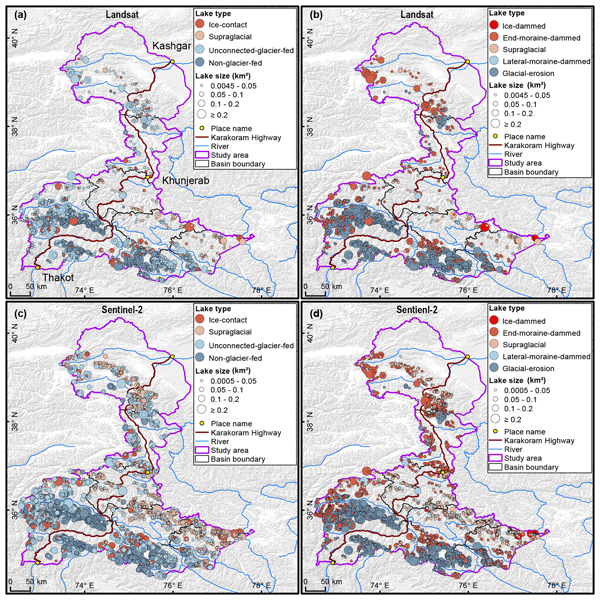
The China–Pakistan Economic Corridor plays a vital role in foreign trade and faces threats from water shortage and water-related hazards. An up-to-date glacial lake dataset with critical parameters is basic for water resource and flood risk research, which is absent from the corridor. This study created a glacial lake dataset in 2020 from Landsat and Sentinel images from 1990–2000, using a threshold-based mapping method. Our dataset has the potential to be widely applied.
Cited articles
Barnhart, K. R., Miller, C. R., Rengers, F. K., and Kean, J. W.: Evaluation of debris-flow building damage forecasts, Nat. Hazards Earth Syst. Sci., 24, 1459–1483, https://doi.org/10.5194/nhess-24-1459-2024, 2024.
Chang, M., Liu, Y., Zhou, C., and Che, H.: Hazard assessment of a catastrophic mine waste debris flow of Hou Gully, Shimian, China, Eng. Geol., 275, 105733, https://doi.org/10.1016/j.enggeo.2020.105733, 2020.
Chen, M., Tang, C., Zhang, X., Xiong, J., Chang, M., Shi, Q., Wang, F., and Li, M.: Quantitative assessment of physical fragility of buildings to the debris flow on 20 August 2019 in the Cutou gully, Wenchuan, southwestern China, Eng. Geol., 293, 106319, https://doi.org/10.1016/j.enggeo.2021.106319, 2021.
Cui, P., Guo, X., Yan, Y., Li, Y., and Ge, Y.: Real-time observation of an active debris flow watershed in the Wenchuan Earthquake area, Geomorphology, 321, 153–166, https://doi.org/10.1016/j.geomorph.2018.08.024, 2018.
Cui, P., Hu, K., Zhuang, J., Yang, Y., and Zhang, J.: Prediction of debris-flow danger area by combining hydrological and inundation simulation methods, J. Mt. Sci., 8, 1–9, https://doi.org/10.1007/s11629-011-2040-8, 2011.
Cui, W. R., Chen, J. G., Chen, X. Q., Tang, J. B., and Jin, K.: Debris flow characteristics of the compound channels with vegetated floodplains, Sci. Total Environ., 868, 161586, https://doi.org/10.1016/j.scitotenv.2023.161586, 2023.
Ding, X. Y., Hu, W. J., Liu, F., and Yang, X.: Risk assessment of debris flow disaster in mountainous area of northern Yunnan province based on FLO-2D under the influence of extreme rainfall, Front. Environ. Sci., 11, 1252206, https://doi.org/10.3389/fenvs.2023.1252206, 2023.
Eidsvig, U. M. K., Papathoma-Köhle, M., Du, J., Glade, T., and Vangelsten, B. V.: Quantification of model uncertainty in debris flow vulnerability assessment, Eng. Geol., 181, 15–26, https://doi.org/10.1016/j.enggeo.2014.08.006, 2014.
Ettinger, S., Mounaud, L., Magill, C., Yao-Lafourcade, A. F., Thouret, J. C., Manville, V., Negulescu, C., Zuccaro, G., Gregorio, D., Nardone, S., Uchuchoque, J., Arguedas, A., Macedo, L., and Llerena, N. M.: Building vulnerability to hydro-geomorphic hazards: Estimating damage probability from qualitative vulnerability assessment using logistic regression, J. Hydrol., 541, 563–581, https://doi.org/10.1016/j.jhydrol.2015.04.017, 2016.
Fraser, A. M., Chester, M. V., and Underwood, B. S.: Wildfire risk, post-fire debris flows, and transportation infrastructure vulnerability, Sustain. Resil. Infrastruct., 7, 188–200, https://doi.org/10.1080/23789689.2020.1737785, 2022.
Fuchs, S., Heiss, K., and Hübl, J.: Towards an empirical vulnerability function for use in debris flow risk assessment, Nat. Hazards Earth Syst. Sci., 7, 495–506, https://doi.org/10.5194/nhess-7-495-2007, 2007.
Fuchs, S., Keiler, M., Ortlepp, R., Schinke, R., and Papathoma-Köhle, M.: Recent advances in vulnerability assessment for the built environment exposed to torrential hazards: Challenges and the way forward, J. Hydrol., 575, 587–595, https://doi.org/10.1016/j.jhydrol.2019.05.067, 2019.
Gartner, J. E., Cannon, S. H., and Santi, P. M.: Empirical models for predicting volumes of sediment deposited by debris flows and sediment-laden floods in the transverse ranges of southern California, Eng. Geol., 176, 45–56, https://doi.org/10.1016/j.enggeo.2014.04.008, 2014.
Gorr, A., McGuire, L., and Youberg, A.: Empirical models for postfire debris-flow volume in the southwest United States, J. Geophys. Res.-Earth, 129, e2024JF007825, https://doi.org/10.1029/2024jf007825, 2024.
Guo, X., Hürlimann, M., Cui, P., Chen, X., and Li, Y.: Monitoring cases of rainfall-induced debris flows in China, Landslides, 21, 2447–2466, https://doi.org/10.1007/s10346-024-02316-7, 2024.
He, K., Hu, X., Wu, Z., Zhong, Y., Zhou, Y., Gong, X., and Luo, G.: Preliminary analysis of the wildfire on March 15, 2024, and the following post-fire debris flows in Yajiang County, Sichuan, China, Landslides, 21, 3179–3189, https://doi.org/10.1007/s10346-024-02364-z, 2024.
Hu, K. H., Cui, P., and Zhang, J. Q.: Characteristics of damage to buildings by debris flows on 7 August 2010 in Zhouqu, Western China, Nat. Hazards Earth Syst. Sci., 12, 2209–2217, https://doi.org/10.5194/nhess-12-2209-2012, 2012.
Jakob, M., Stein, D., and Ulmi, M.: Vulnerability of buildings to debris flow impact, Nat. Hazards, 60, 241–261, https://doi.org/10.1007/s11069-011-0007-2, 2012.
Kang, H. S. and Kim, Y. T.: The physical vulnerability of different types of building structure to debris flow events, Nat. Hazards, 80, 1475–1493, https://doi.org/10.1007/s11069-015-2032-z, 2016.
Kean, J. W., Staley, D. M., Lancaster, J. T., Rengers, F. K., Swanson, B. J., Coe, J. A., Hernandez, J. L., Sigman, A. J., Allstadt, K. E., and Lindsay, D. N.: Inundation, flow dynamics, and damage in the 9 January 2018 Montecito debris-flow event, California, USA: Opportunities and challenges for post-wildfire risk assessment, Geosphere, 15, 1140–1163, https://doi.org/10.1130/ges02048.1, 2019.
Lee, J. S., Song, C. H., Pradhan, A. M. S., Ha, Y. S., and Kim, Y. T.: Development of structural type-based physical vulnerability curves to debris flow using numerical analysis and regression model, Int. J. Disast. Risk Re., 106, 104431, https://doi.org/10.1016/j.ijdrr.2024.104431, 2024.
Luo, H. Y., Zhang, L. M., Zhang, L. L., He, J., and Yin, K. S.: Vulnerability of buildings to landslides: The state of the art and future needs, Earth-Sci. Rev., 238, 104329, https://doi.org/10.1016/j.earscirev.2023.104329, 2023.
Luo, H., Zhang, L., Wang, H., and He, J.: Multi-hazard vulnerability of buildings to debris flows, Eng. Geol., 279, 105859, https://doi.org/10.3389/feart.2022.827438, 2020.
Marchi, L., Arattano, M., and Deganutti, A. M.: Ten years of debris-flow monitoring in the Moscardo Torrent (Italian Alps), Geomorphology, 46, 1–17, https://doi.org/10.1016/s0169-555x(01)00162-3, 2002.
McGuire, L. A., Ebel, B. A., Rengers, F. K., Vieira, D. C., and Nyman, P.: Fire effects on geomorphic processes, Nature Reviews Earth & Environment, 5, 486–503, https://doi.org/10.1038/s43017-024-00557-7, 2024.
Navratil, O., Liébault, F., Bellot, H., Travaglini, E., Theule, J., Chambon, G., and Laigle, D.: High-frequency monitoring of debris-flow propagation along the Réal Torrent, Southern French Prealps, Geomorphology, 201, 157–171, https://doi.org/10.1016/j.geomorph.2013.06.017, 2013.
Ouyang, C., Wang, Z., An, H., Liu, X., and Wang, D.: An example of a hazard and risk assessment for debris flows – A case study of Niwan Gully, Wudu, China, Eng. Geol., 263, 105351, https://doi.org/10.1016/j.enggeo.2019.105351, 2019.
Ouyang, C., Xiang, W., An, H., Wang, F., Yang, W., and Fan, J.: Mechanistic Analysis and Numerical Simulation of the 2021 Post-Fire Debris Flow in Xiangjiao Catchment, China, J. Geophys. Res.-Earth, 128, e2022JF006846, https://doi.org/10.1029/2022jf006846, 2023.
Papathoma-Köhle, M., Gems, B., Sturm, M., and Fuchs, S.: Matrices, curves and indicators: A review of approaches to assess physical vulnerability to debris flows, Earth-Sci. Rev., 171, 272–288, https://doi.org/10.1016/j.earscirev.2017.06.007, 2017.
Papathoma-Köhle, M., Schlögl, M., Dosser, L., Roesch, F., Borga, M., Erlicher, M., Keiler, M., and Fuchs, S.: Physical vulnerability to dynamic flooding: Vulnerability curves and vulnerability indices, J. Hydrol., 607, 127501, https://doi.org/10.1016/j.jhydrol.2022.127501, 2022.
Quan Luna, B., Blahut, J., van Westen, C. J., Sterlacchini, S., van Asch, T. W. J., and Akbas, S. O.: The application of numerical debris flow modelling for the generation of physical vulnerability curves, Nat. Hazards Earth Syst. Sci., 11, 2047–2060, https://doi.org/10.5194/nhess-11-2047-2011, 2011.
Rengers, F. K., McGuire, L. A., Barnhart, K. R., Youberg, A. M., Cadol, D., Gorr, A. N., Hoch, O. J., Beers, R., and Kean, J. W.: The influence of large woody debris on post-wildfire debris flow sediment storage, Nat. Hazards Earth Syst. Sci., 23, 2075–2088, https://doi.org/10.5194/nhess-23-2075-2023, 2023.
Rengers, F. K., McGuire, L. A., Kean, J. W., Staley, D. M., and Hobley, D. E. J.: Model simulations of flood and debris flow timing in steep catchments after wildfire, Water Resour. Res., 52, 6041–6061, https://doi.org/10.1002/2015wr018176, 2016.
Rickenmann, D.: Empirical relationships for debris flows, Nat. Hazards, 19, 47–77, 1999.
Scheidl, C. and Rickenmann, D.: Empirical prediction of debris-flow mobility and deposition on fans, Earth Surf. Proc. Land., 35, 157–173, https://doi.org/10.1002/esp.1897, 2010.
Si, G. W., Chen, X. Q., Chen, J. G., Zhao, W. Y., Li, S., and Li, X. N.: Failure criteria of unreinforced masonry walls of rural buildings under the impact of flash floods in mountainous regions, J. Mt. Sci., 19, 3388–3406, https://doi.org/10.1007/s11629-022-7491-6, 2022.
Sichuan Hydrological Manual: Rainstorm-runoff calculation method in small watershed, Sichuan Water Conservancy and Power Department, Electronic publishing, 1984.
Thomas, M. A., Kean, J. W., McCoy, S. W., Lindsay, D. N., Kostelnik, J., Cavagnaro, D. B., Rengers, F. K., East, A. E., Schwartz, J. Y., Smith, D. P., and Collins, B. D.: Postfire hydrologic response along the Central California (USA) coast: insights for the emergency assessment of postfire debris-flow hazards, Landslides, 20, 2421–2436, https://doi.org/10.1007/s10346-023-02106-7, 2023.
Totschnig, R., Sedlacek, W., and Fuchs, S.: A quantitative vulnerability function for fluvial sediment transport, Nat. Hazards, 58, 681–703, https://doi.org/10.1007/s11069-010-9623-5, 2011.
Vahedifard, F., Abdollahi, M., Leshchinsky, B. A., Stark, T. D., Sadegh, M., and AghaKouchak, A.: Interdependencies between wildfire-induced alterations in soil properties, near-surface processes, and geohazards, Earth Space Sci., 11, e2023EA003498, https://doi.org/10.1029/2023ea003498, 2024.
Wang, T., Chen, J., Chen, X., You, Y., and Cheng, N.: Application of incomplete similarity theory to the estimation of the mean velocity of debris flows, Landslides, 15, 2083–2091, https://doi.org/10.1007/s10346-018-1045-6, 2018.
Wang, T., Yin, K., Li, Y., Chen, L., Xiao, C., Zhu, H., and van Westen, C.: Physical vulnerability curve construction and quantitative risk assessment of a typhoon-triggered debris flow via numerical simulation: A case study of Zhejiang Province, SE China, Landslides, 21, 1333–1352, https://doi.org/10.1007/s10346-024-02218-8, 2024.
Wei, L., Hu, K., Liu, S., Ning, L., Zhang, X., Zhang, Q., and Rahim, Md. A.: The vulnerability of buildings to a large-scale debris flow and outburst flood hazard cascade that occurred on 30 August 2020 in Ganluo, southwest China, Nat. Hazards Earth Syst. Sci., 24, 4179–4197, https://doi.org/10.5194/nhess-24-4179-2024, 2024.
Yang, H., Liu, J., Sun, H., You, Y., Zhao, W., and Yang, D.: Evolution characteristics of post-fire debris flow in Xiangjiao gully, Muli County, Catena, 246, 108353, https://doi.org/10.1016/j.catena.2024.108353, 2024.
Yang, Y., Hu, X., Han, M., He, K., Liu, B., Jin, T., Cao, X., Wang, Y., and Huang, J.: Post-fire temporal trends in soil properties and revegetation: Insights from different wildfire severities in the Hengduan Mountains, Southwestern China, Catena, 213, 106160, https://doi.org/10.1016/j.catena.2022.106160, 2022.
Zhang, B., Zhang, G., Fang, H., Wu, S., and Li, C.: Risk assessment of flash flood under climate and land use and land cover change in Tianshan Mountains, China, Int. J. Disast. Risk Re., 115, 105019, https://doi.org/10.1016/j.ijdrr.2024.105019, 2024.
Zhang, S., Zhang, L., Li, X., and Xu, Q.: Physical vulnerability models for assessing building damage by debris flows, Eng. Geol., 247, 145-158, https://doi.org/10.1016/j.enggeo.2018.10.017, 2018.
Zhang, W., Chen, J., Ma, J., Cao, C., Yin, H., Wang, J., and Han, B.: Evolution of sediment after a decade of the Wenchuan earthquake: a case study in a protected debris flow catchment in Wenchuan County, China, Acta Geotech., 18, 3905–3926, https://doi.org/10.1007/s11440-022-01789-x, 2023.
Zhou, B. F., Li, D. J., Luo, D. F., Lv, R. R., and Yang, Q. X.: Guide to Prevention of Debris Flow, Science Press, Beijing, ISBN 7-03-002612-8, 1991.
Short summary
Debris flows after wildfires threaten buildings, but assessing vulnerability remains challenging. This study develops a quantitative model to evaluate building vulnerability to postfire debris flows in Yajiang County. Field surveys and numerical simulations were used to analyze debris flow and quantify intensity. The results highlight differences in vulnerability models compared to previous studies, and provides a systematic framework for risk management strategies in wildfire-affected areas.
Debris flows after wildfires threaten buildings, but assessing vulnerability remains...
Altmetrics
Final-revised paper
Preprint