
Articles | Volume 26, issue 5
https://doi.org/10.5194/nhess-26-2461-2026
© Author(s) 2026. This work is distributed under
the Creative Commons Attribution 4.0 License.
the Creative Commons Attribution 4.0 License.
https://doi.org/10.5194/nhess-26-2461-2026
© Author(s) 2026. This work is distributed under
the Creative Commons Attribution 4.0 License.
the Creative Commons Attribution 4.0 License.
Research article
| 
01 Jun 2026
Research article |
| 01 Jun 2026
| 01 Jun 2026
Predicting the risk of individual tree fall along powerlines in Norway with a mechanistic wind risk model and machine learning
Norwegian Institute for Bioeconomy Research (NIBIO), Division of Forestry and Forest Resources, Department of Forest Management, Høgskoleveien 8, 1433 Ås, Norway
Barry Gardiner
Institut Européen De La Forêt Cultivée, Cestas, France
Department of Forestry Economics and Forest Planning, Albert-Ludwigs-University Freiburg, Freiburg im Breisgau, Germany
Forest Research, Northern Research Station, Roslin, Scotland, United Kingdom
Svein Solberg
Norwegian Institute for Bioeconomy Research (NIBIO), Division of Forestry and Forest Resources, Department of Forest Management, Høgskoleveien 8, 1433 Ås, Norway
Related authors
No articles found.
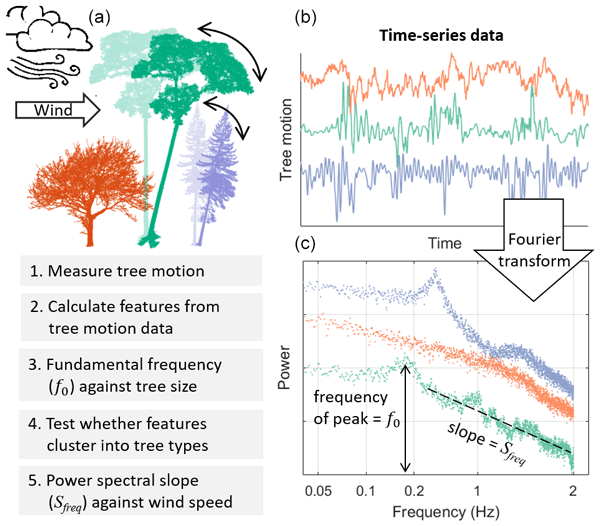
Toby D. Jackson, Sarab Sethi, Ebba Dellwik, Nikolas Angelou, Amanda Bunce, Tim van Emmerik, Marine Duperat, Jean-Claude Ruel, Axel Wellpott, Skip Van Bloem, Alexis Achim, Brian Kane, Dominick M. Ciruzzi, Steven P. Loheide II, Ken James, Daniel Burcham, John Moore, Dirk Schindler, Sven Kolbe, Kilian Wiegmann, Mark Rudnicki, Victor J. Lieffers, John Selker, Andrew V. Gougherty, Tim Newson, Andrew Koeser, Jason Miesbauer, Roger Samelson, Jim Wagner, Anthony R. Ambrose, Andreas Detter, Steffen Rust, David Coomes, and Barry Gardiner
Biogeosciences, 18, 4059–4072, https://doi.org/10.5194/bg-18-4059-2021, https://doi.org/10.5194/bg-18-4059-2021, 2021
Short summary
Short summary
We have all seen trees swaying in the wind, but did you know that this motion can teach us about ecology? We summarized tree motion data from many different studies and looked for similarities between trees. We found that the motion of trees in conifer forests is quite similar to each other, whereas open-grown trees and broadleaf forests show more variation. It has been suggested that additional damping or amplification of tree motion occurs at high wind speeds, but we found no evidence of this.
Cited articles
Avbrotsstatistikk fra Reguleringsmyndigheita for energi – NVE: https://www.nve.no/reguleringsmyndigheten/publikasjoner-og-data/statistikk/avbrotsstatistikk/, last access: 19 May 2025.
Bakkestuen, V., Erikstad, L., and Halvorsen, R.: Step-less models for regional environmental variation in Norway, J. Biogeogr., 35, 1906–1922, https://doi.org/10.1111/j.1365-2699.2008.01941.x, 2008.
Beirlant, J., Goegebeur, Y., Teugels, J., and Segers, J.: Statistics of Extremes: Theory and Applications, John Wiley & Sons, Ltd, ISBN 978-0-470-01238-3, 2004.
Berkelaar, M.: lpSolve: Interface to “Lp_solve” v. 5.5 to Solve Linear/Integer Programs, https://doi.org/10.32614/CRAN.package.lpSolve, 2024.
Braastad, H.: Volumtabeller for bjørk, Meddelser fra Det norske Skogforsøksvesen, 21, 23–78, https://hdl.handle.net/11250/2988596, 1966.
Brantseg, A.: Furu sønnafjells, Kubering av stående skog, Funksjoner og tabeller, Meddelser fra Det norske skogforsøksvesen, https://hdl.handle.net/11250/2988596, 1969.
Chapman, L.: Assessing topographic exposure, Meteorol. Appl., 7, 335–340, https://doi.org/10.1017/S1350482700001729, 2000.
Chen, T. and Guestrin, C.: XGBoost: A Scalable Tree Boosting System, in: Proceedings of the 22nd ACM SIGKDD International Conference on Knowledge Discovery and Data Mining, 785–794, https://doi.org/10.1145/2939672.2939785, 2016.
Chen, T., He, T., Benesty, M., Khotilovich, V., Tang, Y., Cho, H., Chen, K., Mitchell, R., Cano, I., Zhou, T., Li, M., Xie, J., Lin, M., Geng, Y., Li, Y., Yuan, J., and Cortes, D.: xgboost: Extreme Gradient Boosting, R package version 3.2.1.1., https://doi.org/10.32614/CRAN.package.xgboost, 2024.
Chen, Y.-Y., Gardiner, B., Pasztor, F., Blennow, K., Ryder, J., Valade, A., Naudts, K., Otto, J., McGrath, M. J., Planque, C., and Luyssaert, S.: Simulating damage for wind storms in the land surface model ORCHIDEE-CAN (revision 4262), Geosci. Model Dev., 11, 771–791, https://doi.org/10.5194/gmd-11-771-2018, 2018.
Costa, M., Gardiner, B., Locatelli, T., Marchi, L., Marchi, N., and Lingua, E.: Evaluating wind damage vulnerability in the Alps: A new wind risk model parametrisation, Agr. Forest Meteorol., 341, 109660, https://doi.org/10.1016/j.agrformet.2023.109660, 2023.
Dalponte, M., Marzini, S., Solano-Correa, Y. T., Tonon, G., Vescovo, L., and Gianelle, D.: Mapping forest windthrows using high spatial resolution multispectral satellite images, Int. J. Appl. Earth Obs., 93, 102206, https://doi.org/10.1016/j.jag.2020.102206, 2020.
Duperat, M., Gardiner, B., and Ruel, J.-C.: Testing an individual tree wind damage risk model in a naturally regenerated balsam fir stand: potential impact of thinning on the level of risk, Forestry, 94, 141–150, https://doi.org/10.1093/forestry/cpaa023, 2021.
Dupras, J., Patry, C., Tittler, R., Gonzalez, A., Alam, M., and Messier, C.: Management of vegetation under electric distribution lines will affect the supply of multiple ecosystem services, Land Use Policy, 51, 66–75, https://doi.org/10.1016/j.landusepol.2015.11.005, 2016.
Eddelbuettel, D., Francois, R., Allaire, J., Ushey, K., Kou, Q., Russell, N., Ucar, I., Bates, D., and Chambers, J.: Rcpp: Seamless R and C
Fischer, C., Vestøl, G. I., and Høibø, O.: Modelling the variability of density and bending properties of Norway spruce structural timber, Can. J. Forest Res., 46, 978–985, https://doi.org/10.1139/cjfr-2016-0022, 2016.
Gardiner, B., Byrne, K., Hale, S., Kamimura, K., Mitchell, S. J., Peltola, H., and Ruel, J.-C.: A review of mechanistic modelling of wind damage risk to forests, Forestry, 81, 447–463, https://doi.org/10.1093/forestry/cpn022, 2008.
Gardiner, B., Lorenz, R., Hanewinkel, M., Schmitz, B., Bott, F., Szymczak, S., Frick, A., and Ulbrich, U.: Predicting the risk of tree fall onto railway lines, Forest Ecol. Manag., 553, 121614, https://doi.org/10.1016/j.foreco.2023.121614, 2024.
Garfinkel, M., Hosler, S., Roberts, M., Vogt, J., Whelan, C., and Minor, E.: Balancing the management of powerline right-of-way corridors for humans and nature, J. Environ. Manage., 330, 117175, https://doi.org/10.1016/j.jenvman.2022.117175, 2023.
Gilleland, E. and Katz, R. W.: extRemes 2.0: An Extreme Value Analysis Package in R, J. Stat. Softw., 72, https://doi.org/10.18637/jss.v072.i08, 2016.
Hale, S. E., Gardiner, B. A., Wellpott, A., Nicoll, B. C., and Achim, A.: Wind loading of trees: influence of tree size and competition, Eur. J. Forest Res., 131, 203–217, https://doi.org/10.1007/s10342-010-0448-2, 2012.
Hale, S. E., Gardiner, B., Peace, A., Nicoll, B., Taylor, P., and Pizzirani, S.: Comparison and validation of three versions of a forest wind risk model, Environ. Modell. Softw., 68, 27–41, https://doi.org/10.1016/j.envsoft.2015.01.016, 2015.
Hart, E., Sim, K., Kamimura, K., Meredieu, C., Guyon, D., and Gardiner, B.: Use of machine learning techniques to model wind damage to forests, Agr. Forest Meteorol., 265, 16–29, https://doi.org/10.1016/j.agrformet.2018.10.022, 2019.
Hegyi, F.: A simulation model for managing jack pine stands, in: Growth Models for Tree and Stand Simulation, Royal Coll. For., Stockholm, 74–90, ISBN 978 9157603432, 1974.
Hernangómez, D.: Using the tidyverse with terra objects: the tidyterra package, Journal of Open Source Software, 8, 5751, https://doi.org/10.21105/joss.05751, 2023.
Hijmans, R. J.: terra: Spatial Data Analysis, https://doi.org/10.32614/CRAN.package.terra, 2024.
Høibø, O. and Vestøl, G. I.: Modelling the variation in modulus of elasticity and modulus of rupture of Scots pine round timber, Can. J. Forest Res., 40, 668–678, https://doi.org/10.1139/X10-021, 2010.
Hosmer, D. W., Lemeshow, S., and Sturdivant, R. X.: Applied Logistic Regression, in: Applied Logistic Regression, John Wiley & Sons, Ltd., 510, https://doi.org/10.1002/9781118548387.fmatter, 2013.
IEA: Electricity security in tomorrow's power systems, IEA, https://www.iea.org/reports/electricity-security-in-tomorrows-power-systems (last access: 29 May 2026), 2020.
Jahani, A. and Saffariha, M.: Tree failure prediction model (TFPM): machine learning techniques comparison in failure hazard assessment of Platanus orientalis in urban forestry, Nat. Hazards, 110, 881–898, https://doi.org/10.1007/s11069-021-04972-7, 2022.
Jain, A., Shah, T., Yousefhussien, M., and Pandey, A.: Combining Remotely Sensed Imagery with Survival Models for Outage Risk Estimation of the Power Grid, in: 2021 IEEE/CVF Conference on Computer Vision and Pattern Recognition Workshops (CVPRW), 1202–1211, https://doi.org/10.1109/CVPRW53098.2021.00131, 2021.
Jenkinson, A. F.: The frequency distribution of the annual maximum (or minimum) values of meteorological elements, Q. J. Roy. Meteor. Soc., 81, 158–171, https://doi.org/10.1002/qj.49708134804, 1955.
Kamimura, K., Gardiner, B., Dupont, S., Guyon, D., and Meredieu, C.: Mechanistic and statistical approaches to predicting wind damage to individual maritime pine (Pinus pinaster) trees in forests, Can. J. Forest Res., 46, 88–100, https://doi.org/10.1139/cjfr-2015-0237, 2016.
Kassambara, A.: ggpubr: “ggplot2” Based Publication Ready Plots, https://doi.org/10.32614/CRAN.package.ggpubr, 2023.
Kennedy, F.: The identification of soils for forest management, Edinburgh: Forestry Commission Publications, ISBN 978 0855385590, 2002.
Krisans, O., Matisons, R., Rust, S., Burnevica, N., Bruna, L., Elferts, D., Kalvane, L., and Jansons, A.: Presence of Root Rot Reduces Stability of Norway Spruce (Picea abies): Results of Static Pulling Tests in Latvia, Forests, 11, 416, https://doi.org/10.3390/f11040416, 2020.
Lehtonen, I., Hoppula, P., Pirinen, P., and Gregow, H.: Modelling crown snow loads in Finland: a comparison of two methods, Silva Fenn., 48, https://doi.org/10.14214/sf.1120, 2014.
Li, J., Liu, L., Liang, Y., He, C., and Jin, J.: An Integrated Estimating Approach for Design Wind Speed under Extreme Wind Climate in the Yangtze River Inland Waterway, Atmosphere, 13, 1849, https://doi.org/10.3390/atmos13111849, 2022.
Liu, Z., Peng, C., Work, T., Candau, J.-N., DesRochers, A., and Kneeshaw, D.: Application of machine-learning methods in forest ecology: recent progress and future challenges, Environ. Rev., 26, 339–350, https://doi.org/10.1139/er-2018-0034, 2018.
Locatelli, T., Gardiner, B., Tarantola, S., Nicoll, B., Bonnefond, J.-M., Garrigou, D., Kamimura, K., and Patenaude, G.: Modelling wind risk to Eucalyptus globulus (Labill.) stands, Forest Ecol. Manag., 365, 159–173, https://doi.org/10.1016/j.foreco.2015.12.035, 2016.
Locatelli, T., Tarantola, S., Gardiner, B., and Patenaude, G.: Variance-based sensitivity analysis of a wind risk model – Model behaviour and lessons for forest modelling, Environ. Modell. Softw., 87, 84–109, https://doi.org/10.1016/j.envsoft.2016.10.010, 2017.
Locatelli, T., Gardiner, B., Hale, S., and Nicoll, B.: fgr: r Version of the ForestGALES wind risk model, R package version 1.0, https://github.com/tom-locatelli/fgr (last access: 29 May 2026), 2022.
Lorenz, R., Becker, N., Gardiner, B., Ulbrich, U., Hanewinkel, M., and Schmitz, B.: Tree fall along railway lines: modelling the impact of wind and other meteorological factors, Nat. Hazards Earth Syst. Sci., 25, 2179–2196, https://doi.org/10.5194/nhess-25-2179-2025, 2025.
Merlin, M., Locatelli, T., Gardiner, B., and Astrup, R.: Large-scale modelling wind damage vulnerability through combination of high-resolution forest resources maps and ForestGALES, Forest Ecosystems, 14, 100361, https://doi.org/10.1016/j.fecs.2025.100361, 2025.
Morimoto, J., Aiba, M., Furukawa, F., Mishima, Y., Yoshimura, N., Nayak, S., Takemi, T., Chihiro, H., Matsui, T., and Nakamura, F.: Risk assessment of forest disturbance by typhoons with heavy precipitation in northern Japan, Forest Ecol. Manag., 479, 118521, https://doi.org/10.1016/j.foreco.2020.118521, 2021.
Nicoll, B. C., Gardiner, B. A., Rayner, B., and Peace, A. J.: Anchorage of coniferous trees in relation to species, soil type, and rooting depth, Can. J. Forest Res., 36, 1871–1883, https://doi.org/10.1139/x06-072, 2006.
NVE: Trær til besvær, Lærdommer om skogrydding i etterkant av ekstremværet Dagmar, Norges vassdrags- og energidirektorat NVE, http://publikasjoner.nve.no/rapport/2012/rapport2012_45.pdf (last access: 29 May 2026), 2012.
Öhman, K., Llorente, I. P., Fustel, T., Bohlin, I., Lämås, T., and Eggers, J.: Integrating wind damage vulnerability into long-term forest planning: An optimisation-based model for spatial decision support, Trees, Forests and People, 20, 100870, https://doi.org/10.1016/j.tfp.2025.100870, 2025.
Palutikof, J. P., Brabson, B. B., Lister, D. H., and Adcock, S. T.: A review of methods to calculate extreme wind speeds, Meteorol. Appl., 6, 119–132, https://doi.org/10.1017/S1350482799001103, 1999.
Patacca, M., Lindner, M., Lucas-Borja, M. E., Cordonnier, T., Fidej, G., Gardiner, B., Hauf, Y., Jasinevičius, G., Labonne, S., Linkevičius, E., Mahnken, M., Milanovic, S., Nabuurs, G.-J., Nagel, T. A., Nikinmaa, L., Panyatov, M., Bercak, R., Seidl, R., Ostrogović Sever, M. Z., Socha, J., Thom, D., Vuletic, D., Zudin, S., and Schelhaas, M.-J.: Significant increase in natural disturbance impacts on European forests since 1950, Glob. Chang. Biol., 29, https://doi.org/10.1111/gcb.16531, 2022.
Pawlik, Ł. and Harrison, S. P.: Modelling and prediction of wind damage in forest ecosystems of the Sudety Mountains, SW Poland, Sci. Total Environ., 815, 151972, https://doi.org/10.1016/j.scitotenv.2021.151972, 2022.
Peltola, H., Kellomäki, S., Hassinen, A., and Granander, M.: Mechanical stability of Scots pine, Norway spruce and birch: an analysis of tree-pulling experiments in Finland, Forest Ecol. Manag., 135, 143–153, https://doi.org/10.1016/S0378-1127(00)00306-6, 2000.
Poulos, H. M. and Camp, A. E.: Decision support for mitigating the risk of tree induced transmission line failure in utility rights-of-way, Environ. Manage., 45, 217–226, https://doi.org/10.1007/s00267-009-9422-5, 2010.
Quine, C. P.: Estimation of mean wind climate and probability of strong winds for wind risk assessment, Forestry, 73, 247–258, https://doi.org/10.1093/forestry/73.3.247, 2000.
R Core Team: R: A Language and Environment for Statistical Computing, https://www.R-project.org/ (last access: 29 May 2026), 2024.
Reder, S., Kruse, M., Miranda, L., Voss, N., and Mund, J.-P.: Unveiling wind-thrown trees: Detection and quantification of wind-thrown tree stems on UAV-orthomosaics based on UNet and a heuristic stem reconstruction, Forest Ecol. Manag., 578, 122411, https://doi.org/10.1016/j.foreco.2024.122411, 2025.
Rouault, E., Warmerdam, F., Schwehr, K., Kiselev, A., Butler, H., Łoskot, M., Szekeres, T., Tourigny, E., Landa, M., Miara, I., Elliston, B., Kumar, C., Plesea, L., Morissette, D., Jolma, A., and Dawson, N.: GDAL, https://doi.org/10.5281/zenodo.6517191, 2022.
Sey, N. E. N., Amo-Boateng, M., Domfeh, M. K., Kabo-Bah, A. T., and Antwi-Agyei, P.: Deep learning-based framework for vegetation hazard monitoring near powerlines, Spat. Inf. Res., 31, 501–513, https://doi.org/10.1007/s41324-023-00518-0, 2023.
Soukissian, T. H. and Tsalis, C.: The effect of the generalized extreme value distribution parameter estimation methods in extreme wind speed prediction, Nat. Hazards, 78, 1777–1809, https://doi.org/10.1007/s11069-015-1800-0, 2015.
Stadelmann, C., Grottian, L., Natkhin, M., and Sanders, T. G.: Improving the predictive capacity of the windthrow risk model ForestGALES with long-term monitoring data – A statistical calibration approach, Forest Ecol. Manag., 576, 122389, https://doi.org/10.1016/j.foreco.2024.122389, 2025.
Stage, A. R.: Prognosis model for stand development, Intermountain Forest & Range Experiment Station, Forest Service, U.S. Dept. of Agriculture, Ogden, Utah, https://doi.org/10.5962/bhl.title.69018, 1973.
Straker, A., Puliti, S., Breidenbach, J., Kleinn, C., Pearse, G., Astrup, R., and Magdon, P.: Instance segmentation of individual tree crowns with YOLOv5: A comparison of approaches using the ForInstance benchmark LiDAR dataset, ISPRS Open Journal of Photogrammetry and Remote Sensing, 9, 100045, https://doi.org/10.1016/j.ophoto.2023.100045, 2023.
Szymczak, S., Bott, F., Babeck, P., Frick, A., Stöckigt, B., and Wagner, K.: Estimating the hazard of tree fall along railway lines: a new GIS tool, Nat. Hazards, 112, 2237–2258, https://doi.org/10.1007/s11069-022-05263-5, 2022.
Unterwieser, H. and Schickhofer, G.: Influence of moisture content of wood on sound velocity and dynamic MOE of natural frequency- and ultrasonic runtime measurement, Eur. J. Wood Wood Prod., 69, 171–181, https://doi.org/10.1007/s00107-010-0417-y, 2011.
Vestjordet, E.: Funksjoner og tabeller for kubering av stående gran, Meddelser fra Det norske Skogforsøksvesen, 22, https://hdl.handle.net/11250/2988611, 1967.
Walker, M. and Dahle, G. A.: Literature Review of Unmanned Aerial Systems and LIDAR with Application to Distribution Utility Vegetation Management, Arboriculture & Urban Forestry (AUF), 49, 144–156, https://doi.org/10.48044/jauf.2023.011, 2023.
Wickham, H.: ggplot2, Springer International Publishing, Cham, https://doi.org/10.1007/978-3-319-24277-4, 2016.
Žemaitis, P., Armoška, E., Stakėnas, V., and Kulbokas, G.: Wood decay and Norway spruce vulnerability to wind-inflicted mortality in monospecific and mixed stands in hemiboreal forests, Forest Ecol. Manag., 569, 122163, https://doi.org/10.1016/j.foreco.2024.122163, 2024.
Zubkov, P., Gardiner, B., Nygaard, B. E., Guttu, S., Solberg, S., and Eid, T.: Predicting snow damage in conifer forests using a mechanistic snow damage model and high-resolution snow accumulation data, Scand. J. Forest Res., 39, 59–75, https://doi.org/10.1080/02827581.2023.2289660, 2024.
Short summary
Tree falls along power lines cause safety, cost, and environmental issues. Drones can map individual trees to improve risk management. We applied the ForestGALES wind-risk model to individual trees along power lines in southern Norway. It performed moderately alone but combining it with machine learning greatly improved accuracy, offering managers precise guidance for safer vegetation management.
Tree falls along power lines cause safety, cost, and environmental issues. Drones can map...


Altmetrics
Final-revised paper
Preprint