
Articles | Volume 26, issue 5
https://doi.org/10.5194/nhess-26-2353-2026
© Author(s) 2026. This work is distributed under
the Creative Commons Attribution 4.0 License.
the Creative Commons Attribution 4.0 License.
https://doi.org/10.5194/nhess-26-2353-2026
© Author(s) 2026. This work is distributed under
the Creative Commons Attribution 4.0 License.
the Creative Commons Attribution 4.0 License.
Research article
| 
26 May 2026
Research article |
| 26 May 2026
| 26 May 2026
Enhancing hydrological hazard early warning: a 60 d streamflow forecasting framework integrating deep learning and process-based modeling
Zhijie Liu
Department of Hydraulic Engineering, Tsinghua University, Beijing 100084, China
State Key Laboratory of Hydroscience and Engineering, Tsinghua University, Beijing 100084, China

Department of Hydraulic Engineering, Tsinghua University, Beijing 100084, China
State Key Laboratory of Hydroscience and Engineering, Tsinghua University, Beijing 100084, China
Dawen Yang
Department of Hydraulic Engineering, Tsinghua University, Beijing 100084, China
State Key Laboratory of Hydroscience and Engineering, Tsinghua University, Beijing 100084, China
Related authors
No articles found.
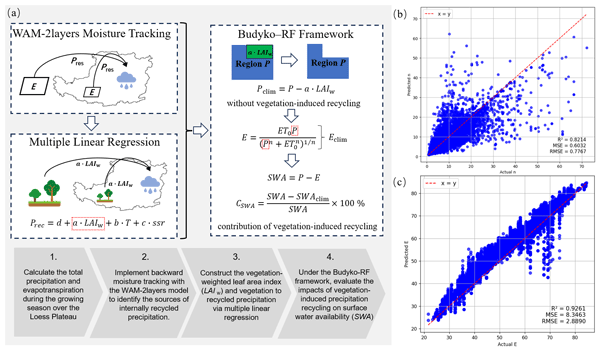
Jiaxiang Deng, Quan Quan, Shuangcheng Tang, Hanbo Yang, and Xiaoyu Song
Hydrol. Earth Syst. Sci., 30, 5455–5472, https://doi.org/10.5194/hess-30-5455-2026, https://doi.org/10.5194/hess-30-5455-2026, 2026
Short summary
Short summary
This study asks whether planting more vegetation on the Loess Plateau can bring enough extra rain to ease water shortages. By combining rainfall tracking with water balance analysis, we found that the added rain linked to vegetation is generally too small to make up for the extra water used by plant growth. Benefits are limited in sparsely vegetated areas and can turn negative where vegetation is dense, showing that restoration in dry regions has clear water limits.
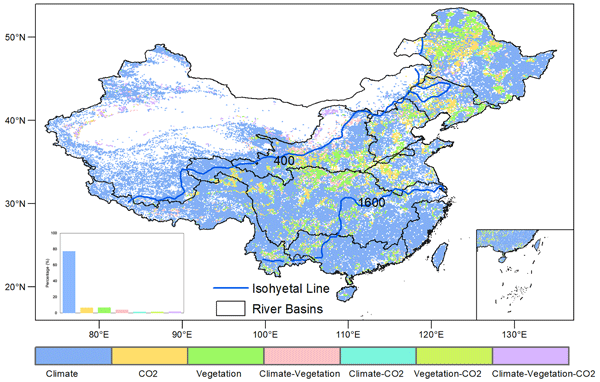
Huilan Shen, Hanbo Yang, and Changming Li
Hydrol. Earth Syst. Sci., 30, 4175–4190, https://doi.org/10.5194/hess-30-4175-2026, https://doi.org/10.5194/hess-30-4175-2026, 2026
Short summary
Short summary
Climate change, rising [CO2], and vegetation dynamics are reshaping global water cycle, but their impacts remain unclear. We improved the coupled carbon and water model to analyze China’s water yield (WY) changes (1982–2017). Our results showed that climate change was the dominant driver nationally, vegetation/ [CO2] most affected in 400-1600 mm precipitation zones. Projections indicate [CO2] may outweigh vegetation effects on WY by 2100. This work informs sustainable water management.
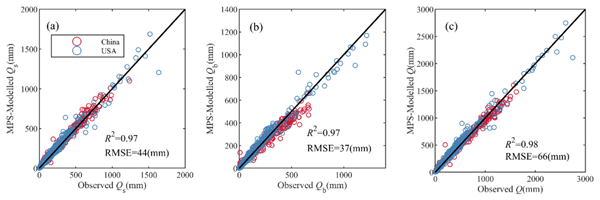
Yufen He, Changming Li, and Hanbo Yang
Hydrol. Earth Syst. Sci., 30, 553–572, https://doi.org/10.5194/hess-30-553-2026, https://doi.org/10.5194/hess-30-553-2026, 2026
Short summary
Short summary
Our research presents an improved method to enhance the understanding and prediction of water flows in rivers and streams, focusing on key runoff components: surface flow, baseflow, and total runoff. Using a streamlined model, the MPS model, we analyzed over 600 catchments in China and the US, demonstrating its accuracy in capturing the spatial and temporal variability of these components. This model offers a practical tool for water resource management.
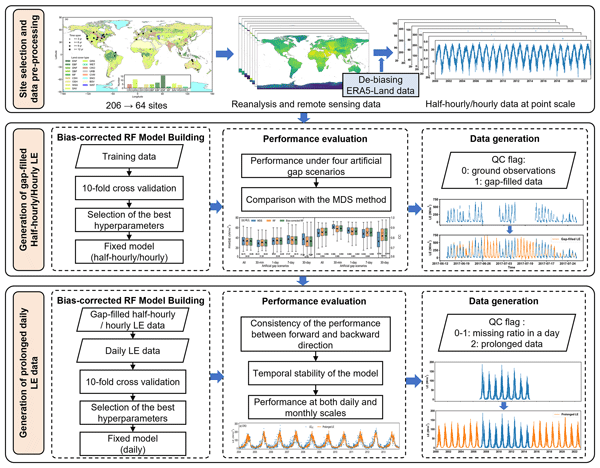
Wangyipu Li, Zhaoyuan Yao, Yifan Qu, Hanbo Yang, Yang Song, Lisheng Song, Lifeng Wu, and Yaokui Cui
Earth Syst. Sci. Data, 17, 3835–3855, https://doi.org/10.5194/essd-17-3835-2025, https://doi.org/10.5194/essd-17-3835-2025, 2025
Short summary
Short summary
Due to shortcomings such as extensive data gaps and limited observation durations in current ground-based latent heat flux (LE) datasets, we developed a novel gap-filling and prolongation framework for ground-based LE observations, establishing a benchmark dataset for global evapotranspiration (ET) estimation from 2000 to 2022 across 64 sites at various timescales. This comprehensive dataset can strongly support ET modeling, water–carbon cycle monitoring, and long-term climate change analysis.
Ziwei Liu, Hanbo Yang, Changming Li, and Taihua Wang
Hydrol. Earth Syst. Sci., 28, 4349–4360, https://doi.org/10.5194/hess-28-4349-2024, https://doi.org/10.5194/hess-28-4349-2024, 2024
Short summary
Short summary
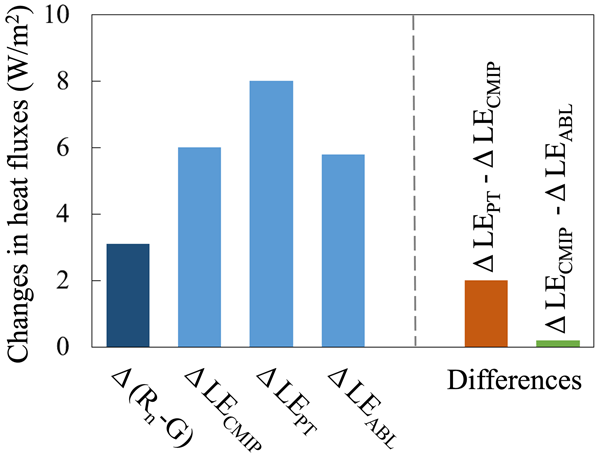
The determination of the coefficient α in the Priestley–Taylor equation is empirical. Based on an atmospheric boundary layer model, we derived a physically clear and parameter-free expression to investigate the behavior of α. We showed that the temperature dominates changes in α and emphasized that the variation of α with temperature should be considered for long-term hydrological predictions. Our works advance and promote the most classical models in the field.
Changming Li, Ziwei Liu, Wencong Yang, Zhuoyi Tu, Juntai Han, Sien Li, and Hanbo Yang
Earth Syst. Sci. Data, 16, 1811–1846, https://doi.org/10.5194/essd-16-1811-2024, https://doi.org/10.5194/essd-16-1811-2024, 2024
Short summary
Short summary
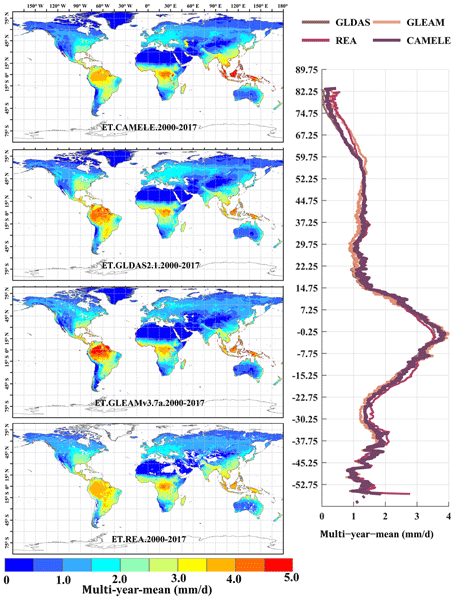
Using a collocation-based approach, we developed a reliable global land evapotranspiration product (CAMELE) by merging multi-source datasets. The CAMELE product outperformed individual input datasets and showed satisfactory performance compared to reference data. It also demonstrated superiority for different plant functional types. Our study provides a promising solution for data fusion. The CAMELE dataset allows for detailed research and a better understanding of land–atmosphere interactions.
Wencong Yang, Hanbo Yang, Changming Li, Taihua Wang, Ziwei Liu, Qingfang Hu, and Dawen Yang
Hydrol. Earth Syst. Sci., 26, 6427–6441, https://doi.org/10.5194/hess-26-6427-2022, https://doi.org/10.5194/hess-26-6427-2022, 2022
Short summary
Short summary
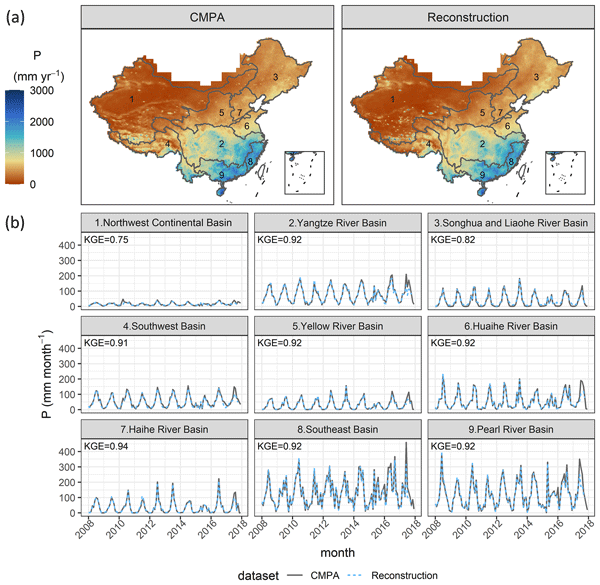
We produced a daily 0.1° dataset of precipitation, soil moisture, and snow water equivalent in 1981–2017 across China via reconstructions. The dataset used global background data and local on-site data as forcing input and satellite-based data as reconstruction benchmarks. This long-term high-resolution national hydrological dataset is valuable for national investigations of hydrological processes.
Changming Li, Hanbo Yang, Wencong Yang, Ziwei Liu, Yao Jia, Sien Li, and Dawen Yang
Earth Syst. Sci. Data Discuss., https://doi.org/10.5194/essd-2021-456, https://doi.org/10.5194/essd-2021-456, 2022
Revised manuscript not accepted
Short summary
Short summary
A long-term (1980–2020) global ET product is generated based on a collocation-based merging method. The produced Collocation-Analyzed Multi-source Ensembled Land Evapotranspiration Data (CAMELE) performed well over different vegetation coverage against in-situ data. For global comparison, the spatial distribution of multi-year average and annual variation were in consistent with inputs.The CAMELE products is freely available at https://doi.org/10.5281/zenodo.6283239 (Li et al., 2021).
Cited articles
Adams III, T. E. and Dymond, R. L.: Possible hydrologic forecasting improvements resulting from advancements in precipitation estimation and forecasting for a real-time flood forecast system in the Ohio River Valley, USA, J. Hydrol., 579, 124138, https://doi.org/10.1016/j.jhydrol.2019.124138, 2019.
Adnan, R. M., Liang, Z., Heddam, S., Zounemat-Kermani, M., Kisi, O., and Li, B.: Least square support vector machine and multivariate adaptive regression splines for streamflow prediction in mountainous basin using hydro-meteorological data as inputs, J. Hydrol., 586, 124371, https://doi.org/10.1016/j.jhydrol.2019.124371, 2020.
Andrade, F. S. A., Arsenault, R., Poulin, A., Troin, M., and Armstrong, W.: Application of weather post-processing methods for operational ensemble hydrological forecasting on multiple catchments in Canada, J. Hydrol., 642, 131861, https://doi.org/10.1016/j.jhydrol.2024.131861, 2024.
Anghileri, D., Monhart, S., Zhou, C., Bogner, K., Castelletti, A., Burlando, P., and Zappa, M.: The Value of Subseasonal Hydrometeorological Forecasts to Hydropower Operations: How Much Does Preprocessing Matter?, Water Resour. Res., 55, 10159–10178, https://doi.org/10.1029/2019wr025280, 2019.
Baño-Medina, J., Manzanas, R., and Gutiérrez, J. M.: Configuration and intercomparison of deep learning neural models for statistical downscaling, Geosci. Model Dev., 13, 2109–2124, https://doi.org/10.5194/gmd-13-2109-2020, 2020.
Bauer, P., Thorpe, A., and Brunet, G.: The quiet revolution of numerical weather prediction, Nature, 525, 47–55, https://doi.org/10.1038/nature14956, 2015.
Bogner, K., Chang, A. Y. Y., Bernhard, L., Zappa, M., Monhart, S., and Spirig, C.: Tercile Forecasts for Extending the Horizon of Skillful Hydrological Predictions, J. Hydrometeorol., 23, 521–539, https://doi.org/10.1175/jhm-d-21-0020.1, 2022.
Cannon, A. J., Sobie, S. R., and Murdock, T. Q.: Bias correction of GCM precipitation by quantile mapping: how well do methods preserve changes in quantiles and extremes?, J. Climate, 28, 6938–6959, https://doi.org/10.1175/JCLI-D-14-00754.1, 2015.
Cheng, M., Fang, F., Kinouchi, T., Navon, I. M., and Pain, C. C.: Long lead-time daily and monthly streamflow forecasting using machine learning methods, J. Hydrol., 590, 125376, https://doi.org/10.1016/j.jhydrol.2020.125376, 2020.
Cong, Z., Yang, D., Gao, B., Yang, H., and Hu, H.: Hydrological trend analysis in the Yellow River basin using a distributed hydrological model, Water Resour. Res., 45, W00A13, https://doi.org/10.1029/2008WR006852, 2009.
Dai, Y., Shangguan, W., Duan, Q., Liu, B., Fu, S., and Niu, G.: Development of a China dataset of soil hydraulic parameters using pedotransfer functions for land surface modeling, J. Hydrometeorol., 14, 869–887, https://doi.org/10.1175/JHM-D-12-0149.1, 2013.
Dion, P., Martel, J.-L., and Arsenault, R.: Hydrological ensemble forecasting using a multi-model framework, J. Hydrol., 600, 126537, https://doi.org/10.1016/j.jhydrol.2021.126537, 2021.
Donegan, S., Murphy, C., Harrigan, S., Broderick, C., Foran Quinn, D., Golian, S., Knight, J., Matthews, T., Prudhomme, C., Scaife, A. A., Stringer, N., and Wilby, R. L.: Conditioning ensemble streamflow prediction with the North Atlantic Oscillation improves skill at longer lead times, Hydrol. Earth Syst. Sci., 25, 4159–4183, https://doi.org/10.5194/hess-25-4159-2021, 2021.
Dong, N., Hao, H., Yang, M., Wei, J., Xu, S., and Kunstmann, H.: Deep-learning-based sub-seasonal precipitation and streamflow ensemble forecasting over the source region of the Yangtze River, Hydrol. Earth Syst. Sci., 29, 2023–2042, https://doi.org/10.5194/hess-29-2023-2025, 2025.
Du, Y., Wang, Q. J., Wu, W., and Su, C.-H.: Calibration of precipitation forecasts from NWP models for ungauged locations, J. Hydrol., 661, 133733, https://doi.org/10.1016/j.jhydrol.2025.133733, 2025.
Falck, A. S., Tomasella, J., Diniz, F. L. R., and Maggioni, V.: Assessment of subseasonal streamflow predictions in a tropical basin, J. Hydrol., 651, 132488, https://doi.org/10.1016/j.jhydrol.2024.132488, 2025.
Flerchinger, G. and Saxton, K.: Simultaneous heat and water model of a freezing snow-residue-soil system I. Theory and development, T. ASAE, 32, 565–571, https://doi.org/10.13031/2013.31040, 1989.
Gao, B., Qin, Y., Wang, Y., Yang, D., and Zheng, Y.: Modeling ecohydrological processes and spatial patterns in the upper Heihe Basin in China, Forests, 7, 10, https://doi.org/10.3390/f7010010, 2015.
Gao, B., Yang, D., Qin, Y., Wang, Y., Li, H., Zhang, Y., and Zhang, T.: Change in frozen soils and its effect on regional hydrology, upper Heihe basin, northeastern Qinghai–Tibetan Plateau, The Cryosphere, 12, 657–673, https://doi.org/10.5194/tc-12-657-2018, 2018.
Ghazvinian, M., Zhang, Y., Hamill, T. M., Seo, D.-J., and Fernando, N.: Improving Probabilistic Quantitative Precipitation Forecasts Using Short Training Data through Artificial Neural Networks, J. Hydrometeorol., 23, 1365–1382, https://doi.org/10.1175/JHM-D-22-0021.1, 2022.
Ghimire, G. R., Krajewski, W. F., and Quintero, F.: Scale-Dependent Value of QPF for Real-Time Streamflow Forecasting, J. Hydrometeorol., 22, 1931–1947, https://doi.org/10.1175/jhm-d-20-0297.1, 2021.
Greuell, W. and Hutjes, R. W. A.: Skill and sources of skill in seasonal streamflow hindcasts for South America made with ECMWF's SEAS5 and VIC, J. Hydrol., 617, 128806, https://doi.org/10.1016/j.jhydrol.2022.128806, 2023.
Guo, D. and Wang, H.: Simulation of permafrost and seasonally frozen ground conditions on the Tibetan Plateau, 1981–2010, J. Geophys. Res.-Atmos., 118, 5216–5230, https://doi.org/10.1002/jgrd.50457, 2013.
Guo, S. L., Wen, Y. H., Zhang, X. Q., and Chen, H. Y.: Runoff prediction of lower Yellow River based on CEEMDAN-LSSVM-GM(1,1) model, Sci. Rep., 13, 1511, https://doi.org/10.1038/s41598-023-28662-5, 2023.
Hipel, K. W. and McLeod, A. I.: Time series modelling of water resources and environmental systems, Elsevier, ISBN 0080870368, 1994.
Huang, Z., Zhao, T., Liu, Y., Zhang, Y., Jiang, T., Lin, K., and Chen, X.: Differing roles of base and fast flow in ensemble seasonal streamflow forecasting: An experimental investigation, J. Hydrol., 591, 125272, https://doi.org/10.1016/j.jhydrol.2020.125272, 2020.
Hunt, K. M. R., Matthews, G. R., Pappenberger, F., and Prudhomme, C.: Using a long short-term memory (LSTM) neural network to boost river streamflow forecasts over the western United States, Hydrol. Earth Syst. Sci., 26, 5449–5472, https://doi.org/10.5194/hess-26-5449-2022, 2022.
Jackson-Blake, L. A., Clayer, F., de Eyto, E., French, A. S., Frías, M. D., Mercado-Bettín, D., Moore, T., Puértolas, L., Poole, R., Rinke, K., Shikhani, M., van der Linden, L., and Marcé, R.: Opportunities for seasonal forecasting to support water management outside the tropics, Hydrol. Earth Syst. Sci., 26, 1389–1406, https://doi.org/10.5194/hess-26-1389-2022, 2022.
Jamei, M., Jamei, M., Ali, M., Karbasi, M., Farooque, A. A., Malik, A., Cheema, S. J., Esau, T. J., and Yaseen, Z. M.: Quantitative improvement of streamflow forecasting accuracy in the Atlantic zones of Canada based on hydro-meteorological signals: A multi-level advanced intelligent expert framework, Ecol. Inform., 80, 102455, https://doi.org/10.1016/j.ecoinf.2023.102455, 2024.
Jarvis, A., Reuter, H. I., Nelson, A., and Guevara, E.: Hole-filled SRTM for the globe Version 4, available from the CGIAR-CSI SRTN 90m Database, http://srtm.csi.cgiar.org (last access: 1 January 2026), 2008.
Koh, R. and Galelli, S.: Evaluating Streamflow Forecasts in Hydro-Dominated Power Systems-When and Why They Matter, Water Resour. Res., 60, e2023WR035825, https://doi.org/10.1029/2023wr035825, 2024.
Kondal, A., Hegewisch, K., Liu, M., Abatzoglou, J. T., Adam, J. C., Nijssen, B., and Rajagopalan, K.: Seasonal forecasts have sufficient skill to inform some agricultural decisions, Environ. Res. Lett., 19, 124049, https://doi.org/10.1088/1748-9326/ad8bde, 2024.
Kratzert, F., Klotz, D., Brenner, C., Schulz, K., and Herrnegger, M.: Rainfall–runoff modelling using Long Short-Term Memory (LSTM) networks, Hydrol. Earth Syst. Sci., 22, 6005–6022, https://doi.org/10.5194/hess-22-6005-2018, 2018.
Lee, D., Ng, J. Y., Galelli, S., and Block, P.: Unfolding the relationship between seasonal forecast skill and value in hydropower production: a global analysis, Hydrol. Earth Syst. Sci., 26, 2431–2448, https://doi.org/10.5194/hess-26-2431-2022, 2022.
Lee, Y., Pianosi, F., Peñuela, A., and Rico-Ramirez, M. A.: Skill of seasonal flow forecasts at catchment scale: an assessment across South Korea, Hydrol. Earth Syst. Sci., 28, 3261–3279, https://doi.org/10.5194/hess-28-3261-2024, 2024.
Li, W., Chen, J., Li, L., Chen, H., Liu, B., Xu, C.-Y., and Li, X.: Evaluation and Bias Correction of S2S Precipitation for Hydrological Extremes, J. Hydrometeorol., 20, 1887–1906, https://doi.org/10.1175/jhm-d-19-0042.1, 2019.
Li, Y., Xü, K., Wu, Z., Zhu, Z., and Wang, Q. J.: A statistical–dynamical approach for probabilistic prediction of sub-seasonal precipitation anomalies over 17 hydroclimatic regions in China, Hydrol. Earth Syst. Sci., 27, 4187–4203, https://doi.org/10.5194/hess-27-4187-2023, 2023.
Liang, H., Zhang, D., Wang, W., Yu, S., and Nimai, S.: Evaluating future water security in the upper Yangtze River Basin under a changing environment, Sci. Total Environ., 889, 164101, https://doi.org/10.1016/j.scitotenv.2023.164101, 2023.
Lin, R., Zhu, J., and Zheng, F.: The Application of the SVD Method to Reduce Coupled Model Biases in Seasonal Predictions of Rainfall, J. Geophys. Res.-Atmos., 124, 11837–11849, https://doi.org/10.1029/2018jd029927, 2019.
Liu, Y., Weerts, A. H., Clark, M., Hendricks Franssen, H.-J., Kumar, S., Moradkhani, H., Seo, D.-J., Schwanenberg, D., Smith, P., van Dijk, A. I. J. M., van Velzen, N., He, M., Lee, H., Noh, S. J., Rakovec, O., and Restrepo, P.: Advancing data assimilation in operational hydrologic forecasting: progresses, challenges, and emerging opportunities, Hydrol. Earth Syst. Sci., 16, 3863–3887, https://doi.org/10.5194/hess-16-3863-2012, 2012.
Luo, X., Yuan, X., Zhu, S., Xu, Z., Meng, L., and Peng, J.: A hybrid support vector regression framework for streamflow forecast, J. Hydrol., 568, 184–193, https://doi.org/10.1016/j.jhydrol.2018.10.064, 2019.
Lyu, Y., Zhu, S. P., Zhi, X. F., Ji, Y., Fan, Y., and Dong, F.: Improving Subseasonal-To-Seasonal Prediction of Summer Extreme Precipitation Over Southern China Based on a Deep Learning Method, Geophys. Res. Lett., 50, e2023GL106245, https://doi.org/10.1029/2023GL106245, 2023.
Lyu, Y., Zhu, S. P., Zhi, X. F., Wang, J. Y., Ji, Y., Fan, Y., and Dong, F.: Significant advancement in subseasonal-to-seasonal summer precipitation ensemble forecast skills in China mainland through an innovative hybrid CSG-UNET method, Environ. Res. Lett., 19, 074055, https://doi.org/10.1088/1748-9326/ad5577, 2024.
McInerney, D., Thyer, M., Kavetski, D., Laugesen, R., Woldemeskel, F., Tuteja, N., and Kuczera, G.: Improving the Reliability of Sub-Seasonal Forecasts of High and Low Flows by Using a Flow-Dependent Nonparametric Model, Water Resour. Res., 57, e2020WR029317, https://doi.org/10.1029/2020wr029317, 2021.
Monhart, S., Zappa, M., Spirig, C., Schär, C., and Bogner, K.: Subseasonal hydrometeorological ensemble predictions in small- and medium-sized mountainous catchments: benefits of the NWP approach, Hydrol. Earth Syst. Sci., 23, 493–513, https://doi.org/10.5194/hess-23-493-2019, 2019.
Nearing, G. S., Klotz, D., Frame, J. M., Gauch, M., Gilon, O., Kratzert, F., Sampson, A. K., Shalev, G., and Nevo, S.: Technical note: Data assimilation and autoregression for using near-real-time streamflow observations in long short-term memory networks, Hydrol. Earth Syst. Sci., 26, 5493–5513, https://doi.org/10.5194/hess-26-5493-2022, 2022.
Neri, A., Villarini, G., and Napolitano, F.: Intraseasonal predictability of the duration of flooding above National Weather Service flood warning levels across the US Midwest, Hydrol. Process., 34, 4505–4511, https://doi.org/10.1002/hyp.13902, 2020.
Nie, Y. and Sun, J.: Improving dynamical-statistical subseasonal precipitation forecasts using deep learning: A case study in Southwest China, Environ. Res. Lett., 19, 074013, https://doi.org/10.1088/1748-9326/ad5370, 2024.
Pan, B., Hsu, K., AghaKouchak, A., and Sorooshian, S.: Improving precipitation estimation using convolutional neural network, Water Resour. Res., 55, 2301–2321, https://doi.org/10.1029/2018WR024090, 2019.
Pendergrass, A. G., Meehl, G. A., Pulwarty, R., Hobbins, M., Hoell, A., AghaKouchak, A., Bonfils, C. J. W., Gallant, A. J. E., Hoerling, M., Hoffmann, D., Kaatz, L., Lehner, F., Llewellyn, D., Mote, P., Neale, R. B., Overpeck, J. T., Sheffield, A., Stahl, K., Svoboda, M., Wheeler, M. C., Wood, A. W., and Woodhouse, C. A.: Flash droughts present a new challenge for subseasonal-to-seasonal prediction, Nat. Clim. Change, 10, 191–199, https://doi.org/10.1038/s41558-020-0709-0, 2020.
Quedi, E. S. and Fan, F. M.: Sub seasonal streamflow forecast assessment at large-scale basins, J. Hydrol., 584, 124635, https://doi.org/10.1016/j.jhydrol.2020.124635, 2020.
Rasp, S. and Lerch, S.: Neural networks for postprocessing ensemble weather forecasts, Mon. Weather Rev., 146, 3885–3900, https://doi.org/10.1175/MWR-D-18-0187.1, 2018.
Ravuri, S., Lenc, K., Willson, M., Kangin, D., Lam, R., Mirowski, P., Fitzsimons, M., Athanassiadou, M., Kashem, S., and Madge, S.: Skilful precipitation nowcasting using deep generative models of radar, Nature, 597, 672–677, https://doi.org/10.1038/s41586-021-03854-z, 2021.
Reichstein, M., Camps-Valls, G., Stevens, B., Jung, M., Denzler, J., Carvalhais, N., and Prabhat, F.: Deep learning and process understanding for data-driven Earth system science, Nature, 566, 195–204, https://doi.org/10.1038/s41586-019-0912-1, 2019.
Sabzipour, B., Arsenault, R., Troin, M., and Martel, J.-L.: Sensitivity analysis of the hyperparameters of an ensemble Kalman filter application on a semi-distributed hydrological model for streamflow forecasting, J. Hydrol., 626, 130251, https://doi.org/10.1016/j.jhydrol.2023.130251, 2023.
Sellers, P., Randall, D., Collatz, G., Berry, J., Field, C., Dazlich, D., Zhang, C., Collelo, G., and Bounoua, L.: A revised land surface parameterization (SiB2) for atmospheric GCMs. Part I: Model formulation, J. Climate, 9, 676–705, https://doi.org/10.1175/1520-0442(1996)009<0676:ARLSPF>2.0.CO;2, 1996.
Shangguan, W., Dai, Y., Duan, Q., Liu, B., and Yuan, H.: A global soil data set for earth system modeling, J. Adv. Model. Earth Sy., 6, 249–263, https://doi.org/10.1002/2013MS000293, 2014.
Shao, P., Feng, J., Lu, J., and Tang, Z.: Data-driven and knowledge-guided denoising diffusion probabilistic model for runoff uncertainty prediction, J. Hydrol., 638, 131556, https://doi.org/10.1016/j.jhydrol.2024.131556, 2024.
Sharma, S., Siddique, R., Reed, S., Ahnert, P., and Mejia, A.: Hydrological Model Diversity Enhances Streamflow Forecast Skill at Short- to Medium-Range Timescales, Water Resour. Res., 55, 1510–1530, https://doi.org/10.1029/2018wr023197, 2019.
Shen, C.: A transdisciplinary review of deep learning research and its relevance for water resources scientists, Water Resour. Res., 54, 8558–8593, https://doi.org/10.1029/2018WR022643, 2018.
Shen, Y. and Xiong, A.: Validation and comparison of a new gauge-based precipitation analysis over mainland China, Int. J. Climatol., 36, 252–265, https://doi.org/10.1002/joc.4341, 2016.
Shi, R., Yang, H., and Yang, D.: Spatiotemporal variations in frozen ground and their impacts on hydrological components in the source region of the Yangtze River, J. Hydrol., 590, 125237, https://doi.org/10.1016/j.jhydrol.2020.125237, 2020.
Siqueira, V. A., Fan, F. M., Dias de Paiva, R. C., Ramos, M.-H., and Collischonn, W.: Potential skill of continental-scale, medium-range ensemble streamflow forecasts for flood prediction in South America, J. Hydrol., 590, 125430, https://doi.org/10.1016/j.jhydrol.2020.125430, 2020.
Siqueira, V. A., Weerts, A., Klein, B., Fan, F. M., Dias de Paiva, R. C., and Collischonn, W.: Postprocessing continental-scale, medium-range ensemble streamflow forecasts in South America using Ensemble Model Output Statistics and Ensemble Copula Coupling, J. Hydrol., 600, 126520, https://doi.org/10.1016/j.jhydrol.2021.126520, 2021.
Slater, L. J., Arnal, L., Boucher, M.-A., Chang, A. Y.-Y., Moulds, S., Murphy, C., Nearing, G., Shalev, G., Shen, C., Speight, L., Villarini, G., Wilby, R. L., Wood, A., and Zappa, M.: Hybrid forecasting: blending climate predictions with AI models, Hydrol. Earth Syst. Sci., 27, 1865–1889, https://doi.org/10.5194/hess-27-1865-2023, 2023.
Su, B., Huang, J., Zeng, X., Gao, C., and Jiang, T.: Impacts of climate change on streamflow in the upper Yangtze River basin, Climate Change, 141, 533–546, https://doi.org/10.1007/s10584-016-1852-5, 2017.
Sutanto, S. J., Wetterhall, F., and Van Lanen, H. A. J.: Hydrological drought forecasts outperform meteorological drought forecasts, Environ. Res. Lett., 15, 084010, https://doi.org/10.1088/1748-9326/ab8b13, 2020.
Sutanto, S. J., Duku, C., Gülveren, M., Dankers, R., and Paparrizos, S.: Future intensification of compound and consecutive drought and heatwave risks in Europe, Nat. Hazards Earth Syst. Sci., 25, 3879–3895, https://doi.org/10.5194/nhess-25-3879-2025, 2025.
Swain, D. L., Prein, A. F., Abatzoglou, J. T., Albano, C. M., Brunner, M., Diffenbaugh, N. S., Singh, D., Skinner, C. B., and Touma, D.: Hydroclimate volatility on a warming Earth, Nat. Rev. Earth Environ., 6, 35–50, https://doi.org/10.1038/s43017-024-00624-z, 2025.
Tabari, H.: Climate change impact on flood and extreme precipitation increases with water availability, Sci. Rep., 10, 13768, https://doi.org/10.1038/s41598-020-70816-2, 2020.
Tanguy, M., Eastman, M., Chevuturi, A., Magee, E., Cooper, E., Johnson, R. H. B., Facer-Childs, K., and Hannaford, J.: Optimising ensemble streamflow predictions with bias correction and data assimilation techniques, Hydrol. Earth Syst. Sci., 29, 1587–1614, https://doi.org/10.5194/hess-29-1587-2025, 2025.
Teutschbein, C. and Seibert, J.: Bias correction of regional climate model simulations for hydrological climate-change impact studies: Review and evaluation of different methods, J. Hydrol., 456, 12–29, https://doi.org/10.1016/j.jhydrol.2012.05.052, 2012.
Tian, F. Q., Li, Y. L., Zhao, T. T. G., Hu, H. C., Pappenberger, F., Jiang, Y. Z., and Lu, H.: Evaluation of the ECMWF System 4 climate forecasts for streamflow forecasting in the Upper Hanjiang River Basin, Hydrol. Res., 49, 1864–1879, https://doi.org/10.2166/nh.2018.176, 2018.
Towler, E., Stovern, D., Acharya, N., Abel, M. R., Currier, W. R., Bellier, J., Cifelli, R., Mahoney, K., Mossel, C., Scheuerer, M., Thorstensen, A., and Viterbo, F.: Implementing and Evaluating National Water Model Ensemble Streamflow Predictions Using Postprocessed Precipitation Forecasts, J. Hydrometeorol., 26, 385–399, https://doi.org/10.1175/jhm-d-24-0111.1, 2025.
Vernon, B., Zhang, W., and Chikamoto, Y.: Improving seasonal precipitation forecasts in the Western United States through statistical downscaling, Environ. Res. Lett., 20, 064008, https://doi.org/10.1088/1748-9326/add02c, 2025.
Vitart, F., Ardilouze, C., Bonet, A., Brookshaw, A., Chen, M., Codorean, C., Déqué, M., Ferranti, L., Fucile, E., Fuentes, M., Hendon, H., Hodgson, J., Kang, H.-S., Kumar, A., Lin, H., Liu, G., Liu, X., Malguzzi, P., Mallas, I., Manoussakis, M., Mastrangelo, D., MacLachlan, C., McLean, P., Minami, A., Mladek, R., Nakazawa, T., Najm, S., Nie, Y., Rixen, M., Robertson, A. W., Ruti, P., Sun, C., Takaya, Y., Tolstykh, M., Venuti, F., Waliser, D., Woolnough, S., Wu, T., Won, D.-J., Xiao, H., Zaripov, R., and Zhang, L.: The Subseasonal to Seasonal (S2S) Prediction Project Database, B. Am. Meteor. Soc., 98, 163–173, https://doi.org/10.1175/BAMS-D-16-0017.1, 2017.
Wang, J., Wang, X., Lei, X. H., Wang, H., Zhang, X. H., You, J. J., Tan, Q. F., and Liu, X. L.: Teleconnection analysis of monthly streamflow using ensemble empirical mode decomposition, J. Hydrol., 582, 124411, https://doi.org/10.1016/j.jhydrol.2019.124411, 2020.
Wang, M., Wyatt, B. M., and Ochsner, T. E.: Accurate statistical seasonal streamflow forecasts developed by incorporating remote sensing soil moisture and terrestrial water storage anomaly information, J. Hydrol., 626, 130154, https://doi.org/10.1016/j.jhydrol.2023.130154, 2023.
Wang, T., Shi, R., Yang, D., Yang, S., and Fang, B.: Future changes in annual runoff and hydroclimatic extremes in the upper Yangtze River Basin, J. Hydrol., 615, 128738, https://doi.org/10.1016/j.jhydrol.2022.128738, 2022.
Xu, P., Wang, D., Singh, V. P., Lu, H., Wang, Y., Wu, J., Wang, L., Liu, J., and Zhang, J.: Multivariate Hazard Assessment for Nonstationary Seasonal Flood Extremes Considering Climate Change, J. Geophys. Res.-Atmos., 125, e2020JD032780, https://doi.org/10.1029/2020jd032780, 2020.
Yang, D., Gao, B., Jiao, Y., Lei, H., Zhang, Y., Yang, H., and Cong, Z.: A distributed scheme developed for eco-hydrological modeling in the upper Heihe River, Sci. China Earth Sci., 58, 36–45, https://doi.org/10.1007/s11430-014-5029-7, 2015.
Yang, D., Li, C., Hu, H., Lei, Z., Yang, S., Kusuda, T., Koike, T., and Musiake, K.: Analysis of water resources variability in the Yellow River of China during the last half century using historical data, Water Resour. Res., 40, W06502, https://doi.org/10.1029/2003WR002763, 2004.
Yin, G. H., Yoshikane, T., Kaneko, R., and Yoshimura, K.: Improving Global Subseasonal to Seasonal Precipitation Forecasts Using a Support Vector Machine-Based Method, J. Geophys. Res.-Atmos., 128, e2023JD038929, https://doi.org/10.1029/2023JD038929, 2023.
Yuan, D., Tan, Y., Zhu, Y., Gao, C., Liu, K., and Dong, N.: Research of monthly runoff forecast of Jinsha River Basin based on VMD-PSO-LSTM (in Chinese), Water Resour. Hydropower Eng., 55, 28–38, https://doi.org/10.13928/j.cnki.wrahe.2024.S1.004, 2024.
Zhang, L., Gao, S., and Yang, T.: Adapting subseasonal-to-seasonal (S2S) precipitation forecast at watersheds for hydrologic ensemble streamflow forecasting with a machine learning-based post-processing approach, J. Hydrol., 631, 130643, https://doi.org/10.1016/j.jhydrol.2024.130643, 2024.
Zhang, L. J., Yang, T. T., Gao, S., Hong, Y., Zhang, Q., Wen, X., and Cheng, C. T.: Improving Subseasonal-to-Seasonal forecasts in predicting the occurrence of extreme precipitation events over the contiguous US using machine learning models, Atmos. Res., 281, 106502, https://doi.org/10.1016/j.atmosres.2022.106502, 2023.
Zhang, Y., Wu, L., Scheuerer, M., Schaake, J., and Kongoli, C.: Comparison of Probabilistic Quantitative Precipitation Forecasts from Two Postprocessing Mechanisms, J. Hydrometeorol., 18, 2873–2891, https://doi.org/10.1175/JHM-D-16-0293.1, 2017.
Zhong, W., Guo, J., Chen, L., Zhou, J., Zhang, J., and Wang, D.: Future hydropower generation prediction of large-scale reservoirs in the upper Yangtze River basin under climate change, J. Hydrol., 588, 125013, https://doi.org/10.1016/j.jhydrol.2020.125013, 2020.
Zhou, F., Yang, H., and Dong, N.: A low flow forecasting model based on recession curve and long short-term memory (LSTM) network (in Chinese), Water Resour. Hydropower Eng., 55, 99–107, https://doi.org/10.13928/j.cnki.wrahe.2024.09.009, 2024.
Zhu, Z., Bi, J., Pan, Y., Ganguly, S., Anav, A., Xu, L., Samanta, A., Piao, S., Nemani, R. R., and Myneni, R. B.: Global data sets of vegetation leaf area index (LAI) 3g and fraction of photosynthetically active radiation (FPAR) 3g derived from global inventory modeling and mapping studies (GIMMS) normalized difference vegetation index (NDVI3g) for the period 1981 to 2011, Remote Sens., 5, 927–948, https://doi.org/10.3390/rs5020927, 2013.
Short summary
Reliable medium- and long-term streamflow forecasts are essential for hazard early warning. We develop a 60-day forecasting framework that corrects precipitation from numerical weather prediction models, utilizes a physical hydrologic model and mitigates systematic simulation errors. Applied to the Upper Yangtze River Basin, it yields practical 60-day forecasts with good accuracy, providing a robust tool for proactive decision making in hazard mitigation to ensure regional water security.
Reliable medium- and long-term streamflow forecasts are essential for hazard early warning. We...


Altmetrics
Final-revised paper
Preprint